
Captain's Logbook
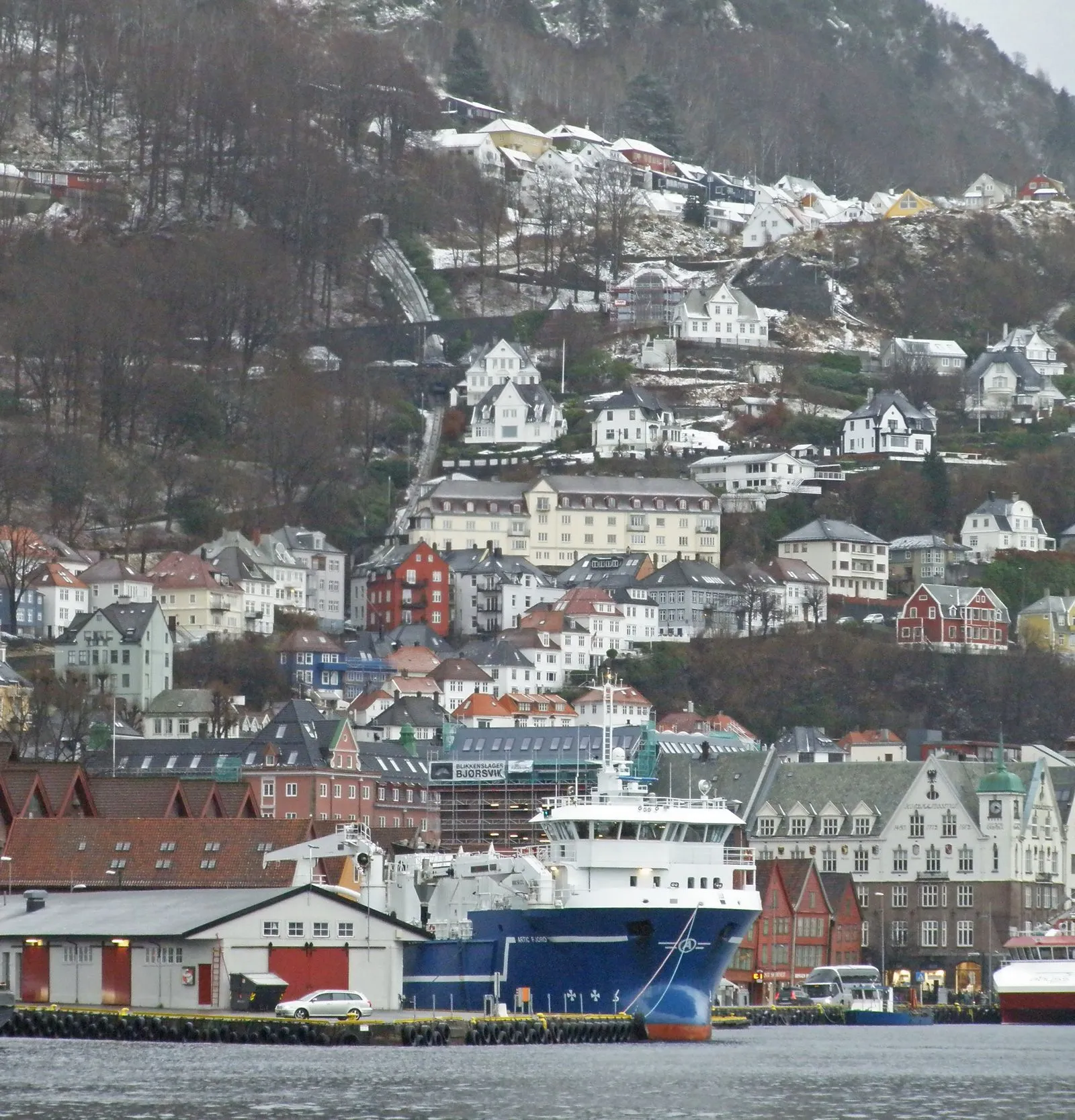
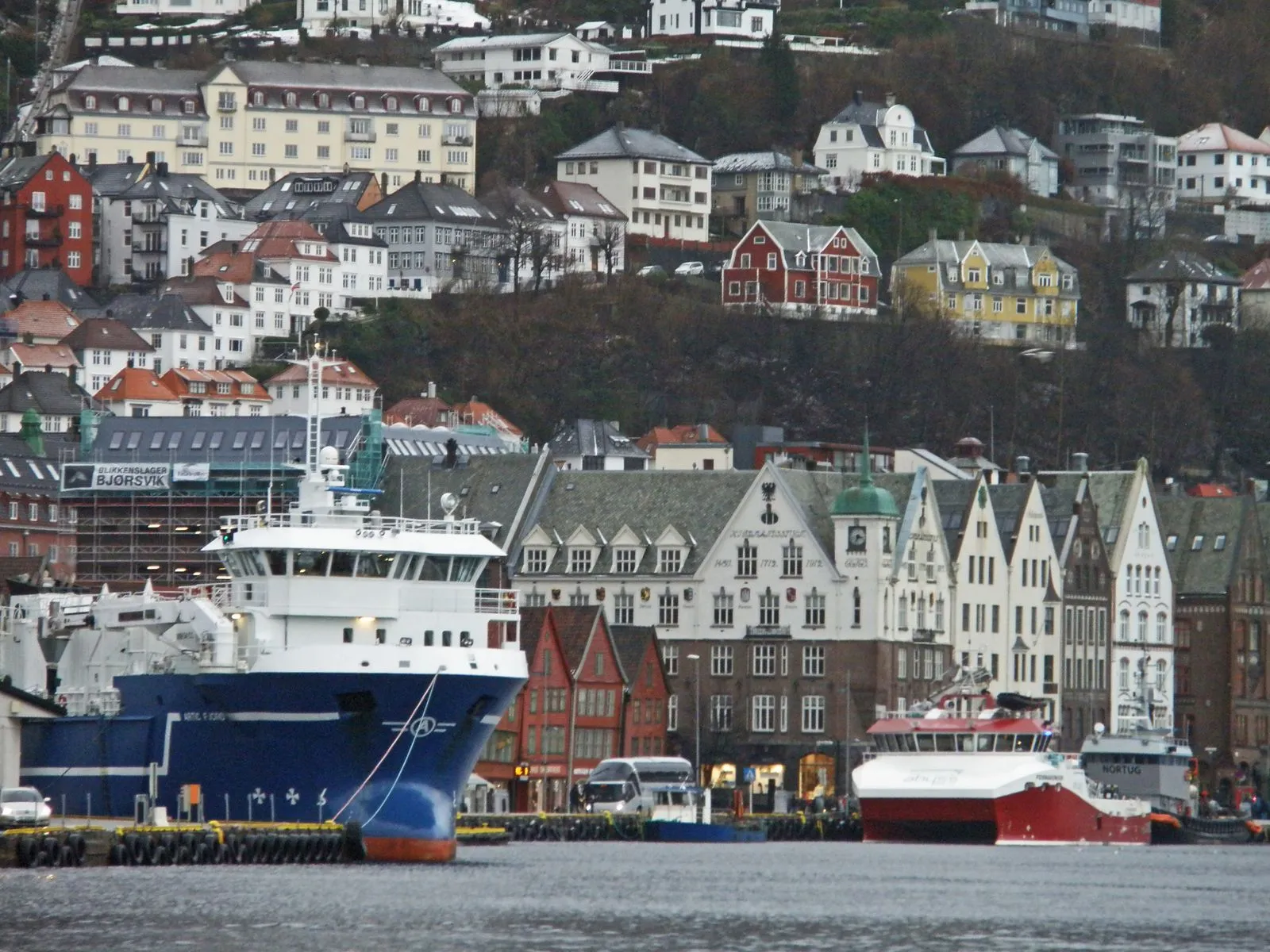
The ship sailed into Bergen harbor at dawn, and I understood immediately why they call this the "city between seven mountains" — peaks rose on every side like cathedral walls protecting something precious. The morning light caught Bryggen's wooden façades in a way that made my breath catch: ochre and rust and deep Scandinavian red, each building leaning against its neighbor like old friends who've weathered centuries together. I gripped the deck railing and let the cold Norwegian air fill my lungs. This was the gateway to the fjords, and it looked exactly like every photograph I'd seen — except somehow more alive.
I walked from the cruise terminal toward Bryggen in five minutes flat. The colorful wooden buildings crowded the waterfront, their gabled rooflines creating a skyline that hasn't changed much since the Hanseatic League established their trading post here around 1350. However, these aren't museum pieces. People work in these buildings, live above their shops, sell wooden trolls and hand-knit sweaters to tourists while rain drizzles against windows that have watched generations come and go. I ducked into narrow passages between buildings where the smell of old timber mixed with coffee and wool, and found myself in courtyards that felt genuinely medieval. The fires of 1702 and 1955 destroyed much of the original Bryggen, but Bergen rebuilt carefully, faithfully, preserving what could be saved and restoring what couldn't.
The fish mart has operated on this spot for over eight centuries. I arrived hungry and left changed. Vendors arranged smoked salmon and fat pink shrimp on beds of ice, the same choreography their ancestors performed in wooden stalls on this exact location. I stood at a counter and ate fish soup so rich it tasted like the sea itself had been distilled into a bowl. The vendor switched between Norwegian and English without effort, her hands red from ice and her stories shaped by generations of working these same tides. The prices were high — NOK 200 ($19) for that soup — but the quality was worth every krone. Nevertheless, I understood why locals just grab fish and chips for half the price at the stands along the wharf.
The Fløibanen funicular has been hauling visitors up Mount Fløyen since 1901. I bought my ticket (NOK 110 round trip, about $10) and boarded the little red car for six minutes of impossible angles. The funicular climbs 320 meters, and from the summit I could see why Bergen became the gateway to Norwegian fjords — narrow waterways cutting between mountains, waterfalls tumbling straight from snowmelt to salt, boats threading through passages carved by ice over millennia. Yet it was the city below that held me. Bryggen's colors popped against the gray-green mountains. The harbor sparkled. My ship looked tiny from up here, and my problems felt tinier still.
Bergen rained three times during my visit — brief showers that left rainbows over the fjord and made the wooden buildings glow even brighter against the wet stone streets. The locals just smiled and kept walking, rain jackets unzipped, as if water falling from the sky was merely a fact of life rather than a problem to solve. By afternoon I found myself doing the same, my jacket beaded with mist and my heart full of this ancient harbor's particular magic.
I spent my last hour wandering through Bergenhus Fortress, where the medieval banquet hall of Håkonshallen still stands after seven centuries. The timber beams overhead have witnessed royal feasts and treaties signed and winters endured. I sat in the great hall for a while, listening to the silence, grateful for places that remember what we've forgotten.
Walking back to the ship through another rain shower, I noticed how the wet stones gleamed and how the mountains had turned to shadows against a sky the color of iron. Bergen felt like it was saying goodbye the same way it said hello — with water and wonder and colors that burned brighter for being wet. That's the lesson Bergen taught me: beauty and resilience grow together, each making the other more precious. The rain that erodes these mountains also carves the fjords. The fires that destroyed Bryggen created the resolve to rebuild it better. What I learned changes how I see every weathered port now.
The Cruise Port
Docking Location: Bergen is a walk-off port. Ships dock at either Skolten terminal (closest to Bryggen, 5-minute walk) or Jekteviken/Dokken terminals (10-15 minute walk or free shuttle). Bergen limits itself to four cruise ships and 8,000 passengers per day — a gentleness the city maintains deliberately.
Terminal Facilities: Basic facilities at the terminals including restrooms and tourist information. The real services start when you reach the waterfront — Bryggen has everything from cafes to ATMs to tour desks.
Accessibility: Bergen is hilly but the main tourist areas (Bryggen, fish mart, funicular station) are on flat waterfront. The funicular itself is wheelchair accessible. Cobblestones in some areas can be challenging. Low stamina level for waterfront exploring; moderate for funicular and summit.
Best Strategy: Walk to Bryggen first (it's closest), then fish mart, then funicular. Save time for wandering the narrow passages and courtyards. The city rewards those who get lost intentionally.
Getting Around
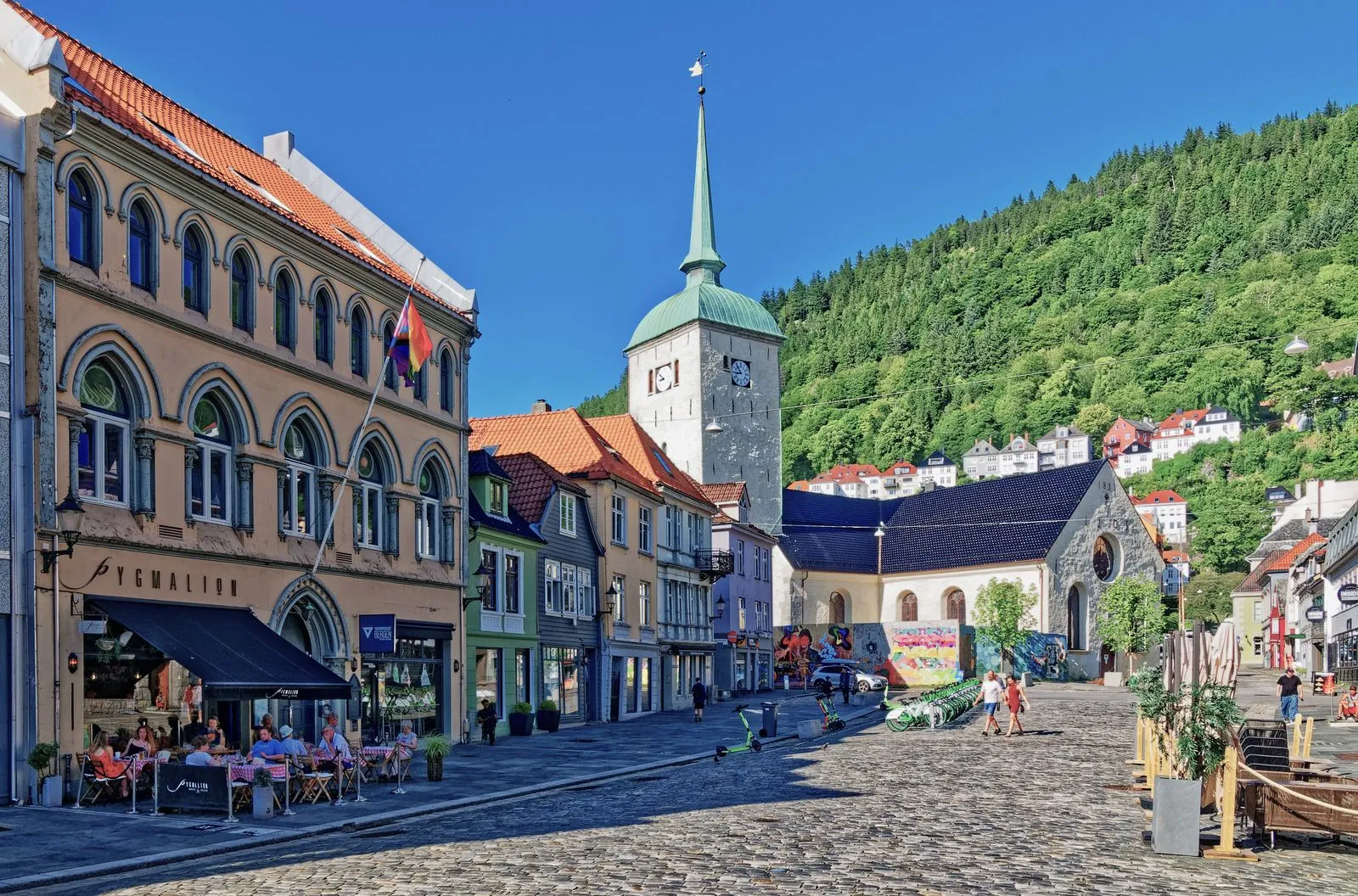
Walking: Bergen is exceptionally walkable. Everything is compact — Bryggen, fish mart, funicular, fortress are all within 15 minutes of each other on foot. The terrain is mostly flat along the waterfront with hills as you move away from the harbor. Comfortable walking shoes essential; cobblestones and wet surfaces are common.
Fløibanen Funicular: The funicular runs every 15-30 minutes from the station near Bryggen up to Mount Fløyen. Tickets cost NOK 110 ($10) round trip, NOK 60 ($5.50) one-way. The ride takes 6 minutes. Book ahead during cruise season as lines build quickly. You can walk down (45 minutes) if you prefer hiking through forest.
Light Rail and Buses: Bergen has a modern light rail (Bybanen) and extensive bus network, but cruise visitors rarely need public transit. Everything worth seeing is within walking distance of Bryggen.
Taxis: Available at the cruise terminal and around town. Expensive by global standards (expect NOK 200+ for short rides). Use only if mobility is limited or you're heading to attractions outside the center.
Hop-On Hop-Off Bus: Available for NOK 350 ($32) covering major attractions. Useful if you want to see sites beyond walking distance like Edvard Grieg's home (Troldhaugen). Otherwise, unnecessary for central Bergen exploration.
Bergen Port Map
Interactive map showing cruise terminals, Bryggen wharf, fish mart, Fløibanen funicular station, and key attractions.
Excursions & Activities
Fløibanen Funicular and Mount Fløyen (NOK 110 / $10, 2-3 Hours)
Essential Bergen experience. The funicular climbs 320 meters in 6 minutes to Mount Fløyen summit. Panoramic views over the city, harbor, islands, and surrounding mountains. Walking trails at the top range from easy strolls to serious hikes. Café at summit. Go independent — no need to book through ship. Buy tickets at the station or online to skip lines during busy times. Book ahead during cruise season. Low stamina level for funicular and viewpoint; moderate for hiking trails.
Bryggen Walking Tour (NOK 150-300 / $14-28, 1.5-2 Hours)
Guided walks through UNESCO Bryggen wharf explain the Hanseatic League, medieval trade, fires that reshaped the wharf, and what it was like living in these wooden buildings centuries ago. Guides take you into narrow passages and courtyards most visitors miss. Tours often include access to the Hanseatic Museum showing how merchants lived and worked. Ship excursions available but local operators like Bergen Guide Service offer similar quality for less. Book ahead or join walk-up tours at Bryggen visitor center. Low stamina level; some uneven surfaces.
Norway in a Nutshell Day Trip (NOK 2,200+ / $200+, Full Day)
Famous scenic journey combining train, bus, and boat through spectacular fjord country. The route from Bergen includes the Flåm Railway, Nærøyfjord cruise, and mountain scenery that defines Norway. However, this is expensive and requires a full day — most cruise visits don't allow enough time. Ship excursions offer modified versions. Book well ahead if interested. High stamina level for the long day.
Troldhaugen - Edvard Grieg Museum (NOK 100 / $9, 2-3 Hours)
Home and museum of composer Edvard Grieg, 8 km south of Bergen. Beautiful lakeside setting, his composing hut, and excellent museum. Concerts in summer. Reach by light rail and bus or taxi (NOK 400+ each way). Ship excursions available. Go independent if you're confident with transit; ship excursion provides transport and guaranteed return. Moderate stamina level.
Fish Mart and Culinary Walk (Self-Guided or NOK 500+ / $46+ Guided)
Eight centuries of fish trading at Bergen's fish mart. Sample smoked salmon, shrimp, fish soup, and Norwegian specialties. Self-guided grazing costs whatever you eat — typically NOK 150-400 ($14-37) for a satisfying meal. Guided food walks cover multiple vendors with explanations of Norwegian food traditions and guaranteed tastings. Book ahead for guided tours. Go independent for flexibility and lower cost. Low stamina level.
Local Food & Drink
Fish Soup (Fiskesuppe): Bergen's signature dish — creamy soup with salmon, cod, shrimp, and vegetables. Rich enough to be a meal. NOK 150-250 ($14-23) at the fish mart.
Smoked Salmon: Norwegian salmon is world-famous for good reason. Buy at fish mart vendors or eat on site with dark bread and mustard sauce. NOK 80-150 ($7-14) for a portion.
Fish and Chips: Locals grab this at stands along the wharf for NOK 100-150 ($9-14). Better value than sit-down restaurants.
Aquavit: Caraway-flavored spirit that pairs with seafood. Burns like Christmas morning. NOK 100+ per shot at restaurants.
Skillingsbolle: Bergen's cinnamon roll, larger and softer than American versions. Perfect with coffee. NOK 40-60 ($4-6) at bakeries.
Current Notices
Weather: Bergen is one of Europe's rainiest cities. A rain jacket is essential regardless of forecast. Weather changes every ten minutes — don't let drizzle stop you.
Passenger Limits: Bergen limits cruise ships to 4 per day and 8,000 passengers total. This keeps crowds manageable but means funicular and popular spots still get busy.
Credit Cards: Norway is nearly cashless. Credit and debit cards work everywhere, even small vendors. No need to exchange currency.
Depth Soundings
The Cons: Norway is expensive. The fish soup that costs $14 elsewhere costs $23 here. The taxi ride that's $10 in other ports is $40 here. Budget accordingly. However, Bergen rewards walking, and the best experiences (Bryggen wandering, funicular views, rain-wet streets) don't require big spending.
The rain is real. Bergen averages over 200 rainy days per year. Yet rain makes the wooden buildings glow, creates rainbows over the fjord, and keeps summer crowds manageable. A good rain jacket transforms weather from obstacle to atmosphere. The Norwegians have a saying: "There's no bad weather, only bad clothing."
The funicular gets crowded during cruise season. Lines can exceed an hour at peak times. Go early or buy tickets online. Nevertheless, the views from Mount Fløyen are worth the wait — just build the time into your plan.
Bergen is compact, which is both pro and con. Everything is walkable, but you can see the highlights in 4-5 hours. Yet this isn't a criticism. Sometimes the best port days are the ones where you finish early and sit with a coffee, watching rain fall on thousand-year-old buildings, feeling no pressure to see one more thing.
Practical Information
Currency: Norwegian Krone (NOK). Credit cards accepted everywhere — Norway is nearly cashless. No need to exchange money.
Language: Norwegian. English is widely spoken and well understood.
Tipping: Not expected but appreciated for exceptional service. Rounding up is sufficient.
Weather: Rainy and mild year-round. Summer highs 15-20°C (59-68°F), winter around freezing. Rain jacket essential.
Best Time: May-September for longest days and mildest weather. June offers midnight twilight.
Power: European plugs (Type C/F), 230V. Adapter needed for US devices.
Photo Gallery
Frequently Asked Questions
Q: How far is Bryggen from the cruise terminal?
A: A 5-minute walk from Skolten terminal; 10-15 minutes or free shuttle from Dokken/Jekteviken terminals. Bergen is very walkable.
Q: Is the funicular worth it?
A: Absolutely. The 6-minute ride and panoramic views from Mount Fløyen are essential Bergen experiences. Budget NOK 110 ($10) round trip.
Q: Does it really rain that much?
A: Yes. Bergen averages over 200 rainy days per year. Bring a rain jacket. But the locals don't let it stop them, and neither should you.
Q: Can I do Norway in a Nutshell from a cruise stop?
A: Only with a very long port day (10+ hours) or overnight. Most cruise visits don't allow enough time. Ship excursions offer modified fjord experiences that fit port day schedules.
Q: Is Bergen expensive?
A: Yes. Norway is one of the world's most expensive countries. However, walking is free, Bryggen is free to explore, and the funicular is only $10.
Q: What should I definitely do with limited time?
A: Walk through Bryggen's narrow passages, take the funicular to Mount Fløyen, and sample fish soup at the fish mart. These three experiences capture Bergen's essence in 3-4 hours.
Q: What's the best way to handle Bergen's rain?
A: Bring a quality rain jacket and embrace it. The Norwegians have a saying: "There's no bad weather, only bad clothing." Rain makes the wooden buildings glow brighter.
Q: When is the best time to visit Bergen?
A: Peak cruise season is June, July, and August — longest daylight (up to 19 hours), mildest temperatures (highs near 66°F), and the best window for fjord excursions. May and September are transitional shoulders. October through April is low season; consider avoiding October through January, which combine the heaviest rain with the shortest daylight.
Q: When is Bergen's storm season?
A: Bergen is wettest September through January, when North Atlantic depressions push gusty winds and heavy rain along the Norwegian coast. Bergen has no hurricane risk, but autumn-into-winter storms regularly cancel small-boat fjord tours and reduce visibility. Even peak summer (June–August) sees frequent rain — the city averages 200+ rainy days a year.
Q: What should I pack for Bergen's weather?
A: Waterproof jacket and pants — not water-resistant, waterproof. Waterproof hiking boots if you plan any excursions. Fleece or wool layers even in July (highs of 66°F mean you'll want them). A waterproof bag for electronics. Quick-dry clothing. An umbrella is optional — Bergen's coastal wind often makes it useless.
Q: Will rain ruin my visit to Bergen?
A: No — Bergen averages 200+ rainy days per year and the city is built for it. Bryggen's wooden wharf, the funicular up Mount Fløyen, and the fish market all operate rain or shine. Locals don't slow down for rain and neither should you. Fjord tours in heavy fog or rain do miss the scenery, so book a flexible operator if weather is uncertain.
Last reviewed: February 2026
This guide draws on firsthand experience from a 2024 visit, supplemented by fellow cruisers and careful research.