


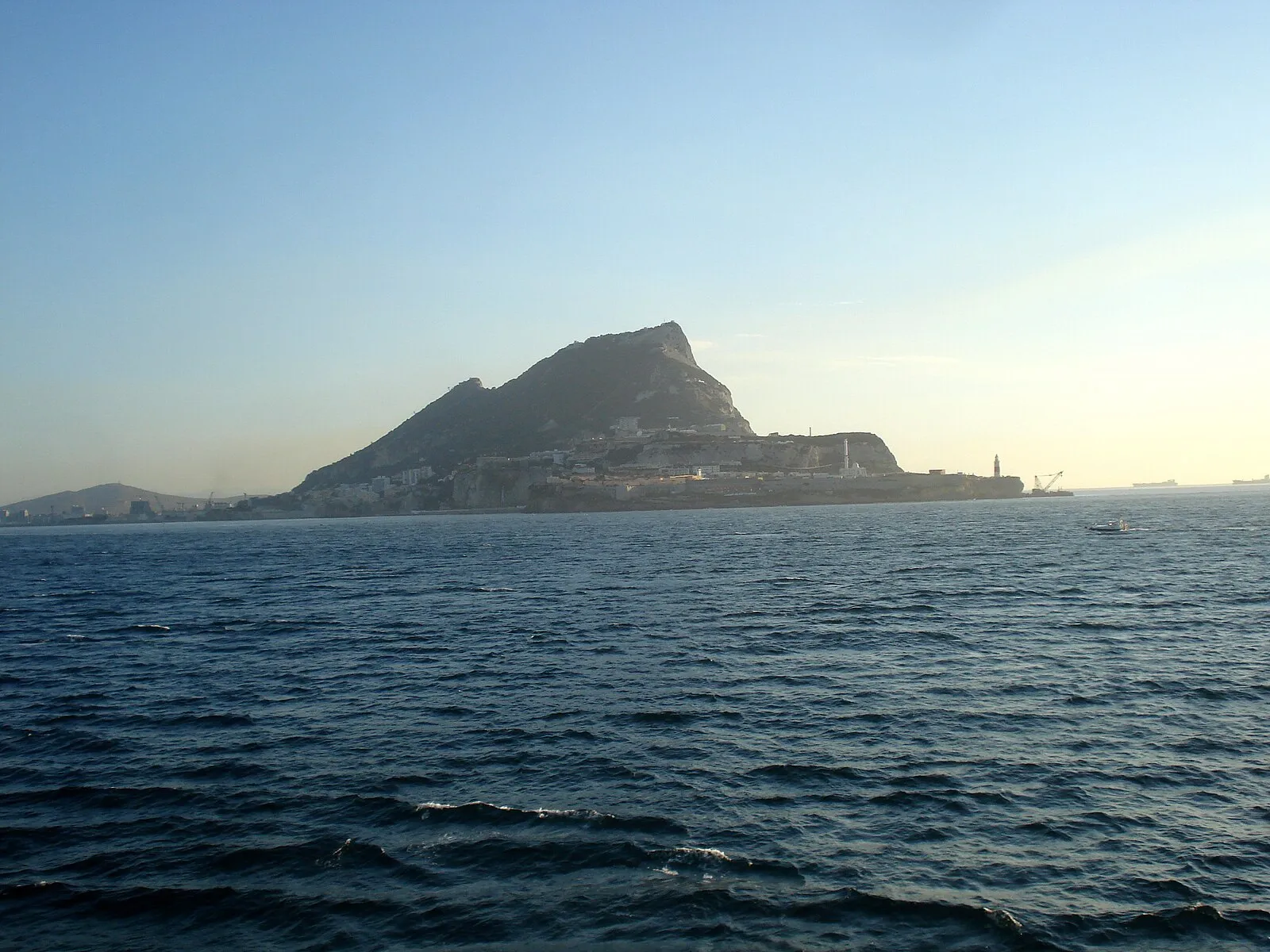
Photo: Wikimedia Commons
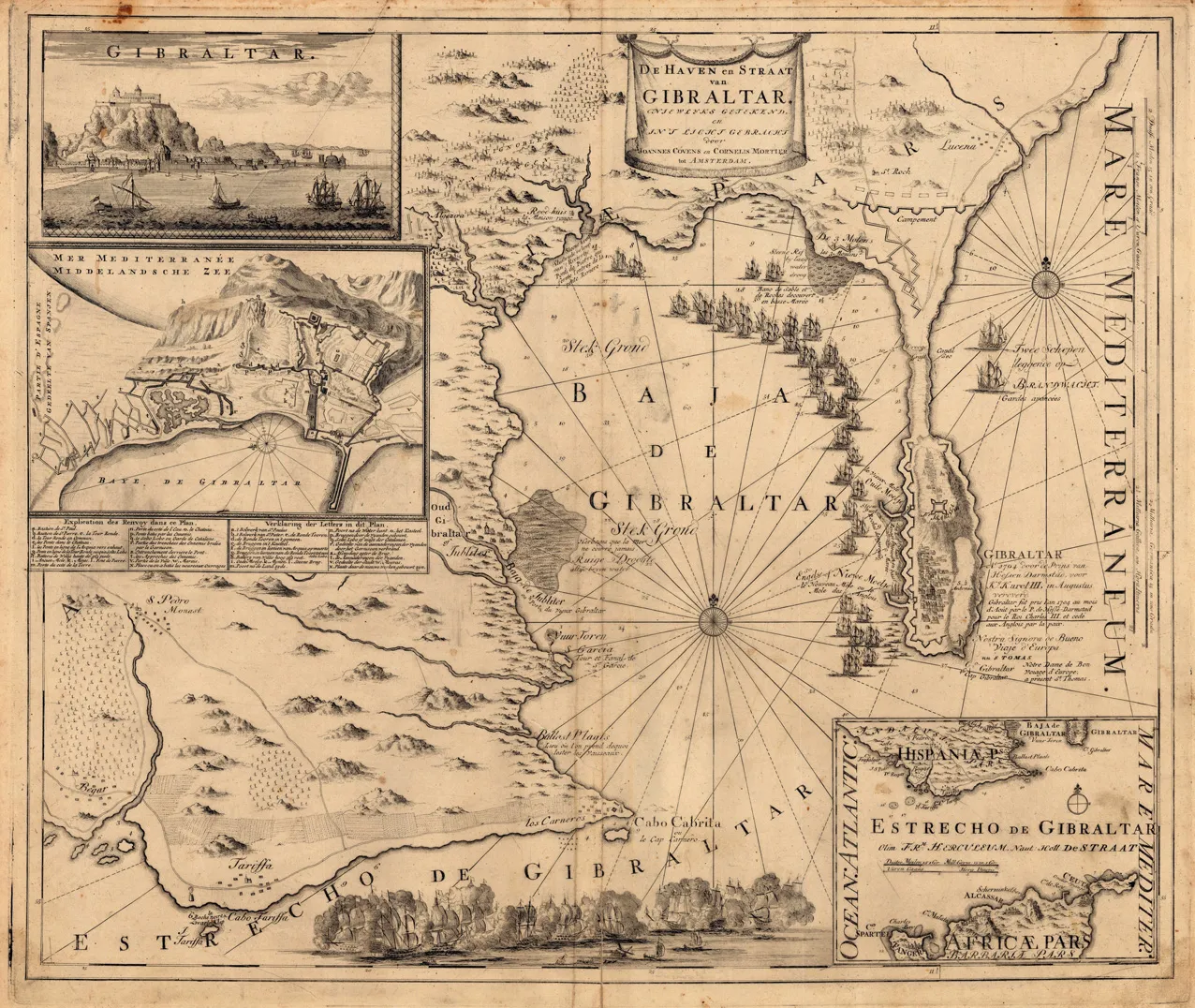
My Logbook: The Rock at the Edge of the World
I saw it before I believed it. Our ship rounded the Spanish headland in the grey light of early morning, and there it was — the Rock of Gibraltar rising out of the sea like a clenched fist, dark and enormous against the pale sky. I had read about it, seen photographs, traced it on charts, but nothing prepared me for the sheer mass of it. The limestone wall climbed nearly four hundred metres straight out of the water, and the rest of the Iberian Peninsula seemed to flatten in deference. I stood at the rail with my coffee growing cold in my hands and watched the shape sharpen as we drew closer. The air smelled of salt and diesel and something else — a faint, dry warmth drifting off the African coast across the Strait. I could see Morocco. Two continents, visible at the same time, separated by a ribbon of blue water only fourteen kilometres wide. My chest tightened at the strangeness of it.
We docked at the Western Arm, and the walk into town took me across what might be the most surreal threshold in all of cruising — the airport runway. Traffic lights stopped cars and pedestrians while a commercial jet landed directly in front of me, its tyres screeching on tarmac that doubles as a public road. I stood there watching the plane taxi away, shaking my head. However, within ten minutes I was on Main Street, and the dissonance only deepened. Red postboxes. Bobbies. Fish and chip shops. Marks and Spencer. Yet the buildings were painted Mediterranean yellow and pink, the air was warm and dusty, and palm trees lined the pavements. Gibraltar is British and Spanish and Moorish and something entirely its own, and the tension between those identities gives the place a restless, fascinating energy that I found impossible to ignore.
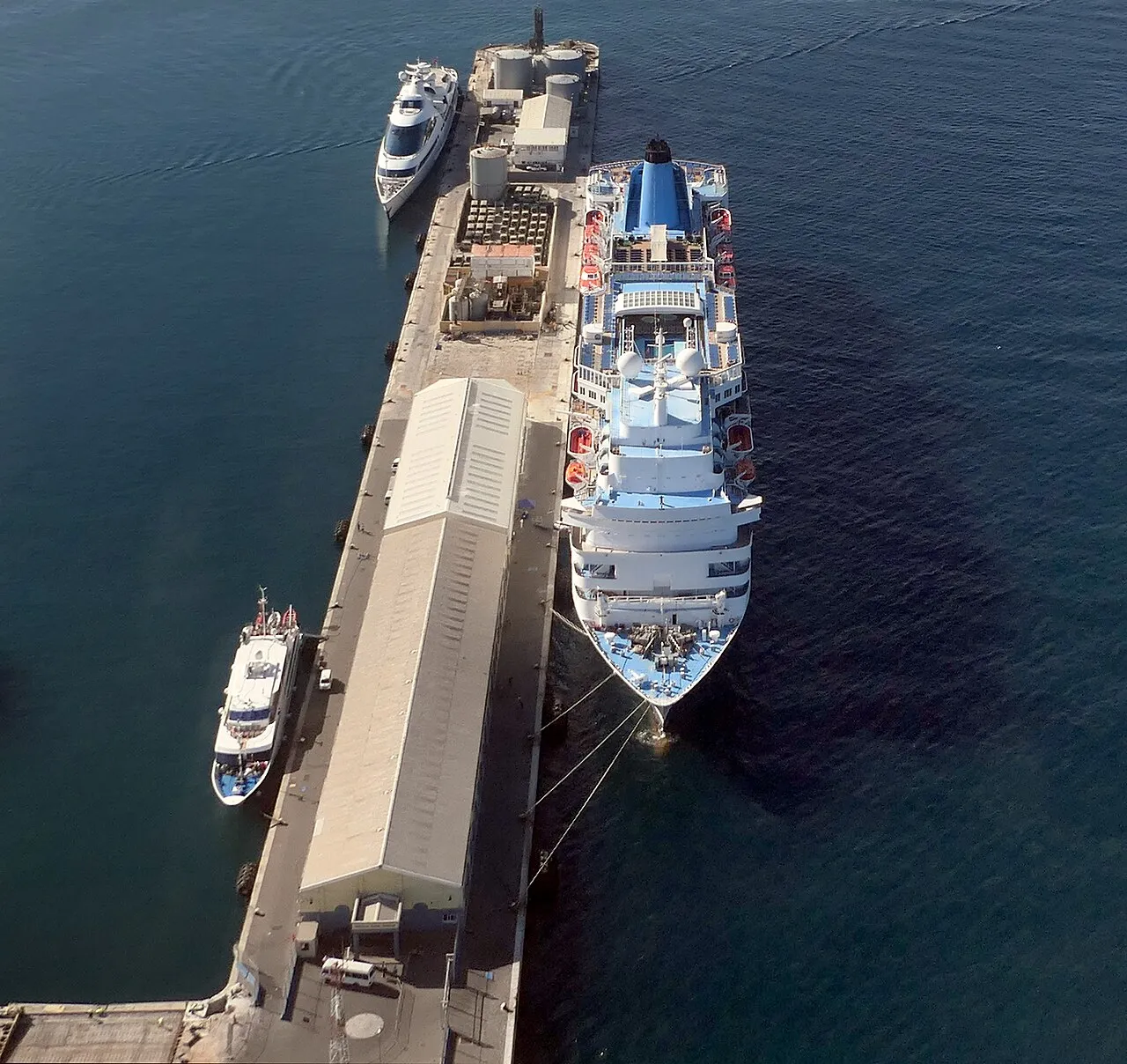
I took the cable car to the top of the Rock, and the ascent alone was worth the fare. The gondola climbed steeply over scrubby Mediterranean hillside, and through the glass floor I watched the town shrink below me until the cruise ship looked like a bathtub toy. At the summit, the wind hit me hard — a clean, fierce gust that tasted of open ocean. I looked south toward Africa. The Rif Mountains of Morocco floated above a band of haze, so close they seemed to belong to the same landscape. I looked north and saw the white sprawl of La Linea and the hills of Andalusia rolling away into Spain. I looked east toward the Mediterranean and west toward the Atlantic, and I stood at the junction of two seas, two continents, two worlds. The scale of it humbled me. I thought of the ancient Greeks calling these pillars the boundary of the known world, and I understood why. Standing there, with the wind pulling at my jacket and the whole Strait laid out below, I felt I had reached an edge of something — not the end of the earth, but a threshold where familiar things give way to the vast and unknown.
The Barbary macaques found me before I found them. A young one appeared on the railing beside me, so close I could see the amber rings in its eyes and the calluses on its small grey hands. It regarded me with an unsettling intelligence — not fear, not aggression, just assessment. I held very still. Another macaque climbed onto a tourist's backpack behind me and began unzipping pockets with practiced fingers. A guide told me these are the only wild primates in Europe, and that Churchill himself ordered their population maintained during the war because legend held that Britain would lose Gibraltar if the apes ever left. Nevertheless, despite the legend and the tourists, the macaques seemed entirely unbothered by any of it. They owned the Rock, and they knew it. I kept my distance and my bag zipped, and I watched them groom each other on the warm stone with a tenderness that surprised me.
I descended into St Michael's Cave on foot, and the temperature dropped the moment I passed through the entrance. The cave opened into a cathedral of stone — stalactites and stalagmites glowing amber and gold under carefully placed lights, the ceiling arching overhead in shapes that looked carved by hand but were carved by water over millions of years. I could hear the drip of moisture echoing off distant walls. The cave has been used as a concert venue, and I could imagine music filling that space, reverberating off every surface. The ancient Greeks believed this cave was one of the gates to Hades. Standing in the cool darkness, surrounded by formations older than any human civilisation, I could see why they thought so. There was a silence in that cave that felt deeper than mere absence of sound — it was the silence of deep time, of water working stone one drop at a century.
I walked through the Great Siege Tunnels afterward, and the contrast was sharp. Where the cave spoke of geological patience, the tunnels spoke of human desperation. During the Great Siege of 1779 to 1783, the British garrison carved these passages by hand through solid limestone to mount cannons against the Spanish and French forces below. I ran my fingers along the chisel marks in the rock and tried to imagine the labour — men working by candlelight, chipping away at stone while cannonballs thundered outside. The tunnels open onto embrasures with staggering views of the isthmus and Spain beyond, and I stood at one of those gun ports feeling the wind on my face and thinking about the soldiers who had stood in this same spot, watching for the enemy below. My eyes filled with tears at the thought of so much courage spent in so confined a space. I whispered a quiet prayer for the men who had carved these walls with nothing but iron and will.
I ended my day walking the Mediterranean Steps trail partway down the eastern face of the Rock. The path was steep and narrow, cut into the cliffside with low scrub on either side and the sea hundreds of metres below. The evening light turned the limestone pink, and I could hear waves breaking against the base of the Rock far beneath me. A Barbary partridge burst from the undergrowth and startled me so badly I grabbed the railing and laughed at myself. The trail was demanding — high stamina, good shoes required — but the solitude was a gift after the crowds at the top. I passed no one for twenty minutes. Just me, the rock, the sea, and the sound of my own breathing.
Back in town, I bought fish and chips wrapped in paper from a shop on Main Street and ate them sitting on a bench in Casemates Square, watching the shadows lengthen across the old casemate walls. The chips were hot and salty and utterly British, and the square around me was utterly Mediterranean — warm stone, cafe tables, the sound of Spanish and English tangling in the evening air. Gibraltar taught me that a place does not need to resolve its contradictions to be beautiful. It can be British and Mediterranean, ancient and modern, a fortress and a home, all at once. I learned that standing at the edge of things — at the boundary between two seas, two continents, two cultures — is where the world feels most alive. I carry the weight of that Rock with me still, and I am grateful for every step I took upon it.
The Cruise Port
Ships dock at the Western Arm or North Mole in Gibraltar's compact harbour. The terminal area is basic — a covered waiting area, restrooms, and a small tourist information booth with free maps. From the gangway, Main Street and Casemates Square are a flat ten-minute walk through the Waterport gate. The terminal is wheelchair accessible on flat ground. Gibraltar is tiny at just 6.7 square kilometres, so everything on the peninsula is reachable on foot or by short taxi ride. Currency is the Gibraltar Pound (GIP), pegged at parity with British Sterling — GBP notes and coins are accepted everywhere. Euros are sometimes accepted at shops, though change comes back in GIP. ATMs are available on Main Street. English is the official language, making this one of the easiest Mediterranean ports for English-speaking cruisers to navigate.
Getting Around
Walking: Gibraltar's town centre is flat and easily walkable. Main Street stretches the length of the town and takes about fifteen minutes end to end. Low stamina level for town exploration. Moderate to high stamina for the Mediterranean Steps trail and Upper Rock paths on foot. The terrain is well-paved in town but steep and rocky on the nature reserve trails above.
Cable Car: The Gibraltar Cable Car runs from the Alameda Botanic Gardens area to the Top of the Rock. A return ticket with Upper Rock Nature Reserve access costs approximately £16 for adults and £10 for children. The ride takes six minutes each way. Wheelchair users should note that the cable car gondolas have a step at entry — staff can assist, but powered chairs may not fit. The cable car closes in high winds.
Taxis: Official Gibraltar taxi tours of the Upper Rock cost approximately £30 per person (shared) or £80–100 for a private vehicle holding up to four passengers. Tours last about ninety minutes and include stops at St Michael's Cave, the Siege Tunnels, and the Apes' Den. Taxis queue at the cruise terminal and Casemates Square.
Ship Excursions vs Independent: Ship excursion Rock tours run £45–70 per person. Going independently by taxi or cable car saves money and allows you to set your own pace. Book ahead only if you want a specific guided historical tour. The territory is small enough that getting lost or running late is difficult.
Excursions & Activities
Upper Rock Nature Reserve & Cable Car (£16 adults / £10 children, 2–4 Hours)
The cable car takes six minutes to reach the summit, and the Upper Rock ticket includes access to St Michael's Cave, the Great Siege Tunnels, the Moorish Castle, the Apes' Den, and the Military Heritage Centre. You can explore independently at your own pace — no guide required, though signposted trails connect the main sites. A ship excursion typically costs £45–70 and includes a guided coach tour with set stops. Going independently by cable car saves money and gives you freedom to linger. Moderate stamina level with steep paths between sites. Wheelchair users can reach the cable car summit station and Apes' Den area, but trails to the Siege Tunnels involve uneven terrain and steps.
St Michael's Cave (Included with Upper Rock ticket, 30–45 Minutes)
A natural limestone cave inside the Rock with spectacular stalactite and stalagmite formations lit in amber and gold. The cave doubles as a concert venue and has a capacity of about six hundred. Entry is included in the Upper Rock Nature Reserve ticket (£16). The main chamber is accessible via a paved path with handrails, making it manageable for visitors with moderate mobility. Low stamina level once inside. Go independently — no booking needed. The cave stays cool year-round, so bring a light layer.
Great Siege Tunnels (Included with Upper Rock ticket, 45 Minutes–1 Hour)
Hand-carved tunnels from the 1779–1783 siege with original cannon embrasures overlooking the isthmus. The tunnels stretch over a kilometre inside the Rock. Included in the Upper Rock ticket (£16). Ship excursion tours stop here for about twenty minutes; going independently lets you take your time reading the displays. Moderate stamina with some uneven ground and low ceilings. Limited wheelchair accessibility — the tunnel floors are rough and passages narrow.
Europa Point & Ibrahim-al-Ibrahim Mosque (Free, 1–2 Hours)
The southernmost tip of Gibraltar, with views across the Strait to Morocco. The Europa Point lighthouse, Trinity Lighthouse, has stood here since 1841. The Ibrahim-al-Ibrahim Mosque — a gift from Saudi Arabia — is one of the largest in a non-Muslim country. Bus route 2 runs from town centre to Europa Point for £1.50 each way. No booking needed. Go independently. Low stamina level on flat ground. Fully wheelchair accessible.
Main Street Duty-Free Shopping (Free to browse, 1–2 Hours)
Main Street runs the length of Gibraltar's town centre and is lined with duty-free shops selling electronics, perfume, jewellery, and spirits at prices below mainland Europe. A bottle of gin that costs £25 in the UK might run £14–18 here. No ship excursion needed — just walk from the port. Low stamina level. Fully wheelchair accessible on the pedestrianised main road.
Dolphin-Watching Boat Trip (£25–35 per person, 1–1.5 Hours)
Boat trips depart from Marina Bay and Ocean Village, about a fifteen-minute walk from the cruise terminal. The Strait of Gibraltar is home to three resident dolphin species, and sighting rates exceed ninety percent. Book ahead through operators like Dolphin Adventure or reserve on arrival at the marina. This is an independently booked activity — ship excursion equivalents run £50–65. Suitable for all mobility levels as boats have seating areas. Low stamina level.
Depth Soundings
Gibraltar uses the Gibraltar Pound (GIP), which is pegged one-to-one with British Sterling. GBP notes and coins are accepted everywhere, but GIP notes are not accepted in the UK — spend them before you leave or exchange at the port. Credit cards work at most shops and restaurants. ATMs on Main Street dispense both GIP and GBP.
The cable car closes in high winds, which can happen without warning on exposed days. However, taxi tours of the Upper Rock operate in most conditions and provide an alternative route to the summit. Nevertheless, if the wind is fierce enough to close the cable car, the exposed summit trails are unpleasant regardless of how you arrive — plan indoor alternatives like the Gibraltar Museum (£2 admission) or the Alameda Botanic Gardens (free).
Summer temperatures reach 30–33 °C (86–91 °F) with high humidity. The Upper Rock has limited shade, so carry water and wear sun protection. Spring (April–May) and autumn (September–October) offer the most comfortable conditions for exploring on foot, with temperatures around 18–24 °C (64–75 °F). Winter is mild at 12–16 °C (54–61 °F) with occasional rain. The Levante — a strong easterly wind — can create a dramatic cloud cap over the Rock even on otherwise clear days.
Photo Gallery
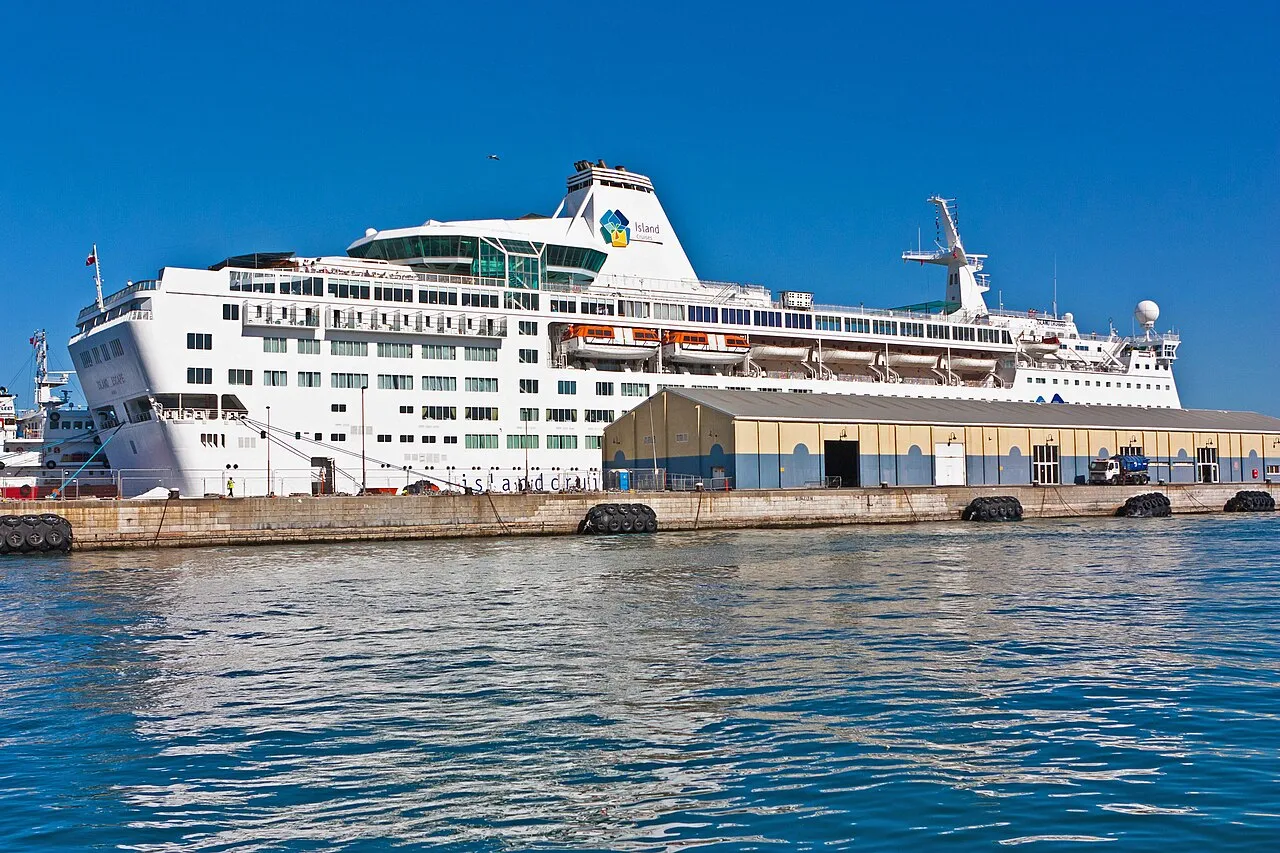
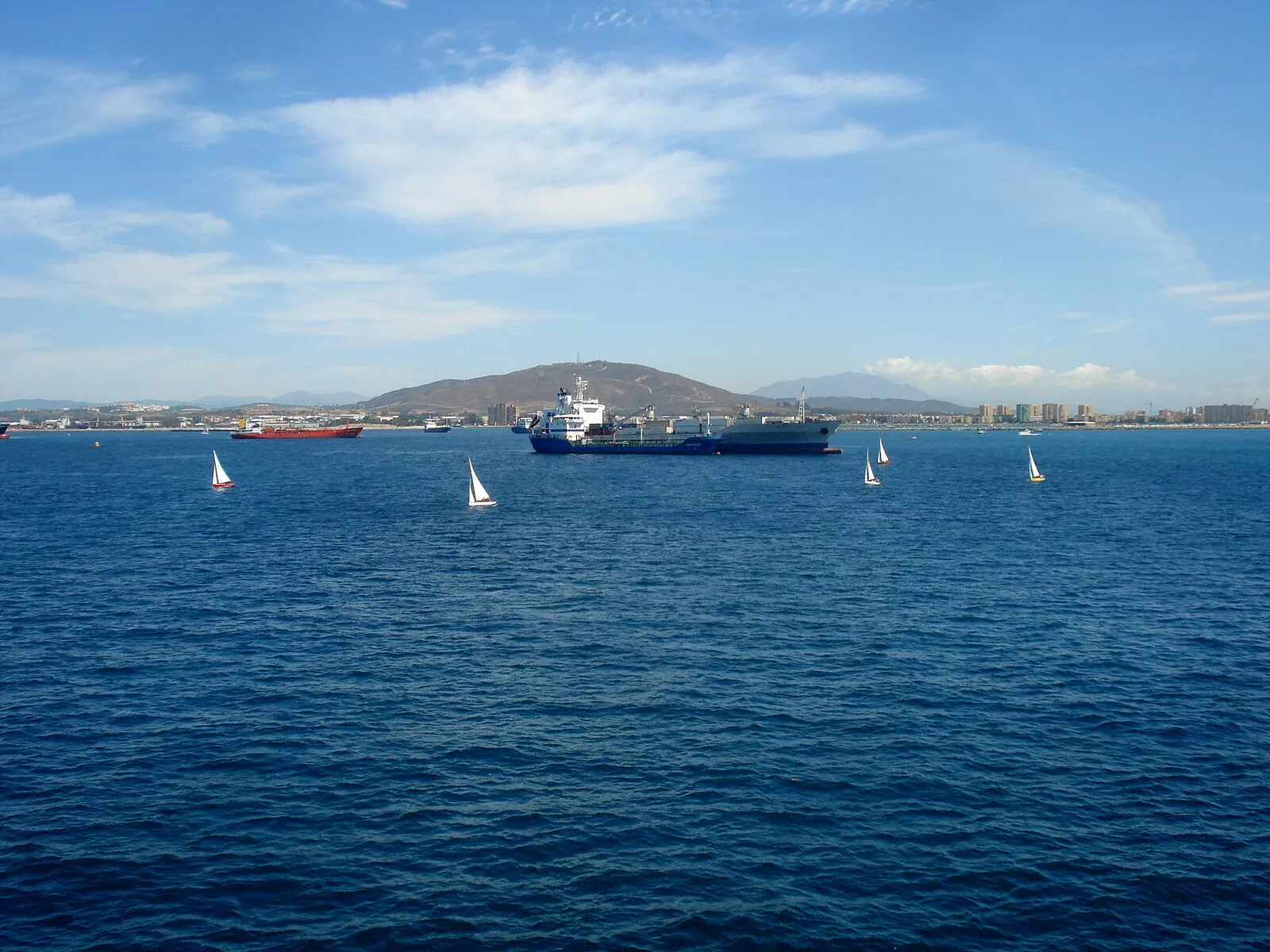
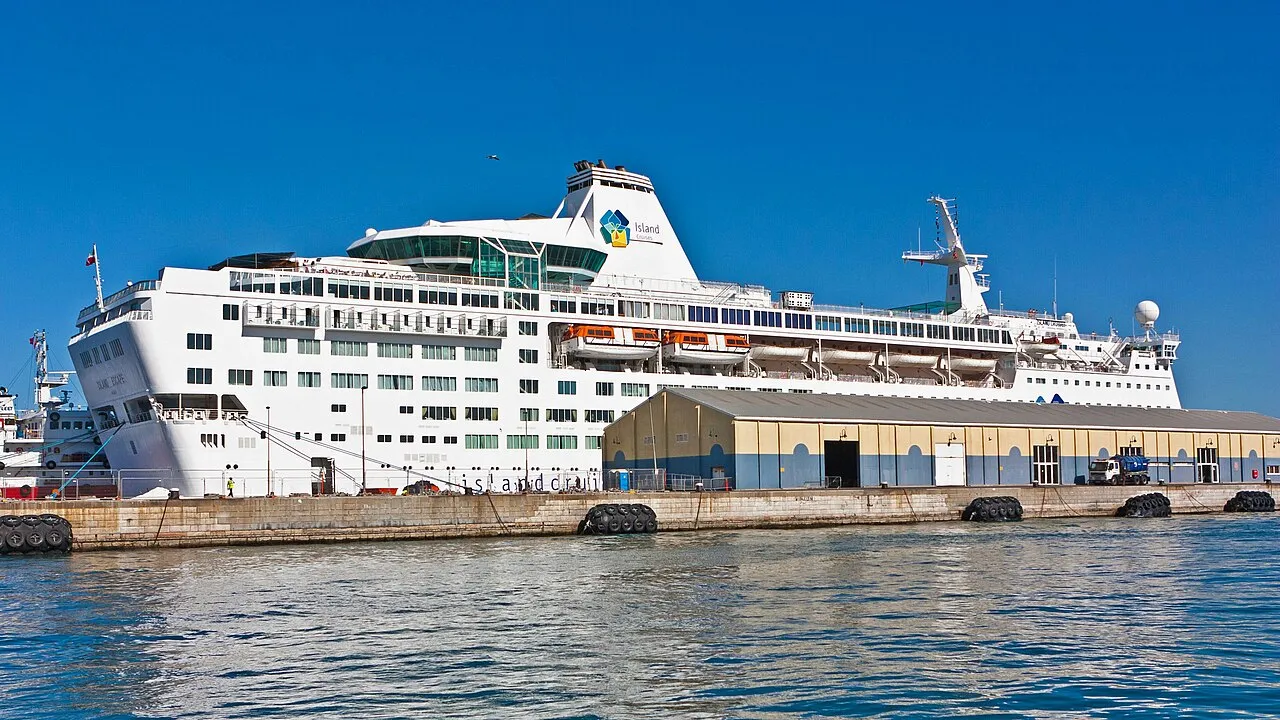
Image Credits
- gibraltar-1.webp, gibraltar-3.webp, gibraltar-5.webp, gibraltar-8.webp: Wikimedia Commons (CC BY-SA)
- gibraltar-2.webp, gibraltar-7.webp: Unsplash (Free licence)
- gibraltar-4.webp, gibraltar-6.webp: Pixabay (Free licence)
Images sourced from free-use platforms under Creative Commons and similar licences.
Weather & Best Time to Visit
Frequently Asked Questions
Q: What's the best time of year to visit Gibraltar on a cruise?
Typical range 48-84°F — British territory at Med entrance; rain: Dry summers; wet winters. Peak cruise months: Jun, Jul, Aug. Avoid months: N/A.
Q: Is there a severe weather or storm season that affects Gibraltar?
Gibraltar is not marked as a warm-water hurricane zone in our seasonal guide. Local concern: Strong winds through Strait of Gibraltar common.
Q: What should I pack for Gibraltar's weather?
For Gibraltar, pack for 48-84°F — British territory at Med entrance. Secure bags for monkey encounter; Comfortable shoes for Rock walk; Wind jacket for summit; Cash for Main Street shops
Q: Will rain ruin my Gibraltar port day?
Brief rain is common enough around Gibraltar that a flexible plan beats canceling. Barbary macaques are famous but can be aggressive — secure belongings; Rock of Gibraltar cable car or walk to top
Last reviewed: February 2026