


Photo: Wikimedia Commons
My Logbook: Wind, Stone, and the Welsh Edge of the World
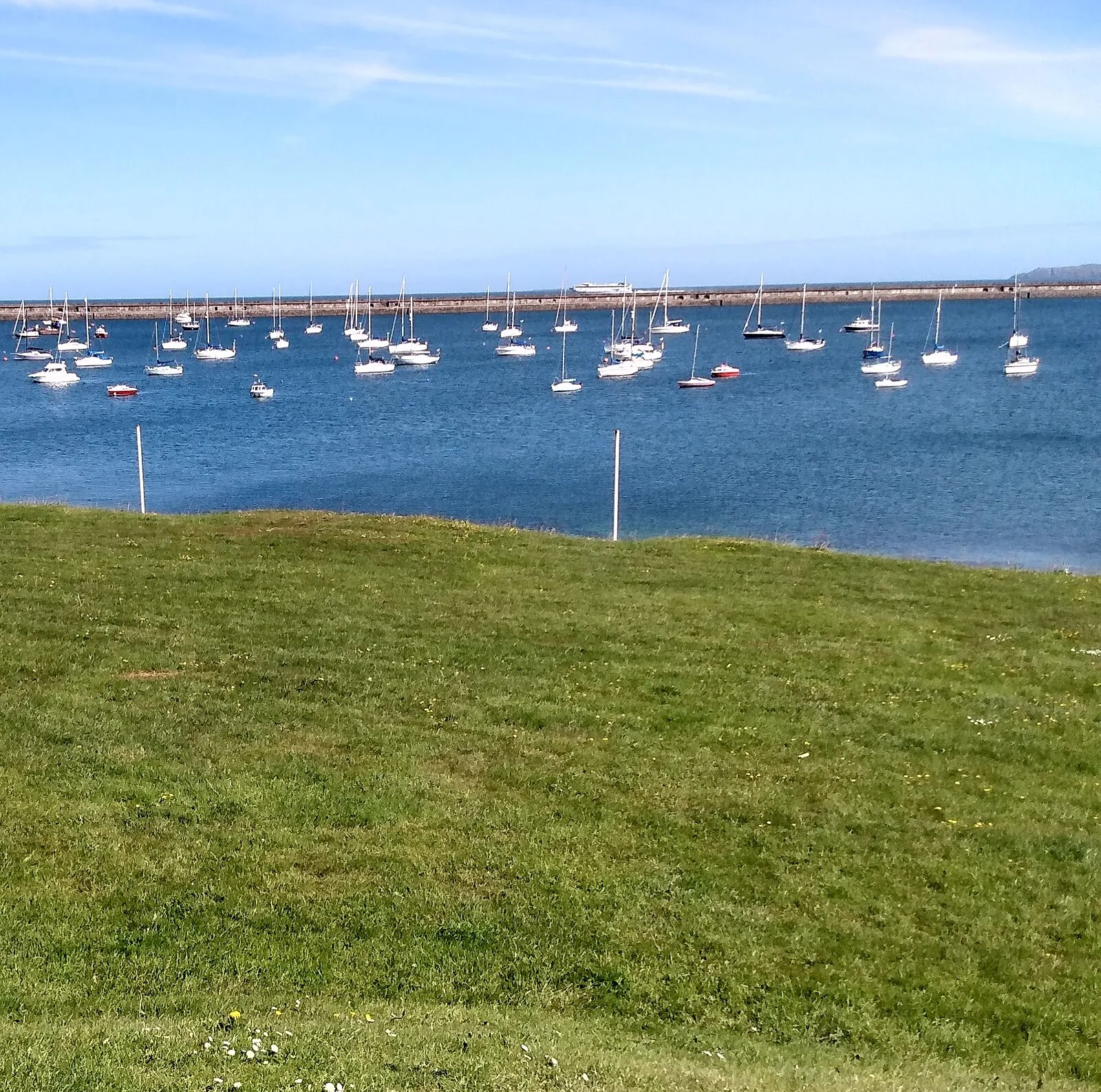
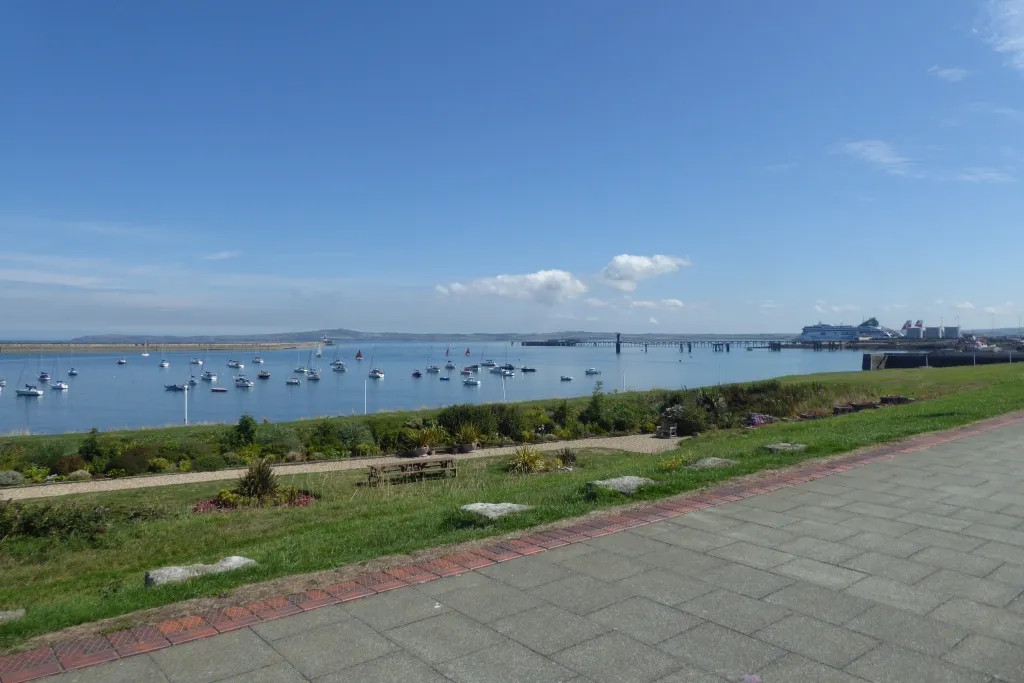
I heard Holyhead before I saw it. Standing on the upper deck as our ship rounded the breakwater, the wind hit me full in the chest — a raw, salt-laced gust that smelled of wet stone and open Atlantic — and I grabbed the railing with both hands while my jacket hood whipped sideways. The harbour opened before me: grey water, grey sky, and the low green bulk of Anglesey rising behind the town like a sleeping animal. I had expected something dramatic, but what I got was something better — something honest and unpolished, a working port that did not dress itself up for visitors. I pulled my collar tight, shouldered my daypack, and walked down the gangway into Wales.
My first stop was the one I could walk to: St Cybi's Church, standing inside the walls of a Roman fort in the centre of town. The stone ramparts are four metres high and a metre and a half thick, laid in a herringbone pattern that has held together since the late third century. I ran my fingers along the courses and felt the texture of sixteen hundred years of weather — rough and pitted, yet solid in a way that made modern concrete look temporary. Saint Cybi founded his monastery here in the sixth century, and the church that replaced it still serves a living congregation. I sat in a wooden pew for a few minutes, listening to the wind whistle through a gap in the window frame, and I thought about the layers of faith and stubbornness that had kept this place standing while empires rose and fell around it.
We took a taxi to Llanfairpwllgwyngyllgogerychwyrndrobwllllantysiliogogogoch — the village with the longest place name in Europe, fifty-eight letters of Welsh that roughly translate to "Saint Mary's Church in the hollow of the white hazel near a rapid whirlpool and the Church of Saint Tysilio near the red cave." The driver, a cheerful man named Rhodri, said it in one breath without stumbling and grinned at my bewildered face. The railway station sign stretches the entire length of the platform, and I stood beside it for a photograph that made me look about four inches tall. However, what surprised me was not the name but the village itself — a quiet, tidy place with a stone church, a small chocolate shop, and a view across the Menai Strait to the mountains of Snowdonia rising beyond. I bought a bar of Welsh sea-salt chocolate for £3.50 and ate it on a bench while staring at those peaks.
From there we drove across the Britannia Bridge to the mainland and south toward Caernarfon Castle. The road wound through rolling farmland dotted with sheep, and I watched the mountains grow taller with every mile. Caernarfon itself is a walled town, and the castle is enormous — polygonal towers, banded masonry in two colours, and the Eagle Tower where the first English Prince of Wales was presented in 1284. Entry costs £11.50 for adults. I climbed to the battlements and looked out over the Menai Strait, where the tide was running fast and grey beneath a sky stacked with clouds. Red kites wheeled overhead, riding the thermals effortlessly, and somewhere below me a Welsh choir was rehearsing — their voices drifted up through the stone corridors, half words and half melody, and I stood still and listened until my eyes stung from the wind. Or perhaps not only from the wind.
We had lunch in Betws-y-Coed, a village tucked into the Snowdonia foothills where the River Conwy tumbles over rocks beneath an ancient stone bridge. I ordered cawl — a slow-cooked Welsh lamb and root vegetable soup — for £8.50, and it arrived in a bowl the size of my head, thick with leeks and potatoes and flavoured with something herbal I could not identify. The woman at the next table told me it was lovage. I ate every drop, mopping the bowl with bread, and I felt the warmth spread through me the way good food does when you have been cold and windblown all morning. Betws-y-Coed smelled of damp pine and woodsmoke, and the sound of the river filled every gap in conversation.
In the afternoon we returned to Anglesey and drove to South Stack, the lighthouse perched on a tiny island off Holyhead Mountain. The path descends four hundred steps cut into the cliff face, and at each turning the view opens wider — blue sea, white surf, and thousands of guillemots and razorbills nesting on the ledges. I could hear them calling to each other, a constant chatter that rose and fell with the wind. The lighthouse itself dates to 1809, and its white tower stands against the sky like an exclamation mark at the end of a very long sentence. I sat on a rock halfway down the steps and simply watched the birds wheel and dive, feeling the spray on my face and the sun — which had finally broken through — warm on my shoulders. It was a moment of pure sensory richness that no photograph could capture.
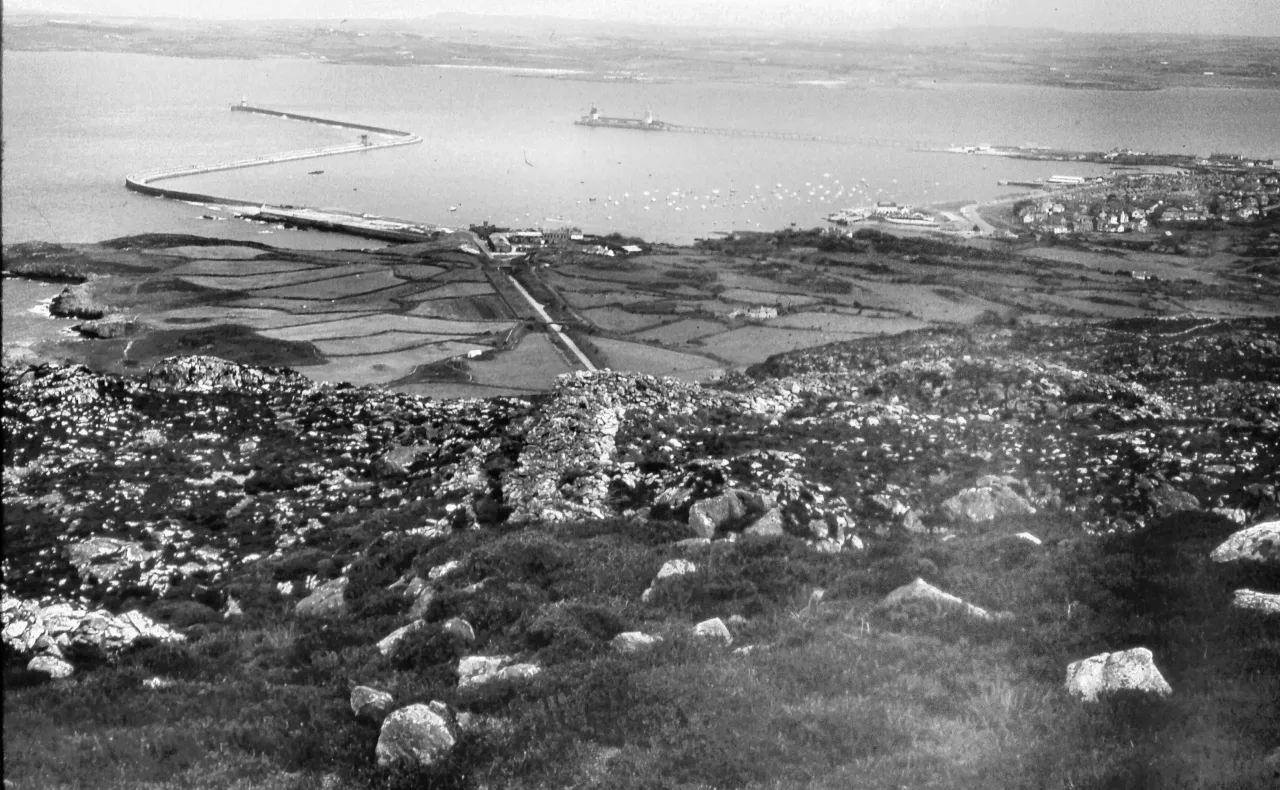
Back at the harbour, I walked along the Holyhead Breakwater — at 1.7 miles, the longest in Europe — and felt the full force of the Irish Sea wind trying to push me sideways. But the breakwater held, as it had held since 1873, and I held with it. An elderly man walking his terrier nodded at me and said, "Lovely day for it," which in Wales means the rain has paused for twenty minutes. I laughed, and he laughed, and the dog ignored us both.
Holyhead taught me that beauty does not require sunshine. The grey skies, the wind, the rain that came and went — they were not obstacles but textures, part of the honest fabric of a place that has never pretended to be anything other than what it is. Wales gave me stone castles and mountain soup and birdsong on sea cliffs, and it asked nothing in return except that I pay attention. I learned that the places which stay with you longest are not always the warm ones. Sometimes the cold wind carries the clearest voice. I carry Holyhead's wind in my chest still, and when I close my eyes I can hear that choir echoing through the castle walls.
Weather & Best Time to Visit
The Cruise Port
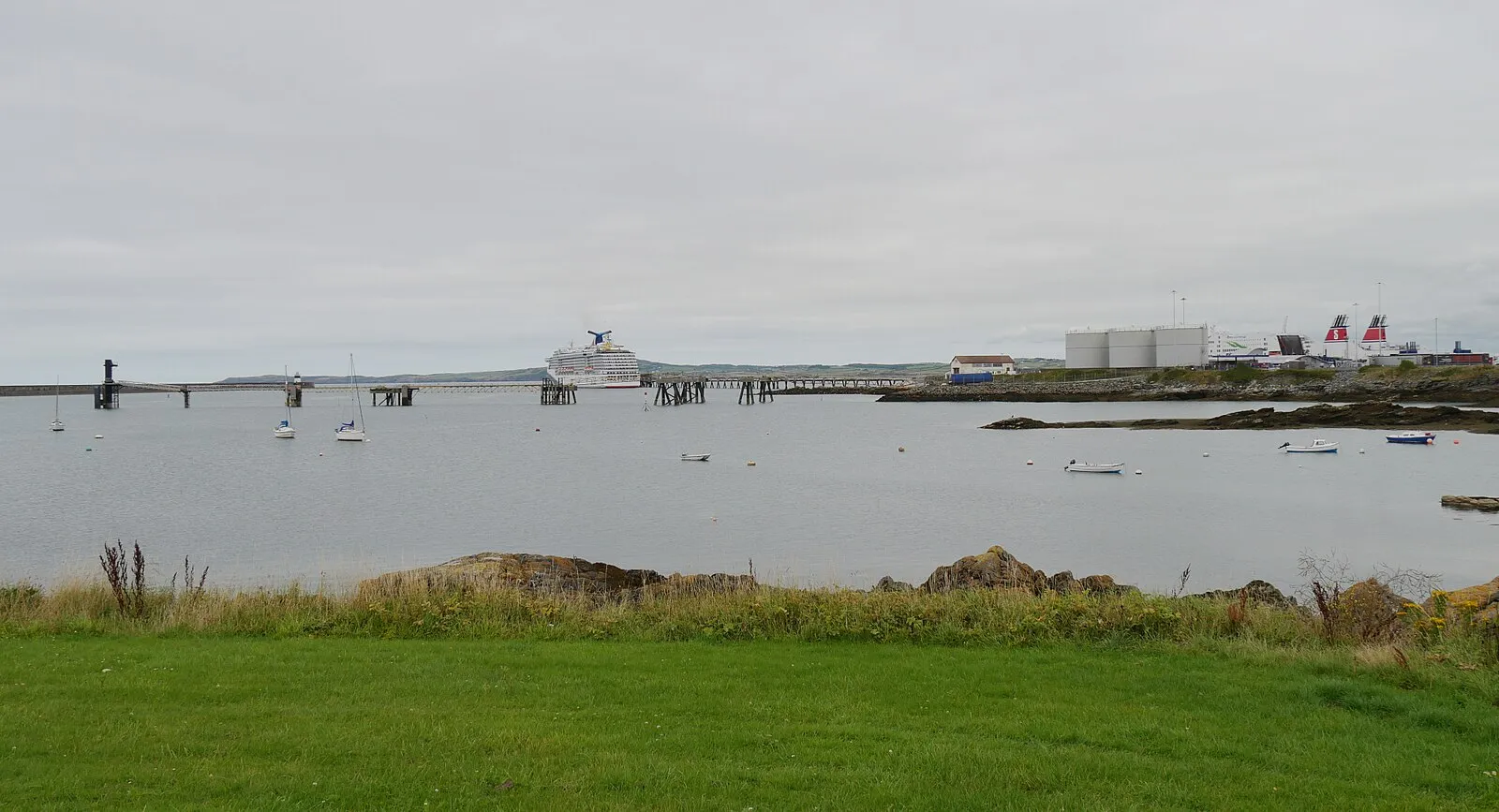
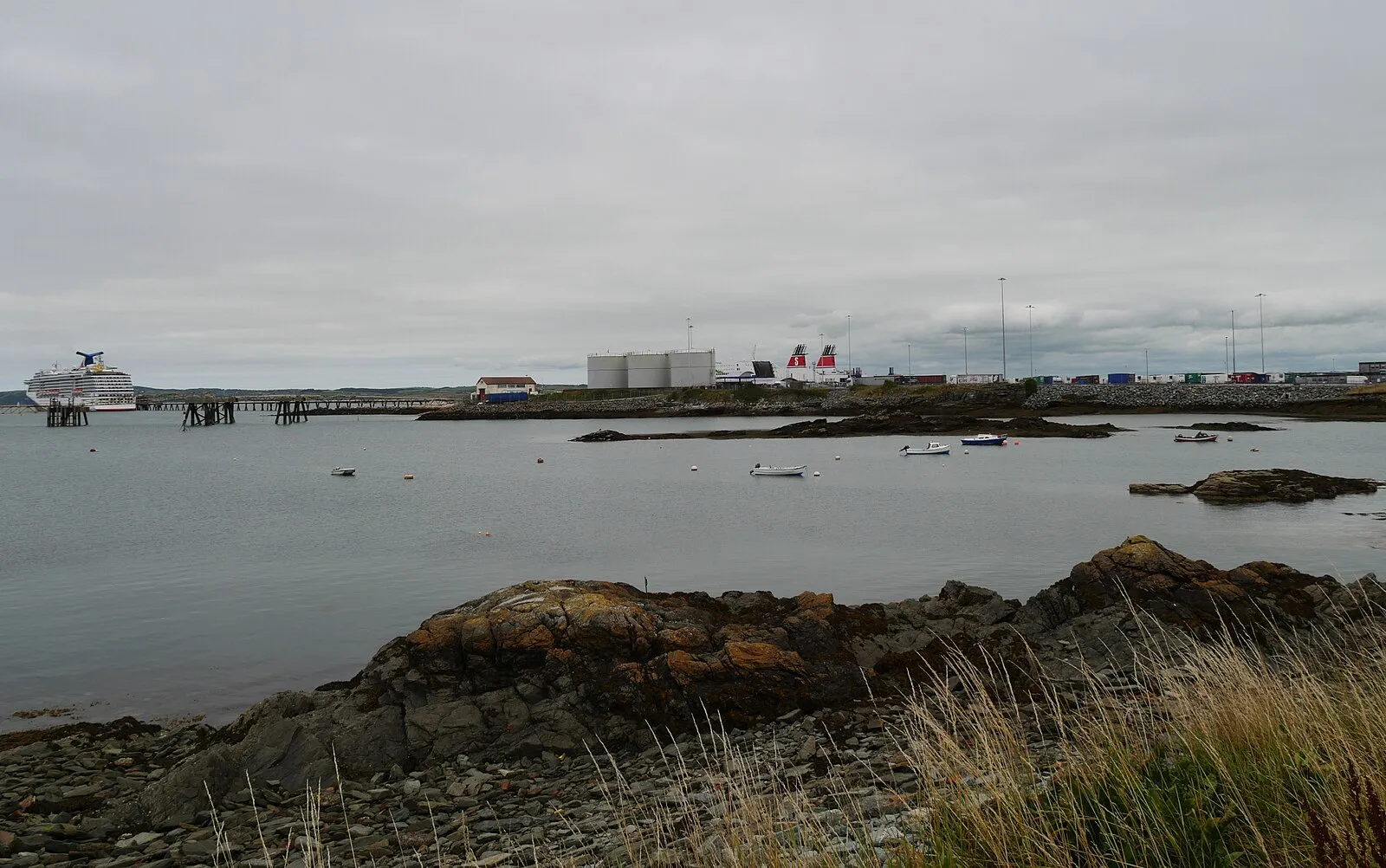
Ships dock at Holyhead Port on Holy Island, the westernmost point of Anglesey in northwest Wales. The port is primarily a ferry terminal serving routes to Dublin, and cruise ships use the deep-water berth adjacent to the Stena Line ferry operations. The terminal area is functional rather than polished — there is a small covered waiting area but no dedicated cruise terminal building, shops, or restaurants inside the port compound. Taxis queue outside the port gate and can be arranged through the port or pre-booked in advance. A taxi fare to Holyhead town centre costs roughly £5, while longer trips to Caernarfon Castle run £35–45 each way. The port gate has level access and ramps suitable for wheelchair users, though the quayside surface can be uneven in places. Shuttle buses are sometimes provided by the cruise line to reach the town centre, typically a five-minute ride. Holyhead's compact size means the railway station and town high street are both within a fifteen-minute walk of the port, making this a convenient stop for independent travellers who prefer not to book a ship excursion.
Getting Around Holyhead
Holyhead town is small enough to walk in thirty minutes end to end, but the real attractions — Caernarfon Castle, Snowdonia, Beaumaris, South Stack — are spread across Anglesey and the Welsh mainland, so you will need wheels. Taxis are the primary option for independent travellers. A full-day private taxi for a group of four costs roughly £200–250 and can cover Caernarfon, Llanfairpwllgwyngyll, and one or two other stops before returning to the ship. Negotiate the route and fare before departure. Pre-booking is strongly advised, especially when multiple cruise ships are in port, because Holyhead has a limited taxi supply.
Ship excursions are the most reliable way to see the highlights if you want guaranteed return times. Expect to pay £60–90 per person for a half-day castle and Snowdonia coach tour. For budget travellers, Arriva Wales trains run from Holyhead station to Bangor (20 minutes, roughly £7 single) and Llanfairpwll (10 minutes, about £4), offering cheap access to eastern Anglesey. Local bus services exist but run infrequently — once an hour at best — and do not serve South Stack directly. Car hire is available in Holyhead but requires advance booking. Wheelchair users and those with limited mobility should note that castle sites involve uneven ground and steep stairs, so vehicle transport between flat viewing areas is recommended. Walking within Holyhead town itself is manageable on mostly level pavements, with accessible routes to the high street and St Cybi's Church.
Holyhead Port Map
Interactive map showing cruise terminal and Holyhead area attractions. Click any marker for details.
Excursions & Activities
Caernarfon Castle (UNESCO World Heritage)
The crown jewel of North Wales castles, built by Edward I beginning in 1283. The polygonal towers and colour-banded masonry are unique in Britain. Entry costs £11.50 for adults, £7.50 for children. Allow 2–3 hours including the drive (30 minutes each way from Holyhead). You can visit independently by taxi (£35–45 each way) or by train to Bangor and bus onward. A ship excursion typically costs £65–85 per person and combines the castle with other stops. This is a moderate-energy visit — the battlements involve steep stairs, but the courtyard and ground-level exhibitions are accessible for those with limited mobility. Book ahead for ship excursions, as castle tours fill quickly on port days.
South Stack Lighthouse & RSPB Reserve
A dramatic clifftop lighthouse on a tiny island connected by a bridge, with four hundred steps descending the cliff. The RSPB reserve hosts thousands of nesting seabirds — guillemots, razorbills, and puffins in season. Entry to the lighthouse costs £5 per adult. The drive from port takes ten minutes. This is a high-energy activity due to the steps, and it is not wheelchair accessible. Visit independently by taxi (roughly £10 each way) — no need to book ahead unless you want a guided RSPB walk. Bring binoculars and a windproof jacket.
Beaumaris Castle (UNESCO World Heritage)
Considered the most technically accomplished concentric castle ever designed, though it was never completed. Edward I began construction in 1295 and ran out of money. Entry costs £7.50 for adults. Beaumaris is a twenty-minute drive from Holyhead, and the town itself is charming — Georgian houses, a Victorian pier, and waterfront cafes. Low-energy visit suitable for most abilities; the castle interior is mostly flat. Visit independently by taxi or combine with Llanfairpwll on a loop tour.
Snowdonia National Park
Wales' highest mountain and surrounding national park lie 40–60 minutes from Holyhead. The Snowdon Mountain Railway (£30 return) runs from Llanberis to the summit at 1,085 metres, weather permitting. Alternatively, scenic drives through the Ogwen Valley and past Llyn Ogwen offer mountain views without hiking. A ship excursion combining Snowdonia highlights costs £70–95 per person. Independent visitors should book the mountain railway in advance, especially in summer. This ranges from low-energy (scenic drive) to strenuous (summit hike), so choose according to your stamina level.
Llanfairpwllgwyngyllgogerychwyrndrobwllllantysiliogogogoch
The village with Europe's longest place name is a fifteen-minute drive from Holyhead. The main attraction is the railway station sign, which stretches the entire platform length and makes a memorable photograph. The village also has a small chocolate shop and views across the Menai Strait. Free to visit; a taxi costs about £15 each way. Low-energy, accessible, and takes thirty minutes at most. Easily combined with Beaumaris or a Menai Bridge stop — no need to book ahead.
Holyhead Town Walk
For those preferring to stay close to the ship, Holyhead itself has rewarding walks. St Cybi's Church inside its Roman fort walls, the Holyhead Maritime Museum (£3 entry), and the 1.7-mile Breakwater walk along Europe's longest breakwater are all within walking distance of the port. Allow 2–3 hours for a leisurely loop. Low-energy and largely accessible on flat paths, though the breakwater can be very windy.
Depth Soundings
Practical tips before you step off the ship.
The currency is British Pounds (GBP). ATMs are available in Holyhead town centre, a short walk from the port. Credit and debit cards are accepted at most shops, restaurants, and attraction entry points, but carry some cash for smaller establishments, market vendors, and taxi fares. Contactless payment is widespread in Wales. A simple lunch of soup and sandwich in Holyhead costs around £8–12.
Welsh weather is famously changeable — even in July, temperatures rarely exceed 18 °C and rain can arrive without warning. Dress in layers with a waterproof outer shell. Castle visits involve exposure to wind and sometimes mud, so sturdy footwear matters more here than in most ports. Sunscreen is still worth carrying; a sunny Welsh afternoon can burn unprotected skin before you notice.
Welsh is spoken as a first language by many locals on Anglesey, and road signs are bilingual. A few words of Welsh — "diolch" (thank you), "bore da" (good morning) — are appreciated and usually met with a warm smile. Tipping is not obligatory in the UK, but rounding up taxi fares and leaving 10% at sit-down restaurants is customary. Holyhead is a safe and welcoming town; petty crime is rare, though standard port-day caution with valuables applies.
Photo Gallery


Frequently Asked Questions
Is Holyhead worth visiting on a cruise?
Holyhead itself is a modest working port, but it serves as the gateway to Caernarfon Castle, Snowdonia National Park, Beaumaris Castle, and the village with the longest name in Europe. The real value is the surrounding region — castles, mountains, and Welsh heritage within easy reach.
Can I visit Caernarfon Castle from Holyhead?
Yes. Caernarfon is about 30 minutes by taxi (£35–45 each way). Ship excursions run £65–85 per person and typically combine the castle with other stops. Allow 4–5 hours for a round trip including time inside the castle.
How do I get from the port to town?
Holyhead town centre is a fifteen-minute walk or five-minute taxi ride (about £5) from the port gate. Some cruise lines provide a shuttle bus. The railway station is also walkable from the port.
What is the weather like in Holyhead?
Maritime and changeable. Summer temperatures range 12–18 °C. Rain can arrive any day of the year, and the exposed coastal position means wind is constant. Bring waterproof layers and warm clothing even in July and August.
Is the Snowdon Mountain Railway worth booking?
The railway climbs to 1,085 metres and offers spectacular views when the weather cooperates. Tickets cost £30 return and should be booked in advance during summer. However, the train only runs in fair weather — fog or high winds cancel services, so have a backup plan ready.
What can I do if I stay near the port?
Walk to St Cybi's Church inside its Roman fort, visit the Maritime Museum (£3), and stroll the 1.7-mile Holyhead Breakwater — the longest in Europe. These are all free or low-cost and within walking distance, making them suitable for a relaxed low-energy port day.
Holyhead: Gateway to Welsh Mountains and Castles
Last reviewed: February 2026