


Photo: Wikimedia Commons
My Logbook: Where Impressionism Was Born on the Norman Tide
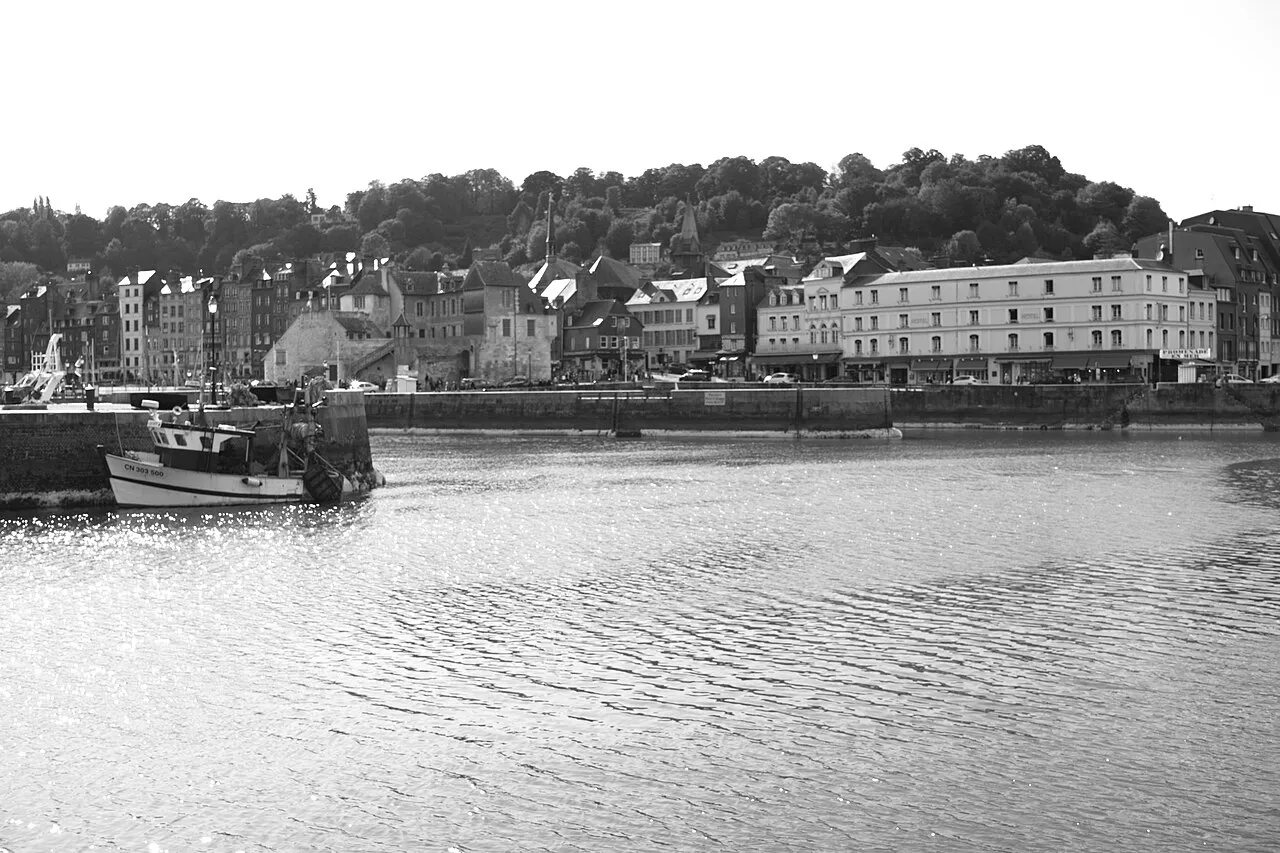
I heard the tender before I saw the harbour. The low rumble of the outboard motor cut through a morning fog so thick that everything beyond arm's reach dissolved into grey silk, and I sat on the bench gripping my daypack, wondering whether the town I had read about for years would live up to the pictures. Then the fog thinned. Slowly, like a curtain lifting on a stage, colour bled into the world — first the dark green of the water, then the russet and slate and cream of buildings stacked along the quay, and finally the masts of sailboats scratching at a sky that was turning, minute by minute, from pewter to pale blue. I caught my breath. The Vieux Bassin of Honfleur appeared before me like a painting coming to life, and I understood in that single moment why the Impressionists had been so obsessed with this place.
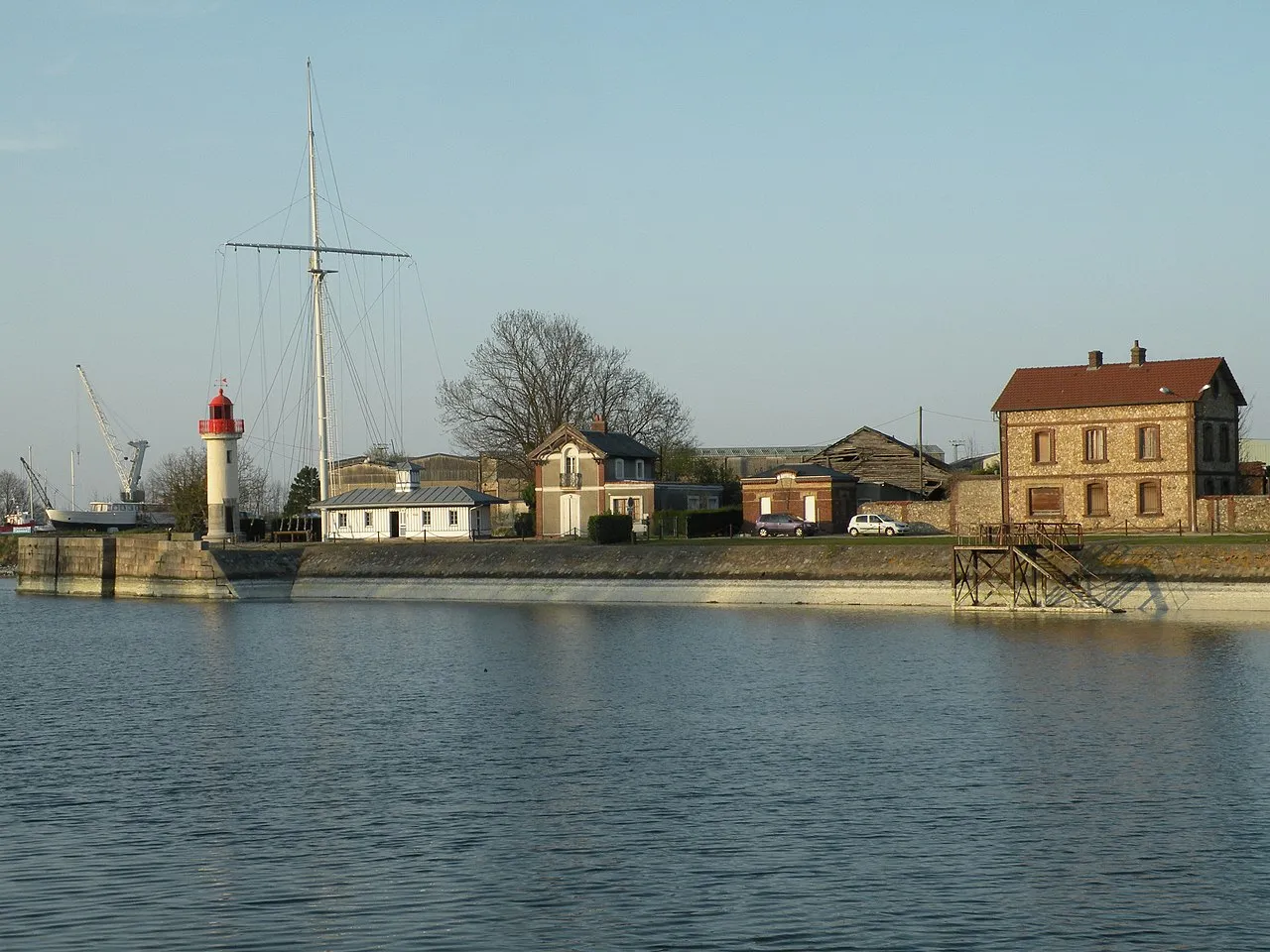
We stepped onto the stone quay and I could smell the town before I had taken ten steps — butter from the creperies, the salt-mineral scent of the estuary, a faint sweetness of Calvados apple brandy drifting from an open cellar door. My wife reached for my hand and we just stood there, turning slowly, taking it in. The harbour is small, far smaller than I had imagined, and that is part of its power. The tall, narrow houses that ring the Vieux Bassin lean against each other like old friends, their slate roofs dark with age, their window boxes spilling red and pink geraniums. Fishing boats rocked gently in the basin, and across the water I could see the Lieutenancy — the medieval gate that once guarded the entrance to the harbour, now standing as a quiet monument to the centuries of explorers and merchants who sailed from these stones.
We walked to Sainte-Catherine's Church first, and I am glad we did, because nothing else I saw that day prepared me for the feeling of standing inside it. The church was built between 1460 and 1496 by shipwrights — not stonemasons, not architects, but the men who built the fishing boats and trading vessels that sailed from this harbour. They had just survived the Hundred Years' War, and there was no stone or money left for a proper cathedral, so they used what they knew: oak timber, ship-building joints, and the geometry of hulls. The result is a church that looks and feels like the inside of a great wooden vessel turned upside down. I ran my hand along one of the pillars and felt the same smooth, confident curves that I had seen in the ribs of old sailing ships. The bell tower stands apart, across the square, like a lighthouse keeping watch over its vessel. I sat in a pew near the back and listened to the silence. However grand the stone cathedrals of Paris and Rouen may be, this wooden church built by sailors touched something deeper in me — something about ordinary people making something sacred from the materials of their daily work.
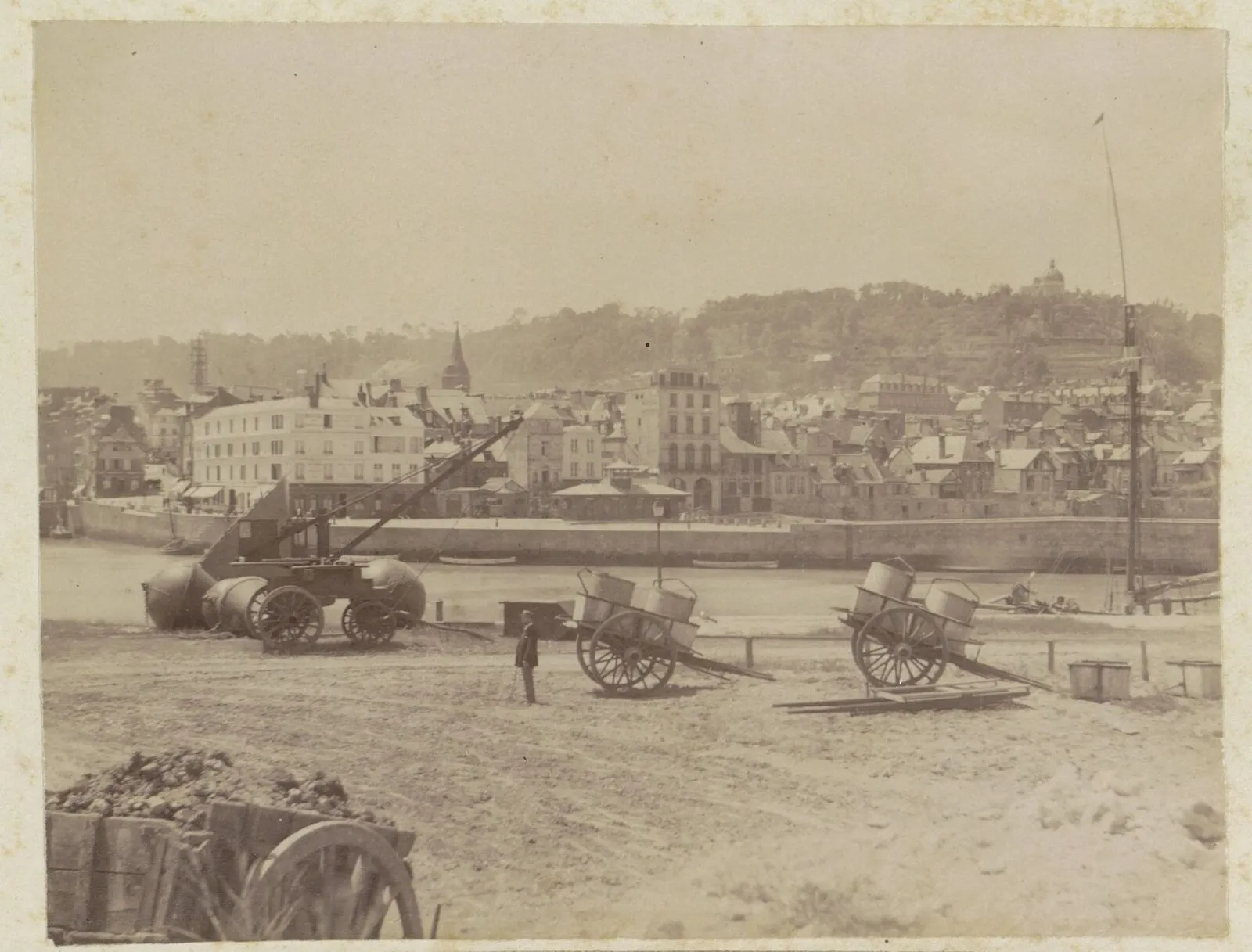
From the church we wandered uphill toward the Cote de Grace, and the view from the top stopped us again. The Seine estuary stretched below, wide and silver, and across it the Pont de Normandie hung in the air like a harp string — one of the longest cable-stayed bridges in Europe, so slender and elegant that it seemed impossible it could carry traffic. I stood there with the wind in my face, looking down at the same landscape that Eugene Boudin had painted a hundred and fifty years earlier, and I felt the strange compression of time that old places give you. Boudin was born in Honfleur in 1824 and spent his life painting its harbour, its sky, its women in white dresses on the beach at Trouville. When a teenage Claude Monet wandered into his studio, Boudin dragged the boy outside and taught him to paint en plein air — in the open air, chasing the light as it moved. That simple act changed the course of art history. They gathered at the Ferme Saint-Simeon, a farmhouse on the hillside where I was now standing, along with Courbet, Jongkind, Corot, and a community of painters who would become the Impressionists. I thought about that — about how a small, stubborn harbour town had accidentally given the world a new way of seeing.
Lunch was moules-frites at a harbour-side restaurant, the mussels swimming in a white wine and cream sauce that tasted like the ocean had gone to finishing school. My wife ordered a galette with Camembert and ham, and we shared a carafe of local cider for 6 EUR. The total bill came to about 38 EUR for two, which felt reasonable for eating with that view. At the next table, a French family argued cheerfully about politics while their children fed bread to the harbour gulls. I listened to the rhythm of their conversation without understanding a word, and it felt like music.
In the afternoon I visited the Eugene Boudin Museum, paying 8 EUR for entry. The collection is modest but deeply moving — Boudin's harbour scenes hang alongside works by Monet, Dufy, and lesser-known Norman painters, and there is a room of Boudin's pastel sky studies that stopped me cold. Each one is no bigger than a postcard, but they capture the light of a specific hour on a specific day with such honesty that I could almost feel the wind change direction as I moved from one to the next. Nearby, the house where composer Erik Satie was born has been turned into a quirky museum — entry about 7 EUR — where you walk through rooms with headphones listening to his strange, beautiful music while mechanical sculptures move around you. Satie's Gymnopedies were written by a man who grew up hearing the same harbour sounds I was hearing, and the connection between place and creation felt almost tangible.
We took the last tender back to the ship as the sun dropped behind the Pont de Normandie, and I stood at the rail watching Honfleur shrink into the dusk. What I learned there is something I could not have learned from books or paintings alone: that beauty is not a luxury but a language, and that this small harbour town has been speaking it fluently for a thousand years. I came expecting a pretty postcard. I left carrying something closer to a prayer — the knowledge that ordinary hands can build extraordinary things, and that the light the Impressionists chased is still here, still changing, still free for anyone willing to sit still long enough to see it.
Weather & Best Time to Visit
The Cruise Port
Most cruise ships calling at Honfleur actually dock at Le Havre, approximately 20 kilometres away across the Seine estuary. From Le Havre, shuttle buses or ship excursions transport passengers to Honfleur in about 30-40 minutes via the Pont de Normandie bridge, with transfers costing around 25-40 EUR per person if booked independently. Smaller expedition and luxury vessels — including those from Ponant, Seabourn, and Oceania — sometimes anchor in the Seine estuary and tender passengers directly into Honfleur's Vieux Bassin, which puts you in the centre of town the moment you step ashore. The tender ride takes roughly ten minutes and is wheelchair accessible on most ships, though the stone quay at Honfleur can be uneven. There are no dedicated cruise terminal facilities in Honfleur itself — no shops, no information desk, no luggage storage. The town's compact centre begins immediately at the quayside, and everything is within walking distance. Public toilets are located near the Lieutenancy building and cost about 0.50 EUR.
Getting Around
Honfleur is a small, walkable town — the entire historic centre covers barely half a square kilometre, and most visitors will never need any transport beyond their own feet. From the Vieux Bassin harbour, Sainte-Catherine's Church is a five-minute walk, the Boudin Museum is five minutes in another direction, and even the hillside Cote de Grace chapel is only about twenty minutes on foot. The streets are narrow, cobblestoned, and largely pedestrianised in the centre, which makes walking pleasant but can be challenging for wheelchair users or those with limited mobility. Pavements are uneven in places, and some streets have steps without ramps. Visitors who use wheelchairs should note that the quayside and the main streets around the Vieux Bassin are the flattest and most accessible areas.
For those arriving from Le Havre by shuttle, the drop-off point is usually the car park near the Vieux Bassin, from which the entire town is accessible on foot. Taxis are available in Honfleur but scarce — there is no rank at the harbour, so calling ahead is advisable if you need one. A taxi to Le Havre costs approximately 50-70 EUR one way. Local bus line 20 connects Honfleur to Le Havre via Pont de Normandie, with tickets around 2 EUR, though the service runs infrequently. Bicycle hire is available from shops near the harbour for about 15 EUR per day, and the cycling paths along the estuary are flat and scenic. For most cruise visitors spending a half-day in port, walking is all you will need.
Excursions & Activities
Vieux Bassin & Old Town Walking Tour
The heart of Honfleur is the Vieux Bassin itself — a compact, photogenic harbour ringed by tall timber-framed houses dating from the 16th to 18th centuries. Walking the harbour loop takes about thirty minutes at a leisurely pace, and you will pass the Lieutenancy gate, dozens of galleries and creperies, and the church of Saint-Etienne (now the maritime museum, entry about 4 EUR). This is a low-energy stroll suitable for all mobility levels along the flat quayside. You can explore independently — no guide is needed, and the harbour is impossible to miss from any direction. A ship excursion combining the walking tour with Sainte-Catherine's Church and a cider tasting typically costs 60-90 EUR per person.
Sainte-Catherine's Church
France's largest wooden church is free to enter and sits five minutes from the harbour. Built by shipwrights after the Hundred Years' War, its oak-beamed interior resembles an inverted hull. The detached bell tower across the square is also worth a look — it was built separately to reduce fire risk to the main building. Allow 30-45 minutes. Flat access through the main door makes this accessible for wheelchair users. No need to book ahead — simply walk in during opening hours.
Eugene Boudin Museum
The museum dedicated to Honfleur's most famous son holds an intimate collection of Impressionist and pre-Impressionist works, including paintings by Boudin, Monet, Dufy, and Courbet. Entry costs approximately 8 EUR for adults. The ground floor is wheelchair accessible, though the upper gallery requires stairs. Allow one to one and a half hours. Visit independently by walking from the harbour; no advance booking is required.
Pont de Normandie & Estuary Drive
The Pont de Normandie cable-stayed bridge spans the Seine estuary with an elegant 856-metre main span and offers dramatic views of the river, the Normandy coast, and Le Havre's industrial port. Driving across costs about 5.60 EUR in tolls. Ship excursions that include a bridge crossing and countryside drive through the Pays d'Auge (Calvados and cheese country) typically cost 70-100 EUR. You can also book ahead with a local driver independently for around 120 EUR for a half-day tour covering the bridge, a Calvados distillery, and a cheese farm.
Calvados & Normandy Cuisine Tasting
Normandy's food traditions are concentrated around Honfleur — Calvados apple brandy, Camembert and Pont-l'Eveque cheese, fresh moules-frites, and buttery galettes. Several shops around the harbour offer free tastings of Calvados and cider. For a more structured experience, organized tasting tours visit a working Calvados distillery and a fromagerie in the countryside, with prices from 45-75 EUR per person through ship excursion bookings. You can also visit independently by hiring a taxi to the Pays d'Auge, though having a designated driver matters since the tastings are generous. A moderate-energy half-day activity.
Cote de Grace & Notre-Dame de Grace Chapel
The hilltop chapel above Honfleur offers sweeping views over the Seine estuary and the Pont de Normandie. The uphill walk from the harbour takes about twenty minutes and is a moderate-energy activity — the path is paved but steep in places, and not suitable for wheelchairs. The chapel itself is small, quiet, and free to enter. Sailors once prayed here before long voyages. No booking needed — simply walk up from the harbour.
Depth Soundings
France uses the Euro (EUR). ATMs are available near the Vieux Bassin and along Rue de la Ville; most accept international cards with a small withdrawal fee. Credit cards are widely accepted at restaurants, museums, and larger shops, but small market stalls, bakeries, and the public toilets require cash. Carry coins and small notes for purchases under 10 EUR.
Tipping in France is not obligatory — service is included in restaurant bills by law — but leaving a euro or two for good service is appreciated. English is spoken at most tourist-facing businesses in Honfleur, though attempting a "bonjour" and "merci" goes a long way with shopkeepers. The town is very safe for visitors; petty crime is rare. Cobblestone streets can be tricky in wet weather, so wear shoes with good grip. Most museums and churches close by 6 p.m. and some shut for lunch between noon and 2 p.m. — plan your itinerary around these gaps. Honfleur's compact size means you will not need to rush, but if your ship tenders, confirm the last tender time and arrive at the quay at least thirty minutes early.
Photo Gallery
Image Credits
All photographs on this page are used under Creative Commons or free-use licenses. Images sourced from Wikimedia Commons, Pixabay, and Unsplash.
Frequently Asked Questions
Where do cruise ships dock for Honfleur?
Most ships dock at Le Havre, about 20 km away. Shuttle transfers cross the Pont de Normandie in 30-40 minutes. Smaller ships sometimes anchor in the estuary and tender directly into the Vieux Bassin harbour.
Can I explore Honfleur independently from Le Havre?
Yes. Local bus line 20 runs between Le Havre and Honfleur for about 2 EUR, and taxis cost 50-70 EUR one way. Many visitors share a taxi to split costs. Independent exploration is straightforward once you arrive.
How much time do I need in Honfleur?
Four to five hours is enough to walk the harbour, visit Sainte-Catherine's Church, see the Boudin Museum, and enjoy lunch. The town is compact and most sights are within a five-minute walk of each other.
What is Sainte-Catherine's Church?
France's largest wooden church, built by shipwrights between 1460 and 1496. Its twin-nave interior resembles an upturned ship hull. Free to enter, with flat access through the main door for wheelchair users.
What should I eat in Honfleur?
Moules-frites (mussels and chips) in cream sauce, galettes with Camembert, and fresh Normandy cider are the local specialities. Harbour restaurants serve lunch for 15-20 EUR. Calvados apple brandy tastings are available at many shops.
Is Honfleur accessible for wheelchair users?
The quayside and main streets around the Vieux Bassin are mostly flat and manageable. Cobblestones can be uneven in places. Sainte-Catherine's Church has flat access. The hillside Cote de Grace is steep and not wheelchair accessible.
Honfleur, France — Port Guide
Last reviewed: February 2026