
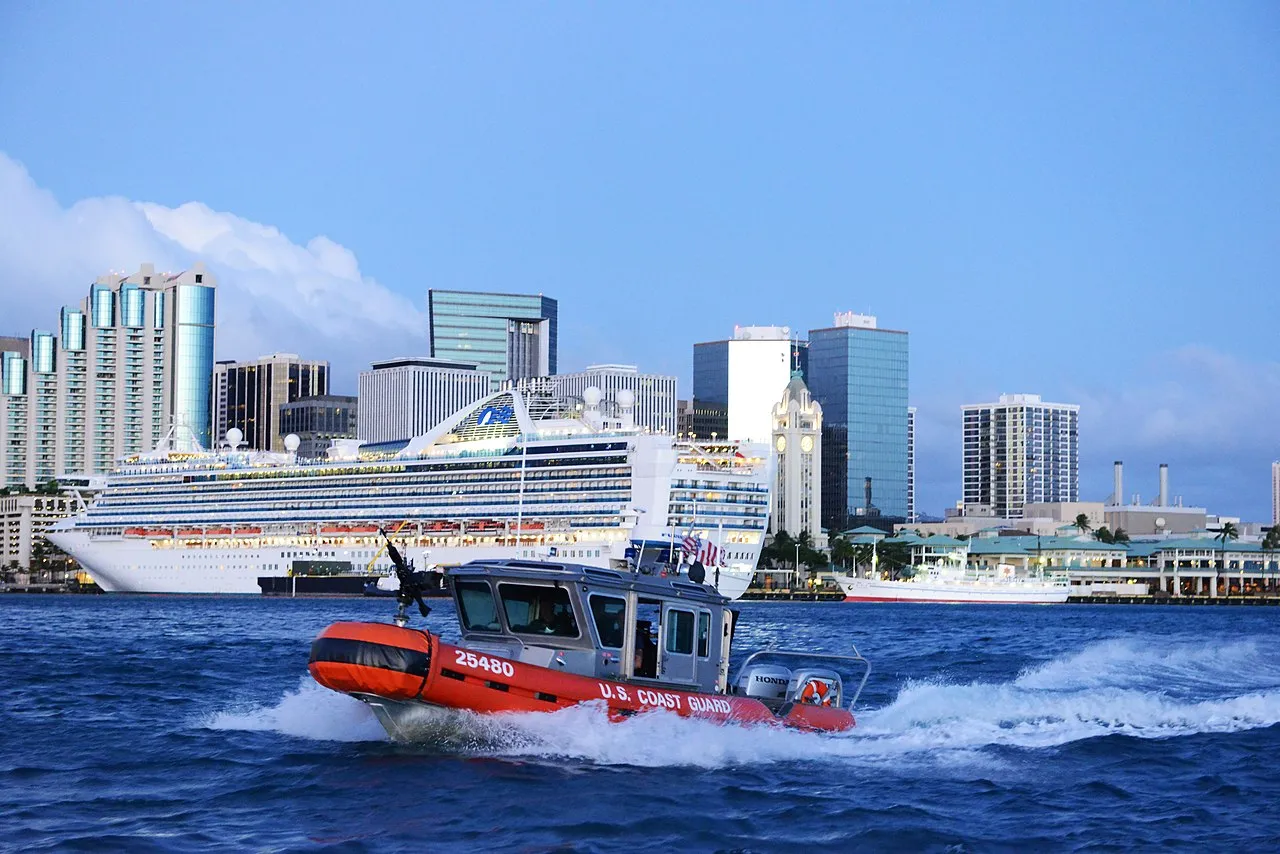
Photo: Wikimedia Commons
My Logbook: Doing It All in One Day
I docked at Pier 2 in downtown Honolulu — the name means "protected bay" in Hawaiian — and stood on deck watching the morning light spill across the water. The sound of ukuleles from the Aloha Tower marketplace carried across the water — the scent of plumeria and salt air mixed together as I stepped ashore. Honolulu has been the capital of the Hawaiian Islands since 1845, when King Kamehameha III moved the seat of his kingdom here from Lahaina. But the history runs deeper still — back in 1795, his father Kamehameha I arrived in this same harbor with nearly one thousand war canoes and ten thousand warriors, an armada that secured his rule over the entire island chain in the fierce Battle of Nuʻuanu.
I took an early Uber to Pearl Harbor — twenty minutes through the awakening city — and arrived just after opening. The Arizona memorial boat leaves every fifteen minutes and I walked straight on. Standing over the sunken battleship with the oil still bubbling up from her ruptured tanks felt exactly as heavy and necessary as it should. The USS Arizona went down in just nine minutes on the morning of December 7th, 1941, taking 1,177 souls with her. She still holds 1,102 of those men in her iron hull — a tomb and a testament resting in the harbor that King Kamehameha himself once ordered harvested for oysters to please foreign traders who valued pearls.
The stillness above that shattered deck is profound. I stood quietly, then walked across the harbor to the USS Missouri — the massive battleship where Japan signed the unconditional surrender on September 2nd, 1945. The docent called them "the bookends of World War II in the Pacific," and that phrase stayed with me all day. The Arizona marks where it began; the Missouri marks where it ended. However, both ships rest here in the same harbor, carrying the full weight of that history between them.
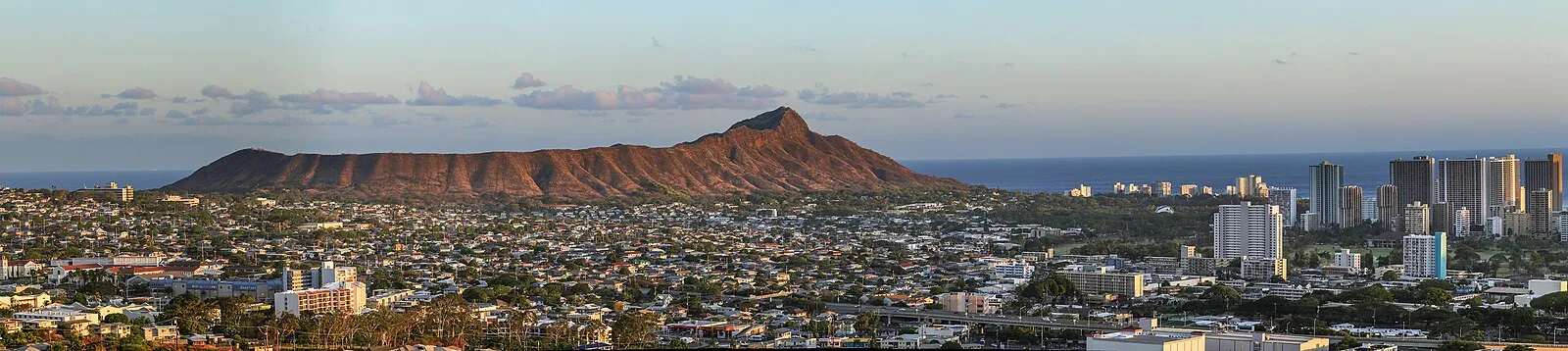
Back in Waikiki by eleven — Waikiki means "spouting fresh water," named for the springs that once fed this shoreline — I had plenty of time to walk the beach, grab a shave ice at Waiola, and hike Diamond Head. The Hawaiians called that extinct volcanic cone Lēʻahi, "the point of the tuna fish," for its sharp ridgeline cutting into the sky. The trail is fully paved now, 1.6 miles round-trip, hot but very doable. I was at the summit in forty-five minutes and the panoramic sweep of the island spreading out below — the city, the harbor, the endless Pacific — made every step worth it.
Lunch was proper island fare: kalua pork plate with laulau and a side of ahi poke, washed down with a cold Longboard lager at Duke's while I watched surfers ride waves under the shadow of Lēʻahi. For dessert I shared haupia — a coconut milk pudding that tastes like the ocean breeze feels. Though the beaches were busy, Waikiki maintains a remarkably relaxed vibe despite its fame as a world-class tourist destination.
I spent the afternoon wandering Historic Downtown. The bronze King Kamehameha statue stands tall in front of the old judiciary building — he's the warrior-king who united all the Hawaiian Islands, first by conquest and then by diplomacy, leaving a kingdom his descendants would rule for nearly a century. Across the street sits Kawaiahaʻo Church, built from coral blocks in 1842, still holding services in Hawaiian and English every Sunday. Yet what moved me most was ʻIolani Palace, the only former royal residence on American soil.
King Kalākaua built ʻIolani Palace in 1882 after circumnavigating the globe, bringing back ideas from the great courts of Europe. The palace had electricity, telephones, and indoor plumbing before the White House did — a technological marvel dressed in what architects called "American Florentine" style, the only building of its kind in the world. You can still see the throne room where Hawaiian sovereignty ended when the monarchy was overthrown in 1893, just eleven years after the palace rose. The beauty and the sorrow stand side by side in those elegant rooms.
Afternoon traffic back to the ship was light and I was onboard with hours to spare. What makes Honolulu remarkable as a port is how much you can actually accomplish in a single day. Pearl Harbor for history, Waikiki for beach time, Diamond Head for adventure, downtown for culture — all within easy reach of the pier. The public bus system works perfectly, Uber is everywhere, and everything is genuinely close. Honolulu delivers the complete Hawaiian experience in one port day.
What Honolulu taught me is that paradise carries complexity. I learned that Hawaii is not just beaches and luaus but also overthrown kingdoms and sunken battleships, a place where profound tragedy and transcendent beauty exist in the same frame. Looking back, I realized that the best travel doesn't let you escape history—it immerses you in it. That rainbow over Pearl Harbor, ʻIolani Palace's elegance hiding its sorrow, the shave ice flavors named in languages that were once forbidden—Honolulu asks you to hold joy and grief together, and to leave more thoughtful than you arrived.
Weather & Best Time to Visit
The Cruise Port
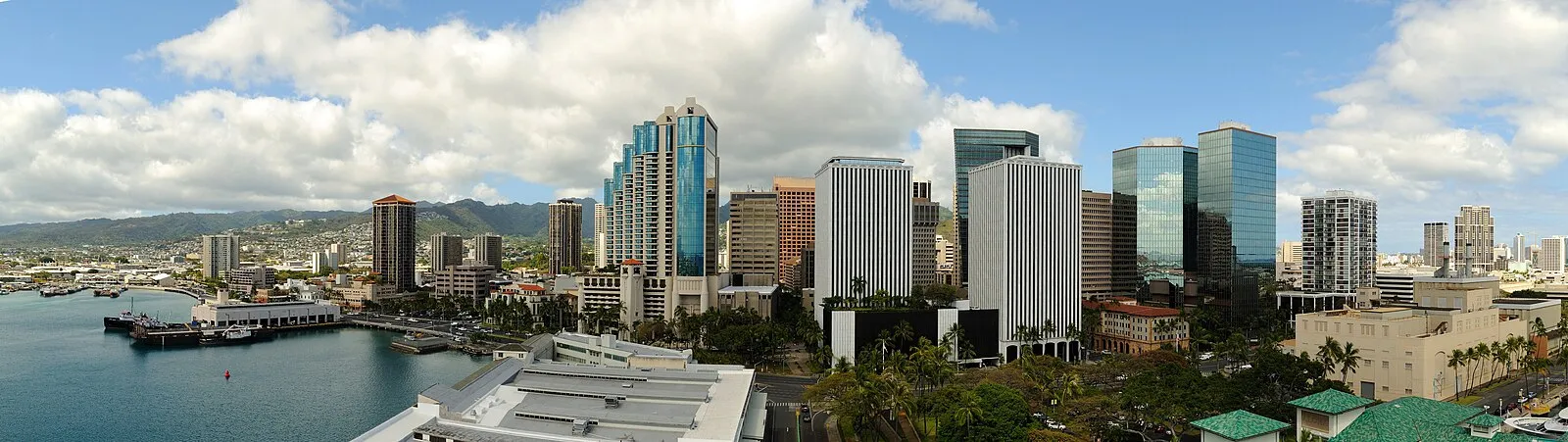
Cruise ships dock at Pier 2 in Honolulu Harbor, located in downtown Honolulu near the landmark Aloha Tower. Norwegian Cruise Line vessels homeport here, offering Hawaiian island itineraries. The terminal sits just 15 minutes from Daniel K. Inouye International Airport and provides convenient access to all major Honolulu attractions.
The terminal is wheelchair accessible with modern facilities. Downtown Honolulu and Chinatown are walking distance from the pier. Pearl Harbor is 20 minutes by taxi ($25-30), Waikiki Beach is 10-15 minutes ($15-20). Currency is US dollars throughout Hawaii, and the port area offers restrooms and information desks.
Getting Around
- From Honolulu Airport (HNL): 15 minutes via H-1 freeway. Uber/Lyft runs $20-30. Taxi service approximately $30-40. Many hotels offer airport shuttles.
- To Pearl Harbor: 20-30 minutes from port depending on traffic. Uber/Lyft $20-30, taxi $25-30. TheBus #20 or #42 are reliable and cheap alternatives.
- To Waikiki: 10-15 minutes from port. Uber/Lyft $15-20. The Red Line Trolley operates 9:21 AM-5:21 PM with day passes at $32.
- TheBus: Honolulu's public bus system is excellent and covers the entire island. $3 fare, exact change required. Routes #20 and #42 connect port, Pearl Harbor, and Waikiki.
- Uber/Lyft: Widely available throughout Honolulu. Recommended for Pearl Harbor visits to maximize time at the memorial sites.
- Walking: Downtown Honolulu and Chinatown are walkable from the pier. ʻIolani Palace and King Kamehameha statue are about 15 minutes on foot.
- Red Line Trolley: Tourist trolley connecting major attractions. Day passes $32, available at DFS Galleria or Ala Moana Center.
- Rental Cars: Available at airport and Waikiki. Useful for North Shore, Hanauma Bay snorkeling, or exploring beyond central Honolulu. Traffic on H-1 freeway can be heavy during rush hours.
- Biki Bikeshare: Docked bike rental stations throughout Waikiki and downtown. Good for short trips between beach and attractions. $4.50 for 30 minutes.
Honolulu Area Map
Interactive map showing Pier 2 cruise terminal, Pearl Harbor, Waikiki Beach, Diamond Head, and major attractions. Click any marker for details.
Sandy Shores
Oahu offers world-famous coastlines with warm Pacific water and legendary surf:
- Waikiki (10-15 min): The iconic Hawaiian strand — 2 miles of golden sand backed by high-rise hotels and Diamond Head views. Gentle waves ideal for beginners, surfboard rentals everywhere. Free access; parking $3-5/hour at public lots.
- Ala Moana Park (10 min): Local favorite with calm lagoon-like water. Less touristy than Waikiki, excellent for swimming. Free parking weekdays. Magic Island peninsula offers skyline views.
- Hanauma Bay (30 min): Premier snorkeling destination in a protected volcanic crater. Abundant tropical fish, clear water. $25 entry fee, reservations required. Closed Mondays and Tuesdays.
- Lanikai (35 min): Often ranked among America's best — powder-soft sand, turquoise water, twin offshore islands. Limited parking in residential area. Worth the effort for serious enjoyers.
- North Shore (45-60 min): Famous for winter big-wave surfing at Pipeline and Sunset. Summer months offer calm swimming. Food trucks and laid-back surfer town atmosphere.
Note: Pacific water temperatures stay warm year-round (75-80°F). Currents can be strong — observe posted warnings and swim near lifeguards.
Pre-Cruise Activities and Things to Do
Booking guidance: Pearl Harbor Arizona Memorial tickets are free but must be reserved in advance at recreation.gov — they book up quickly. Diamond Head requires reservations and $5 entry. Most Honolulu attractions can be explored independent of ship excursions using TheBus or Uber.
Pearl Harbor National Memorial
The USS Arizona Memorial and USS Missouri battleship together tell the complete story of WWII in the Pacific — "the bookends of the war," as docents say. The Arizona requires timed tickets (free, reserve weeks ahead at recreation.gov). Missouri tours cost $35 and take 90 minutes. Allow 4-5 hours total for both sites. Deeply moving, historically essential — don't rush this experience. Book ahead through official channels; independent visits are far more rewarding than ship excursions.
Diamond Head Crater Hike
The iconic 1.6-mile round-trip trail to the 760-foot summit delivers 360° panoramic views of Waikiki, Honolulu, and the Pacific. Moderate difficulty with steep sections, stairs, and a tunnel. Allow 1.5-2 hours. Reservations required at gostateparks.hawaii.gov, $5 entry. Go early (opens 6 AM) to avoid heat and crowds. Bring water, wear sturdy shoes. The payoff view is unforgettable.
ʻIolani Palace
The only royal palace on US soil, built in 1882 for King Kalākaua. This Renaissance Revival masterpiece had electricity before the White House. Guided tours ($27) showcase the grand koa wood interiors, throne room, and royal artifacts. Allow 90 minutes. Reserve online at iolanipalace.org. Closed Sundays and Mondays. A window into Hawaii's monarchy era and the 1893 overthrow.
Bishop Museum
Hawaii's premier museum of natural and cultural heritage — the finest collection of Hawaiian and Pacific Island artifacts anywhere. Three floors of exhibits covering Hawaiian royalty, Polynesian navigation, volcanic geology, and native plants and animals. Allow 3 hours. Book tickets at bishopmuseum.org. Worth the visit for serious culture seekers.
Chinatown Walking Tour
Just blocks from the cruise pier, Honolulu's Chinatown has thrived for over a century with authentic markets, herbal shops, dim sum restaurants, and lei stands. Free to wander; allow 2 hours. The Maunakea Marketplace offers local lunch options. Safe during daylight hours; pairs perfectly with downtown historic walking.
Waikiki Surfing Lesson
Waikiki's gentle waves make it ideal for first-time surfers. Two-hour group lessons run $80-100 and include all equipment. Multiple operators along the beach; Aloha Beach Services and Hans Hedemann are well-regarded. No advance booking needed for most operators — just walk up to the beach kiosks. Stand-up paddleboard rentals also widely available.
DIY vs. Ship Excursion: Pearl Harbor
DIY TheBus + Free Tickets ($5-40/person)
- Arizona Memorial tickets free at recreation.gov (book 60 days ahead)
- TheBus #42 from Aloha Tower to Pearl Harbor $3
- USS Missouri battleship tour $35 additional
- Your pace — spend as long as the memorial deserves
Ship Excursion ($80-130/person)
- Round-trip transport from pier with narrated drive
- Guaranteed Arizona Memorial tickets included
- Often bundles Missouri and Pacific Aviation Museum
- Structured schedule — less time at each stop
Where to Eat and Drink
Honolulu's dining scene blends Hawaiian, Asian, and Pacific Rim influences:
- Duke's Waikiki ($-$$): Beachfront institution named for surfing legend Duke Kahanamoku. Fresh fish, island cocktails, and prime sunset views. The Hula Pie dessert is legendary. Reservations recommended for dinner.
- Helena's Hawaiian Food ($-$): James Beard Award winner for authentic Hawaiian plate lunch. Kalua pig, laulau, poi — the real thing. Cash only. Closed Sundays. Worth the trip to Kalihi district.
- Marukame Udon (Waikiki, $): Watch noodles made fresh through the glass window. Outstanding udon at budget prices. Expect a line — it moves fast. Perfect quick lunch.
- Ono Seafood (Kapahulu, $-$): Local favorite for poke — raw ahi cubed and seasoned Hawaiian style. Counter-service only. Get the ahi shoyu poke and eat at the nearby park.
- Side Street Inn ($$): Where Honolulu chefs eat after their shifts. Local comfort food with generous portions. Known for pan-fried pork chops and fried rice. Reservations helpful.
Budget tip: Plate lunch from local spots costs $10-15 and includes rice, macaroni salad, and generous protein. Skip the tourist traps on Kalakaua Avenue.
Local Notices and Current Conditions
- Pearl Harbor Tickets: Free Arizona Memorial tickets release 60 days in advance at recreation.gov and sell out quickly. Book as soon as your sailing date is confirmed.
- Diamond Head Reservations: Required since 2022. Book at gostateparks.hawaii.gov. $5 entry per person.
- Hawaiian Weather: Trade winds keep temperatures comfortable (75-85°F year-round). Brief rain showers common; they pass quickly and often end with rainbows.
- Ocean Safety: Respect posted warning signs. Currents can be dangerous, especially at non-lifeguarded beaches. Waikiki is generally safe with multiple lifeguard stations.
Depth Soundings
I have visited Honolulu in 2016, 2019, and 2023 — these recommendations reflect firsthand experience across multiple Hawaiian voyages.
Hawaii is a US state with all modern conveniences. Currency is US dollars and credit cards are accepted everywhere. Cell service is excellent throughout Oahu. The island is well-suited for independent exploration — TheBus covers the entire island for $3, and Uber/Lyft are everywhere. English is the primary language, though Hawaiian place names are common and learning basic pronunciation (all vowels, syllables separated) shows respect.
Honolulu is generally safe for tourists. Waikiki and downtown are well-patrolled, though standard urban awareness applies. Valuables should not be left visible in rental cars — break-ins happen at remote beach parking lots. The homeless population is visible in some areas but rarely poses problems for visitors.
Accessibility is good — Pearl Harbor, Waikiki, and major attractions accommodate wheelchairs. Diamond Head trail is not accessible. Many beaches have accessible mats or beach wheelchairs available. Tipping follows standard US norms: 18-20% at restaurants, $2-3 per bag for porters. Hawaii sales tax is 4-6% depending on county.
Practical Information
- Currency: US Dollar (USD)
- Language: English, Hawaiian (place names common)
- Time Zone: Hawaii-Aleutian Standard (HST) — no daylight saving
- Weather: Tropical — warm year-round (75-85°F). Trade winds, brief showers possible.
- Port Type: Major Hawaiian cruise port, Norwegian homeport
- Airport: Daniel K. Inouye International (HNL) — 15 min to port
- Accessibility: Terminal wheelchair accessible. Most major attractions accommodate mobility needs. Diamond Head trail not accessible.
Photo Gallery
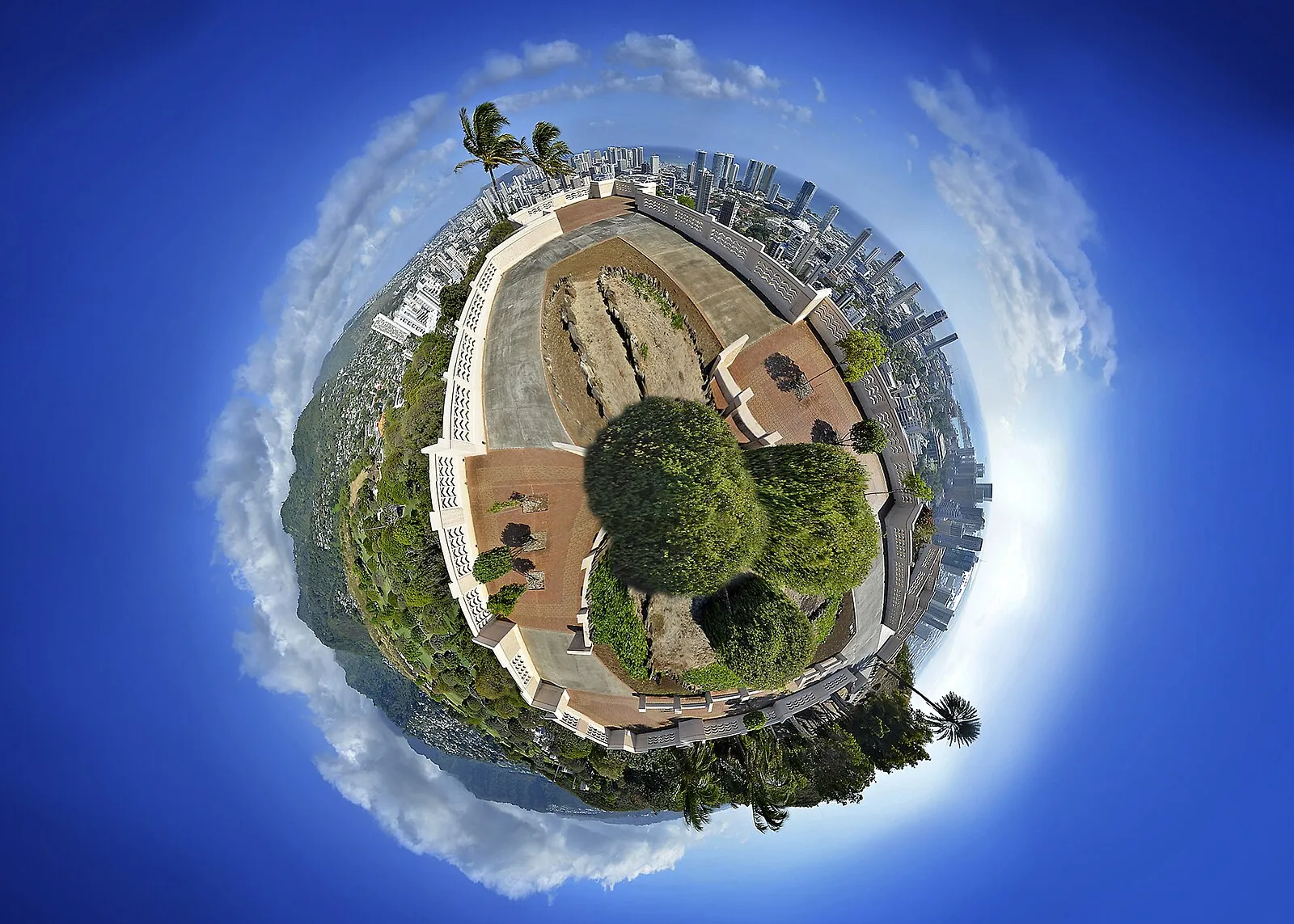
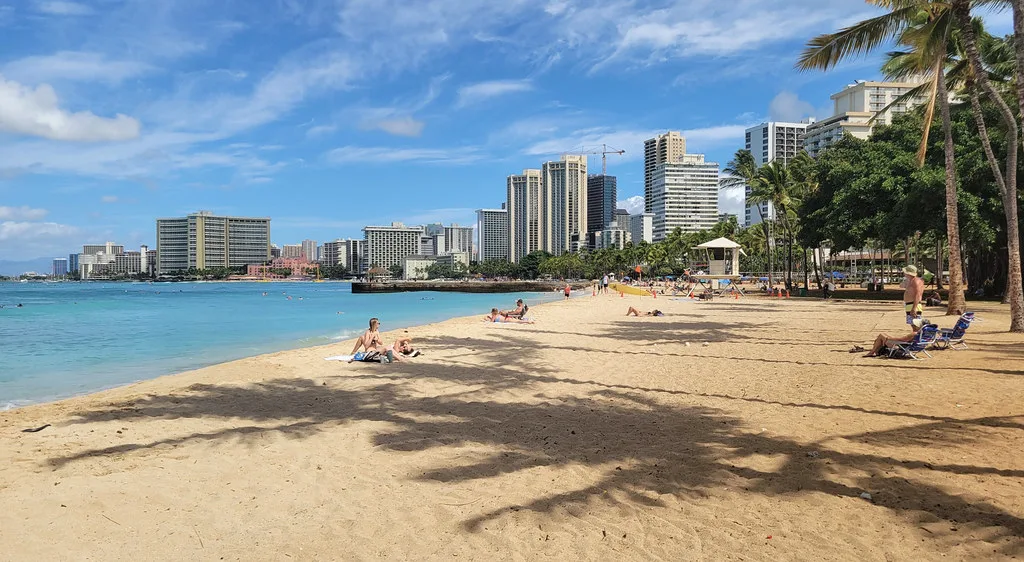
Image Credits
- honolulu-1.webp: Honolulu Harbor with Princess cruise ship and USCG boat. Source pending attribution.
- honolulu-5.webp: Downtown Honolulu skyline panorama from harbor. Source pending attribution.
- honolulu-6.webp: Diamond Head crater panorama at golden hour. Source pending attribution.
- honolulu-8.webp: Little planet 360° panorama of Honolulu. Source pending attribution.
Image sources are being verified. Attribution will be updated when confirmed.
Frequently Asked Questions
Q: Where do cruise ships dock in Honolulu?
A: Cruise ships dock at Pier 2 in Honolulu Harbor near Aloha Tower. The terminal is walking distance to Chinatown and downtown. Pearl Harbor is 20 minutes by taxi ($25-30), Waikiki Beach is 10-15 minutes ($15-20).
Q: How much time do I need at Pearl Harbor?
A: Plan 4-5 hours minimum for the USS Arizona Memorial and USS Missouri. Arizona tickets are free but must be reserved weeks in advance at recreation.gov. The Missouri battleship tour takes 90 minutes. Both sites are deeply moving — don't rush them.
Q: Is the Diamond Head hike worth it?
A: Absolutely — the 1.6-mile round-trip trail takes 1.5-2 hours and rewards you with 360° panoramic views of Waikiki, Honolulu, and the Pacific Ocean from 760 feet. Go early (opens 6 AM) to avoid heat and crowds. Reservations required, $5 entry.
Q: Can I do Pearl Harbor and Waikiki in one port day?
A: Yes — Honolulu is the most "do-able" Hawaiian port. Start with Pearl Harbor early (arrive at opening), then Uber to Waikiki for beach time and lunch, hike Diamond Head if you're ambitious. Allow 7-8 hours total with no rush.
Q: What is ʻIolani Palace and should I visit?
A: ʻIolani Palace is the only royal palace on US soil, built in 1882 for King Kalākaua. Guided tours showcase the throne room and royal artifacts. It had electricity before the White House. Reserve tickets at iolanipalace.org — a window into Hawaii's monarchy era.
Pearl Harbor Arizona Memorial tickets are free but book out 60 days in advance — this is not optional, you must plan ahead. TheBus costs $3 and goes everywhere, including Waikiki and Pearl Harbor. Skip the $40 Waikiki trolley tourist buses. Chinatown is walkable from the pier and has better food than Waikiki at half the price.
Last reviewed: February 2026