



Photo: Wikimedia Commons
From the Logbook: The Island That Breathes
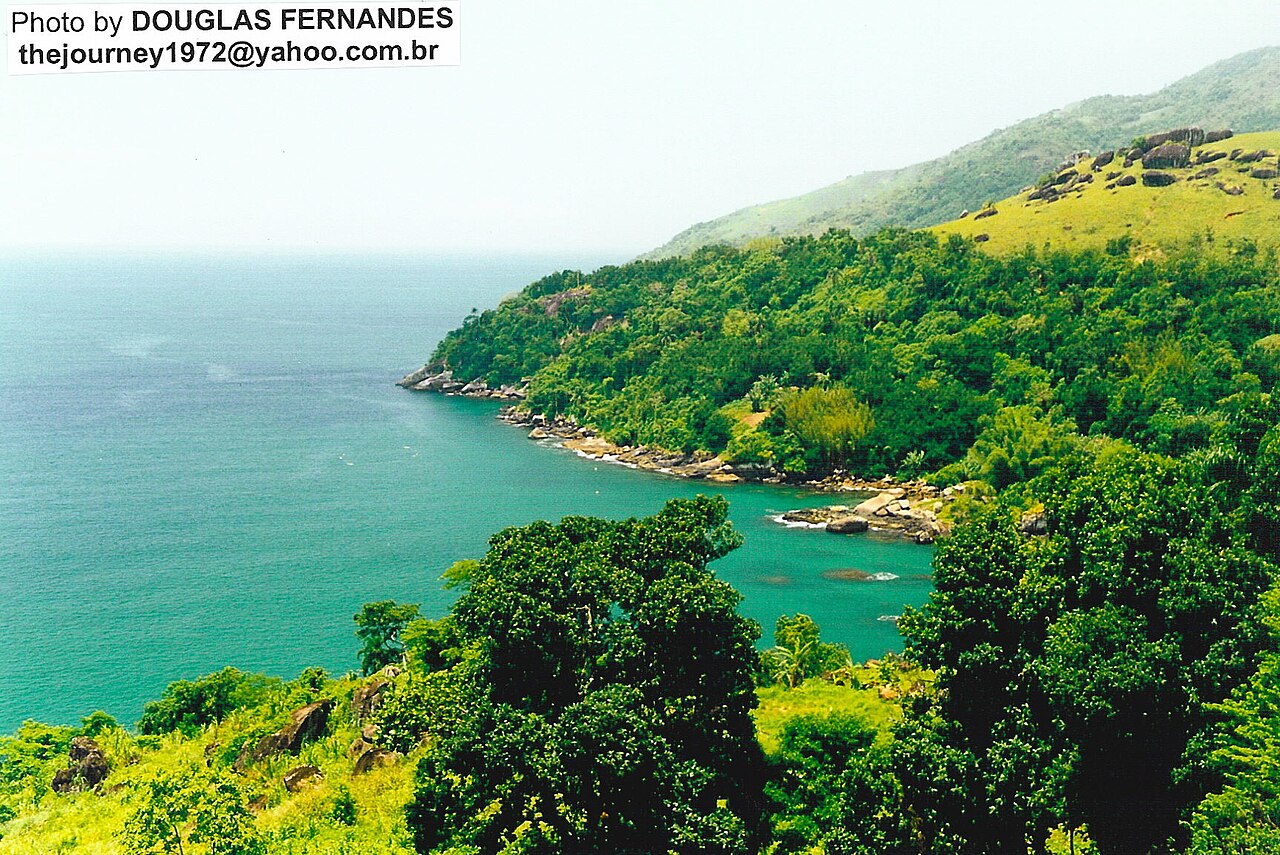
I heard Ilhabela before I saw it. Standing on the tender as we motored toward Vila's pier, the sound of the island reached me across the water — a low, steady hum of insects and birdsong pouring from the forest canopy that covered every ridge and slope rising from the shoreline. The green was staggering. Not the manicured green of a resort lawn but the deep, tangled, reckless green of Atlantic Forest that has been growing and dying and growing again for millennia. I gripped the railing and breathed in the salt air, feeling my heartbeat slow as the jungle grew larger and the ship grew smaller behind me.
The tender deposited me at Vila's waterfront, and I stepped onto warm cobblestones slick with morning mist. The little colonial town was just waking up — a man arranged fresh coconuts on a cart, a woman swept the steps of the white church, and a street dog of indeterminate breed trotted past with the confidence of someone who knew exactly where breakfast would come from. I bought a coconut water for R$8 and drank it standing in the shadow of the church, the sweet liquid cold against my throat. I could smell the forest from here — rich, damp, fertile, like the earth after heavy rain. A sign pointed uphill toward Cachoeira da Toca, and I followed it.
The trail to the waterfall wound through jungle so dense that the sunlight filtered down in scattered coins of gold, barely touching the forest floor. I walked carefully on the slippery path, swatting at the notorious borrachudos — black flies that descended in silent clouds and left welts that would itch for days. Every traveler warns you about the borrachudos, and every traveler is right to do so. I had applied DEET repellent at the trailhead, but the flies seemed to view it as seasoning rather than deterrent. However, I pressed on, because the sound of falling water was getting louder with every step, and something about the way the forest closed around me felt less like confinement and more like an embrace.
After thirty minutes of climbing, the trail opened onto a rocky amphitheater, and Cachoeira da Toca thundered before me. The waterfall pounded into a pool so cold that when I waded in, the shock seized my lungs and I gasped like a child. I stood waist-deep in water that had been filtered through volcanic rock and centuries of forest floor, and I tipped my head back and let the spray coat my face. The sound was enormous — not harsh, but full, a kind of liquid applause that filled the entire basin. I looked up and saw the forest canopy framing a ragged circle of blue sky far above, and a pair of toucans crossed that circle in unhurried flight, their oversized beaks bright against the green.
It was at that moment, standing in cold water under a tropical waterfall, bitten and sweating and utterly alone, that something broke open inside me. I thought of my father, who had loved the ocean but never traveled beyond the coast of his home state. He would have loved this place — the wildness of it, the honesty of an island that does not apologize for its insects or its mud or its unpaved roads. My eyes filled with tears, and I let them fall into the pool where they disappeared instantly, carried away by the current. I whispered a quiet prayer of gratitude for the privilege of standing where he never could, and I felt his presence beside me as clearly as I felt the cold water on my skin. Grief and joy lived together in that moment, tangled like the roots of the trees above me, and I did not try to separate them.
I climbed back down to Vila feeling lighter, despite the insect bites swelling on my arms. A taxi driver named Carlos offered to take me to Praia do Curral for R$60, and I accepted. The road wound along the western coast, and through the window I watched the channel between Ilhabela and the mainland shimmer in the late-morning light. Sailboats dotted the water — Ilhabela is the sailing capital of Brazil, Carlos told me proudly, host to the largest regatta in Latin America. The island felt alive with motion: boats on the water, birds in the canopy, clouds racing across the peaks.
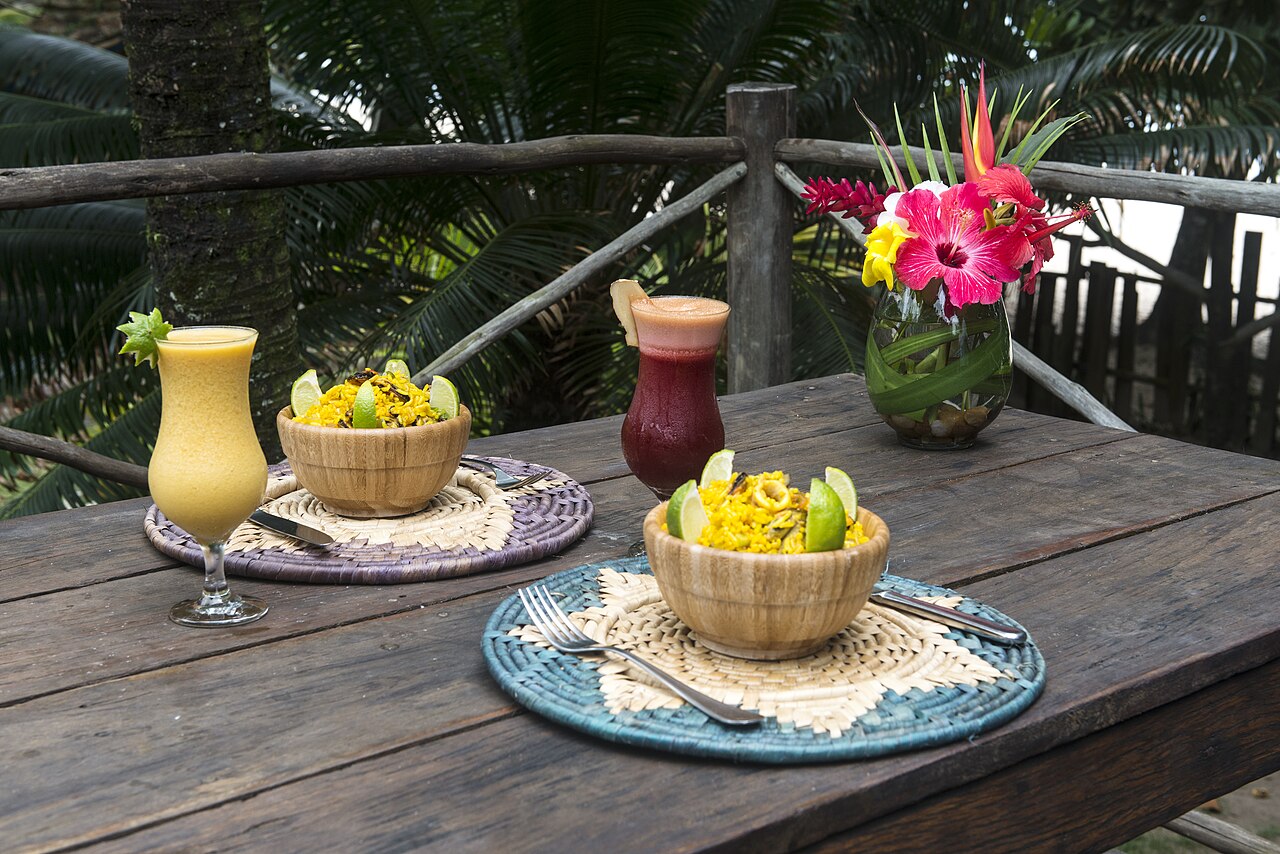
Praia do Curral was warm sand and clear water and beach bars playing bossa nova at a volume that suggested the music was for the ocean as much as for the customers. I ordered a grilled fish plate with rice and farofa for R$45 and ate it at a plastic table with my feet in the sand. The fish had been caught that morning — the waiter pointed to the boat pulled up on the beach — and it was simply seasoned with lime and salt and utterly delicious. I ate slowly, watching the waves and thinking about how different this felt from the polished port experiences I had known before. Ilhabela does not perform for visitors. It simply exists, wild and green and imperfect, and invites you to accept it on its own terms.
Back at the tender pier in late afternoon, I sat on a bench and watched the other passengers return. Some were sunburned and happy from beach days. Others were scratching borrachudo bites and laughing about it. A young couple carried a bag of handmade hammocks they had bought in Vila for around R$120 each. The tender arrived, and I rode back across the channel toward the ship, watching Ilhabela's peaks recede into the evening haze. The jungle was already beginning to darken, but the highest ridgeline still caught the last amber light, and the island seemed to glow from within.
What I learned on Ilhabela is this: there are places that reward comfort, and there are places that reward willingness. This island asks you to tolerate its insects, to walk its muddy trails, to accept that the best waterfall requires effort and the best beach requires a 4x4. In return, it gives you something no polished port can offer — the feeling of discovering a world that was not arranged for your convenience but exists in its own fierce, beautiful truth. I carry that green cathedral in my memory like a hymn, and I hear its waterfall every time I close my eyes and listen for what matters.
Weather & Best Time to Visit
The Cruise Port
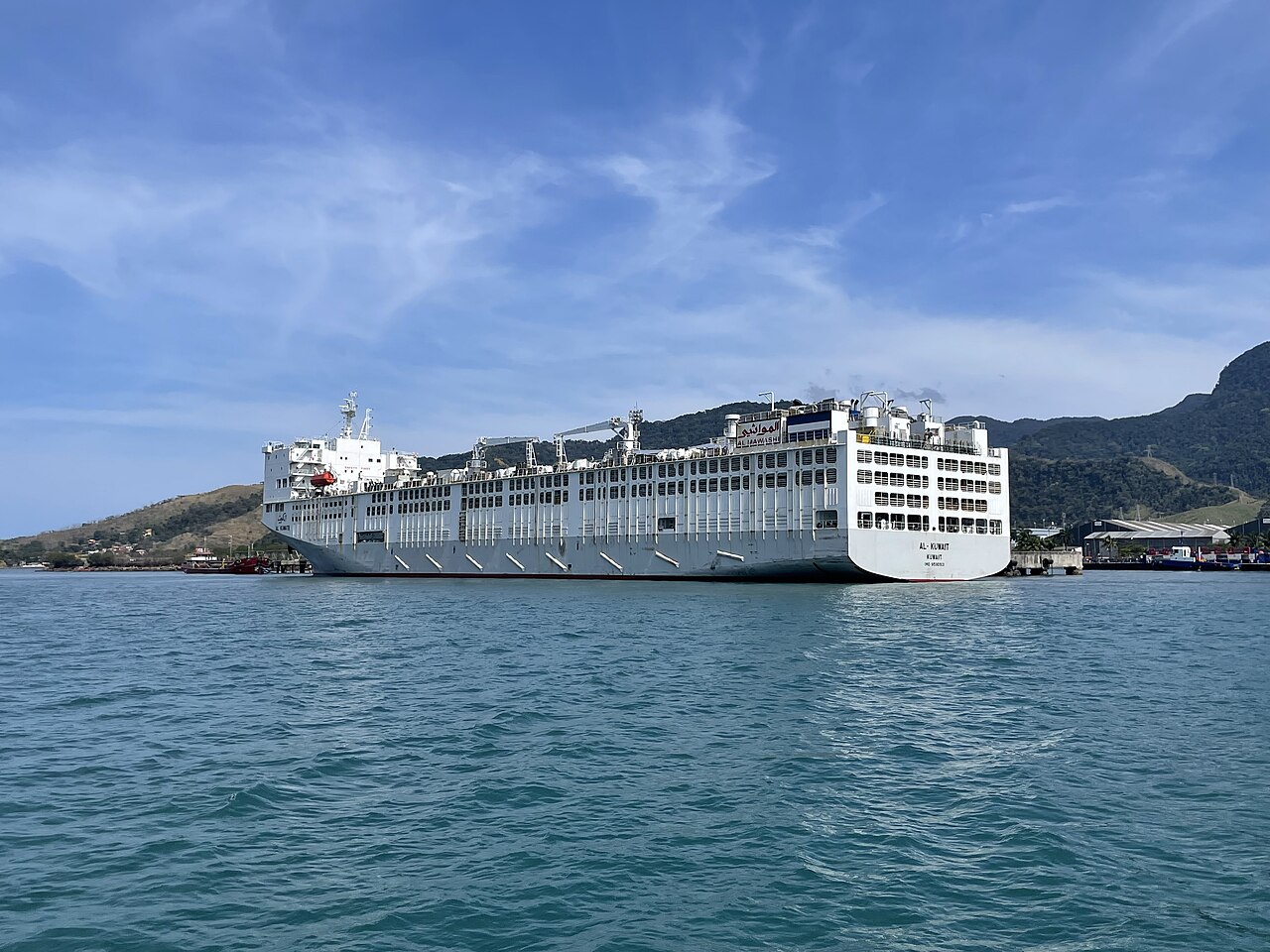
Cruise ships anchor in the Sao Sebastiao Channel between Ilhabela and the mainland, and passengers ride tenders to the small pier in Vila, the island's historic town center. The tender ride takes about ten minutes and offers stunning views of the forested peaks rising above the waterline. There is no formal cruise terminal — you step off the tender onto a concrete pier with basic shade cover and a short walk to the town's main street. Tour operators and taxi drivers gather near the landing area, and you can arrange transport on the spot or walk directly into Vila's cobblestone center.
The tender pier area has limited accessibility features. The pier surface is mostly flat but can be uneven in spots, and the tender boarding process involves stepping between a floating platform and the boat, which may be challenging for passengers with limited mobility. Check with your ship's shore excursion desk about tender accessibility before planning your day. Vila itself is compact and mostly walkable, with restaurants, shops, and the church within a few hundred meters of the landing point. There are no ATMs directly at the pier, but several banks with ATMs sit along the main road in town, roughly five minutes on foot.
Getting Around
Ilhabela is a mountainous island with one main paved road running along the western coast and a network of unpaved roads penetrating the interior. Vila and the nearby western beaches are accessible by regular taxi, with fares running R$40-80 depending on distance. A taxi from Vila to Praia do Curral costs approximately R$50-60 one way, and to the waterfall trailheads around R$30-40. Taxis do not run on meters here; negotiate the fare before departing. Some drivers will wait and return you for a round-trip price of R$100-150, which is usually worthwhile if you plan to visit a beach for a few hours.
For the remote east coast beaches like Praia de Castelhanos, you need a 4x4 vehicle. The road crosses the island through dense jungle on an unpaved track that becomes impassable after heavy rain. A 4x4 excursion to Castelhanos costs R$200-300 per person and takes roughly ninety minutes each way. Several local operators run these trips from Vila; you can book ahead through your ship's excursion desk or arrange one independently at the pier. Walking is limited to Vila and immediate surroundings — the hills are steep, the sun is strong, and distances between beaches are significant. Renting a bicycle is possible but only practical for fit riders comfortable with hills. Wheelchair users will find Vila's waterfront accessible on paved paths, but most nature trails and remote beaches are not wheelchair accessible.
Excursions & Activities
Cachoeira da Toca Waterfall Hike
The most popular and accessible waterfall on the island. A taxi from Vila to the trailhead costs R$30-40, and entry to the park is R$30 per person. The hike takes about thirty minutes on a well-marked but slippery trail through dense Atlantic Forest to a thundering waterfall with a natural swimming pool. Bring water shoes and DEET repellent. This is a moderate-energy activity suitable for reasonably fit walkers. You can visit independently — no guide is required, and the trail is clearly signposted. A ship excursion typically combines this with a beach stop for $60-90 per person. Allow 2-3 hours total including transport.
Praia do Curral Beach Day
The most developed beach on the island, roughly fifteen minutes by taxi from Vila (R$50-60). Beach bars rent chairs and umbrellas for R$30-50, and serve grilled fish plates from R$40-60. Water sports including stand-up paddleboarding (R$40/hour) and kayaking (R$30/hour) are available. This is a low-energy visit accessible to most mobility levels, with relatively flat sand and nearby facilities. No need to book ahead — simply take a taxi and choose a beach bar on arrival.
Praia de Castelhanos 4x4 Adventure
A dramatic wild beach on the eastern (ocean-facing) side of the island, reached only by an unpaved jungle road requiring a 4x4 vehicle. The journey itself is an adventure — ninety minutes through dense forest with river crossings and steep grades. A ship excursion to Castelhanos runs $80-120 and guarantees your return to the tender on time. You can also book independently with local 4x4 operators in Vila for R$200-300 per person. This is a high-energy, full half-day commitment. The beach is wild, beautiful, and has basic food vendors but limited shade. Allow 4-5 hours total.
Vila Historic Walking Tour
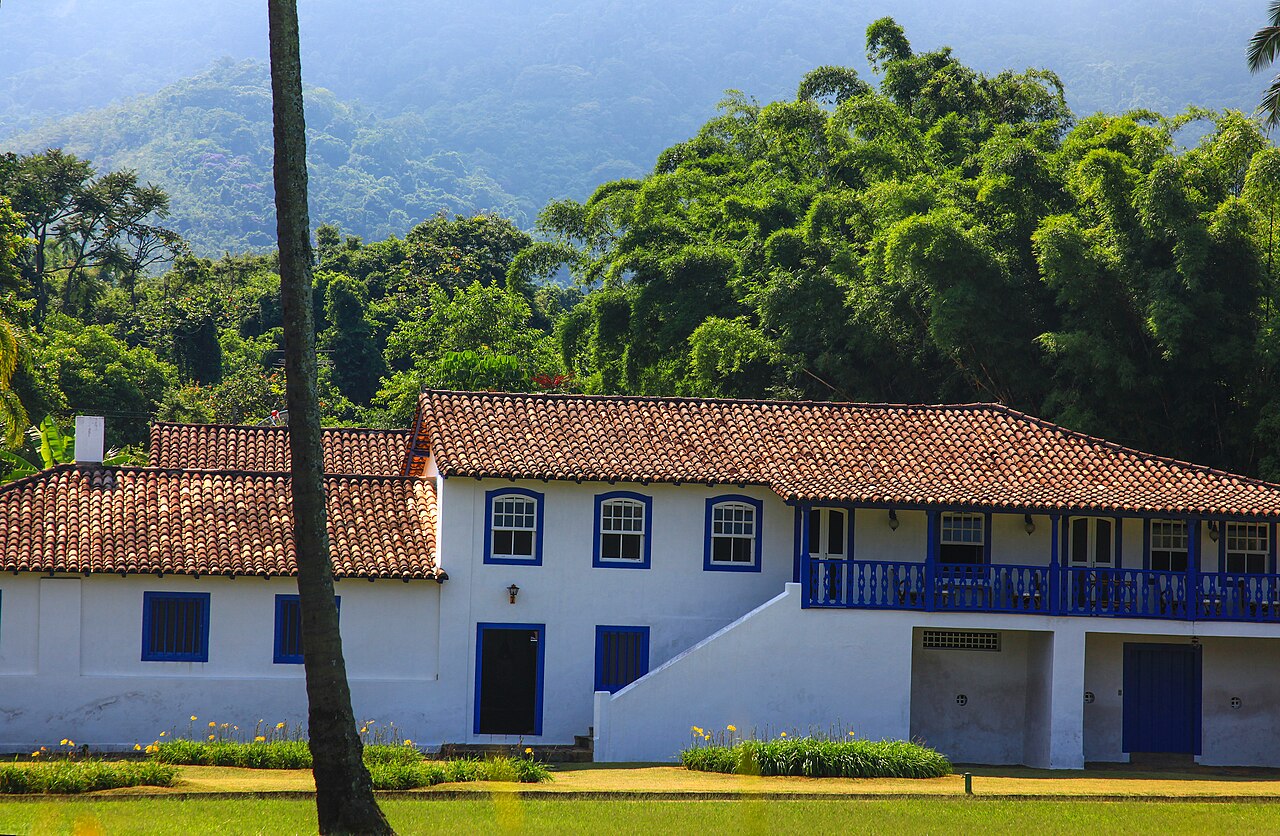
The colonial town center is free to explore on foot directly from the tender landing. The white church, waterfront promenade, craft shops, and ice cream vendors are all within walking distance. Budget about an hour for a gentle stroll. You can wander independently or join a walking tour if your ship offers one (typically $25-40). Vila is accessible for wheelchair users along the waterfront paved sections.
Scuba Diving and Snorkeling
Ilhabela sits atop dozens of historical shipwrecks and is regarded as a top diving destination in Sao Paulo state. Half-day diving excursions cost R$250-400 through local operators. Snorkeling trips to rocky coves run R$100-150. Equipment rental is included in most packages. Book ahead during the busy season (December through March) as dive boats fill quickly, or arrange independently at the pier through operators like Ilhabela Diving. Ship excursions for diving are rare at this port; most divers arrange their own through local outfits.
Sailing Charter
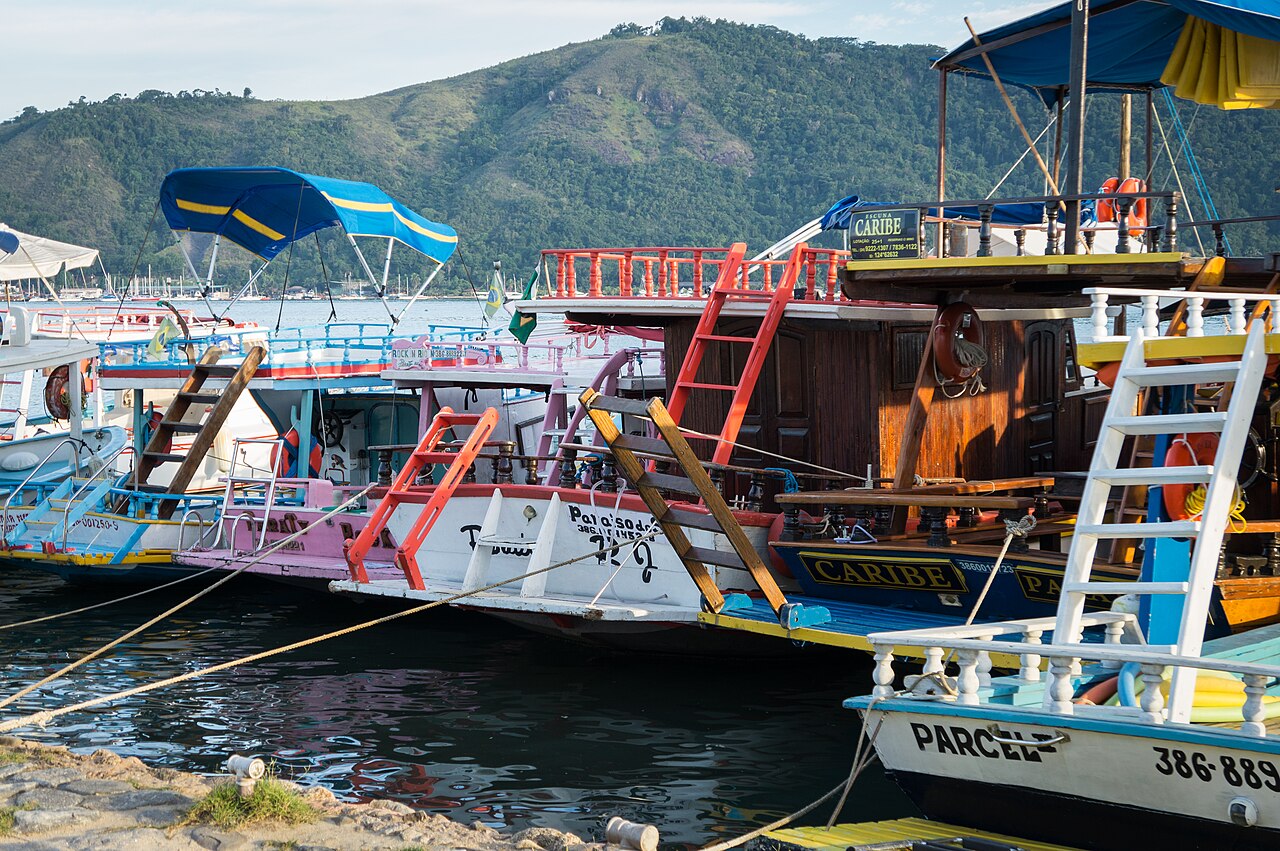
As Brazil's sailing capital, Ilhabela offers half-day and full-day sailing charters along the coast. A half-day sail for two to four passengers costs R$300-600 depending on the boat and season. This is a lovely way to see the island's coastline from the water and often includes a stop for snorkeling. Book ahead through local operators if visiting during regatta season (July), or arrange independently at the marina near Vila.
Tender Port: Ships anchor offshore and tender to the main pier in Vila (the historic town center).
Depth Soundings
Brazil operates on the Brazilian Real (BRL). As of early 2026, $1 USD buys approximately R$5.80-6.20. ATMs are available in Vila along the main commercial street, and most accept international cards with a withdrawal fee of R$10-15. Credit cards work at established restaurants, beach bars, and shops in town, but cash is essential for taxi drivers, small vendors, waterfall entry fees, and beach chair rentals. Carry small bills — getting change for a R$100 note at a beach stall can be difficult.
Tipping in Brazil follows the custom of a 10% service charge included on most restaurant bills. If no service charge appears, 10% is a fair tip. Taxi drivers do not expect tips but appreciate rounding up. Portuguese is the primary language and English is limited outside tourist areas, though younger Brazilians in Vila often speak basic English. Learning "obrigado" (thank you) and "quanto custa?" (how much?) goes a long way. The borrachudo black flies are a genuine health consideration — their bites cause itchy welts that can last a week. Apply DEET-based repellent before leaving the ship and reapply after swimming. Sunscreen is also critical; the tropical sun at this latitude burns quickly even on cloudy days.
Photo Gallery




Frequently Asked Questions
Are the borrachudos (black flies) really that bad?
Yes, in shady forested areas and near waterfalls they are relentless. Beaches with wind and sun are much better. Bring strong repellent with DEET, apply before leaving the ship, and cover exposed skin on hikes. The bites itch for days but are not dangerous.
Which beach is best for cruise visitors with limited time?
Praia do Curral offers beach bars, chair rentals (R$30-50), water sports, and food — about fifteen minutes by taxi from the tender landing. Praia Grande is closer and more family-friendly but has fewer facilities.
Do I need a 4x4 vehicle to explore Ilhabela?
Only for the east coast beaches like Castelhanos, which require unpaved jungle roads. Vila, the western beaches, and waterfall trailheads are all accessible by regular taxi along the paved coastal road.
What currency is used in Ilhabela?
Brazilian Real (BRL). Cards are accepted at restaurants and shops in Vila, but cash is needed for taxis, beach vendors, waterfall entry fees, and small purchases. ATMs are available in town.
How does Ilhabela compare to Buzios?
Ilhabela is more nature-focused with dense Atlantic Forest and waterfalls, while Buzios is a polished beach-resort town with boutique shopping. Ilhabela feels wilder, less developed, and rewards adventurous visitors willing to hike and explore.
Is Ilhabela accessible for wheelchair users?
Vila's waterfront has paved areas suitable for wheelchair users. However, waterfall trails and remote beaches require hiking on uneven ground. The tender boarding process may also present challenges — check with your cruise line about tender accessibility arrangements before your visit.
Ilhabela, Brazil — Port Guide
Last reviewed: February 2026