
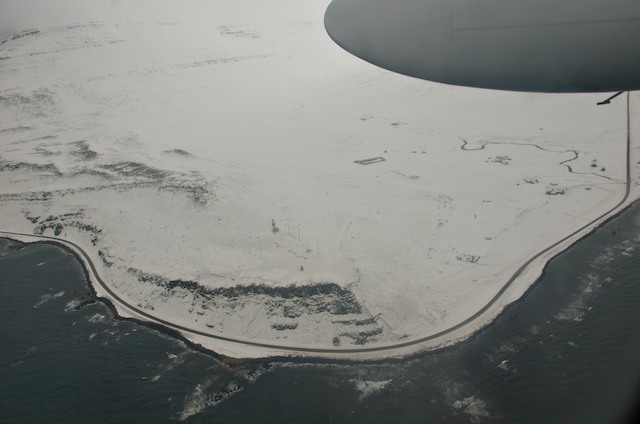
Photo: Wikimedia Commons
From the Logbook: Where the Road Ends and the Fjord Begins
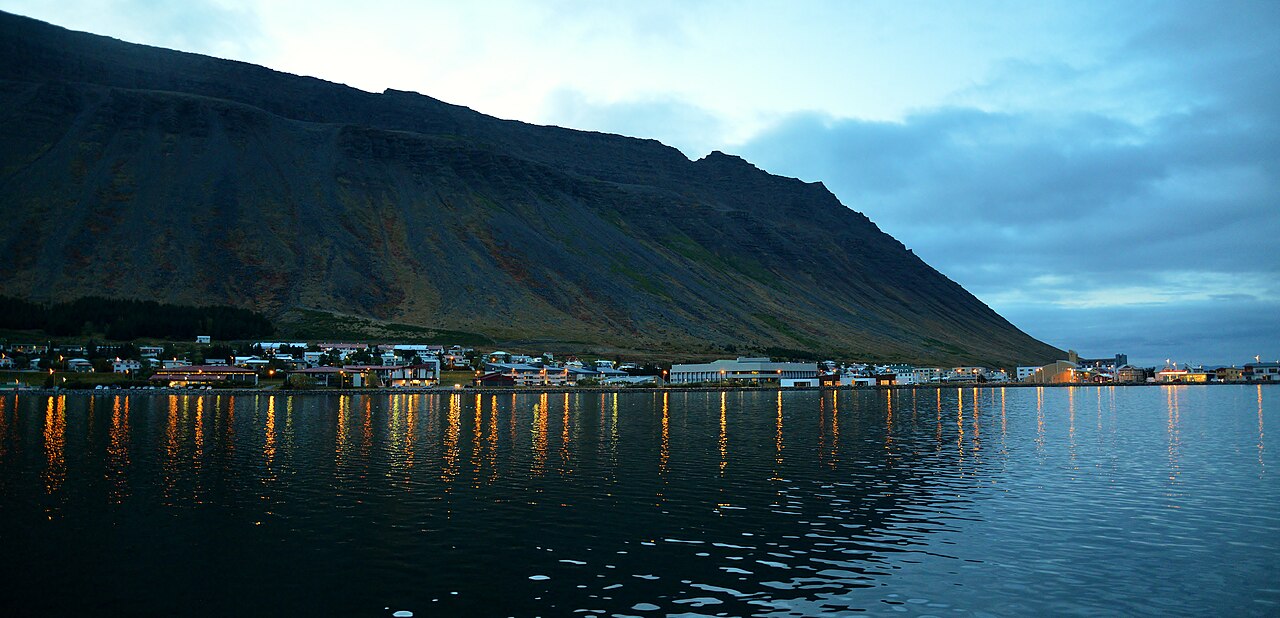
I heard Isafjordur before I saw it. Standing on the tender as we crossed the dark water of the fjord, the sound reached me first — not a city sound, not traffic or construction, but the low moan of wind funnelling through a gap in the mountains, and beneath it, the slap of small waves against the hull. The air smelled of salt and cold stone and something faintly vegetal, like wet moss. I pulled my jacket tighter and watched the town materialize out of the mist: a cluster of bright houses pressed against the base of a mountain that rose so steeply it seemed to lean over them, protective and threatening in equal measure. I counted the colours as we drew closer — red, ochre, sky blue, forest green — and I thought of the people who had chosen those colours, who had painted their homes in defiance of the grey sky and the long, dark winter. I felt grateful for their stubbornness.
The tender bumped against the landing, and I stepped ashore into a town that felt barely awake. It was nine in the morning on a Tuesday in July, and the streets were nearly empty. A woman walked a small white dog past the harbour. A man in overalls carried a bucket of fish toward a processing shed. I could hear my own footsteps on the pavement. Isafjordur has roughly 2,500 residents, making it the largest settlement in the Westfjords, but it felt more like a village — intimate, unhurried, existing at a pace that the modern world had largely forgotten. I walked past the old timber houses near the harbour, some dating to the 18th century, their wooden walls darkened by salt and time. The Westfjords Heritage Museum sat among them, housed in one of the oldest buildings in the country, and I ducked inside to escape a sudden squall of rain.
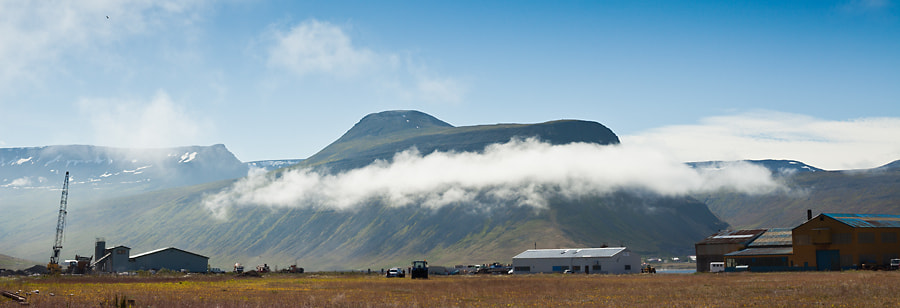
The museum was quiet and small, but it held the story of a place that had survived against improbable odds. I read about the fishing families who had lived here for centuries, hauling cod from waters so cold that a man who fell overboard had minutes, not hours, before the sea claimed him. I saw photographs of avalanches that had swept through the town, burying houses under walls of snow. And yet the people stayed. They rebuilt. They painted their houses in bright colours and went back to the sea. I stood in front of a black-and-white photograph of a fishing crew from 1923 — seven men in wool sweaters, their faces weathered beyond their years — and I thought about what it costs to love a place that is always trying to kill you. However, there was something else in those faces too: a steadiness, a calm that comes from knowing exactly where you belong.
After the museum, I hired a driver to take me to the Arctic Fox Centre in Sudavik, about twenty kilometres along the fjord. The drive was beautiful and unsettling — the road carved into the mountainside with nothing but a low guardrail between us and the dark water far below. My driver, a quiet man named Gunnar, told me that this road closes regularly in winter. "Sometimes for weeks," he said, without emotion. "We are used to it." I thought about what isolation like that does to a community — how it binds people together, how it forces self-reliance, how it breeds a particular kind of toughness that I, a creature of cities and airports, could only admire from the outside.
The Arctic Fox Centre was a small building at the edge of Sudavik, overlooking the fjord. Inside, I learned that the Arctic fox is Iceland's only native land mammal — everything else, including humans, arrived later. The centre rescues orphaned and injured foxes, and a few permanent residents live in outdoor enclosures. I watched an Arctic fox named Mori pad across his pen, his coat a dusty brown in its summer phase. A volunteer told me his story: orphaned as a kit, raised by humans, released to the wild. He came back three times. Now he lives here, greeting visitors with curious sniffs, belonging fully to neither world — tame enough to seek company, wild enough to survive winter. I stood at the fence watching him for a long time, and something shifted inside me. I thought about all the creatures, human and otherwise, who exist in that in-between space — not quite wild, not quite domesticated, simply doing their best in a world that doesn't quite fit. I whispered a quiet prayer for Mori and for all the stranded creatures, and I felt my eyes fill with tears that I did not try to explain.

Back in town, I walked along the waterfront and found a small cafe where I ordered a bowl of fish stew — Isafjordur's signature dish, thick with cod and potatoes and cream, served with dense rye bread. It cost about $22, which is unremarkable by Icelandic standards but still made me blink. The woman who served me noticed my accent and asked where I was from. When I told her, she smiled and said, "You came a long way to eat fish soup." I told her it was worth the trip. She laughed, and I meant it. Despite the price and the weather, there was something about eating that simple, honest food in that small, honest place that felt like a gift I had not earned.
I spent my last hour walking the trails above the town. The path climbed steeply through knee-high wildflowers — purple lupins and yellow buttercups nodding in the wind — and then levelled out on a ridge that gave me a view of the entire fjord. The mountains dropped vertically into water so dark it looked like ink. Far below, I could see my cruise ship anchored in the fjord, tiny and toylike against the scale of the landscape. A bird I could not identify — possibly a golden plover — called from somewhere in the grass. The wind was cold and constant and smelled of the sea. I stood there until my hands were numb, not wanting to leave, not wanting to lose this feeling of standing at the edge of the inhabited world, looking out at something vast and indifferent and strangely beautiful.
The tender ride back to the ship was rougher than the morning crossing. The wind had picked up, and the small boat pitched and rolled as it cut across the chop. I gripped the rail and watched Isafjordur shrink behind us — the bright houses, the dark mountains, the single church steeple — and I felt the particular sadness of leaving a place I had only just begun to understand. But I also felt something deeper: a recognition that places like this matter, that their survival is not guaranteed, that the families who stay in remote towns and paint their houses red and haul fish from freezing water are doing something quietly heroic. That is what Isafjordur taught me — that courage is not always loud, that the most remarkable lives are sometimes lived in the smallest places, and that a town of 2,500 people clinging to a mountainside at the edge of the Arctic can hold more wisdom than a city of millions. I carry that lesson with me still, along with the taste of fish stew and the memory of an Arctic fox who could not decide whether he was wild or tame.
Weather & Best Time to Visit
Isafjordur has a subarctic oceanic climate shaped by the North Atlantic. Summers (June through August) bring temperatures of 8-13 °C (46-55 °F) with long daylight hours — in late June and early July, the midnight sun means near-constant light. Winters are harsh, with temperatures dropping to -2 to 3 °C (28-37 °F) and snow covering the mountains from October through April. Wind is constant year-round; sudden fog and rain can roll in without warning even in summer. Cruise ships visit between May and September, with July and August offering the mildest conditions. However, even in peak summer, tendering can be cancelled if the fjord is too rough. Layered clothing with a waterproof outer shell is essential regardless of the month.
The Cruise Port
Isafjordur's small harbour cannot accommodate large cruise ships dockside. Most vessels anchor in the fjord and tender passengers ashore. The tender landing is in the heart of town, beside the harbour — everything is walkable from there. A few smaller expedition-class ships may dock directly at the pier when space allows, but this is uncommon during peak season. The landing area has a small welcome tent staffed by local tourism volunteers who distribute free maps and answer questions. There are no shops or restaurants inside the terminal area itself, but the town centre is literally a two-minute walk away. Wheelchair users should note that the tender boats themselves can be challenging to board depending on sea conditions, though the landing area is flat and accessible. Weather is unpredictable in the Westfjords, and high winds or rough seas can delay or cancel tendering entirely. Have a backup plan — ship activities, reading, relaxation — in case shore access is impossible. When tendering runs smoothly, the crossing takes about ten minutes each way.
Getting Around
Isafjordur is a compact town, and most visitors explore the centre entirely on foot. The harbour, old town, Heritage Museum, cafes, and gift shops are all within a five-to-ten-minute walk of the tender landing. Pavements are mostly flat in the town centre, making low-walking exploration manageable for most mobility levels, though some streets are uneven with older paving stones. For destinations outside town — the Arctic Fox Centre in Sudavik (20 km), Dynjandi waterfall (about 100 km), or the hiking trailheads above the fjord — you will need vehicle transport.
Taxis exist in Isafjordur but are limited in number. A taxi to Sudavik costs approximately $40-50 one way. Hiring a private driver for a half-day tour runs $150-250 depending on the route and duration. Rental cars are available through local agencies, but booking ahead during cruise season is wise because supply is extremely limited — sometimes only two or three vehicles are available in the entire town. A rental car costs roughly $80-120 per day. There is no public bus service useful for cruise visitors on a time-limited port day. Most cruise lines offer organised ship excursion coaches for popular destinations like Dynjandi and the Arctic Fox Centre. The roads outside town are narrow, winding, and often gravel-surfaced, so drive cautiously if you choose to go independently. In the town itself, walking remains the simplest and most rewarding way to experience Isafjordur.
Port Map
Excursions & Activities
Arctic Fox Centre (Sudavik)
The most popular excursion from Isafjordur, the Arctic Fox Centre is located in the village of Sudavik, about 20 km along the fjord. The centre houses a museum with exhibits on Arctic fox ecology, behaviour, and conservation, plus outdoor enclosures with resident rescue foxes. Entry costs approximately $15 (2,000 ISK). A ship excursion combining the Fox Centre with a scenic drive typically costs $80-120. You can also visit independently by taxi ($40-50 one way) or rental car. Allow 1.5-2 hours for the visit including the drive. This is a low-energy excursion suitable for most mobility levels, with flat paths through the exhibit area.
Dynjandi Waterfall
The most spectacular natural site in the Westfjords, Dynjandi is a 100-metre cascade that fans out in a bridal-veil pattern down a cliff face. The drive from Isafjordur takes about 1.5 hours each way on winding mountain roads. A full-day ship excursion costs $130-180 and is the safest option because the drive time leaves little margin for error if you need to make it back for the last tender. Independent visitors can hire a driver for $200-300 round trip. The walk from the car park to the base of the falls is a moderate-energy hike of about 15 minutes on a rocky trail. Book ahead for organised tours during peak season, as capacity is limited.
Kayaking the Fjord
Paddling through the glacially carved fjord beneath towering mountains is an unforgettable experience. Guided kayak tours last 2-3 hours and cost $90-130. No experience is necessary — outfitters provide drysuits, equipment, and instruction. Tours operate weather-permitting and should be booked ahead through local operators or as a ship excursion. This is a moderate-energy activity. Wheelchair users and those with limited upper-body mobility should note that kayaking requires balance and arm strength.
Town Walk and Heritage Museum
A self-guided walk through Isafjordur's old town takes about an hour and costs nothing. The timber houses near the harbour date to the 18th century, and the Westfjords Heritage Museum (entry roughly $10 or 1,500 ISK) is housed in one of Iceland's oldest structures. The museum covers fishing history, avalanche survival, and daily life in one of Europe's most remote settlements. This is a low-energy, accessible activity suitable for almost everyone. No booking needed — simply walk off the tender and explore.
Hiking Above the Fjord
Several trails begin at the edge of town and climb into the mountains above. The most popular route leads to a ridge overlooking the entire fjord, gaining roughly 300 metres of elevation over 2-3 kilometres. Wildflowers bloom in July and August. Trails are unmarked in places, and weather can change rapidly, so carry layers, water, and let someone know your route. This is a high-energy activity for fit walkers. There is no cost, and no booking is needed. Independently exploring the mountain trails offers solitude that organised tours cannot replicate.
Tender Port: Isafjordur typically requires tendering. Weather can delay or cancel shore access — have backup plans ready.
Depth Soundings
Iceland operates on the Icelandic Krona (ISK). As of early 2026, $1 USD buys approximately 135-140 ISK. Credit and debit cards are accepted virtually everywhere in Iceland — even market stalls and public toilets — so cash is rarely necessary. ATMs are available at the local bank in town. Iceland is expensive by any measure: expect cafe meals to cost $25-40, a beer at a bar to run $12-15, and even a simple hot dog to be $5-8. Budget accordingly and do not expect bargains.
Tipping is not customary in Iceland; service charges are included in prices. English is widely spoken, especially in tourism-facing businesses, though learning "takk" (thank you) earns a smile. The town has reliable mobile coverage and most cafes offer free WiFi. Isafjordur sits at 66 degrees north latitude, just below the Arctic Circle, so in late June the sun barely sets — bring an eye mask if you are sensitive to light. Conversely, ships visiting in May or September will find significantly shorter days. Weather layers are non-negotiable: a waterproof jacket, warm fleece, and sturdy walking shoes are the minimum. Wool base layers are ideal, and locals will tell you there is no bad weather, only bad clothing.
Practical Information
Money
Icelandic Krona (ISK). Credit cards accepted virtually everywhere — cash rarely needed.
Weather
Cool even in summer (8-13 °C / 46-55 °F). Wind and rain likely. Dress in waterproof layers.
Language
Icelandic, but English widely spoken.
Costs
Iceland is expensive. Cafe meals $25-40, beers $12-15. Plan your budget with care and gratitude for each experience.
Photo Gallery


Frequently Asked Questions
Will I definitely get ashore at Isafjordur?
Not guaranteed. Isafjordur is a tender port and Westfjords weather is notoriously changeable. High winds or rough seas can delay or cancel tendering entirely. Have a flexible mindset and a backup plan for ship-based activities.
Can I visit Dynjandi waterfall on a cruise day?
Dynjandi is about 1.5 hours each way by road. A full-day ship excursion can include it if your port call allows eight or more hours ashore. Independent visitors should hire a driver and depart as early as possible. Book ahead during peak season.
Is there much to do in Isafjordur town?
The town is small but charming. Walk the old timber houses, visit the Heritage Museum, browse local craft shops, and enjoy fresh seafood at a harbourside cafe. Most visitors find it a peaceful and rewarding few hours.
Can I see arctic foxes near Isafjordur?
Yes. The Arctic Fox Centre in Sudavik (20 km from town) has resident rescue foxes and exhibits about wild populations. Ship excursions often include a stop here, or you can visit independently by taxi.
What currency do I need in Isafjordur?
Icelandic Krona (ISK). Credit and debit cards are accepted virtually everywhere in Iceland, even for small purchases. Cash is rarely needed, but ATMs are available at the local bank in town.
How accessible is Isafjordur for visitors with limited mobility?
The town centre is mostly flat and walkable. However, the tender boats can be difficult for wheelchair users depending on sea conditions. Hiking trails are steep and uneven. The Arctic Fox Centre has accessible paths on the main level.
Isafjordur, Iceland — Cruise Port Guide
Last reviewed: February 2026