


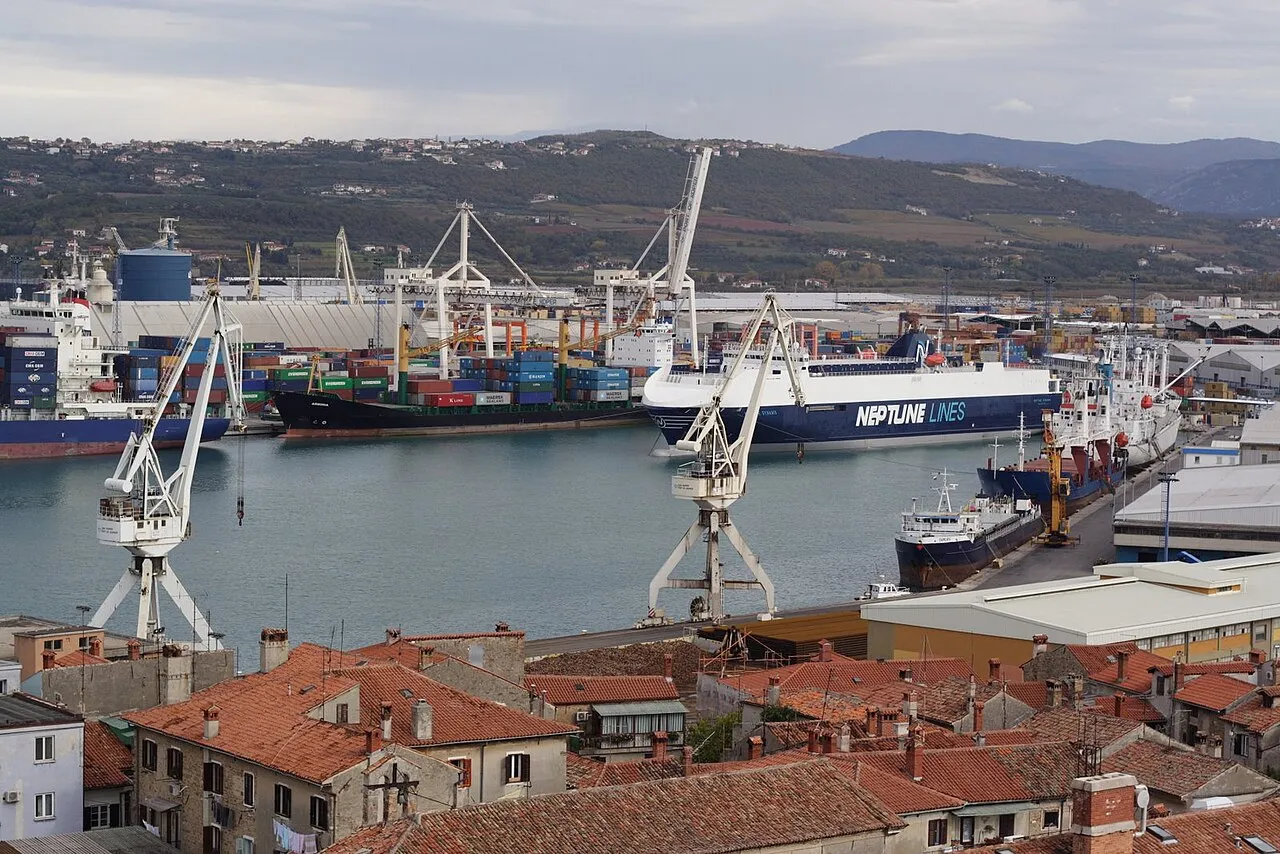
Photo: Wikimedia Commons
My Logbook: Venetian Stones and Slovenian Soul
I heard Koper before I saw it. Standing on the upper deck as our ship nudged toward the passenger terminal, the sound of church bells drifted across the Bay of Koper, thin and bright in the morning air, mixing with the low rumble of container cranes working the commercial port next door. The water was flat and grey-green, and the town rose behind the harbour in a jumble of terracotta roofs and pale stone walls that looked like they had been sketched by a Venetian painter who ran out of canvas. I grabbed my daypack, laced my walking shoes tight, and stepped down the gangway into Slovenia's only real port town — a place with exactly forty-seven kilometres of coastline and five centuries of Venetian history compressed into streets you can walk in an afternoon.
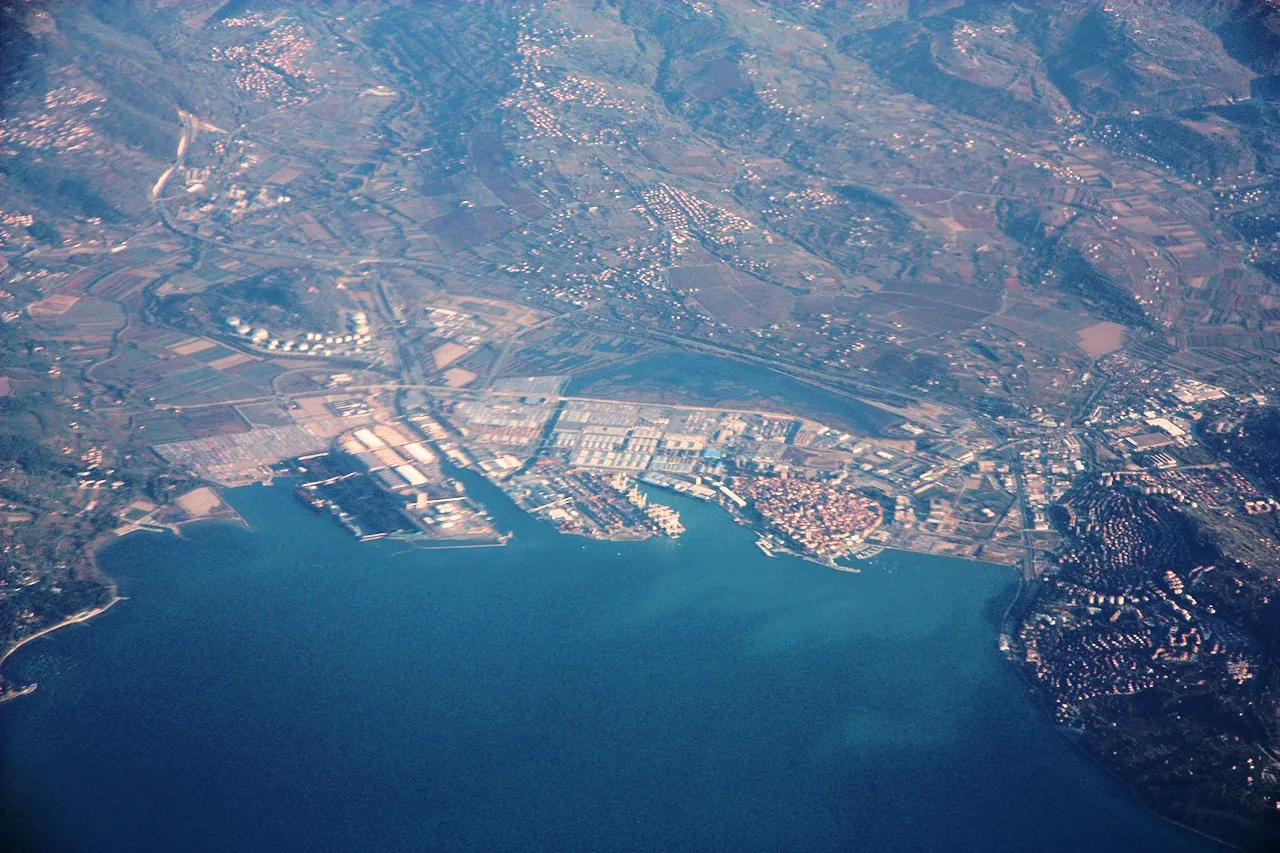
The walk from the cruise terminal into the old town took me fifteen minutes along a flat, paved waterfront path — wheelchair accessible and shaded by plane trees for most of its length. I passed fishermen mending nets and a woman selling jars of Istrian honey from a folding table, and then the old town simply opened up in front of me like a theatre curtain rising. Tito Square — Titov trg in Slovenian — is the beating heart of Koper, and it stopped me in my tracks. The Praetorian Palace dominated the western side, its Gothic-Venetian facade covered in carved lions and coats of arms and arched windows that spoke of a time when the mayor of Capodistria answered directly to the Doge of Venice. The Loggia cafe occupied the ground floor, and I sat down at an outdoor table and ordered a double espresso for 1.50 EUR. I sipped it slowly, watching pigeons strut across the flagstones while the cathedral bell tower cast its long morning shadow over the square.
I climbed that bell tower — fifty-four metres of narrow stone steps that spiralled upward through the cool interior of the Cathedral of the Assumption. The climb costs 3 EUR, and it is worth every cent. At the top, I emerged into blinding sunlight and a view that made me catch my breath. To the west, the Italian city of Trieste shimmered across the bay. To the south, the Slovenian coast curved away toward Izola and Piran, a ribbon of white stone and green hills meeting blue water. Below me, the rooftops of Koper spread out in every shade of orange and brown, broken by church spires and the green rectangles of hidden courtyard gardens. I stood there for a long time, turning slowly, trying to fix it all in my memory.

After the tower, I wandered the back streets. Koper's old town is small enough to explore without a map but layered enough to reward curiosity. I found a tiny courtyard where an old man was pressing olive oil in a stone mill, the green liquid pooling thick and fragrant in a stainless steel basin. He offered me a taste on a piece of bread — peppery, grassy, alive — and refused any payment. "From my trees," he said in careful English, gesturing vaguely toward the hills. I thanked him and moved on, but the taste of that oil stayed on my tongue for hours, clean and honest and rooted in a specific piece of earth.
In the afternoon I caught the local bus to Piran — a twenty-minute ride costing about 3 EUR — and the day shifted gears completely. If Koper is the working heart of Slovenia's coast, Piran is its romantic soul. The town clings to a narrow peninsula jutting into the Adriatic, its Venetian architecture even more perfectly preserved than Koper's. I walked Tartini Square, named for the violinist Giuseppe Tartini who was born here in 1692, and climbed the town walls for another set of views that seemed designed specifically to make photographers weep. The Church of St. George sat at the highest point, and from its terrace I could see all the way to the Croatian coast on one side and the snow-dusted Julian Alps on the other. I sat on a warm stone bench and watched the sun track across the water, and I understood why the Venetians fought so hard to keep this stretch of coastline — the light here has a quality I have not seen anywhere else in the Mediterranean, a softness that turns ordinary stone into something that glows.
Back in Koper that evening, I walked to a small restaurant near the marina and ordered grilled branzino with potatoes and a glass of local Malvazija white wine. The fish cost 14 EUR and the wine 4 EUR — prices that would be unthinkable in Venice or Dubrovnik for the same quality. The waiter, a young man studying literature at the University of Ljubljana, told me that Koper was changing. "More ships come every year," he said. "But we are still ourselves. We are not a theme park." I believed him. There was something deeply authentic about this place — a town that earns its living from its commercial port and its olive groves and its fishing boats, and welcomes visitors without performing for them.
I made one more stop before returning to the ship. I had read about the Ljubljana excursion — the Slovenian capital sits just an hour inland by road — but I had chosen to stay on the coast this time. However, several passengers who had taken the day trip returned glowing with stories of Ljubljana Castle perched above the old town, the Triple Bridge spanning the emerald Ljubljanica River, and the dragon statues guarding the Dragon Bridge. They had paid about 60 EUR for a guided group tour and said every euro was well spent. I made a mental note to take that trip next time, because Slovenia is a country that rewards return visits — small enough to feel intimate but deep enough to keep surprising you.
What I carry from Koper is this: that smallness is not a limitation but a form of concentration. Slovenia pours its entire maritime identity into forty-seven kilometres of coast, and the result is something undiluted and real. The Venetian stones remember. The olive trees remember. The grandmother on the seawall remembers. And now, so do I. That is the gift this port gave me — not spectacle, not grandeur, but the quiet insistence that a place does not need to be large to be deeply loved, and that the most honest travel happens when you stop performing as a tourist and simply sit still long enough to hear what a town is trying to tell you.
Weather & Best Time to Visit
The Cruise Port
Ships dock at the Koper Passenger Terminal, located adjacent to the commercial container port on the northern edge of town. The terminal building is modern and functional with a covered walkway, basic seating, and tourist information desk where you can pick up free maps. There are no shops or restaurants inside the terminal itself, but the waterfront promenade begins immediately outside the gate. The walk to Tito Square and the old town takes about fifteen minutes along a flat, paved, wheelchair-accessible path — no shuttle bus required. Taxis wait outside the terminal; the fare to Piran costs approximately 30 EUR one way. The port area has accessible ramps and level surfaces throughout, making it manageable for passengers using mobility aids. Slovenia uses the euro, so there is no currency exchange needed for most European cruise passengers. ATMs are available in the old town within a short walk of the terminal.
Getting Around
Koper's old town is compact and entirely walkable — you can cross it end to end in twenty minutes at a leisurely pace. The streets are a mix of flagstone and cobblestone, generally flat but occasionally uneven underfoot, so sturdy walking shoes are recommended. Wheelchair users will find the main routes from the port to Tito Square accessible, though some narrow back streets have steps or rough surfaces. A free city map from the tourist office marks the most accessible routes through the historic center.
For destinations beyond walking distance, local buses connect Koper with Piran (20 minutes, about 3 EUR), Izola (10 minutes, about 2 EUR), and Portoroz (25 minutes, about 3 EUR). Buses run every twenty to thirty minutes during cruise season. Taxis are metered and reliable — a taxi from the port to Piran costs roughly 30 EUR, while a full-day private driver for excursions to Ljubljana or Postojna Cave runs 120–180 EUR depending on distance and duration. Bike rental is available near the waterfront at about 15 EUR for a half day, and the Parenzana trail is the standout cycling route — flat to gently rolling, with old railway tunnels and viaducts making it a moderate-energy adventure suitable for reasonably fit adults. Electric bike rentals are also available for about 25 EUR per half day for those wanting a lower-energy ride along the coast.
Koper Area Map
Interactive map showing cruise terminal and Koper attractions. Click any marker for details.
Excursions & Activities
Koper Old Town Walking Tour
The old town is the easiest and most rewarding way to spend a port morning. Start at Tito Square with the Praetorian Palace and Loggia, climb the cathedral bell tower (3 EUR entry) for panoramic views, then wander Kidriceva and Cevljarska streets past Venetian-Gothic townhouses and hidden courtyards. Allow two to three hours. This is a low-energy, self-guided walk — you can explore independently or join a ship excursion that typically costs 40–55 EUR and includes a local guide. The entire route is accessible on the main streets, though some back alleys have steps.
Piran Day Trip
The jewel-box Venetian town of Piran sits twenty minutes south by bus (about 3 EUR each way) and is the single strongest recommendation I can make for this port. Tartini Square, the Church of St. George, and the medieval town walls deliver a concentrated dose of Adriatic beauty. You can visit independently by catching the local bus from Koper bus station, a ten-minute walk from the cruise terminal. A ship excursion to Piran typically costs 50–70 EUR and adds Portoroz or a local food sampling stop. Allow three to four hours for a comfortable independent visit. Moderate energy — there are hills and steps to reach the best viewpoints, but the main square and waterfront are flat and wheelchair accessible.
Ljubljana Capital Excursion
Slovenia's capital is roughly one hour by road from Koper and makes a rewarding full-day trip. Highlights include Ljubljana Castle (funicular ride about 13 EUR), the Triple Bridge, Preseren Square, and the riverside cafe scene. A ship excursion runs 55–80 EUR and guarantees your return to the vessel — book ahead for this one, because the drive time leaves limited margin for delays. Independent travelers can arrange a private driver for about 120–150 EUR round trip, or take the bus (about 12 EUR each way, 1.5 hours). High energy due to the travel time.
Postojna Cave & Predjama Castle
The underground train ride through Postojna Cave is unlike anything else in Europe — 24 kilometres of stalactites and stalagmites illuminated along a subterranean railway. Entry costs approximately 28 EUR for adults. Predjama Castle, built into a cliff face fifteen minutes away, adds medieval drama for about 16 EUR. A combined ship excursion runs 80–110 EUR. You can visit independently by taxi or private driver (about 80–100 EUR round trip for the car). Allow five to six hours total. The cave tour involves some walking on uneven ground but is partially accessible; ask the cave management in advance about wheelchair arrangements.
Parenzana Bike Trail
The converted narrow-gauge railway trail runs along the coast and into the Istrian interior, passing through tunnels and over stone viaducts. Bike rental near the waterfront costs about 15 EUR for a half day. The trail is flat to gently rolling and suitable for moderate fitness levels. Allow three to four hours for a round trip to the first tunnels and back. You can book ahead with a local outfitter who will provide helmets and route maps, or simply rent independently and follow the well-marked path. This is not typically offered as a ship excursion but is easy to arrange on your own.
Depth Soundings
Slovenia uses the euro, so cruise passengers from the eurozone need no currency exchange. ATMs are available on Pristaniska street near the old town entrance and accept major international cards. Credit cards work at most restaurants, hotels, and shops in Koper and Piran, but smaller market vendors and konobas (traditional taverns) in the countryside may prefer cash. Budget about 20–40 EUR for a comfortable lunch with a non-alcoholic drink; the cost of dining here is notably lower than in Venice or Dubrovnik. Carry small denominations — a 50 EUR note can be difficult to break at a roadside honey stand.
Tipping is not obligatory in Slovenia but appreciated — round up the bill at restaurants or leave 5–10% for good service. English is widely spoken in Koper's tourist areas and by younger Slovenians, though learning "hvala" (thank you) earns genuine smiles. The Slovenian coast observes a Mediterranean pace — restaurants close between lunch and dinner, and shops may shut for an afternoon break. Water from the tap is safe to drink throughout Slovenia. The Bora wind can drop temperatures sharply in winter and Transitional Seasons; check the forecast before planning outdoor excursions. For wheelchair users and those with limited mobility, Koper's main waterfront path and Tito Square are accessible, but the Piran hill climbs and Parenzana tunnels present barriers — plan accordingly.
Photo Gallery
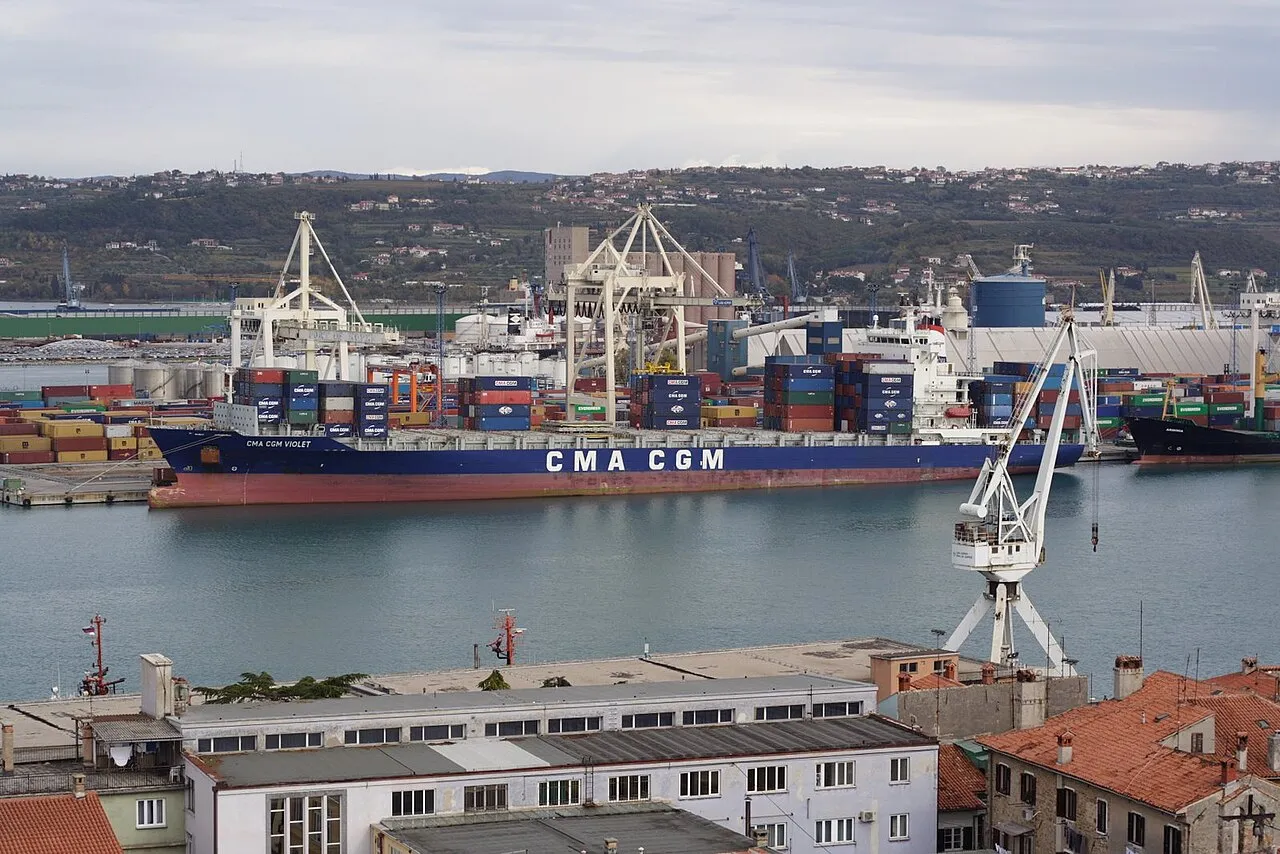
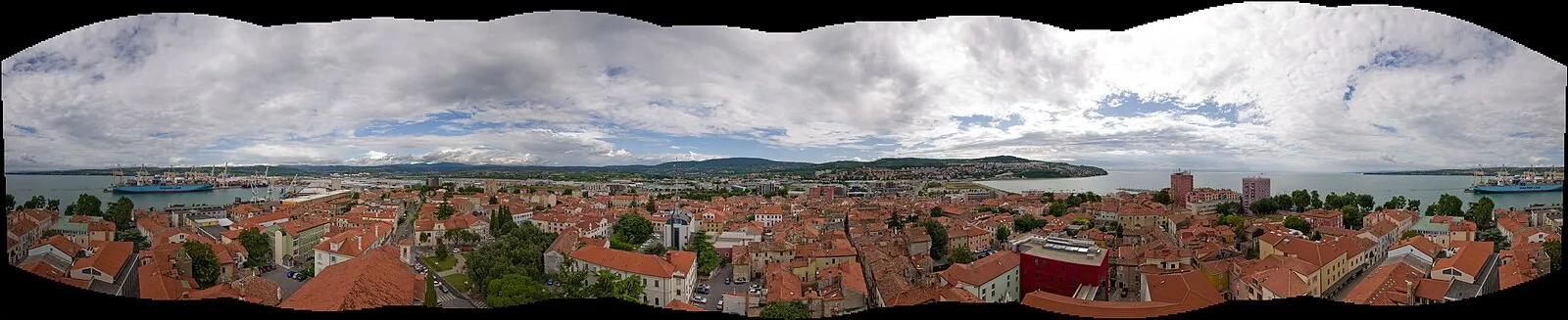
Image Credits
All photographs on this page are used under Creative Commons or free-use licenses. Images sourced from Wikimedia Commons, Unsplash, Pixabay, Pexels, and Flickr.
Frequently Asked Questions
Can I walk from the cruise port to Koper old town?
Yes. The walk from the passenger terminal to Tito Square takes about fifteen minutes along a flat, paved waterfront path that is wheelchair accessible. No shuttle bus is needed.
Is Koper worth visiting on a cruise?
Koper offers authentic Venetian-Gothic architecture, genuine Slovenian culture, and access to Piran, Ljubljana, and Postojna Cave — all at prices well below neighbouring Italy or Croatia. It is an underrated stop that rewards curious travellers.
What currency does Koper use?
Slovenia uses the euro. Credit cards are accepted at most restaurants and shops. Carry small cash for market vendors, bus fares, and countryside konobas. ATMs are available in the old town.
Can I visit Ljubljana from Koper in a day?
Yes, but it requires planning. Ljubljana is about one hour by road. Ship excursions cost 55–80 EUR and guarantee timely return. Independent visitors can hire a driver for 120–150 EUR round trip or take the bus at about 12 EUR each way.
How long does the Parenzana bike trail take?
A round trip to the first tunnels and viaducts takes three to four hours at a relaxed pace. Bike rental runs about 15 EUR for a half day. The trail is flat to gently rolling and suitable for moderate fitness.
What should I eat in Koper?
Try grilled branzino (sea bass) with local olive oil, fuzi pasta with Istrian truffles, and Malvazija white wine. A full meal with wine costs 18–25 EUR at a waterfront restaurant — exceptional value for Adriatic dining.
Koper, Slovenia — Port Guide
Last reviewed: February 2026