


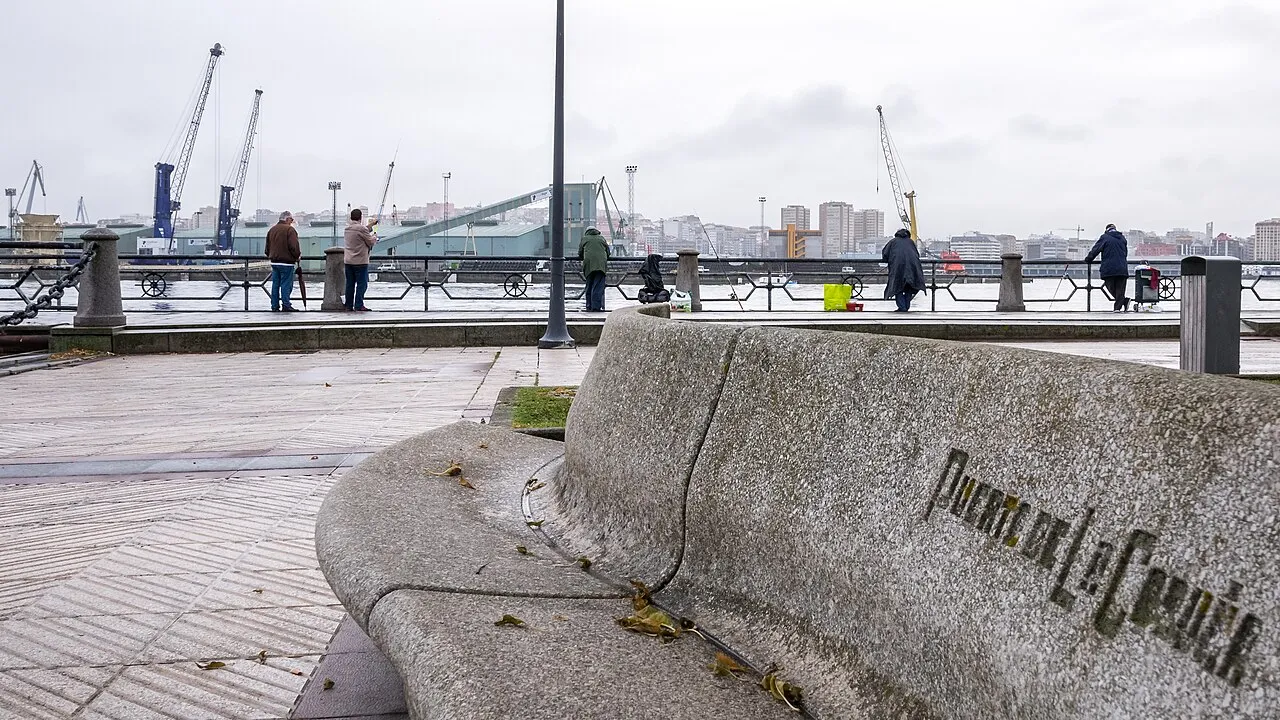
Photo: Wikimedia Commons
My Logbook: Where Roman Stone Meets the Atlantic
I heard La Coruna before I saw it. Standing on the upper deck as our ship rounded the breakwater, the sound of Atlantic waves crashing against granite carried across the harbour, and behind it came the faint ring of cathedral bells rolling down from the Old Town. The air smelled of salt and something green — the lush, rain-fed hills of Galicia rising behind the city like a promise. I grabbed my daypack, slipped on my walking shoes, and stepped down the gangway into a morning that felt more like Brittany or Ireland than the Spain I had imagined from postcards of the Costa del Sol.
The walk from the cruise terminal to the Tower of Hercules took me along a coastal path that hugged the headland, the wind pressing against my chest with each step. I could taste the salt on my lips. Wildflowers — yellow gorse and purple heather — lined the trail, and the grass was so green it seemed to glow in the low morning light. To my left, the Atlantic stretched to the horizon, slate-grey and restless. To my right, the city climbed its hills in tiers of white stone and glass. And ahead, rising from a rocky promontory like a finger pointing at the sky, stood the Tower of Hercules — a lighthouse that has been guiding sailors since somewhere between 40 and 80 AD, when a Roman architect named Gaius Sevius Lupus raised it from local granite and dedicated it to Mars, the god of war.
I paid the 3 EUR entry fee and began climbing the 242 steps. The staircase spiralled upward through layers of history — thirty-four metres of original Roman masonry at the core, wrapped in twenty-one metres of neoclassical stone added by architect Eustaquio Giannini in 1788 under King Carlos III. I ran my fingers along the rough inner wall and felt the grooves where medieval sailors had carved their names and symbols into the stone, leaving messages for whoever climbed after them. The earliest written record of the tower comes from the historian Paulus Orosius around 415 AD, when the lighthouse was already ancient. I thought about that — a building so old that by the time someone first wrote about it, it had already been burning for three centuries.
At the summit, the wind hit me full in the face, and I gasped. The view opened in every direction: the harbour below with our ship at berth, the red-tiled rooftops of the Old Town, the green hills rolling south toward Santiago de Compostela, and the Atlantic crashing white against the rocks of Monte dos Bicos, where Iron Age carvings mark even older human presence on this headland. UNESCO named the entire site a World Heritage treasure in 2009, but the tower needs no official recognition. It simply stands, as it has for nearly two thousand years, doing what it was built to do — showing sailors the way home.
Back in the city, I wandered through the glazed galerias along Avenida de la Marina. These are entire building facades wrapped in white-painted glass balconies — La Coruna's signature architectural feature, originally designed to let fishermen's families watch the harbour while sheltering from the rain. The glass caught the shifting Atlantic light and threw it back in pale silver, and for a moment the whole waterfront seemed to shimmer. I watched an old woman watering geraniums behind one of those glass panels, her silhouette framed like a painting, and I understood why they call this the City of Glass.

Lunch was at a small taverna on a cobblestone alley in the Old Town, near the Romanesque churches of Santiago and Santa Maria del Campo. I ordered pulpo a feira — Galician-style octopus, tender and smoky, dusted with paprika and drizzled with olive oil, served on a wooden board for 14 EUR. The pimientos de Padron came next, blistered and salted, and I played the old game of wondering which one would be the hot one. A glass of cold Albarino wine cost 3.50 EUR and tasted of green apple and Atlantic mineral. The flavors were simple and honest, like the city itself.
In the afternoon, I walked to Riazor Beach. The sand was golden and wide, the waves rolling in with real Atlantic power, and a handful of surfers in wetsuits rode the swells with quiet concentration. I sat on the seawall and watched them for a long time. The water was cold — maybe 17 degrees — but a few families were swimming, the children shrieking as each wave hit them. I took off my shoes and walked along the wet sand, feeling the shock of the cold water on my feet, and something shifted inside me.
It happened quietly, the way important things often do. I had been carrying a heaviness with me on this voyage — work stress, the weight of deadlines, a nagging feeling that I had been moving too fast through my own life without stopping to look at where I was. But standing there on that beach, with the Atlantic pulling at my ankles and the Tower of Hercules visible on the headland to my north, still burning after two thousand years, my eyes filled with tears. I whispered a quiet prayer of gratitude — not for anything specific, but for this moment, for the cold water and the green hills and the ancient light. For the fact that Gaius Sevius Lupus built something that outlasted every empire that tried to claim it. For the reminder that some things endure. I stood there for a long time, not wanting to move, letting the water and the wind do their work on me.
I made it back to the ship with an hour to spare, sunburned on my nose despite the clouds, carrying a bottle of Albarino and a small bag of smoked paprika that cost 2 EUR. As the ship pulled away from La Coruna, I stood at the rail and watched the Tower of Hercules grow smaller against the darkening sky, its light beginning to blink as dusk settled. What La Coruna taught me is that endurance is its own kind of beauty — that a city built on rain and granite and cold Atlantic wind can be warm in ways that have nothing to do with temperature, and that sometimes you need to stand at the edge of a continent with the ocean at your feet to remember what matters.
Weather & Best Time to Visit
The Cruise Port
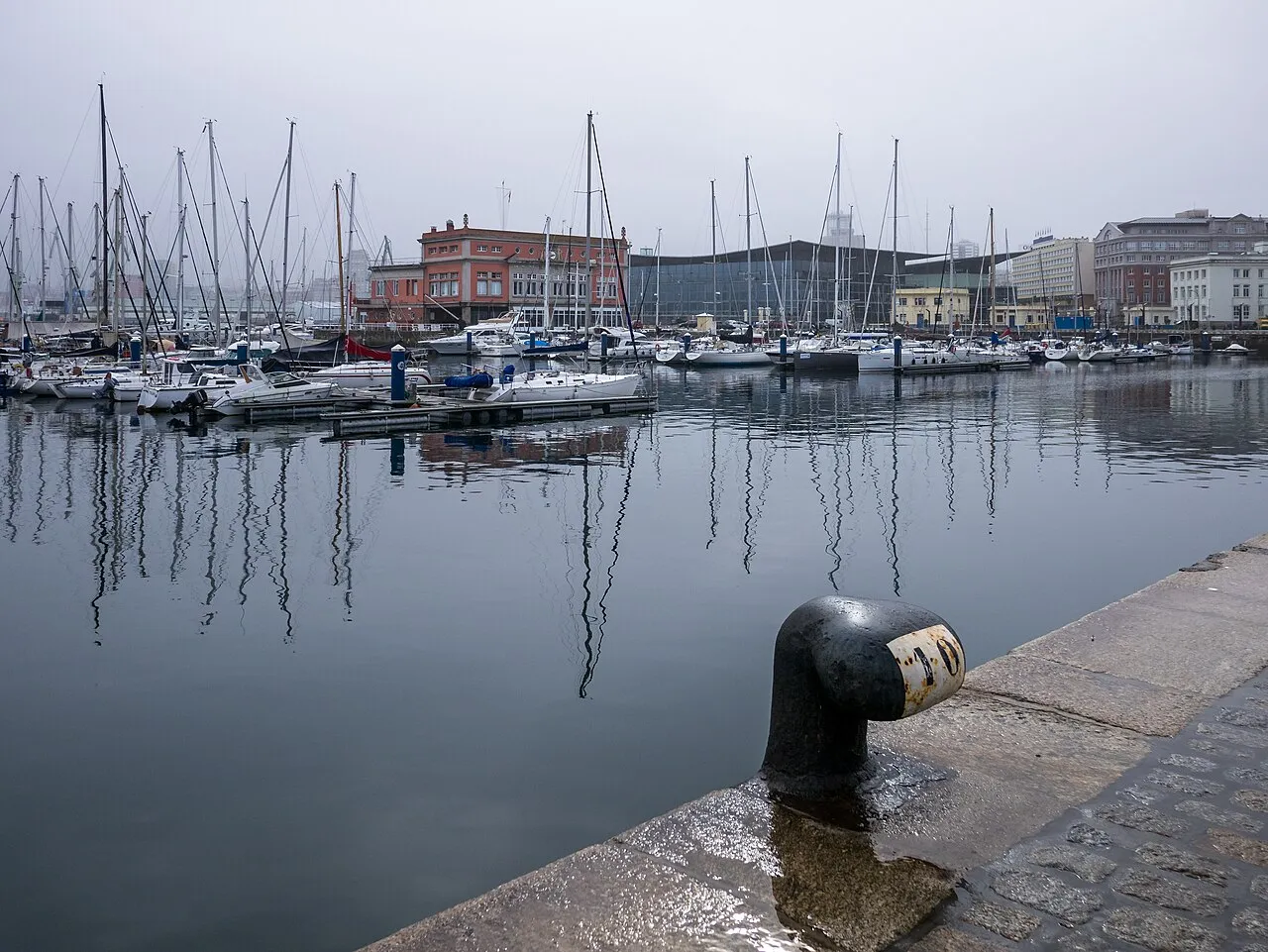
Ships dock at the Muelle de Trasatlanticos terminal in La Coruna's inner harbour, placing you within a ten-minute walk of the Old Town and the glass galerias waterfront. The terminal building is basic — a covered walkway with security screening and a small waiting area, but no shops or restaurants inside the port gate. Taxis queue outside the terminal; a ride to the Tower of Hercules costs approximately 6–8 EUR, though most visitors walk. The port area has accessible ramps at ground level and even pavement to the main road. Wheelchair users will find the route into the Old Town manageable, though some cobblestone streets in the medieval quarter are uneven. The harbour is sheltered, and tender operations are rare — nearly all cruise ships dock directly at the quay. Port security requires passengers to show their cruise card when returning.
Getting Around
La Coruna is a remarkably walkable cruise port. The Old Town, Maria Pita Square, the galerias waterfront, and most restaurants sit within a ten-minute walk of the terminal. The Tower of Hercules is about twenty minutes on foot along the scenic coastal promenade, which is paved, flat, and wheelchair accessible for most of its length. Riazor Beach is a similar distance in the opposite direction, reachable by the Paseo Maritimo seafront path.
For longer distances, city buses run frequent routes at 1.30 EUR per ride, though they can be confusing for first-time visitors. Taxis are metered and affordable — a cross-town trip rarely exceeds 8 EUR. For the Santiago de Compostela day trip, the train station (Estacion de San Cristobal) is a 15-minute taxi ride from the port at approximately 7 EUR, with trains departing roughly every hour for 12–15 EUR each way. The bus station offers a similar service at a slightly lower price. A private guide for a full-day Santiago tour runs 150–200 EUR for a group. Traffic is light in La Coruna, so transit times are reliable. Passengers with mobility concerns should note that the Old Town has some steep inclines and uneven cobblestones, though the waterfront promenade and main commercial streets are fully accessible.
Beaches
Riazor & Orzan
Two connected city beaches with golden sand and real Atlantic surf, twenty minutes' walk from the port along the Paseo Maritimo promenade. Free entry, lifeguards in summer, and the promenade is wheelchair accessible. Water temperature ranges from 15–19 degrees Celsius in summer — refreshing rather than warm. Surfboard rentals cost approximately 15 EUR per hour. Allow 1–3 hours depending on whether you swim. No need to book ahead — simply walk along the seafront.
Excursions & Activities
Tower of Hercules
The only working Roman lighthouse in the world and a UNESCO World Heritage Site. The tower stands 55 metres on a rocky headland twenty minutes' walk from the port. Entry costs 3 EUR; climbing the 242 steps is moderate-energy but rewarding for the panoramic Atlantic views from the top. The grounds and sculpture park are free to explore. Allow two hours for the full visit. You can walk independently from the port along the coastal path, or a ship excursion typically combines the tower with an Old Town walking tour for 40–60 EUR. The headland path is exposed to wind, so bring a jacket. The base area is wheelchair accessible, though the tower interior requires stair climbing.
Old Town & Maria Pita Square
The medieval Ciudad Vieja is a compact maze of cobblestone alleys, Romanesque churches (Santiago and Santa Maria del Campo), and traditional tapas bars. Maria Pita Square — named for the local heroine who repelled Sir Francis Drake's 1589 attack — anchors the district with its grand arcaded City Hall. Free to explore independently; allow 1.5–2 hours for a leisurely walk. Low-energy, though some streets are steep. Book ahead for guided walking tours at approximately 15 EUR per person through local operators.
Santiago de Compostela Day Trip
The end point of the Camino de Santiago pilgrimage sits about 75 kilometres south. The train fare is roughly 12–15 EUR each way. The cathedral, old town, and Praza do Obradoiro are spectacular, and the Botafumeiro incense censer swings at the noon Pilgrim Mass on certain days. A ship excursion costs 60–90 EUR and guarantees your return to the vessel — wise given the transit time. Independent travelers should take the earliest possible train and budget at least six hours total. Moderate energy; the Santiago old town is walkable but hilly.
Galician Seafood & Market Tour
Visit the Mercado de San Agustin or the Plaza de Lugo market to see the morning catch — percebes (goose barnacles), navajas (razor clams), pulpo (octopus), and vieiras (scallops). Several tour operators offer guided food walks at 35–50 EUR including tastings. Independently, you can simply walk into any market and then choose a nearby restaurant for a racion (sharing plate) lunch. Pulpo a feira runs about 12–16 EUR, and a full seafood lunch with wine costs 20–30 EUR per person.
Monte de San Pedro
A hilltop park with panoramic views over the city and the Atlantic, reachable by a free outdoor elevator from the Paseo Maritimo or by taxi for about 6 EUR. The park has walking trails, old military bunkers, and a peace monument. Free entry and wheelchair accessible paths throughout. Allow 1–1.5 hours. Visit independently — no need to book ahead.
Depth Soundings
Spain uses the Euro (EUR). ATMs are plentiful near the port and throughout the Old Town; most accept international cards. Credit cards work at restaurants, shops, and larger establishments, but small tapas bars and market vendors sometimes prefer cash. Carry some coins and small notes for market purchases and coffee.
Tipping in Spain is not obligatory but appreciated. Rounding up the bill or leaving 5–10% at sit-down restaurants is generous by local standards. Tapas bar etiquette is informal — stand at the bar for the cheapest prices, or pay a small surcharge to sit at a table. Siesta hours (roughly 2–5 p.m.) mean many smaller shops close mid-afternoon; restaurants typically serve lunch from 1:30 p.m. and dinner from 8:30 p.m., which can catch cruise passengers off guard if they are used to earlier meal times.
The path around the Tower of Hercules headland is exposed to Atlantic wind even in summer — a light windbreaker makes the experience far more comfortable. English is understood at tourist-facing businesses, but learning a few words of Spanish or Galician goes a long way. "Grazas" (thank you in Galician) earns warm smiles. La Coruna's tap water is safe to drink, and many restaurants will serve it free on request — ask for "agua del grifo."
Photo Gallery
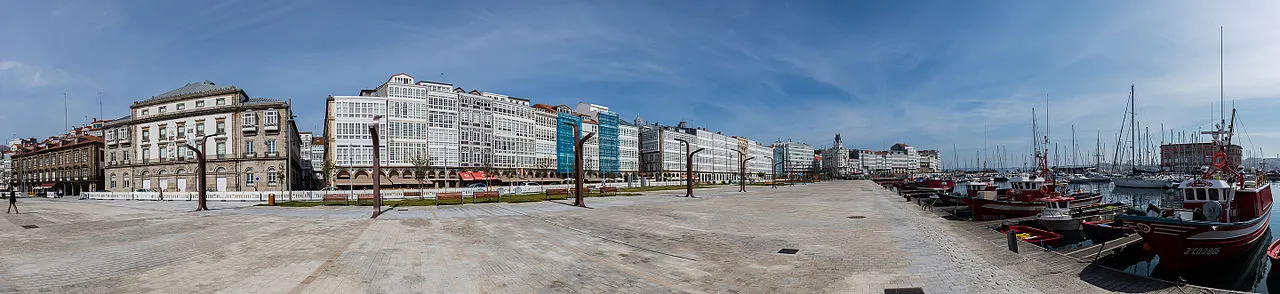
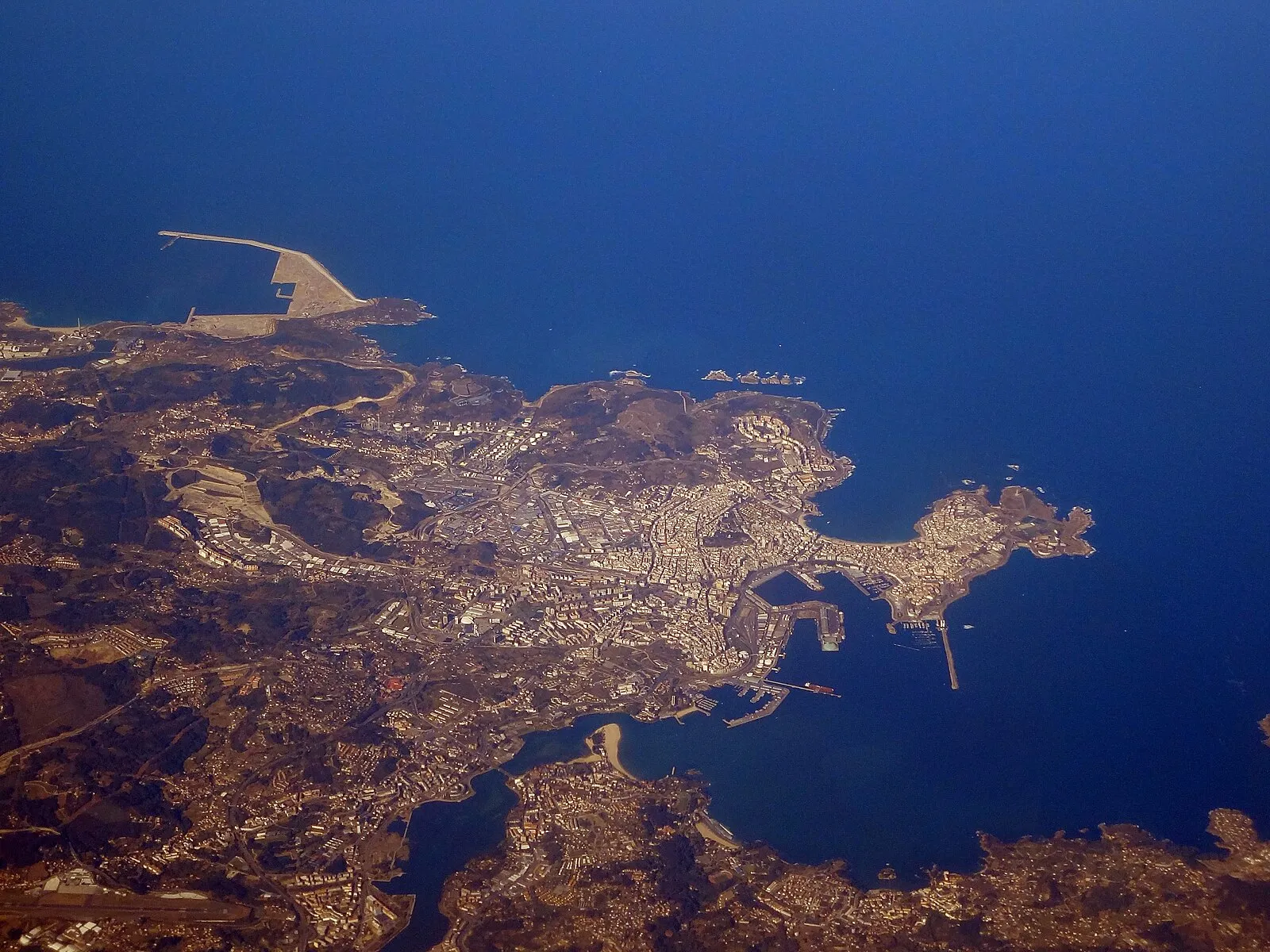
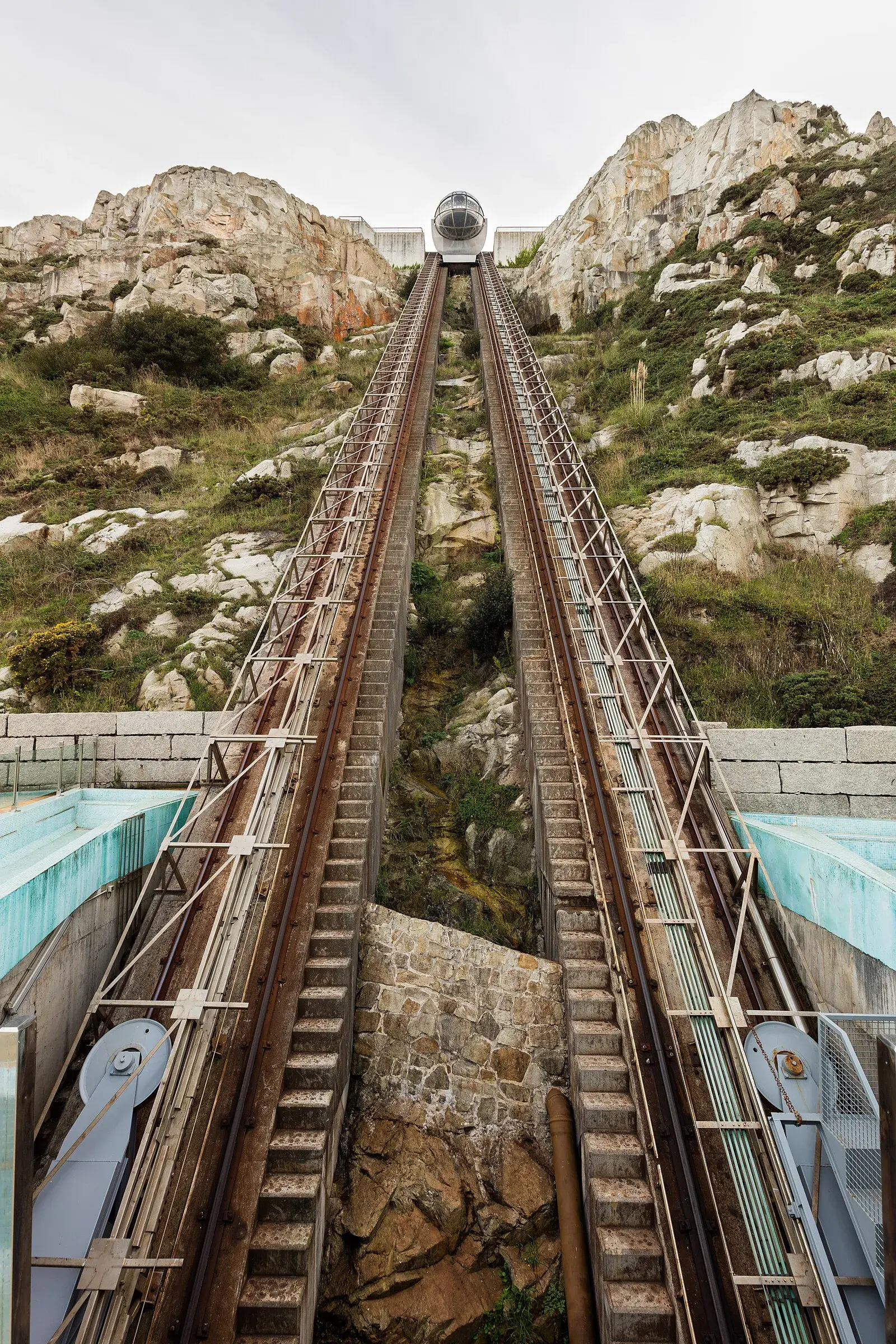
Image Credits
All photographs on this page are used under Creative Commons or free-use licenses. Images sourced from Wikimedia Commons, Unsplash, Pexels, Pixabay, and Flickr.
Frequently Asked Questions
Where do cruise ships dock in La Coruna?
Ships dock at the Muelle de Trasatlanticos terminal in the inner harbour, about a ten-minute walk from the Old Town and the galerias waterfront. The terminal has basic facilities with taxis available outside the gate.
Can I visit Santiago de Compostela from La Coruna on a cruise day?
Yes. Santiago is about one hour each way by train at 12-15 EUR. Budget at least six hours total for a comfortable visit. A ship excursion costs 60-90 EUR and guarantees return to the vessel, which is wise given the transit time.
What should I eat in La Coruna?
Pulpo a feira (Galician-style octopus on a wooden board) is the signature dish at 12-16 EUR. Also try pimientos de Padron, empanada gallega, and a glass of local Albarino white wine for about 3.50 EUR.
Is La Coruna walkable from the cruise port?
Yes, and that is a major advantage of this port. The Old Town, Maria Pita Square, galerias, and restaurants are all within a ten-minute walk. The Tower of Hercules is about twenty minutes along the paved coastal promenade.
How long does the Tower of Hercules visit take?
About two hours including the walk from the port and the climb up 242 steps. The headland path is exposed to Atlantic wind, so bring a light jacket. Entry costs 3 EUR. The grounds and sculpture park are free.
What currency is used in La Coruna?
The Euro (EUR). Credit cards are widely accepted at restaurants and shops. ATMs are plentiful near the port and in the Old Town. Small tapas bars and market vendors may prefer cash, so carry some coins and small notes.
When is the best time to visit La Coruna?
May-October is the cruise season, with July-August offering the warmest weather (highs around 22°C) and longest daylight. May-June and September-October are the transitional months — milder, occasionally wetter, with thinner crowds at Tower of Hercules and the Old Town. Winter (Nov-Feb) is mild for Spain but reliably wet — the Low Crowds window. The live weather widget in the seasonal panel above is the primary source for short-term conditions on a specific sailing date.
When is La Coruna's storm season?
La Coruna sits at ~43°N on Spain's Galician Atlantic coast — outside the tropical-cyclone tracks. Galicia is famous as one of Europe's wettest regions thanks to its full exposure to Atlantic frontal systems year-round. Winter storms (Oct-Mar) bring strong winds and rough seas; the cruise season largely avoids the worst weather but September-October calls can encounter early autumn systems. Late-season Atlantic hurricanes occasionally recurve toward Iberia after passing the Azores. The live weather widget in the seasonal panel above is the primary source for current conditions on a specific sailing date.
What should I pack for a La Coruna port day?
A waterproof jacket year-round (Galicia is wet — "if you don't like the weather, wait an hour" is the local saying). Light layers for the temperature swings; even peak-summer mornings can be cool with sea fog before burning off. Comfortable walking shoes for the Old Town cobblestones and the 242-step climb at the Tower of Hercules. The Tower headland is exposed to Atlantic wind — a windproof shell matters even on sunny days.
Will rain ruin my La Coruna port day?
Galician rain is part of the experience — locals don't pause for showers. The galerias (Maria Pita Square's famous glassed-in balconies) are the perfect rainy-day stroll. Indoor refuges include the Museum of Fine Arts, the Domus (interactive science museum), the Aquarium Finisterrae, and the wonderful covered Mercado da Praza de Lugo for tapas and seafood. Tower of Hercules and the coastal promenade lose appeal in heavy weather but stay beautiful in light rain. The Santiago day trip is essentially indoor (train + Cathedral) once you arrive. The live weather widget in the seasonal panel above is the primary source for short-term forecasts on a specific sailing date.
La Coruna, Spain — Port Guide
Last reviewed: February 2026