


Photo: Wikimedia Commons
My Logbook: Where the North Atlantic Meets the Norse
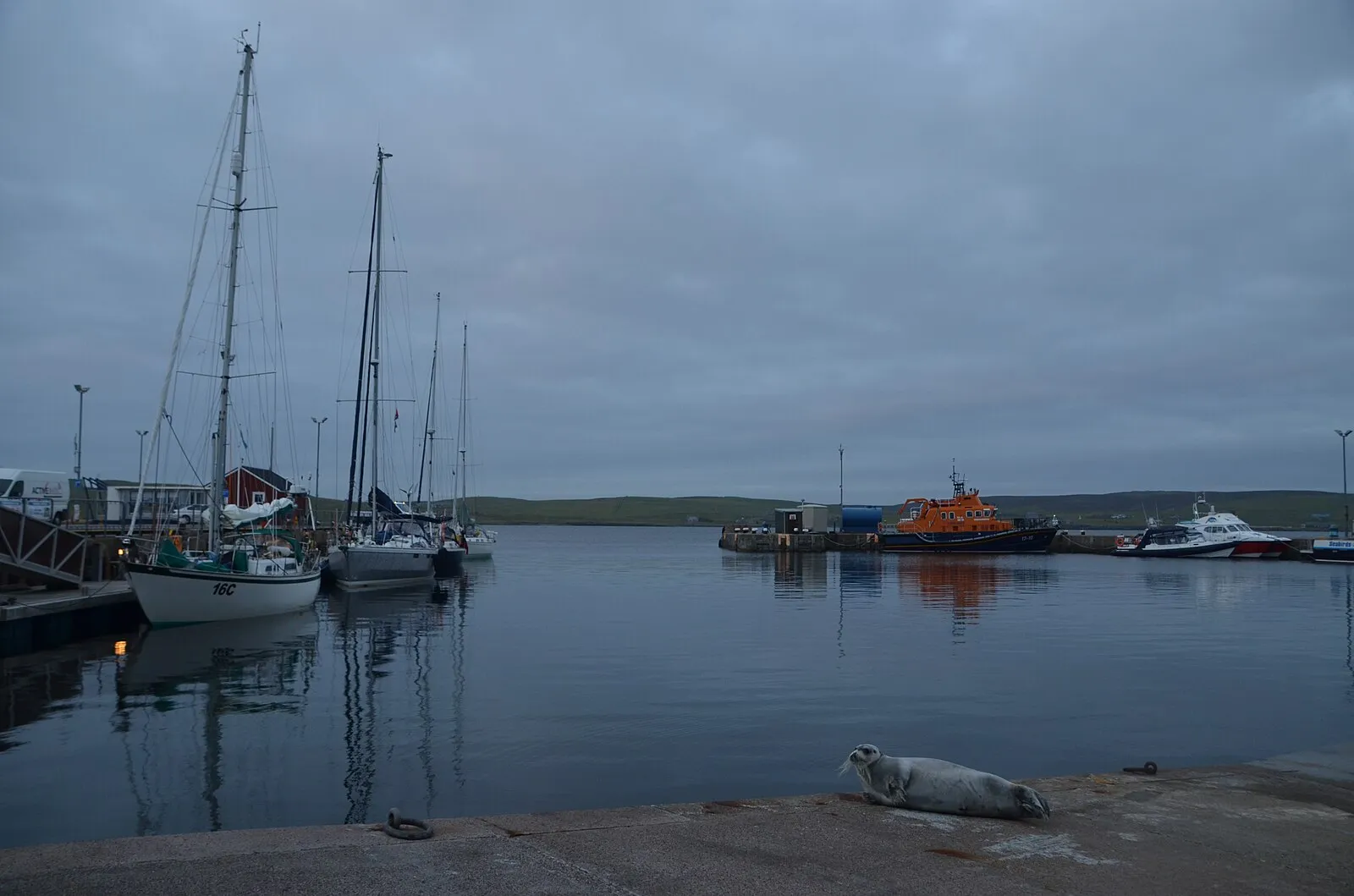
I heard Shetland before I saw it. Standing at the rail as our ship rounded the southern tip of Bressay, the wind hit me like a cold hand pressed flat against my chest, and underneath it came a sound I had never heard before — a low, steady roar that was not the engine and not the sea but the wind itself, channelled through the narrow sound between the islands. My jacket hood snapped back. I grabbed the railing with both hands and laughed, because it felt wild and raw and completely unlike anything a cruise ship had ever delivered me into. Beyond the sound, Lerwick revealed itself in grey stone and painted waterfront houses, a town built of stubbornness and herring money, clinging to the hillside as though daring the Atlantic to try again.
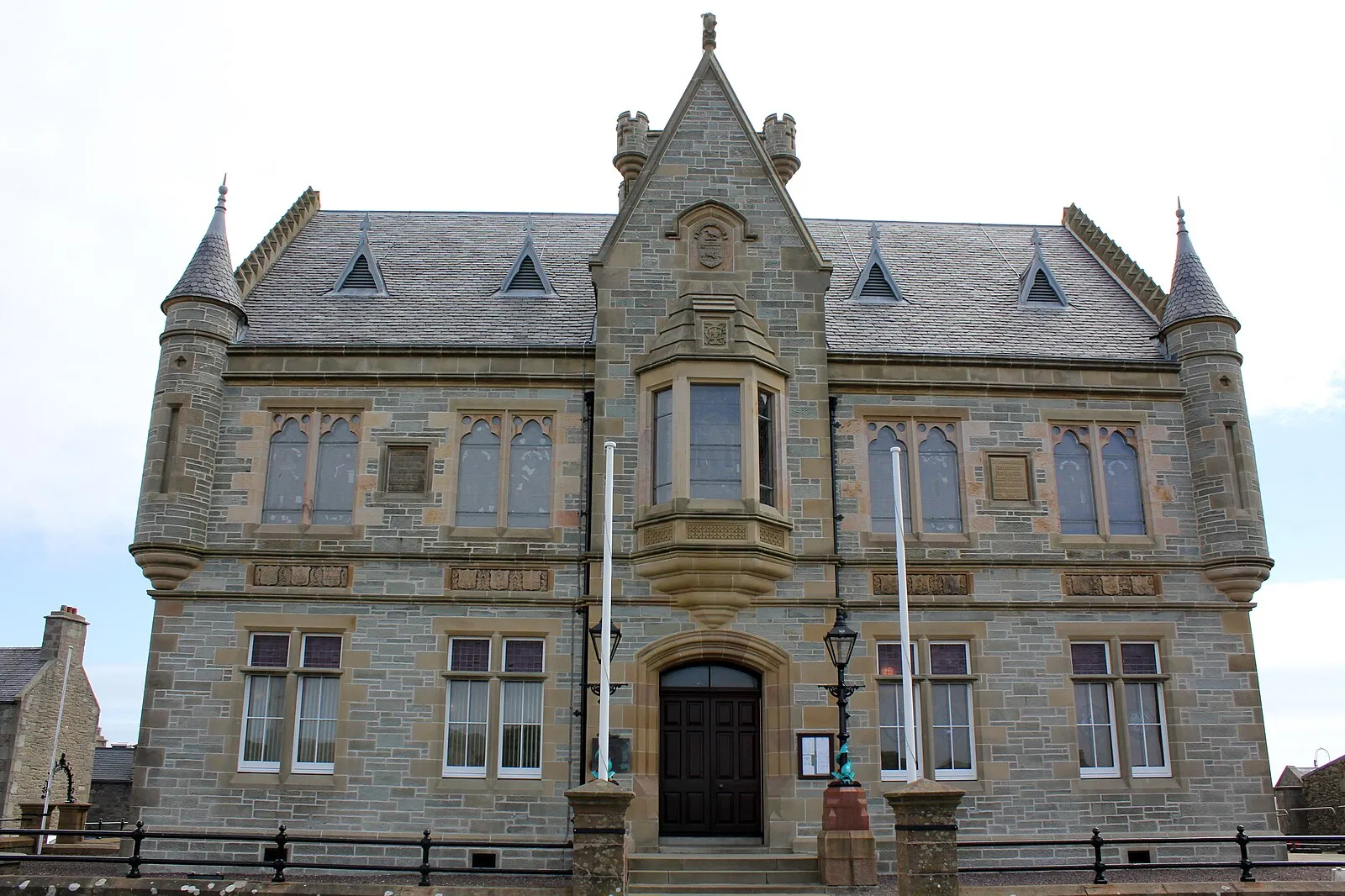
The walk from the harbour uphill to Commercial Street took fifteen minutes, and I felt every one of them in my calves. Lerwick rises steeply from the water, and the narrow lanes twist between stone buildings that have weathered four hundred years of Shetland gales. I reached Fort Charlotte first — a star-shaped artillery fort built by Cromwell's forces in 1665, burned by the Dutch in 1673, rebuilt by the Hanoverians, and now standing open to the wind with cannons pointed at Bressay Sound. I walked the ramparts alone. The view from the northeast bastion was staggering: the harbour below, fishing boats at anchor, our cruise ship looking oddly large against the small-town waterfront, and beyond it all the grey-green hills of Bressay dissolving into low cloud. I stood there for a long time, feeling the wind press against me, watching the light change on the water every few seconds. Shetland light moves like nothing I have seen elsewhere — it shifts and breaks and reforms, as though the sky cannot decide what mood to settle on.

At the Shetland Museum and Archives on Hay's Dock, I spent an hour I had not planned for. The building is modern — glass and timber, warm inside — but the exhibits reach back five thousand years. I saw Pictish carved stones, Norse combs made from whale bone, and a replica of a sixteela — the small open boats Shetlanders used to fish the violent waters around the islands until well into the twentieth century. A volunteer at the boat gallery, a retired fisherman named Magnus, told me his grandfather had rowed one of these boats to the haaf fishing grounds thirty miles offshore, staying out for days in the open Atlantic. "They were hard men," he said, with a quietness that suggested he thought himself something less. But I looked at his hands — thick, scarred, still strong — and I thought the strength had not gone anywhere. It had just changed form.
We took the excursion bus south to Jarlshof, and it was the most extraordinary archaeological site I have ever walked through. Four thousand years of human settlement lie exposed on a grassy headland above the sea: Bronze Age oval houses, Iron Age wheelhouses with stone partitions still intact, a Viking longhouse with its hearth stone blackened by a thousand fires, and a medieval farmstead piled on top of the lot. A storm in the 1890s ripped the turf away and revealed all of it, layer after layer, like the rings of a felled tree. I crouched in the Viking longhouse and ran my fingers over the hearthstone. It was cold and smooth, worn by hands that had warmed themselves there a thousand years ago. Outside, the sea crashed against the rocks below Sumburgh Head, and I could hear the faint, clownish calls of puffins on the cliff face above.
We walked to Sumburgh Head after Jarlshof — barely half a mile — and that is where Shetland broke something open in me. I lay on my stomach at the cliff edge, chin on my forearms, and watched puffins shuttle back and forth from the sea to their burrows. They flew in low and fast, stubby wings whirring, beaks stuffed with silver sand eels, and they landed with a graceless thump that made me smile every time. One bird stood three feet from my face, regarding me with that slightly baffled expression puffins carry permanently, as though the whole world is a mild surprise. The Atlantic stretched to the horizon in every direction. The wind smelled of salt and wet grass. I could hear the boom of the swell against the base of the cliff, felt it in my ribs like a slow heartbeat. And I whispered a prayer of gratitude — for the creation laid out before me, for the privilege of lying on this ancient grass at the edge of the world, for the small, brave bird who trusted me enough to stand within arm's reach and study me with its round orange eye.
Something shifted in me at Sumburgh Head. I had come to Shetland expecting a remote, windswept curiosity — a box to tick on a British Isles itinerary. But lying on that cliff, watching those puffins, I realized I was not at the edge of something. I was at the centre. The centre of a world that had been inhabited and loved and fished and built upon for five thousand years, where Viking longships once beached on the very stones I could see below, where otters still hunt in the kelp forests and seals watch you from the water with ancient, knowing faces. Shetland taught me that remoteness is a matter of perspective. From here, it was London and the mainland that felt far away, not the other way around. I learned that what we call the edge of the world is often the place where the world feels most alive. I carry that lesson with me still, and I carry the scent of salt grass and the sound of the wind through Bressay Sound, and the image of a puffin standing three feet away, looking at me as though I was the strange one.
Weather & Best Time to Visit
The Cruise Port
Cruise ships dock at Lerwick Harbour alongside the main commercial quay, or anchor in Bressay Sound and tender passengers to the small boat pier near the town centre. The harbour has no dedicated cruise terminal building — you step off the gangway onto the working quayside. There is a small visitor information point near the pier during cruise ship days, staffed by volunteers who hand out town maps and bus timetables. Taxis queue at the harbour, though the supply is limited and can run out quickly when large ships arrive; booking ahead through your ship or a local operator is wise. A taxi to Sumburgh Head or Jarlshof costs approximately 60–80 GBP ($75–100) return. The walk from the pier to Commercial Street, the main shopping area, takes about fifteen minutes uphill. The harbour area has level ground and is wheelchair accessible, though the town itself rises steeply and some older lanes have cobblestones and uneven surfaces. There are public toilets near the harbour and on Commercial Street (free). Currency is British Pounds; most shops accept contactless card payment, though small market stalls prefer cash.
Getting Around
Lerwick town centre is compact and walkable, with Commercial Street, Fort Charlotte, and the Shetland Museum all within a fifteen-to-twenty-minute walk of the harbour. However, the town is steep, and some lanes involve significant climbs on narrow pavements. For anyone with mobility limitations, a taxi from the pier to key town sights costs around 5–8 GBP ($6–10) one way. The main attractions beyond Lerwick — Jarlshof, Sumburgh Head, and Scalloway Castle — require transport. Local buses run from the Viking Bus Station on Commercial Road, with the number 6 service heading south to Sumburgh airport and Jarlshof, costing approximately 4 GBP ($5) each way. Service frequency is limited, so check timetables before relying on buses for a timed port day.
Taxis are the most flexible option but Shetland has a small fleet; pre-booking is strongly recommended, especially when multiple cruise ships are in port. A full-day taxi hire to cover Jarlshof, Sumburgh Head, and Scalloway runs about 150–200 GBP ($190–250). Car hire is available from agencies near the airport or in Lerwick starting at around 50 GBP ($63) per day, though most agencies require advance booking. Driving is on the left; roads are single-track with passing places outside Lerwick. Cycling is possible but only for fit riders comfortable with strong headwinds and narrow roads shared with farm vehicles. The Shetland Museum and the main Commercial Street shops are accessible for wheelchair users, though the hilly terrain between them is a challenge without vehicle transport.
Excursions & Activities
Jarlshof & Sumburgh Head Combined Tour
The signature Shetland excursion combines the extraordinary Jarlshof archaeological site with the RSPB puffin colony at Sumburgh Head, both located near the southern tip of Mainland Shetland. Jarlshof entry costs approximately 9 GBP ($11) for adults. The site is outdoors on a grassy headland with uneven ground — moderate energy level, and not wheelchair accessible due to rough terrain. Sumburgh Head is free to enter and involves a short walk along cliff paths to view puffins (late April to mid-August). A ship excursion covering both sites runs approximately 60–90 GBP ($75–115) per person and guarantees your return to the vessel. To visit independently, arrange a taxi (60–80 GBP return) or take the number 6 bus. If your port time is limited, book ahead with a local taxi firm to avoid being stranded.
Fort Charlotte & Lerwick Town Walk
A low-energy, self-guided walk from the harbour through the historic town. Fort Charlotte is free to enter and offers panoramic views from its ramparts. Continue along Commercial Street for Shetland knitwear shops, the Peerie Shop Cafe (coffee approximately 3 GBP/$4), and local craft galleries. Allow 1.5–2 hours. Fully independent — no need to book ahead.
Shetland Museum & Archives
Located on Hay's Dock, fifteen minutes' walk from the pier. Free entry. The museum covers five thousand years of Shetland history from Pictish stones to Viking artefacts to the twentieth-century fishing industry. Wheelchair accessible throughout. Allow 1–1.5 hours. Visit independently; it is an easy walk from the harbour.
Scalloway Castle & Village
The former capital of Shetland, about fifteen minutes by taxi from Lerwick. Scalloway Castle (free entry, key from Scalloway Museum) was built in 1600 by the notorious Earl Patrick Stewart. The village has a small museum telling the story of the “Shetland Bus” — the secret wartime boat runs to Nazi-occupied Norway. A taxi to Scalloway costs approximately 15–20 GBP ($19–25) one way. No need to book ahead for the castle itself.
Up Helly Aa Viking Heritage
The famous fire festival takes place on the last Tuesday of January, but the Up Helly Aa Exhibition in Lerwick (open May–September, entry approximately 5 GBP/$6) displays a full-size replica galley and Viking costumes year-round. Low energy, accessible, and a good alternative when weather closes the cliff paths. Visit independently from the town centre.
Wildlife & Otter Watching
Shetland is home to the densest otter population in Europe. Otters can be spotted along the coastline year-round, particularly around the harbours of Lerwick and Scalloway. Guided wildlife tours (approximately 80–120 GBP/$100–150 per person for a half day) increase your chances significantly. These tours also cover seal colonies, great skuas, and possibly orca sightings in summer. Book ahead through a local operator; ship excursion versions cost roughly 100–140 GBP ($125–175).
Depth Soundings
Shetland uses the British Pound (GBP). ATMs are available in Lerwick town centre on Commercial Street. Most shops and restaurants accept contactless card payments, but small market stalls and rural honesty boxes at farm gates require cash. Carry small notes and coins. Tipping is not customary in Shetland — a simple thank-you is appreciated. Shetland wool knitwear is the standout purchase: genuine Fair Isle jumpers start around 150 GBP ($190), and smaller items like hats and gloves run 20–40 GBP ($25–50). Buy directly from local knitters or the Shetland Textile Museum for authenticity.
Wind is the defining feature of Shetland's weather. Even in July, temperatures rarely exceed 14 °C (57 °F) and the wind chill can make it feel much colder. A windproof jacket is essential regardless of season. Waterproof shoes are valuable for the boggy cliff paths at Sumburgh Head. Mobile phone signal works in Lerwick but drops out quickly in rural areas. The town has free public WiFi at the Shetland Library. Lerwick is safe for walking at any hour — crime is virtually nonexistent. Be prepared for the weather to change multiple times in a single hour; locals say if you do not like the weather in Shetland, wait fifteen minutes.
Photo Gallery
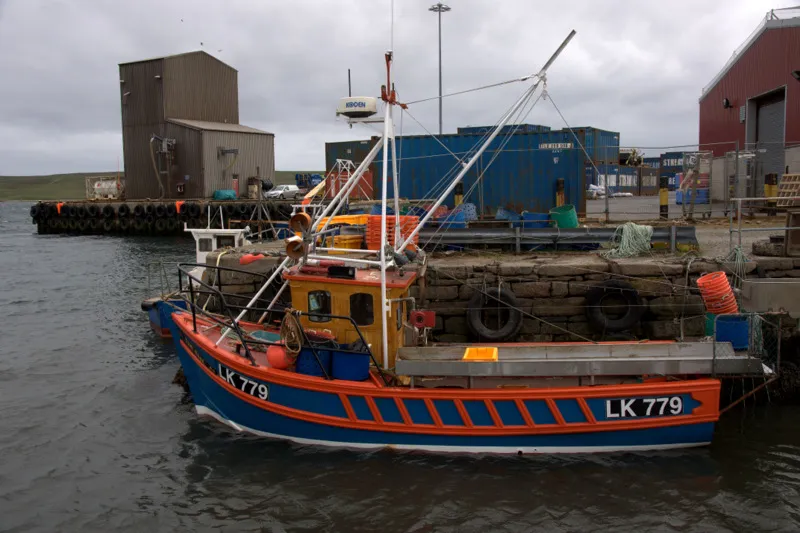
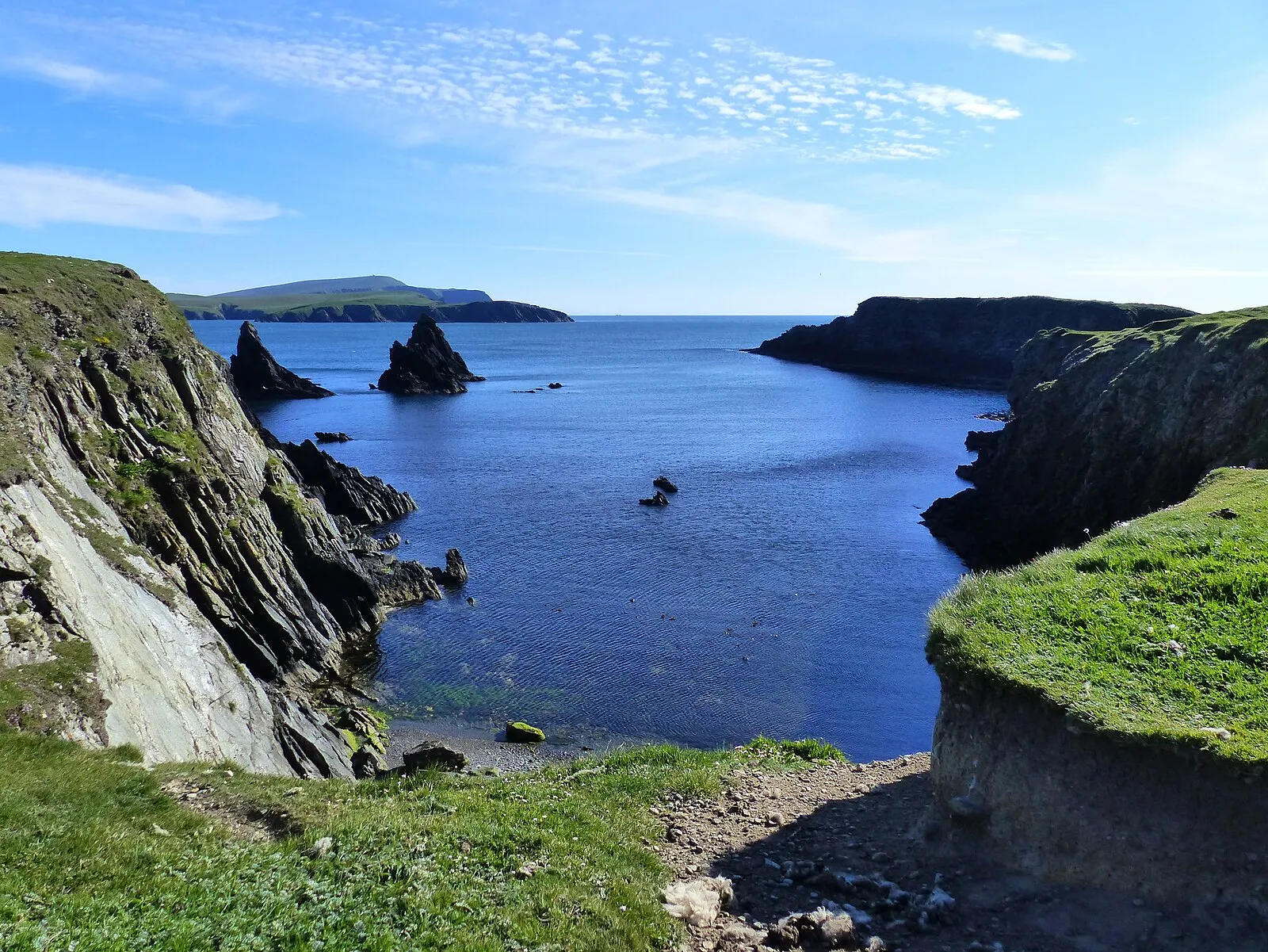
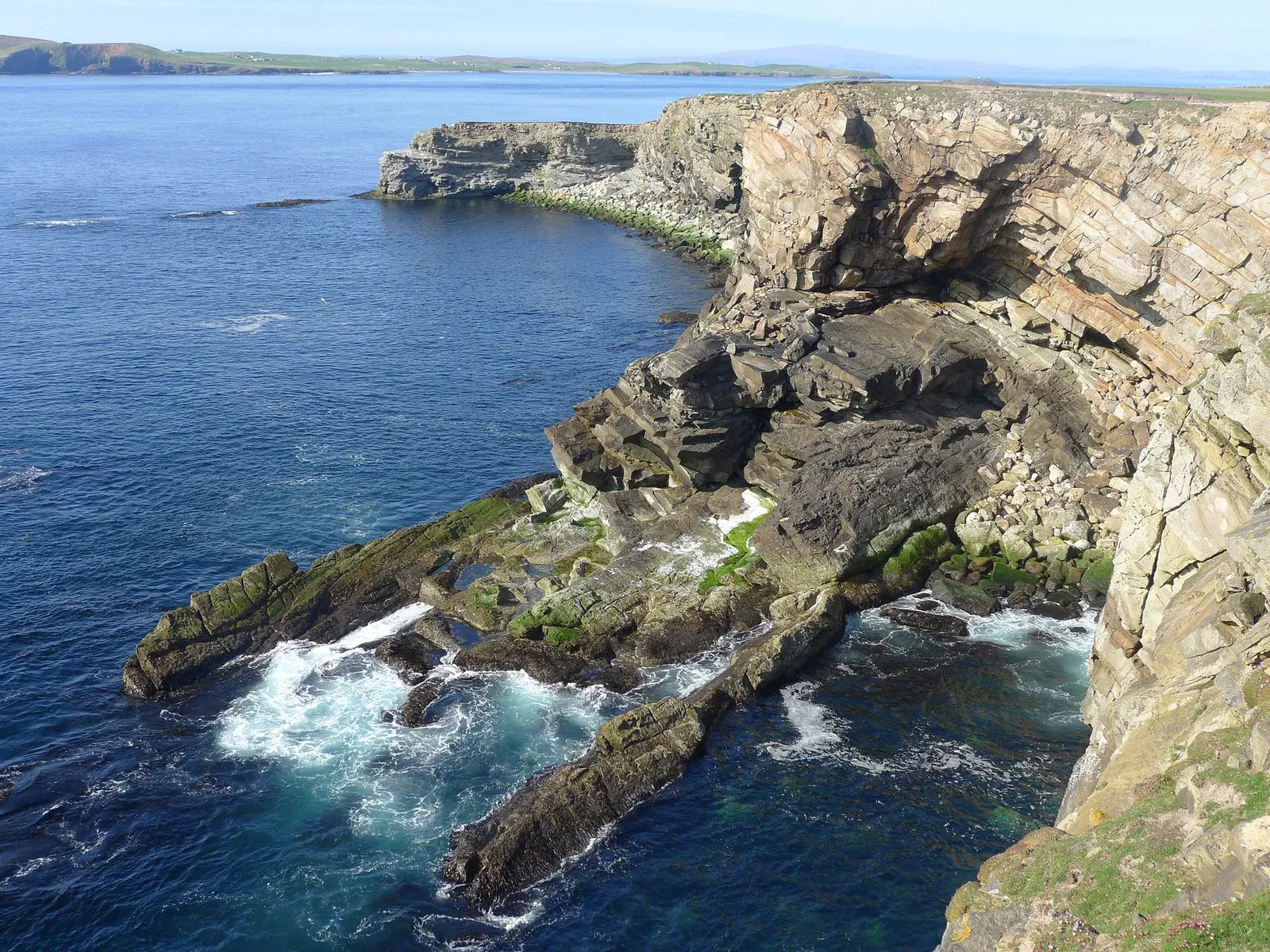
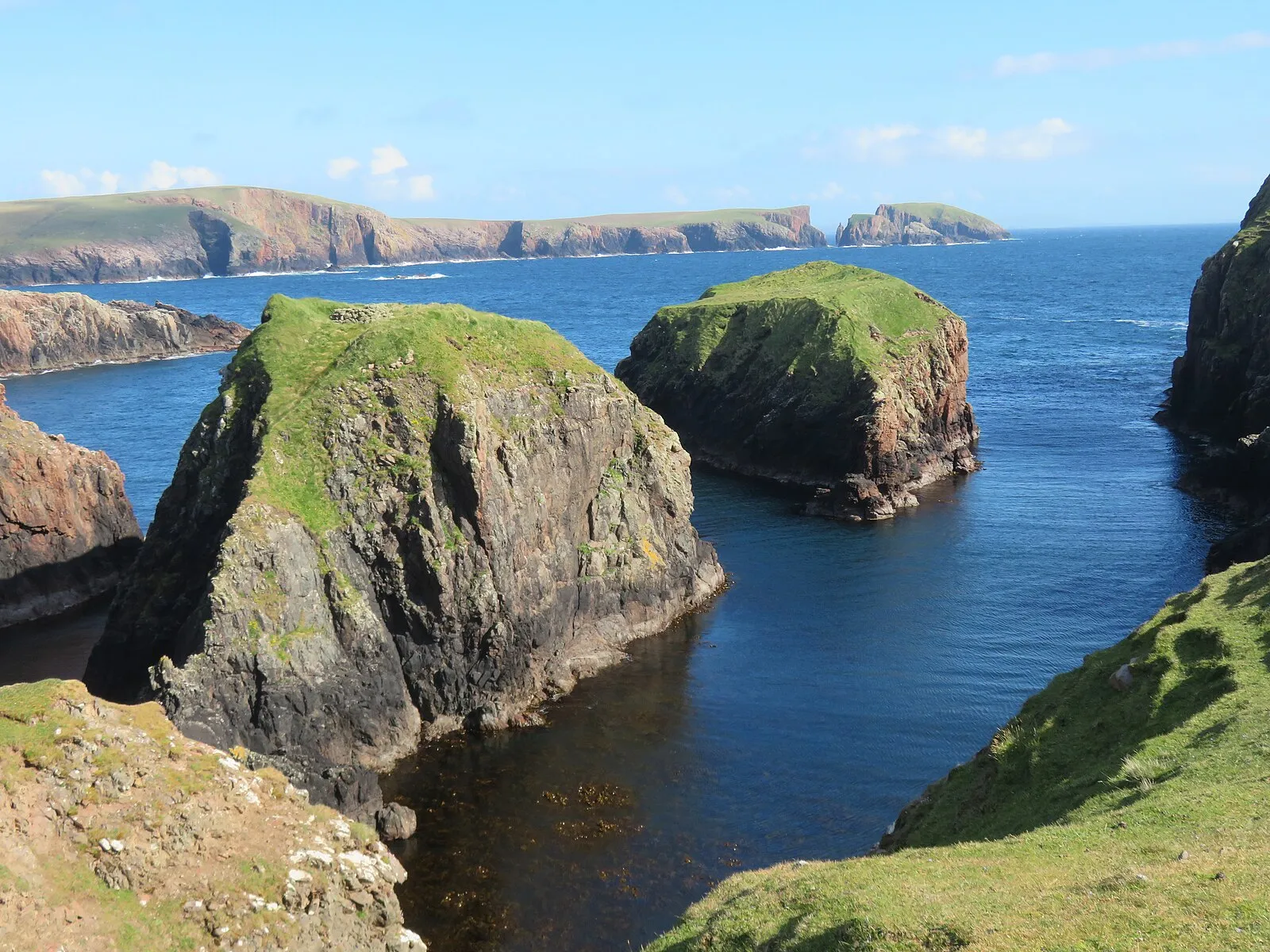
Image Credits
Photographs on this page are used under Creative Commons or free-use licenses. Images sourced from Wikimedia Commons, Unsplash, Pixabay, Pexels, and Flickr. Hero image and supplementary photographs courtesy of Flickers of Majesty.
Frequently Asked Questions
Where do cruise ships dock in Lerwick?
Ships dock at Lerwick Harbour alongside the commercial quay, or anchor in Bressay Sound and tender passengers ashore to the small boat pier. The town centre is a fifteen-minute uphill walk from the harbour. Taxis are available but limited in number.
Can I see puffins at Sumburgh Head?
Yes. Puffins nest at Sumburgh Head from late April to mid-August. You can lie on the grass at the cliff edge and watch them return with beaks full of sand eels at remarkably close range. The site is free to enter and about 40 minutes by road south of Lerwick.
What is Jarlshof and is it worth visiting?
Jarlshof is an archaeological site near Sumburgh showing continuous human settlement from the Bronze Age through Viking times to the medieval period. Entry is approximately 9 GBP ($11). It is widely considered the most significant multi-period site in Scotland.
What should I pack for Shetland weather?
A windproof jacket is essential in any season. Temperatures range from 2 to 14 degrees Celsius year-round. Layers, waterproof walking shoes, and binoculars for wildlife watching are recommended. Sunscreen is useful in summer when daylight lasts nineteen hours.
Is Lerwick accessible for wheelchair users?
The Shetland Museum is fully wheelchair accessible. The harbour area is level. However, the town centre is steep with uneven cobbled lanes, and Jarlshof has rough terrain unsuitable for wheelchairs. Vehicle transport between sites helps those with limited mobility.
What is the best thing to buy in Lerwick?
Shetland knitwear is the standout purchase — genuine Fair Isle jumpers, scarves, and hats made from local wool. Prices start around 20 GBP ($25) for small items. Buy directly from local knitters or shops on Commercial Street for authentic pieces.
When is the best time to visit Lerwick?
The Shetland cruise season runs May-September. Late June through August offers the warmest weather (10-15°C highs) and the famous "simmer dim" — light all night at this 60°N latitude. May and September are the transitional months — cooler but with thinner crowds at Sumburgh Head and Jarlshof. Up Helly Aa fire festival (last Tuesday in January) is the major cultural event but falls outside the cruise season. Winter cruise calls are essentially nonexistent. The live weather widget in the seasonal panel above is the primary source for short-term conditions on a specific sailing date.
What is the storm season for Lerwick?
Lerwick sits at ~60°N in the Shetland Islands — outside the tropical-cyclone tracks but firmly in the North Atlantic storm path. Atlantic winter storms (Oct-Mar) bring gale-force winds, rough seas in Bressay Sound, and frequent ferry cancellations. Cruise ships occasionally pivot away from Lerwick during severe systems. Even cruise-season storms can disrupt tender operations when ships have to anchor rather than alongside the commercial quay. The live weather widget in the seasonal panel above is the primary source for current conditions on a specific sailing date.
Will rain ruin my Lerwick port day?
Shetland weather is wet and windy. The locals say "if you don't like it, wait twenty minutes." Indoor refuges include the Shetland Museum (free, world-class maritime/Viking collection), the Bod of Gremista house museum, the Anderson High School Sound Hall when cultural events run, and a string of warm cafés along Commercial Street. The Sumburgh Head puffin colony and Jarlshof archaeological site are exposed; heavy rain dampens the experience. The live weather widget in the seasonal panel above is the primary source for short-term forecasts on a specific sailing date.
Lerwick, Shetland — Port Guide
Last reviewed: February 2026