


Photo: Wikimedia Commons
My Logbook: Island of the Winds
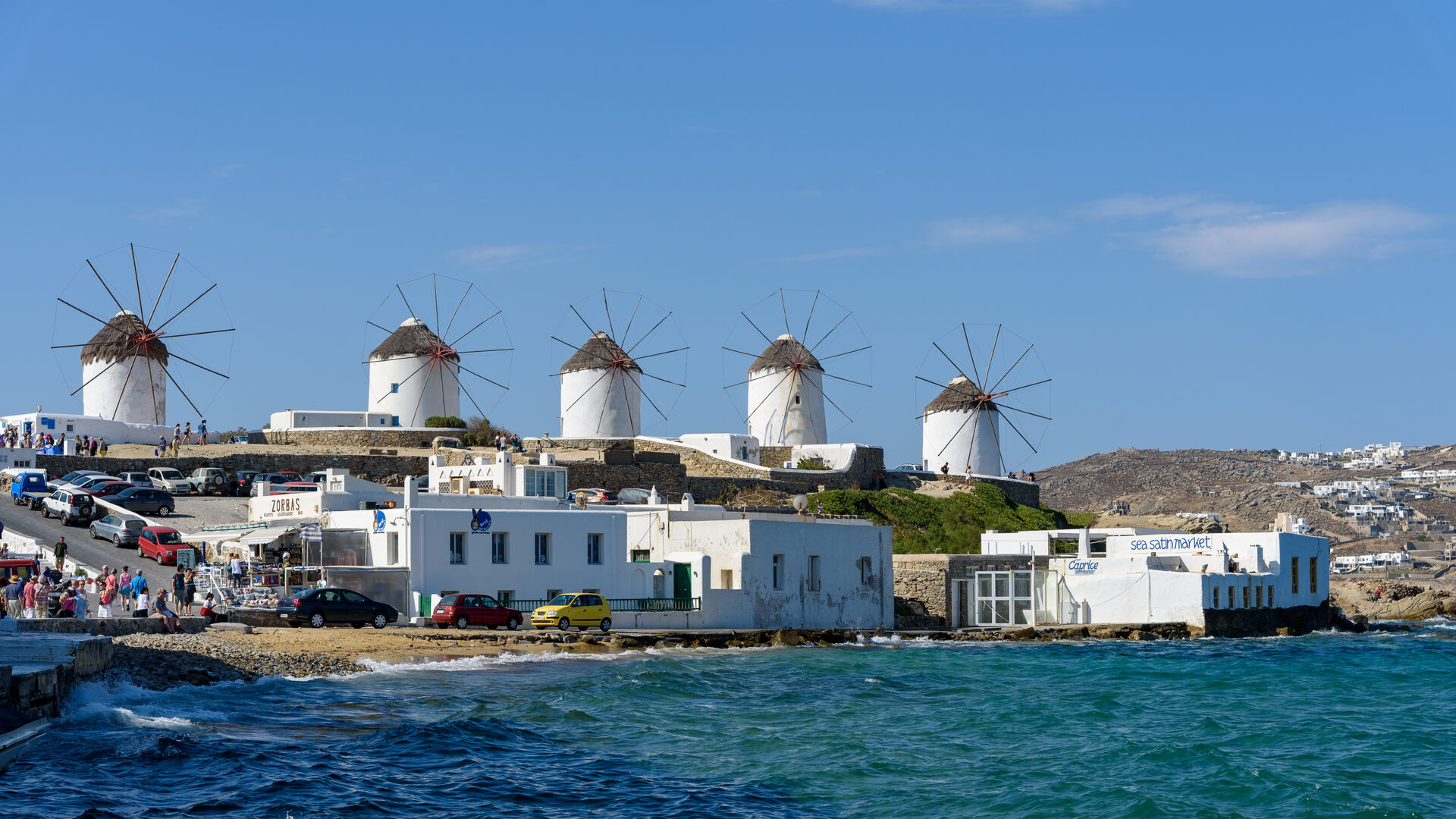
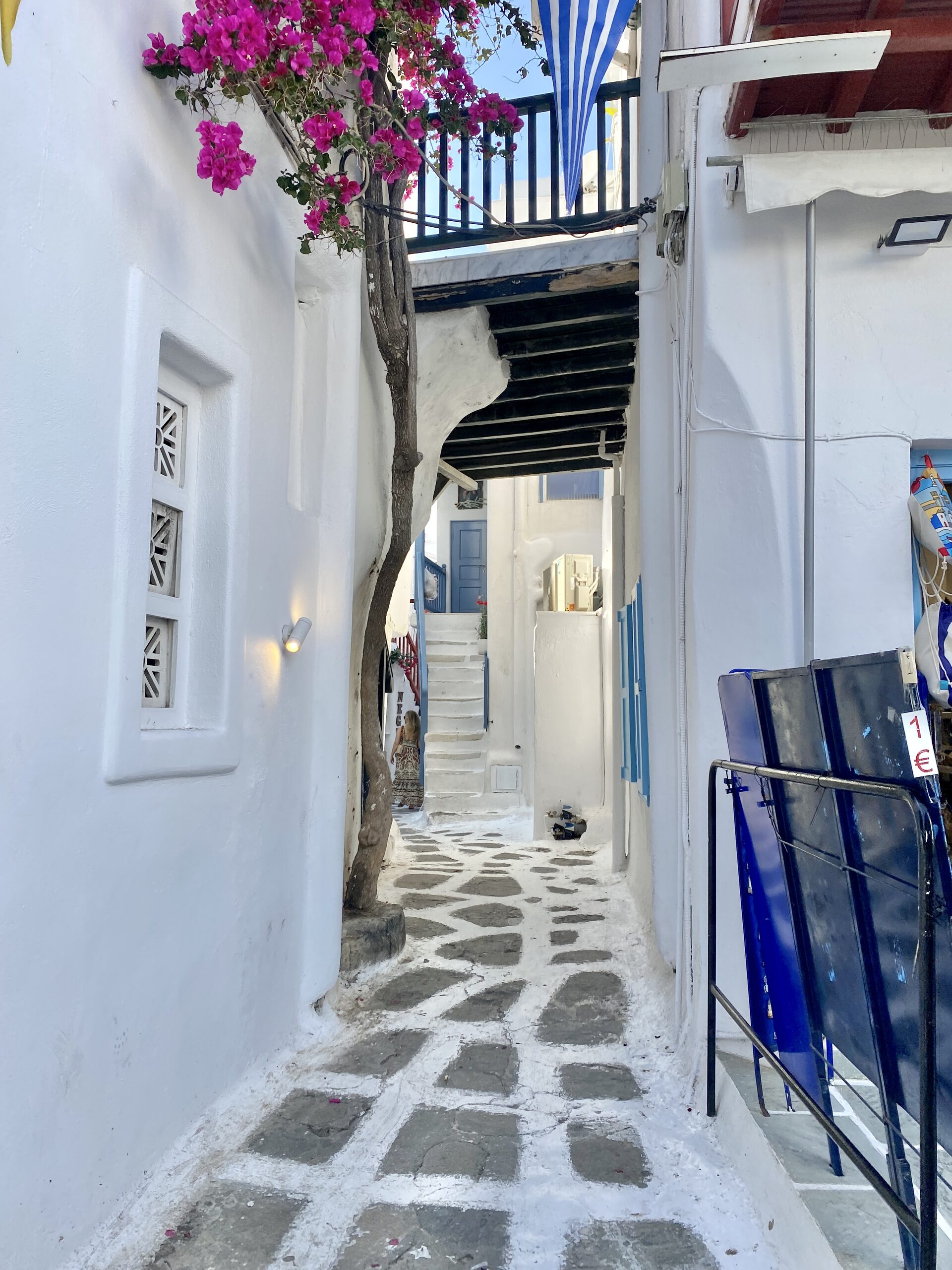
I first glimpsed the famous windmills of Mykonos from the ship's upper deck as we rounded the harbor at dawn, their white-washed towers catching the early light against the brilliant blue Aegean. They call this place the Island of the Winds, and standing there with the breeze already tugging at my clothes, I understood why immediately. We had arrived at one of the most photographed islands in the Mediterranean—a place where Cycladic architecture reaches its most perfect expression in a maze of sugar-cube buildings, blue-domed churches, and bougainvillea-draped alleyways so narrow you could touch both walls with outstretched arms. However, I quickly discovered that Mykonos offers far more than the photos suggest.
The shuttle from the New Port dropped us at the edge of Mykonos Town—known locally as Chora—and I spent my first hour simply getting lost in the labyrinthine streets. This is deliberate design, I learned later: the Mykoniots built their town as a maze to confuse the pirates who once plagued these waters. Today those winding paths confuse tourists instead, but in the most delightful way. I turned corners and discovered tiny churches painted in brilliant white with sky-blue trim, boutiques selling handcrafted jewelry and linens, and tavernas where elderly men played backgammon in doorways while cats lounged on every sun-warmed stone. Though the crowds can be overwhelming at midday when multiple ships are in port, the morning hours belong to those who wake early.
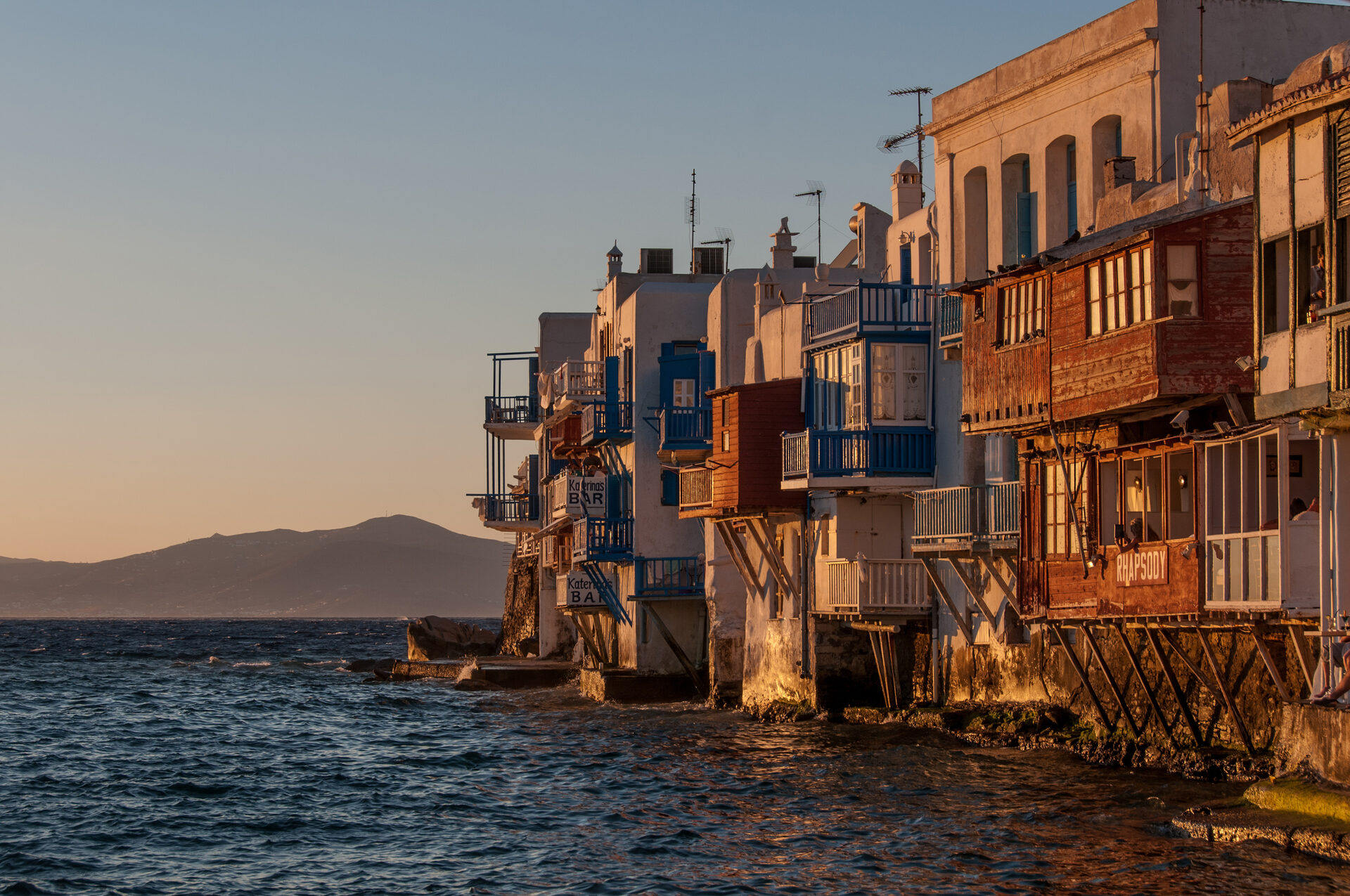
Little Venice became my favorite corner of the island—a row of 18th-century fishing houses built right at the water's edge, their wooden balconies hanging directly over the waves. I found a table at one of the waterfront bars and ordered a Greek coffee, watching the sea splash against the foundations below me while the morning sun painted everything gold. From here, the view of the windmills on the hill above is iconic, and I understood why this exact spot appears on half the postcards sold on the island. Yet despite the tourist fame, there was something genuinely romantic about it—the kind of place where you might linger for hours, ordering another coffee, watching the boats come and go, feeling absolutely no desire to be anywhere else in the world.
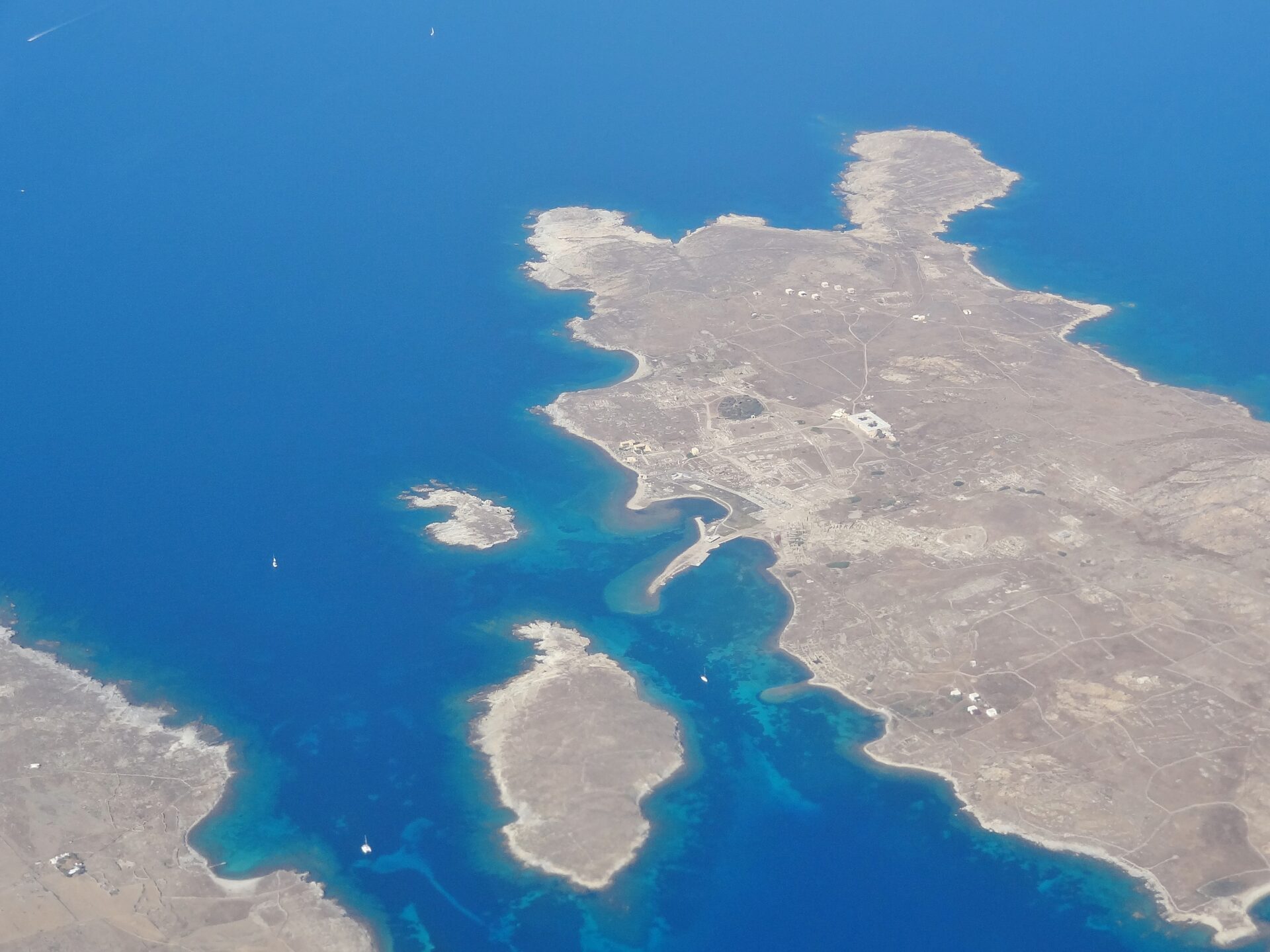
My afternoon excursion to Delos proved to be the highlight of my visit. The short ferry ride from Mykonos Town delivers you to one of the most sacred sites in the ancient Greek world—the mythological birthplace of Apollo and Artemis, and for centuries a thriving religious center and commercial hub. Walking among the ruins of temples, theaters, and private homes, many with original mosaic floors still intact after 2,500 years, I felt the weight of deep antiquity in a way few archaeological sites can match. Although the sun was fierce and shade practically nonexistent, the chance to stand where pilgrims once came from across the Mediterranean to honor the gods made every bead of sweat worthwhile.
Back in Mykonos Town, I spent the late afternoon exploring the quieter neighborhoods away from the main tourist routes. Beyond the famous waterfront and shopping streets, I found residential areas where laundry hung between whitewashed walls and old women sat in doorways doing needlework. The Aegean Maritime Museum caught my attention—a small collection documenting the island's seafaring past through model ships, navigation instruments, and photographs of the sponge divers who once called this port home. For me, these glimpses of everyday island life mattered as much as the famous landmarks. I wandered into the Archaeological Museum of Mykonos as well, where pottery and grave stelae from ancient Rheneia and Delos reminded me that this island has been welcoming visitors for three millennia. The famous Pithos depicting the Trojan Horse—one of the oldest known artistic representations of the myth—sat in its glass case as pilgrims of a different sort filed past with their cameras.
As evening approached, I made my way back toward Little Venice. The crowds had grown since morning, but the golden light transformed everything it touched. I found a spot on the rocks near the windmills, away from the packed bar terraces, and watched the sun sink toward the sea. Mykonos has earned its reputation as a party island, but in these quiet moments—the soft light, the gentle breeze, the timeless silhouette of the windmills against the fading sky—I understood why artists and dreamers have been coming here for generations. The island speaks to something deeper than its party reputation suggests.
Weather & Best Time to Visit
Cruise Port Information
Cruise ships dock at the New Port of Tourlos, located approximately 2 kilometers north of Mykonos Town (Chora). This modern facility can accommodate multiple large vessels simultaneously. The port offers basic amenities including restrooms, taxi stands, and a shuttle bus stop. Most cruise lines provide free shuttle service to and from Mykonos Town, running every 15-20 minutes during port hours. The ride takes about 10 minutes and drops passengers near the old port in the heart of town.
On busy days when multiple ships are in port, shuttle lines can grow long. Taxis are available but limited—expect to pay approximately €10-15 for the short ride to town. I recommend taking the first shuttle possible to beat the crowds, especially if you want to explore the narrow streets and photograph the windmills without being surrounded by fellow passengers. The port area itself offers little of interest beyond the transportation hub.
Getting Around Mykonos
Shuttle Bus to Mykonos Town
The cruise line shuttle is the easiest option for reaching town. Service runs continuously during port hours, and the 10-minute ride delivers you directly to the center of Chora near the old harbor. My advice is to take the first shuttle of the day—the maze-like streets are most magical when empty of crowds, and the light rewards early photographers.
Public Buses
Mykonos has two bus stations: one in Fabrika Square serving the south shore (Paradise, Super Paradise, Platis Gialos, Paraga), and one near the windmills serving northern destinations. Fares run €2-3 depending on distance, with frequent service during tourist season. Buses can become crowded midday, especially heading to popular shores.
Taxis
Taxis are available but in limited supply given the island's popularity. Expect fares of €10-15 to town from the port, €15-20 to most shores. During peak hours, finding an available taxi can be challenging—consider booking ahead through your ship or a local taxi app if you need reliable transport for excursions.
Walking in Mykonos Town
The heart of Chora is entirely pedestrian and best explored on foot. Wear comfortable walking shoes—the marble-paved streets are beautiful but can be slippery, and you'll encounter plenty of stairs and uneven surfaces. The town is compact enough that you can walk from one end to the other in about 15 minutes, though wandering the maze will easily consume hours.
Mykonos Port Map
Interactive map showing the cruise port, Mykonos Town, seaside areas, and key attractions. Click any marker for details and directions.
Shore Excursions & What to See
Booking guidance: Delos ferry tickets should be booked ahead as capacity is limited—reserve through local operators or your ship excursion desk for guaranteed return to port. Ship excursions to Delos include guided tours and handle all logistics. Independent exploration of Mykonos Town and the shores works well via public bus.
Mykonos Town (Chora)
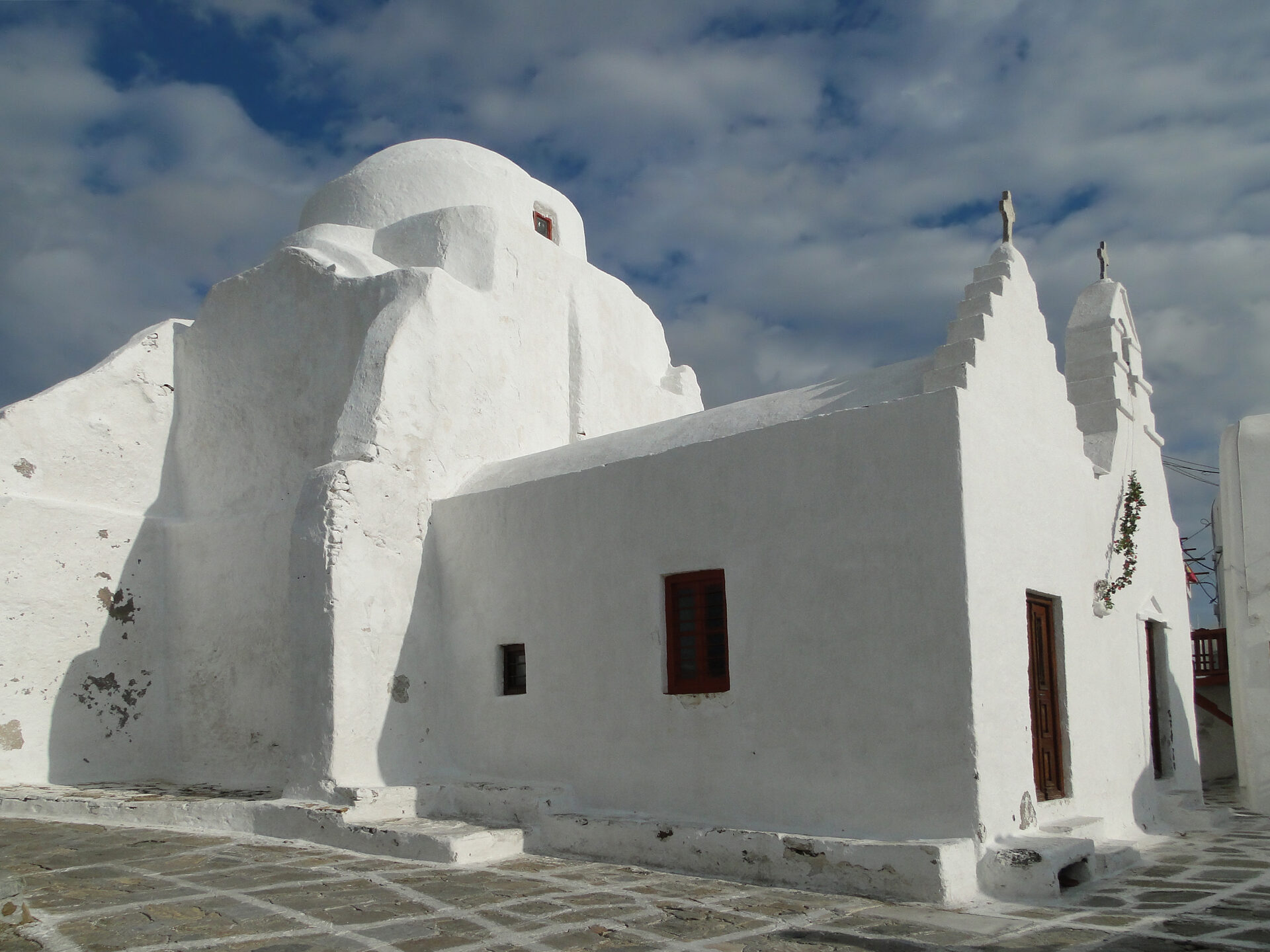
The heart of the island, Chora is a maze of white-washed buildings, blue-painted doors, and narrow pedestrian streets designed to confuse pirates. Don't try to navigate by map—the joy is in getting lost. Key landmarks include the row of 16th-century windmills at Kato Mili, the Paraportiani Church (five chapels merged into one whitewashed wonder), and the waterfront district of Little Venice. Shopping ranges from high-end designer boutiques to local artisan workshops selling jewelry, ceramics, and hand-woven textiles. Tavernas serve fresh seafood and traditional Greek dishes at prices that reflect the island's popularity.
Delos Archaeological Site
One of the most significant archaeological sites in Greece, Delos served as the mythological birthplace of Apollo and Artemis and later became the religious center of the Cyclades. Ferries depart from Mykonos Town's old port (approximately €20-25 roundtrip, 30 minutes each way) with limited daily departures—typically 9am and 10am outbound, returning 1:30pm and 3pm. The archaeological site (entrance approximately €12) includes remarkably preserved mosaics, temples, theaters, and residential quarters. Bring water, sun protection, and sturdy shoes—there's no shade and the terrain is rocky. I recommend allocating 2-3 hours for exploration.
Seaside Getaways and Swimming Spots
Mykonos offers diverse seaside experiences to suit every preference. Paradise (€3 bus from Fabrika Square) is famous for its party atmosphere with loud music and clubs. Super Paradise is similar but more LGBTQ+-friendly. For families or those seeking relaxation, Ornos (closest to town, approximately €2 by bus) offers calm waters, sunbed rentals (around €15-20 for two chairs and umbrella), and numerous waterfront restaurants. Platis Gialos provides excellent facilities and water taxis (€10-15) to more remote coves. Agios Sostis on the north coast offers a quieter, undeveloped alternative with wheelchair-accessible parking nearby.
Little Venice
This photogenic waterfront district features 18th-century fishing houses with colorful wooden balconies built right over the sea. Today the ground floors house bars and restaurants where you can sip cocktails while waves splash beneath your feet. Sunset brings magical light and crowds to match—arrive early for the best seats. Prices reflect the premium location, so expect to pay €10-15 for drinks, but the atmosphere is genuinely special.
DIY vs. Ship Excursion: Delos Archaeological Island
DIY Ferry + Ticket (€32-40/person)
- Ferry from Mykonos Old Port €20 round-trip, 30 min
- Archaeological site entry €12
- Explore the sacred island at your own pace
- Limited return ferries — check schedule carefully
Ship Excursion (€70-100/person)
- Guided tour with expert archaeological commentary
- Transport from ship tender to Delos and back
- History comes alive with a knowledgeable guide
- Fixed time on island — usually 2-3 hours
Depth Soundings Ashore
Practical tips before you step off the ship.
Beat the crowds: Multiple cruise ships often call simultaneously. Taking the first shuttle gives you at least an hour of relative peace in Mykonos Town before the masses arrive. The windmills and Little Venice are best photographed in morning light anyway.
Budget accordingly: Mykonos is one of the most expensive islands in Greece. Restaurant meals, sunbed rentals, and drinks cost significantly more than on less-touristy islands. Bring sufficient euros—many smaller establishments are cash-only.
Delos planning: If visiting Delos, book ferry tickets in advance and be aware of the limited return schedule. Missing the last boat means expensive private arrangements. The site has no shade, food, or water—bring everything you need.
Walking shoes essential: Mykonos Town's marble-paved streets are beautiful but slippery, especially when worn smooth. Comfortable shoes with good grip are essential—leave the flip-flops for seaside outings.
Respect local customs: Although Mykonos has a reputation for lively evenings and celebrations, many residents appreciate visitors who respect local traditions. The churches scattered throughout town are active places of worship—dress modestly if entering.
Wind awareness: The island's nickname isn't accidental. Strong meltemi winds blow throughout summer, particularly in July and August. They provide welcome relief from the heat but can disrupt ferry schedules to Delos and make north-facing shores less pleasant.
Mobility considerations: Mykonos Town presents significant challenges for visitors with mobility impairments. The marble-paved streets are uneven, often stepped, and rarely wheelchair accessible. Narrow alleyways and constant stairs make wheelchair navigation extremely difficult in Chora. The port shuttle buses are not reliably wheelchair accessible—contact your cruise line in advance to arrange mobility assistance. Ornos and Platis Gialos offer relatively flat waterfront areas with some accessible facilities. Delos is not recommended for those with mobility limitations due to rough terrain and lack of accessible paths.
Photo Gallery
Frequently Asked Questions
How do I get from the cruise ship to Mykonos Town?
Ships dock at the New Port about 2km from Mykonos Town. Free shuttle buses run regularly between the port and town, taking about 10 minutes. Taxis are also available for approximately €10-15, though lines can be long when multiple ships are in port. I recommend the first shuttle for crowd-free exploration.
Is the day trip to Delos worth it?
Absolutely. Delos is one of the most significant archaeological sites in Greece, mythological birthplace of Apollo and Artemis. The 30-minute ferry from Mykonos Town costs about €20-25 roundtrip, with site entrance around €12. Plan 2-3 hours for exploring the remarkably preserved ruins. Book ahead as ferries have limited capacity.
Where are the best swimming spots for cruise visitors?
Paradise is most famous but crowded and party-focused. For a more relaxed experience, try Ornos (closest to town, family-friendly) or Platis Gialos (excellent facilities, water taxis to other coves). Buses connect town to major seaside areas for €2-3 each way.
What are the famous windmills of Mykonos?
The iconic windmills of Kato Mili sit on a hill overlooking Mykonos Town and Little Venice. Originally built by Venetians in the 16th century to mill grain from cargo ships, they're now the island's most photographed landmark. Visit at sunset for the most magical light and photos, though be prepared for crowds at that hour.
Author's Note: Until I have sailed this port myself, these notes are soundings in another's wake—deep research, careful triangulation, and honest interpretation of what awaits, offered in the spirit of every good navigator who shares their charts so others might sail more wisely.
Last reviewed: February 2026
Key Facts
- Country
- Greece
- Region
- Cyclades Islands
- Port
- New Port at Tourlos
- Currency
- Euro (EUR)
- Language
- Greek
- Climate
- Mediterranean; hot dry summers, mild winters
Mykonos is expensive — budget €10-15 for a basic coffee, €15-20 for a cocktail in Little Venice. The windmills and Chora are beautiful but small; you can walk the entire town in 90 minutes. If you want a beach day, Ornos is closest and cheapest to reach. Paradise Beach is a party scene, not a relaxation spot.