


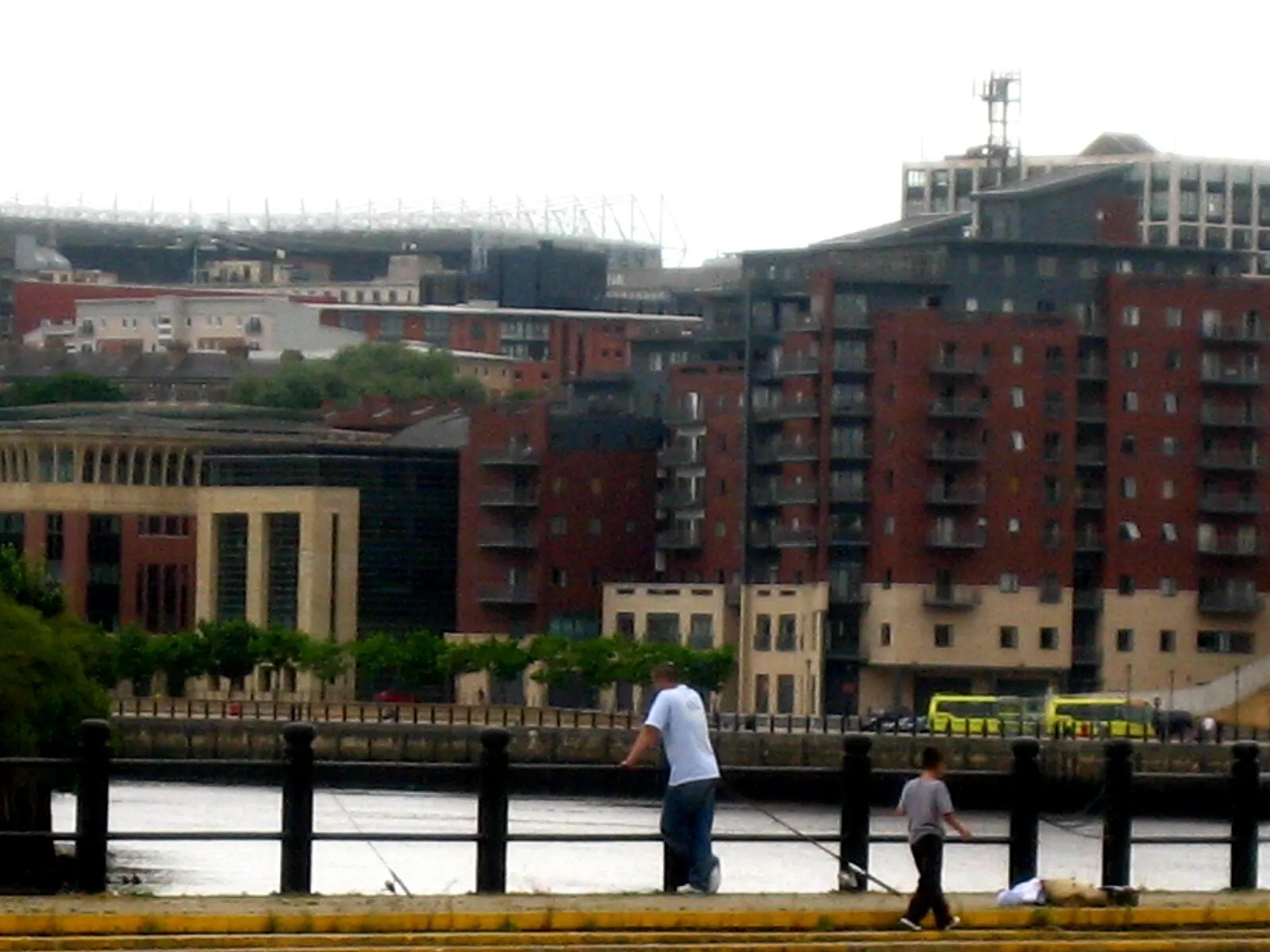
Photo: Wikimedia Commons
My Logbook: Seven Bridges and Geordie Grace
I felt the North Sea before I saw land. A cold, salt-heavy wind pushed across the open deck as our ship turned into the mouth of the River Tyne, and I pulled my jacket tighter and watched the grey coastline sharpen into focus. The pilot boat bounced out to meet us, small and brave against the swell, and somewhere behind the low hills to the south, a rust-red angel was standing in a field with its arms spread wide, waiting. I did not know yet how much that angel would mean to me. But the wind seemed to know. It kept pushing me toward it.
We docked at the Port of Tyne in North Shields, and the free shuttle bus carried us along the river toward Newcastle city centre. The ride took about twenty minutes, long enough to watch the industrial waterfront give way to Georgian terraces and old stone warehouses being reborn as restaurants and galleries. The driver, a cheerful woman named Margaret, pointed out landmarks as we went. "That's the Fish Quay," she said. "Best fish and chips in England, and I'll fight anyone who says otherwise." I believed her. There was a fierce pride in her voice that I would hear again and again throughout the day, from shopkeepers and taxi drivers and a man selling roasted chestnuts on Grey Street who told me, without prompting, that Newcastle had the finest curved street in all of Europe. He was not wrong. Grey Street sweeps downhill in a long, elegant arc of honey-coloured stone, and when the afternoon sun catches it, the whole street seems to glow from within.
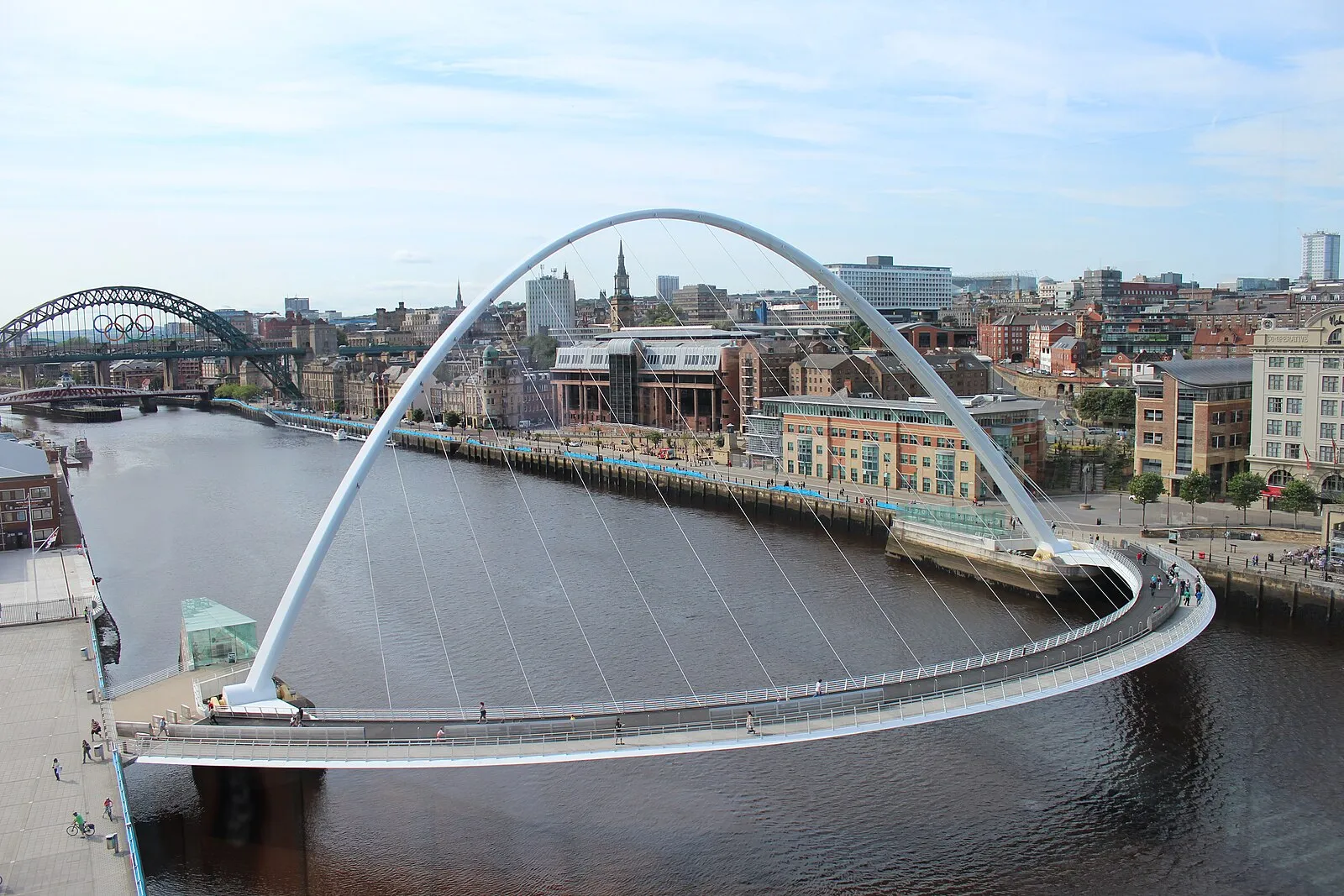
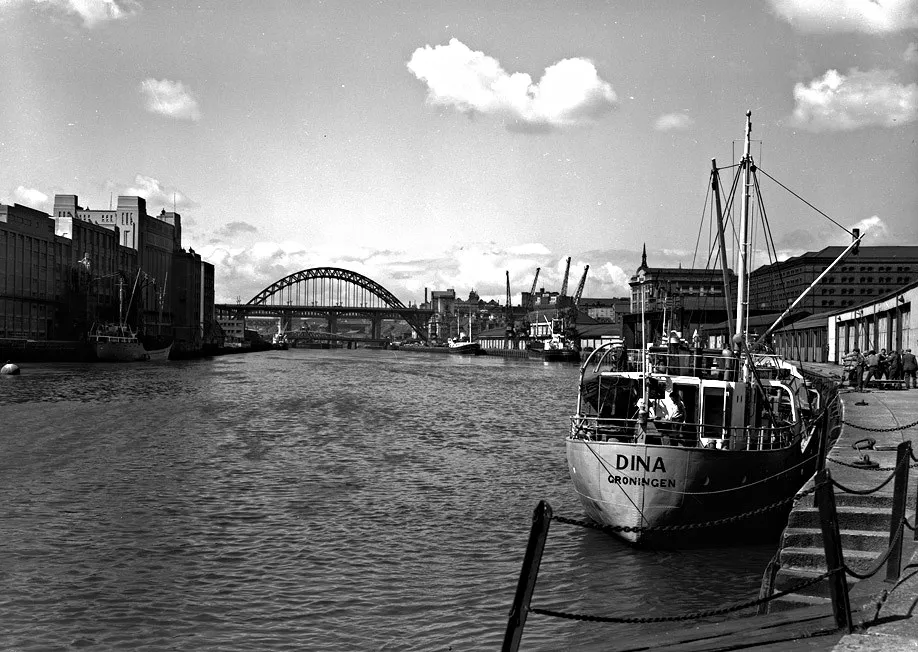
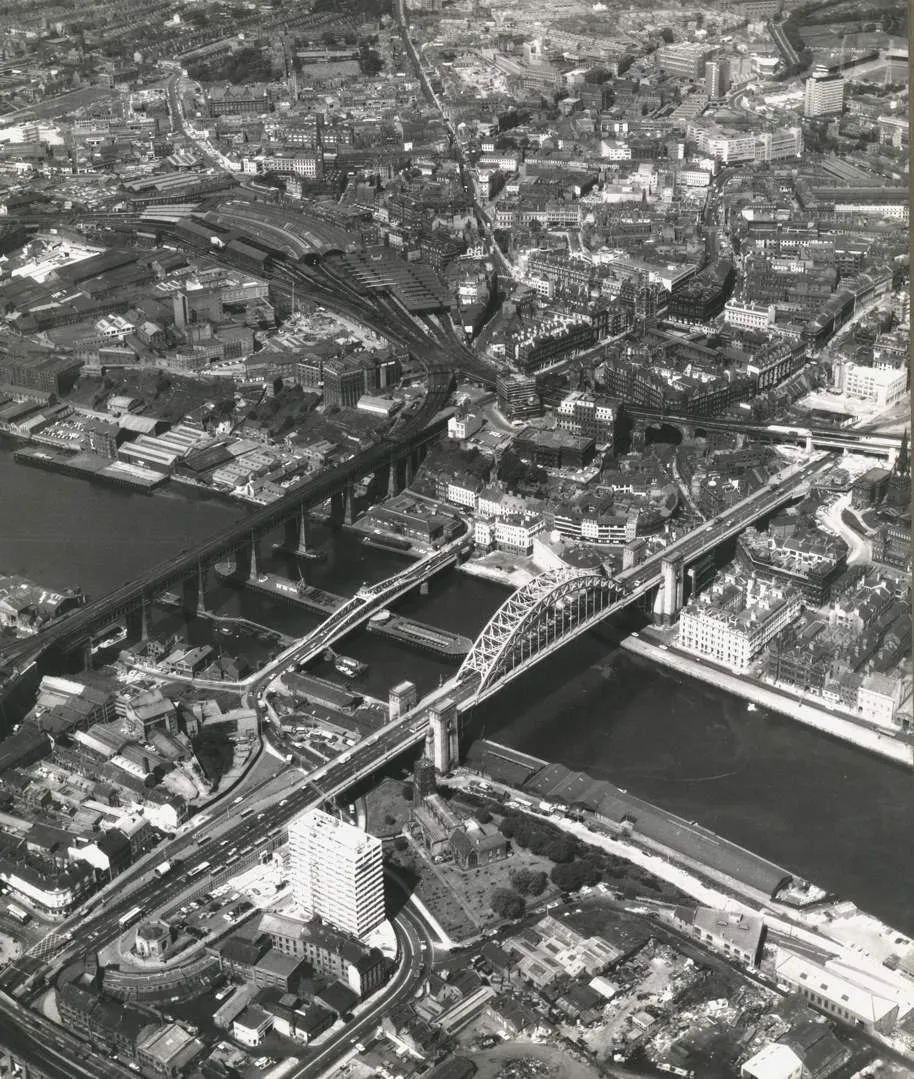
I walked down to the Quayside first. The Tyne Bridge rose above me, a massive steel arch that reminded me of Sydney's Harbour Bridge — and no wonder, since the same firm built both. But where Sydney's bridge carries a kind of brash confidence, the Tyne Bridge felt steadier, more grounded, as though it had been carrying the weight of this city's story for so long that it had become part of the bedrock. I stood beneath it and looked upriver, counting bridges. There were seven visible from where I stood, each from a different era, each a different shape, and together they told the story of a city that keeps building, keeps crossing, keeps reaching for the other side. The Gateshead Millennium Bridge — the tilting bridge that opens like a slow, mechanical wink — caught the morning light and threw silver reflections across the water. I watched it for ten minutes, just breathing.
I crossed the Millennium Bridge to the Gateshead side and climbed the steps to BALTIC Centre for Contemporary Art. The building is a converted flour mill, enormous and industrial, with gallery spaces that feel like cathedral naves. The exhibition that morning was a collection of video installations by a young artist from Sunderland, and I sat in a dark room watching projected images of waves breaking against the Northumberland coast while a cello played something slow and aching. I was the only person in the room. The sound filled me, and I felt my eyes fill with tears — not from sadness, but from the quiet grace of being alone in a beautiful place where someone had poured their heart into making something true. I whispered a quiet prayer of gratitude for the unknown artist and for the strange gift of arriving in the right room at the right time.
Back across the river, I climbed to the Castle Keep — the Norman stone fortress built in 1172 that gave Newcastle its name. The walls are thick enough to muffle the modern city outside, and as I climbed the spiral staircase to the roof, I could feel the centuries compressing around me. From the top, I saw the whole city laid out below: the Tyne winding through its valley, the bridges stitching the two banks together, the green hills beyond. Roman soldiers had stood on this same bluff at Pons Aelius fort in AD 122, watching the eastern end of Hadrian's Wall stretch westward. History stacks up here like geological layers, and standing at the top of the Keep, I felt it all pressing gently against my chest.
After lunch — a stottie cake with pease pudding and ham from a bakery on Grainger Street for about $4 — I took a taxi south to see the Angel of the North. The fare cost approximately $20 each way. The angel stands on a low hill beside the A1 motorway, and as we approached, it grew larger and larger in the windscreen until it seemed to fill the entire sky. Antony Gormley's sculpture is twenty metres tall with a wingspan of fifty-four metres, wider than a Boeing 767, and it is made of weathering steel that has turned the colour of dried blood. I walked up the grassy slope toward it, and the wind hit me hard. It was the same North Sea wind I had felt on the ship that morning, but here it seemed to funnel through the angel's outstretched wings and become something more. I stood directly beneath the figure and looked up. The ribs of steel curved above me like the vaulting of a chapel, and the wind sang through them with a low, resonant hum. A farmer in a nearby field waved from his tractor as though this was all completely normal.
On another day I would have taken the excursion to Hadrian's Wall. The ship offered a full-day tour for $85 that included Housesteads Roman Fort and a stretch of the wall itself, and independent travelers can hire a driver for about $150 for the round trip. However, my time was short, and the angel had already given me what I came for. I returned to the city and spent the final hour walking along the Quayside, watching the light change on the water. A busker was playing "Fog on the Tyne" on an accordion, and two old men on a bench were arguing about football with the kind of passion that only real love produces.
What Newcastle taught me is something I did not expect to learn. I came looking for bridges and Roman stones and a famous sculpture, and I found all of those. But the real gift was the warmth. Despite the cold wind and the grey sky, every person I met in this city radiated a kind of fierce, unguarded kindness that I have rarely encountered anywhere else in my travels. The Geordie spirit is not performed for tourists — it is simply how these people are. It is the shopkeeper who insists you try a free sample of her tablet. It is Margaret the bus driver narrating the city's story with genuine pride. It is the farmer waving from his tractor beneath the angel's wings. Sometimes you visit a place and it gives you facts. Newcastle gave me something warmer than facts. It gave me hope.
Weather & Best Time to Visit
The Cruise Port
Ships dock at the Port of Tyne's International Passenger Terminal in North Shields, approximately eight miles east of Newcastle city centre. The terminal is a modern, single-storey building with a small seating area, basic refreshments, and tourist information desks. Free Wi-Fi is available inside. Taxis queue outside the terminal, and a metered ride to the city centre costs approximately $15-20 GBP. On most cruise days, a complimentary shuttle bus operates between the terminal and Newcastle city centre, typically dropping passengers near the Central Station area. The terminal has level access and accessible ramps, making it wheelchair friendly at ground level. Currency exchange is not available at the terminal, so plan to use ATMs in the city centre or pay by contactless card, which is accepted almost everywhere in Newcastle. The area around the terminal in North Shields has limited attractions, so most visitors head directly into Newcastle or arrange excursions.
Getting Around
Newcastle has an excellent public transport network centred on the Tyne and Wear Metro, a light rail system that connects the coast to the city centre and beyond. A single Metro fare within the city costs about $2-3 GBP, and an all-day DaySaver pass costs roughly $5 GBP. The nearest Metro stations to the cruise terminal are Meadow Well and Percy Main, both about a fifteen-minute walk from the port gate — though the free shuttle bus is more convenient for most visitors.
Within the city centre, walking is the best way to explore. The Quayside, Grainger Town, and the cathedral district are all within comfortable walking distance of each other, though the terrain is hilly in places. The walk from Central Station down to the Quayside involves a steep descent that may challenge those with mobility difficulties. For the Angel of the North and Hadrian's Wall, you will need a taxi or organized transport — neither is accessible by Metro alone. Taxis are metered and reliable; a ride from the city centre to the Angel of the North costs approximately $20 GBP each way. Private drivers for a half-day Hadrian's Wall excursion charge around $150 GBP for the vehicle. Wheelchair users will find the Metro stations have lift access, and the Quayside promenade is largely flat and paved, though some cobbled sections near the historic buildings can be difficult. Local buses serve outlying areas but are less useful for cruise visitors with limited time.
Newcastle Port Map
Interactive map showing cruise terminal and Newcastle attractions. Click any marker for details.
Excursions & Activities
Angel of the North
Antony Gormley's iconic sculpture stands twenty metres tall with a fifty-four metre wingspan on a hilltop south of the city. The site is free to visit and takes about thirty to forty-five minutes to explore, including the walk up the grassy slope from the car park. A ship excursion typically costs $45-60 and combines the Angel with other city highlights. Independently, a taxi from the city centre costs about $20 GBP each way. The slope to the sculpture is moderately steep and unpaved, so this is a moderate-energy activity not ideal for wheelchair users. Book ahead if you want a private driver on busy port days.
Hadrian's Wall & Housesteads Roman Fort
The Roman frontier wall stretches across Northern England, and the best-preserved sections at Housesteads and Vindolanda are about forty-five to sixty minutes by car from Newcastle. Entry to Housesteads costs approximately $10 GBP per adult. A ship excursion runs $80-100 for a full-day tour with transport, guide, and guaranteed return to the vessel. Independently, you can hire a private driver for around $150 GBP for the round trip. The terrain at Housesteads is uneven and hilly — this is a high-energy excursion requiring sturdy footwear. Wheelchair access is very limited at the fort itself, though the visitor centre is accessible.
Quayside & Tyne Bridges Walk
A self-guided walk along the Quayside is free and covers the Tyne Bridge, Gateshead Millennium Bridge, Swing Bridge, and High Level Bridge. Allow one to two hours. The route is mostly flat and paved, making it a low-energy, wheelchair accessible activity. No need to book ahead — simply walk from the shuttle drop-off point down to the riverfront.
BALTIC Centre for Contemporary Art
This free gallery in a converted flour mill on the Gateshead bank of the Tyne hosts rotating contemporary exhibitions. Entry is free, though special exhibitions may charge $5-8 GBP. Allow one to two hours. The building has lift access throughout and is fully wheelchair accessible. Visit independently by walking across the Millennium Bridge from the Newcastle Quayside — no need to book ahead.
Castle Keep & Cathedral
The Norman castle built in 1172 that gave Newcastle its name offers panoramic views from the rooftop. Entry costs approximately $8 GBP. The steep spiral staircase makes this unsuitable for wheelchair users or those with mobility limitations. St Nicholas Cathedral, adjacent to the castle, is free to enter and features a distinctive lantern tower. Both can be visited independently within an hour. A ship excursion combining these sites with the Quayside walk costs $40-55.
Victoria Tunnel Tour
This underground tour follows a coal wagon way built in 1842, later used as a Second World War air-raid shelter. Tours cost approximately $8-10 GBP per person and last about ninety minutes. Book ahead through the Ouseburn Trust website, as tours sell out during summer. The tunnel involves steps and uneven surfaces, making it inaccessible for wheelchair users. A moderate-energy activity suitable for older children and adults.
Depth Soundings
Newcastle uses British Pound Sterling (GBP). As of early 2026, one US dollar buys approximately 0.78-0.82 GBP. Contactless card payments are accepted at virtually every shop, restaurant, and attraction in the city, making cash less necessary than in many European ports. ATMs are plentiful in the city centre near Grainger Street and Northumberland Street. Tipping at restaurants is customary at 10% if a service charge is not already included, though it is not obligatory.
The Geordie accent is famously thick, and visitors sometimes struggle with unfamiliar words. A warm smile and a polite "sorry, could you say that again?" will always be met with patience and good humour. "Howay" means come on or let's go, and "canny" means good or nice. English is obviously the first language, and you will have no communication difficulties beyond the occasional vocabulary surprise. Newcastle is generally safe for visitors during daytime hours, though standard precautions apply in any city. Keep valuables secure in crowded areas like Northumberland Street. The weather is the biggest practical challenge — a waterproof jacket is not optional, even in summer. Temperatures rarely exceed 19 degrees Celsius, and the North Sea wind can make it feel significantly cooler. Budget about $30-50 per person for a port day covering transport, one attraction entry, and lunch.
Photo Gallery
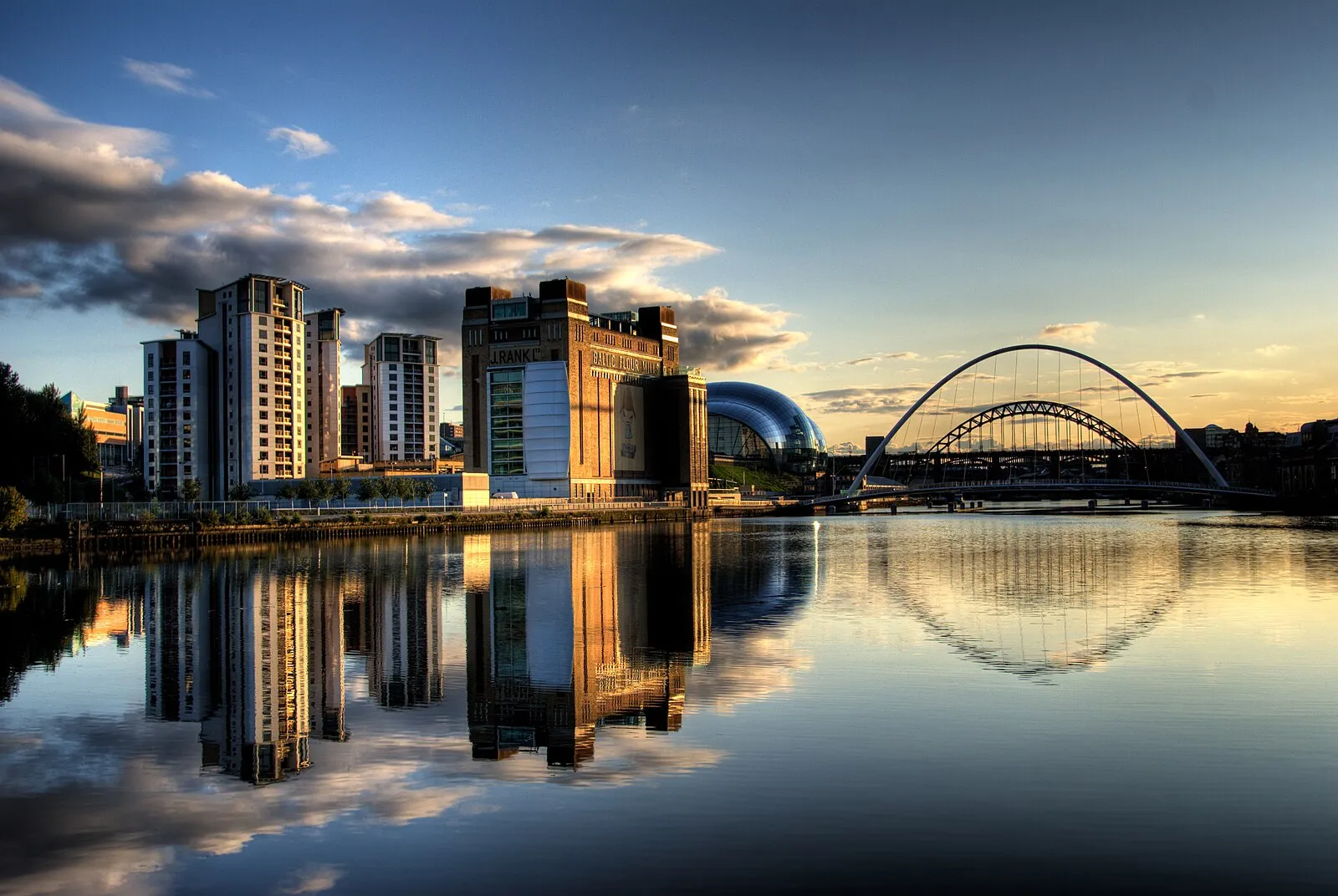
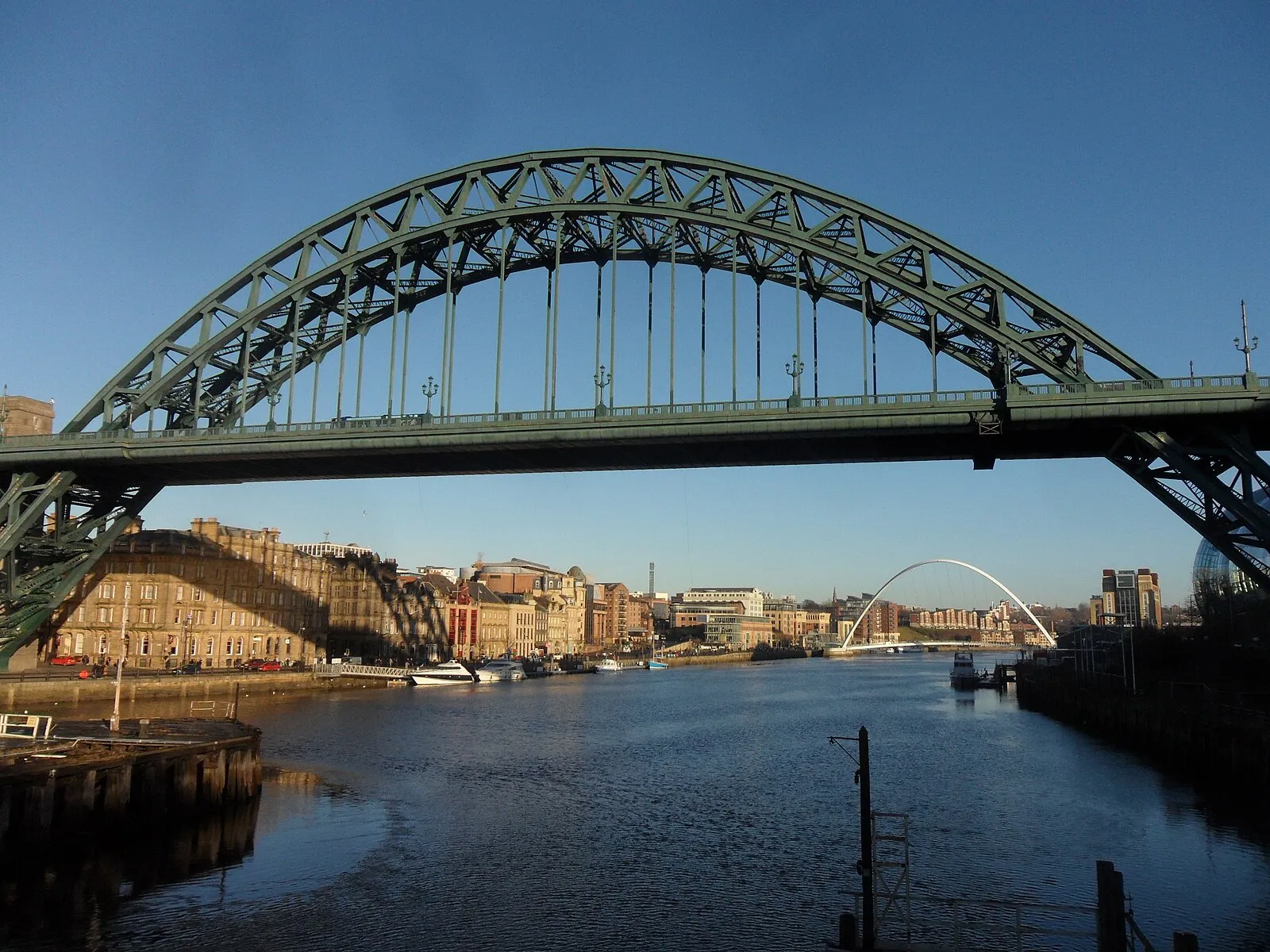
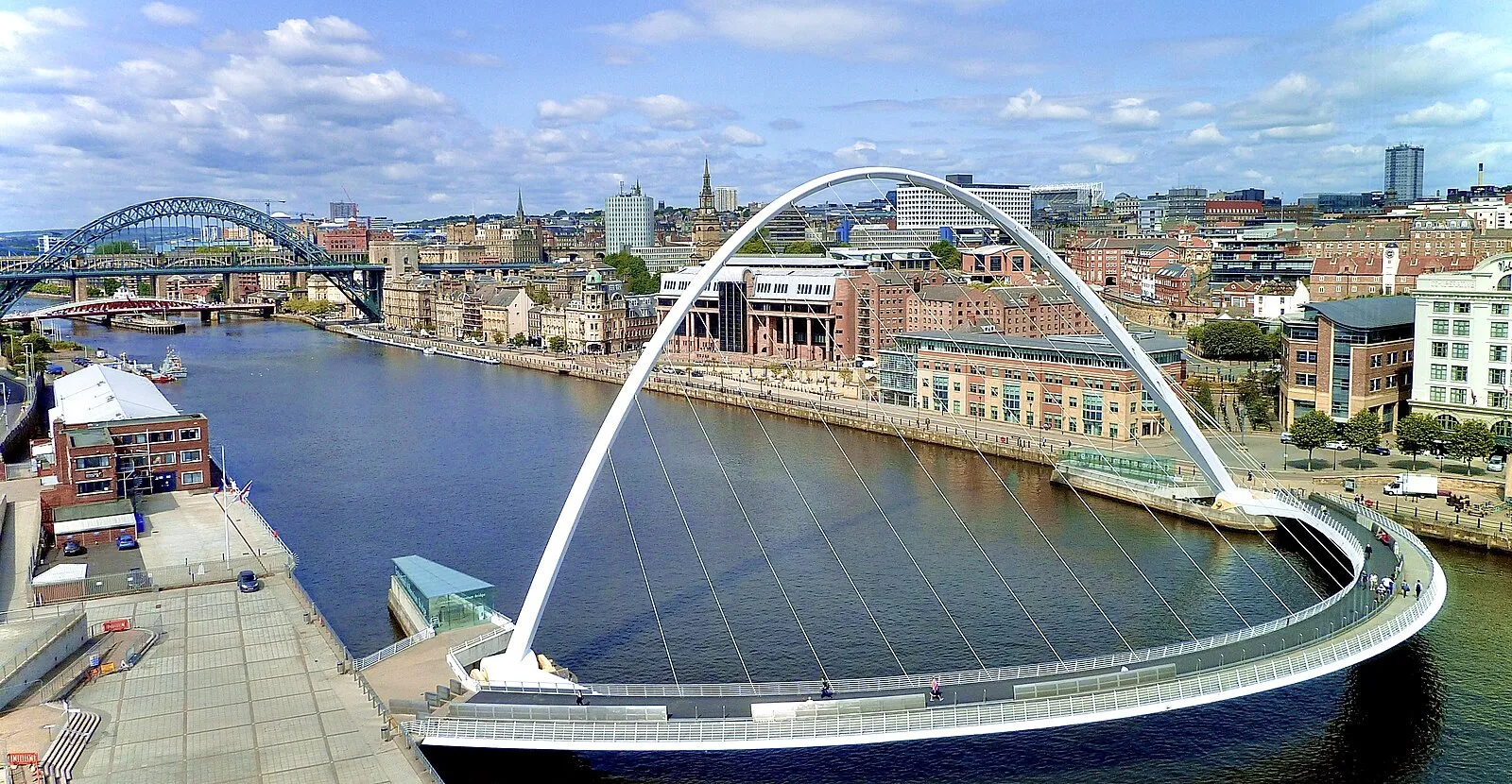
Image Credits
All photographs on this page are used under Creative Commons or free-use licenses. Images sourced from Wikimedia Commons, Unsplash, Pixabay, Pexels, and Flickr.
Frequently Asked Questions
Where do cruise ships dock in Newcastle?
Ships dock at the Port of Tyne's International Passenger Terminal in North Shields, about eight miles east of Newcastle city centre. A free shuttle bus operates on most port days, and taxis cost approximately $15-20 GBP to the city.
Can I walk from the cruise terminal to Newcastle city centre?
No, the terminal is too far to walk comfortably. Use the free shuttle bus, the Tyne and Wear Metro from nearby Meadow Well or Percy Main stations, or take a taxi.
How do I get to the Angel of the North?
A taxi from Newcastle city centre costs about $20 GBP each way and takes roughly twenty minutes. Ship excursions also include the Angel as a stop. Public transport is possible but slower.
Is Hadrian's Wall feasible as a day trip from the cruise port?
Yes, but plan carefully. The nearest sections at Housesteads are about an hour by car. A ship excursion ensures your return to the vessel. Independent visitors should hire a private driver and leave early.
What currency is used in Newcastle?
British Pound Sterling (GBP). Contactless card payments are accepted almost everywhere. ATMs are plentiful in the city centre along Grainger Street and Northumberland Street.
What should I pack for a port day in Newcastle?
Layers and a waterproof jacket are essential. Newcastle's maritime climate brings frequent rain and cool North Sea winds year-round. Comfortable walking shoes are important for the hilly Quayside terrain.
Newcastle upon Tyne — Port Guide
Last reviewed: February 2026