

Photo: F. W. Sheelor / Library of Congress Panoramic Photographs (public domain, 1915) · also at Wikimedia Commons
Skagway, Alaska
Region: Alaska | Season: May – September | Tender: No (direct dock)

Photo: F. W. Sheelor / Library of Congress Panoramic Photographs (public domain, 1915) · also at Wikimedia Commons
Region: Alaska | Season: May – September | Tender: No (direct dock)
We woke up docked at the very end of a narrow fjord with sheer granite walls rising thousands of feet on both sides. The morning air was crisp and smelled of pine, saltwater, and fresh coffee from the docks. Skagway itself is literally a movie set — wooden boardwalks, vintage signs, rangers in flat hats and suspenders telling stories like they just stepped out of 1898. Four cruise ships were in port, but the moment we started walking down Broadway, the town's electric energy drew us in. What makes Skagway different from every other Alaska port is that it's not pretending — this town genuinely was the gateway to the Klondike goldfields when word of the August 1896 strike on Bonanza Creek triggered one of history's wildest human stampedes.
When the Seattle Post-Intelligencer announced the discovery on July 17, 1897, with its famous "Ton of Gold!" headline, the rush exploded overnight. Within a year, nearly 100,000 fortune-seekers poured through this narrow valley, and by June 1898 Skagway had swollen to somewhere between 8,800 and 10,000 souls — making it the largest city in Alaska at the time. Walking these same wooden planks, I could almost hear the chaos: pack mules braying, tent saloons roaring, desperate men shouldering impossible loads toward mountain passes that would break most of them. The Canadian Mounties had required every stampeder to haul one ton of supplies over these passes to prevent starvation in the goldfields — imagine dragging 2,000 pounds up what we were now riding in cushioned comfort.
The White Pass & Yukon Route Railway is the undisputed star — and rightly called the "Scenic Railway of the World." We boarded the 8:15 vintage train and immediately started climbing the 110-mile narrow-gauge track that hugs cliffs so close you can touch the rock walls. What staggered me wasn't just the scenery — trestle bridges, tunnels, switchbacks, and sudden views of glaciers hanging like frozen waterfalls — but the engineering audacity. Construction began on May 27, 1898, and just eight weeks later, on July 21, 1898, Alaska's first-ever train ran four miles from Skagway — a herculean feat that would take 30,000 workers and two years to complete the full route through solid granite using nothing but black powder and crude hand tools.
By February 1899 they'd reached the 2,885-foot summit of White Pass, and when we crested that same spot the wind hit us like a wall — cold, sharp, tasting of snow even in July. The railway earned designation as an International Historic Civil Engineering Landmark in 1994, and standing on that open platform with the whistle shrieking and the abyss yawning below, I understood why. Thousands of pack horses died on the infamous Dead Horse Trail below us; the guide said bones still surface after heavy rains.
Back down we joined the free National Park Service walking tour through the Klondike Gold Rush National Historical Park — much of downtown Skagway is preserved as a living museum, and the rangers don't just recite facts, they inhabit the stories. We heard about Soapy Smith's con games and his violent end in July 1898, when he was shot and killed in a gunfight with surveyor Frank Reid on Juneau Wharf — both men died from their wounds, Reid four days later, hailed as the hero who ended Soapy's reign of crime. The rangers also showed us brothels disguised as "dress shops" — wild west perfection with footnotes.
The Moore Homestead cabin stands as a quiet counterpoint to all this chaos: Billy Moore had filed a 160-acre homestead claim here back in 1887, built a cabin, wharf, and sawmill, dreaming of a town that would serve prospectors heading to the interior — and when the stampede hit, his vision exploded beyond anything he could have imagined. Lunch was reindeer sausage with grilled onions on a sourdough bun from the Skagway Fish Company — the taste was savory and slightly sweet, eaten on a bench while watching floatplanes take off.
Afternoon we hiked the first mile of the Chilkoot Trail — the shorter but brutally steeper alternative route the stampeders used when Dead Horse Trail became impassable. Even that first mile was steep, rooty stairs through spruce forest with the scent of moss and old snow, but the sense of walking in the literal boot-prints of desperation and hope was overwhelming. I kept thinking: they did this with a ton of gear. We had water bottles and complaining knees.
The pros: most authentic Gold Rush town left standing, the railway is unforgettable, and everything is compact and walkable. The National Park Service rangers offer some of the best free tours in Alaska.
The cons: it gets crowded mid-day when multiple ships are in, and most shops close early. Book the earliest train possible for best light and smaller crowds.
Practical tips: Wear real shoes — boardwalks get slippery when wet. Bring a light jacket even if it's sunny at sea level; the summit is always 15–20°F colder. And book ahead — the White Pass Railway sells out months in advance during peak season.
Last reviewed: February 2026
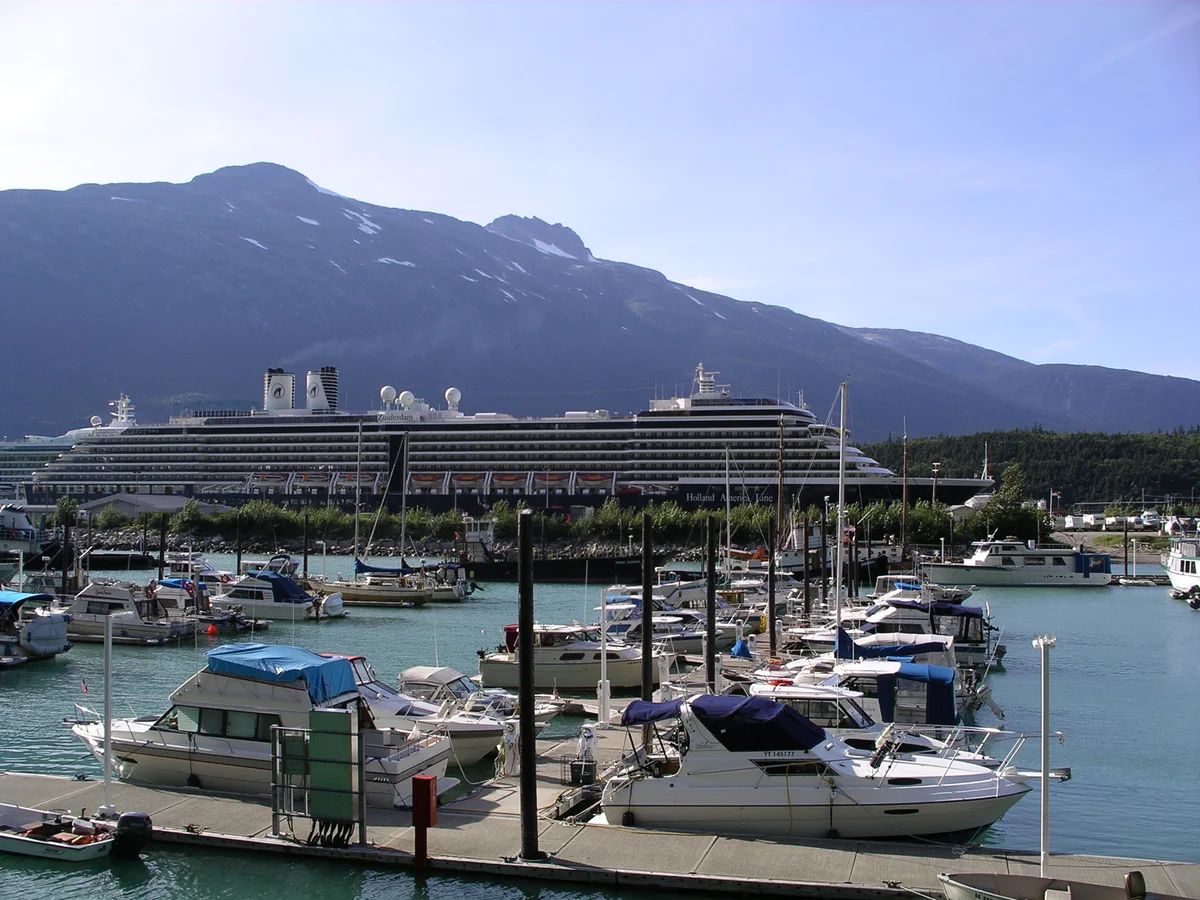
Skagway welcomes approximately 1.2 million cruise passengers annually despite having a year-round population of about 1,200 (2020 Census). The waterfront includes four docking facilities — Broadway Dock, Railroad Dock, and Ore Dock (owned and operated by the White Pass & Yukon Route) plus a state-owned Ferry Dock used by the Alaska Marine Highway System. All docks place you within steps of the historic district — you're already in town the moment you step off the gangway.
Unlike larger Alaska ports, Skagway has no industrial port area to traverse. Ships dock directly at the waterfront, and the wooden boardwalks of Broadway Street begin immediately. The White Pass & Yukon Route Railway depot sits adjacent to the Railroad Dock, making train excursions incredibly convenient — walk off your ship and onto your train. On peak days when four or more large ships arrive, the small town can feel crowded, but the compact layout means attractions are never more than a 10-minute walk away.
Port facilities include visitor information centers near each dock, public restrooms, and easy access to the Klondike Gold Rush National Historical Park visitor center on Broadway. ATMs are available throughout downtown. The entire historic district is flat and wheelchair accessible, though some original boardwalk sections can be uneven.
Skagway is the most walkable cruise port in Alaska — the entire historic district fits within a few blocks, and you step off your ship directly into town. No shuttles, taxis, or transfers needed for the main attractions. The wooden boardwalks and false-front buildings of Broadway Street start at the dock.
Ships dock at Broadway Dock, Railroad Dock, Ore Dock, or Ferry Dock — all within steps of the historic district. From any dock, you're in the heart of town immediately. The White Pass Railway depot is adjacent to Railroad Dock.
The Klondike Gold Rush National Historical Park visitor center on Broadway offers free maps and ranger recommendations. For the White Pass Railway, book at least 60-90 days ahead — this excursion sells out during peak season.
Interactive map showing cruise docks, historic Broadway, White Pass Railroad depot, and attractions mentioned in this guide. Click any marker for details.
Note: White Pass Summit is 20 miles from town (accessed by train). Chilkoot Trailhead is 9 miles out.
Skagway's excursions center on two themes: the legendary White Pass Railway and Klondike Gold Rush history. Unlike other Alaska ports with diverse wildlife options, Skagway excels at immersive historical experiences. Book the railway early — it's the signature excursion that sells out months ahead during peak season.
The signature Skagway experience is this narrow-gauge railway climbing from sea level to 2,865 feet at White Pass Summit. The Summit Excursion (3.5 hours, $150-180) is the most popular option, featuring vintage parlor cars, stunning trestle bridges, tunnels carved through solid granite, and views of waterfalls, glaciers, and the infamous Dead Horse Trail far below. For the full experience, choose the train-only option rather than bus return — the descent offers different views and the vintage cars are half the charm. Longer excursions continue to Fraser, BC (passport required) or Bennett Lake (8 hours). Book at least 60 days ahead for summer sailings.
The free National Park Service walking tours are among the best ranger-led programs in Alaska — 45-60 minutes of storytelling that brings 1898 Skagway to life. Paid options include the Skagway Street Car Tour ($45, 2 hours) covering more ground with costumed guides, and the Liarsville Gold Rush Trail Camp ($100-130) offering gold panning, salmon bake, and theatrical performances. The Gold Rush Cemetery ($5-10 shuttle) holds the graves of Soapy Smith and Frank Reid, with rangers often stationed to tell their story.
For adventurous travelers, shuttles access the Chilkoot Trailhead 9 miles from town. Day hikers can explore the first few miles of this historic route where stampeders once hauled a ton of supplies. The trail is steep and rooty but deeply atmospheric — you're literally walking in their footsteps. Full Chilkoot expeditions (33 miles, 3-5 days) require permits and planning but offer a transformational wilderness experience.
Jewell Gardens ($30-40) offers a peaceful escape with beautiful gardens and glassblowing demonstrations. Helicopter glacier tours ($300-400) fly over the Juneau Icefield. The Kroschel Wildlife Center ($100-150) provides close encounters with Alaskan wildlife. Kayaking excursions paddle the calm waters of Taiya Inlet.
Reserve White Pass Railway 60-90 days before your cruise — these trains sell out quickly, so book ahead to secure your preferred departure time. Morning trains offer better light for photography. Compare ship excursion prices with independent booking; the railway operates its own ticket office at wpyr.com. Free alternatives include the National Park Service walking tours, exploring Broadway's historic buildings, and visiting the museum exhibits at the NPS visitor center.
Skagway has about 1,200 residents and over a million cruise visitors a year — the town exists for tourists. Broadway Street shops are mostly jewelry stores, but the Klondike Gold Rush NPS visitor center is genuinely excellent and free. The White Pass Railway is the main event here and it deserves the hype. Book the earliest train for the best light and fewer crowds.
Practical tips before you step off the ship.
Skagway sits in a rain shadow and is drier than other Southeast Alaska ports, but weather at the summit can change rapidly. Expect sun at sea level and possible sleet at White Pass — layers are essential. Temperatures at the 2,865-foot summit run 15-20°F colder than downtown. Bring a warm jacket for the train even if it's T-shirt weather at the dock.
Important: Most shops close by 6 PM when cruise ships depart. Plan shopping for earlier in the day.
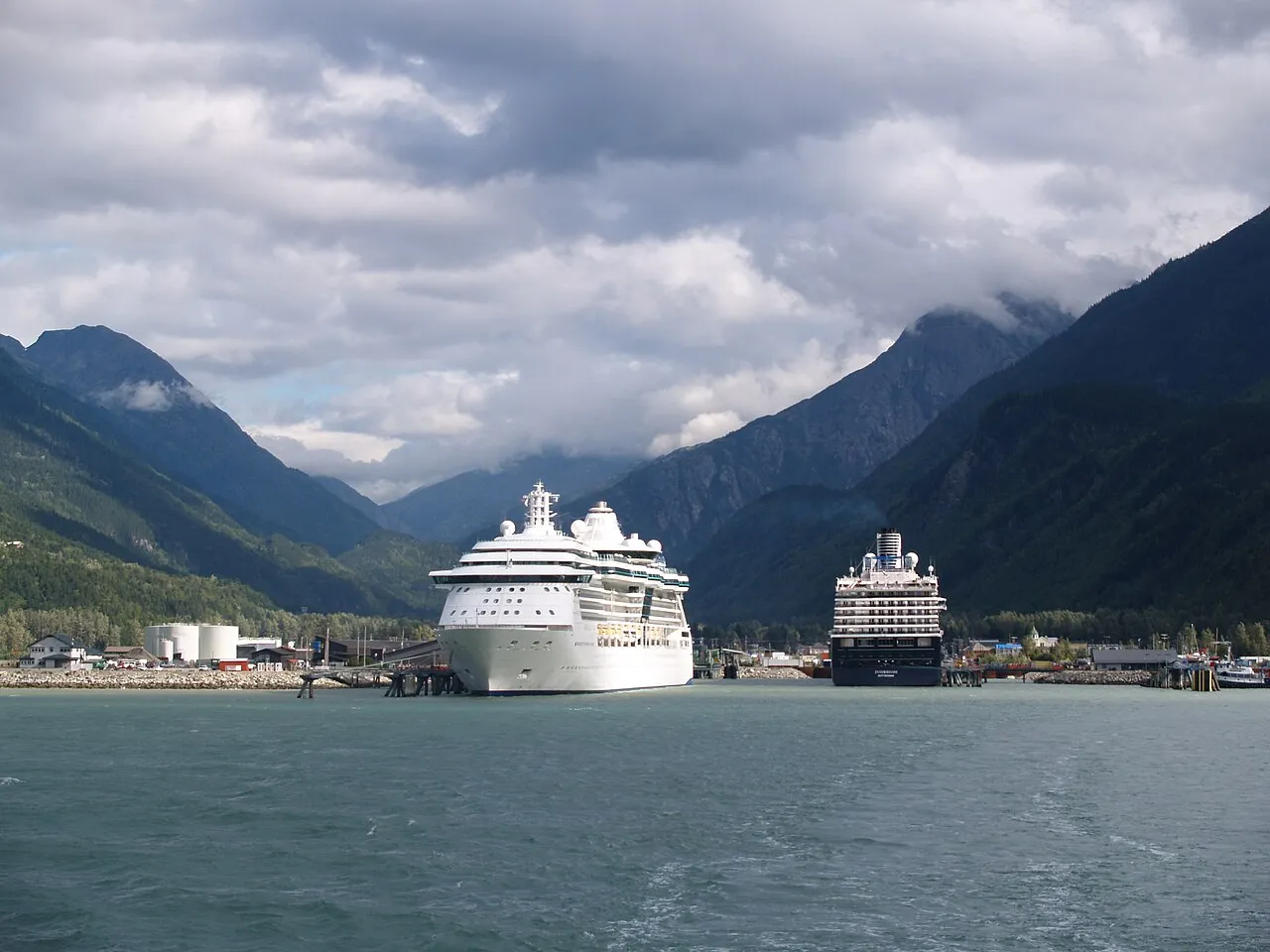
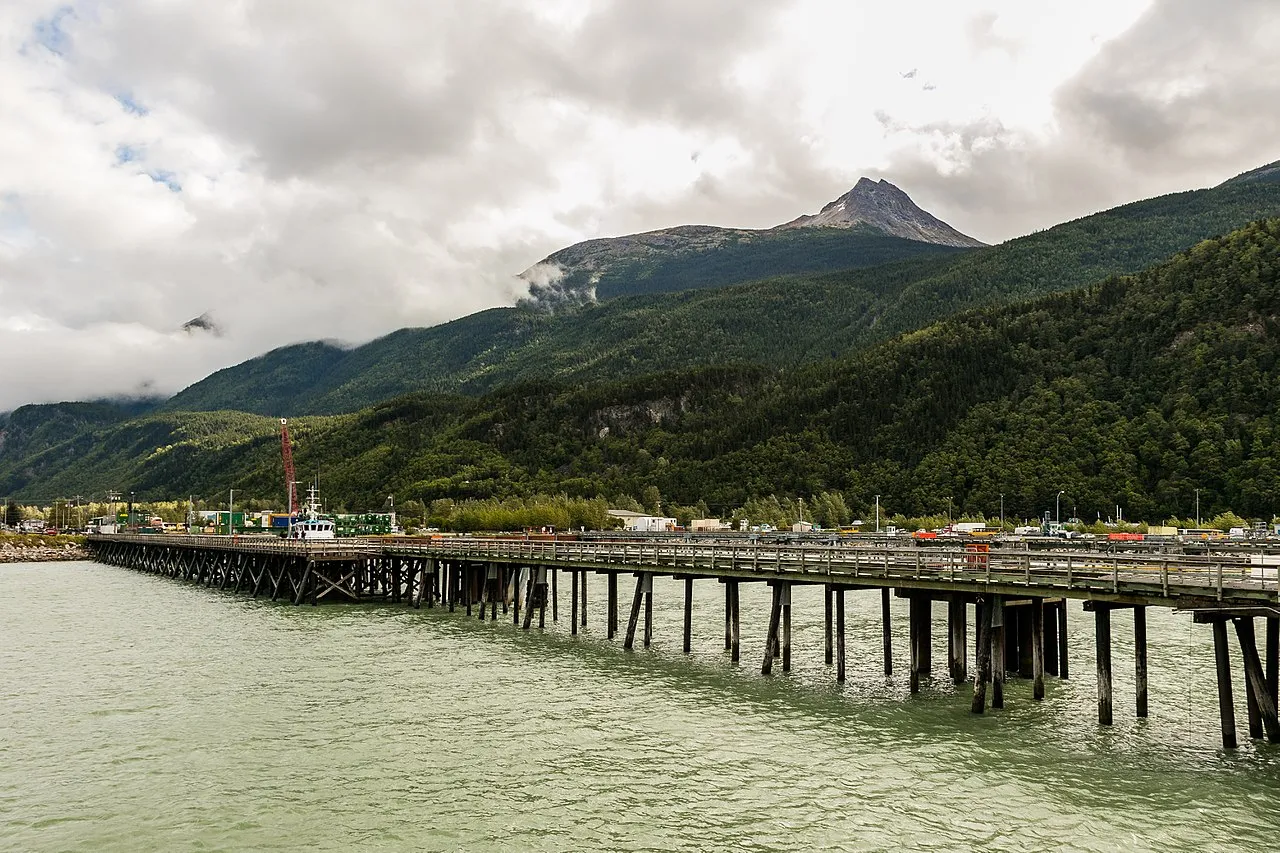
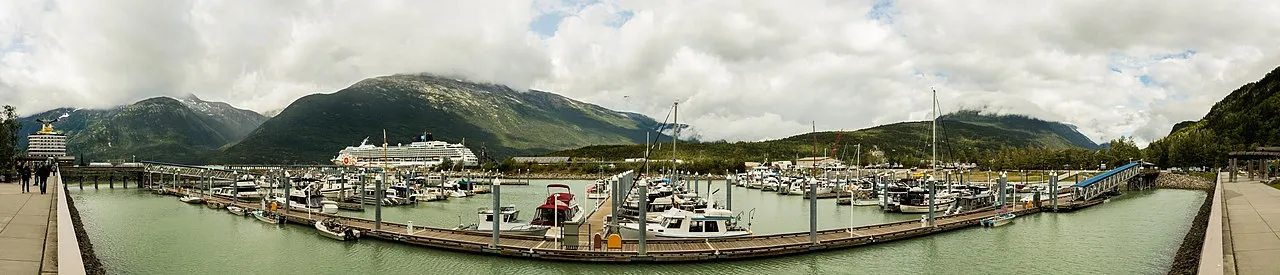
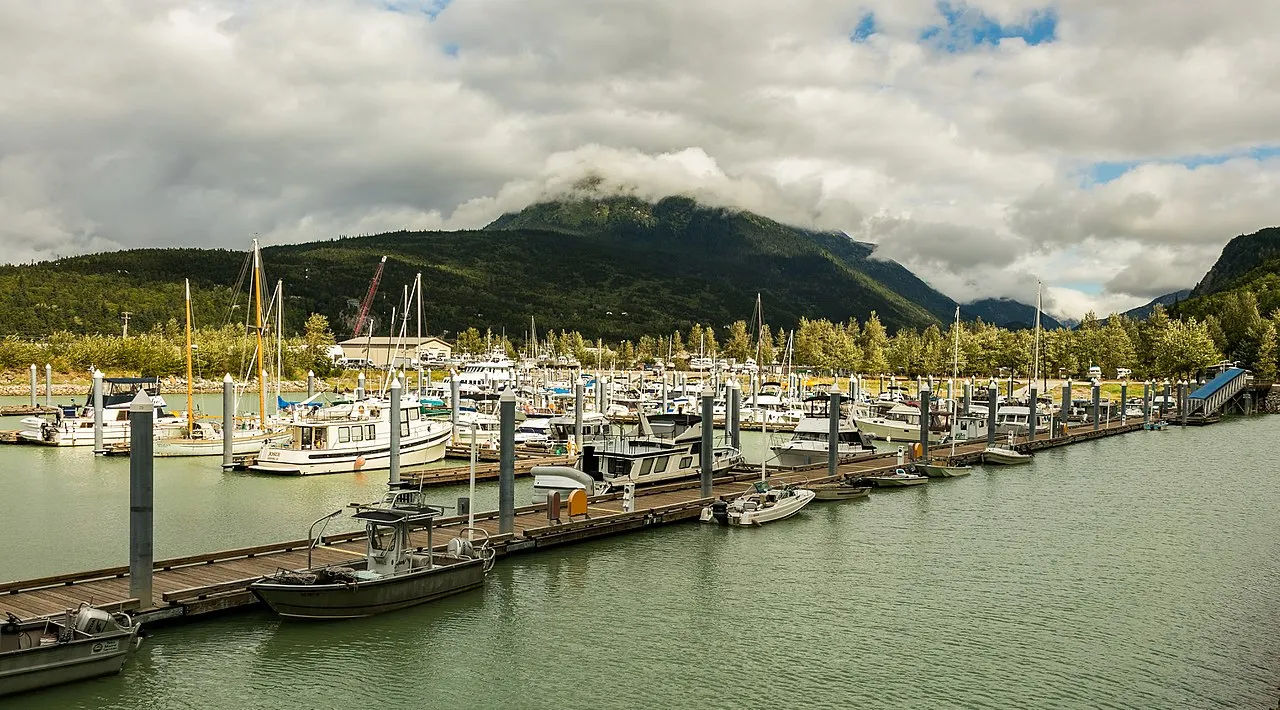
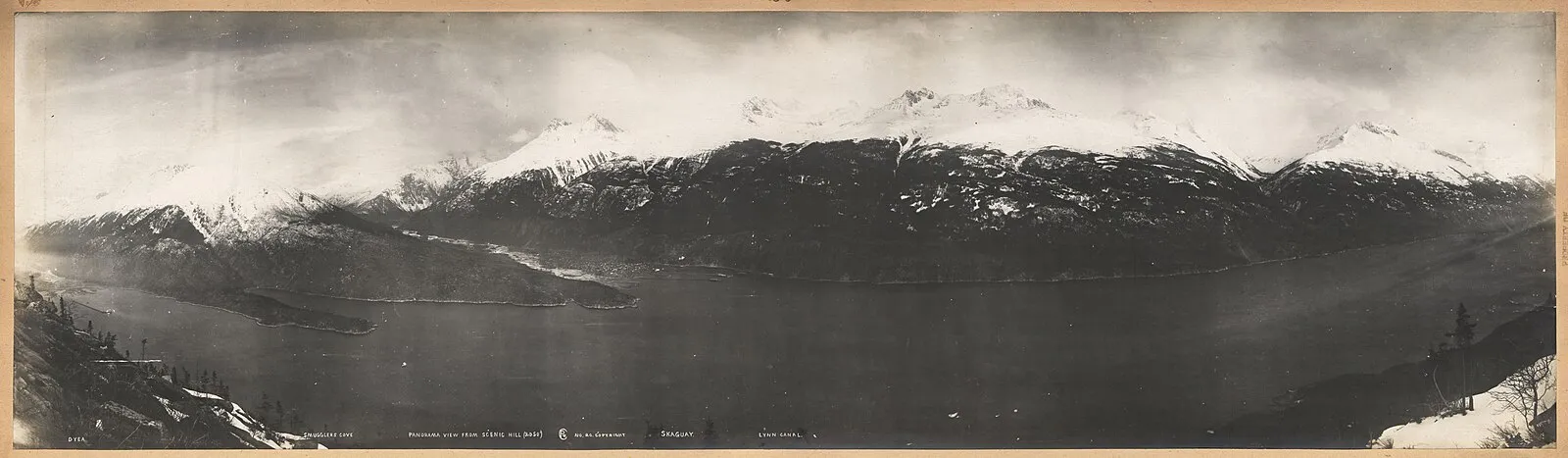
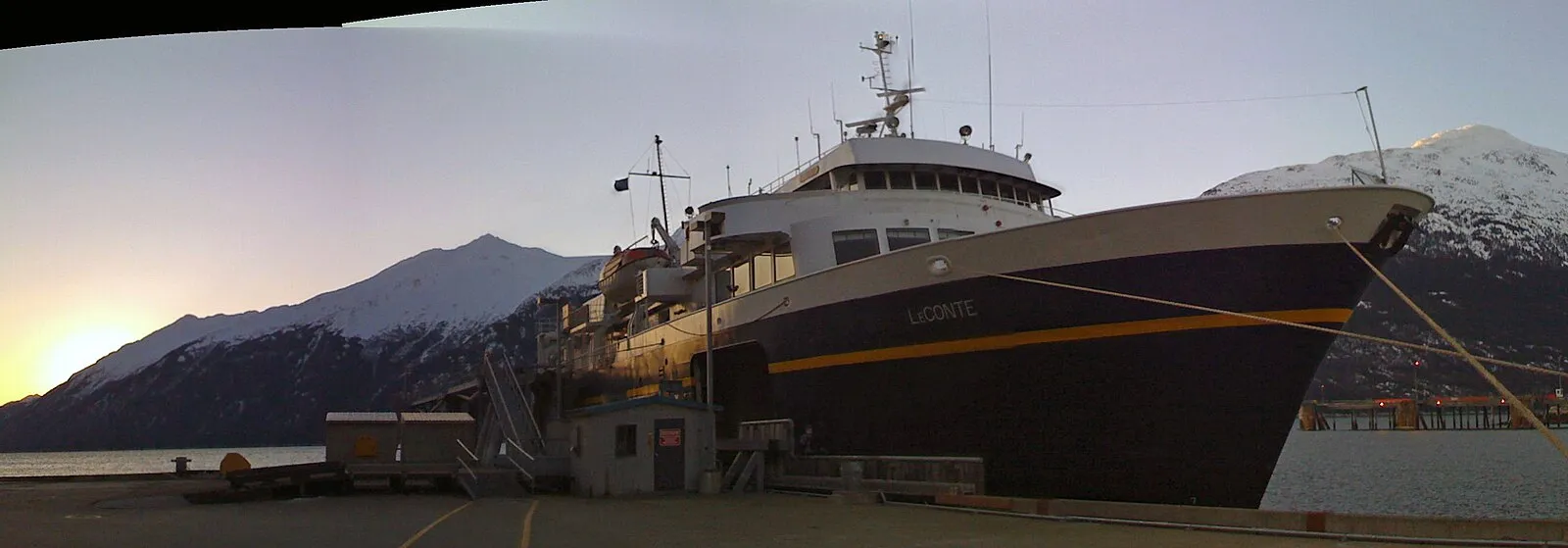
Gallery rebuilt 2026-04-12 with verified public-domain images — all from the Library of Congress Prints & Photographs Division. Photographers include F. W. Sheelor (1915 panoramic), Pillsbury & Cleveland Co. (1899 Gold Rush waterfront), Callarman (Broadway Street), Winter & Pond (A.B. Mountain), LaRoche of Seattle (1897 earliest Skagway), William H. Rau (Klondike stereograph), and the Frank & Frances Carpenter Collection (Burro Creek Falls). Ten prior generic-boilerplate "Wikimedia Commons contributor" files were removed per admin/CAREFUL.md Image Verification Protocol.
Mid-June through early August offers the most reliable weather — highs in the low 60s°F, the longest daylight (~18 hours at the June solstice), and the fullest White Pass Railway schedule. May and September are quieter with lower prices but cooler and wetter conditions. Skagway averages roughly 30 inches of precipitation a year in town — drier than Juneau or Ketchikan but still wetter than you might expect.
Pack a waterproof outer shell (the town is drier than Juneau or Ketchikan but rain is still possible any day), fleece mid-layer, warm base layer, and comfortable walking shoes for the boardwalks. If you are doing the White Pass Railway, it is noticeably colder at the summit (2,865 ft) than at sea level — bring an extra warm layer for the open observation car. Binoculars are useful for wildlife along the railway.
Alaska sits outside the warm-water storm belt — no typhoons or similar events. The real concern is Gulf of Alaska mid-latitude low-pressure systems, which intensify from late August through winter. Summer cruise days rarely encounter severe weather. The White Pass Railway operates rain or shine and is rarely cancelled due to weather during the cruise season.
No. Skagway is actually one of the driest ports in Southeast Alaska at ~30 in/yr — less than Ketchikan or Juneau. The White Pass Railway runs rain or shine. The Gold Rush-era boardwalks on Broadway are covered in places, and the Klondike Gold Rush Visitor Center, Mascot Saloon, and other NPS buildings are indoor attractions. The mountain scenery is often most dramatic in moody weather.
Yes. Skagway is the most walkable port in Alaska — you step off the ship directly into the Klondike Gold Rush National Historical Park historic district. Broadway Street with its wooden boardwalks and restored false-front buildings is steps from every cruise dock. The entire town is essentially one street, about 0.5 miles long. No shuttle or taxi needed.
The standard Summit Excursion is about 3.5 hours round-trip, climbing from sea level to 2,865 feet at White Pass Summit and returning via the same route. Longer options to Fraser, BC (passport required) or Bennett Lake extend to 4-8 hours. The railway depot is on 2nd Avenue, a short walk from the cruise docks. Book at least 30-60 days ahead — trains sell out during peak season.
In 1897-98 the discovery of gold in Canada's Klondike triggered one of the last great gold rushes. An estimated 100,000 set out; roughly 30,000 made it. Most passed through Skagway or Dyea via the White Pass or Chilkoot trails. Skagway boomed from one homestead to a lawless town of 10,000. The NPS Klondike Gold Rush National Historical Park preserves this history, and Broadway looks remarkably similar to 1898 photographs.
Only if your excursion crosses into Canada — specifically the White Pass Railway trips to Fraser, BC or Bennett Lake, or any Yukon bus/helicopter excursions. The standard Summit Excursion stays in Alaska and does NOT require a passport. If you are unsure, confirm with your excursion operator before booking. US passport holders should bring their passport on any cross-border excursion.
Bald eagles are common along the waterfront and river channels. Mountain goats are sometimes visible on the high peaks from the White Pass Railway. Black bears occasionally appear in the Skagway River valley, especially during salmon runs July-August. Harbor seals frequent the harbor. The Chilkoot River area (near Dyea) is known for bear viewing during salmon season.
Skagway Brewing Company serves craft beer and pub food in a Gold Rush-era setting. The Red Onion Saloon is a restored 1898 brothel turned bar/restaurant with character to spare. Starfire for upscale dining. Bonanza Bar and Grill for burgers and halibut. The Klondike Doughboy stand near the docks serves fresh doughnuts that draw long lines from cruise passengers.
White Pass Summit Excursion (train) runs about $130-160 per person; longer Fraser/Bennett options $180-250; Yukon bus tours $100-180; helicopter glacier tours $300-450; horseback riding $150-200; Chilkoot Trail guided hikes $90-150; gold panning $25-40; Liarsville Gold Rush show $70-90. Ship excursions typically cost 10-20% more than booking direct but include guaranteed return to ship.
The White Pass Railway is the #1 excursion. The NPS Klondike Gold Rush Visitor Center on Broadway (free) has exhibits and ranger talks about the 1898 stampede. The Mascot Saloon Museum (free, NPS) recreates a Gold Rush-era bar. Red Onion Saloon upstairs brothel tour ($5-10) is entertaining history. The Gold Rush Cemetery (0.5 mi from town) holds the graves of con man Soapy Smith and vigilante Frank Reid.
Skagway's cruise docks are accessible, and the flat Broadway boardwalk district is largely wheelchair-friendly. The NPS Visitor Center is fully accessible. The White Pass Railway has wheelchair-accessible coaches — confirm when booking. Some boardwalk sections and the Gold Rush Cemetery trail may have uneven surfaces. The town is flat and compact — no hills to navigate in the main tourist area.