


Captain's Logbook
St. Petersburg: My Imperial Dream
Peter the Great built this city in 1703 out of sheer force of will – digging canals through marshland to create a western capital that would rival Paris and eclipse Moscow's medieval soul. Arriving at dawn, I watched golden light spill across the Neva and understood why he wanted this so desperately: St. Petersburg doesn't just shine, it proclaims. The Peter & Paul Fortress spire seemed to pierce heaven itself.
The Winter Palace – commissioned by Peter's daughter Empress Elizabeth in 1754 and built over eight years by Italian architect Bartolomeo Rastrelli – is imperial excess frozen in Baroque perfection. Elizabeth died before she could see it finished, but what she left behind takes your breath: room after room of gilded moldings, painted ceilings, parquet floors that belong in jewelry boxes. Inside is the Hermitage Museum, founded by Catherine the Great in 1764 as her private art collection. Today it holds over 3 million pieces (a third of them coins and medals), and when it opened to the public in 1852, it changed what a museum could be.
I arrived early and had the Gold Room almost to ourselves – Fabergé eggs glittering beside Scythian treasures that predate Christ. The Church on Spilled Blood at 9 a.m. was blessedly empty: every inch covered in biblical mosaics so intricate they look wet, still glistening after a century. This was the city of the Romanov czars for nearly 200 years, and the weight of that dynasty – the ambition, the artistry, the ruthless beauty – presses down on every cobblestone.
In the evening I took a canal boat under the bridges while the sky turned lavender and gold at 11 p.m. – the famous white nights, when the sun refuses to set and the whole city glows like a stage set. Dinner was Georgian khinkali dumplings and khachapuri cheese bread that ruined all other bread forever. The pros: the most staggeringly beautiful city autocrats ever built. The cons: visa bureaucracy and afternoon crowds, but dawn solves everything.
But what I had not prepared for was the siege memorial. A small plaque near the Fontanka Canal marks where, during the 900-day Siege of Leningrad, a million civilians starved to death while the city refused to surrender. A woman my age was standing there reading the names. She saw me looking and said, in careful English, "My grandmother is on this wall." She pointed to a name I could not read. Her eyes were dry. She had brought white carnations. She laid them at the base and stood back, and I stood beside her in silence because there was nothing else to give. The evening light came through the linden trees and fell on the flowers and on her grandmother's name. My throat closed. I thought of my own grandmother, gone three years now, and how I had never once laid flowers for her. This woman crossed the city every year to stand at a wall for someone she never met. I have a grave I could drive to in twenty minutes and I never go. The tears came then — not for her grandmother but for mine, for the ordinary neglect that passes for busyness, for the way grief waits quietly at canal walls in foreign cities until you have no defence left. She touched my arm once, briefly, and walked away. I stood there until the light changed.
The logistics here deserve a frank word. Most cruise passengers visit St. Petersburg on a ship-organized visa, which means your time is structured through excursion packages — typically around a hundred and fifty to two hundred dollars per person for a full-day tour. The bus ride from the cruise terminal to the city center took about forty minutes through wide Soviet-era boulevards lined with pastel Baroque facades. I noticed the scale of everything felt deliberately overwhelming — Peter wanted visitors to feel small beside his creation, and three centuries later, it still works. The Hermitage alone could consume a week, so our guide wisely focused on the Italian Renaissance galleries and the Gold Room, keeping us moving for about three hours before our feet rebelled. I appreciated the metro stop at Nevsky Prospekt, where the underground stations themselves are works of art — chandeliers, marble columns, mosaic panels — built in the 1950s as palaces for the proletariat. The canal boat ride in the evening cost about twenty euros and lasted an hour, gliding beneath ornate bridges while the sky refused to darken. The air smelled of river water and linden blossoms, and the reflections of the pastel buildings rippled like an Impressionist painting come to life. I remember the texture of the khachapuri crust — crisp and yielding at once — and the warmth of the cheese inside, eaten at a small Georgian restaurant on a side street near the Fontanka Canal where locals outnumbered tourists ten to one. St. Petersburg demands stamina and rewards it extravagantly.
One more thing: if your ship offers a two-day stop, take it. A single day in St. Petersburg is like trying to drink the Neva — the scale defies compression. On a second day we visited Peterhof, the "Russian Versailles," where 150 fountains cascade down terraced gardens to the Gulf of Finland, and the gold leaf on the statues shone so bright it hurt to look at in direct sunlight. The hydrofoil there from the city center cost about fifteen euros and took thirty minutes across the open water, which was itself a beautiful ride. Peterhof's grounds are vast and the lower gardens alone could absorb an afternoon. I sat on a bench watching the Grand Cascade and thought that Peter the Great, for all his autocratic ruthlessness, understood something true about beauty — that it should overwhelm you, that excess in service of wonder is not really excess at all. St. Petersburg left me exhausted and grateful, which may be exactly what Peter intended.
Weather & Best Time to Visit
The Cruise Port
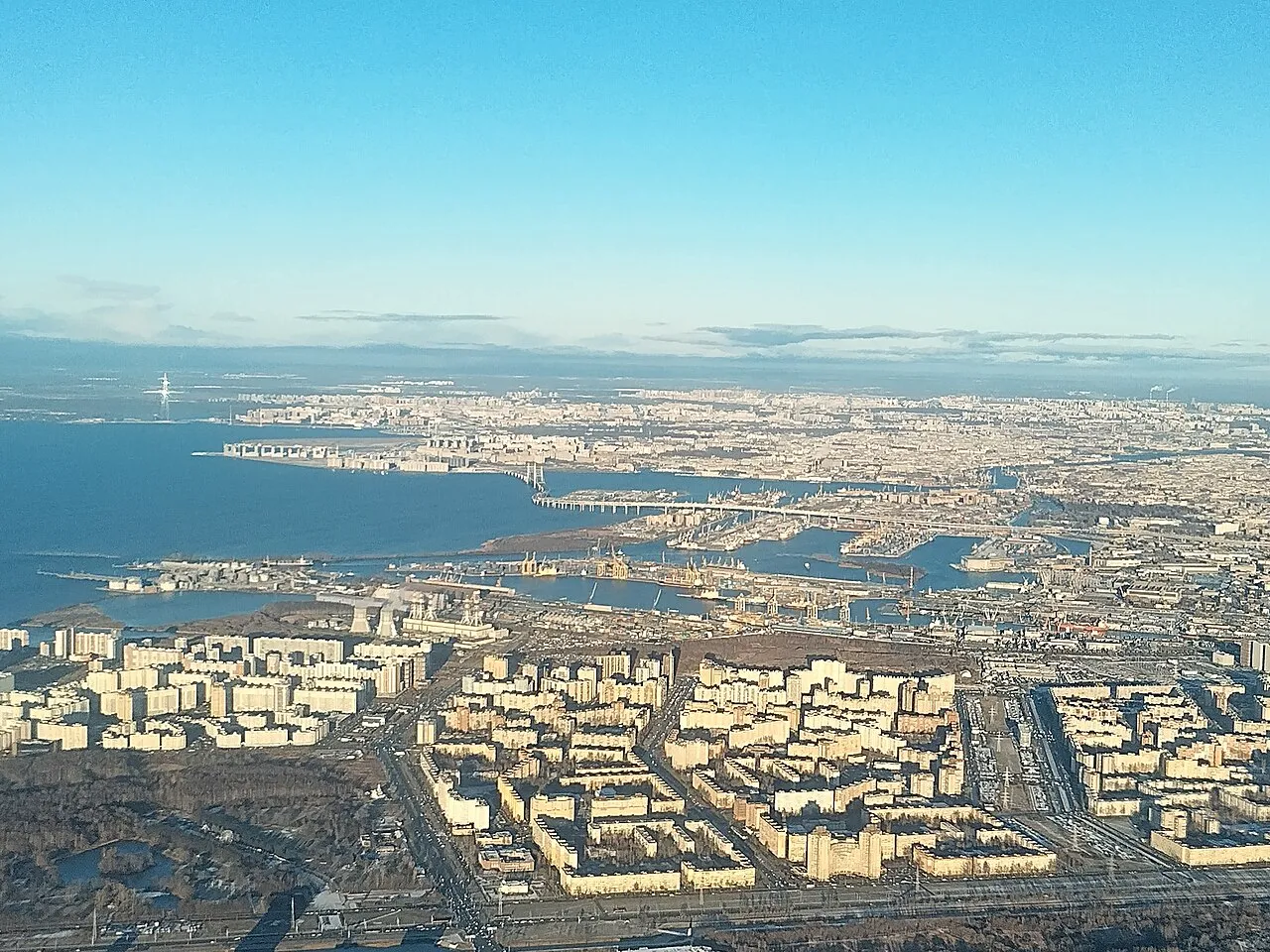
St. Petersburg's Marine Façade cruise terminal occupies the western tip of Vasilyevsky Island, a purpose-built facility opened in 2011 that can handle seven large ships simultaneously. The terminal complex includes immigration counters, tourist information desks, currency exchange, and a duty-free area. From the terminal, the city centre is about 7 kilometres east — too far to walk comfortably, and taxis cost 600-1,000 RUB ($7-12 USD) to Nevsky Prospekt.
Russian visa requirements shape how most cruise passengers experience this city. Under the 72-hour visa-free regime, you may go ashore without a visa only if your cruise line or a licensed tour operator arranges a blanket visa. Ship excursions include this automatically. Independent visitors who want to explore on their own must obtain a Russian tourist visa in advance — a process that takes several weeks and costs $160-250 USD depending on nationality. Most first-time visitors opt for ship excursions to avoid the paperwork.
Getting Around
Ship excursions: The standard and simplest option. Full-day tours typically cost $150-250 USD per person and include bus transport, guides, entrance fees, and visa arrangements. Two-day packages that combine the Hermitage with Peterhof run $300-450 USD. These guarantee return to the ship and handle all logistics.
Licensed tour operators: Companies like SPB Tours and DenRus offer private tours that satisfy visa requirements at lower cost than ship excursions — typically $100-180 USD per person for small groups. Book ahead — these fill up weeks before sailing, especially for summer white nights season.
Metro: If you hold a valid Russian visa, St. Petersburg's metro is fast, beautiful, and cheap — a single ride costs about 70 RUB ($0.80 USD). Stations like Avtovo and Kirovsky Zavod feature chandeliers and marble columns. The metro connects the cruise port area (Primorskaya station) to Nevsky Prospekt in about 20 minutes.
Taxi: Use Yandex Taxi for reliable metered rides. A cross-city trip rarely exceeds 500 RUB ($6 USD). Cash taxis at tourist spots charge significantly more.
Mobility note: St. Petersburg presents challenges for passengers with limited mobility. Cobblestone streets, high kerbs, and limited lift access at some metro stations require careful planning. Ship excursions labelled accessible typically use adapted buses and avoid the worst cobblestone areas. The Hermitage has lifts but the distances inside are considerable — allow extra time.
St. Petersburg Area Map
Interactive map showing cruise terminal and St. Petersburg attractions. Click any marker for details.
Top Excursions & Attractions
Ship excursions handle visa requirements and guarantee return to the vessel. Independent exploration requires a Russian tourist visa obtained in advance. Book ahead — summer white nights season (June-July) is peak demand.
The Hermitage & Winter Palace
One of the world's greatest museums, the Hermitage houses over 3 million items across six buildings including the magnificent Winter Palace. Ship excursions typically cost $150-200 USD for a 3-hour guided visit focusing on highlights — the Jordan Staircase, Italian Renaissance galleries, Impressionist collection, and the Gold Room. Independent visitors with a Russian visa pay 500 RUB ($6 USD) for admission. The museum is vast; even a focused ship excursion barely scratches the surface. The Hermitage has lifts but distances inside are considerable — wear comfortable shoes. Book ahead for skip-the-line access in summer, when queues stretch across Palace Square.
Peterhof Palace & Gardens
The Russian Versailles sits 30 kilometres west of the city on the Gulf of Finland. Its 150 fountains, gold-leaf statues, and cascading terraces are extraordinary. Ship excursions to Peterhof cost $100-150 USD including hydrofoil or bus transport. Independent visitors take the hydrofoil from the Admiralty Embankment (800 RUB / $10 USD each way, 30 minutes) — the ride across the open water is beautiful. Palace admission is 1,000 RUB ($12 USD); the Lower Gardens alone are 600 RUB ($7 USD). Allow a full half-day. Fountains operate May to mid-October only.
Church on Spilled Blood
This iconic church with its colourful onion domes was built on the site where Tsar Alexander II was assassinated in 1881. The interior is covered in over 7,500 square metres of mosaics — more mosaic than any other church in the world. Admission is 400 RUB ($5 USD). Most ship excursions include an exterior photo stop; the interior visit takes about 30-45 minutes. Located on the Griboedov Canal, a 10-minute walk from Nevsky Prospekt.
Catherine Palace & Tsarskoye Selo
Located 25 kilometres south of the city, Catherine Palace is famous for the reconstructed Amber Room — an entire chamber decorated in amber panels, gold leaf, and mirrors. Ship excursions combining Catherine Palace with other sites cost $120-180 USD. The palace interior is spectacular but crowded in summer — guided groups move through quickly. The surrounding parks and gardens are beautiful for walking. Independent visitors pay 1,000 RUB ($12 USD) admission. Bus transport from the city takes about 45 minutes.
Canal Boat Tour
An evening canal cruise through St. Petersburg's waterways is one of the city's great pleasures — gliding beneath ornate bridges while pastel Baroque facades reflect in the water. Tours depart from several points along the Fontanka and Moika canals, costing 800-1,500 RUB ($10-18 USD) for a 1-hour circuit. During white nights season (late June), the midnight bridge openings are unforgettable. Some ship excursions include a canal component; independent boat tours are easy to arrange dockside.
Depth Soundings Ashore
Practical tips before you step off the ship.
Early-entry tickets are pure gold – they turn overwhelming crowds into private palace moments.
Money: ATMs are generally available near the port area, though fees vary. Credit cards are widely accepted at tourist-oriented establishments, but carry some local cash for markets, street food, and smaller vendors. Your ship's exchange rate is typically unfavorable — withdraw from a bank ATM instead.
Timing: Start early if your ship arrives at dawn — the first hours offer pleasant conditions and smaller crowds. Allow at least 30 minutes buffer before all-aboard time. Set a phone alarm as backup.
Safety: Standard port-town awareness applies — keep valuables close and stick to well-traveled areas during daylight. Your ship's ID card is your most important item — losing it creates a genuine headache at the gangway.
Communication: Wi-Fi is often available at cafés and restaurants near the port. Consider downloading offline maps before disembarking — cellular data roaming charges can be substantial and surprising.
Photo Gallery


Frequently Asked Questions
Q: Is St. Petersburg worth it?
A: The single most spectacular port in northern Europe.
Q: Best thing?
A: Early Hermitage + canal cruise.
Q: How long in Hermitage?
A: 4 hours minimum, lifetime not enough.
Q: Walk from port?
A: No – organized transport only.
Q: What is the best time to visit St. Petersburg?
A: Cruise season runs June through August — imperial city with extreme seasons (12-73°F). November through February are the months to avoid. White Nights (late June) — sun barely sets, magical atmosphere.
Q: Is St. Petersburg suitable for passengers with mobility challenges?
A: Accessibility varies by area. The port vicinity and main commercial streets are generally manageable, but older historic districts may feature cobblestones, stairs, and uneven surfaces. Consider booking an accessible ship excursion if you have concerns. The ship's shore excursion desk can advise on specific accessibility options for this port.
Q: Can I explore independently or should I book a ship excursion?
A: Both options work well. Ship excursions guarantee return to the vessel and handle logistics, making them ideal for first-time visitors. Independent exploration costs less and allows more flexibility — just keep track of time and allow a 30-minute buffer before all-aboard. Many passengers combine approaches: an organized morning tour followed by free afternoon exploration.
Q: Does St. Petersburg have a hurricane or storm season?
A: St. Petersburg is not in a hurricane zone. The defining seasonal concern is cold winters; Neva River winds are cold in winter. November through February are the months to avoid.
Q: What should I pack for St. Petersburg's weather?
A: Layers for cool temperatures. Waterproof jacket. Comfortable walking shoes for palace visits. Visa documentation.
Q: Will rain ruin my port day in St. Petersburg?
A: Rain is year-round; wetter in summer. Cruise season concentrates in the June–August window when daylight is longest (up to 18.5 hours).
Last reviewed: February 2026
Image Credits
- st-petersburg-1.webp: WikiMedia Commons (CC BY-SA)
- st-petersburg-2.webp: WikiMedia Commons (CC BY-SA)
- st-petersburg-3.webp: WikiMedia Commons (CC BY-SA)
- st-petersburg-4.webp: WikiMedia Commons (CC BY-SA)
Images sourced from WikiMedia Commons under Creative Commons licenses.