


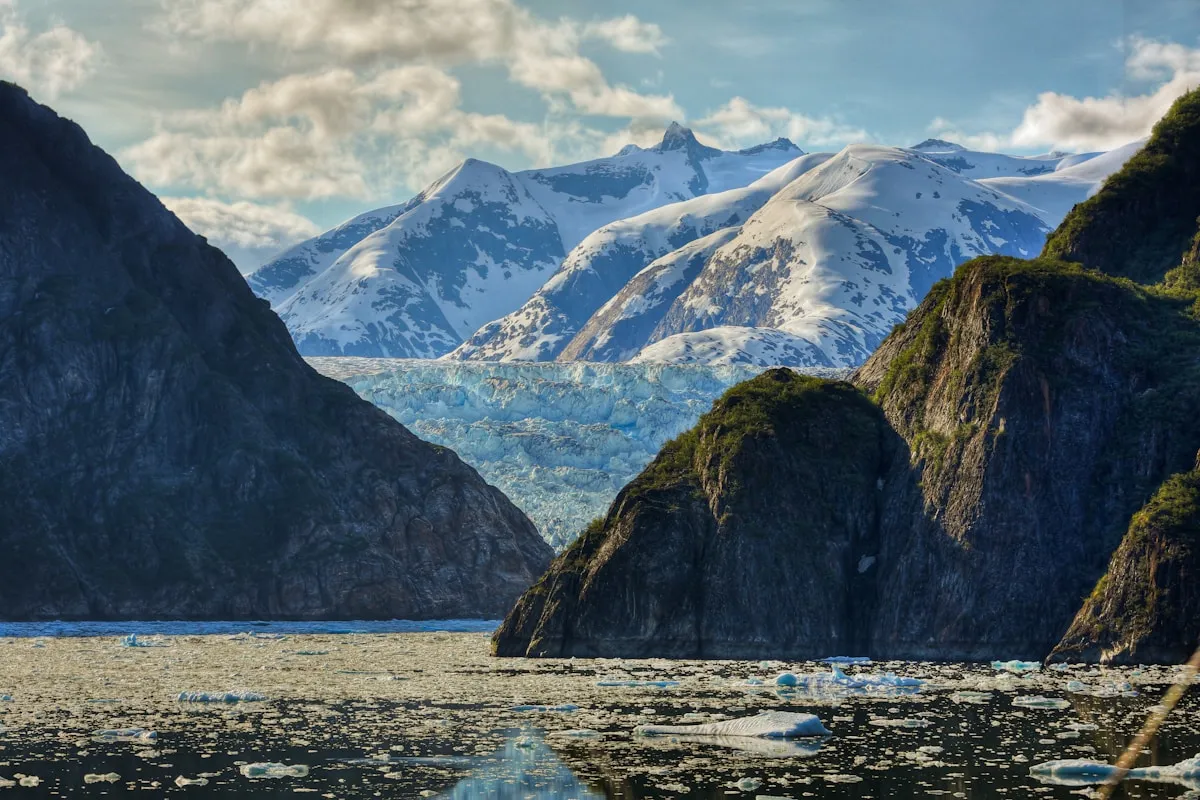
Photo: John Cobb / Unsplash
My Tracy Arm Logbook
I've been lucky enough to cruise through Tracy Arm three times now, and each visit has been completely different. The fjord never looks the same twice—ice conditions change constantly, weather shifts from crystal clear to misty and atmospheric, and the glaciers themselves are in constant slow motion, always calving new icebergs and revealing different faces. My first visit was on a foggy morning where we couldn't see more than 200 yards, and then suddenly the mist lifted to reveal the Sawyer Glaciers in full glory. My second was all golden sunshine and electric blue ice. My most recent trip had light rain that made the waterfalls absolutely thunderous. Each experience was unforgettable in its own way.
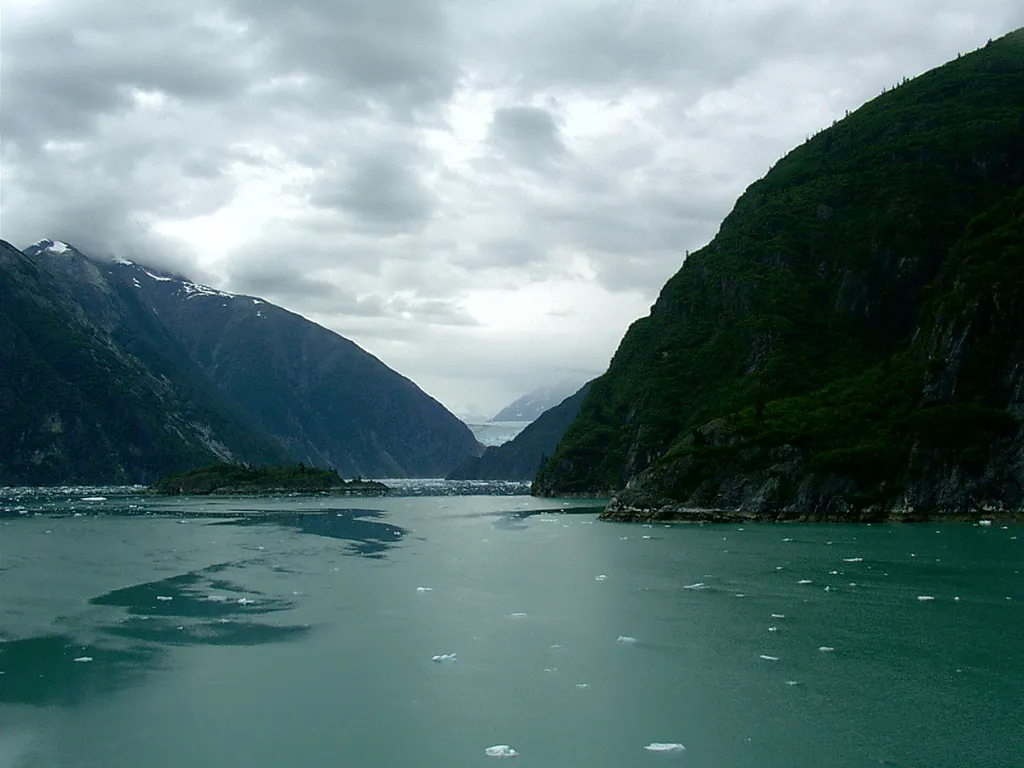
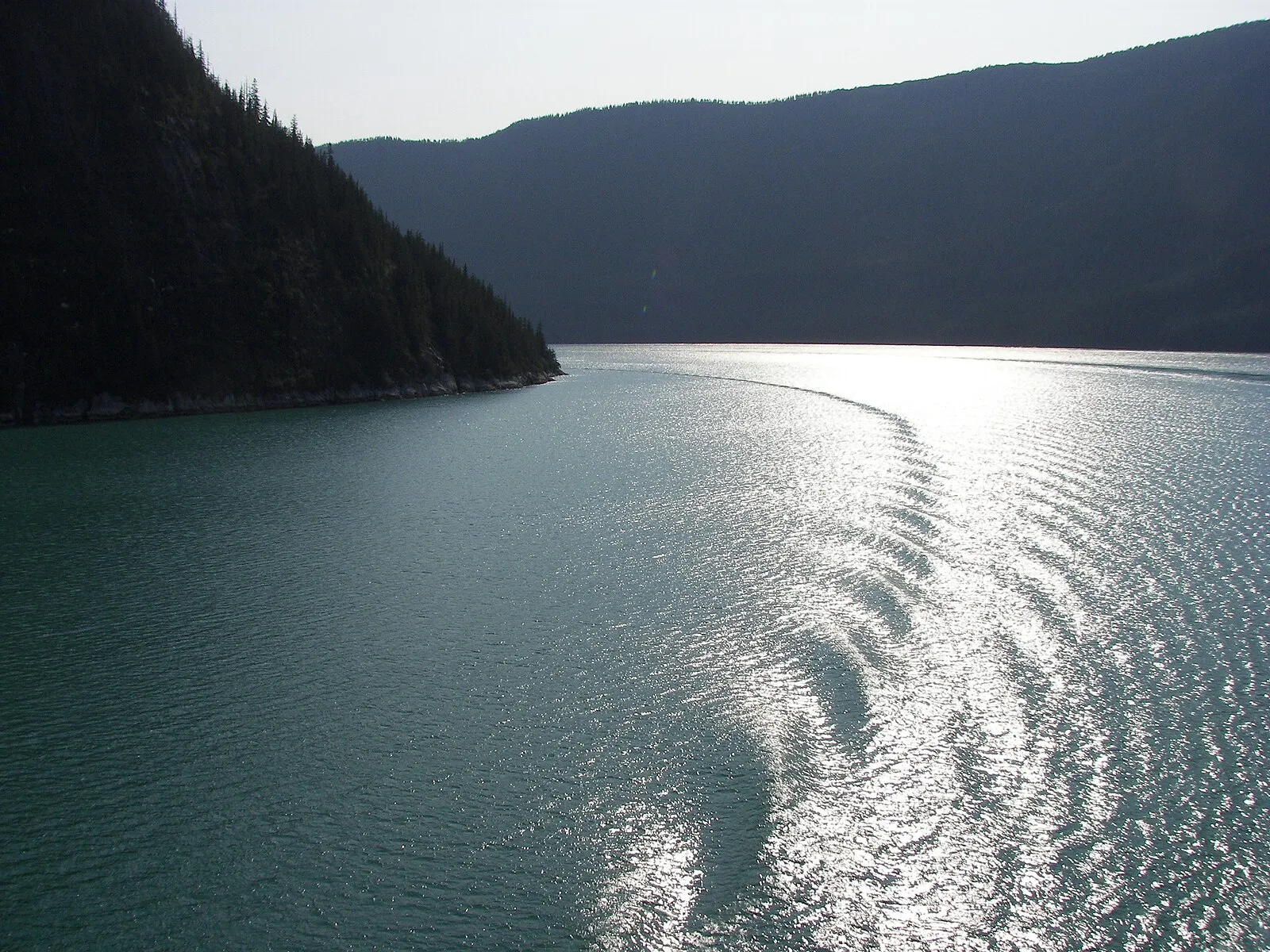
The ship entered Tracy Arm just after dawn, and I immediately understood why John Muir—who explored these waters in 1879 with Stikine Tlingit guides who'd known this landscape for generations—compared these granite walls favorably to Yosemite Valley. The fjord is narrow, barely 300 yards across in places, with sheer granite cliffs rising 4,000 feet straight out of the milky turquoise water. Commander Henry B. Mansfield named this place in 1899 for Navy Secretary Benjamin F. Tracy, but the landscape feels far older than any human name could capture.
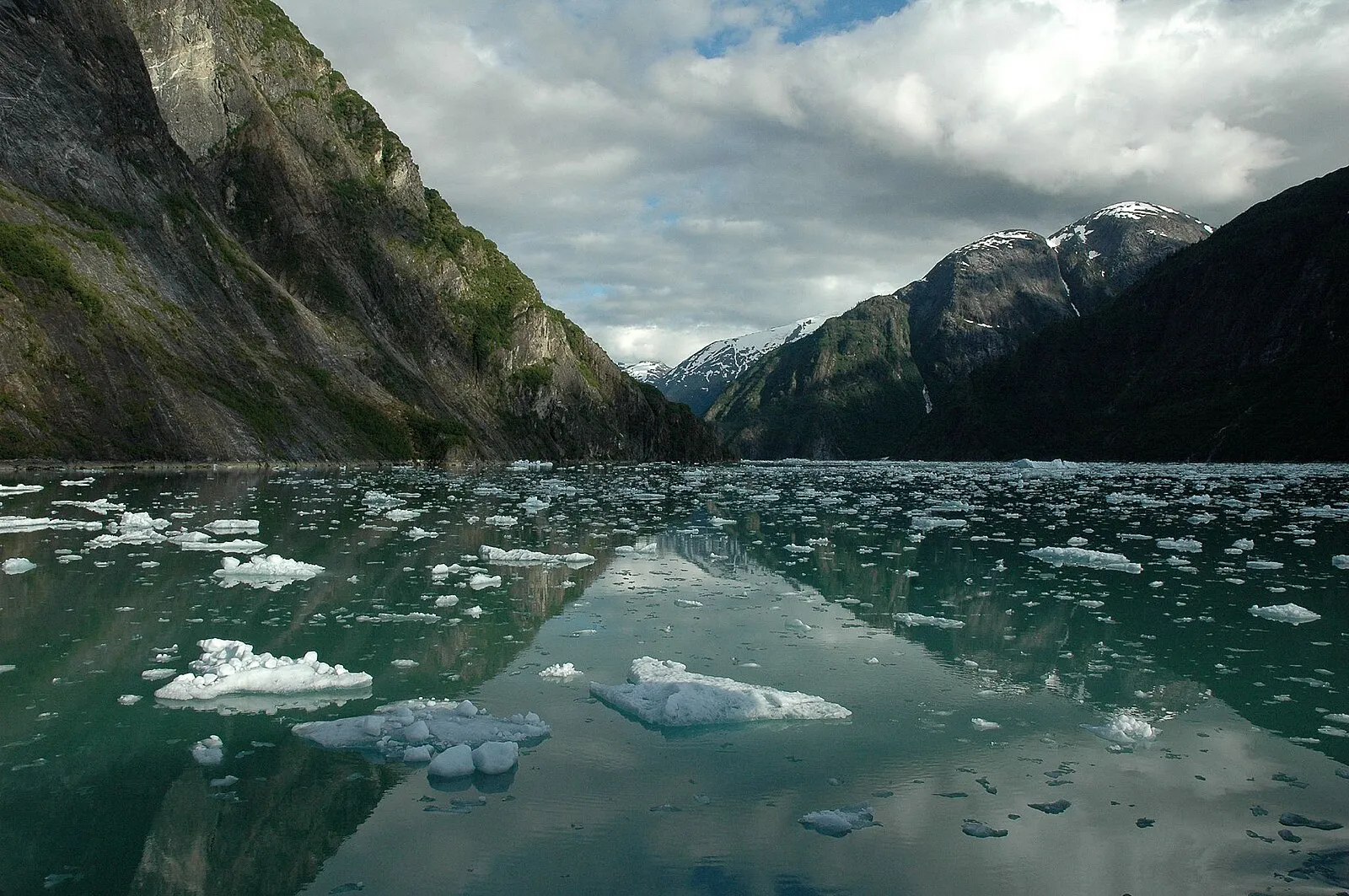
We spent nearly five hours threading through the 30-mile fjord. The captain kept the ship at slow speed, partly for safety in the iceberg-studded waters and partly to give us time to absorb the scenery. I positioned myself on the forward observation deck early and didn't leave except for quick coffee runs. The cold was significant—temperatures dropped noticeably as we approached the glaciers—but I was prepared with multiple layers and waterproof outer shells, which made all the difference for comfort.
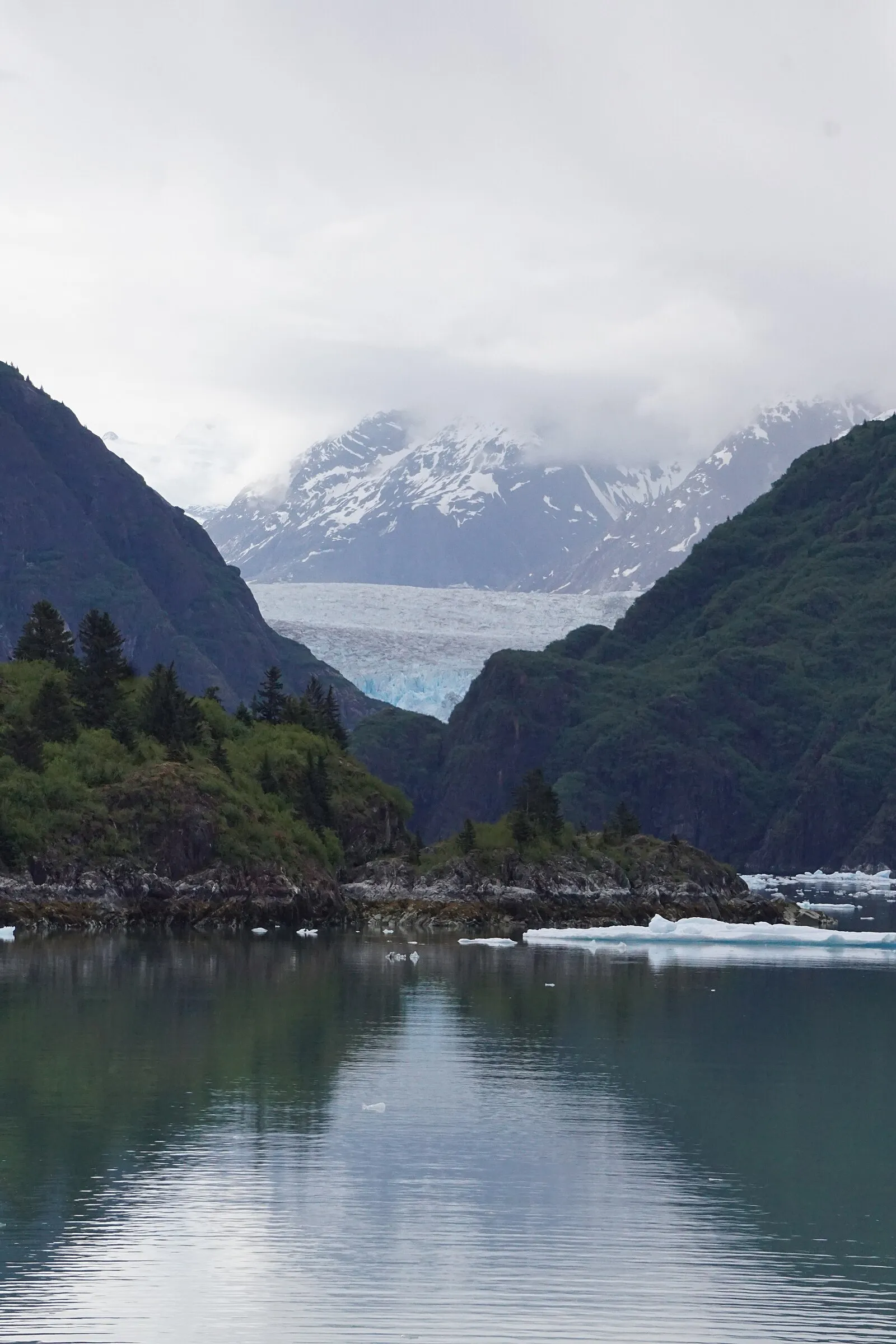
The icebergs began appearing about halfway into the fjord—small chunks at first, then progressively larger pieces until we were navigating through a field of frozen sculptures. Some were brilliant white, others showed bands of deep blue where compressed glacial ice had squeezed out all the air bubbles. Harbor seals were everywhere, lounging on the flatter bergs like sunbathers, completely unbothered by our ship passing 100 yards away. I counted at least 40 seals through my binoculars, though there were probably many more.
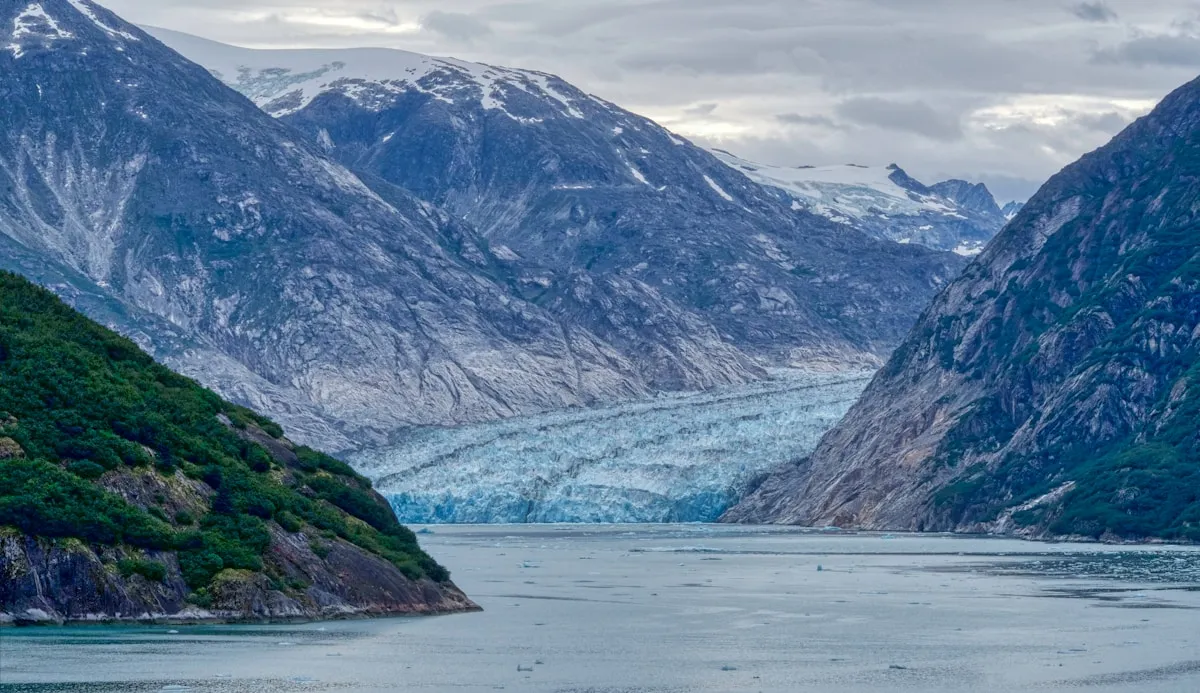
When we rounded the final bend and both Sawyer Glaciers came into view, the captain cut the engines and we drifted. South Sawyer sits on the left, North Sawyer on the right, both massive walls of blue-white ice stretching hundreds of feet high. The silence was remarkable—just waterfalls, the occasional seal bark, and the deep groaning of stressed ice. Then came the calving. A section of South Sawyer the size of a delivery truck peeled away and crashed into the water with a boom that echoed off every granite wall. The splash sent waves rippling through the iceberg field, setting the seals scrambling.
On the way back out, golden hour transformed everything. The granite turned amber and orange, shadows deepened into purple, and the whole prehistoric landscape seemed to glow. Mountain goats appeared on impossible cliff ledges, their white coats standing out against the dark rock. A black bear worked the shoreline, flipping rocks for food, completely oblivious to the massive cruise ship drifting past. Bald eagles circled overhead, and I spotted several nests tucked into the tallest trees on the lower slopes.
This entire area is now protected as the Tracy Arm-Fords Terror Wilderness—653,179 acres designated by Congress in 1990, where roughly one-fifth of the land remains covered in ice slowly diminishing since the Little Ice Age ended around the mid-1700s. The conservation status means no development, no commercial activity beyond carefully permitted tourism, and no interference with the natural processes that have been shaping this landscape for millennia. What we're seeing is ancient ice that's been here for thousands of years, still actively shaping the landscape even as it gradually shrinks back. My captain mentioned that the glaciers have receded noticeably even in the decade he's been running this route—a sobering reminder of what we're witnessing.
I've now experienced Tracy Arm in fog, sunshine, and rain. Each condition revealed something different: the fog created an ethereal mystery where icebergs appeared suddenly like ghosts; the sunshine turned everything crystalline and sharp, the best conditions for photography; the rain amplified every waterfall and created a dramatic atmosphere that felt almost cinematic. If your itinerary includes Tracy Arm, don't cancel or complain regardless of weather—every condition brings its own magic.
Looking back, Tracy Arm taught me something I couldn't have learned anywhere else. I realized that the most profound experiences don't require participation—sometimes simply witnessing is enough. I didn't hike these glaciers, didn't kayak among the icebergs, didn't set foot on land at all. Yet watching ancient ice calve into the sea, listening to sounds that have echoed here for millennia, breathing air so cold and clean it seemed to purify something inside me—that was more than enough. I learned that presence itself can be an action, and that some places are so magnificent they demand nothing from us but attention.
Weather & Best Time to Visit
Cruise Port
Tracy Arm is a scenic cruising destination—ships do not dock. All viewing happens from the ship's decks as the vessel navigates the 30-mile fjord over approximately 5-6 hours. The fjord is located roughly 60 miles southwest of Juneau in the Tracy Arm-Fords Terror Wilderness. There are no shore landings, no tender operations, and no disembarkation. Instead, this is a full day dedicated to glacier and wildlife viewing from the comfort of your cruise ship, with the captain positioning the vessel for optimal viewing of the twin Sawyer Glaciers at the fjord's head.
Ships typically enter Tracy Arm in early morning and exit by early afternoon, though exact timing varies by vessel and ice conditions. Some cruise lines offer expedition-style Zodiac tours (approximately $350-$450 per person) that launch from the ship for closer glacier approach, but these depend on ice conditions and weather. The ship's naturalists typically provide narration throughout the transit, explaining the geology, wildlife, and glacial processes you're witnessing.
Getting Around
Currency: US dollars (for any onboard purchases during scenic cruising).
Where to Position Yourself: The forward observation decks offer the best views as the ship enters the fjord and approaches the glaciers. However, these spots fill up early—I recommend claiming your position at least 30 minutes before the scheduled fjord entry time. The upper decks give excellent panoramic views of the granite walls, while lower outside decks offer more intimate perspectives and better angles for wildlife photography. The ship will typically rotate 360 degrees at the glacier face, so all sides eventually get good views.
Indoor vs Outdoor Viewing: While observation lounges offer warmth and comfort, I strongly recommend outdoor viewing for the full experience. The sounds—calving thunder, waterfall roar, ice creaking—are essential to Tracy Arm. The cold near the glaciers is significant (often 15-20 degrees colder than open ocean), so dress in layers with a waterproof outer shell. Wheelchair users and those with mobility limitations should note that many observation areas are accessible, though outdoor deck surfaces can become wet and slippery near the glaciers.
Weather Contingency: Ice and weather conditions occasionally prevent ships from reaching the Sawyer Glaciers, in which case most cruise lines divert to nearby Endicott Arm with Dawes Glacier—equally stunning scenery with a different character. This is a natural consequence of navigating active glacial waters, not something to be disappointed about.
Tracy Arm Fjord Map
Interactive map showing the 30-mile Tracy Arm Fjord, twin Sawyer Glaciers, and nearby Endicott Arm. Note: Tracy Arm is scenic cruising only—no shore landing.
Excursions
Scenic cruising and optional expedition tours—no traditional port excursions.
Ship Excursion: Zodiac Glacier Expedition (Where Available)
Some cruise lines offer small-boat expeditions during Tracy Arm transit. These typically cost $350-$450 per person and last 2-3 hours. Participants board Zodiacs or similar expedition craft launched from the ship and cruise closer to the glacier faces and iceberg fields than the main vessel can safely navigate. The experience is weather and ice dependent—ships cannot guarantee these excursions will operate. When they do run, they bring you close enough to hear the glacier creak and groan, though the main ship viewing is already worth the early alarm. Book ahead through your cruise line if this interests you, as spots are limited and capacity is typically 20-40 passengers per departure.
Independent Option: Glacier Viewing from the Ship
The most popular "excursion" at Tracy Arm is simply positioning yourself on deck for optimal viewing—and it's completely free. No booking required, no guaranteed return concerns, and you maintain flexibility to move around the ship as conditions change. I prefer this approach because you can respond to developments: when calving starts on one glacier, you can shift position; when wildlife appears on the port side, you can move freely. Bring binoculars (essential for seal counting and glacier detail), camera with telephoto lens if you have one, and plenty of layers.
Combining with Juneau
Many Alaska itineraries pair Tracy Arm with a Juneau port call on the same voyage. This creates excellent opportunities: you can take a helicopter glacier landing excursion from Juneau (approximately $400-$600) to walk on glacial ice, complementing the scenic cruising view from Tracy Arm. The Mendenhall Glacier visitor center in Juneau (about $45 for shuttle and entry) also provides educational context that enhances your Tracy Arm experience. If your itinerary includes both, I recommend doing the Juneau glacier excursion first—the knowledge gained makes Tracy Arm more meaningful.
Booking Guidance
For the optional Zodiac expedition (if your ship offers it), book ahead through your cruise line's excursion desk. These sell out quickly and cannot be booked independently. For optimal ship viewing positions, no booking needed—just arrive early to your chosen deck location. If you're a serious photographer, consider the ship excursion's guaranteed return to the vessel as less of a concern here since you never leave the ship for standard viewing. Passengers with mobility concerns should note that Zodiac boarding requires stepping down a gangway and into a small inflatable craft, which may not be accessible for everyone.
Depth Soundings
Practical details for your Tracy Arm scenic cruising experience.
Timing & Schedule
Tracy Arm transits typically begin at dawn (around 5-6am in summer) and conclude by early afternoon (1-2pm). The glaciers are at the fjord's head, so maximum glacier viewing occurs mid-transit. Set your alarm early—the entrance to Tracy Arm, with its first iceberg sightings, is worth waking for.
Accessibility Considerations
Most ships have accessible viewing areas for scenic cruising, though outdoor decks may become slippery from glacial spray. Wheelchair users should check with guest services about optimal accessible viewing locations. Some ships position chairs in observation lounges with large windows as an indoor alternative. The ship's PA system broadcasts narration throughout, so you won't miss information regardless of your location.
Costs Aboard
Since there's no port call, the main expenses are optional shipboard purchases: specialty coffee ($5-8), hot chocolate from bars ($6-9), binocular rental if needed ($15-25/day), camera memory cards from the shop ($30-50), and photography packages if the ship offers them ($50-200). The ship's photographer typically stations on deck during the glacier approach—images available later for purchase at typical cruise ship rates ($20-30 per digital image, packages around $200-300).
What to Bring on Deck
Layers are essential—temperatures can drop 15-20 degrees near the glaciers compared to open ocean. Waterproof outer layer recommended for spray and mist. Hat and gloves even in summer. Binoculars (really, don't skip this—you'll regret it). Camera with charged batteries (cold drains them fast, bring spares). Snacks from the buffet so you don't lose your viewing spot. Hot beverage in an insulated mug if permitted on deck.
Tracy Arm Fjord Gallery

Frequently Asked Questions
Is Tracy Arm Fjord worth visiting on an Alaska cruise?
Tracy Arm is absolutely worth it—the dramatic 30-mile narrow fjord with 4,000-foot granite walls, twin Sawyer Glaciers actively calving, and iceberg fields packed with lounging harbor seals create an unforgettable scenic cruising experience. I consider it one of Alaska's premier glacier viewing opportunities.
How does Tracy Arm compare to Glacier Bay?
Tracy Arm offers a more intimate experience with narrower passages and taller granite walls, while Glacier Bay has more glaciers and wider vistas. Both are spectacular—Tracy Arm feels more dramatic and enclosed, Glacier Bay feels more expansive. If your itinerary includes one but not the other, you're not missing out—both deliver glacier scenery you won't forget.
Do you get off the ship at Tracy Arm?
No—Tracy Arm is a scenic cruising destination only. There is no dock, no tender landing, and no shore excursions in the traditional sense. All viewing is done from the ship's decks (or optional Zodiac tours launched from the ship) as the vessel navigates the 30-mile fjord over approximately 5-6 hours.
What wildlife can you see at Tracy Arm?
Harbor seals are the most common wildlife, often seen lounging on icebergs throughout the fjord—I've counted 40+ on a single transit. Mountain goats appear on cliff ledges, black bears sometimes wander the shoreline, and bald eagles nest in the trees. Occasionally humpback whales or orcas are spotted at the fjord entrance.
What should I bring for Tracy Arm scenic cruising?
Bring warm layers (temperatures drop significantly near glaciers even in summer), binoculars for wildlife and glacier details (essential, not optional), a camera with extra batteries (cold drains them fast), waterproof outer layers for spray and light rain, hat and gloves even in summer, and snacks so you don't lose your deck position.
Q: What's the best time of year to visit Tracy Arm Fjord Guide?
A: Peak cruise season offers the most reliable weather and best conditions for sightseeing. Check the weather section above for specific month recommendations based on your planned activities.
Q: Does Tracy Arm Fjord Guide have extreme weather to worry about?
A: Like most destinations, weather conditions vary by season. Check the weather hazards section above for specific concerns and the best time to visit. Cruise lines monitor conditions and will adjust itineraries if needed for passenger safety.
Q: What should I pack for Tracy Arm Fjord Guide's weather?
A: Essentials include sunscreen, comfortable walking shoes, and layers for variable conditions. Check the packing tips section in our weather section for destination-specific recommendations.
Q: Will rain ruin my port day?
A: Brief showers are common in many destinations but rarely last long enough to significantly impact your day. Have a backup plan for indoor attractions, and remember that many activities continue in light rain. Check the weather forecast before your visit.
Q: Does Tracy Arm Fjord have a hurricane or storm season?
A: Weather patterns vary by region and season. Check the weather hazards section above for specific storm season concerns and timing. Cruise lines closely monitor weather conditions and will adjust itineraries if needed for passenger safety. Travel insurance is recommended for cruises during peak storm season months.
Key Facts
- Location
- Tracy Arm-Fords Terror Wilderness, Southeast Alaska (60 miles SW of Juneau)
- Access
- Scenic cruising only — no dock, no tender, no shore landing
- Currency
- US Dollar (USD)
- Language
- English
- Best Season
- June through August (peak Alaska cruise season)
- Climate
- Cool maritime; 40–55 °F (4–13 °C) near glaciers even in summer
Last reviewed: February 2026