


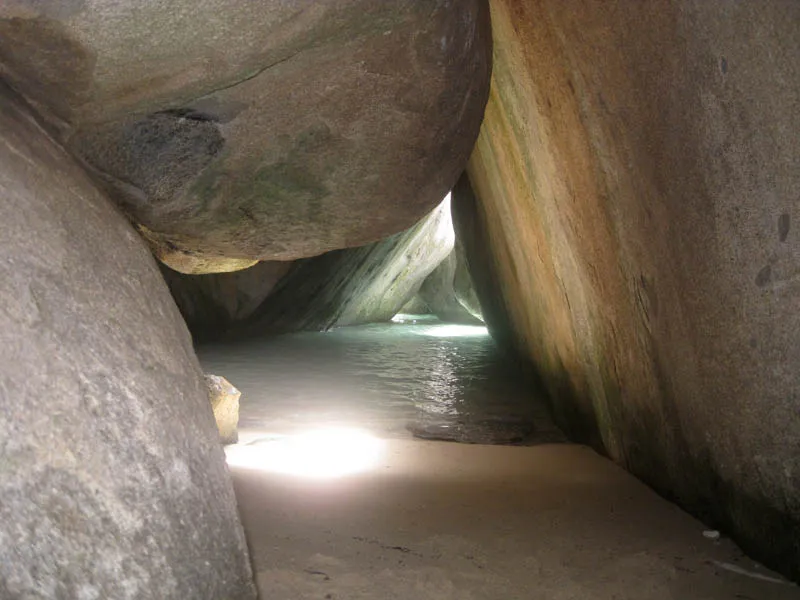
My Visit to Virgin Gorda
I stepped onto the tender at seven-thirty in the morning, and the first thing that struck me was the smell of the sea itself — not the usual port-town blend of diesel and concrete, but something clean and primal, salt carried on warm Caribbean air with the faintest trace of frangipani drifting from the green hills above Spanish Town. My wife stood beside me, gripping the rail as our small boat rocked gently against the side of the ship, and we both stared at the water beneath us. It was so clear I could see the sandy bottom twelve feet below, dappled with light, a starfish the size of my hand resting motionless in the shallows. I looked at her and we both smiled without speaking. We had waited months for this moment, and now it was here, and it was already better than we had imagined.
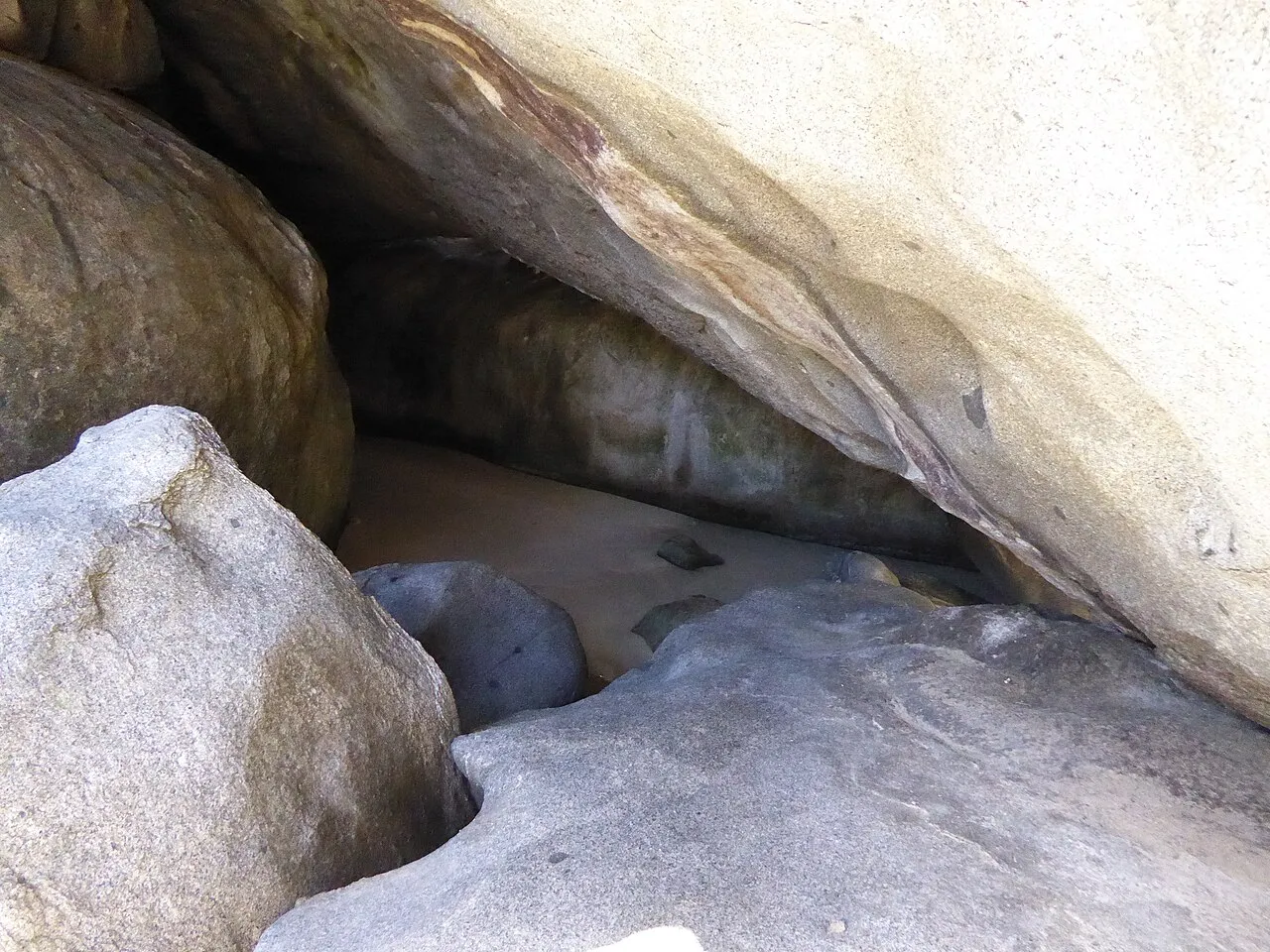
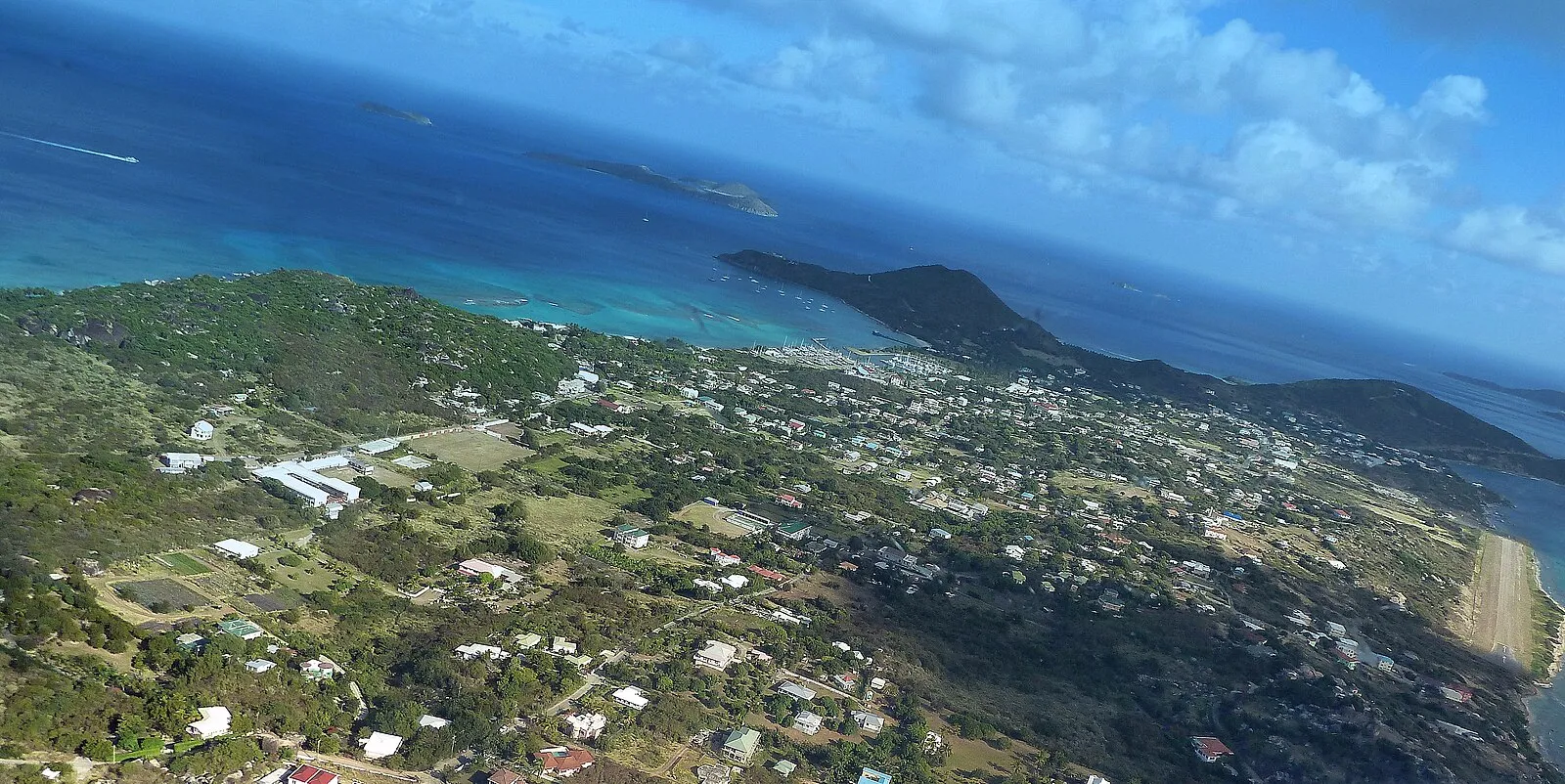
The tender ride took about ten minutes, the outboard humming softly as we crossed the anchorage. Christopher Columbus named this island "La Gorda Virgen" — the Fat Virgin — in 1493, supposedly because its silhouette from the sea resembled a woman reclining on her side. I could see what he meant as we approached: the island's profile was rounded and gentle, green hills sloping to a waist of low land before rising again at the southern tip. Spanish Town, where the tender docked, is the oldest permanent settlement in the British Virgin Islands, founded in 1780 and nestled inside what geologists say is an ancient volcanic crater. However, we did not linger there. Our hearts were already set on The Baths.
We shared an open-air safari taxi with six other excited passengers — the fare was $5 per person each way — and the driver, a man named Carlton with a warm laugh and weathered hands, navigated the narrow roads with practiced ease. The ride took about twelve minutes, climbing through low scrub and cactus before descending toward the coast. When we arrived at the trailhead, Carlton told us to take our time. "You will know when you have seen enough," he said with a grin. "Nobody ever does."
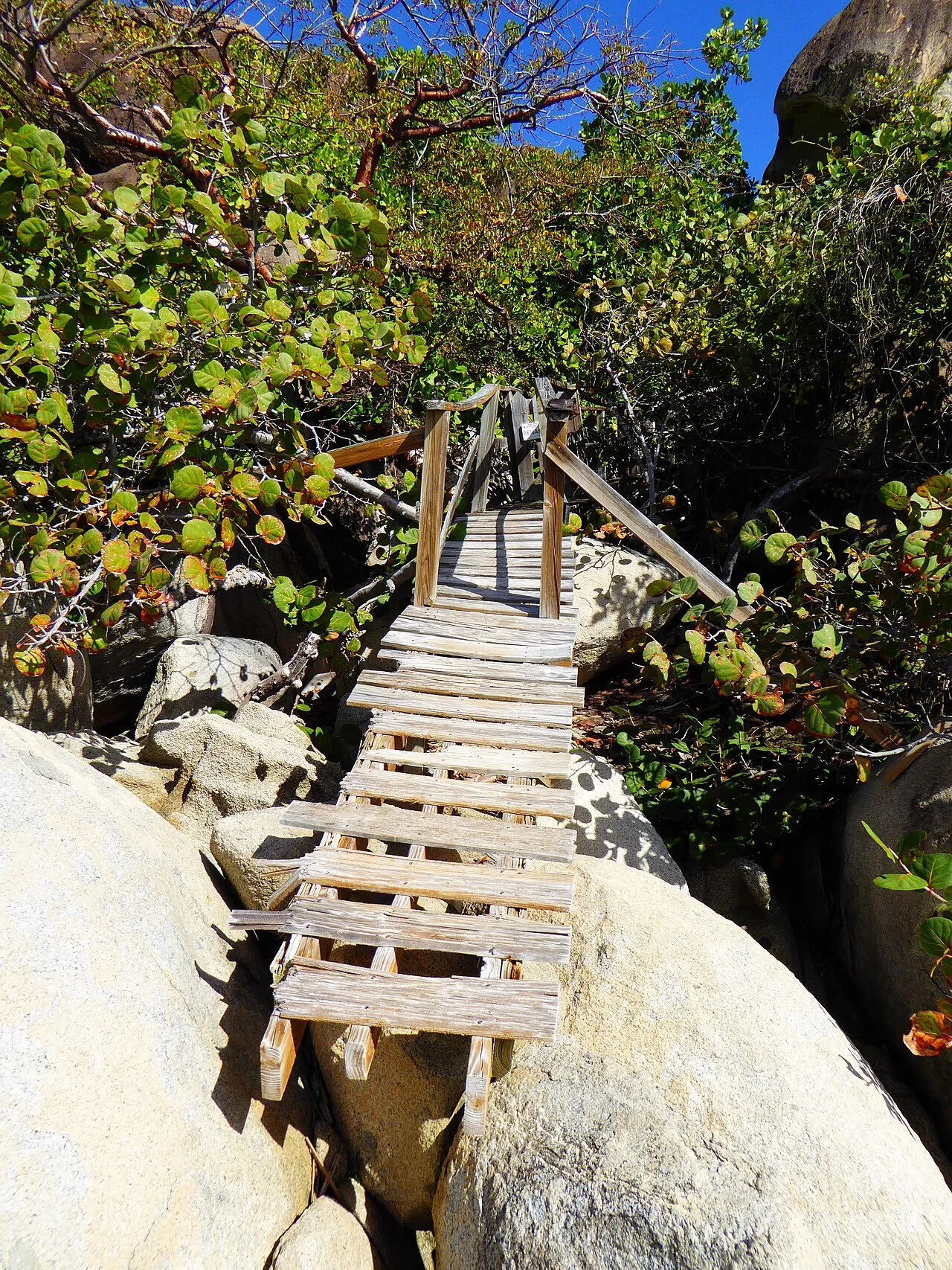
The entrance to The Baths National Park cost $8 per person, paid at a small booth near the trailhead. The path down was short — perhaps five minutes of walking on stone steps — but the moment I stepped into the boulder field, my jaw dropped and I stopped breathing for a second. House-sized granite spheres lay scattered across the beach and into the sea like abandoned marbles left by some primordial giant. They formed cathedral-like grottos with shafts of golden sunlight piercing through gaps in the stone, falling onto turquoise pools where the water glowed as though lit from within. The sound was extraordinary — waves echoing off rock like distant thunder, water dripping from the ceilings of narrow passages, the faint rush of the sea breathing through hidden channels. I reached out and pressed my palm against one of the boulders. It was warm from the sun and rough beneath my fingers, and I felt something ancient in it — fifty million years of geological patience condensed into this single moment of contact.
We waded waist-deep through the caverns, climbing wooden ladders, ducking under boulders, sometimes swimming short stretches where the water filled the passages completely. My wife laughed as I misjudged a step and plunged up to my chest, though the water was so warm it hardly mattered. The taste of salt was on my lips. Around every bend, a new chamber opened — some dark and cool and echoing, others flooded with light so bright the water seemed to glow electric blue. I have been to many beautiful places in my years of cruising, but nothing prepared me for this. It felt like walking through the architecture of the earth itself, through rooms that no human hand had shaped, that had been sculpted by nothing but wind and water and time.
We emerged at Devil's Bay and I honestly lost the ability to speak. My wife reached for my hand and squeezed it. Before us lay a crescent of pure white sand, water in every shade of blue from pale aquamarine to deep navy, and only four other people on the entire beach. The silence was broken only by the gentle lap of waves and the distant call of a frigatebird circling overhead. I sat on the sand and felt the heat of it beneath me, the sun on my shoulders, the cool breeze coming off the water. For the first time in months I felt my chest unclench — all the tension and planning and worry I had carried dissolved into the warm air like mist. Something shifted inside me. This was not just a beautiful beach. This was a place that reminded me what rest actually felt like.
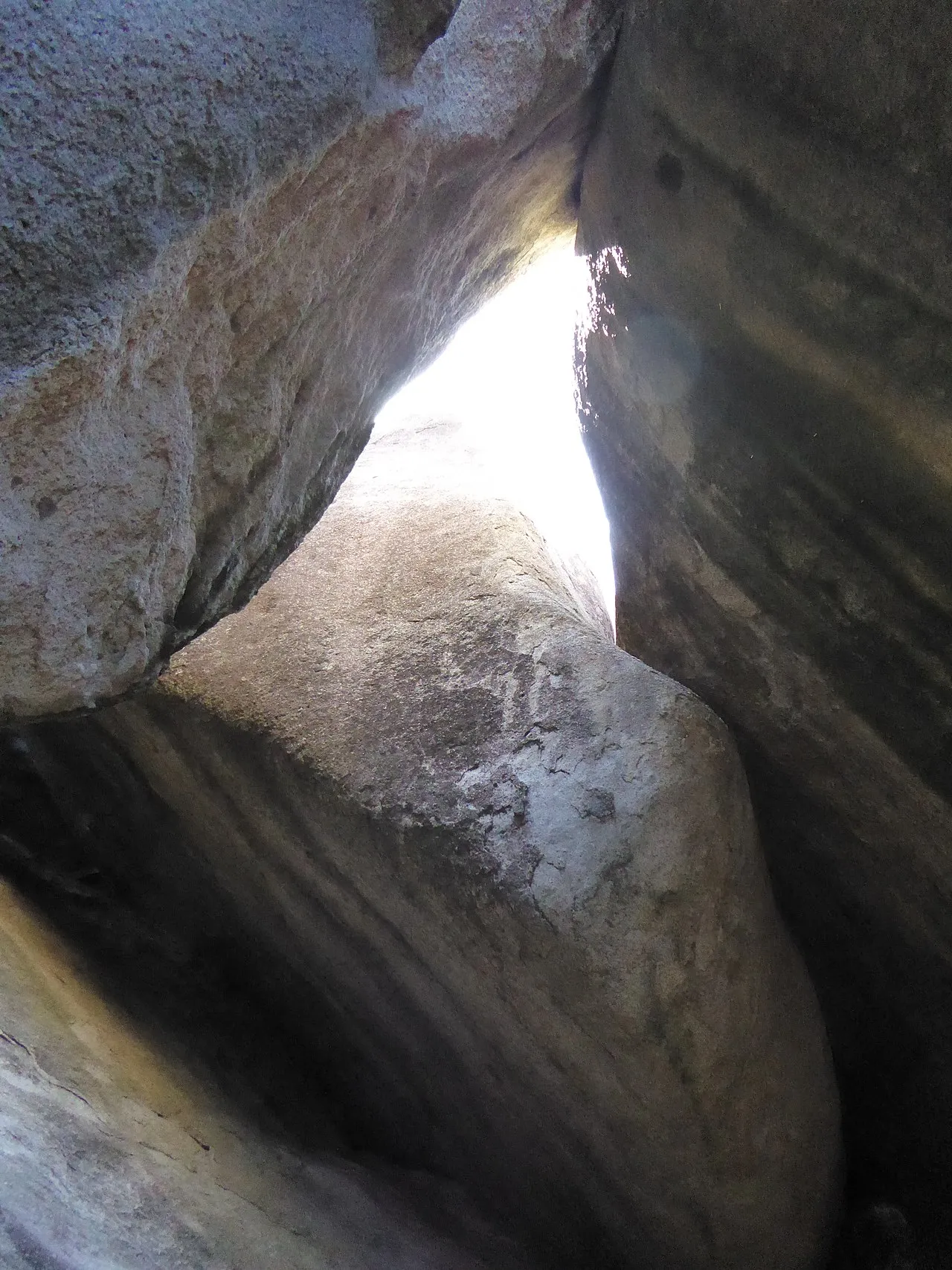
We snorkeled around the boulders for over an hour. The visibility was astonishing — I could see fifty feet in every direction. Huge tarpon, easily four to five feet long, patrolled the shadows beneath overhanging rock. Schools of blue tangs swirled past in flashes of electric colour. A spotted eagle ray with a wingspan of six feet ghosted past us so gracefully that I forgot to breathe, watching it glide into the blue with slow, effortless beats of its wings. My wife surfaced beside me, pulled her mask up, and whispered, "Did you see that?" Her eyes were wide with wonder. I nodded. Some moments do not need words.
By noon more visitors arrived from other ships, but it never felt overcrowded — there was plenty of space if you explored beyond the main beach. We climbed back through The Baths trail and had lunch at Top of the Baths restaurant, where I ordered conch fritters and the strongest painkiller I have ever tasted — the BVI recipe with dark rum and freshly grated nutmeg on top, sweet and potent. The cost was about $28 for both our meals. The view from the restaurant terrace was absurd — all green hills and blue water stretching to the horizon — and I could have sat there all afternoon.
On the way back to Spanish Town we detoured to see the ruins of the old Copper Mine, a haunted-looking cluster of stone chimney stacks and crumbling walls on the southwestern coast. In the mid-1800s Cornish miners came here chasing copper veins, working the ore until the mines became unprofitable and were abandoned. Now it is a national park — quiet, windswept, and strangely beautiful. The juxtaposition struck me hard: these same islands where enslaved Africans labored on sugar plantations until abolition in 1834 later saw European miners toiling underground. History layered on history, suffering on suffering, and yet the sea beside those ruins was the most peaceful shade of blue I had ever seen.
That evening, back on the ship, I stood at the rail and watched Virgin Gorda shrink behind us as we sailed north. The sun was setting and the island glowed amber and gold against the darkening sky. My wife came up beside me with two cups of tea and handed me one. "Thank you for planning this," she said quietly. I shook my head. "I did not plan this," I said. "This was a gift." And I meant it — not just the island, not just the boulders and the water and the ray, but the grace of being alive and healthy enough to wade through those caverns with the woman I love, to feel warm stone under my palms and taste salt on my lips and hear the sea echoing in chambers that were old before any human drew breath.
Looking back, I realize what Virgin Gorda taught me. It was not the spectacle that stayed — although the spectacle was extraordinary. What stayed was the stillness. The moment I sat on the sand at Devil's Bay and felt, for the first time in longer than I could remember, that I did not need to be anywhere else or do anything else. That the gift was simply being present. The boulders at The Baths were not placed there for us, and they will be there long after we are gone, patient and enduring, shaped by forces far older and greater than our small lives. Yet we were allowed to walk among them for one morning. I learned that the finest journeys are not the ones that take you farthest from home — they are the ones that bring you closest to gratitude.
Weather & Best Time to Visit
Featured Images
The Cruise Port
What you need to know before you dock.
- Terminal: Virgin Gorda is a tender port — ships anchor in the Sir Francis Drake Channel and tender passengers to the yacht harbour at Spanish Town (also called The Valley). The tender dock area has a small welcome pavilion with tourist information and taxi dispatch. Facilities are basic compared to major cruise terminals but well-organized for the volume of visitors. The tender landing area is accessible for wheelchair users, though the island itself presents significant mobility challenges due to hilly terrain and rocky trails.
- Distance to The Baths: About 15 minutes by taxi from the tender dock. No walking route is practical for cruise visitors due to distance and lack of sidewalks.
- Tender: Yes — all ships anchor offshore. Tender rides run approximately 10 minutes each way. Confirm return tender schedule with your ship.
- Currency: US Dollar (USD); credit cards accepted at restaurants and shops in Spanish Town; some beach vendors are cash only
- Language: English
- Driving: Left side (British territory); narrow roads with limited signage
- Best Season: December through April (dry season, calm seas, best snorkeling visibility)
- Time Zone: Atlantic Standard Time (AST, UTC-4); no daylight saving time observed
Getting Around
Transportation tips for cruise visitors.
- Safari Taxis: Open-air trucks with bench seating are the primary transport on Virgin Gorda. They operate on set routes with fixed fares — typically $5 per person each way to The Baths from Spanish Town, and $7-10 per person to more distant points like Bitter End. Drivers will wait and bring you back, or you can arrange a return pickup. Taxis gather near the tender dock and depart when full. These vehicles can accommodate passengers with limited mobility, though boarding requires stepping up onto the truck bed. For visitors using wheelchairs, private van transfers should be arranged in advance through the ship or a local operator.
- Walking: Spanish Town is small and walkable, with a few restaurants, gift shops, and a grocery store within a five-minute walk of the tender dock. However, The Baths and other major attractions are not within walking distance. The road to The Baths has no sidewalks and limited shoulders, so walking is not recommended or safe for that route.
- Private Taxi: For groups or families wanting flexibility, private taxis can be hired for $60-80 for a half-day island tour covering The Baths, Copper Mine ruins, and Gorda Peak viewpoint. Negotiate the fare and itinerary before departing. Drivers are knowledgeable and happy to share local history.
- Rental Cars: Available but not recommended for cruise day visitors due to left-hand driving, narrow roads, and limited parking at popular beaches. A full-day rental costs about $65-85.
- Water Taxis: Small boats run between Spanish Town and other BVI islands. Not typically useful for same-day cruise visitors unless your itinerary specifically includes island-hopping.
Virgin Gorda Area Map
Interactive map showing cruise tender dock, The Baths, Devil's Bay, Spring Bay, Gorda Peak, and major attractions. Click any marker for details.
Excursions & Activities
How to spend your time ashore. For popular activities like The Baths and snorkeling tours, book ahead during peak season to secure your spot. Many visitors choose to explore independent of the ship excursion options for flexibility and cost savings, though a ship excursion offers guaranteed return to the vessel before departure.
The Baths National Park
The signature attraction of Virgin Gorda and one of the most extraordinary geological formations in the Caribbean. Massive granite boulders — some the size of houses — create a labyrinth of sea caves, tidal pools, and hidden grottoes along the southwestern shore. The trail from the parking area descends to the boulder field (about 5 minutes), then winds through passages where you wade, swim, and climb wooden ladders between chambers flooded with turquoise water and shafts of sunlight. The trail exits at Devil's Bay beach. Entry fee is $8 per person. Allow 3-5 hours. Moderate walking required — the trail involves uneven rocky surfaces, ladders, and waist-deep water in places. Not accessible for wheelchair users or visitors with significant mobility limitations. Wear water shoes with good grip. Bring a dry bag for electronics. Arrive early to avoid crowds — first tender ashore is ideal.
Devil's Bay Beach
Reached via the trail through The Baths or a separate trail from the road above. A secluded crescent of white sand with excellent snorkeling directly off the beach. Less crowded than The Baths main beach, especially in the afternoon. Free to access once you have paid The Baths entry fee. Bring your own water and snacks — no vendors on the beach. The snorkeling here is superb, with tarpon, blue tangs, eagle rays, and colourful reef fish visible in the clear water.
Spring Bay Beach
Adjacent to The Baths but with easier access — a gentler trail without ladders or deep wading. Same spectacular granite boulders framing a white-sand beach. Excellent for families with children or visitors who want the boulder scenery without the moderate fitness demands of The Baths trail. Free entry. Good snorkeling close to shore. A quieter, more relaxed alternative that still delivers the iconic Virgin Gorda boulder experience.
Gorda Peak National Park
The highest point on Virgin Gorda at 1,370 feet, with a moderate hiking trail (about 30 minutes each way) through dry tropical forest to an observation tower with 360-degree views of the BVI, Anegada, and on clear days, St. Croix. The trailhead is accessible by taxi (about $10 per person from Spanish Town). Bring water and sunscreen. Allow 2 hours total. A rewarding half-day excursion that combines well with a morning at The Baths.
Copper Mine Ruins
The remains of a 19th-century copper mine operated by Cornish miners, now a national park on the southeastern coast. Stone chimney stacks and crumbling walls stand against dramatic ocean views. Free entry. A short walk from the road. Historical signage explains the mining operations. Allow 30-45 minutes. Easily combined with The Baths visit by taxi — ask your driver to stop on the return route.
Snorkeling at The Baths & Surrounding Reefs
Some of the finest snorkeling in the Caribbean is right at The Baths and Devil's Bay. Visibility regularly exceeds 50 feet. Marine life includes tarpon, eagle rays, blue tangs, parrotfish, and occasional sea turtles. You can book ahead for a guided snorkel boat tour through local operators for about $65-85 per person, which includes equipment and visits to multiple sites. Independent snorkeling with your own gear is free once you are in the park. Ship excursion options for snorkeling typically cost $70-100 per person and include equipment, a guide, and guaranteed return to the vessel.
Bitter End Yacht Club Area
Located at the North Sound, this area offers a different atmosphere — calm protected waters ideal for kayaking, paddleboarding, and sailing. Water taxi access from Gun Creek. Several restaurants and beach bars in the area. A full-day commitment given the travel time from Spanish Town — best for visitors with extended port time. Costs vary depending on activities booked.
Depth Soundings Ashore
Lessons learned the hard way.
- Water Shoes Are Essential: The rocks at The Baths are slicker than they look, especially when wet. Proper water shoes with rubber grip soles will save you from a painful fall. Flip-flops and bare feet are not safe on these surfaces.
- Go Early — First Tender: We were in the water by 8:45 a.m. and had The Baths almost entirely to ourselves for over an hour. By midday, multiple ships had tendered and the trails were noticeably busier. The early morning light through the boulders is also the most photogenic.
- Bring a Dry Bag: You will be wading and swimming through passages with your belongings. A waterproof dry bag for your phone, camera, and cash is not optional — it is essential. The cost of a dry bag is far less than the cost of a ruined phone.
- Spring Bay for Easier Access: If you have bad knees, mobility concerns, or are travelling with very young children, Spring Bay offers the same spectacular boulder scenery with a much easier access trail — no ladders, no deep wading, and no swimming passages. It is the best accessible alternative to The Baths.
- Cash for Taxi Drivers: Although the fare to The Baths is fixed at $5 per person each way, drivers appreciate tips. Have small bills ready. Some beach vendors at The Baths are also cash only.
- Hydration and Sun Protection: There is limited shade on the trails and beaches. Bring at least one litre of water per person and apply reef-safe sunscreen before you leave the ship. The Caribbean sun at this latitude is intense even on overcast days.
- Tender Timing: Confirm your last tender time before going ashore. Virgin Gorda is small enough that you will not get stranded easily, but water taxi costs for a private return to the ship are steep — $50 or more per person.
Photo Collection
Frequently Asked Questions
Q: Is Virgin Gorda worth visiting on a cruise?
A: It is the number one reason people book BVI itineraries. The Baths are unlike anything else in the Caribbean — massive granite boulders forming grottos, sea pools, and caves that you wade and swim through to reach Devil's Bay beach.
Q: What is the best attraction on Virgin Gorda?
A: The Baths and Devil's Bay, without question. Nothing else in the Caribbean compares to the experience of walking through those boulder formations.
Q: How long do The Baths take?
A: 3-5 hours for the full experience including the trail, snorkeling, and relaxing at Devil's Bay. You could do a quick walk-through in 90 minutes, but you would regret rushing it.
Q: Can you walk from where the tender drops you to The Baths?
A: No. The Baths are about 15 minutes by taxi from the tender dock at Spanish Town. The road has no sidewalks and walking is not safe or practical. Safari taxis cost $5 per person each way.
Q: Is The Baths trail wheelchair accessible?
A: No. The trail involves rocky uneven surfaces, wooden ladders, and wading through waist-deep water. Visitors with mobility limitations should consider Spring Bay instead, which offers the same boulder scenery with easier access. The tender dock area at Spanish Town is wheelchair accessible.
Q: What should I pack for Virgin Gorda?
A: Water shoes with grip, a dry bag for electronics, reef-safe sunscreen, snorkel gear if you have it, and at least a litre of water per person. Wear your swimsuit under your clothes for efficiency.
Q: Does Virgin Gorda have a hurricane season?
A: The avoidance note in the Best Time block flags "Sep, Oct" for "hurricane risk." Specific Atlantic-basin dates and storm history are not detailed on this page; for current tropical-system status, use the live weather widget in the seasonal panel above.
Q: What is the best time to visit Virgin Gorda?
A: The seasonal panel above lists Peak Season as "Dec, Jan, Feb, Mar, Apr," Transitional as "May, Jun, Nov," and Low Season as "Jul, Aug, Sep, Oct." The avoidance note flags "Sep, Oct" for "hurricane risk."
Q: Will rain ruin my Virgin Gorda port day?
A: The seasonal panel does not give Virgin Gorda-specific rainfall data — the Rain entry reads "Seasonal variation — check forecast." The avoidance note flags "Sep, Oct" for "hurricane risk." For short-term forecasts on a specific sailing date, the live weather widget in the seasonal panel above is the primary source.
Image Credits
- Hero image and gallery: Wikimedia Commons (CC BY-SA 3.0 / CC BY 2.0)
- Featured images: Wikimedia Commons (CC BY-SA)
- Logbook inline images: Wikimedia Commons (CC BY 2.0 / CC BY-SA)

Tender Port
Ships anchor offshore and passengers take small boats (tenders) to reach the pier.
Last reviewed: February 2026
Virgin Gorda: Where Boulders Guard the Gates of Paradise
Author's Note: Until I have sailed this port myself, these notes are soundings in another's wake — helpful for planning, and marked for revision once I have logged my own steps ashore.
Key Facts
- Region
- Caribbean
- Currency
- US Dollar (USD); credit cards accepted at restaurants and shops in Spanish Town; some beach vendors are cash only
- Language
- English