
Photo: Wikimedia Commons
My Logbook: Where Giants Swim
I've been researching Akureyri with growing anticipation, yet nothing in my planning quite captures what awaits in Iceland's magnificent north. My research reveals ships sailing into Eyjafjörður — one of Iceland's longest fjords — with snow-draped peaks rising on both sides, their reflections shimmering in water so still it looks painted. We're just 60 kilometers south of the Arctic Circle here, though the latitude feels less like a number and more like a presence. The light itself is different, softer somehow, as if the sun remembers it will barely set come summer.
What draws me to Akureyri is the promise of whale watching in one of the world's premier locations. My research has revealed Eyjafjörður's deep, nutrient-rich waters draw humpback whales, minke whales, white-beaked dolphins, and harbor porpoises throughout the season. Occasionally — if the waters are generous — blue whales appear, silent and impossibly vast. Tour operators are so confident they offer a Wildlife Guarantee: see nothing, and you get a free retry within two years. I've never heard of anyone needing it.
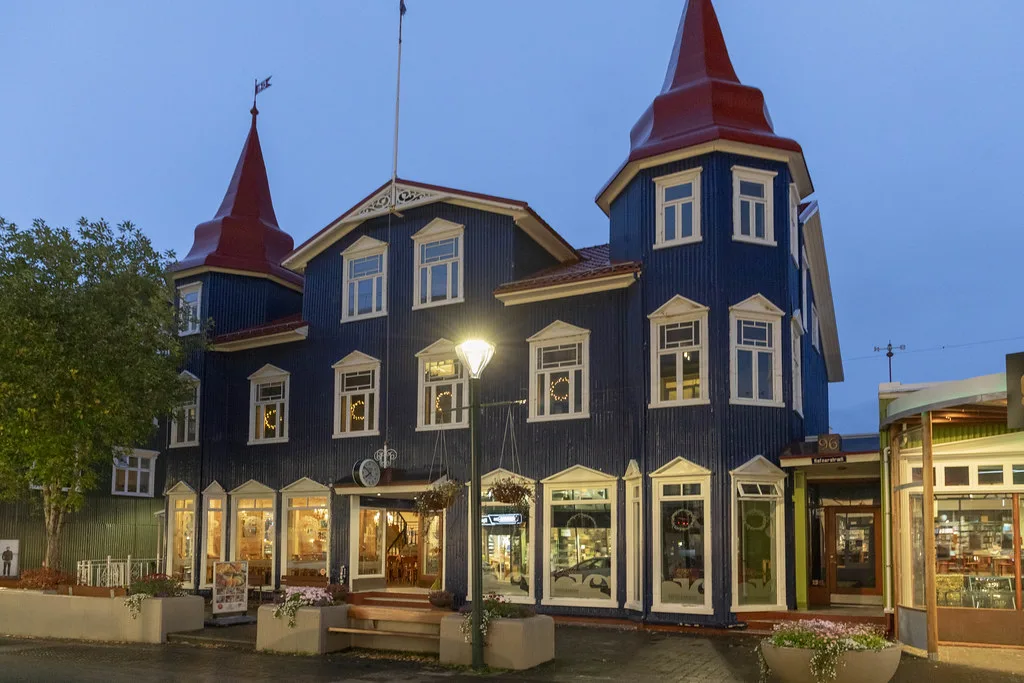
However, Akureyri itself has captured my imagination beyond the whales. Iceland's second-largest urban area sits tucked on the western shore of Eyjafjörður's southern end, where mountains shelter it from Arctic winds. The floating pier deposits you directly in front of Hof Cultural Centre — a striking glass-and-concrete building that looks like Iceland distilled into architecture. You walk off the ship and you're already downtown, surrounded by colorful houses, cozy cafés, and that particular Icelandic warmth.
The waterfall has been dominating my planning. Thirty minutes east of Akureyri, Goðafoss plunges 12 meters across a 30-meter horseshoe of thundering water — powerful, beautiful, and soaked in Viking lore. The name means "Waterfall of the Gods," and the story still gives me chills: In the year 1000, Iceland's chieftain was tasked with deciding whether the nation would adopt Christianity or remain pagan. After meditation, he declared for Christ — then threw his statues of Norse gods into this waterfall. I want to stand at that viewing platform, feeling the spray on my face, watching glacial water crash over the same rocks it did a thousand years ago.
My research into Lake Mývatn has been particularly compelling. Ninety minutes east of Akureyri, this volcanic wonderland offers landscapes that genuinely feel alien. Dimmuborgir presents dramatic black lava formations rising like ancient fortress ruins. Hverir assaults the senses with bubbling mud pools and hissing steam vents, sulfur painting the earth in shades of yellow and rust. Though the smell is primal, the beauty is undeniable. The Mývatn Nature Baths promise a soothing counterpoint — a geothermal lagoon less crowded than the Blue Lagoon.
The Botanical Garden has added an unexpected dimension to my planning. One of the world's northernmost botanical gardens, just 60 kilometers from the Arctic Circle, it showcases subarctic flora and hardy Icelandic natives that have no business surviving this far north but do anyway. Founded in 1912, walking paths meander through beds of wildflowers and alpine species. A small café serves coffee and pastries. It's free to enter and just 10 minutes walk from the pier.
Yet what strikes me most about Akureyri is how much it offers in concentrated form. Exceptional whale watching departing from the pier. A thundering waterfall steeped in legend just 30 minutes away. Geothermal wonders within 90 minutes. A walkable downtown with colorful houses and cozy cafés. This isn't a port where you need to choose between experiences — you can fit remarkable variety into a single day, though you'll leave wanting more. That seems to be Iceland's way.
My planning has convinced me that Akureyri offers something rare — raw natural power combined with genuine Icelandic charm, all accessible from a pier that puts you in the heart of things. I'm going with respect for the whales and waterfalls, excitement for landscapes that look like other planets, and appreciation for a northern town that has learned to thrive at the edge of the Arctic. The midnight sun awaits.
The more I research, the more I understand why travelers return to Iceland again and again. This land has a way of getting under your skin — the quality of light, the vast emptiness, the sense that you're witnessing something ancient and unchanging. Akureyri promises all of that intensity concentrated into a single port call. I want to feel what the Vikings felt when they first sailed these fjords.
Looking back at my planning, I realize Iceland is teaching me about perspective. We spend so much energy on things that don't matter, while the earth itself reminds us what endurance really means. The lesson isn't just about whales or waterfalls — it's about learning to feel small and finding peace in that smallness.
Weather & Best Time to Visit
The Cruise Port
Akureyri's cruise terminal is a floating pier directly in front of Hof Cultural Centre in downtown Akureyri. Ships dock directly — no tendering required. You walk off the gangway into the heart of Iceland's second-largest urban area. Whale watching tours depart from this same pier, making booking and boarding remarkably convenient.
Currency is Icelandic Króna (ISK) though credit cards are accepted virtually everywhere — even public restrooms. English is widely spoken. The pier area is wheelchair accessible with flat pathways into downtown. Akureyri is compact and walkable — shops, cafés, Akureyrarkirkja church, and the Botanical Garden are all accessible on foot. Only outlying attractions like Goðafoss and Lake Mývatn require tours or transport.
Getting Around
- Walking: Akureyri downtown is compact and walkable from the pier. Akureyrarkirkja church is 15 minutes uphill with rewarding views. The Botanical Garden is 10 minutes on flat ground. Everything central is accessible on foot with good sidewalks throughout. Wheelchair accessible with curb cuts and ramps.
- Whale Watching: Tours depart directly from the cruise pier — no transport needed. Classic tours on larger boats (€85-95, 2.5-3 hours) or RIB express boats (€130-150, 1.5-2 hours). Book in advance through ship excursion desk or operators like Whale Watching Akureyri.
- Taxis: Available at port but limited supply in this small city. Credit cards accepted. Expensive by international standards (Iceland prices). Book in advance for guaranteed pickup. Useful for Goðafoss if not joining organized tour.
- Car Rental: Available but costly (€80-120/day). Roads are excellent though distances are long and fuel quite expensive. Only worthwhile for independent full-day exploration to Mývatn or beyond.
- Organized Tours: Most practical option for Goðafoss, Lake Mývatn, and Húsavík. Ship excursion options offer guaranteed return to ship. Independent tours bookable through local operators. Half-day Goðafoss tours €80-120; full-day Mývatn tours €150-200.
- Bike Rental: Available in downtown area. Akureyri has dedicated bike paths. Good for Botanical Garden or coastal exploring if weather cooperates.
Akureyri Area Map
Interactive map showing cruise pier, Akureyrarkirkja church, Botanical Garden, whale watching departure point, and nearby attractions including Goðafoss and Lake Mývatn. Click any marker for details.
Beaches & Shorelines
Akureyri isn't a beach destination — this is Arctic Iceland with water temperatures around 5-10°C. However, the fjord scenery is spectacular:
- Eyjafjörður Fjord: Iceland's longest fjord offers dramatic scenery — snow-capped mountains, fishing villages, and wildlife. Best experienced from whale watching boats or scenic drives along the coastal roads.
- Námaskarð Geothermal Area: Not a beach but a striking lunar landscape near Lake Mývatn — steaming vents, bubbling mud pools, and sulfur-painted earth. No swimming (dangerous!) but incredible for photography.
- Mývatn Nature Baths: Geothermal lagoon for soaking (35-40°C) with mountain views. €45-55 admission. Less crowded than Blue Lagoon. Combines well with Mývatn day trip.
- Grjótagjá Cave: Small geothermal cave near Mývatn — too hot for swimming now but atmospheric for photos. Free to visit on Mývatn tours.
Tip: Bring layers for all outdoor activities. Iceland weather changes rapidly. Waterproof jacket essential even on sunny days.
Shore Excursions & Things to Do
Booking guidance: Whale watching sells out on cruise days — book in advance through ship excursion desk for guaranteed return to ship (€85-150) or independent operators. Goðafoss and Mývatn require full or half-day tours (€80-200). Downtown attractions like Botanical Garden need no booking.
Whale Watching from Akureyri
Exceptional whale watching departing directly from the cruise pier. Eyjafjörður's deep, nutrient-rich waters draw humpback whales, minke whales, white-beaked dolphins, and harbor porpoises. Blue whales appear occasionally. Classic tours on family-friendly boats with indoor seating (€85-95, 2.5-3.5 hours) or express RIB tours on rigid inflatables (€130-150, 1.5-2 hours) — faster and closer to whales but more exposed. Warm overalls and hot cocoa provided. Wildlife Guarantee included — see nothing, get a free retry. Book through ship excursion desk for guaranteed return or reserve with Whale Watching Akureyri or Ambassador tours. This is why you came to Akureyri.
Goðafoss Waterfall
The "Waterfall of the Gods" — 30 minutes east of Akureyri. Glacial water plunges 12 meters across a 30-meter horseshoe of thundering falls, steeped in Viking lore from the year 1000. Free to visit with viewing platforms on both sides. Ship excursion half-day tours €80-120. Independent taxi around €100-120 return with waiting time. Often combined with Lake Mývatn for full-day tours. Even people who think they don't care about waterfalls stand transfixed here. Book ahead for organized tours.
Lake Mývatn & Geothermal Wonders
Volcanic wonderland 90 minutes from Akureyri. Dimmuborgir offers dramatic black lava formations. Hverir (Námaskarð) presents bubbling mud pools and hissing steam vents with sulfur painting the earth yellow and rust. Mývatn Nature Baths provides geothermal soaking (€45-55 admission). Full-day tours €150-200 including multiple stops and typically lunch. Ship excursion options available with guaranteed return. This is a full-day commitment but the landscapes genuinely feel alien. Book in advance — tours fill on cruise days.
Akureyrarkirkja Church
Iconic Lutheran church perched on a hillside overlooking Akureyri. Designed by Guðjón Samúelsson (same architect as Reykjavík's Hallgrímskirkja) and consecrated in 1940. Stunning stained glass and pipe organ inside. 15-minute uphill walk from pier — steep but rewarding panoramic views. Free entry, donations welcome. No booking required. Allow 30-45 minutes including the climb and views.
Akureyri Botanical Garden
One of the world's northernmost botanical gardens, just 60km from the Arctic Circle. Founded in 1912, showcasing subarctic flora and hardy Icelandic natives. Walking paths, benches, and a small café. Free admission. 10-minute walk from pier on flat ground. Open June-September. A peaceful counterpoint to the day's adventure. No booking required. Allow 1 hour.
Food & Dining
Icelandic cuisine celebrates fresh seafood and hearty northern flavors:
- Icelandic Fish ($-$$): Arctic char, cod, haddock — incredibly fresh. Fish and chips elevated to art form at harbor restaurants. €15-25 for mains.
- Lamb ($-$$): Icelandic sheep graze freely on highlands. Traditional lamb stew (kjötsúpa) €12-18. Slow-roasted lamb shank €25-35. Hearty comfort on cool days.
- Skyr ($): Thick Icelandic yogurt (technically cheese) — high protein, tangy, served with berries. €4-6 at cafés. Breakfast staple.
- Kleinur ($): Twisted Icelandic doughnuts with cinnamon-cardamom spice. €3-5 at bakeries. Essential with coffee.
- Hot Dogs/Pylsur ($): Iceland's beloved street food — lamb-based with crispy onions, remoulade, ketchup, mustard. €4-6. Don't mock it until you try it.
- Local Beer ($): Craft breweries like Einstök and Kaldi produce excellent beer. €8-12 per glass at pubs.
Budget tip: Iceland is expensive. Budget €15-25 for casual meals, €8-12 for beer, €4-6 for coffee. Cards accepted everywhere — cash rarely needed.
Note: Tipping is not customary in Iceland. Service is included in prices.
Local Notices & Current Conditions
- Book Whale Watching Early: Tours sell out on cruise days. Ship excursion options offer guaranteed return to ship. Book in advance for best availability.
- Dress in Layers: Iceland weather changes in minutes. Waterproof jacket essential. "No bad weather, only bad clothing" is Iceland's motto.
- Midnight Sun (June-July): The sun barely sets — dips near horizon around midnight but never truly dark. Bring eye masks for sleeping.
- Geothermal Safety: Stay on marked paths at Hverir/Námaskarð. Ground can be dangerously hot and unstable. Burns happen to careless visitors.
- Currency: Icelandic Króna (ISK). Credit cards accepted everywhere. Cash rarely needed. No tipping expected.
Depth Soundings Ashore
Practical tips before you step off the ship.
Akureyri is Iceland's second-largest urban area (population 19,000) and the unofficial capital of the north. Located just 60km south of the Arctic Circle, it enjoys surprisingly mild weather thanks to fjord protection and the North Atlantic Current. Currency is Icelandic Króna (ISK); credit cards are accepted virtually everywhere including small vendors and public restrooms. Approximately €1 = 150 ISK.
Safety is excellent — Iceland is consistently ranked among the world's safest countries. Standard travel precautions apply. Icelanders are friendly and nearly everyone speaks excellent English.
The cruise pier and downtown are wheelchair accessible with flat terrain. Akureyrarkirkja church requires a steep uphill climb. Whale watching boats vary — confirm accessibility when booking. Organized tour buses typically accommodate wheelchairs with advance notice. Geothermal areas have uneven volcanic terrain that may challenge mobility-impaired visitors.
Weather is unpredictable year-round. Summer temperatures average 10-15°C but can swing dramatically. Rain is possible any day. Pack waterproof layers regardless of the forecast. UV protection matters even on cloudy days — Arctic clarity intensifies sunlight.
Practical Information
- Currency: Icelandic Króna (ISK); €1 = ~150 ISK; cards everywhere
- Language: Icelandic (English widely spoken)
- Time Zone: GMT/UTC (no daylight saving)
- Weather: Summer 10-15°C, changeable. Layers essential. Midnight sun June-July.
- Port Type: Floating pier downtown — ships dock directly, no tender
- Walkable: Downtown fully walkable from pier. Goðafoss/Mývatn require tours.
- Accessibility: Pier accessible. Downtown flat. Church climb steep. Tour buses accommodate wheelchairs with notice.
Photo Gallery
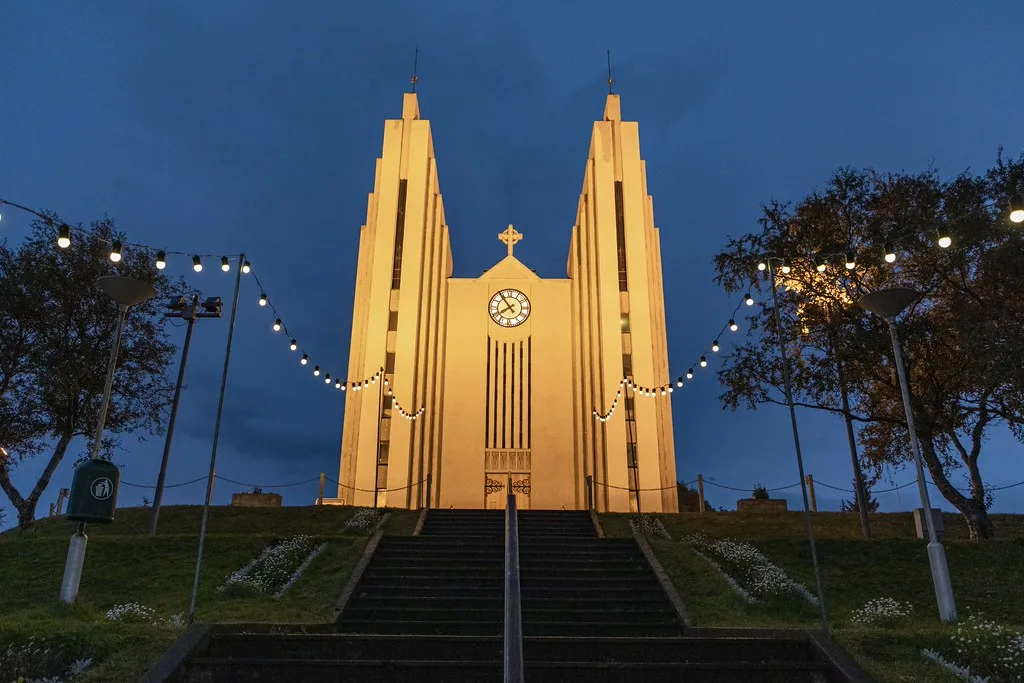
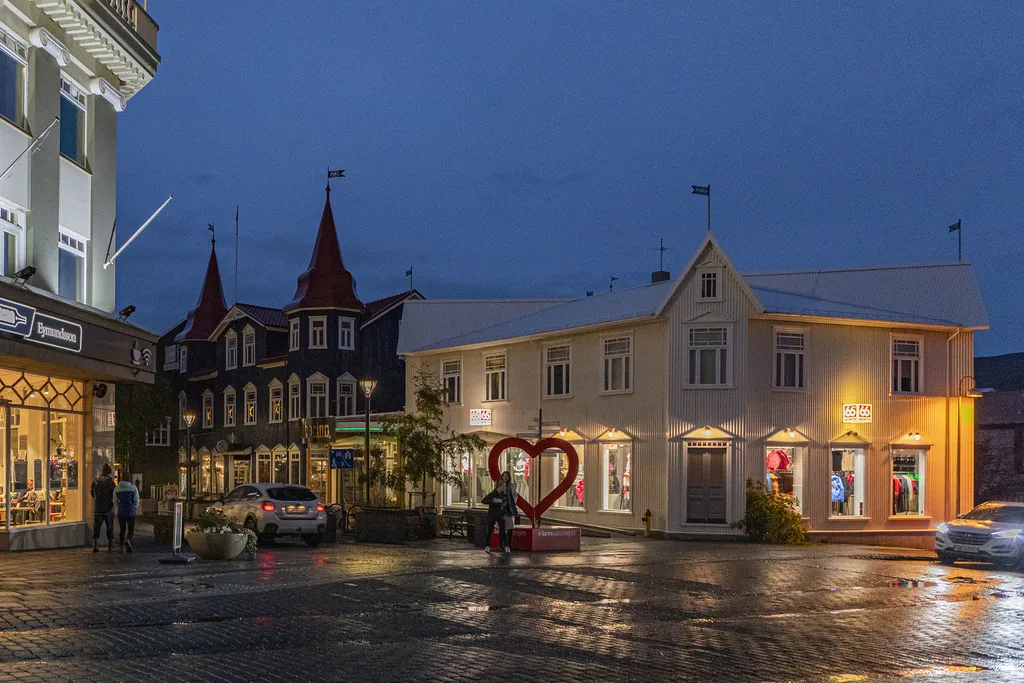
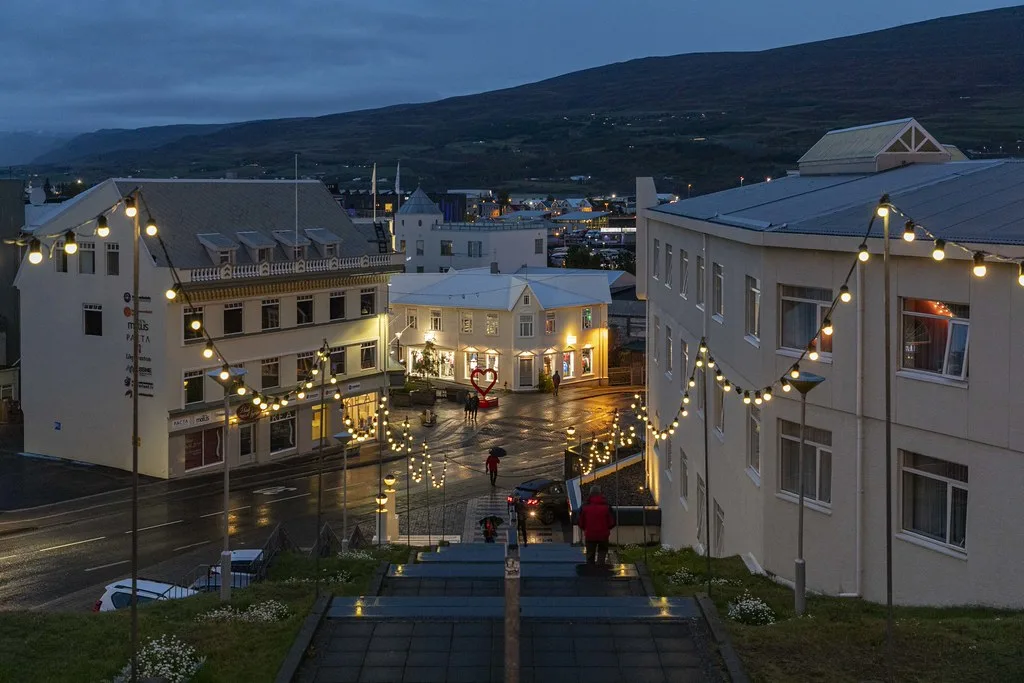
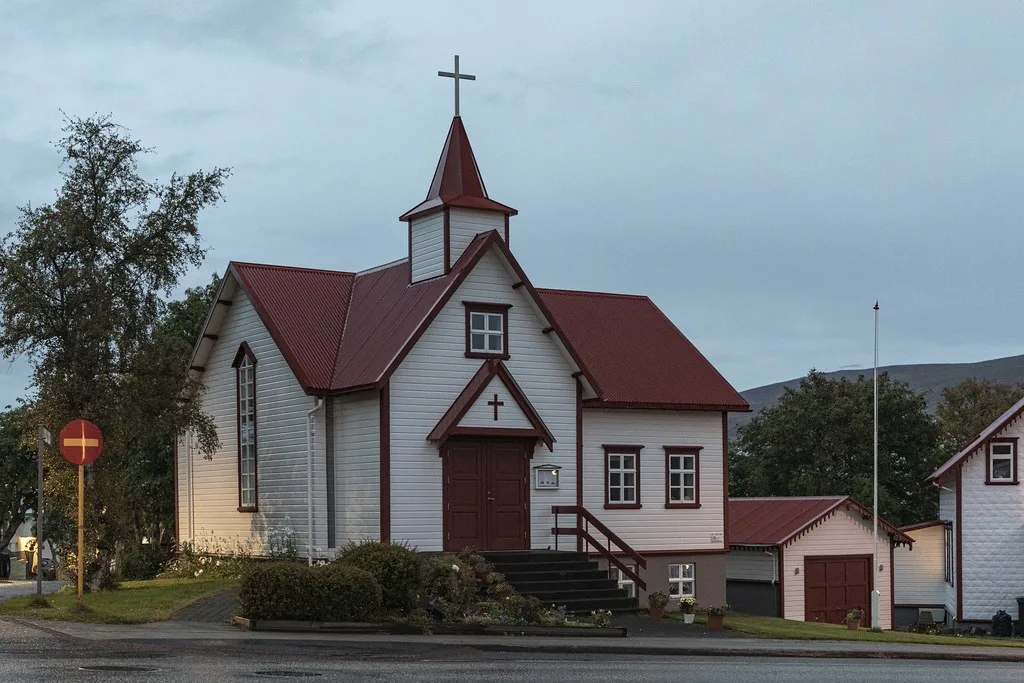
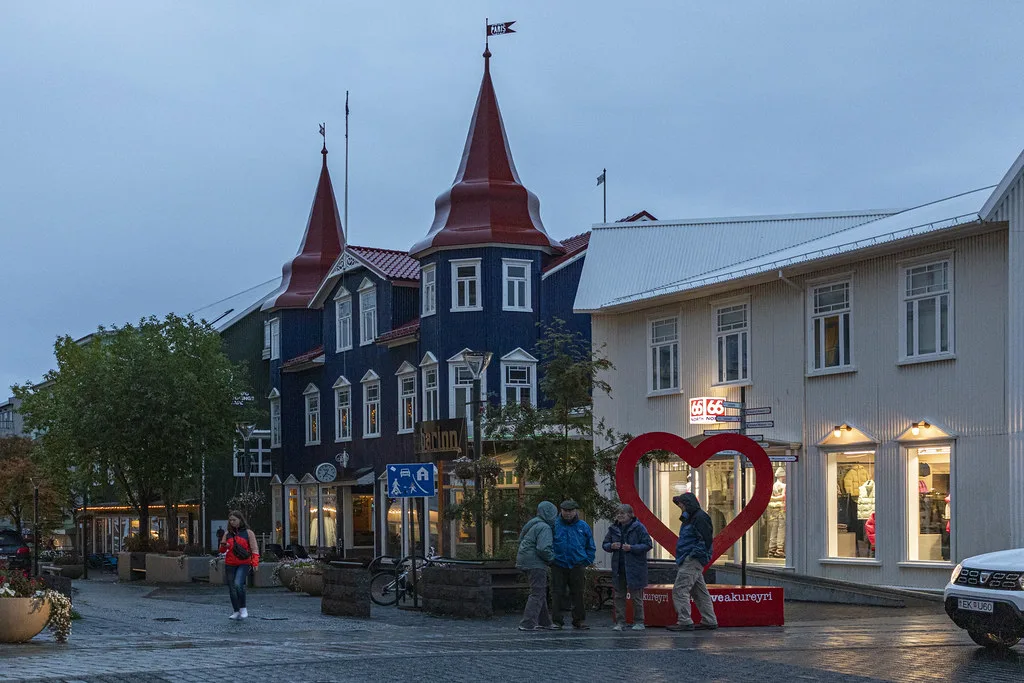
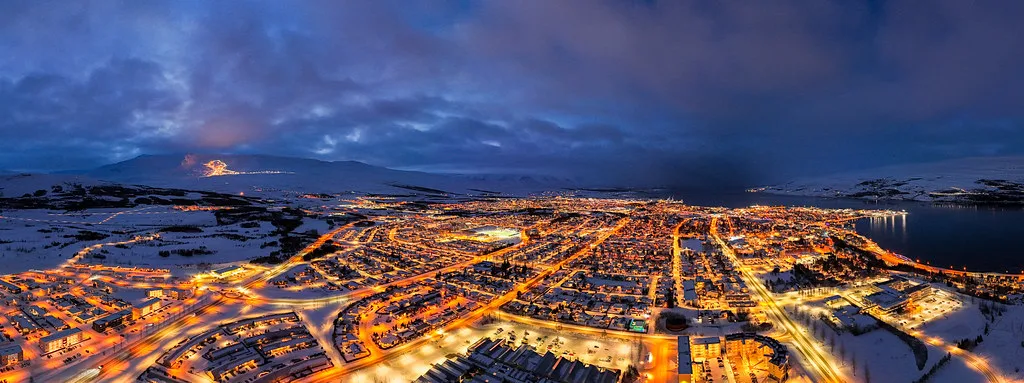
Image Credits
- eyjafjordur-whale.webp: Flickers of Majesty
- godafoss.webp: Flickers of Majesty
- myvatn.webp: Flickers of Majesty
- akureyri-pier.webp: Flickers of Majesty
- akureyrarkirkja.webp: Flickers of Majesty
All images used with permission. Photo credits link to original sources.
Frequently Asked Questions
Q: Where do cruise ships dock in Akureyri?
A: At the floating pier directly in front of Hof Cultural Centre in downtown Akureyri. You walk off the ship into the town center. Whale watching tours depart from the same pier. No tenders or shuttles required.
Q: Is whale watching worth it?
A: Absolutely. Akureyri offers exceptional whale watching in Eyjafjörður fjord. Humpbacks, minkes, dolphins, and porpoises are common. Tours include a Wildlife Guarantee. Classic tours €85-95, RIB tours €130-150. Book in advance — they sell out on cruise days.
Q: Can I visit Goðafoss independently?
A: Yes, by taxi (€100-120 return) or rental car. However, organized tours (€80-120 half-day) are easier and often combine with other stops. Ship excursions offer guaranteed return before sailing. The waterfall itself is free to visit.
Q: How cold is it in summer?
A: Summer temperatures average 10-15°C but can drop lower with wind. Waterproof layers essential. Akureyri sits just south of the Arctic Circle — the sun dips briefly below the horizon in June-July but daylight is effectively continuous (22-23 hours). It's called "white nights" rather than true midnight sun.
Q: What if I don't want to do tours?
A: Downtown Akureyri is pleasant for walking — colorful houses, cafés, the Botanical Garden (free), and Akureyrarkirkja church. You can spend a relaxing day without organized excursions, though whale watching and Goðafoss are the signature experiences.
Last reviewed: February 2026