


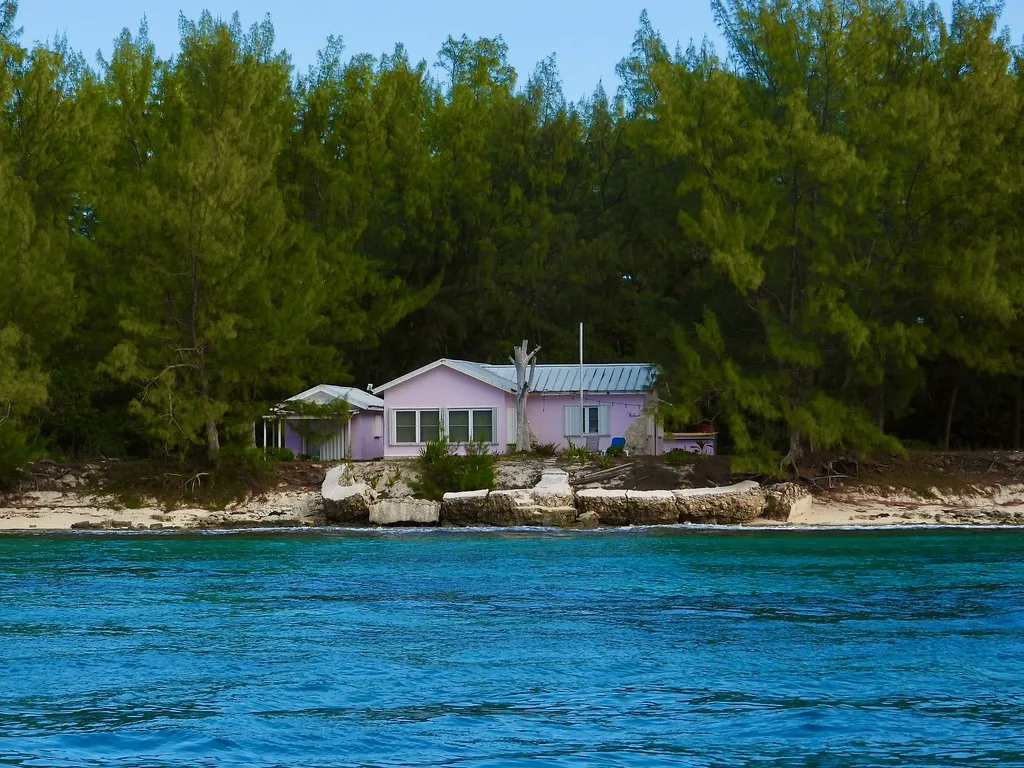
Photo: Wikimedia Commons
My Logbook: Where Hemingway's Giants Still Swim
I stepped off the gangway onto an island that exists in two worlds—the modern resort complex where cruise ships dock, and the weathered fishing village where legends were born. Bimini announced itself immediately through the peculiar turquoise clarity of the water surrounding the island, a shade of blue-green I'd seen in photographs but never quite believed was real. The Bahamas begin here, just fifty miles east of Miami, where the continental shelf drops away and the Gulf Stream rushes north carrying warm Caribbean water toward distant shores. Standing on the dock, I could see straight down twenty feet to the sandy bottom, watching needlefish dart through shafts of sunlight that penetrated the water like searchlight beams.
Alice Town sits along a single road they call the King's Highway—though "highway" overstates the case for what amounts to one paved lane running the length of North Bimini's inhabited strip. I walked south from Resorts World along this road, passing clapboard buildings painted in fading pastels, rum bars with hand-lettered signs advertising Kalik beer and fresh conch, and charter fishing offices displaying photos of massive marlin held aloft by grinning anglers. However, what caught my attention was how small everything felt—the entire settled portion of the island stretches maybe three miles, a ribbon of human habitation pressed between the calm waters of the Bimini lagoon on one side and the wild Atlantic on the other.
The Compleat Angler Hotel stood near the center of town, rebuilt after a fire destroyed the original structure where Ernest Hemingway spent his summers from 1935 to 1937. I pushed through the doorway into the cool darkness of the bar and found myself surrounded by black-and-white photographs covering every wall—Hemingway young and muscular, standing beside fish that dwarfed him, marlin with bills longer than a man's arm, tuna the size of torpedoes. The bartender, a Bimini native named Thomas who'd worked here thirty years, poured me a rum and told me stories his grandfather had passed down about "Papa" Hemingway arriving each summer aboard his boat Pilar, heading straight out to where the Gulf Stream ran deepest.
"The fishing brought him here," Thomas said, leaning against the bar, "but something about these islands kept him coming back. He wrote parts of his books sitting right there." He pointed to a corner table near the window where afternoon light streamed through salt-hazed glass. I sat in that same spot with my rum and looked out at the exact view Hemingway would have seen—fishing boats rocking at anchor, the impossibly blue water stretching toward the horizon, pelicans diving for baitfish in synchronized plunges.
That afternoon I hired a golf cart—the primary mode of transportation on an island where "traffic" means two cars passing on the narrow road—and drove the full length of North Bimini in fifteen minutes. The pace here runs slower than anywhere I'd experienced in the Caribbean. Locals waved from porches as I passed. Children played in yards where chickens scratched in the dirt. Small churches stood beside the road, their painted signs promising salvation in colorful letters. Yet what struck me most was the sound, or rather the absence of it—no highways, no construction noise, no urban rumble. Just wind through palm fronds, waves against rocks, and the occasional outboard motor heading toward fishing grounds.
I stopped at Blister Bay Beach on the island's east side, where powder-soft white sand met water so clear I could count individual grains of sand beneath the surface. The beach stretched empty in both directions, no facilities, no vendors, no crowds—just me and the elemental simplicity of sand, water, and sky. I waded into the warm shallows and swam out fifty yards, then floated on my back watching frigate birds circle overhead, their forked tails identifying them as surely as a signature. The water supported me effortlessly, warm as bathwater, salt enough to keep me buoyant without effort.
That evening I returned to Alice Town for dinner at a local restaurant where they served cracked conch and grilled lobster to a mix of tourists and Bimini residents. The owner, a woman named Miss Caroline who'd lived her entire seventy-three years on the island, told me the Bimini she knew as a child had been even smaller, even quieter, before the cruise ships started calling. "But we're glad to share our little piece of paradise," she said, bringing me another plate of conch fritters I hadn't ordered. "Just don't forget that this is a real place, not just a beach. Real people live here, raise their families here, make their living from the sea."
Her words stayed with me as I walked back toward the cruise terminal under stars so bright they seemed to hang just overhead, close enough to touch. Bimini had given me Hemingway's ghost, the mystery of the underwater road, beaches of impossible beauty, and water clearer than glass. But what I'll carry forward is something harder to photograph or describe—the feeling that I'd touched something authentic, a place that existed for its own reasons rather than for mine. Miss Caroline was right: this wasn't just a beach day destination. This was home to two thousand people who wake each morning to this impossible blue water and somehow manage not to take it for granted. That awareness, that gratitude for beauty that surrounds you daily, might be the real treasure Ponce de León came seeking—not a fountain of eternal youth, but the wisdom to recognize paradise when you're standing in it.
Weather & Best Time to Visit
The Cruise Port
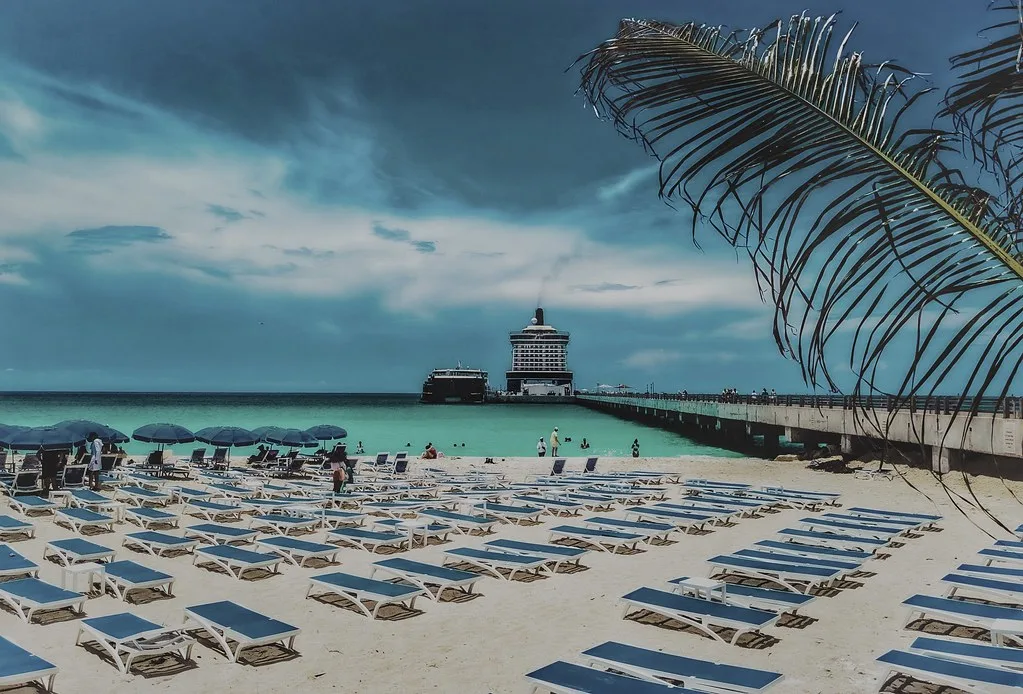
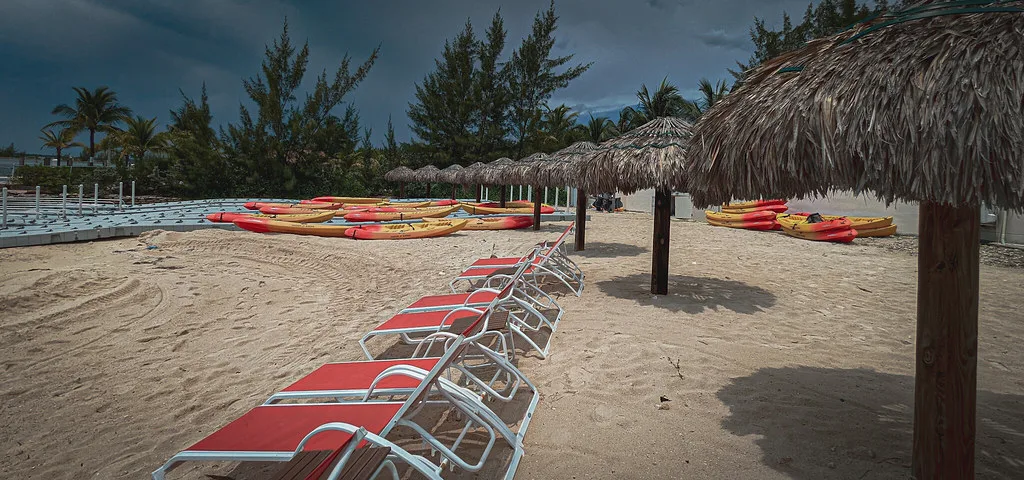
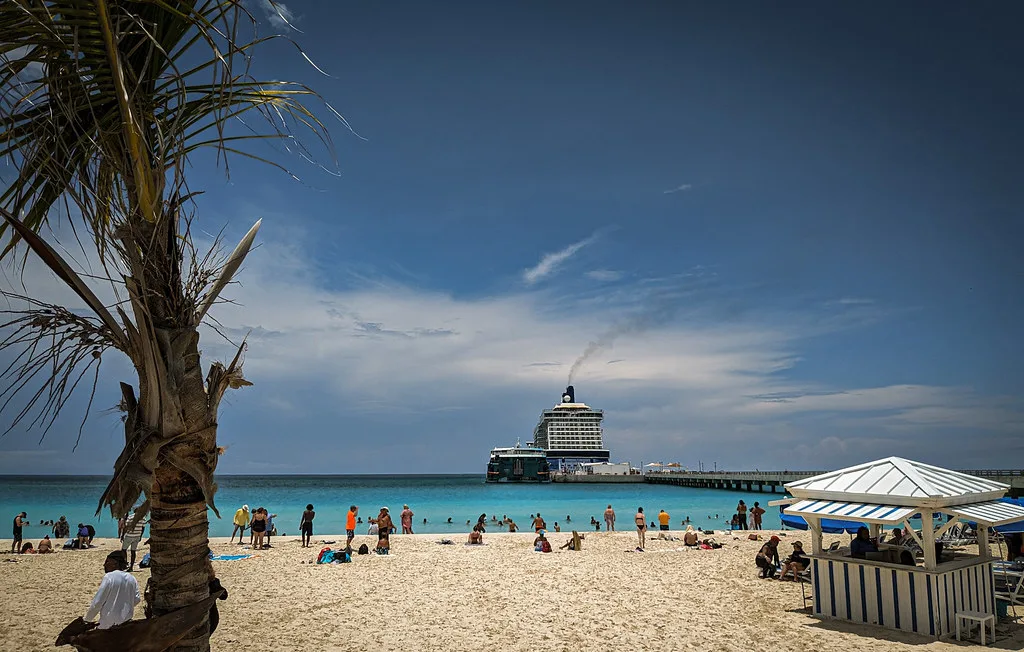
Most cruise ships calling on Bimini dock at Resorts World Bimini, a purpose-built cruise port on North Bimini's northern end. The terminal opened in recent years specifically to accommodate large cruise ships, offering a beach club atmosphere with two lagoon-style pools, white sand beaches, restaurants, entertainment, and water sports rentals. The port facility is completely flat and wheelchair accessible, with no stairs between ship and shore. A complimentary tram service runs continuously around the resort property, allowing guests to hop on and off at various amenities.
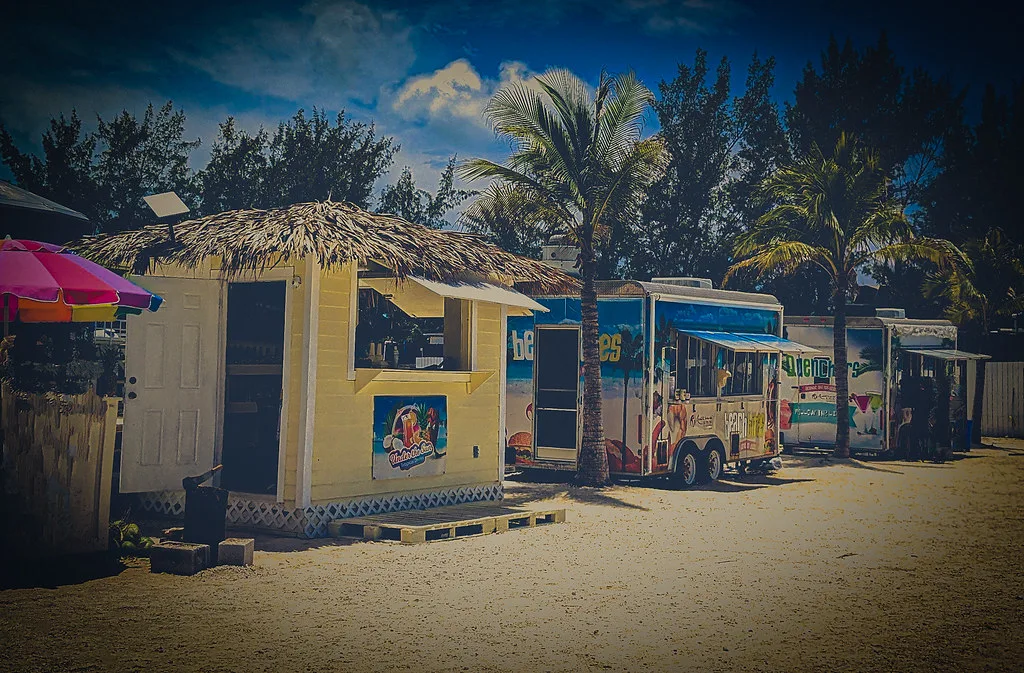
Fisherman's Village, which opened in June 2024, sits adjacent to the cruise port and features an open-air market with The Healing Hole restaurant serving traditional Bahamian food and specialty cocktails, plus Amici's Pizzeria. A free shuttle bus runs every 10-15 minutes connecting the cruise port to Fisherman's Village for those who want dining and shopping beyond the resort.
Alice Town, the main settlement on North Bimini, lies about 10-15 minutes south by taxi or golf cart. This is where Hemingway drank and fished, where Ponce de León supposedly sought the Fountain of Youth, and where authentic Bahamian life unfolds along the King's Highway—a single-lane road lined with colorful clapboard buildings, local rum bars, and charter fishing offices. South Bimini, connected by a short inter-island ferry ride (about 10 minutes, a few dollars), offers quieter beaches and nature trails through mangroves. The Bimini Biological Field Station there studies lemon sharks, and visitors can sometimes observe the research.
Getting Around
- Free Resort Tram: Resorts World Bimini operates complimentary tram service around the resort property, connecting the cruise terminal to pools, beach areas, and dining venues. The trams run continuously during cruise ship hours, making it easy to explore the resort amenities without walking long distances in the sun.
- Golf Carts ($50-70/day): Golf carts are the primary rental transportation on Bimini and the best way to explore beyond the resort. Main roads are paved and well-maintained, though some side streets and beach access points can be sandy or rocky. Booking ahead through your cruise line or calling local operators ensures availability, especially when multiple ships are in port. Remember: drive on the left (British rules apply).
- Taxis ($5/person): Taxis are readily available at the cruise terminal and throughout Alice Town. Standard fare is $5 per person to anywhere on North Bimini. Taxis can also be reached by VHF radio on channel 68 or flagged down on the street in Alice Town.
- Walking: The island's compact size makes walking feasible for those comfortable with moderate distances. Bailey Town is about 10-15 minutes on foot from the resort, while Alice Town is approximately 45 minutes walking along the King's Highway. However, the Caribbean sun can be intense, so consider your stamina level and heat tolerance before setting out on foot.
- Inter-Island Ferry: The ferry between North and South Bimini runs regularly, takes about 10 minutes, and costs just a few dollars. South Bimini offers quieter beaches, nature trails, and the Bimini Biological Field Station. The ferry is an easy way to experience both islands during a port call.
- Accessibility: The Bimini cruise port is highly wheelchair accessible—completely flat with no stairs between ship and shore. The free tram service accommodates wheelchairs. Main roads in Alice Town have sidewalks, though some areas feature uneven surfaces. Beach access points vary in wheelchair-friendliness; the resort beach areas are generally more accessible than natural beaches.
Bimini Area Map
Interactive map showing Resorts World Bimini cruise port, Alice Town, beaches, snorkeling sites including the Bimini Road, and major attractions. Click markers for details.
Top Excursions & Things to Do
Booking guidance: Most Bimini excursions can be booked through your cruise line or with local operators at the port. Snorkeling tours fill quickly when multiple ships are in port—book in advance for guaranteed spots. Independent exploration works well for beach time and Alice Town visits. Golf cart rentals benefit from advance reservations during peak season.
Bimini Road Snorkeling ($109 adults, $79 kids + 10% VAT)
The mysterious Bimini Road lies about a half-mile offshore in 15-20 feet of crystal-clear water. This underwater formation of massive rectangular limestone blocks arranged in a J-shape has sparked decades of debate—ancient road, natural beach rock, or remnants of Atlantis? Snorkel tours provide masks, fins, and snorkels, taking you to swim above the geometric stones that seem too precise for chance. The tour typically includes multiple stops: the Bimini Road, the SS Sapona shipwreck (a concrete vessel from 1926 sitting in shallow water), and often a WWII aircraft wreck. Tour duration runs 2-3 hours. Book through Neal Watson's Bimini Scuba Center or your cruise line.
Shark Diving ($349 + 10% VAT, certified divers)
For certified scuba divers, Bimini offers encounters with Caribbean reef sharks at the Shark Arena, where approximately 30 sharks gather in the open ocean for a 30-minute dive. Great Hammerhead Safaris run from November through April for those seeking unforgettable encounters with these magnificent predators. Price includes tanks and weights; bring your certification card. Limited availability—book well in advance through dive operators.
Stingray Island & Marine Life Encounters (included in most snorkel tours)
Many snorkeling excursions include a stop at Stingray Island, where you can feed southern stingrays in waist-deep water. The rays glide past your legs, their wings brushing against you as they search for food—an unforgettable tactile experience. Tours also visit Rainbow Reef and Tuna Alley, where tropical fish, sea turtles, and nurse sharks frequent the coral formations.
Beach Time at Resorts World (free-$50)
The resort's beach club offers complimentary beach access with lounge chairs, two lagoon-style pools, and calm waters perfect for swimming. VIP cabanas are available for rent (around $50-75) providing shade, cushioned seating, and dedicated service. Water sports rentals include kayaks, paddleboards, and jet skis at additional cost. This option works perfectly for families with young children or those preferring a relaxed beach day over active excursions.
Alice Town Exploration (free-$15)
Independent wandering through Bimini's main settlement costs nothing but taxi fare or golf cart rental. The Compleat Angler Hotel displays Hemingway memorabilia and photos. Small churches, local restaurants serving conch and lobster, and rum bars line the King's Highway. The Bimini Museum (donation-based) chronicles the island's history from Ponce de León to prohibition rum-running to modern fishing tournaments. Allow 2-3 hours for a leisurely exploration. Combine with lunch at a local restaurant like The Healing Hole for authentic Bahamian cuisine.
South Bimini Nature Trails (ferry $3-5)
Take the 10-minute inter-island ferry to South Bimini for quieter beaches and nature trails through mangrove ecosystems. Blister Bay Beach offers pristine white sand with no facilities—bring water and sun protection. The Bimini Biological Field Station sometimes allows visitors to observe lemon shark research (call ahead). South Bimini provides an escape from cruise crowds for those seeking solitude.
DIY vs. Ship Excursion: Bimini Road Snorkeling
DIY Independent ($109-120/person)
- Book with local operator at port or online in advance
- More departure time flexibility
- Smaller group sizes possible
- Must arrange own transport to marina if needed
Ship Excursion ($120-150/person)
- Guaranteed to return before all-aboard time
- Transportation logistics handled
- Ship waits if excursion runs late
- Higher cost but zero stress about timing
Depth Soundings
Practical details and honest assessments for planning your Bimini day.
- Island size reality: North Bimini is only about 7 miles long and less than 1 mile wide at its widest point. You can drive the entire length in 15 minutes by golf cart. This isn't a destination requiring complex itinerary planning—pick one or two activities and embrace the laid-back pace. Trying to cram too much defeats the island's primary appeal: simplicity.
- Currency and costs: Bahamian dollars are pegged 1:1 to USD, and US dollars are accepted everywhere. Credit cards work at the resort and major restaurants, but bring cash for taxis, small restaurants in Alice Town, and ferry rides. Prices run moderately high—this is the Bahamas, not budget Caribbean. Expect to pay $15-25 per person for meals at local restaurants, $5-10 for drinks.
- Water and food safety: Tap water is potable but tastes heavily treated. Bottled water is readily available. Fresh seafood dominates menus—conch, lobster, and fish are local specialties and generally safe when properly prepared. Restaurants near the cruise port cater to tourists; those in Alice Town serve more authentic local fare at better prices.
- Weather considerations: Bimini sits exposed to Atlantic weather patterns. Brief rain showers pass quickly but can disrupt snorkeling tours. Sun exposure is intense—the Bahamas lie at 25°N latitude with minimal shade on beaches. Reapply sunscreen every 2 hours and consider a rash guard for extended water time. Hurricane season (June-November) can affect cruise schedules.
- Realistic timing for excursions: Snorkeling tours run 2-3 hours. Add 30 minutes for check-in and transport. If your ship has only 6-7 hours in port, you'll have limited time for beach relaxation after a snorkel tour. Consider whether you'd rather do one thing well (full snorkel tour) or split time between resort beach and Alice Town exploration.
- When to stay aboard: If you've visited other Bahamas ports (Nassau, Grand Bahama, etc.) and have limited budget, Bimini offers similar experiences at higher per-hour costs due to short port calls. The island shines for first-time Bahamas visitors, Hemingway enthusiasts, snorkelers seeking the Bimini Road, and those who simply want a mellow beach day without extensive exploring.
Photo Gallery
Frequently Asked Questions
Where do cruise ships dock in Bimini?
Cruise ships dock at Resorts World Bimini, a purpose-built cruise port on North Bimini's northern end. The facility opened specifically to accommodate large cruise ships and features direct beach access, pools, restaurants, and entertainment. The port is completely flat and wheelchair accessible. Free tram service runs around the resort property. Some smaller expedition ships may tender to Alice Town instead.
What is the Bimini Road and is it worth visiting?
The Bimini Road is an underwater formation of massive rectangular limestone blocks arranged in a J-shape, discovered in 1968 about half a mile offshore in 15-20 feet of water. Some believe it's evidence of Atlantis or an ancient road; scientists debate whether it's natural beach rock formation. Regardless of origin, swimming above these geometric stones in crystal-clear water creates an unforgettable experience. The stones are undeniably impressive and mysteriously regular in shape. Snorkel tours ($109 adults) typically combine the Bimini Road with the SS Sapona shipwreck and other sites for a complete underwater adventure.
Why is Bimini associated with Ernest Hemingway?
Ernest Hemingway lived on Bimini from 1935 to 1937, staying at the Compleat Angler Hotel. He came for the legendary marlin fishing—the Gulf Stream runs close to shore here, bringing massive game fish within reach of small boats. While on Bimini, he worked on "To Have and Have Not" and wrote articles about fishing, but mostly he fished aboard his boat Pilar. A 500-pound Atlantic blue marlin caught off Bimini allegedly inspired "The Old Man and the Sea" and "Islands in the Stream." The Compleat Angler Hotel (rebuilt after a fire) displays Hemingway memorabilia and photos of his catches.
How do I get around Bimini?
Golf carts are the primary rental transportation and the best way to explore independently—rent one for $50-70/day (book ahead for availability). Taxis cost a flat $5 per person to anywhere on North Bimini. The free resort tram serves Resorts World property. Walking is feasible for moderate distances—Alice Town is about 45 minutes on foot from the resort. The inter-island ferry to South Bimini costs a few dollars and takes 10 minutes. Remember to drive on the left (British driving rules apply in the Bahamas).
Can I use US dollars in Bimini?
Yes, absolutely. Bahamian dollars are pegged 1:1 to the US dollar, and USD is accepted everywhere on the island. You'll receive change in either Bahamian or US currency interchangeably. Credit cards work at the resort and major restaurants, but bring cash for taxis, small eateries in Alice Town, ferry rides, and tips. Most prices are quoted in "dollars" without specifying which currency since they're equivalent.
Is Bimini good for families with young children?
Yes, Bimini works well for families. Resorts World offers calm beach waters, two lagoon-style pools perfect for kids, and complimentary beach access. The shallow, crystal-clear water allows children to see fish and marine life easily. Stingray Island excursions (part of snorkel tours) let kids feed rays in waist-deep water—a memorable hands-on experience. The island's small size means less travel time and no complex logistics. However, extended snorkeling tours may challenge younger children; consider booking family-friendly shorter excursions or spending the day at the resort beach instead.
When is the best time to visit Bimini?
The glance Temperature reads "66-90°F year-round" and Rain reads "Brief showers; wetter Jun-Oct." The Wind entry adds "Trades; Gulf Stream proximity." The hazard-note notes Bimini is "Closest Bahamas to Florida."
When is hurricane season in Bimini?
The hazard-note on this page reads: "Closest Bahamas to Florida." The glance Rain entry identifies "wetter Jun-Oct" as the wet-season window. Specific Atlantic-basin dates and storm history are not detailed on this page; for current tropical-system status, use the live weather widget in the seasonal panel above.
What should I pack for Bimini's weather?
The glance Temperature reads "66-90°F year-round" and Humidity "Moderate (68-78%)." The Wind entry adds "Trades; Gulf Stream proximity." The Packing Tips section lists "Sunscreen and sunglasses — essential year-round"; "Light layers for variable temperatures"; "Comfortable walking shoes for exploring"; "Rain jacket or compact umbrella."
Will rain ruin my Bimini port day?
The glance Rain entry reads "Brief showers; wetter Jun-Oct." For short-term forecasts on a specific sailing date, the live weather widget in the seasonal panel above is the primary source.
Last reviewed: February 2026
Bimini's biggest asset is also its limitation—it's tiny. You can see most of the island in a few hours. Don't over-plan; this port rewards those who relax and embrace the slow pace rather than rushing to check boxes.
Until I have sailed this port myself, these notes are soundings in another's wake. This guide draws from published accounts, fellow cruisers, and careful research — but it does not yet carry the weight of my own anchor. I am working my way through the world's cruise ports, one by one, to write what I see with my own eyes and feel with my own heart. This page awaits that day.