


Photo: Wikimedia Commons (CC BY-SA)
Captain's Logbook: Bonaire
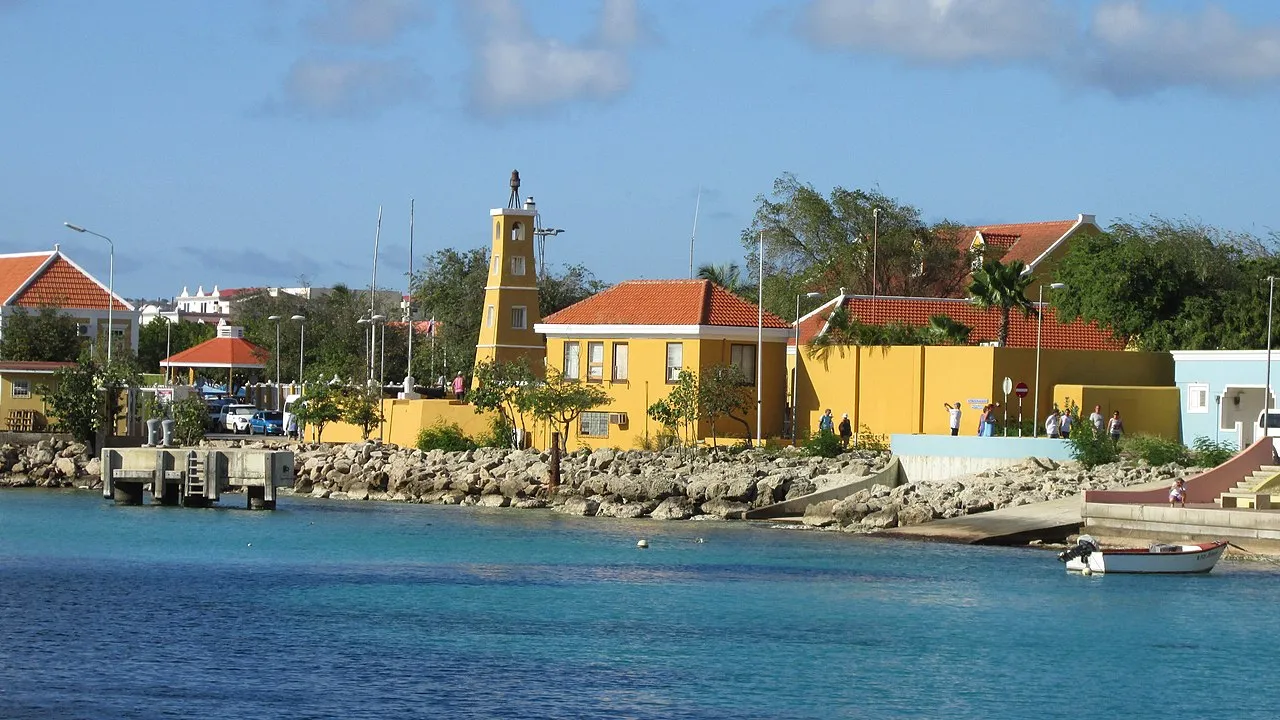
Sailing into Kralendijk (the name means "coral reef" or "coral dike" in Dutch) with flamingos flying past my ship was one of those moments that stays with you forever. I stood on my balcony, coffee in hand, watching pink birds glide past the bow as the turquoise waters gave way to this legendary diver's paradise. Bonaire isn't just another pretty island; it's one of the ABC Islands (Aruba, Bonaire, Curaçao) in the Dutch Caribbean, and its entire coastline has been protected as a marine park since 1979. We're talking 85+ dive sites with visibility often reaching 100+ feet, 470+ species of fish, and 57 different types of coral. The island's population of just 18,000 people treats the underwater world like a cathedral — and I quickly understood why.
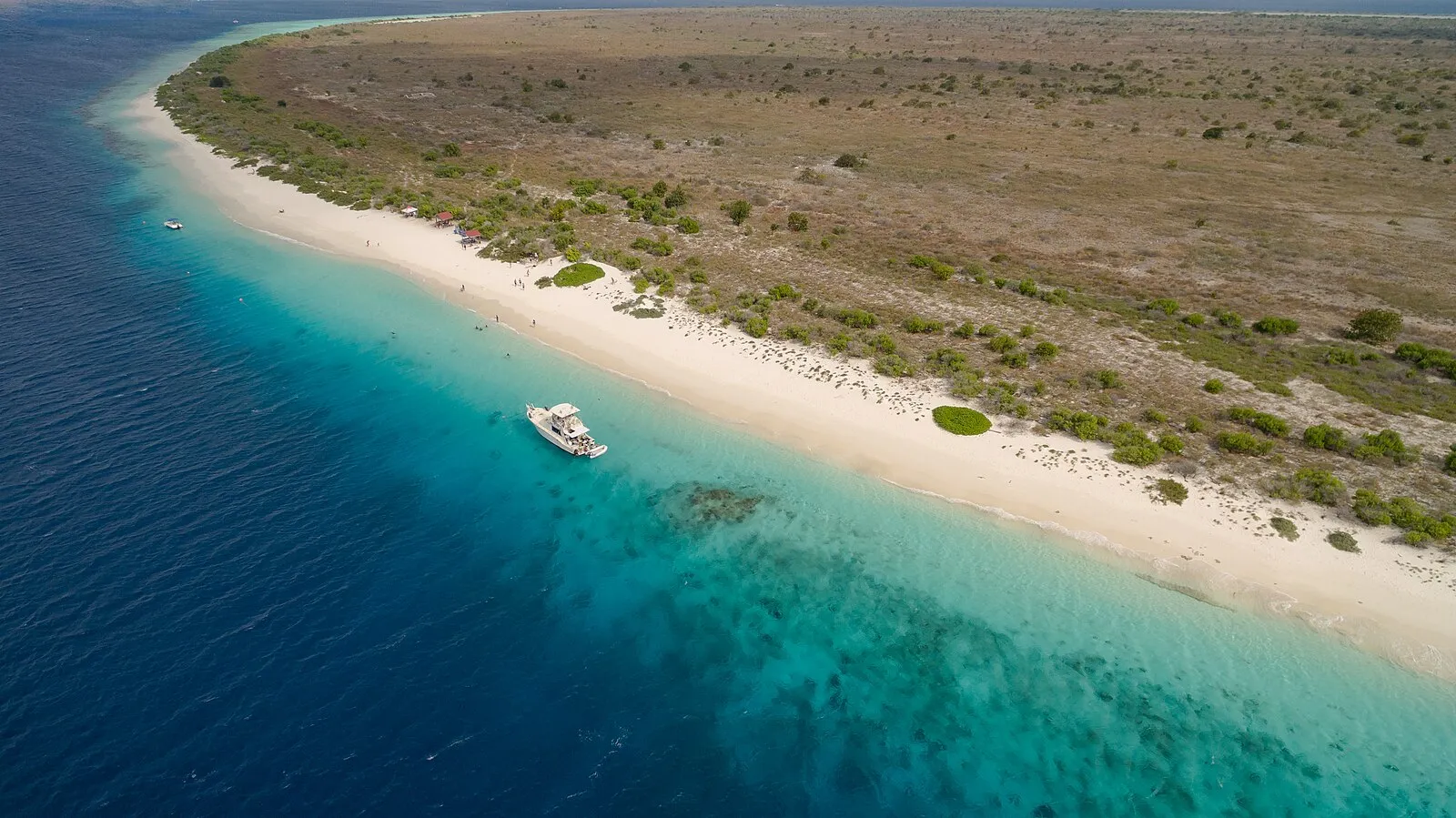
My perfect day started with me stepping off the ship and heading straight to the water taxi pier. The scent of salt air mixed with frangipani blossoms followed me as I walked through Kralendijk's pastel-colored streets. The $25 round-trip water taxi to Klein Bonaire was money well spent — this uninhabited island with No Name Beach offers snorkeling that rivals anything I've experienced in the Caribbean. The water clarity here is absurd; I could see the coral formations from the boat before I even jumped in. Schools of sergeant majors and yellowtail snappers swirled around me within seconds of entering the water, and I spotted my first sea turtle within ten minutes.
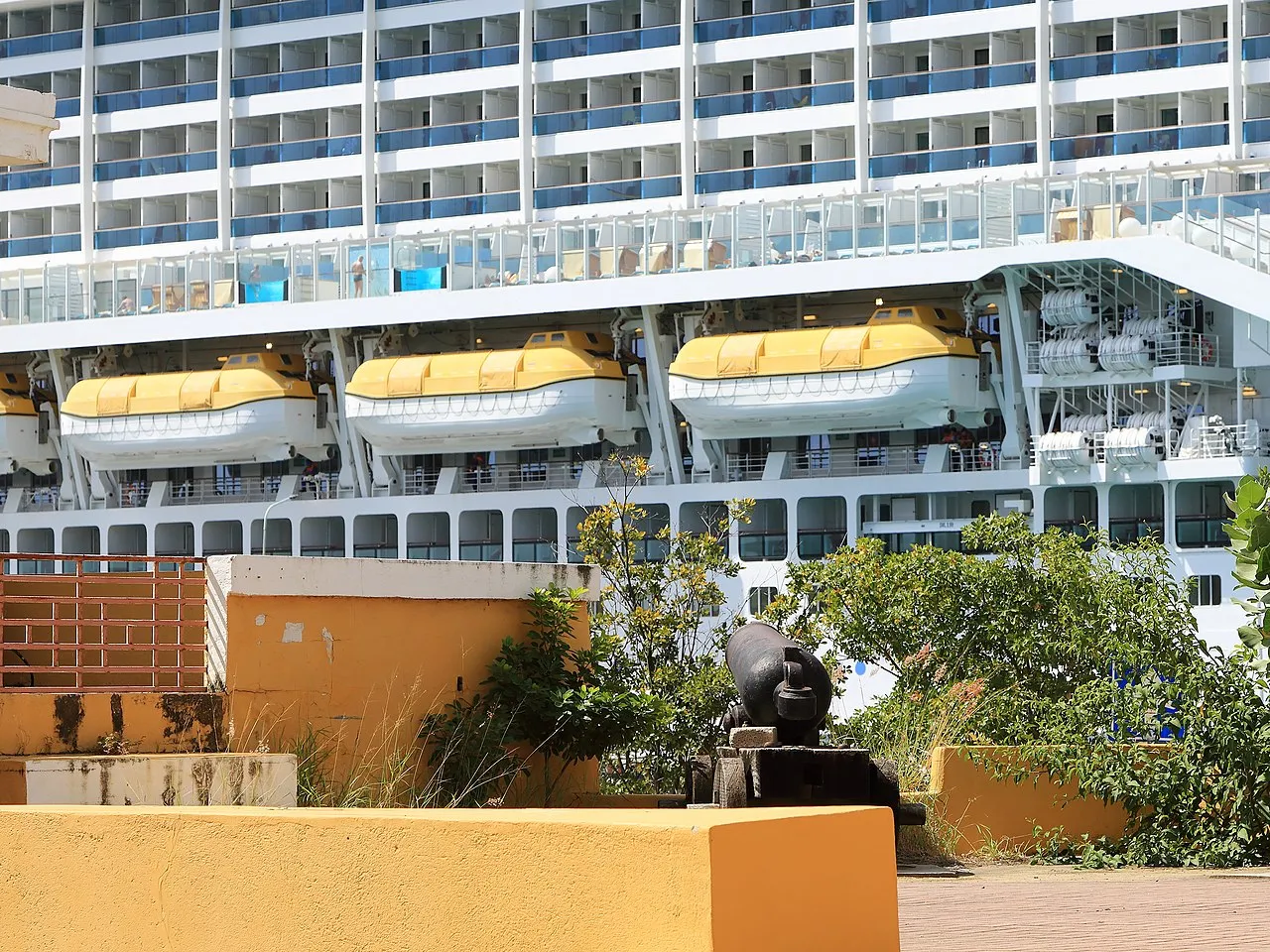
Lunch back in town at Karel's Beach Bar gave me a chance to taste something I'd never tried before: lionfish burger. The sweet, flaky meat had a delicate flavor that surprised me, and I washed it down with a cold Bonaire Blonde beer on the pier overlooking Fort Oranje. This colonial fortress has watched over the harbor since the Dutch West India Company claimed the island in 1636 (Spain had it first in 1499 under Alonso de Ojeda, but the Dutch made it theirs). My lunch cost about $20 including tip — reasonable for waterfront dining with this view.
After lunch, I rented a golf cart for $50 for the day — the most fun way to explore this compact island. The afternoon drive south took me to the Pekelmeer Flamingo Sanctuary, one of only four places in the entire world where Caribbean flamingos actually breed. This 135-acre sanctuary sits amid the solar salt works, those massive white salt pyramids you'll photograph from your ship. The aroma of salt hung heavy in the warm air as I watched hundreds of pink birds wade through shallow lagoons, their reflections doubling their numbers in the still water. The surreal scene of pink flamingos against white salt mountains and brilliant blue sky made me understand why photographers travel here from around the world.
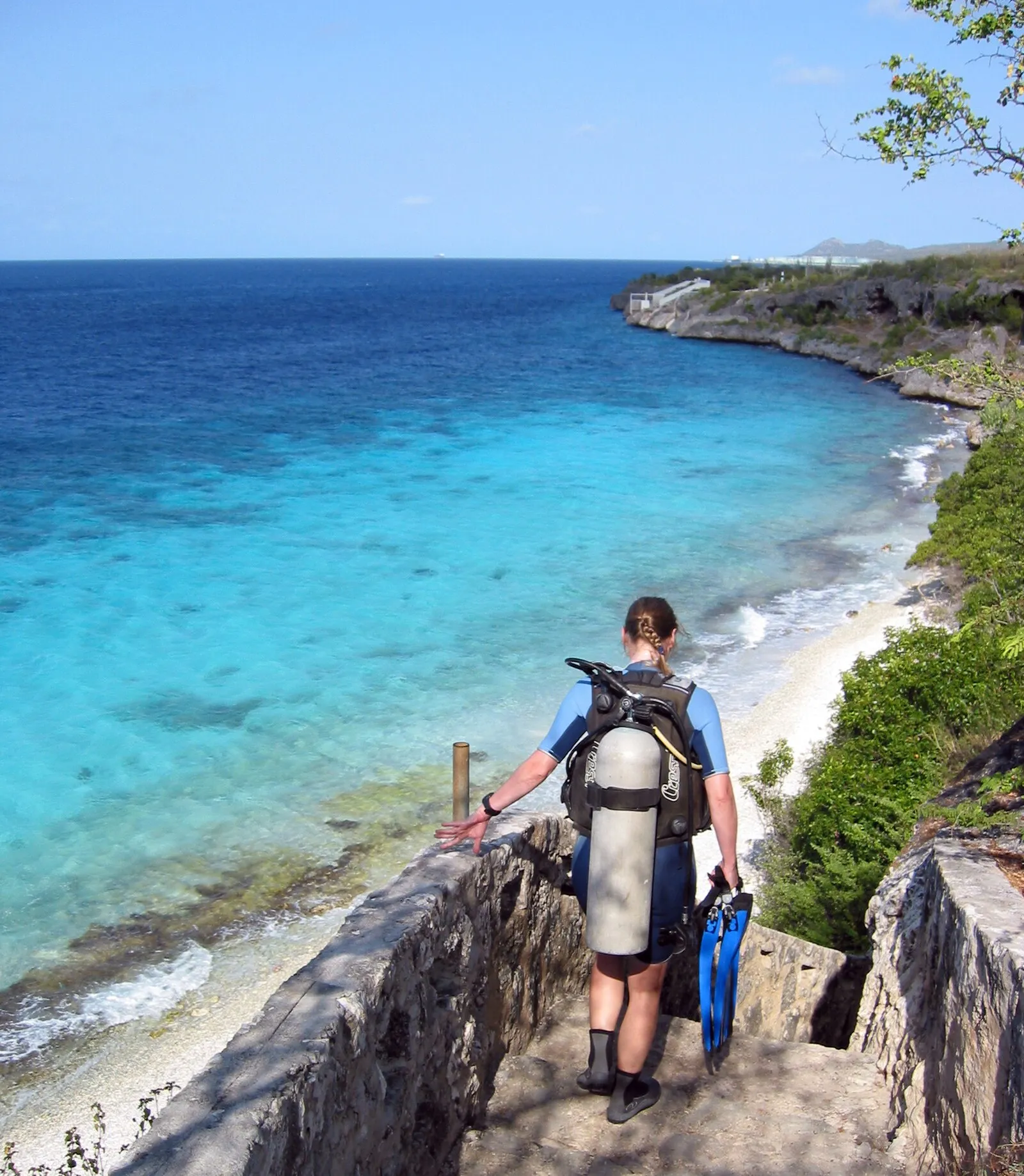
Continuing north, I stopped at 1000 Steps Beach — it's really only 67 limestone steps down to the water, but they feel like a thousand when you're hauling snorkel gear back up in the afternoon heat. The shore entry here leads to one of the island's best reef walls, and I spent an hour watching parrotfish, trumpetfish, and barracuda patrol the coral canyons. The accessibility is remarkable for such a dramatic underwater landscape — wheelchair users can view much of the coastline from the road, and the flat terrain around Kralendijk makes navigating by wheelchair or mobility scooter straightforward.
The sunset from the old slave huts on the southern shore brought a more somber reflection. These tiny stone structures, some barely five feet tall, housed enslaved Africans who harvested salt in brutal conditions during the Dutch colonial period. Standing there with the orange sun setting over the salt flats, the fragrance of sea grape and cactus flowers drifting on the breeze, I felt the weight of history mixing with the beauty of the present. A Polar beer in hand (about $4 at the nearby snack bar), I watched the sky turn pink and gold over an island where the Netherlands Antilles dissolved in 2010, but the commitment to preserving both natural paradise and historical truth has never wavered.
What I Learned: Bonaire taught me that conservation and tourism can coexist beautifully. The $25 marine park fee I paid as a snorkeler isn't a burden — it's a privilege. That money funds rangers, mooring systems, and research that keeps these reefs healthy while the rest of the Caribbean struggles with bleaching and degradation. I left Bonaire with a renewed commitment to seeking out destinations that treat their natural heritage as something sacred rather than something to exploit. The dive-flag license plates here aren't just cute — they're a statement of values that I wish more places would adopt.
Weather & Best Time to Visit
The Cruise Port
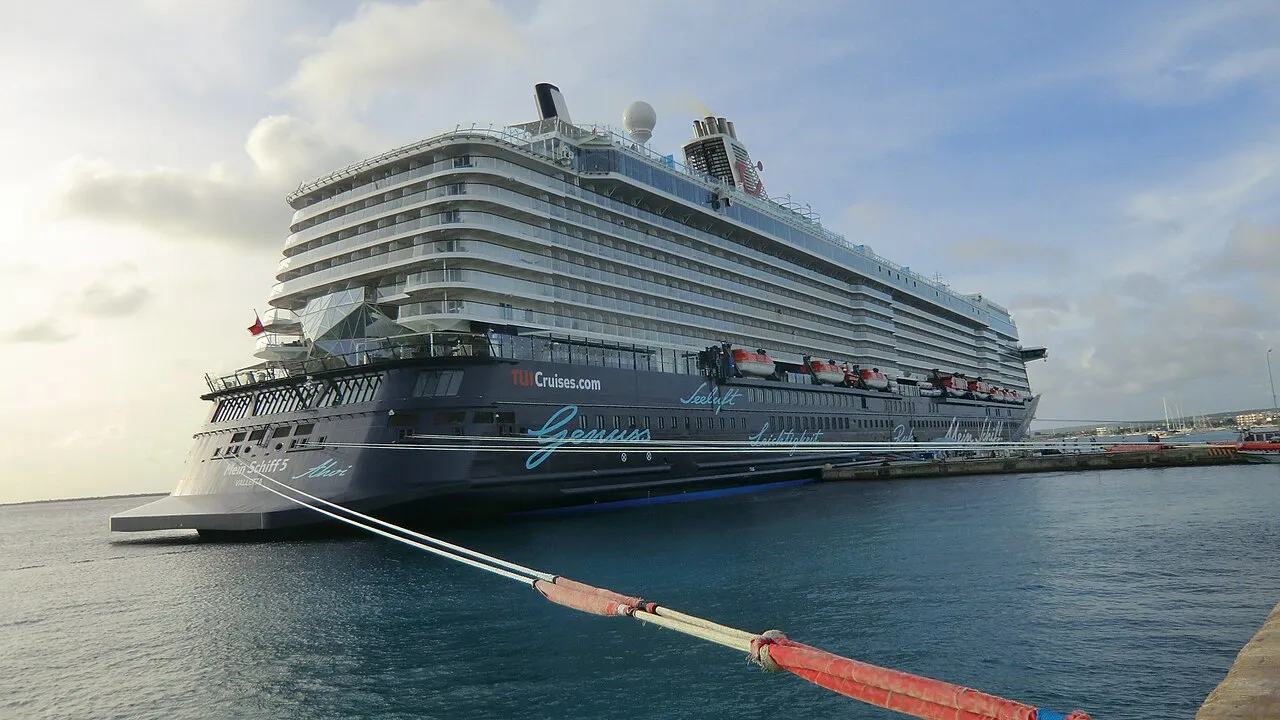
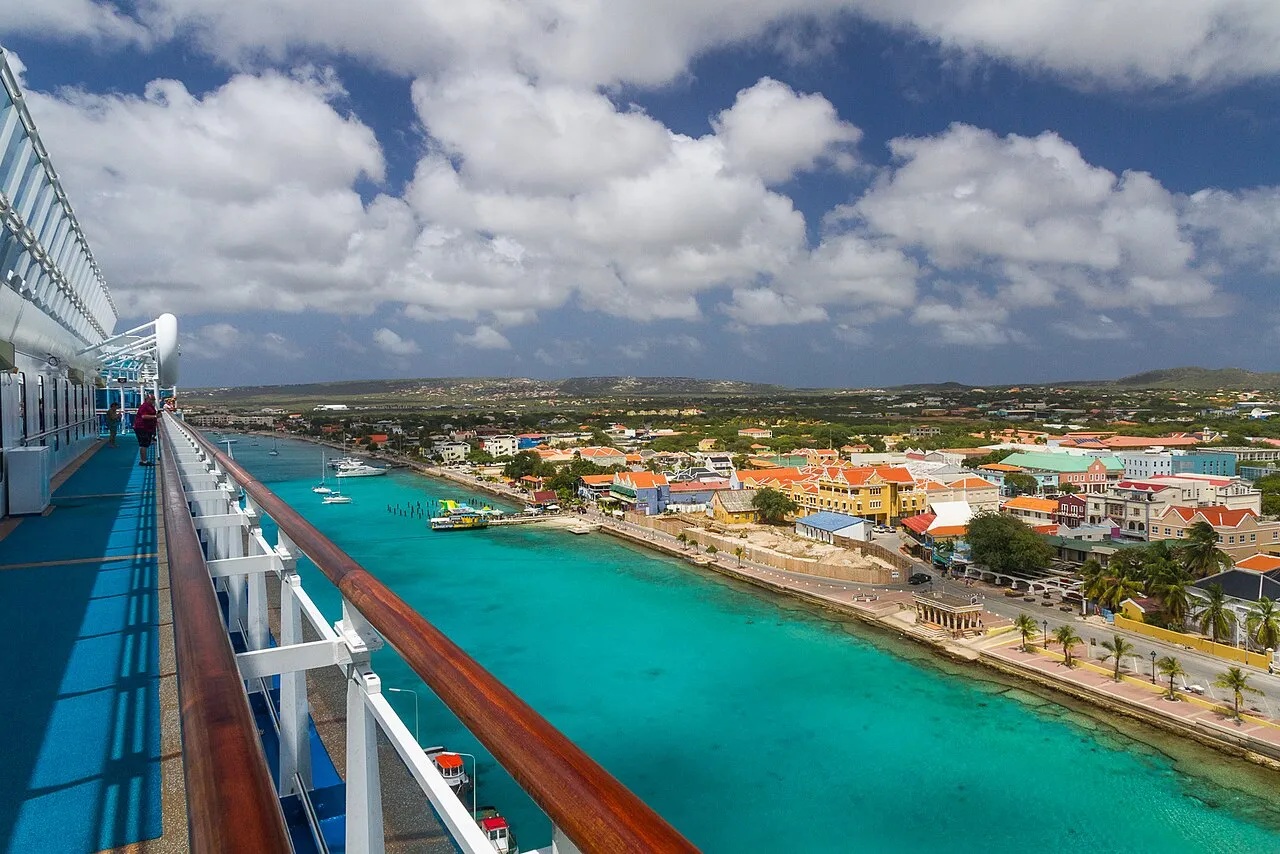
Bonaire's cruise terminal sits at either the North Pier or South Pier in Kralendijk, depending on your ship's size and schedule. Both piers deposit you within a five-minute walk of downtown — you'll literally step off the gangway and find yourself in the heart of the capital. The terminal area has restrooms, a small tourist information booth, and taxi stands. Most days see only one or two ships, so the port never feels overwhelmed. Currency is officially the U.S. dollar (since 2011), so no exchange needed for American travelers. The pier area is flat and accessible, with smooth pavement leading directly into town. Cruise terminal Wi-Fi is spotty, but most waterfront restaurants offer free connectivity with purchase.
Getting Around Bonaire
North or South Pier — literally walk off into town and you're in Kralendijk, the compact capital where everything is within a ten-minute stroll. Water taxis to Klein Bonaire leave every 30 minutes from the town pier, costing $25 round-trip per person. Golf carts ($45-60/day) and scooters ($35-45/day) are the fun way to explore the island — you can circumnavigate the entire 24-mile-long island in half a day and hit all 85+ marked dive sites along the coast. Even if you're just snorkeling, the shore diving here is exceptional.
Taxis are available at the pier but limited in number; negotiate the fare before departing (expect $25-40 for a basic island tour). Rental cars start around $40-50/day from agencies near the pier. The roads are generally good, and driving is on the right side. For those with mobility considerations, the flat terrain around Kralendijk makes wheelchair and mobility scooter navigation straightforward, and several tour operators offer accessible vehicle options if arranged in advance.
- Klein Bonaire: $25 round-trip water taxi, best snorkeling on the island
- Fort Oranje: 5-minute walk from pier, colonial fortress with harbor views (free)
- 1000 Steps Beach: North coast, 15-minute drive (actually 67 steps down to water)
- Pekelmeer Flamingo Sanctuary: South end, 135 acres, free roadside viewing
- Salt Pyramids: Southern coast, massive white mounds at the solar salt works (free to photograph)
- Marine Park: Entire coastline protected since 1979, $25/year snorkeler fee or $45/year diver fee
Bonaire Area Map
Interactive map showing Kralendijk cruise pier, Klein Bonaire, 1000 Steps Beach, and snorkeling spots. Click any marker for details.
Shore Excursions & Independent Options
Bonaire offers excellent choices whether you prefer a ship excursion or going independent. The island's compact size and easy navigation make independent exploration particularly rewarding here, but ship-organized tours provide guaranteed return to the vessel if you're concerned about timing.
Ship Excursion Options
Most cruise lines offer snorkeling trips to Klein Bonaire ($75-95), island tours by bus ($55-70), and combination snorkel-and-sightseeing packages ($90-120). The ship excursion advantage here is the guaranteed return — you won't miss the ship if the water taxi runs late. Diving excursions for certified divers typically run $120-150 for a two-tank dive. Book ahead for dive trips as space is limited.
Independent Exploration
Going independent on Bonaire is easy and often more rewarding. Rent a golf cart ($45-60/day) from vendors near the pier and create your own island circuit. The water taxi to Klein Bonaire ($25 round-trip) departs every 30 minutes and is simple to navigate independently. For snorkeling, you can rent quality gear from dive shops along the waterfront for about $15-20/day.
Best independent itinerary: Morning water taxi to Klein Bonaire for snorkeling (depart 9am, return by noon), lunch at Karel's Beach Bar ($20-30), afternoon golf cart drive south to the flamingo sanctuary and salt pyramids, return via 1000 Steps Beach for a late snorkel. Total independent cost: approximately $100-120 per person including lunch.
Top Excursion Picks
- Klein Bonaire Snorkeling: Ship excursion ~$85 | Independent ~$40 (water taxi + gear rental). The snorkeling rivals anything in the Caribbean.
- Island Safari/Jeep Tour: Ship excursion ~$70. Covers flamingos, salt flats, slave huts, and northern coastline.
- Kayak & Snorkel Combo: Ship excursion ~$95 | Independent ~$50. Paddle mangroves then snorkel the reef.
- Scuba Diving (certified): Ship excursion ~$140 | Independent ~$100. Two-tank dive at famous sites like Hilma Hooker wreck.
- Self-Drive Island Tour: Independent only, ~$50-60. Golf cart around the entire island with stops at your leisure.
Booking advice: Book ahead for diving, especially for the Hilma Hooker wreck dive. Snorkeling trips rarely sell out. Going independent requires no advance booking except for diving — just show up at the pier and negotiate. The 85+ marked dive/snorkel sites mean you'll never feel crowded even without reservations. Water shoes are recommended for rocky shore entries at most dive sites. Bring reef-safe sunscreen — the marine park enforces environmental protections strictly, and conventional sunscreens containing oxybenzone are discouraged to protect the fragile coral ecosystem that makes Bonaire special.
Depth Soundings Ashore
Practical tips before you step off the ship.
Bonaire's laid-back vibe and dive-flag license plates (seriously, every vehicle sports the red-and-white diver down flag) are the island's way of telling you to slow down and live underwater all day. The marine park fee is $45/year for divers or $25/year for snorkelers and non-divers — worth every penny to support the conservation that's kept this place pristine since 1979. Pay at dive shops or the marine park office in Kralendijk; you'll receive a tag for your bag.
Don't touch the coral (hefty fines up to $500), don't feed the fish, don't wear gloves while diving (prevents temptation to touch), and respect the fact that you're swimming through one of the most biodiverse marine ecosystems in the Caribbean. The ABC Islands (Aruba, Bonaire, Curaçao) each have their own character, but Bonaire wins for underwater beauty hands-down. Spanish claimed it in 1499, Dutch took over in 1636, and when the Netherlands Antilles dissolved in 2010, Bonaire became a special municipality of the Netherlands — they take marine conservation seriously here. All 85+ dive sites are marked with yellow stones on shore showing the site name; follow the underwater trail markers to stay on course.
Photo Gallery
Frequently Asked Questions
Q: Best shore snorkeling?
A: Klein Bonaire (water taxi from town, $25 round-trip) or 1000 Steps on the north coast. Visibility often hits 100+ feet. Both are accessible without a boat for Klein Bonaire's shore entry points.
Q: Can I see flamingos?
A: Yes! Pekelmeer Flamingo Sanctuary in the south — one of only 4 Caribbean flamingo breeding sites in the world. The 135-acre sanctuary is viewable from the road (free); bring binoculars for best views of the pink birds amid white salt pyramids.
Q: How many dive sites?
A: 85+ marked sites around the island, most accessible from shore. The entire coastline is a protected marine park with 470+ fish species and 57 coral types. Yellow stones on shore mark each site.
Q: Should I rent a truck or golf cart?
A: Golf carts are cheaper ($45-60/day vs $50-70 for trucks), more fun, and perfectly adequate for Bonaire's flat, paved roads. Book ahead during peak season if you want a specific type.
Q: Crowds?
A: Almost none — this is one of the least crowded Caribbean destinations. Population is only 18,000, and even on cruise ship days the island feels peaceful. Most visitors spread across the coastline.
Q: What does Kralendijk mean?
A: "Coral reef" or "coral dike" in Dutch — perfectly fitting for the capital of the diver's paradise.
Q: Is Bonaire accessible for wheelchair users?
A: The pier and downtown Kralendijk are flat and accessible. Many dive operators offer adaptive diving programs. The coastal road offers scenic views from vehicles for those who can't access beaches.
Q: What currency does Bonaire use?
A: U.S. dollars since 2011 — no exchange needed for American travelers. Credit cards widely accepted.
Last reviewed: February 2026
Bonaire's entire economy runs on diving and snorkeling, which means non-divers may find a full port day stretching thin. The flamingo sanctuary and salt flats are genuinely worth seeing, but you can cover both in under two hours. Shore power and WiFi are limited outside Kralendijk, and most restaurants and shops close early. Bring cash — many local vendors don't accept cards, and the few ATMs in town charge hefty fees.