Captain's Logbook
The ship tied up at Flynn Cruiseport Boston, and I was off the gangway within twenty minutes, standing at Faneuil Hall where American independence first found its voice. The free shuttle had dropped me at the doorstep of democracy itself. I grabbed a coffee from a street cart and walked toward Boston Common, where the red brick line of the Freedom Trail began its 2.5-mile journey through everything that made America possible.
My feet followed that famous red line — sometimes painted, sometimes brick — through cobblestone streets that looked exactly like the textbook illustrations I remembered from school. However, touching the actual buildings changed everything. At Paul Revere's House, I climbed narrow stairs into cramped rooms where the silversmith raised his family before riding through the night on April 18, 1775. The house was built around 1680, making it the oldest structure in downtown Boston. Standing in his parlor, I understood something I hadn't grasped from books: Revere wasn't just a rider. He was a craftsman, father, and organizer who later founded the Revere Copper and Brass Company. The midnight ride was one night. His life was the work of building a new nation.
At Old North Church, I climbed the same steeple where two lanterns hung to signal "one if by land, two if by sea" — warning that British troops were crossing the Charles River. The church still holds Sunday services in those colonial box pews. I sat where patriots sat, running my hands along wood worn smooth by generations of restless fingers. Nevertheless, the real weight came at Granary Burying Ground. Walking between headstones for Samuel Adams, John Hancock, and Paul Revere, I heard tour groups moving through, their chatter fading as people encountered the names they'd only known from signatures on documents. Here were the actual bones of men who risked everything for an idea. October leaves spiraled down through ancient oaks while I read epitaphs I'd memorized in grade school.
Lunch pulled me into the North End — Boston's oldest neighborhood, now thoroughly Italian. The narrow streets smelled of garlic and fresh bread. I found a cash-only restaurant with a line out the door, no website, and lobster ravioli worth the wait. The pasta was $22 and demolished every other lobster ravioli I'd eaten before. Dessert required joining the eternal debate: Mike's Pastry versus Modern Pastry, two cannoli empires facing each other across Hanover Street. I chose Mike's, watched them pipe the ricotta filling fresh so the shell stayed crisp, and committed to returning for Modern next time. The cannoli cost $6 and tasted like Sunday afternoon at my grandmother's house.
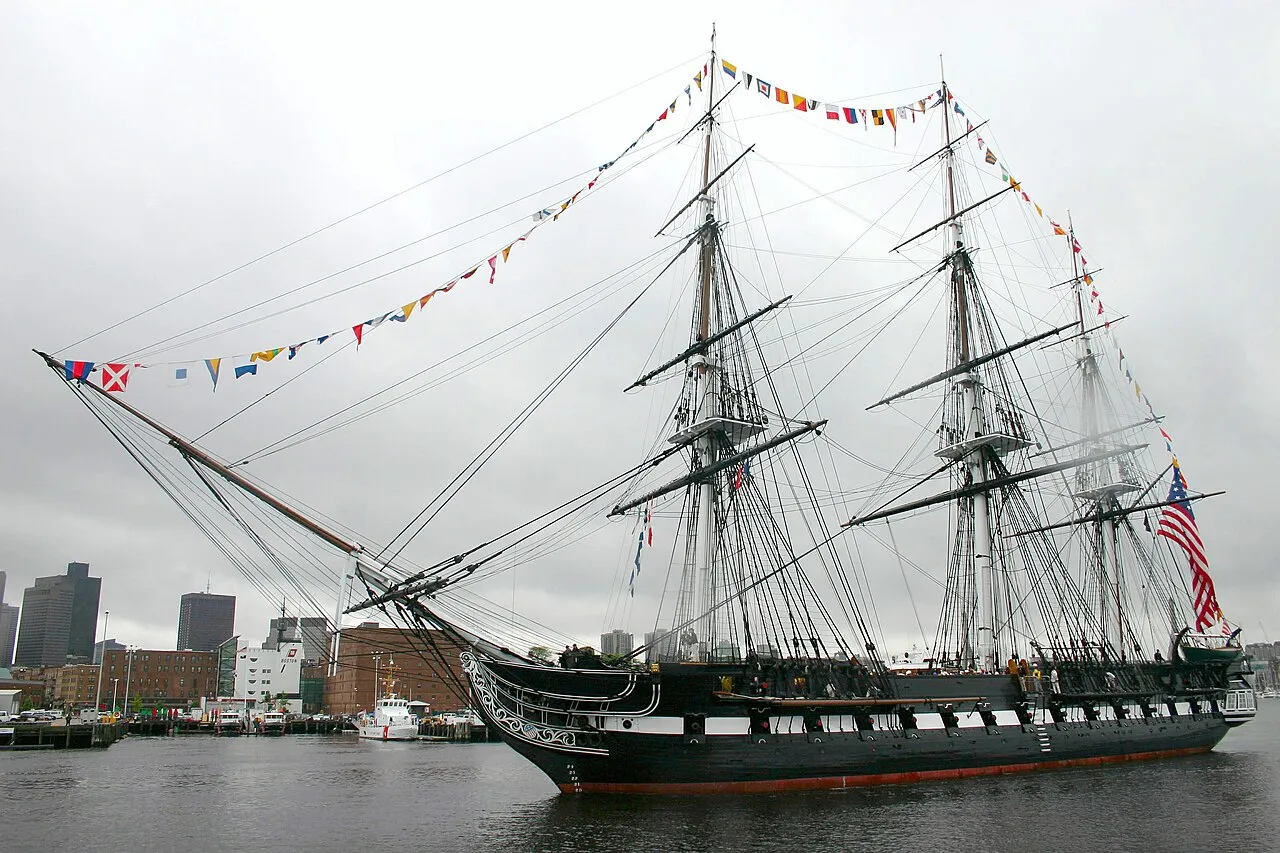
The afternoon brought me to USS Constitution at Charlestown Navy Yard — "Old Ironsides," still a commissioned Navy vessel and the oldest warship afloat in the world. Sailors in period uniforms led tours through gun decks and officer quarters. The ship earned her nickname in 1812 when British cannonballs bounced off her oak hull. I stood on the same planks where sailors once fought, the Boston Harbor stretching behind me, and felt the weight of maritime defense spanning centuries. Yet the surprise was how intimate the ship felt — cramped hammocks, low ceilings, the smell of tar and hemp. These weren't abstract heroes. They were young men sleeping shoulder to shoulder in darkness, defending a nation barely fifty years old.
I ended the day at Fenway Park, taking the ballpark tour even though no game was scheduled. The Green Monster loomed over left field — 37 feet of hand-operated scoreboard and legend. The guide showed us the Pesky Pole, pointed out the lone red seat marking the longest home run ever hit here, and let us walk onto the warning track. Baseball fans pay $30 for this; even non-fans find the atmosphere worth the price. Something about a stadium that's survived since 1912 makes modern sports arenas feel disposable.
What I learned in Boston changed how I think about American independence. The textbooks give you dates and signatures. Walking the Freedom Trail gives you cramped houses and church pews and headstones leaning after centuries of New England winters. Revolution wasn't abstract principle — it was Paul Revere leaving his family in a two-room house, not knowing if he'd return. It was colonists packing into Old South Meeting House until 5,000 people couldn't fit, then marching to the harbor to dump tea. Boston doesn't just preserve that story. It lets you walk through it, touch it, feel the weight of what ordinary people did when they chose to be extraordinary.
The Cruise Port
Location Reality: Flynn Cruiseport Boston (Black Falcon Terminal) sits in South Boston's Seaport District, about 2 miles from downtown. It's an industrial port area — you won't walk to attractions. The terminal handles basics: check-in, restrooms, ATMs, and baggage claim. Most cruise lines provide free shuttles to Faneuil Hall, running every 15-30 minutes.
Getting Downtown: Free ship shuttle is the easiest option (20 minutes to Faneuil Hall). Taxis queue outside ($12-18 to downtown). Rideshares (Uber/Lyft) are plentiful. The Silver Line rapid bus connects to South Station for about $2. Wheelchair accessible shuttles and taxis available.
Accessibility: Terminal is wheelchair accessible. Most downtown attractions have good accessibility, though cobblestone streets on the Freedom Trail can be challenging. MBTA has accessible stations marked on maps. Low stamina level for Faneuil Hall and waterfront; moderate for full Freedom Trail; high stamina level for Bunker Hill Monument climb (294 steps).
Currency: US Dollar ($). Credit cards accepted everywhere. ATMs throughout downtown.
Getting Around
Walking: Downtown Boston is extremely walkable once you arrive by shuttle. The Freedom Trail covers 2.5 miles on mostly flat terrain with some cobblestone sections. Comfortable walking shoes essential — historic brick sidewalks punish sandals. Low stamina level for waterfront exploring; moderate for full Freedom Trail.
The T (MBTA): Boston's subway system connects major attractions. Red, Orange, Green, and Blue lines fan out from downtown. Single ride costs $2.40 with CharlieCard or tap contactless. Silver Line bus connects Seaport to downtown in 15 minutes, often free. Wheelchair accessible stations marked on system maps.
Ship Excursions vs Independent: Ship excursions to Freedom Trail, Salem, or Plymouth cost $60-150 and guarantee return. Go independent for downtown Boston — shuttles are free, the Freedom Trail is self-guided, and you control your schedule. Book ahead for Fenway tours ($30), whale watching ($55-70), or Salem day trips if going independent. Ship excursions make sense for distant destinations like Plymouth or Cape Cod where transportation is complicated.
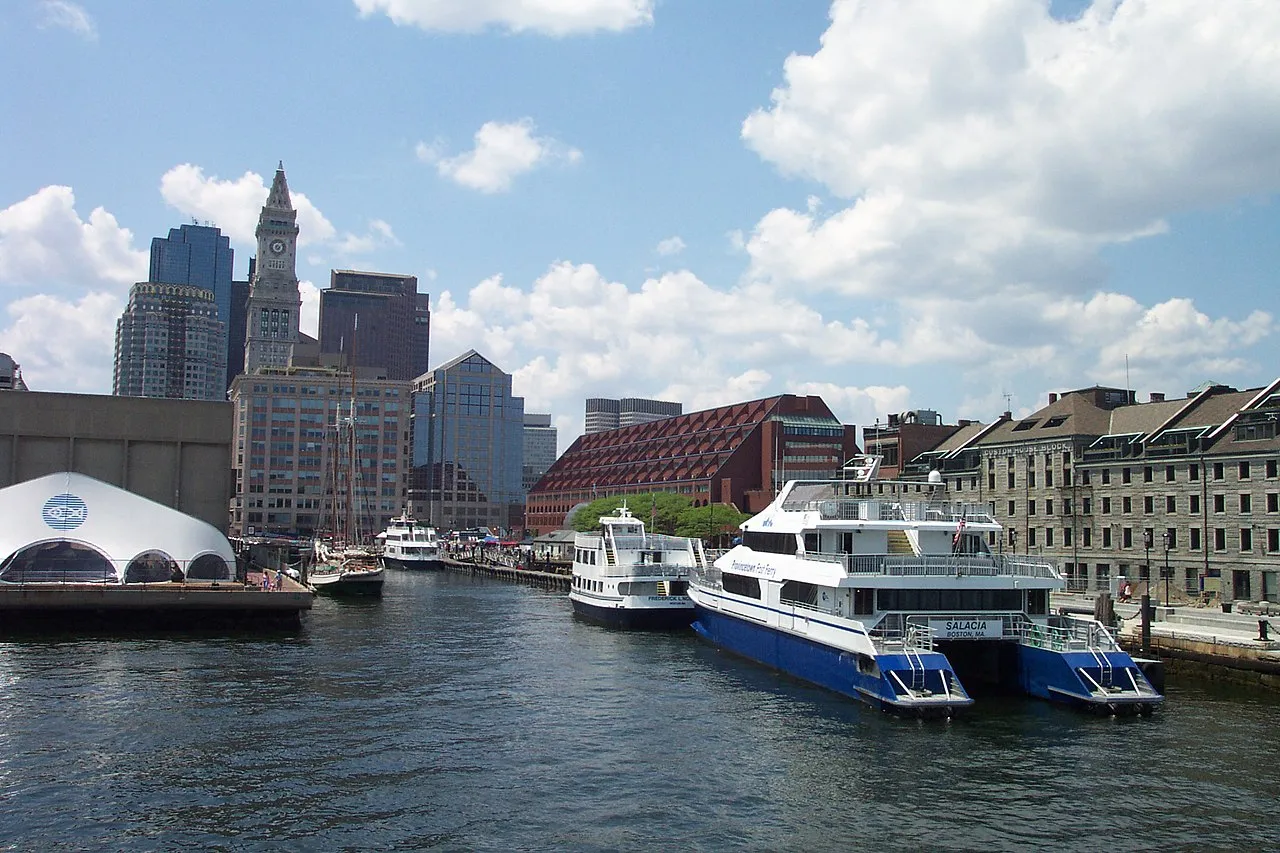
Taxis and Rideshares: Plentiful throughout Boston. Expect $12-18 from terminal to downtown, $25-35 to Fenway or Cambridge. Water taxis ($15-20) run from Seaport to Long Wharf — scenic and appropriately nautical.
Hop-On Hop-Off: Trolley tours loop past major sites with narration. Duck boats ($48-55) drive through the city then splash into the Charles River. Touristy but fun. Book ahead during peak season as they fill up.
Boston Port Map
Interactive map showing cruise terminal, Freedom Trail route, North End, and major attractions.
Excursions & Activities
Freedom Trail Self-Guided Walk (Free, 3-5 Hours)
The essential Boston experience. Follow the 2.5-mile red brick/painted line connecting 16 Revolutionary War sites: Boston Common, Massachusetts State House, Park Street Church, Granary Burying Ground, King's Chapel, Old South Meeting House, Old State House, Faneuil Hall, Paul Revere's House, Old North Church, and USS Constitution. Free to walk; individual sites charge $5-15 entry. Go independent — the trail is well-marked and self-explanatory. Download the official app or grab a map at Boston Common visitor center. Book ahead for Old North Church tower climb ($8) during peak season. Moderate stamina level with flat terrain but cobblestones.
Salem Witch Trials Day Trip ($40-80 tour or $15 train, 4-6 Hours)
Witch trial infamy dominates, but Salem offers charming seaport architecture, maritime museums, and House of the Seven Gables. Ship excursions cost $70-100 and guarantee return. Go independent by commuter rail from North Station (30 minutes, $15 round trip) if you're comfortable with timing. Book ahead for Salem Witch Museum ($15) which fills up in October. Moderate stamina level walking cobblestone streets.
Fenway Park Tour ($30, 1 Hour)
America's oldest ballpark (1912) — even non-baseball fans appreciate the atmosphere. See the Green Monster, Pesky's Pole, hand-operated scoreboard, and walk on the warning track. Tours run regularly throughout the day. Book ahead online as tours fill up, especially during baseball season. Go independent — easy to reach by T (Green Line to Kenmore). Low stamina level with some standing.
New England Aquarium ($34 adult, 2-3 Hours)
Giant Ocean Tank spirals four stories with sea turtles, sharks, and rays. Harbor seal exhibit outside draws crowds. Excellent air-conditioned break from summer heat. Book ahead online to skip ticket lines. Located at Long Wharf, walkable from Freedom Trail. Low stamina level with elevator access.
Whale Watching ($55-70, 3-4 Hours)
Stellwagen Bank National Marine Sanctuary hosts humpbacks, finbacks, and occasionally right whales from April through October. Ship excursions cost $80-100. Go independent by booking directly with Boston Harbor Cruises or New England Aquarium whale watches for $55-70. Book ahead — peak season trips sell out days in advance. Moderate stamina level; seasickness possible.
Plymouth & Mayflower ($100-150 ship / $35 train, 5-6 Hours)
Plymouth Rock (smaller than expected), Mayflower II replica, and Plimoth Patuxet living museum. Ship excursions guarantee return and include transportation. Go independent by commuter rail if you're confident with schedules — trains take 1 hour each way. Book ahead for Plimoth Patuxet ($32). Low to moderate stamina level.
Local Food & Drink
New England Clam Chowder: Creamy, not tomato-based (that's Manhattan style). Try at Faneuil Hall food court, Union Oyster House, or Legal Sea Foods. $8-15 per bowl. Essential.
Lobster Roll: Hot with butter or cold with mayo — both camps are fierce. Neptune Oyster, James Hook, or any waterfront location. $25-40 depending on seasonal pricing.
North End Italian: Boston's Little Italy offers red-sauce joints where cash is still king. Giacomo's, Trattoria Il Panino, or any place with a line. Pasta dishes $18-30.
Cannoli: Mike's Pastry vs Modern Pastry — pick a side in the eternal debate. Ricotta piped fresh so shells stay crisp. $5-7 each.
Samuel Adams: Boston's hometown brewery. Available everywhere, but the brewery tour in Jamaica Plain includes tastings ($5 suggested donation).
Current Notices
Shuttle Timing: Note your last shuttle return time. Missing it means taxi to industrial port area. Most shuttles run until 1-2 hours before departure.
North End Cash: Many Italian restaurants are cash-only or add credit card fees. ATMs are around, but plan ahead.
Boston Drivers: Crosswalks are suggestions. Look both ways even with the walk signal. Pedestrians have legal right-of-way, but self-preservation trumps law.
Depth Soundings
The Cons: Six-hour port calls force ruthless prioritization. You can't do Freedom Trail, North End lunch, and Fenway — pick two. Although the city is compact, each experience deserves time. Yet if you accept you're coming back someday, Boston rewards whatever slice you choose.
Weather is unpredictable. October offers gorgeous foliage but layers are essential. Summer can be muggy. However, most attractions are walkable and indoor options abound for weather breaks.
Cobblestones punish wrong footwear. The Freedom Trail crosses brick sidewalks, uneven colonial streets, and genuine 18th-century cobblestones. Nevertheless, comfortable walking shoes transform the challenge into atmosphere — the irregular surfaces are part of walking where revolutionaries walked.
Prices run high for a US port. Lobster rolls hit $35-40, clam chowder $12-15, cannoli $6 each. However, the Freedom Trail itself is free, Boston Common costs nothing, and people-watching at Faneuil Hall doesn't require spending. Budget carefully and splurge strategically.
Practical Information
Currency: US Dollar ($). Cards accepted everywhere. ATMs plentiful.
Language: English. Boston accent is real — "pahk the cah."
Tipping: 18-20% at restaurants. $1-2 per drink at bars. $2-5 for taxi/rideshare.
Weather: Variable. Summer 70-85°F (21-29°C), humid. Fall 45-65°F (7-18°C), gorgeous foliage. Spring unpredictable. Winter cold and snowy.
Best Time: September-October for fall foliage and pleasant walking weather. May-June for comfortable temperatures before summer humidity.
Power: US standard (Type A/B), 120V. No adapter needed for US devices.
Photo Gallery
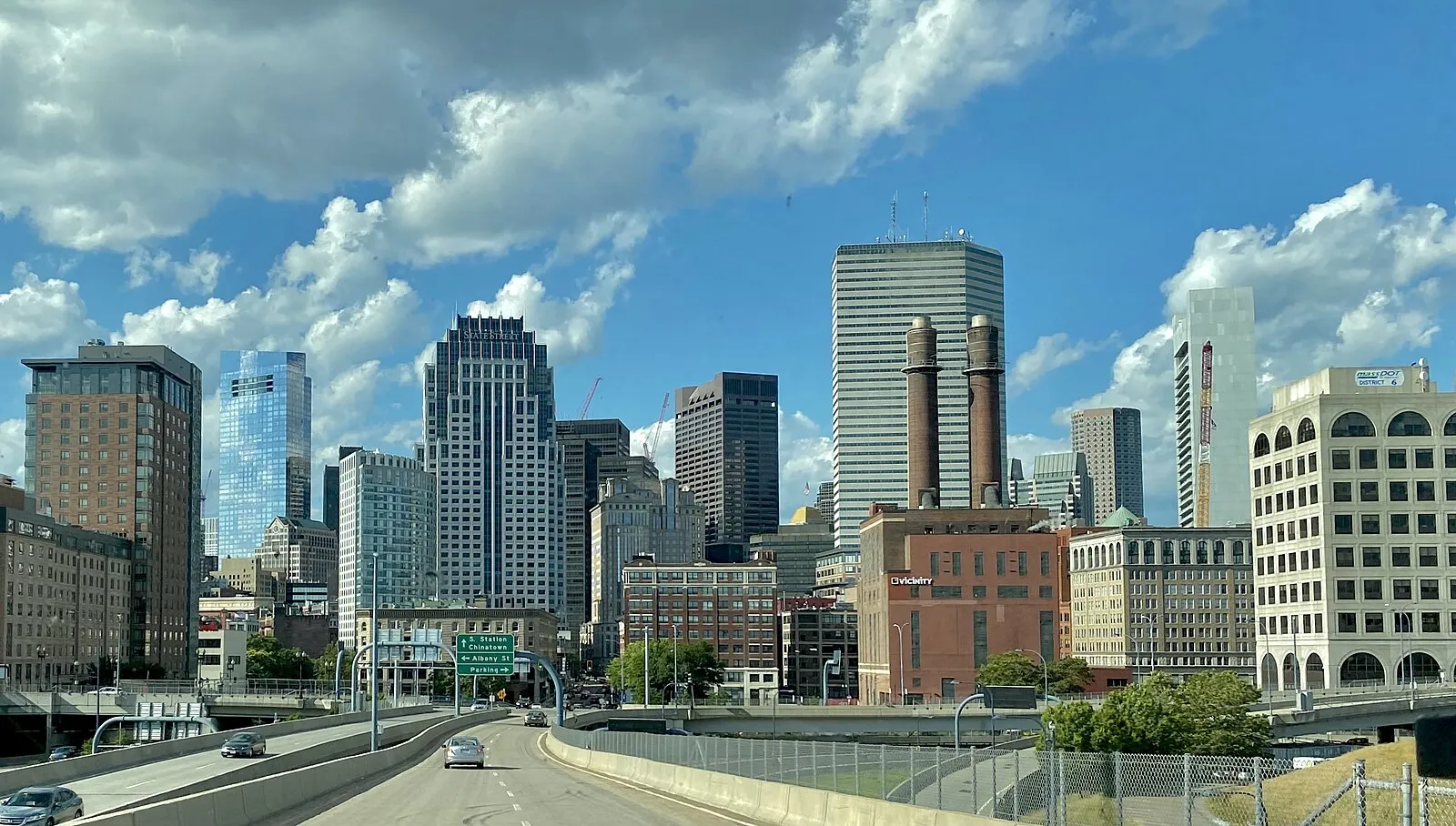
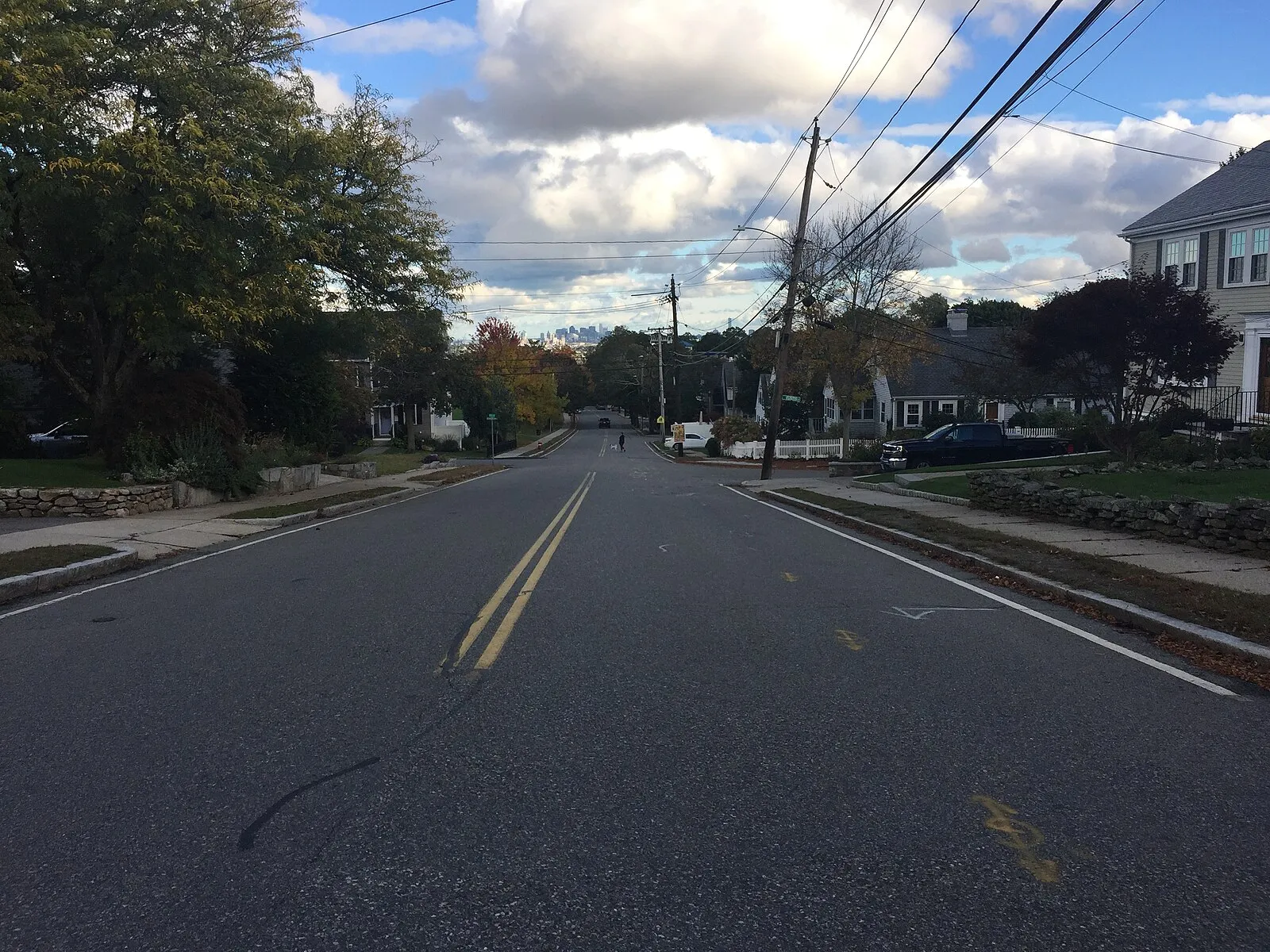
Frequently Asked Questions
Q: Is Boston worth it for a short port call?
A: Yes. Even with six hours, the Freedom Trail delivers concentrated American independence in walkable blocks. You won't see everything, but you'll understand why Boston earned the "Cradle of Liberty" nickname.
Q: What's the single best thing to do?
A: Walk the Freedom Trail. It's free, iconic, and connects sixteen "I learned about this in school" moments. If you can only do one thing, follow the red brick line from Boston Common to USS Constitution.
Q: How long does the Freedom Trail take?
A: Walking without stops: 90 minutes. With touring sites and photos: 3-5 hours. Most people settle around 3 hours, hitting highlights without exhausting themselves.
Q: Should I book excursions through the ship?
A: For downtown Boston, go independent — free shuttles, self-guided Freedom Trail, flexible schedule. Ship excursions make sense for Plymouth, Cape Cod, or whale watching where transportation is complicated and guaranteed return matters.
Q: Mike's or Modern Pastry?
A: Both are excellent. Pick whichever has the shorter line, or commit to trying both and declaring a winner. The ricotta gets piped fresh at both — shells stay crisp, fillings creamy. You can't lose.
Q: Do I need to book anything in advance?
A: Whale watching, Fenway tours, and museum timed entries sell out or cap attendance — book ahead. Freedom Trail, Faneuil Hall, and North End wandering need no reservations. Boston rewards spontaneity.
Last reviewed: February 2026
Until I have sailed this port myself, these notes are soundings in another's wake. This guide draws from published accounts, fellow cruisers, and careful research — but it does not yet carry the weight of my own anchor. I am working my way through the world's cruise ports, and this page awaits that day.