
Captain's Logbook
I stepped onto the Cagliari waterfront and immediately felt the pull of something ancient rising above me. The medieval Castello quarter crowned the hill like a stone fortress watching over the Mediterranean, its honey-colored towers catching the morning sun. Sardinia has been inhabited for 8,000 years, and Cagliari wears that weight with the same comfortable ease as an old fisherman wears his sea-salt clothes. The cruise terminal sat close enough to the old town that I could walk into 3,000 years without waiting for a shuttle or hailing a taxi. This was going to be a good day.
My feet carried me uphill through the Marina quarter where pastel buildings lined narrow streets and laundry hung from wrought-iron balconies like colorful flags announcing daily life. The smell of espresso drifted from corner cafés, and I stopped at a tiny bar for a €1.50 cappuccino that tasted better than any coffee I'd had in a week. The barista smiled and asked where I was from. However, the real magic waited above — the Bastione di Saint Remy, a massive limestone terrace built in the early 1900s that offers panoramic views I still dream about. From that height, the entire Gulf of Cagliari spread before me — turquoise water stretching to distant mountains, the salt flats where pink flamingos gather, and the endless sweep of Poetto Beach curving toward the horizon.
I climbed higher into the Castello quarter, the medieval heart of Cagliari enclosed by ancient walls. Torre dell'Elefante (€5 admission) rose above me — a limestone tower built by the Pisans in 1307, named for the small carved elephant near its base. I paid to climb to the top where I could see for miles in every direction, the Mediterranean wind whipping through open windows that once served archers defending against invaders. Nevertheless, the real treasure was simply wandering the medieval streets — every turn revealed another carved doorway, another hidden church, another glimpse of lives lived inside walls that have sheltered Sardinians for seven centuries.
The Cathedral of Santa Maria anchored the center of the Castello quarter, its Romanesque-Gothic facade rising from a plaza where locals sat on ancient stone benches. Entry was free, and I stepped inside to find cool darkness and the smell of incense and centuries. The marble pulpits came from the Duomo in Pisa, installed here in 1312, and I ran my fingers along carvings that craftsmen had shaped before Columbus was born. Yet the underground crypt held even older secrets — sarcophagi and relics from saints whose names I didn't recognize but whose devotees had clearly loved them fiercely across the ages.
After the cathedral, I descended to the Roman Amphitheatre, carved into the hillside rock during the 2nd century AD. The €5 admission let me wander freely through stone seats where 10,000 spectators once watched gladiators and theatrical performances. The acoustics still worked perfectly — I whispered from the stage and heard my voice carry up to the highest seats. Although the structure lacks the grandeur of Rome's Colosseum, there's something intimate about standing where Sardinian Romans gathered two thousand years ago, the same Mediterranean sun warming the same limestone seats.
Lunch pulled me back down to the Marina quarter where I found a trattoria with handwritten menus and no English translation. I pointed at what the family next to me was eating and received malloreddus — tiny Sardinian pasta shells in a sausage and saffron sauce that tasted like Sunday dinner at a grandmother's house. The meal cost €12 including water and bread, and I sat for an hour watching street life flow past the window. Sardinian food is honest — no fuss, no molecular gastronomy, just ingredients treated with respect by people who have been cooking this way for generations.
The afternoon took me to Poetto Beach, just 800 meters from the cruise terminal — a ten-minute walk that felt like entering a different world. Eight kilometers of white sand stretched toward the salt flats, the water so clear and turquoise it looked artificial. I rented a beach chair for €8 from one of the stabilimenti (beach clubs) and swam in water warm enough to make me forget I was in a major city. The Devil's Saddle mountain rose at the far end of the beach, its distinctive profile watching over swimmers and sunbathers. However, the real surprise waited in the nearby Molentargius lagoon — thousands of pink flamingos standing in shallow water like feathered sculptures. Wild flamingos. In a city. I couldn't stop photographing them.
What I learned in Cagliari changed how I think about Mediterranean ports. Everyone rushes to Barcelona and Rome while places like this sit quietly waiting to be discovered. Sardinia has its own language, its own food, its own pace — the island was so isolated for so long that it developed a culture unlike anywhere else in Italy. The lesson I carried back to the ship was simple: the smaller ports often hold the biggest treasures. Cagliari didn't need to impress me with grand monuments or famous museums. It impressed me by being itself — ancient, authentic, and utterly unconcerned with what tourists might expect.
The Cruise Port
Location Reality: Cagliari's cruise terminal (Molo Ichnusa or Molo Rinascita) sits at the edge of the Marina quarter, within easy walking distance of the old town. You step off the ship and within ten minutes you're climbing medieval streets. No shuttle required unless you want to reach distant Sardinian shores.
Getting to the Old Town: Simply walk. Exit the terminal and turn left along the waterfront. The Marina quarter begins immediately; the Castello quarter rises above you on the hill. Signs point toward Bastione di Saint Remy and the major attractions. Wheelchair accessible routes available along the lower Marina streets.
Accessibility: Terminal is wheelchair accessible. The Marina quarter is flat and manageable. The Castello quarter involves steep hills and stairs — the elevator at Bastione di Saint Remy helps but may not operate in off-season. Low stamina level for waterfront walking; moderate for Marina district; high stamina level for Castello climbs.
Currency: Euro (€). Credit cards accepted at most businesses. ATMs throughout the Marina quarter.
Getting Around
Walking: The best way to experience Cagliari. The historic center is compact — you can walk from the cruise terminal to the Castello quarter in 20-30 minutes (uphill). Poetto Beach is just 800 meters from the terminal. Cobblestones and steep stairs in older sections require sturdy shoes. Low stamina level for waterfront; moderate for full exploration; high for tower climbs.
Ship Excursions vs Independent: Ship excursions to Nora ruins or Costa Smeralda cost €60-150. Go independent for Cagliari itself — everything is walkable from the port. Book ahead only for guided archaeological tours or winery visits. Ship excursions make sense for distant attractions where transportation and timing are complicated.
Local Buses: CTM buses connect the old town to Poetto Beach and outlying areas. Single ride €1.30 from tabacchi shops. Line PQ reaches Poetto Beach every 15-20 minutes. However, most visitors find walking adequate for central sights.
Taxis: Queue near the port entrance. €8-15 to Poetto Beach or the Roman Amphitheatre. Useful for hill-averse travelers or returning to the ship with tired legs.
Tourist Train: A small train loops through the old town (€5) providing a narrated overview. Good for orientation or mobility-limited visitors. Departs from the port area.
Cagliari Port Map
Interactive map showing cruise terminal, Bastione di Saint Remy, Castello quarter, and Poetto Beach.
Excursions & Activities
Bastione di Saint Remy & Castello Walk (Free, 2-3 Hours)
The essential Cagliari experience. Climb (or take the elevator) to this massive limestone terrace for panoramic Gulf views, then wander the medieval Castello quarter with its towers, cathedral, and ancient streets. Free to explore. Go independent — the walk from the port takes 20-30 minutes uphill. Book ahead not required. Moderate to high stamina level depending on how many stairs you tackle.
Torre dell'Elefante & Torre di San Pancrazio (€5 each, 30-45 min each)
Medieval Pisan towers from 1305-1307 offering the best elevated views in Cagliari. Climb narrow stairs to lookout platforms where defenders once watched for invaders. Go independent — both towers are in the Castello quarter. Book ahead not required. High stamina level with steep stairs. Worth the climb for photographers.
Roman Amphitheatre (€5, 1 Hour)
Second-century AD amphitheatre carved into hillside rock, seating 10,000 spectators. Excellent acoustics and atmospheric ruins. Go independent — 15-minute walk from the port. Book ahead not required. Low stamina level once inside. Still hosts occasional concerts in summer.
Poetto Sands (Free, 2-4 Hours)
Eight kilometers of white sand and turquoise water just 800 meters from the cruise terminal. Beach chair rentals €8-15 at stabilimenti. Cafes and restaurants line the promenade. Go independent — easy walk from the port. Book ahead not required. Low stamina level. Perfect for afternoon relaxation after morning sightseeing. Water is swimmable May-October.
Molentargius Flamingo Lagoon (Free, 1-2 Hours)
Thousands of wild pink flamingos in urban lagoons near Poetto Beach. Free viewing from trails and observation points. Go independent — walk past Poetto Beach to the lagoon paths. Book ahead for guided birdwatching tours (€10-20). Low stamina level on flat trails. Binoculars enhance the experience.
Nora Archaeological Site (€60-100 ship / €8 plus transport independent, 3-4 Hours)
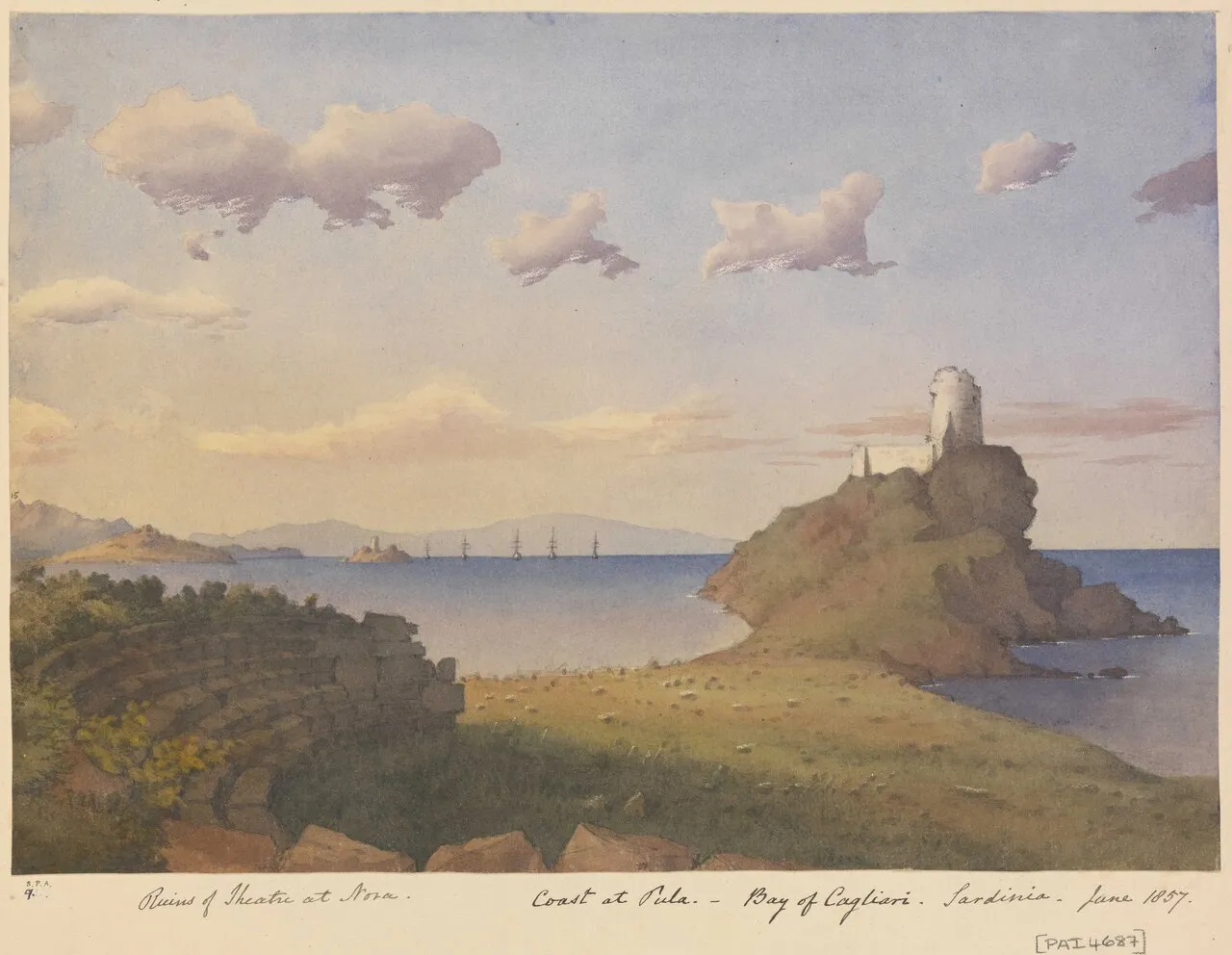
Phoenician and Roman ruins on a peninsula 40km from Cagliari. Temple remains, mosaics, amphitheatre, and ocean views. Ship excursions include transportation and guarantee return. Go independent by rental car or organized tour (€30-50). Book ahead for tours during peak season. Moderate stamina level with outdoor walking.
Sardinian Wine Country (€80-150 ship, 4-5 Hours)
Visit wineries producing Cannonau, Vermentino, and other Sardinian varietals. Rolling countryside and rustic cantinas. Ship excursions include transportation and guarantee return to the ship. Independent visits require car rental. Book ahead through ship or local tour operators. Low stamina level. Perfect for wine enthusiasts interested in Mediterranean island varieties.
Local Food & Drink
Malloreddus: Small Sardinian pasta shells with saffron, typically served with sausage ragù. €10-14. The island's signature pasta.
Culurgiones: Stuffed pasta pockets with potato, pecorino, and mint. €12-15. Like ravioli but more interesting.
Porceddu: Slow-roasted suckling pig, Sardinia's ceremonial dish. €18-25. Rich and crispy-skinned.
Seadas: Fried pastry filled with cheese and drizzled with honey. €6-8. The perfect finish.
Cannonau Wine: Sardinia's robust red grape, related to Grenache. €4-7 per glass. Pairs perfectly with the meat-heavy cuisine.
Current Notices
Siesta Hours: Many shops close 1-4pm. Churches may close midday. Plan museum visits for morning or late afternoon.
Sun Protection: Mediterranean sun is fierce, especially at Poetto Beach. Sunscreen, hat, and water essential even in Transitional Seasons.
Tower Closures: Medieval towers occasionally close for restoration. Check locally on arrival.
Depth Soundings
The Cons: The Castello quarter involves serious hill climbing. Although an elevator helps at Bastione di Saint Remy, it doesn't always operate and doesn't eliminate all stairs. Yet the payoff — panoramic views and medieval atmosphere — justifies the effort for those who can manage it.
English is less common here than in major Italian ports. However, pointing at menus and basic Italian phrases work perfectly. Nevertheless, restaurant staff near the port generally speak enough English for ordering.
Cagliari lacks the "wow factor" monuments of Rome or Florence. But that's precisely its appeal — authentic Sardinian life without the overwhelming crowds and inflated prices of more famous destinations. What it lacks in grandeur it delivers in genuine atmosphere and welcoming locals.
Poetto facilities cost money — chair rentals €8-15. However, the sand and water are free, and the stabilimenti provide clean restrooms and food service. The value compared to similar Mediterranean spots is excellent.
Practical Information
Currency: Euro (€). Cards widely accepted. ATMs in Marina quarter.
Language: Italian and Sardinian. English limited but sufficient at tourist sites. Basic Italian appreciated.
Tipping: Round up at cafés. 5-10% at restaurants. Not expected but appreciated.
Weather: Mediterranean climate. Summer 25-35°C (77-95°F), winter 8-15°C (46-59°F). 300+ sunny days annually.
Best Time: May-June and September-October for pleasant temperatures. July-August hot but swimming conditions are prime.
Power: European plugs (Type C/F), 230V. Adapter needed for US/UK devices.
Photo Gallery
Frequently Asked Questions
Q: Is Cagliari worth visiting on a cruise stop?
A: Yes. Cagliari offers Sardinian authenticity without tourist crowds — medieval Castello quarter, Roman ruins, flamingos in urban lagoons, and excellent beach just steps from the port. It's one of the Mediterranean's underrated gems.
Q: Can you walk to Poetto Beach from the cruise port?
A: Yes. The beach is only 800 meters from the terminal — about a 10-minute walk. Eight kilometers of white sand and turquoise water await.
Q: What's the best thing to do in Cagliari?
A: Start at Bastione di Saint Remy for panoramic views, then explore the medieval Castello quarter. Save beach time for afternoon when the morning sightseeing is done.
Q: Should I book excursions through the ship?
A: For Cagliari itself, go independent — everything is walkable from the port. Ship excursions make sense for Nora archaeological site or wine country where transportation is complicated and guaranteed return matters.
Q: Are the flamingos really there?
A: Yes. Thousands of wild pink flamingos live year-round in the Molentargius lagoon near Poetto Beach. One of Cagliari's most unexpected attractions.
Q: Is the climb to Castello quarter difficult?
A: The hills are real. Allow 20-30 minutes from the port with rest stops. An elevator at Bastione di Saint Remy helps. Those with mobility issues should consider taxis or the tourist train.
Last reviewed: February 2026
This guide draws on firsthand experience from a 2024 visit, supplemented by fellow cruisers and careful research.