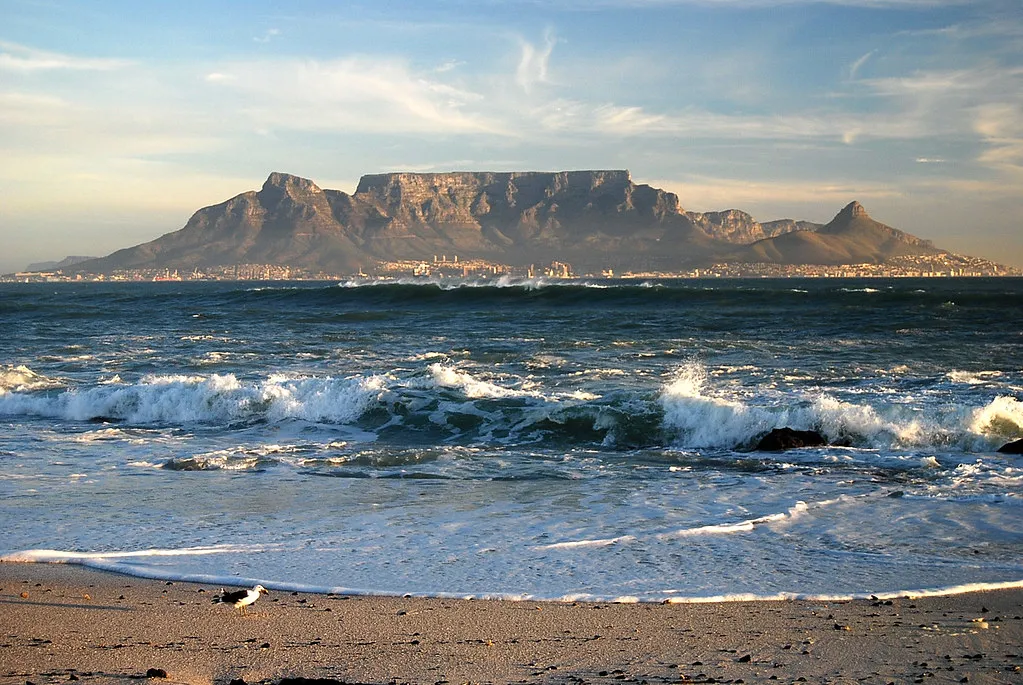
I saw Table Mountain before I saw the city. It rose from the sea as our ship rounded the coast, flat and immense and ancient, clouds spilling over its edges like a tablecloth being laid for dinner. Locals call it exactly that — the tablecloth. I stood on deck gripping the railing, and my breath caught. I have seen dramatic coastlines before — I have gasped at the Norwegian fjords and marveled at the cliffs of Santorini — but nothing had prepared me for the way Cape Town announces itself. The mountain dominates everything. Ocean stretches on three sides. The light hits the harbor in a way that photographers dream about and everyone else simply stares at, unable to look away.
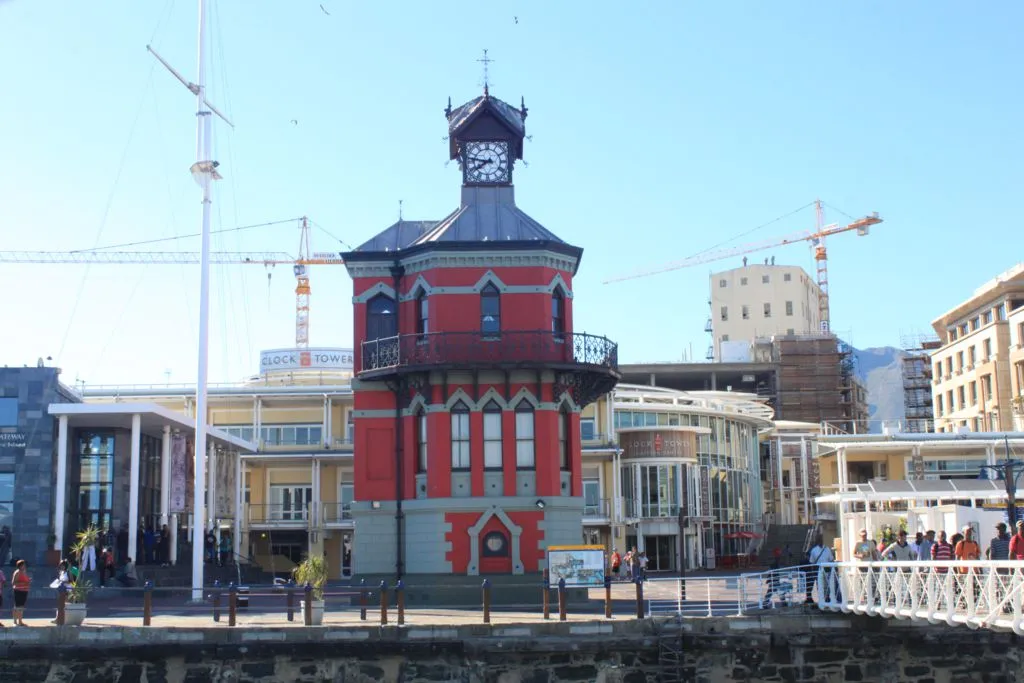
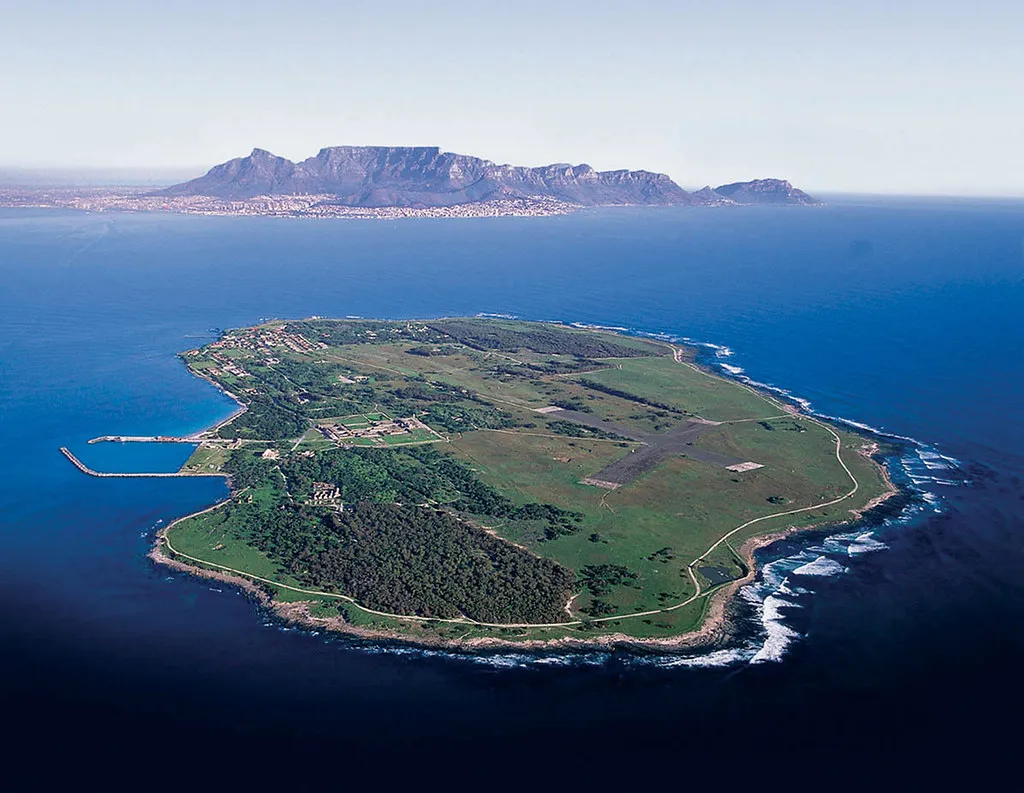
We docked at the V&A Waterfront, and I was grateful for the location. The cruise terminal sits in the beating heart of Cape Town's tourist district, so I stepped off the ship and found myself already surrounded by life — restaurants spilling onto terraces, craft stalls, the harbor sparkling in the morning sun. I could see Robben Island from where I stood, a dark shape seven kilometers offshore, and I felt my stomach tighten. I had read the accounts, studied the photographs, but knowing that Nelson Mandela had been held there — visible from the city, close enough to almost touch yet impossibly far away — gave the view an emotional weight that caught me off guard.
I took the ferry to Robben Island that morning. The crossing took thirty minutes, and the guide who met us on the island was a former political prisoner himself. He walked us through the corridors where he had lived, where he had suffered, and he spoke without bitterness. I want you to understand what that means: this man had been imprisoned for his beliefs, had lost years of his life in that place, and he stood before us offering his testimony with a grace I am not sure I could manage. When we reached Mandela's cell — a space barely larger than a closet, concrete walls, a thin mat on the floor — I felt tears sting my eyes. Eighteen of his twenty-seven years of imprisonment were spent in that room. Our guide ended with Mandela's words: "It always seems impossible until it's done." My hands were shaking when I whispered amen. I believed him. I had to believe him.
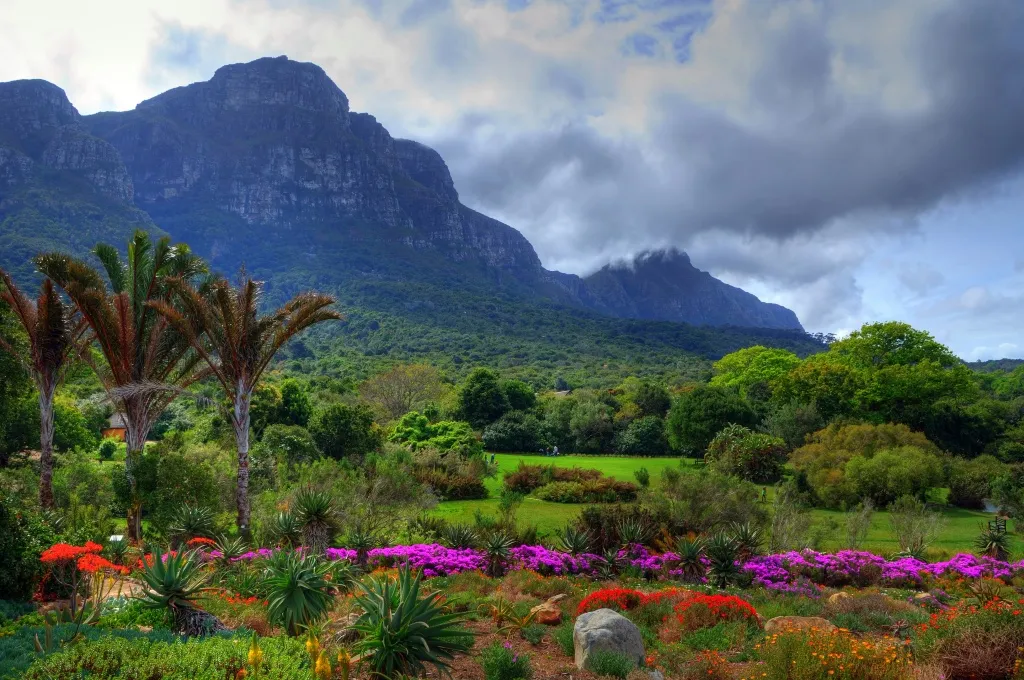
Back on the mainland, I rode the cable car up Table Mountain. The revolving cabin has been carrying visitors to the 1,085-meter summit since 1929 — nearly a century of gasps at the same impossible views. I stepped out at the top and the wind hit me, clean and sharp, carrying the scent of fynbos — that unique Cape vegetation found nowhere else on earth. I could see the entire Cape Peninsula stretching south, the Atlantic on one side, False Bay on the other, and far below, the city where two oceans and two continents meet. I sat on a rock and prayed. I thanked God for the beauty of this place, and I asked for the wisdom to understand its pain — because Cape Town carries both in equal measure.
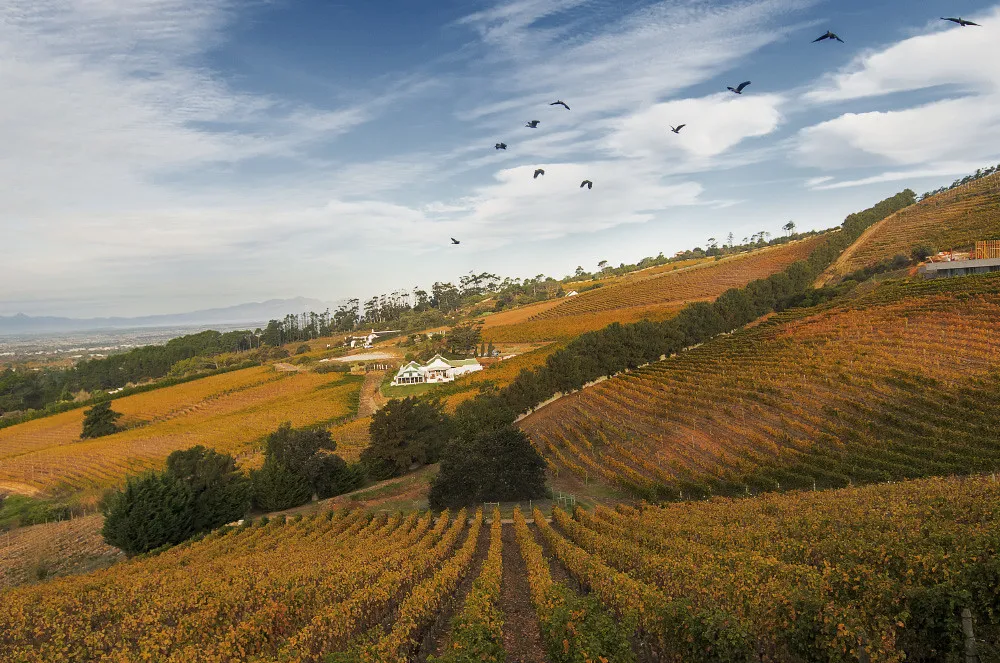
The wine regions surprised me most. I had expected good wine but what I found in Constantia was something deeper. Governor Simon van der Stel planted the first vines here in 1685, and the Groot Constantia estate still produces extraordinary wines from the same red soil and Mediterranean climate that made these vineyards legendary centuries ago. I tasted a pinotage — South Africa's signature red grape — and it carried notes of earth and smoke and resilience, as though the vine itself remembered what this soil had witnessed. The chenin blanc rivaled anything I have tasted in the Loire Valley, at a fraction of the price. These wines deserve far more recognition than they receive, and sitting on the estate terrace with Table Mountain rising behind me, I understood why people fall in love with this place and never leave.
But I would be dishonest if I wrote only about the beauty. Cape Town is a city still healing from apartheid, where the scars of enforced separation remain visible in the geography itself — wealthy suburbs on one side, townships stretching to the horizon on the other. The inequality is stark and uncomfortable and real. However, what I also found was a fierce determination to build something better. In every conversation, at every table, I heard people speaking about the future with a hope that felt earned rather than naive. This is not a city hiding from its past. It faces it daily, openly, and with a courage that humbled me.
As our ship pulled away that evening, I watched Table Mountain shrink slowly into the twilight. The city's lights came on, scattered across the slopes like stars that had fallen and decided to stay. I thought about the guide on Robben Island, his quiet dignity, his refusal to let suffering define him. I thought about those ancient vines in Constantia, still bearing fruit after three centuries. I learned something in Cape Town that I carry with me still: that beauty and pain are not opposites. They grow from the same soil. The places that have suffered most deeply are often the ones that shine most brightly — if you have the courage to look, and the grace to see.
The Cruise Port
What you need to know before you dock.
Cape Town's cruise terminal sits within the V&A Waterfront complex — one of the best cruise terminal locations in the world. Ships dock directly at the pier (no tender needed), and you step off into a vibrant waterfront district with restaurants, shops, the Two Oceans Aquarium, and harbor views in every direction. The terminal building has currency exchange, ATMs, and a tourist information desk. Taxis queue outside, and metered Uber operates throughout the city at reasonable rates — expect R100–150 (~$6–8) to Table Mountain lower cableway station.
The V&A Waterfront is entirely walkable and wheelchair accessible, with flat promenades, ramps, and accessible restrooms throughout the complex. For destinations beyond the waterfront, metered taxis and Uber are the most practical options. Expect to pay R100–150 (~$6–8) from the terminal to Table Mountain lower station, R250–350 (~$14–19) to Kirstenbosch Gardens, or R700–900 (~$39–50) for a half-day private hire to the Cape Peninsula.
The MyCiTi bus rapid transit system connects the waterfront to central Cape Town and surrounding suburbs at R15–30 (~$1–2) per ride, and the routes are accessible for passengers with mobility difficulties. City Sightseeing hop-on hop-off buses offer two routes — the Red Route covers the city and Table Mountain, the Blue Route extends to Constantia and Hout Bay — at R250 (~$14) for a full-day pass. For the winelands, Cape Point, or Boulders Beach, book through your cruise line's excursion desk or a local tour operator — self-driving is possible but organized tours eliminate the stress of navigating unfamiliar roads and provide a designated driver for wine tastings.
Accessibility note: The V&A Waterfront earns high marks for wheelchair access and mobility-friendly pathways. Table Mountain's cable car can accommodate wheelchairs with advance booking — contact the aerial cableway office directly. Robben Island has limited accessibility due to uneven gravel paths. Most tour operators offer accessible vehicles if requested at the time of booking.
Cape Town Area Map
Interactive map showing cruise terminal, Table Mountain, Robben Island, Boulders Beach, and Cape Peninsula attractions. Click any marker for details and directions.
Excursions & Activities
How I'd spend my time — and what to book ahead.
Cape Town offers excellent options whether you choose a ship excursion or go independent. For Table Mountain and the V&A Waterfront, independent exploration works beautifully. For Cape Point, Boulders Beach, or the Winelands, organized tours provide guaranteed return to the ship and stress-free logistics.
Table Mountain Cable Car
The revolving cable car climbs to the 1,085-meter summit of Table Mountain — declared one of the New Seven Wonders of Nature in 2011. Spectacular 360-degree views, hiking trails across the summit plateau, and unique fynbos flora found nowhere else on earth. R400 (~$22) round-trip adult. Book tickets online in advance to skip the queue — walk-up lines can exceed two hours in peak season. The cable car closes during high winds, so check conditions before heading up. Allow 2–3 hours total. Moderate stamina — flat summit paths but windy conditions.
Robben Island
UNESCO World Heritage site where Nelson Mandela was imprisoned for eighteen of his twenty-seven years. The ferry from V&A Waterfront takes thirty minutes. Tours are led by former political prisoners who share their personal accounts — deeply moving and essential to understanding South Africa. R600 (~$33), 3.5 hours total. Book online days in advance — ferries sell out quickly, especially in peak season. Low stamina — mostly walking on flat ground, but gravel paths may challenge wheelchair users.
Boulders Beach Penguin Colony
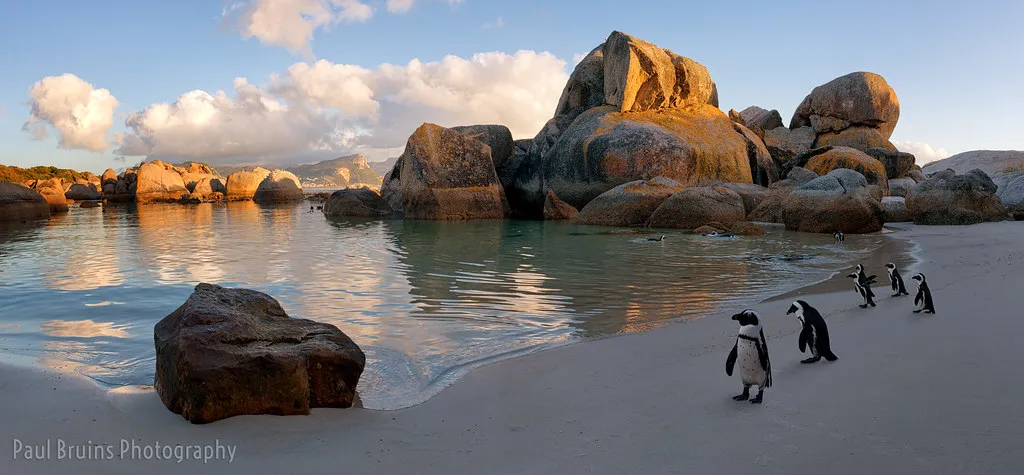
Walk among wild African penguins at this protected beach in Simon's Town, 40 km from port (45-min drive). One of only two mainland penguin breeding colonies in the world. R176 (~$10) entry. Book a guided tour or arrange a taxi — combine with Cape Point for a full-day peninsula excursion. Low stamina — boardwalks are accessible for most visitors, though some sandy sections exist.
Cape of Good Hope & Cape Point
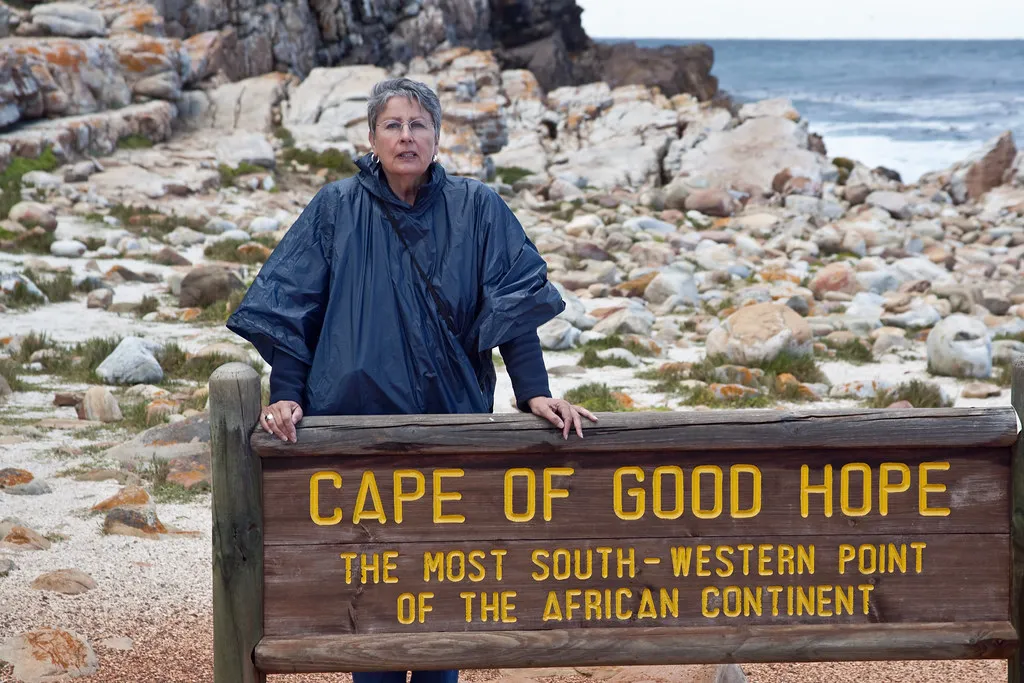
Dramatic cliffs at the southwestern tip of Africa where Atlantic and Indian Oceans meet. Funicular to the lighthouse (R90 / ~$5 return), baboon sightings, and stunning coastal drives along Chapman's Peak. Full-day excursion (60 km from Cape Town). Often combined with Boulders Beach. Book through your ship's excursion desk or reserve with a local operator for smaller group sizes. Moderate stamina — walking difficulty varies by trail chosen.
Constantia Winelands
South Africa's oldest wine region, where Governor Simon van der Stel planted the first vines in 1685. Visit Groot Constantia estate for world-class pinotage, chenin blanc, and chardonnay — tastings from R120 (~$7). The Mediterranean climate here produces exceptional wines at remarkable value. Just 20 minutes from the waterfront. Organized tours with designated driver recommended. Low stamina — wheelchair accessible at major estates.
V&A Waterfront
Working harbor turned vibrant waterfront district — restaurants, the Two Oceans Aquarium (R240 / ~$13 adult), craft markets, and harbor boat rides. Walk straight from the cruise terminal. Safe, accessible, and excellent for families or those preferring a relaxed port day. Low stamina — flat, wheelchair friendly throughout.
Depth Soundings
Cape Town is where nature and resilience converge on a scale that humbles you. Table Mountain is magnificent — but the deeper story lies in how this city confronts its complicated past with openness and determination. Robben Island will move you. The winelands will delight you. The V&A Waterfront will welcome you. One day isn't enough, but one day is deeply worthwhile.
Budget R1,500–2,500 (~$83–140) per person for a full port day including Table Mountain cable car, lunch, transport, and one additional excursion. The Waterfront itself is free to explore. Wine tastings start at R120 (~$7). For visitors with mobility concerns, the Waterfront and Constantia estates are the most accessible options — both earn strong marks for wheelchair access and gentle walking paths. Robben Island and Cape Point require more physical effort and advance planning for accessibility needs.
Q: Where do cruise ships dock in Cape Town? A: Ships dock at the V&A Waterfront Cruise Terminal — central location, walking distance to shops, restaurants, and the Two Oceans Aquarium. No tender required.
Q: Is Cape Town safe for cruise visitors? A: The V&A Waterfront and main tourist areas are generally safe. Use organized tours or taxis for destinations beyond the waterfront. Don't wander alone in unfamiliar neighborhoods. Exercise normal travel caution, keep valuables secure, and book reputable operators.
Q: Is the Table Mountain cable car worth it? A: Absolutely. The revolving cabin offers 360-degree views from the 1,085-meter summit. Book online in advance — walk-up queues can exceed two hours. Check weather conditions first, as high winds close the cable car frequently. Have a backup plan.
Q: Can I see penguins from the cruise port? A: Boulders Beach penguin colony is 40 km away (45-min drive). Requires organized tour or taxi. Absolutely worth it — one of only two mainland penguin breeding colonies in the world. Combine with Cape Point for a full peninsula day.
Q: Is Cape Town accessible for visitors with mobility concerns? A: The V&A Waterfront is largely flat and wheelchair accessible with ramps and accessible restrooms. Table Mountain cable car accommodates wheelchairs with advance notice. Robben Island has limited accessibility due to uneven gravel paths. Many tour operators offer accessible vehicles if booked ahead.
Image Credits
Hero & Gallery: Placeholder images — to be replaced with credited photos from Wikimedia Commons