


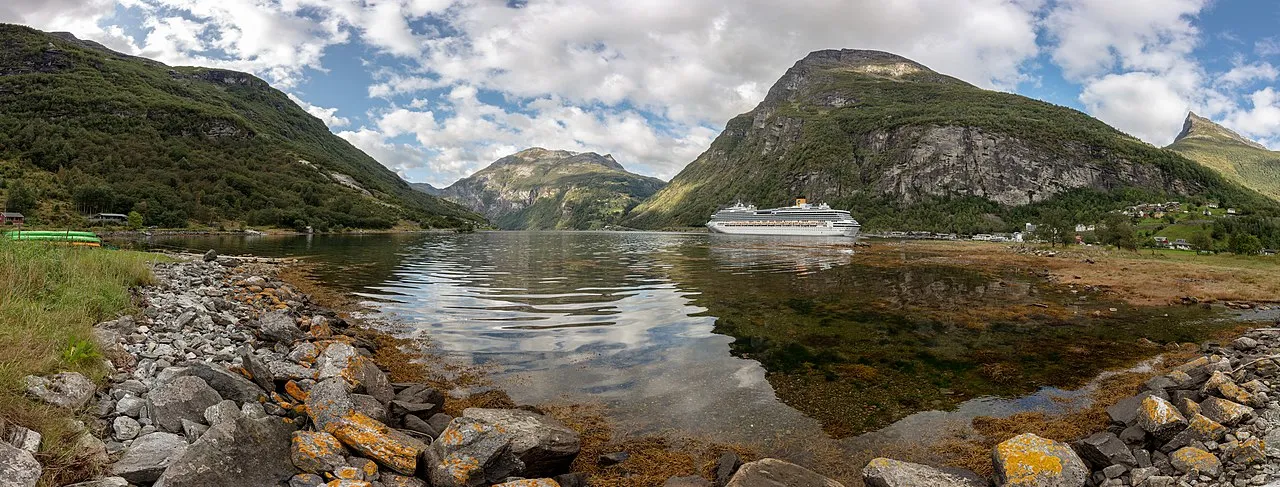
My Visit to Geiranger
I woke before dawn on a Tuesday morning and climbed to the upper deck in my fleece and waterproofs, coffee in hand, breath hanging in the cold Norwegian air. Our ship was already deep inside Geirangerfjord, gliding through water so still it mirrored the mountains above — a perfect, inverted world of granite and green. The silence was extraordinary. No engine hum, no wind, just the faint hiss of our wake spreading across the fjord. I stood at the rail and watched the cliffs slide past, their faces dark and wet, streaked with silver threads of meltwater that caught the first grey light. My wife joined me a few minutes later, wordless, and we stood together as the ship rounded a bend and the Seven Sisters waterfall came into view.
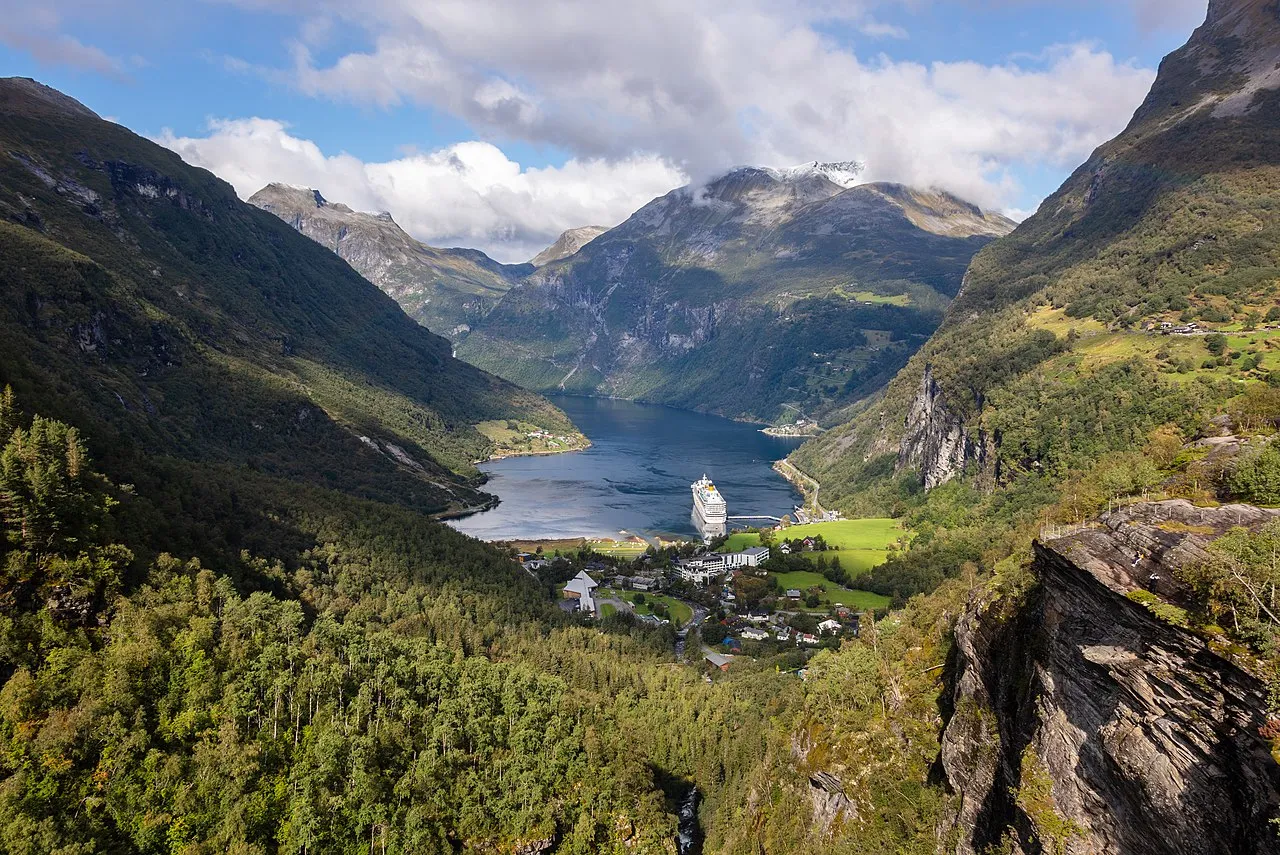
Nothing prepares you for the scale of it. De Syv Sostrene — the Seven Sisters — is not one waterfall but seven, braiding down a cliff face that rises four hundred and ten metres above the water. The longest stream drops two hundred and fifty metres in pure free fall. I heard the roar before I understood what I was hearing — a deep, resonant thunder that grew louder as we drew closer, until the sound filled my chest and my ears and the space behind my eyes. Spray drifted across the deck like rain. The temperature dropped. I tasted cold minerals on my lips. Across the fjord, the Suitor waterfall tumbled down in perpetual courtship, its shape suggesting a bottle tilted to pour — the old legend says the Suitor was rejected by all seven sisters, and now he drinks himself into sorrow on the opposite cliff. I am not sure I believe it, but standing there with mist on my face and that thunder in my bones, I understood why people needed a story to make sense of this place.
What surprised me most was realizing we would pass the Seven Sisters twice — once sailing in, once sailing out. Geiranger sits at the dead end of the fjord, so there is no through passage. The ship must reverse course, and suddenly you get a second chance at the view you thought you had memorized. I stayed on deck both times. So did nearly everyone else. However, the second pass felt different — more intimate, as though the mountains had decided we belonged.
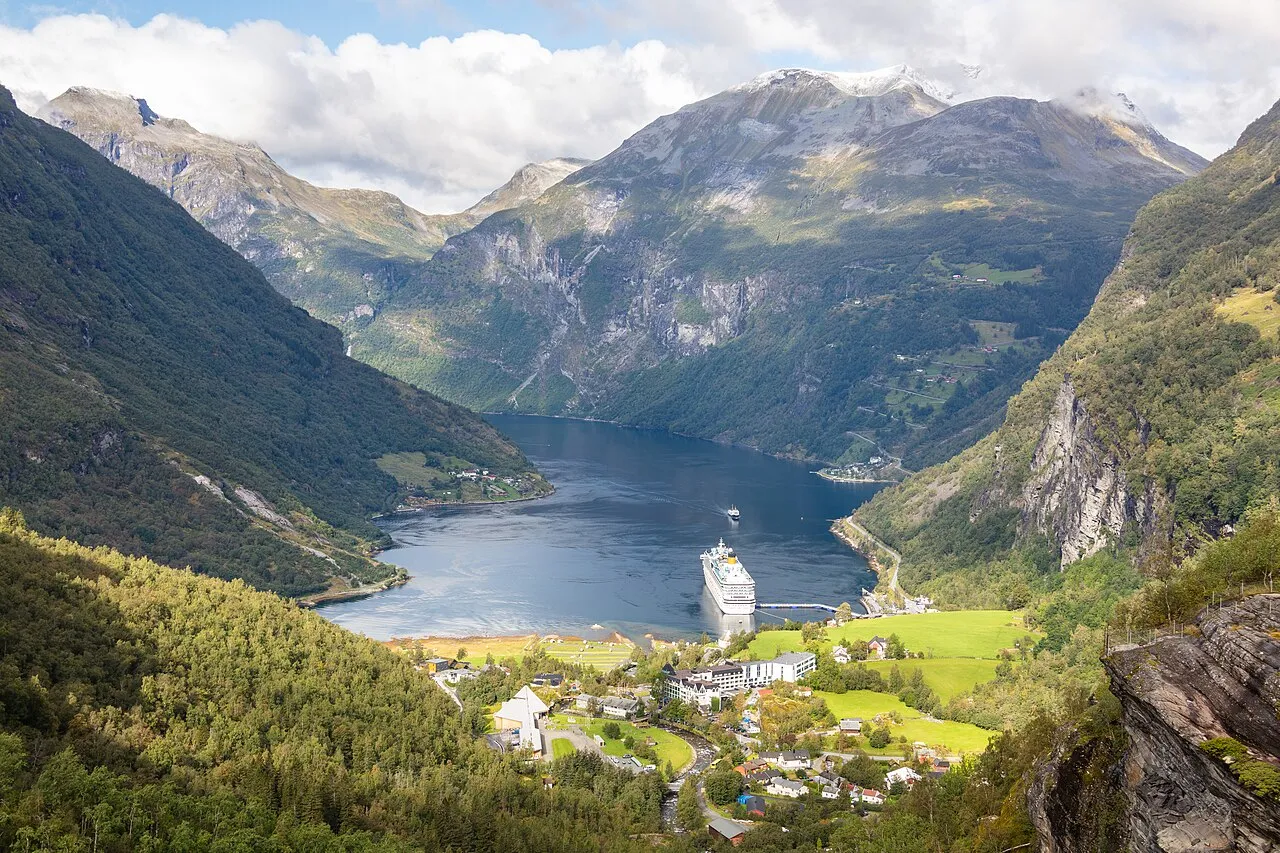
We tendered ashore to a village so small it barely qualified as one — two hundred and fifty permanent residents, a handful of shops, a chocolate factory that smelled of cocoa and warm sugar when I walked past its open door. The Norwegian Fjord Centre stood at the end of a short path, and I spent an hour inside learning how glaciers carved this landscape over a hundred and twenty thousand years, grinding through bedrock with a patience that makes human ambition seem absurd. Outside, the air smelled of pine resin and wet stone, and I noticed wildflowers growing in cracks along the harbour wall — tiny purple saxifrage clinging to granite, beautiful and stubborn.
Our plan was to take the Eagle Road up to Ornesvingen viewpoint, and we joined a small group tour in a minibus. The road climbed through eleven hairpin bends, each one tighter than the last, and at every turn the fjord dropped further below us until our ship — which had felt so vast when we were aboard — became a white speck on dark water. At the viewpoint, I stepped out into cold wind and looked down. The fjord stretched fifteen kilometres back toward the open sea, flanked by walls of rock that caught the shifting light and turned from grey to green to gold. Despite the crowds pressing around the railing, I felt a profound solitude — the kind that comes not from being alone but from being small in the presence of something immeasurably old.
We continued higher to Dalsnibba, at fifteen hundred metres above sea level. Snow lay in patches even though it was July. The air was thin and sharp, and I could see peaks fifty kilometres distant, ridge after ridge fading into blue haze. My wife took my hand and squeezed it, and I realized my eyes had filled with tears — not from sadness, but from something I still cannot name. Gratitude, perhaps. Or awe so deep it spills over. I whispered a quiet prayer of thanks, standing on that mountain with the world spread out below us, and I meant every word. Although I have visited many beautiful places in my travels, Dalsnibba broke something open inside me that I did not know was closed.
Back down in the village, we walked the path toward the abandoned farm at Skagefla. The trail climbed steeply from the fjord through birch forest, and I heard nothing but my own breathing and the distant rush of water. The farm sat on a green ledge two hundred and fifty metres above the fjord, buildings still standing, grass growing wild where crops once struggled. Families lived here year-round, raising children and livestock on patches of land so steep that supplies had to be hauled up by rope in winter. In 1993, King Harald and Queen Sonja celebrated their silver wedding anniversary on this very ledge — a gesture that acknowledged both the beauty and the profound human cost of Norway's mountain settlements. I sat on a stone wall and looked down at our ship far below, feeling the weight of all those lives spent in isolation and endurance. The silence up there was different from the silence on the fjord. It held grief in it, and courage, and something that felt very much like hope.
That evening, we sat on the top deck as the ship retraced its path through the fjord. The sun hung low and golden, casting long shadows down the cliff faces. The waterfalls glowed amber. A woman beside me was crying quietly, and when I glanced over she just smiled and said, "It is too much, is it not?" It was. In the best possible way. I reached for my wife's hand and held it as the fjord opened out toward the sea, and neither of us spoke. Some places leave you without words, and Geiranger is one of them.
Looking back, I realized what Geiranger taught me. It was not the grand vistas that stayed with me — not the vertigo of Dalsnibba or the drama of the Seven Sisters, though those were magnificent. What stayed was the quiet: the scent of pine resin on a harbour wall at morning, the sound of meltwater finding its way down granite, the taste of cold mountain air on my tongue at fifteen hundred metres. I learned that the finest journeys are the ones that make you feel both small and grateful at the same time — small because the world is so vast, grateful because you were given eyes to see it. Geiranger is a place that has stood for a hundred and twenty thousand years, shaped by forces beyond human comprehension, and yet it still welcomes the fragile, temporary creatures who sail into its heart and weep at its beauty. Sometimes you travel to a place and it changes you in ways you cannot articulate until long after you have gone. This was that place for me.
Weather & Best Time to Visit
Featured Images
The Cruise Port
What you need to know before you dock.
Geiranger is a tender port. Ships anchor in the fjord and passengers are ferried ashore by the ship's tender boats, a process that typically takes ten to fifteen minutes each way. The tender pier sits at the head of the fjord beside the village, where you will find a small tourist information office, public toilets, and a handful of souvenir shops within a few minutes' walk. The pier area is flat and generally accessible for wheelchair users and those with limited mobility, though the tender boats themselves can be challenging for guests who have difficulty with steps or unsteady footing — speak with guest services aboard your ship if you need assistance. There is no dedicated cruise terminal building. Wi-Fi is available in some cafes and at the Norwegian Fjord Centre nearby. Currency is the Norwegian Krone, though many shops accept credit cards. English is widely spoken throughout the village. Tender operations can be suspended in poor weather, so always have a contingency plan for your shore day.
Getting Around
Transportation tips for cruise visitors.
Walking: Geiranger village is tiny — the main strip of shops, cafes, and the Norwegian Fjord Centre are all within a five-minute walk of the tender pier. The waterfront area is flat and manageable for most visitors, including those with mobility challenges. However, anything beyond the village centre involves steep hills and mountain roads, so walking to the major viewpoints is not practical for a port day.
Shuttle Buses: During cruise season, local shuttle buses run from the village to the Flydalsjuvet viewpoint and the Eagle Road lookout at Ornesvingen. Fares are approximately 150-200 NOK (around $15-20) per person each way. These are the most affordable way to reach the viewpoints independently. Schedules are timed to cruise ship arrivals, but confirm departure times at the pier to avoid being stranded. Some shuttle services can accommodate wheelchair users with advance notice.
Taxi Tours: Local taxis offer fixed-price tours to Flydalsjuvet, Dalsnibba, and the Eagle Road viewpoints. A typical two-hour circuit costs approximately 1,500-2,500 NOK ($150-250) for the car, split among up to four passengers. Book at the pier or arrange through your ship. This is the most flexible option for small groups who want to control their schedule and guaranteed return to the ship.
Organized Excursions: Both the ship and local operators offer half-day and full-day excursions to Trollstigen, Dalsnibba, and the Eagle Road. Ship excursions cost $100-250 per person depending on the itinerary. Local operators near the pier often offer similar tours for less, though you assume responsibility for returning on time. For Trollstigen especially, an organized tour is the only practical option — it is a ninety-minute drive each way.
Kayak Rental: Several outfitters near the pier rent kayaks for fjord exploration at approximately 500-800 NOK ($50-80) for a half-day guided tour. A unique and peaceful way to experience the waterfalls from water level.
Geiranger Area Map
Interactive map showing tender pier, viewpoints, waterfall locations, and major attractions. Click any marker for details.
Tap markers to explore Geiranger's viewpoints and attractions
Excursions & Activities
How to spend your time ashore. For popular excursions to Dalsnibba and Trollstigen, book ahead during peak season to secure your spot. Many visitors choose to explore independent of ship excursion options for flexibility and cost savings, though a ship excursion offers guaranteed return to the vessel before departure.
Eagle Road & Ornesvingen Viewpoint
The Eagle Road (Ornevegen) climbs through eleven hairpin bends from the fjord to the Ornesvingen viewpoint at 620 metres. Your ship becomes a white speck on dark water far below. Available by shuttle bus (150-200 NOK), taxi tour, or ship excursion. Allow ninety minutes for the return trip including time at the viewpoint. The viewing platform is accessible for wheelchair users. Free entry; cost is transport only.
Flydalsjuvet Viewpoint
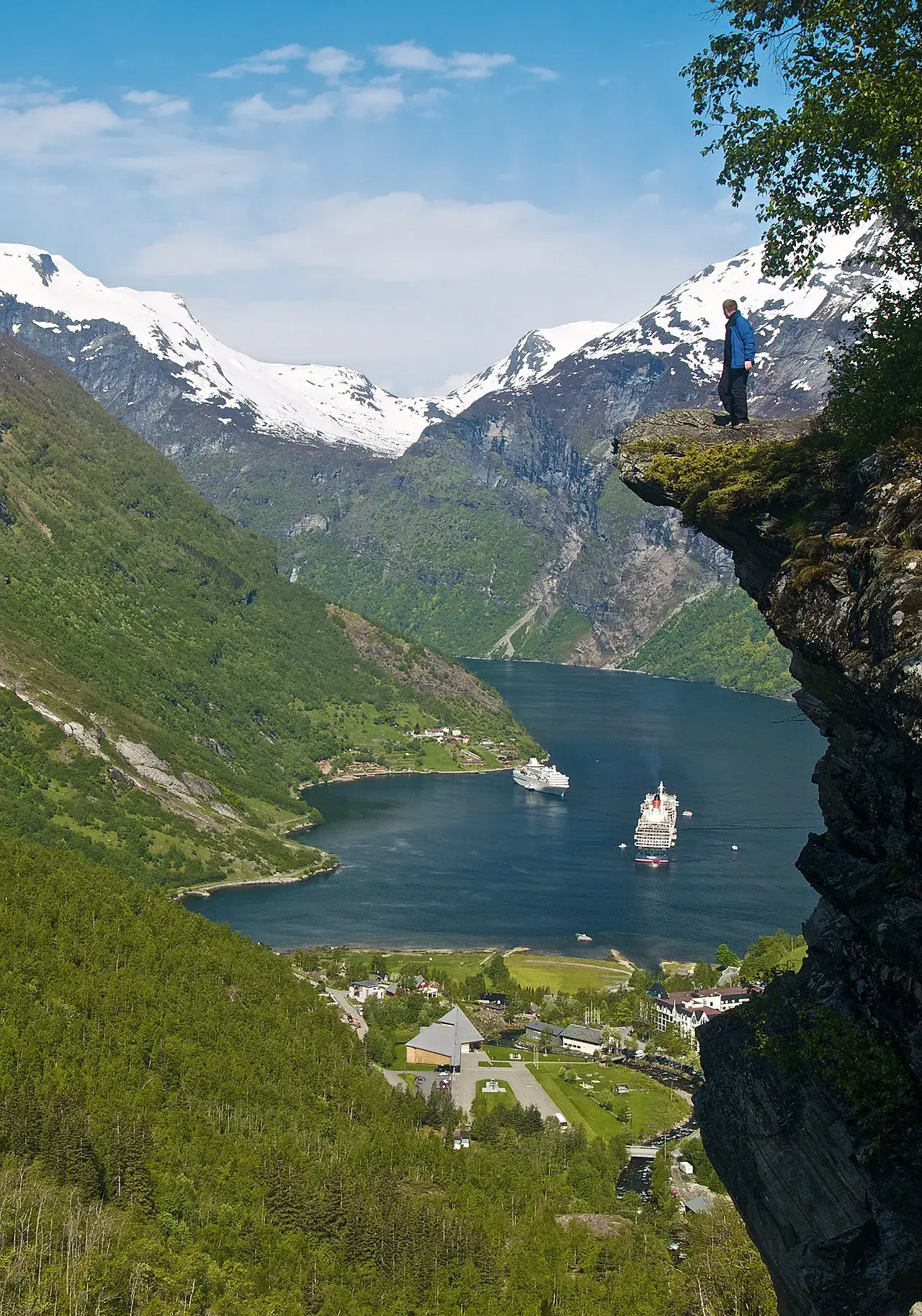
The classic postcard view — a rock ledge jutting over the void with the village and cruise ships arranged below like a perfect miniature. About ten minutes by taxi or shuttle from the pier. Early morning visits avoid the worst crowds. The main viewing area requires some walking on uneven ground. Free entry.
Dalsnibba Summit
At fifteen hundred metres, Dalsnibba offers a panorama that earns the climb — snow-capped peaks in every direction, the fjord a thin blue ribbon far below. Road toll approximately 150 NOK per vehicle. Open late May to October, weather permitting. Ship excursions to Dalsnibba cost $80-150 per person, or combine with a taxi tour. Allow two to three hours round-trip from the pier. The summit platform is accessible but temperatures can drop sharply.
Trollstigen (Troll's Ladder)
Norway's most famous mountain road — eleven hairpin turns climbing 850 metres up a near-vertical cliff with the Stigfossen waterfall plunging beside the road. Located ninety minutes from Geiranger, so only feasible as a full-day ship excursion ($150-250 per person) or a long independent tour. Typically opens late May to mid-October. The viewing platforms at the top extend over the void. Check if the road is open before committing to a booking — early and late season cruises may find it snow-closed.
Fjord Kayaking
Paddle beneath the Seven Sisters waterfall at water level — an entirely different perspective from the one on deck. Guided tours for beginners cost approximately 500-800 NOK ($50-80) for a half-day, with equipment provided. Experienced paddlers can rent independently, but respect the weather — conditions change quickly in these deep fjords. Not suitable for guests with limited mobility. Book ahead in peak season as group sizes are small.
Skagefla Abandoned Farm Hike
A steep but maintained trail climbs from a landing point on the fjord to this ghost farm perched on a green ledge 250 metres above the water. The buildings still stand. Grass grows wild where crops once struggled. Allow three to four hours for the return hike including time at the farm. Moderate fitness required — the trail involves significant elevation gain. Some guided hikes are available through local operators for approximately 400-600 NOK per person.
Norwegian Fjord Centre
A small but well-curated museum in the village covering the geology, history, and ecology of the fjord. Learn how glaciers carved this landscape over 120,000 years. About 120 NOK entry fee. Allow sixty to ninety minutes. Wheelchair accessible. A good option for guests who prefer low-walking activities or a rainy-day alternative.
Depth Soundings Ashore
Lessons learned the hard way.
Tender Timing: The tender queue builds quickly after breakfast. Get ashore early — ideally on the first or second tender — to maximize your time. The return queue also peaks around 4pm when multiple tour groups converge. Plan to return either early or late to avoid the crush. Budget at least forty-five minutes for the tender process each way on busy days.
Dalsnibba Road Closures: The toll road to Dalsnibba typically opens in late May or early June and closes in October, depending on snowfall. Early-season cruises may arrive to find it gated shut. Check conditions before booking excursions — the Geiranger tourist office posts daily updates. There is no refund for excursions cancelled due to road closures, so consider travel insurance or choosing a ship excursion which will offer an alternative if the road is closed.
Norway Is Expensive: Budget accordingly. A sandwich and coffee in the village will cost 150-200 NOK ($15-20). Souvenirs and taxi fares are priced at Norwegian levels, which can shock visitors from less costly countries. Credit cards are accepted almost everywhere, even for small purchases.
Waterfall Photography: The Seven Sisters and Bridal Veil waterfalls are best photographed during the sail-in, not from the village. Be on deck early, choose a position on the correct side of the ship (starboard for Seven Sisters on entry), and have your camera ready. The spray can coat lenses — bring a cloth. The second pass on the way out offers different light and a second chance.
Dress in Layers: The temperature at the tender pier may be 15 degrees Celsius, but it can drop to near freezing at Dalsnibba. Wind chill on the viewpoints is real. A waterproof shell, fleece layer, and warm hat will save your day. Even in July, this is not shorts-and-sandals territory above the village.
Photo Collection
Frequently Asked Questions
Q: Is the sail-in really that spectacular?
A: Yes. Stay on deck for the entire fjord passage — it is fifteen kilometres of continuous drama. Set your alarm, grab coffee, and do not look at your phone. This is why you came to Norway. The Seven Sisters waterfall is visible on the starboard side sailing in.
Q: Do I need a ship excursion?
A: It depends on your plans. For Trollstigen, a ship excursion is the most practical option given the ninety-minute drive each way. For Flydalsjuvet and the Eagle Road, shuttle buses and taxis work well independently. Dalsnibba falls somewhere in between — a taxi tour is feasible but a ship excursion removes the stress of time management. Ship excursions cost more but offer guaranteed return to the vessel.
Q: Is Geiranger better than Flam?
A: Different strengths. Geiranger has the more dramatic sail-in, the waterfalls, and the high-altitude viewpoints. Flam has the famous railway and a gentler valley setting. Both are exceptional Norwegian fjord experiences. Ideal itineraries include both.
Q: Will rain ruin my Geiranger port day?
A: Geiranger weather is unpredictable — sun, rain, and mist can alternate within hours. The mist actually adds atmosphere to photographs and enhances waterfall viewing, and Norwegian fjord visits are at their most cinematic in moody weather. Pack layers and waterproof everything. Temperatures range from 10-20°C in summer at sea level, colder at altitude. Heavy rain rarely shuts down anything except the high-altitude viewpoints (Dalsnibba in cloud is just cloud). The live weather widget in the seasonal panel above is the primary source for short-term forecasts on a specific sailing date.
Q: What's the best time of year to visit Geiranger?
A: The Norwegian fjord cruise season runs May-September. June-August is peak — warmest temperatures, longest daylight (essentially midnight sun at 62°N), all the high-altitude roads and viewpoints open. May and September are the transitional months — cooler and possibly wetter but with thinner crowds. The Geiranger Trollstigen road is typically closed Oct-May. The live weather widget in the seasonal panel above is the primary source for short-term conditions on a specific sailing date.
Q: When is Geiranger's storm season?
A: Geiranger sits at ~62°N in the Sunnmøre fjord region — outside the tropical-cyclone tracks. The relevant heavy-weather pattern is North Atlantic winter storms (Oct-Mar) which bring snow, ice, and rough outer-fjord conditions; the cruise season largely avoids this window. Summer thunderstorms are uncommon but possible. Avalanche risk closes the Trollstigen road through winter and the shoulder months. The live weather widget in the seasonal panel above is the primary source for current conditions on a specific sailing date.
Q: Is Geiranger accessible for wheelchair users or those with limited mobility?
A: The village waterfront and tender pier area are generally flat and accessible. However, tender boats themselves require stepping down, which can be difficult — speak with guest services aboard your ship for assistance. The Ornesvingen and Dalsnibba viewing platforms are wheelchair accessible. Hiking trails to the abandoned farms are steep and not accessible. The Norwegian Fjord Centre in the village is fully accessible.
Q: What should I pack for Geiranger?
A: Waterproof jacket, warm layers, comfortable walking shoes with grip, binoculars, and a camera. Even in summer, temperatures at altitude can be near freezing. Sunscreen is wise on clear days — the northern latitude means intense UV when the sun does appear.
Q: Will the zero-emission rules affect my cruise?
A: Starting in 2026, smaller cruise vessels must meet zero-emission requirements while in the fjord. By 2032, the mandate extends to larger ships. Some cruise lines are investing in hybrid and battery technology. If Geiranger is on your wishlist, consider booking sooner rather than later as the transition period may see reduced capacity.

Tender Port
Ships anchor offshore and passengers take small boats (tenders) to reach the pier.
Last reviewed: February 2026
Geiranger: The Fjord That Made the World Stop and Stare
Author's Note: Until I have sailed this port myself, these notes are soundings in another's wake — helpful for planning, and marked for revision once I have logged my own steps ashore.