
Photo: Wikimedia Commons
My Logbook: Hamburg's Tides of Brick and Memory
I stepped off the gangway into a cold gust of wind that carried the scent of the Elbe, brackish and ancient, and I knew immediately that Hamburg was not a city that would hand itself over easily. The morning sky hung low and pewter-gray over the harbor, and the sound of gulls competed with the distant rumble of container cranes loading cargo onto ships that dwarfed our own. My first breath ashore tasted of salt water and diesel and something faintly sweet I could not name. I stood on the pier for a long moment, watching the river's dark surface ripple under a sky that felt close enough to touch, and I whispered a quiet prayer for this day in a port I had dreamed about for years.
I walked from the HafenCity terminal toward Speicherstadt, and within minutes the modern glass towers gave way to something altogether different: row upon row of red-brick warehouses rising from canal waters like monuments to a bygone age of commerce. The neo-Gothic facades stretched above me, their arched windows and copper-topped towers reflected in water so still it created a mirror world beneath my feet. I ran my fingers along the rough brick, cool and slightly damp, and felt the weight of more than a century of stories embedded in the masonry. Built between 1885 and 1927 on timber piles driven into marshy ground, this is the world's largest warehouse district, and earning its UNESCO World Heritage status in 2015 was simply the world catching up to what Hamburg already knew: this place is extraordinary. However, the warehouses that once stored coffee from Brazil, tea from Ceylon, and spices from the East now hold museums and offices, and I felt a pang of melancholy for the lost aromas of empire that no longer drifted through these corridors.
My feet carried me next to the Elbphilharmonie, and nothing in the photographs had prepared me for seeing it rise from the old harbor warehouse like a wave of glass frozen mid-crest. I ascended the curved escalator, 82 meters long, rising through the building's heart, and emerged onto the Plaza at 37 meters above the harbor. The wind hit me immediately, carrying that same Elbe scent I had tasted on the pier. I gazed out across the port, watching container ships glide through channels below while the city's spires reached toward clouds behind me. The 360-degree panorama encompassed everything that makes Hamburg remarkable: the working port to the south, Speicherstadt's red-brick expanse across the canals, and the green copper spire of St. Michaelis Church marking the skyline. I stood there for twenty minutes, my eyes watering from the cold wind, yet I could not bring myself to go inside. Something about that vantage point, caught between the concert hall's futuristic glass curves and the centuries-old harbor below, made me feel suspended between eras. I finally understood why Hamburgers fought for a decade to build this place, despite the cost overruns and delays that nearly sank the project.
I descended from the Plaza and wandered into the fish market district, where vendors were packing up the last of the morning's catch. An older woman behind a stall offered me a sample of smoked eel on dark bread, and I ate it standing at the counter, the smoky flavor mingling with a sharp tang of horseradish. She told me she had worked the Fischmarkt for thirty-two years, through reunification, floods, and the years when tourists were scarce and the harbor smelled of something less romantic than adventure. I asked her what had changed. She shrugged and said, "The ships got bigger. The fish stayed the same." I laughed, but something in her voice told me she meant it as both observation and complaint.
In the afternoon I found my way to Miniatur Wunderland, the vast model railway exhibition inside one of the Speicherstadt warehouses. I had expected a children's attraction, but what I discovered was an act of devotion: seventeen years of meticulous construction, entire countries rendered in miniature, with day-night cycles, moving vehicles, tiny dramas unfolding if you leaned close enough to look. I watched a miniature airport where planes actually taxied and took off, and a Scandinavian harbor where container ships loaded and unloaded on schedule. A boy beside me, no more than six, pressed his face against the glass and gasped when a tiny fire truck raced to a blaze in the Italian section. His father lifted him onto his shoulders so he could see better, and I felt my eyes fill with tears at the tenderness of the gesture, this ordinary moment of care that somehow contained everything I had been thinking about all day: that the grandest cities are built on the smallest acts of attention.
I walked back to the ship as the late-afternoon light turned the Elbe to copper, passing through HafenCity where glass office towers rose from what had been derelict dockland just twenty years ago. Hamburg is a city that builds and rebuilds itself, I realized, layer upon layer, brick upon glass upon water. Although the cold wind never relented and the sky never fully cleared, I felt grateful for every gray hour I had spent walking these streets. The lesson Hamburg taught me is one I carry with me still: that a port city's soul lives not in its monuments but in its daily rhythm, the loading and unloading, the tides that rise and fall, and the people who show up every morning to work the market stalls and tend the warehouses and keep the city breathing. Looking back, I understand that something shifted inside me on that Plaza above the harbor, a quiet recognition that beauty does not require sunshine, and that the truest places reveal themselves slowly, in fog and drizzle, to those who are willing to wait.
Weather & Best Time to Visit
The Cruise Port
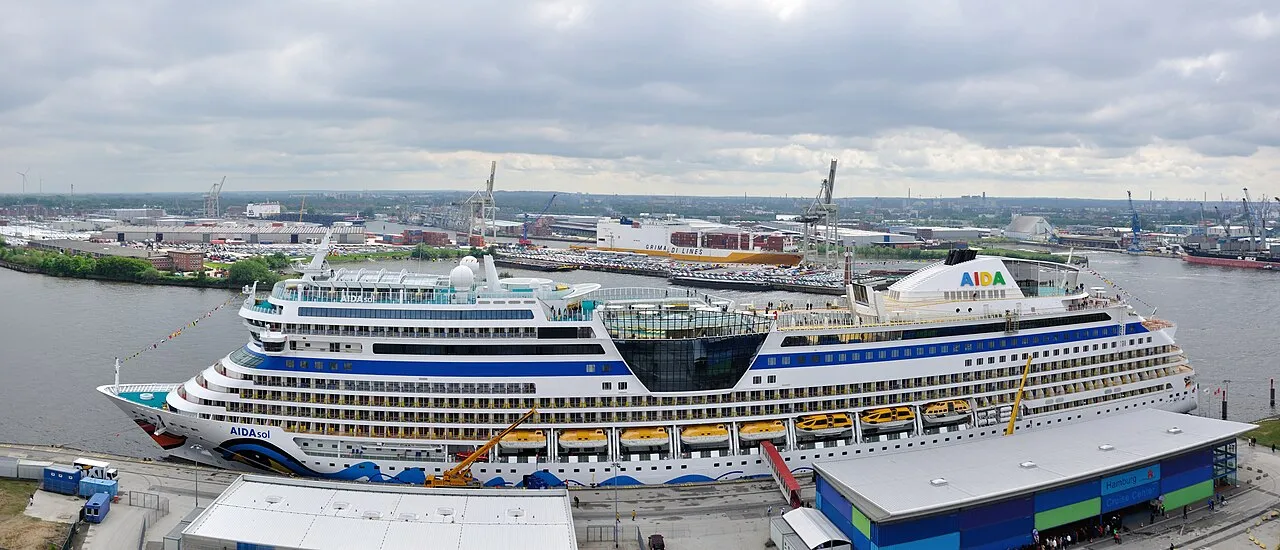
Hamburg operates two cruise terminals. The HafenCity terminal (Hamburg Cruise Center HafenCity) sits in the heart of the redeveloped harbor district, placing Speicherstadt and the Elbphilharmonie within a 15-minute walk. The Altona terminal (Hamburg Cruise Center Altona) lies further west along the Elbe; from there, a shuttle bus or taxi ride of about 20 minutes is needed to reach the city center. Both terminals have covered check-in areas, basic waiting facilities, and taxi ranks immediately outside. The HafenCity terminal offers step-free access from the gangway to the street, and accessible taxis can be pre-booked through the terminal information desk. Credit card payment is accepted for taxis from both terminals, but having some Euro cash is helpful for smaller purchases nearby. A taxi from HafenCity to the Rathaus costs roughly €10–15. Port security requires showing your ship card upon re-boarding. If your ship docks at Altona, plan extra time for the return journey, especially during afternoon rush-hour traffic.
Getting Around
Hamburg's public transport system is among the most efficient in northern Europe. The U-Bahn (underground) and S-Bahn (suburban rail) form the backbone, supplemented by buses and harbour ferries that are included in the standard ticket. The Hamburg CARD costs approximately €11 per day and provides unlimited travel on all public transport plus discounts of up to 50% at museums and attractions. Buy it at any HVV vending machine in U-Bahn stations or at the tourist information kiosk near the terminal.
Harbour ferry line 62 deserves special mention: it runs from Landungsbrucken along the Elbe past the container port and shipyards, and it is essentially a harbour cruise included in your transport ticket. The full round trip takes about an hour and provides views of the port infrastructure that most walking tours cannot reach. Wheelchair users should note that Hamburg's U-Bahn stations have lifts at most stops, and low-floor buses run on major routes, though some older S-Bahn stations have limited accessibility. The city is generally flat, making it comfortable for those with moderate mobility, and most pavements are well maintained. Taxis are available throughout the city; a ride from HafenCity to the Rathaus costs about €12. For visitors who prefer a low-energy port day, the harbour ferry combined with the Elbphilharmonie Plaza visit covers the essentials without extensive walking.
Excursions & Activities
Speicherstadt & Miniatur Wunderland
The UNESCO-listed warehouse district is walkable from the HafenCity terminal in about 15 minutes. Miniatur Wunderland, the world's largest model railway, draws millions of visitors annually and charges approximately €20 for adults. Book ahead online to avoid queues that can stretch past two hours in summer. Allow 2–3 hours inside. The exhibition is wheelchair accessible with lifts between floors. You can visit independently without difficulty — it is a short, flat walk from the terminal along clearly signed routes. A ship excursion typically bundles Speicherstadt with other city highlights for €60–90.
Elbphilharmonie Plaza
The free viewing platform at 37 meters above the harbor offers a 360-degree panorama of the port and city. The curved escalator ride through the building is an experience in itself. Free Plaza tickets are available at the entrance or can be reserved online. Allow 45 minutes to an hour. Fully accessible via lift. This is an easy independent visit — walk 20 minutes from HafenCity terminal along the waterfront promenade.
Harbour Ferry Cruise (Line 62)
Take the public ferry from Landungsbrucken for a budget-friendly harbour tour. The cost is included in any HVV day pass or Hamburg CARD (€11/day). The full loop takes about one hour and passes shipyards, container terminals, and the Elbphilharmonie from the water. This is a low-energy activity suitable for all mobility levels, as the ferries have accessible boarding ramps. No need to book ahead; ferries depart every 15 minutes during peak hours.
St. Michaelis Church Tower
Known as the "Michel," Hamburg's iconic baroque church charges approximately €6 for tower access. A lift takes visitors partway, with stairs for the final section to the viewing platform at 82 meters. Views extend across the harbor and city. Allow 45 minutes. The church nave is free to enter and wheelchair accessible at ground level, though the tower itself requires some stair climbing. Visit independently — it is a 25-minute walk from HafenCity terminal.
Hamburg Fish Market (Fischmarkt)
The Sunday-morning Fischmarkt runs from 5 a.m. to 9:30 a.m. and is a Hamburg institution. Vendors sell fresh fish, flowers, fruit, and souvenirs with theatrical enthusiasm. Entry is free. The market hall (Fischauktionshalle) has live music and a festive atmosphere. A ship excursion is unnecessary here — take the U3 or walk 30 minutes from HafenCity. This moderate-energy outing works well combined with a harbour ferry ride afterward.
HafenCity & International Maritime Museum
HafenCity is Europe's largest inner-city development project, and walking through it reveals Hamburg's ambition to reinvent its waterfront. The International Maritime Museum (approximately €15 entry) occupies the oldest warehouse in the district and houses 3,000 years of seafaring history across ten floors. Allow 2 hours. The museum is accessible on all floors via lift. Visit independently; it is a 10-minute walk from the cruise terminal. If your ship offers a general city tour as a ship excursion, it usually includes a drive through HafenCity but rarely stops at the museum, so independent exploration gives you more time. A guaranteed return to the ship is easy to manage from here, given the short walking distance.
Depth Soundings
Hamburg uses the Euro (EUR). As of early 2026, €1 buys approximately $1.05 USD. ATMs are plentiful at U-Bahn stations and shopping areas; most accept international cards. Credit and debit cards (Visa, Mastercard) are widely accepted in restaurants, shops, and attractions. However, some smaller cafes and market stalls remain cash-only, so carry €30–50 in small denominations for incidental purchases. The Fischmarkt vendors strongly prefer cash.
Tipping in Germany is modest. Round up the bill or add 5–10% at restaurants; service charges are rarely included. Taxi drivers appreciate rounding up to the nearest Euro. Germans value punctuality — if you book a tour or table, arrive on time. English is widely spoken in tourist areas and by younger residents, though a simple "Danke" (thank you) or "Entschuldigung" (excuse me) is always appreciated. Tap water is safe to drink throughout the city, and many restaurants will provide it free if asked. Shopping hours are typically 10 a.m. to 8 p.m. Monday through Saturday; most shops close on Sundays except in tourist zones and the Hauptbahnhof area.
Photo Gallery
Image Credits
All photographs on this page are used under Creative Commons or free-use licenses. Images sourced from Wikimedia Commons, Unsplash, Pixabay, Pexels, and Flickr. If you are the rights holder of any image and wish to request removal or proper attribution, please get in touch.
Frequently Asked Questions
Where do cruise ships dock in Hamburg?
Ships dock at Hamburg Cruise Center, with terminals in HafenCity and Altona. HafenCity is more central and within walking distance of Speicherstadt and the Elbphilharmonie. From Altona, budget 20 minutes by shuttle or taxi to reach the city center.
What is the Speicherstadt and why is it significant?
Speicherstadt is the world's largest warehouse district, a UNESCO World Heritage Site built between 1885 and 1927. Its red-brick neo-Gothic buildings stretch along canals and now house museums, including Miniatur Wunderland. Entry to the district is free; individual attractions charge separately.
How do I get from the cruise terminal to Hamburg city center?
From HafenCity terminal, walk 15–20 minutes or take U3 from Baumwall station. From Altona terminal, use the shuttle bus to Altona station then take the S-Bahn. The Hamburg CARD (€11/day) covers all public transport and attraction discounts.
What currency is used in Hamburg?
Hamburg uses the Euro (EUR). Credit cards are widely accepted, but smaller vendors and market stalls often prefer cash. ATMs are available at most U-Bahn stations.
Is Hamburg walkable from the cruise port?
Yes, from HafenCity terminal. Speicherstadt is about 15 minutes away, the Elbphilharmonie 20 minutes, and the Rathaus about 30 minutes. The city is flat and pavements are well maintained, making it accessible for most visitors.
What is the best way to get around Hamburg on a port day?
The Hamburg CARD provides unlimited travel on U-Bahn, S-Bahn, buses, and harbour ferries for about €11 per day. Harbour ferry line 62 doubles as a scenic cruise along the Elbe and is included in the fare. Taxis are available but cost €10–15 for most city-center trips.
Hamburg, Germany — Port Guide
Last reviewed: February 2026