


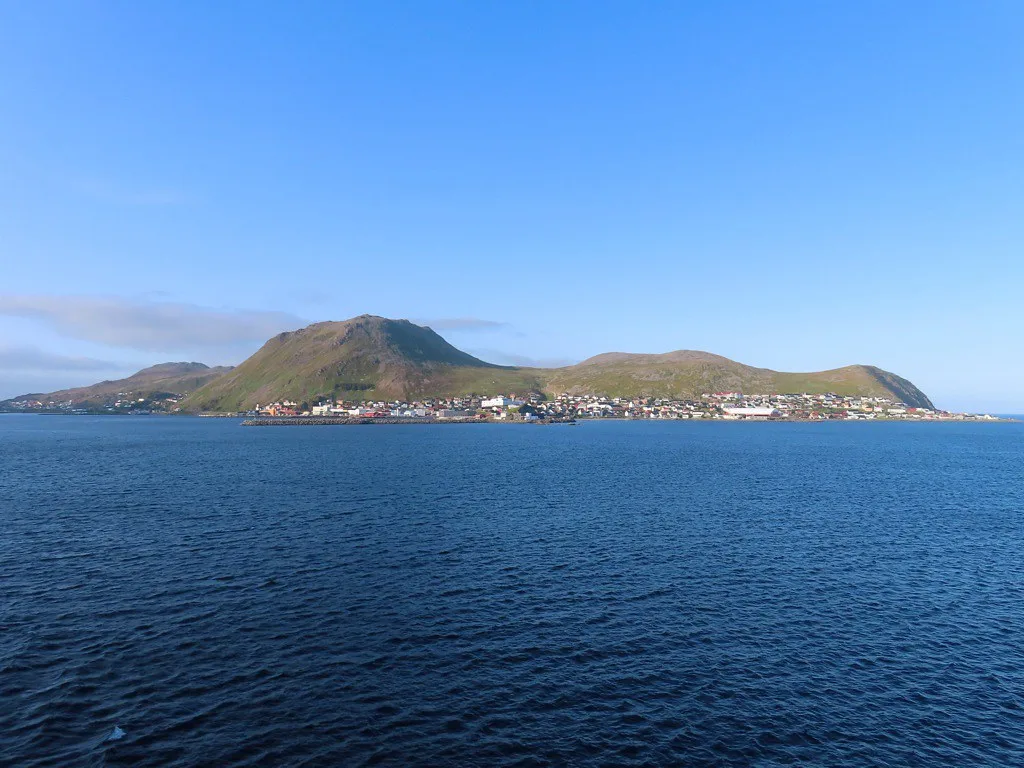
Photo: Wikimedia Commons
My Logbook: Standing at the Edge of the Known World
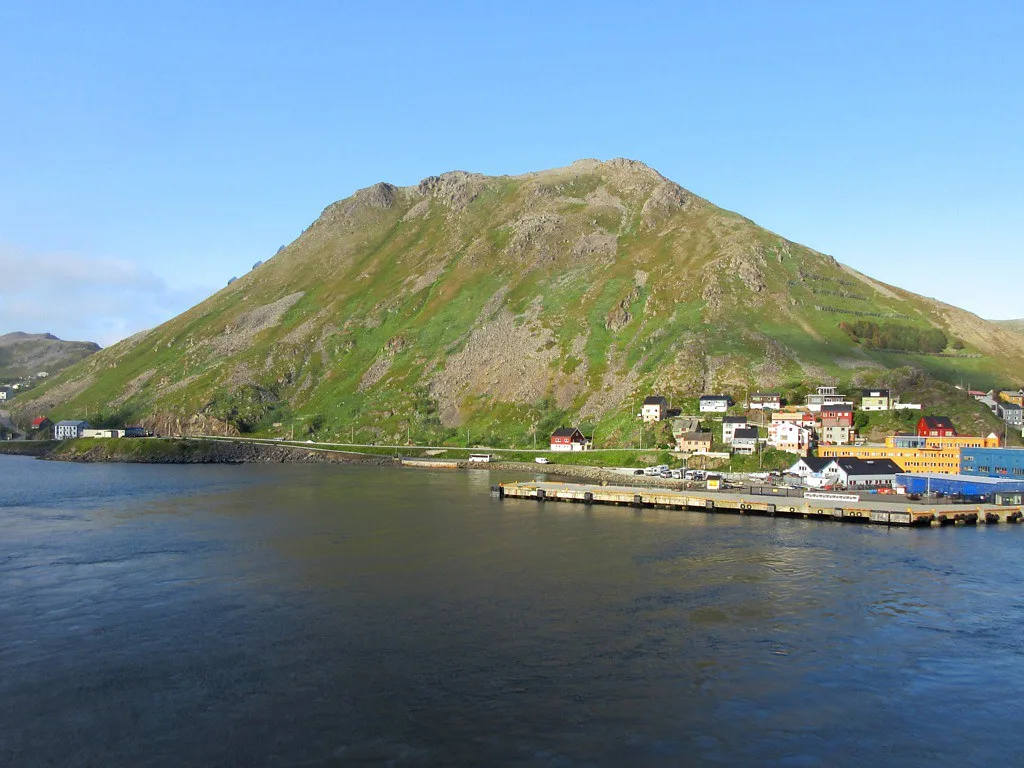
I heard the wind before I saw the land. Standing on the forward deck as our ship rounded the headland into Honningsvag harbour, I felt it slam against my jacket — cold, sharp, carrying the taste of salt and something mineral, like wet stone. The sky was a pale silver that refused to commit to either day or night, and below the cliffs the water ran dark green, almost black in places where the depth dropped away. I pulled my hood tighter and stared at the scattering of colourful houses along the waterfront — red, yellow, white — clustered together as if huddling for warmth against the treeless hills behind them. This was 71 degrees North. This was the Arctic. And I was trembling, though I could not tell if from the cold or from anticipation.
I walked down the gangway and into a town that felt both welcoming and startlingly remote. Honningsvag has roughly 2,500 residents, a single main street, and the Honningsvag Church — the only building the German army did not burn during their scorched-earth retreat in 1944. Everything else had been rebuilt. I stood in front of that church for a few minutes, running my hand along the white wooden wall, trying to imagine what it meant to be the sole survivor of a town's destruction. The paint was smooth and cold under my fingers. Seabirds circled overhead, their cries echoing off the harbour walls, and I could smell diesel from the fishing boats mixed with the clean, sharp scent of Arctic air.
My destination was North Cape — Nordkapp — the famous cliff 34 kilometres north where Europe falls into the Arctic Ocean. I had booked the ship excursion for $125, and our bus wound through a landscape that grew more alien with every passing minute. The birch trees thinned, then vanished entirely. The tundra stretched flat and brown on both sides of the road, broken only by patches of snow lingering in shadowed hollows even though it was July. I pressed my face to the window. Reindeer grazed near the roadside, unbothered by the bus, their antlers dark against the pale sky. I counted seven before we rounded a bend and I lost sight of them. My seatmate, a retired teacher from Edinburgh, whispered: "It looks like the surface of the moon." I understood what she meant, however I thought it looked more like a place where time had simply stopped — where the land had been waiting, patient and unchanged, since before humans walked it.
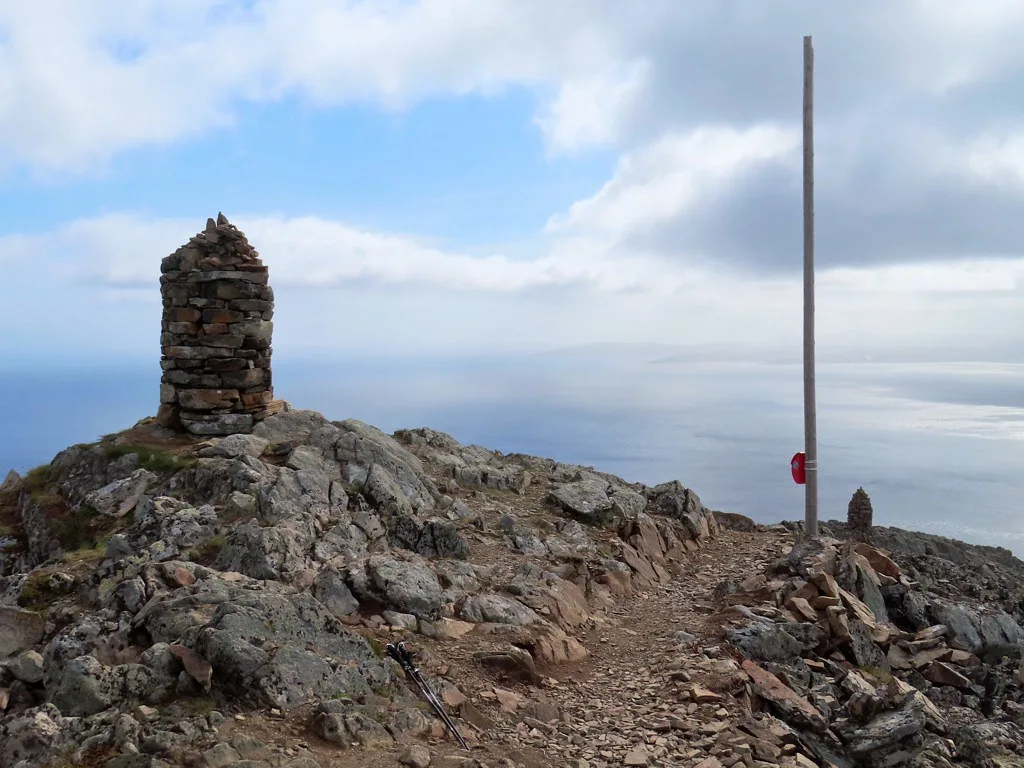
North Cape Hall sits carved into the clifftop, a modern visitor centre with exhibitions about the cape's history and a wide-screen film of the midnight sun. Entry was included in my excursion, though independent visitors pay approximately NOK 310 (~$30). I walked through the exhibits quickly — my goal was the cliff itself. I pushed through the glass doors at the far end and stepped outside, and the wind nearly knocked me sideways. The famous globe monument — a skeletal iron sphere perched at the cliff's edge — stood before me against an endless silver sky, and beyond it: nothing. Just ocean. Grey-blue water stretching north toward Svalbard, toward the North Pole, toward the very top of the spinning world. I walked to the railing and gripped the cold metal and looked down. Three hundred and seven metres below, the waves broke against the base of the cliff in white lines of foam that I could see but not hear over the wind. I tasted salt on my lips. The air smelled of nothing at all — no vegetation, no exhaust, no cooking, no human trace. Just cold, clean, empty Arctic air.
The midnight sun hung low on the northwestern horizon, golden and stubborn, refusing to dip below the water line even though my watch read half past eleven at night. The light it cast was unlike anything I had experienced — horizontal and warm-hued, painting long shadows across the tundra behind me, turning the sea into a sheet of burnished copper. I stood there for what felt like an hour but might have been twenty minutes. Time behaved strangely in that endless light. Other visitors came and went, snapping photographs by the globe, but I found myself unable to move.
It was then that the moment came — the one I carry with me still. A Sami woman in traditional dress had been standing quietly near the cliff edge, her bright blue gakti vivid against the grey stone. She turned to me and said, simply, "You feel it?" I nodded, not trusting my voice. "My grandmother called this the place where the sky meets the sea and forgets to stop," she said. "She came here every summer of her life." Her eyes were bright and kind. I felt tears prick the backs of my eyes — not from sadness, but from the sudden overwhelming awareness that people had stood on this exact spot for thousands of years, feeling exactly what I was feeling, and that the Sami had called this land home when the rest of Europe barely knew it existed. I whispered a quiet prayer of thanks for the gift of standing where so many had stood before me, humbled by the permanence of this cliff and the briefness of my own small life against it.
The bus ride back to Honningsvag was quiet. My seatmate had fallen asleep. I watched the tundra roll past, still lit by the sun that would not set, and thought about edges and endings and how standing at the boundary of something — a continent, a season, a life — forces you to look both forward and back. I had come to North Cape expecting a geographical milestone, a latitude to add to my logbook. What I found instead was a lesson in scale. The Arctic does not care about your plans or your schedule or your expectations. It simply is — vast, cold, beautiful, indifferent — and if you stand still long enough in that empty wind, you begin to understand what matters and what does not. I walked back aboard the ship carrying that understanding like a stone in my pocket, smooth and heavy and real. The gangway echoed under my boots. The harbour water was still. And the midnight sun still burned above Honningsvag, patient and golden, waiting for no one.
Weather & Best Time to Visit
The Cruise Port
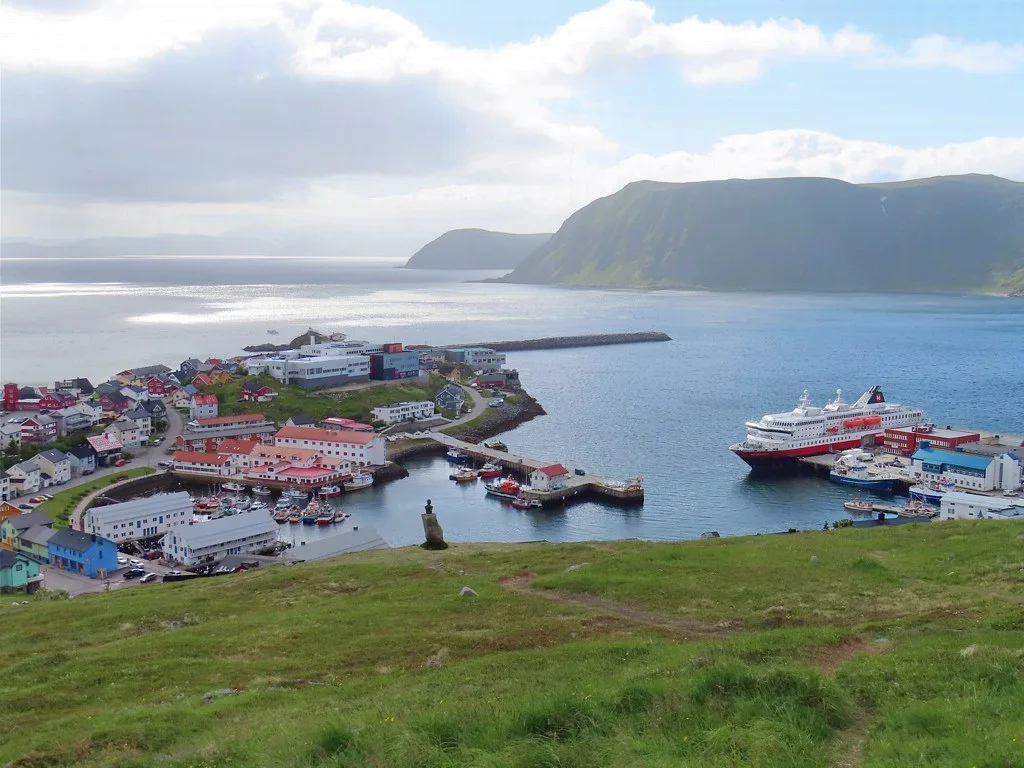
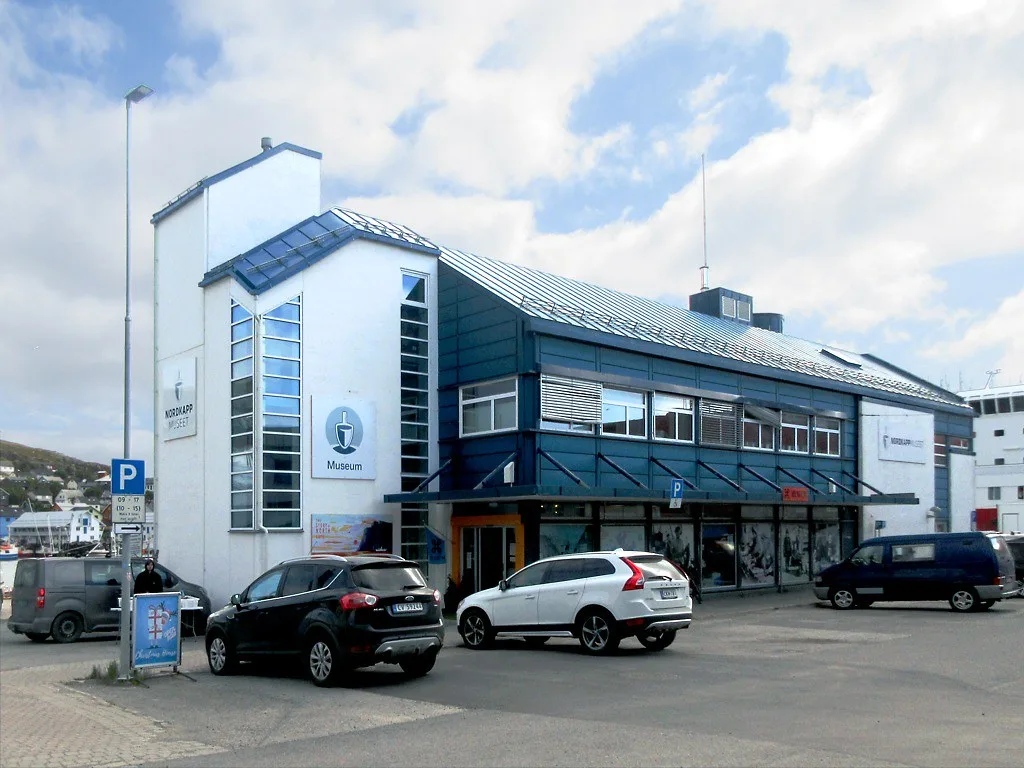
Ships dock directly at Honningsvag harbour, a compact facility within walking distance of the town centre. The pier is flat and accessible for wheelchair users and those with limited mobility, with a smooth paved surface leading to the main road. There is no formal cruise terminal building — passengers walk off the ship and into the town. A small tourist information kiosk operates near the pier during summer cruise season. Taxis are limited in number, so pre-arranged excursions or the shuttle bus to North Cape are the standard options. The town centre is a five-minute walk from the pier, where you will find a handful of shops, a supermarket (Coop or Rema 1000), the Nordkappmuseet, and a few cafes. Coffee costs roughly NOK 40-60 ($4-6) and a simple lunch runs NOK 150-250 ($15-25). Norway is expensive — budget accordingly. Credit cards are accepted almost everywhere, and Norwegian Krone is the local currency.
Getting Around
Honningsvag is a small town, and the cruise-relevant area around the harbour is easily walkable in thirty minutes. The pier surface is paved and wheelchair accessible, and the main street is flat with ramps at crossings, making the town centre navigable for visitors using wheelchairs or mobility scooters. Pavements are generally in good condition, though some side streets are gravel. There is no public bus service within the town itself — distances are too short to need one.
Getting to North Cape is the main transport challenge. Ship excursions ($100-150) provide coach transport to the cliff and back, typically with a guided commentary on the drive. Independent buses to North Cape operate during summer, departing from the town centre (NOK 200-300 round trip, approximately 45 minutes each way). Schedules vary year to year and depend on ship arrival times, so check locally. A handful of taxis operate in Honningsvag, but they are scarce and expensive — a round trip to North Cape by taxi costs approximately NOK 2,000-3,000 ($200-300). Renting a car is possible but rarely practical for a single port day. Walking to North Cape is not feasible — it is 34 kilometres each way along a road with no pavement and heavy coach traffic.
Port Map
Tap markers to explore Honningsvag
Excursions & Activities
North Cape (Nordkapp) by Coach
The signature excursion from Honningsvag and the reason most ships call here. A ship excursion costs $100-150 and includes a 45-minute coach ride through treeless Arctic tundra, entry to North Cape Hall (otherwise NOK 310 / ~$30), and guided commentary. You will see the famous globe monument at the cliff edge, 307 metres above the Arctic Ocean. Allow three to four hours for the round trip. Independently, you can take a scheduled bus from town (NOK 200-300 return) — however, you should book ahead or confirm schedules at the tourist kiosk, as frequencies change by season. The ship excursion guarantees your return to the vessel and is worth the premium for peace of mind.
Sami Reindeer & Lavvu Visit
Several operators offer visits to Sami reindeer herding families, where you can enter a lavvu (Sami tent), hear about Sami history and daily life, feed reindeer, and sample joik (a form of Sami vocal music). Tours cost $80-120 and last roughly two hours. This is a meaningful cultural encounter that provides context for the Arctic landscape. You can book ahead through your cruise line or independently through local operators. Accessible for most mobility levels — the lavvu sites are generally flat, though surfaces may be uneven ground.
Honningsvag Town Walk
A gentle self-guided walk through Honningsvag takes about an hour. Visit the Honningsvag Church (the sole building to survive the 1944 destruction), the Nordkappmuseet (North Cape Museum, entry NOK 90 / ~$9), and the harbour front with its colourful fishermen's houses. Free to walk; museum costs noted. Wheelchair accessible on main streets. No need to book ahead — simply walk off the ship and explore.
Knivskjellodden Hike
For experienced hikers, the trail to Knivskjellodden — the actual northernmost point of mainland Europe, 1.5 km further north than Nordkapp — is a demanding nine-kilometre each-way trek across open tundra. Allow five to seven hours return. There are no facilities on the trail. This is only feasible if your ship is in port for a full day and you are confident in Arctic hiking. Not wheelchair accessible. Bring waterproofs, layers, and food. Do not attempt this independently unless you have experience with exposed terrain — weather changes fast at 71 degrees North.
Birdwatching & Cliff Path
The cliffs around Honningsvag host puffins, guillemots, kittiwakes, and Arctic terns during summer. A gentle path east of town follows the shoreline and offers views over the harbour and nesting seabird colonies. Free, self-guided, roughly one to two hours. Binoculars are useful. The path is unpaved and uneven in places, so not suitable for wheelchairs. No need to book ahead.
Depth Soundings
Norway operates on the Norwegian Krone (NOK). As of early 2026, $1 USD buys approximately 10-11 NOK. Credit and debit cards are accepted almost universally — Norway is largely cashless, and even small purchases like coffee can be paid by card. ATMs are available in Honningsvag but not at the pier itself. Currency exchange is not readily available in town, so arrange NOK before arrival if you want cash.
Prices in Honningsvag reflect Norway's high cost of living. A coffee runs NOK 40-60 ($4-6), a sandwich NOK 80-120 ($8-12), and a restaurant meal NOK 200-350 ($20-35). Alcohol is particularly expensive: a beer in a restaurant costs NOK 90-120 ($9-12). Tipping is not expected in Norway, though rounding up is appreciated. The town has limited shopping — a few gift shops selling Sami-inspired crafts, postcards, and knitwear. English is spoken widely by virtually all residents.
Summer temperatures at 71 degrees North range from 5 to 15 degrees Celsius (41-59 degrees Fahrenheit), but wind chill at North Cape can drop the perceived temperature sharply. Dress in layers: thermal base, fleece or wool mid-layer, and a windproof and waterproof outer shell. Gloves and a warm hat are recommended even in July. The midnight sun means no darkness between May 14 and July 29; from November through January, the polar night brings continuous darkness.
Photo Gallery


Frequently Asked Questions
What is North Cape?
North Cape (Nordkapp) is a 307-metre cliff often called Europe's northernmost point, though nearby Knivskjellodden extends slightly further north. It is 34 km from Honningsvag, accessible by excursion coach or independent bus.
When is the midnight sun at North Cape?
The midnight sun is visible from approximately May 14 to July 29. During this period the sun never sets. Summer cruises from June through August offer the best chance to witness this phenomenon.
How do I get from the port to North Cape?
Ship excursions ($100-150) are the most common option. Independent buses run from town (45 minutes, NOK 200-300 round trip). North Cape Hall entry costs approximately NOK 310 (~$30).
Is it cold at North Cape in summer?
Yes. Even in July, temperatures average 7-13 degrees Celsius (45-55 degrees Fahrenheit). Wind chill at the clifftop can make it feel much colder. Bring layers and a windproof jacket.
Is Honningsvag accessible for wheelchair users?
The pier and town centre are mostly flat and paved. North Cape Hall has accessible facilities. However, the globe monument area at the clifftop is exposed and may have uneven surfaces in places.
Can I see the Northern Lights from Honningsvag?
Yes, during winter months from September through March. Most cruise ships visit in summer for the midnight sun. Hurtigruten coastal voyages and expedition ships offer winter aurora-viewing sailings.
When is the best time to visit Honningsvag?
The glance Temperature reads "17-56°F — North Cape, 71°N" and Daylight reads "0-24 hours — extreme variation." The Rain entry reads "Year-round; wetter late summer." The Wind entry adds "Very exposed; strong winds common."
When is Honningsvag's storm season?
The glance Wind entry reads "Very exposed; strong winds common," and the Temperature entry reads "17-56°F — North Cape, 71°N." The Rain entry reads "Year-round; wetter late summer." For current conditions on a specific sailing date, use the live weather widget in the seasonal panel above.
What should I pack for Honningsvag's weather?
The glance Temperature reads "17-56°F — North Cape, 71°N" — pack for the cold end of that range with strong wind. The Wind entry reads "Very exposed; strong winds common." The Packing Tips section lists "Sunscreen and sunglasses — essential year-round"; "Light layers for variable temperatures"; "Comfortable walking shoes for exploring"; "Rain jacket or compact umbrella." A real waterproof + windproof shell is the page's recurring emphasis.
Will rain ruin my Honningsvag port day?
The glance Rain entry reads "Year-round; wetter late summer," and the Wind entry adds "Very exposed; strong winds common." The page describes North Cape Hall (the visitor center at the cliff) as an indoor refuge with the globe view. For short-term forecasts on a specific sailing date, the live weather widget in the seasonal panel above is the primary source.
Honningsvag — Gateway to North Cape
Last reviewed: February 2026