


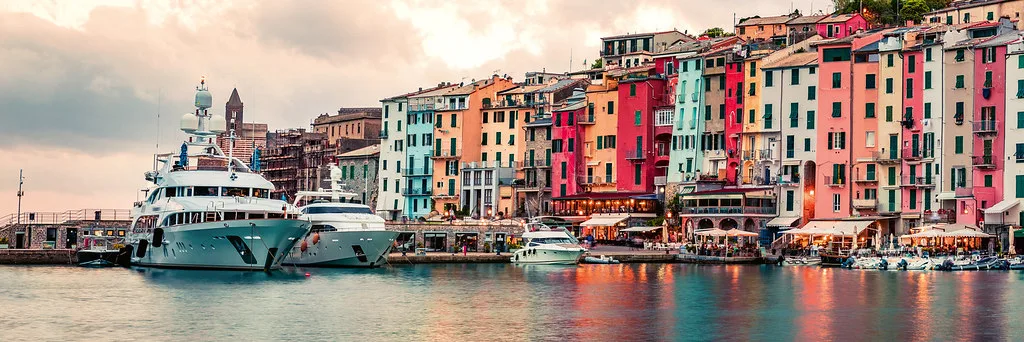
Photo: Wikimedia Commons (CC BY-SA)
Captain's Logbook
La Spezia
The ship slipped into what the Italians call the Golfo dei Poeti — the Gulf of Poets — and I understood immediately why Lord Byron and Percy Bysshe Shelley fell under this coastline's spell in the nineteenth century. The protected waters of this deep natural harbor cradle La Spezia on all sides, a working port city that wears its dual identity honestly: Italy's most important naval base since 1869, and the humble gateway to five impossibly colorful villages that cling to nearby cliffs like barnacles on ancient stone. Standing at the rail as the morning mist lifted, my breath caught at the way the Apuan Alps rose behind the city like a painted backdrop, their marble-white peaks glowing in the early light. I had read about this coastline for years, studied photographs, watched travel documentaries — but nothing prepared me for the way the real thing felt in my chest.
I'll be honest with you, as one traveler to another — La Spezia itself isn't why you've come. It's a practical city, an industrial one even, with shipyards and naval installations that hum with quiet purpose. But what lies just fifteen minutes away by train transformed my understanding of what the Italian coastline could be. Cinque Terre — five UNESCO World Heritage villages stacked impossibly along the rugged Ligurian shoreline — waits there like a secret the Mediterranean has been keeping for centuries. Connected by hiking trails older than memory and a railroad that punches boldly through coastal mountains, these painted villages are Instagram-famous now, but they're the real thing nonetheless.
The logistics matter deeply here, so let me share what I learned. From the cruise terminal at Molo Garibaldi, you can walk to La Spezia Centrale train station in about twenty minutes — a pleasant enough stroll through working neighborhoods where laundry flaps from balconies and old men argue politics over espresso. Or take a taxi for ten euros if your knees protest or time is short. Trains depart for the Cinque Terre villages every fifteen to thirty minutes, rattling up the coast with a rhythm that feels timeless. Buy a Cinque Terre Card early — it includes unlimited train rides between villages and access to the coastal hiking trails. Do this at first light if you can. Summer days bring thousands of visitors to villages built for hundreds, and the morning trains fill quickly with those who've learned this lesson before you.
You can also reach the villages by boat from La Spezia's port, though I found the train more reliable and frequent. The sea route offers its own rewards — watching those painted houses emerge from the coastline as you approach from the water is something special, the way medieval traders must have first glimpsed them centuries ago.
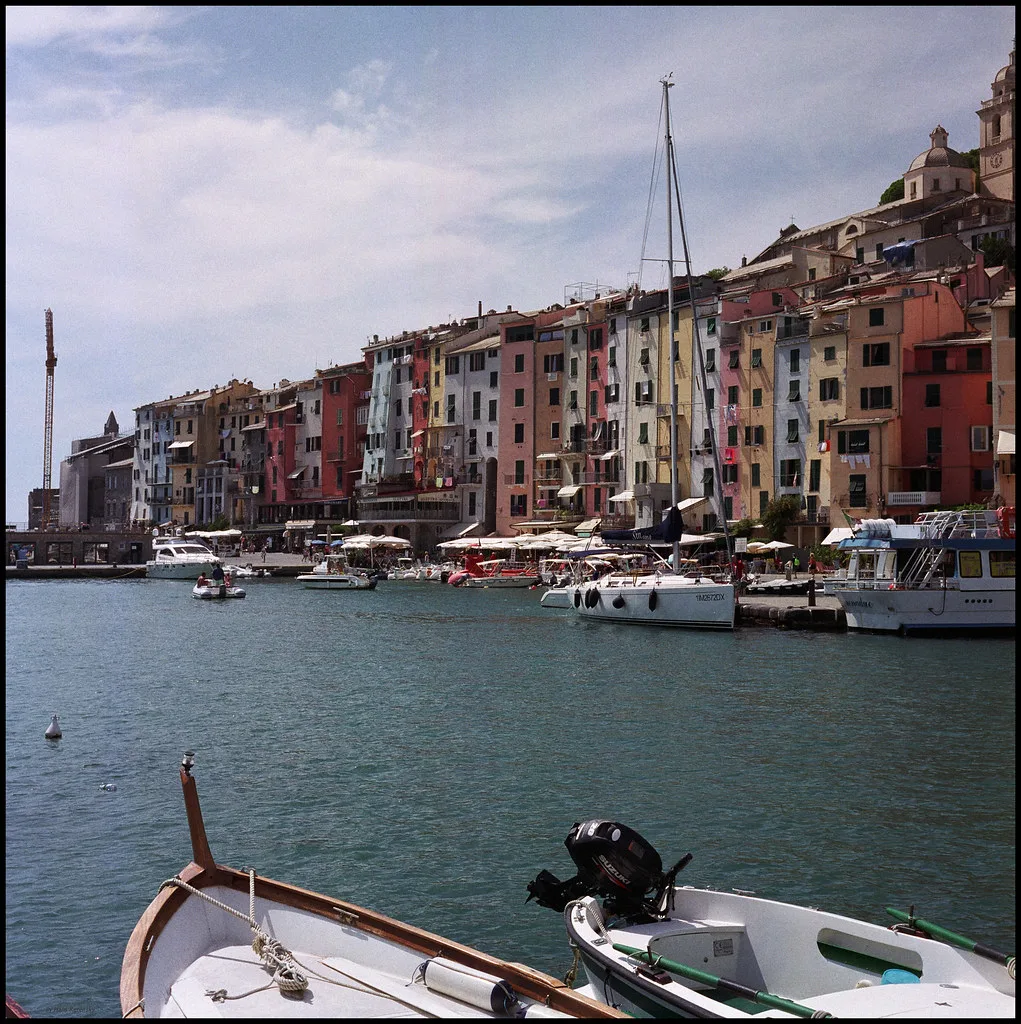
Portovenere sits at the tip of the peninsula that shelters La Spezia's gulf, and I nearly made the mistake of skipping it entirely. A fellow passenger — a retired art teacher from Vermont — told me over breakfast that Portovenere was her favorite place on earth, more beautiful than Cinque Terre, less crowded, more honest. I was skeptical, but she had tears in her eyes when she said it, and that kind of conviction deserves respect. So I took the bus from La Spezia's waterfront, a winding thirty-minute ride along the coast road, and she was right. The thirteenth-century Church of San Pietro perches on a rocky promontory where the waves crash beneath you, and the striped marble facade catches the afternoon sun in ways that make photographers weep. The narrow streets climb steeply from the harbor, lined with those same painted houses you'll find in Cinque Terre but with far fewer tourists blocking your view of them. Lord Byron's grotto sits below the church — a sea cave where the poet supposedly swam across the gulf to visit Shelley in Lerici, a distance that seems impossible until you stand there and realize that Romantic poets simply refused to accept the word.
Back in La Spezia proper, I wandered Via del Prione with no particular destination, which is the best way to discover any Italian city. The daily market near Piazza Cavour was in full swing — vendors selling fresh pesto in glass jars, stacks of focaccia still warm from the oven, buckets of anchovies glistening silver on crushed ice. An old woman at a cheese stall insisted I try her pecorino, slicing a thin wedge with a practiced hand and watching my face as I tasted it. When I closed my eyes and whispered something appreciative, she nodded once, satisfied, as if she had passed judgment on me rather than the other way around. I bought a wedge wrapped in wax paper and ate it later on the train to Manarola, crumbling pieces onto focaccia, which felt like the most civilized lunch imaginable.
The train back to La Spezia was crowded with sunburned tourists clutching gelato cups and shopping bags, and I stood pressed against the window watching the coastline slide past — tunnel, cliff, village, tunnel, cliff, village — that hypnotic rhythm the Cinque Terre rail line creates. A young couple beside me was speaking in hushed Italian, and the woman rested her head on the man's shoulder with a contentment that felt like it belonged to this specific place and no other. I realized then that what makes this stretch of coastline extraordinary isn't the painted houses or the hiking trails or even the food, though all of those are remarkable. It's the way this place insists on slowness, on attention, on being fully present in a world that usually rewards the opposite. The lesson of Cinque Terre is that beauty demands your time, and if you refuse to give it, the beauty retreats into the stones and the sea and waits for someone who will.
Looking back, I realized that La Spezia itself deserved more of my attention than I gave it. The naval museum with its collection of figureheads and torpedo models, the fresh pasta shops along Via del Prione where nonne roll dough by hand in the back rooms, the quiet harbor at dusk where fishing boats still outnumber yachts and the water reflects the city lights in long golden ribbons — these are the details that linger now, weeks later, when I close my eyes and smell the salt air again. My heart ached a little when the ship pulled away that evening, the gulf growing smaller behind us, the lights of the five villages appearing one by one along the darkening coast like a constellation that had fallen to earth and refused to go back.
The Cruise Port
Ships dock at Molo Garibaldi, La Spezia's main cruise pier on the eastern shore of the Gulf of Poets. The terminal is basic — a covered waiting area and little else. Don't expect shops or lounges. What you get instead is immediacy: step off the ship and you're in a working Italian port city, not a tourist enclosure.
The walk to La Spezia Centrale train station takes about 10 minutes along the waterfront — a pleasant stroll past naval installations and local cafes. This station is your launch point for Cinque Terre, Pisa, Florence, and everywhere else the Italian rail network reaches. Taxis queue near the pier entrance if you prefer a ride (around €10 to the station).
Getting Around
La Spezia itself is compact and walkable. The old town, Via del Prione shopping street, and the waterfront are all within easy reach of the cruise pier. You won't need transport unless you're heading out of the city.
Train to Cinque Terre: Regional trains run every 15-30 minutes from La Spezia Centrale to all five villages. Journey time is 5-20 minutes depending on which village. A Cinque Terre Card (€16/day) covers unlimited train travel between villages plus trail access — buy it at the station before your first ride. Individual tickets run approximately €4 each way.
Ferry: Seasonal ferries connect La Spezia to the Cinque Terre villages by sea, offering spectacular coastal views. Less frequent than trains but worth it for the approach — watching the painted houses emerge from the cliffs is unforgettable.
Pisa and Florence: Both are reachable by train. Pisa Centrale is about 1 hour away; Florence (Santa Maria Novella) takes 2-2.5 hours. Doable as a day trip if your port call is long enough, but you'll spend most of your time in transit.
Weather & Best Time to Visit
The Cruise Port
La Spezia's cruise terminal sits at Molo Garibaldi, a modern pier on the city's western waterfront that handles a growing number of Mediterranean itineraries each season. The port occupies a strategic position at the head of the Gulf of Poets — one of the deepest natural harbors on Italy's Ligurian coast — sheltered from open-sea swells by the long peninsula that stretches south toward Portovenere. Most major cruise lines dock here rather than attempting the narrow approaches to the Cinque Terre villages themselves, making La Spezia the practical gateway for ships too large to anchor along the rugged coastline to the north. The terminal building offers basic facilities including restrooms, a small tourist information desk, and taxi ranks just outside the exit. On busy port days when multiple ships are in, the terminal area can feel congested, but the walk into town thins the crowds quickly. Free shuttle buses sometimes operate between the pier and the city center, though availability depends on the cruise line and the season — check with your ship's shore excursion desk before disembarking. The port area itself is flat and accessible, with clear signage pointing toward the train station, the old town, and the waterfront promenade. La Spezia handles both cruise traffic and active Italian Navy operations, so you may see naval vessels sharing the harbor — a reminder that this is a working port first and a tourist destination second.
Getting Around La Spezia
The regional train is your lifeline here, and understanding it transforms your entire port day. From La Spezia Centrale station — a twenty-minute walk or quick taxi ride from Molo Garibaldi — the Trenitalia regional service runs north along the coast to all five Cinque Terre villages. Trains depart every fifteen to thirty minutes during peak season, less frequently in shoulder months. A single ride to Riomaggiore, the closest village, costs roughly four euros and takes just twelve minutes. But the smartest purchase is the Cinque Terre Card, available at the station ticket office or from automated machines — it bundles unlimited train travel between La Spezia and Monterosso with access to the coastal hiking trails and village Wi-Fi hotspots. The one-day card runs about sixteen euros and pays for itself after just two or three village hops. Buy it early at the station before the queues build.
Ferries offer an alternative route to the villages from La Spezia's waterfront, operated by Consorzio Marittimo Turistico. The boat service runs from roughly April through October, weather permitting, and the journey to Riomaggiore takes about twenty-five minutes — slower than the train but with spectacular coastal views as the painted villages reveal themselves from the water. A day pass for the ferry costs around thirty-five euros. Ferries also connect La Spezia to Portovenere, a worthwhile side trip that takes about thirty minutes by sea.
Within La Spezia itself, walking is the most practical way to explore. The old town is compact, the waterfront promenade is flat and pleasant, and most points of interest cluster within a fifteen-minute walk of each other. Local buses connect the train station to outlying neighborhoods and to Portovenere via the coastal road — the bus to Portovenere takes about thirty minutes and costs a few euros. Taxis are available at the cruise terminal and train station but are rarely necessary unless you're short on time or carrying heavy bags. For the Cinque Terre villages themselves, walking the Blue Trail — the Sentiero Azzurro — between villages is the iconic experience: the Monterosso-to-Vernazza section takes roughly two hours and rewards you with cliff-edge Mediterranean views that no train window can replicate. Check trail status before setting out, as sections close periodically for maintenance or after landslides.
Hiking the Coastal Trails
The famous Sentiero Azzurro – the Blue Trail – once connected all five villages in a continuous coastal path worn smooth by centuries of feet. But this is earthquake country, landslide country, and portions of the trail close regularly when the mountains reclaim their territory. Check the trail status before you plan your day. When I visited, the Monterosso-Vernazza and Vernazza-Corniglia sections were reliably open, but these things change with the weather and the seasons.
I hiked the stretch from Monterosso to Vernazza on a June morning before the heat settled in, and it took me about two hours at a contemplative pace – stopping often to look back at the coastline, to watch the way the light changed on the water, to let faster hikers pass. The trail is moderately difficult, steep in places where stone steps climb through terraced vineyards and wind through chestnut forests, then emerge suddenly onto exposed cliffside paths where the Mediterranean spreads below you like burnished silver. The views are extraordinary throughout – the kind that make you stop walking and just breathe.
Bring water, start early before the Mediterranean sun climbs high, and wear proper hiking shoes with good traction. The trails are ancient, uneven, sometimes slick with morning dew or loose with pebbles. I saw tourists attempting these paths in flip-flops and dress sandals, and I winced for their ankles. This is not a boardwalk stroll. Respect the terrain and it will reward you.
If hiking doesn't call to you – or if your ship schedule doesn't allow the time – take the train between villages and explore each on foot. You'll cover more ground, spend less energy on steep climbs, and save your hiking legs for your favorite stretch. There's no shame in the easier route. The villages themselves offer plenty of steps and hills to climb.
Top Excursions & Things to Do
The Five Villages of Cinque Terre
These five ancient fishing villages – Monterosso, Vernazza, Corniglia, Manarola, and Riomaggiore – cling to this unforgiving coastline like they've grown from the rock itself. Each has its own character, its own particular way of capturing the light. I visited them all in a single long day, though I could have spent a week and still found new corners, new views, new ways the afternoon sun transformed those painted walls.
Riomaggiore: The southernmost village and your first encounter if you're coming from La Spezia – just twelve minutes by train. The colorful houses tumble down the ravine to a tiny harbor where fishing boats still rest between the rocks. The main street, Via Colombo, tunnels through the lower village, genuinely charming in a way that's less polished than the postcard shots suggest. Which somehow makes it better, more honest. I watched an old fisherman mending nets while tourists photographed him, and he ignored us all with magnificent indifference.
Manarola: The photographer's favorite, and mine too if I'm being truthful. At sunset, those jumbled pastel houses glow golden above the rocky swimming coves, and the whole village seems to levitate in that strange Mediterranean light that turns everything into memory even as you're living it. The Sciacchetrà dessert wine they make here comes from grapes grown on terraces so steep and precarious you wonder how any human tends them. It tastes like honey and apricots and the patience of centuries.
Corniglia: The smallest village and the only one without direct access to the sea – it perches on a clifftop a hundred meters above the water, reached by 382 stone steps or a shuttle bus for those wise enough to save their knees. Quieter than its sisters, more authentically itself somehow, with fewer tourists and better gelato. I sat in the village square and watched absolutely nothing happen for half an hour, which felt like the most Italian thing I did all day.
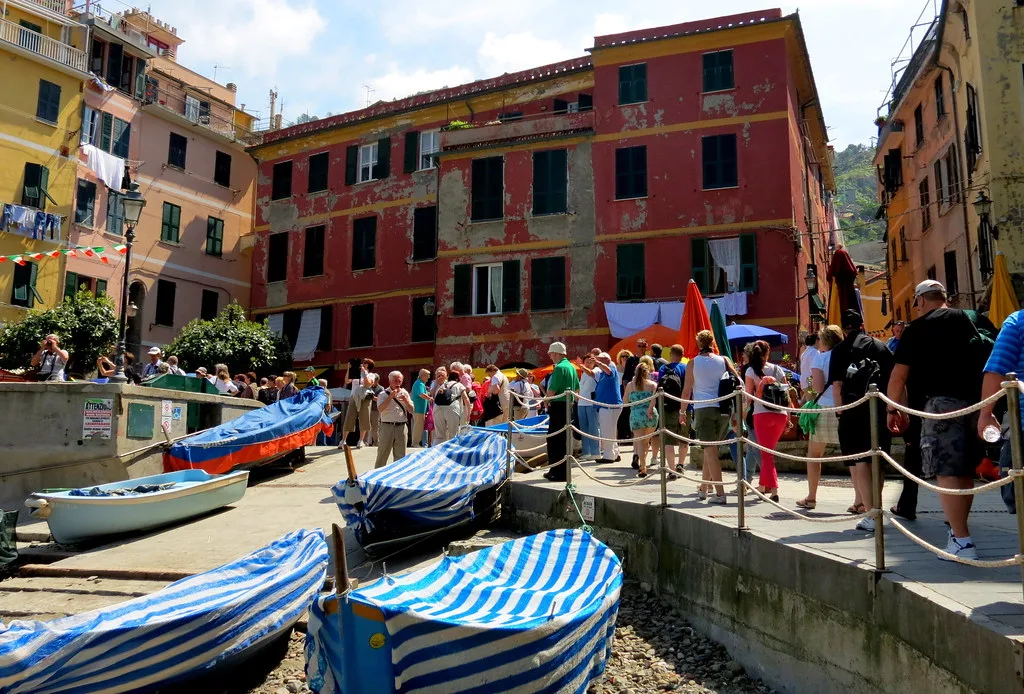
Vernazza: Many travelers call this the most beautiful of the five, and I won't argue. The natural harbor, the pastel houses arranged just so, the church of Santa Margherita and the medieval Doria Castle ruins creating a composition so perfect it seems impossible that it simply evolved over centuries. But arrive early or stay late – midday brings tour groups that overwhelm the tiny piazza, and the magic retreats into doorways and shadows until the crowds depart.
Monterosso al Mare: The northernmost and largest village, split between old town and new, with an actual sandy beach – the only real beach among the five. It's more resort-like, less dramatically vertical, but it offers amenities the others lack: beach chairs, restaurants with tables, room to breathe. If you're traveling with small children or prefer your coastline accessible, this is your village. The others make you work for their beauty. Monterosso gives it more freely.
Booking tip: You can book ahead through your cruise line's ship excursion desk for guaranteed return to the vessel, or explore independent options through local operators — often at lower prices with more flexibility. Independent travelers should allow at least 90 minutes buffer before all-aboard and keep the ship's contact number handy.
The Gulf of Poets and Naval Heritage
La Spezia sits at the head of a deep, protected gulf that the Italians call Golfo dei Poeti – the Gulf of Poets – a name earned in the nineteenth century when the Romantic poets discovered this coastline and never quite recovered from it. Lord Byron swam these waters, challenging the sea with the same reckless passion he brought to everything. Percy Bysshe Shelley lived briefly in nearby Lerici with Mary Shelley, writing some of his finest verses while watching storms roll across the gulf, until the sea claimed him in 1822 when his boat went down in a summer squall not far from this shore.
But this protected harbor attracted more than poets. In 1869, the newly unified Kingdom of Italy established the Arsenale Militare Marittimo – the Arsenal of La Spezia – transforming this sleepy port into one of the nation's most important naval bases. It became, and remains, the headquarters of the Italian Navy.
Walking the waterfront, you will see this dual nature everywhere: cruise ships and naval vessels sharing the harbor, tourists consulting maps while naval officers walk purposefully past, the graceful nineteenth-century arcades of Via del Prione standing near modern military infrastructure. La Spezia never pretends to be a resort town. It is a working port that happens to sit next to extraordinary beauty, and I found that honesty refreshing.
The Food of Liguria
Liguria invented pesto – pesto alla Genovese – and the basil grown on these coastal hillsides has a different flavor than anywhere else on earth, sweeter and more aromatic, smaller leaves that concentrate the essential oils. Eat it on trofie pasta – the twisted local shape that catches the sauce perfectly – or slathered thick on warm focaccia. Don't accept imitations. You will know the difference the moment it touches your tongue.
Speaking of focaccia: the Ligurian version is an art form, dimpled and golden, brushed with olive oil and scattered with coarse salt. But seek out focaccia di Recco if you find it – a thin, cheese-filled flatbread that emerges from wood-fired ovens crispy and blistered, the cheese molten and stretching when you tear it.
Farinata – chickpea flatbread baked in wide copper pans until the edges crisp and the center stays creamy – is the local street food, sold by the slice and eaten warm. Fresh anchovies appear on every menu, fried golden or marinated with lemon and olive oil, and they bear no resemblance to the salty tinned things you know from pizza toppings. These are sweet, delicate, revelatory.
Depth Soundings
Money: The local currency is Euro (€). ATMs are generally available near the port area, though fees vary. Credit cards are widely accepted at tourist-oriented establishments, but carry some local cash for markets, street food, and smaller vendors. Your ship's exchange rate is typically unfavorable — withdraw from a bank ATM instead. Budget $30–$80 per person for a comfortable day including lunch, transport, and a few entry fees.
Timing: Start early if your ship arrives at dawn — the first hours offer pleasant conditions and smaller crowds. Allow at least 30 minutes buffer before all-aboard time. Set a phone alarm as backup. Most port visits allow 8–10 hours on shore, which is enough to see the highlights without rushing if you prioritize well.
Safety: Standard port-town awareness applies — keep valuables close and stick to well-traveled areas during daylight. Your ship's ID card is your most important item — losing it creates a genuine headache at the gangway.
Communication: Wi-Fi is often available at cafés and restaurants near the port. Consider downloading offline maps before disembarking — cellular data roaming charges can be substantial and surprising. Google Maps offline mode or Maps.me work well for navigation without data.
Food & Water: Tap water safety varies by destination — ask locally or buy bottled water to be safe. The best food often comes from busy local restaurants rather than tourist-facing spots near the port. Lunch at a popular local place typically costs $8–$20 per person. Street food can be excellent value if you choose busy stalls with high turnover.
Photo Gallery

Frequently Asked Questions
Q: What's the best time of year to visit La Spezia?
A: Cruise season runs June through August — gateway to Cinque Terre (37-82°F). August is the month to avoid: August is overcrowded and hot. May, September, and October are pleasant transitional months.
Q: Does La Spezia have a storm season?
A: La Spezia is not in a tropical-storm zone. The notable seasonal hazard is autumn floods: autumn floods can close hiking trails — some trails close after heavy rain. Generally sheltered by mountains.
Q: What should I pack for La Spezia's weather?
A: Sturdy hiking shoes — trails are steep. Sun protection. Train pass for Cinque Terre. Cash for small trattorias.
Q: Will rain ruin my port day?
A: Wetter than south Med; autumn floods possible. Cruise season concentrates in the drier June–August window.
Q: Is La Spezia suitable for passengers with mobility challenges?
A: Accessibility varies by area. The port vicinity and main commercial streets are generally manageable, but older historic districts may feature cobblestones, stairs, and uneven surfaces. Consider booking an accessible ship excursion if you have concerns. The ship's shore excursion desk can advise on specific accessibility options for this port.
Q: Do I need to exchange currency before arriving?
A: The local currency is Euro (€). Most tourist-facing businesses accept major credit cards. ATMs near the port offer competitive exchange rates. Carry some local cash for small purchases, markets, and tips. Avoid exchanging money on the ship — the rates are typically unfavorable compared to local bank ATMs.
Q: Can I explore independently or should I book a ship excursion?
A: Both options work well. Ship excursions guarantee return to the vessel and handle logistics, making them ideal for first-time visitors. Independent exploration costs less and allows more flexibility — just keep track of time and allow a 30-minute buffer before all-aboard. Many passengers combine approaches: an organized morning tour followed by free afternoon exploration.
Last reviewed: February 2026
La Spezia: Your Gateway to Cinque Terre's Painted Villages
Port Map
Tap markers to explore La Spezia and Cinque Terre
Frequently Asked Questions
Can I see all five villages in one port day?
Technically possible, yes – the trains run frequently and the distances are short. But I wouldn't recommend it, not if you want to actually experience these places rather than simply photograph them and move on. You'll spend your day on trains, checking your watch, rushing through narrow streets with your heart rate elevated for all the wrong reasons. Pick two or three villages and give them the time they deserve. Manarola and Vernazza make a beautiful combination. Or Monterosso and Corniglia if you want beach and clifftop. Quality over quantity, always.
Should I book a ship excursion or go independently?
Independent travel is cheaper, more flexible, and honestly more rewarding if you're comfortable with basic train navigation. The trains are easy to figure out – you buy a Cinque Terre Card, check the departures board, and go. You set your own pace, linger where you want to linger, leave when you're ready. Ship excursions guarantee you won't miss all-aboard time, which gives peace of mind, but they often rush through villages with large groups, hitting the highlights on a predetermined schedule. I went independently and never regretted it. Just set alarms and allow buffer time for the return.
Is La Spezia itself worth exploring?
If you have time after visiting Cinque Terre – or if the weather turns poor and the villages lose their magic in the rain – La Spezia's old town offers pleasant discoveries. There's a daily market with local produce and regional specialties, good restaurants where the prices drop and the locals outnumber the tourists, and that remarkable Naval Technical Museum if maritime history speaks to you. But let's be honest: most cruisers head straight to the painted villages, and I can't fault that choice. La Spezia is a fine city, but Cinque Terre is extraordinary.
What time of day is best for Cinque Terre?
Early morning or late afternoon – the golden hours when the light is magical and the crowds are manageable. I took the first train out at dawn and had Manarola's waterfront nearly to myself for twenty precious minutes while the village woke up. By noon the same spots were shoulder-to-shoulder with tour groups. Midday in summer is genuinely brutal: packed trains where you'll stand pressed against strangers, lines at every gelateria and restroom, villages so overwhelmed the magic retreats into private moments you can't access. Start at first light if your ship schedule allows it. You'll thank yourself all day.