


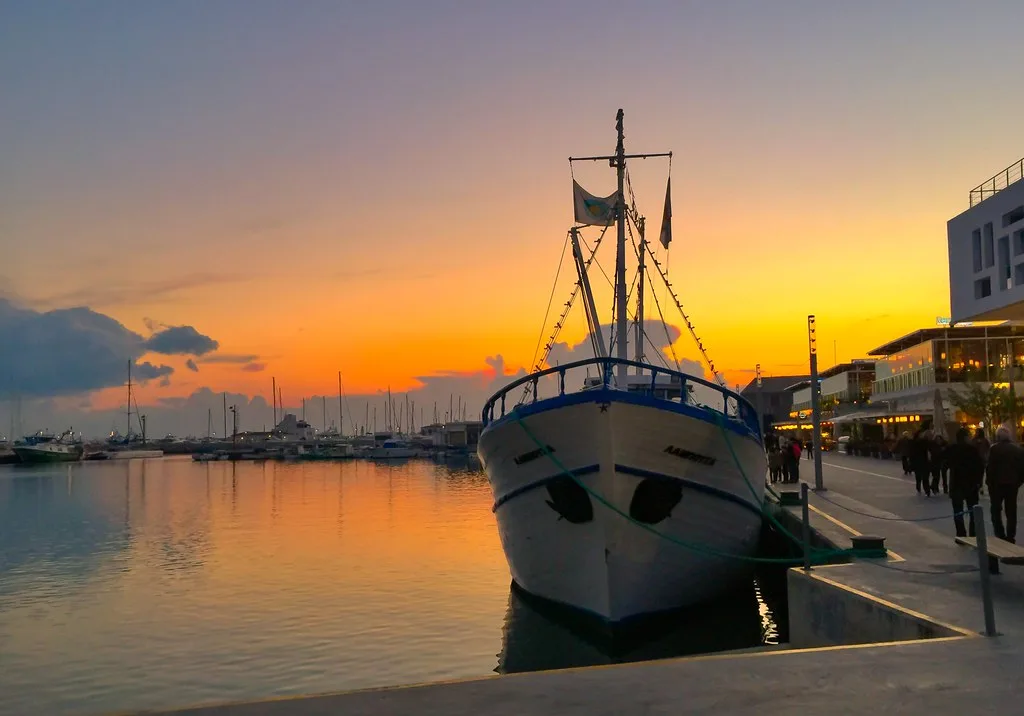
Photo: Wikimedia Commons
Last reviewed: February 2026
My Logbook: Limassol
I stepped off the shuttle bus into the fierce midday heat of Limassol and immediately felt the warm Mediterranean wind push against my face. My shirt stuck to my back within seconds. The air smelled of brine and grilled lamb drifting from a nearby taverna, and I heard church bells ringing somewhere in the maze of the Old Town ahead. I had studied the maps, read the histories, but nothing prepared me for the scale of what I was about to walk through. Limassol holds four thousand years of layered civilization in its bones, and my single port day suddenly felt absurdly short.
We walked east along the promenade toward the Old Town, past cafes where locals lingered over tiny cups of Cypriot coffee. My wife Sarah noticed the cats first — they were everywhere, lounging on warm stone walls, weaving between our ankles, utterly unafraid. I watched one tabby stretch across a Crusader-era doorstep as though it owned every empire that had ever passed through. The narrow lanes opened onto Limassol Castle, squat and weathered, its limestone walls golden in the sun. I paid our €4.50 admission and we stepped inside. The air was immediately cooler — almost cold against my sun-heated skin. I ran my hand along the rough stone wall and felt centuries of wear beneath my fingertips. This is where Richard the Lionheart married Berengaria of Navarre in 1191, making her Queen of England between battles of the Third Crusade. The chapel is small and plain. I stood where a king once stood and whispered vows. I tried to imagine it — armoured knights, the smell of incense and sweat, the sound of Latin prayer echoing off these same stones. However, the medieval museum inside was modest compared to what I had expected. Still, the collection of Crusader-era armour and Byzantine pottery told a story no textbook could match.
We drove west toward Kourion and the landscape shifted from urban sprawl to golden-brown hills dotted with olive trees. I gazed out the taxi window and something shifted inside me. The scale of history here is not abstract — you feel it in the road itself, which follows ancient paths carved by Roman chariots. When we crested the final hill and I saw the amphitheatre for the first time, I could not speak for a long moment. It sits on a cliff overlooking the sea, its stone seats descending toward a stage framed by nothing but sky and water. I climbed to the top row and sat down. The wind was warm and steady. I heard a bird singing somewhere below. A group of schoolchildren were testing the acoustics — one child whispered from the stage and I heard every word from fifty metres away. The sound carried perfectly, just as the ancient Greeks had designed it to carry, twenty-two hundred years ago. Despite the crowds, I felt utterly alone with the ancients for a moment.
The mosaics in the House of Eustolios stopped me cold. Fish and birds and geometric patterns, their colours still bright after seventeen centuries — deep reds, ocean blues, forest greens. I crouched beside one panel showing a woman holding a measuring rod, identified as Ktisis, the personification of Creation. My knees ached from squatting on the rough stone, but I could not look away. The delicacy of the work was extraordinary. Yet I also noticed how much had been lost — blank patches where mosaic tiles had been pried away by looters centuries ago. Beauty and destruction, side by side. Although the ruins were partially roped off, you could still walk freely through most of the site, touching columns that Bronze Age pilgrims once touched. I tasted the dust on my lips and smelled wild thyme baking in the heat.
The moment that stays with me happened at the Temple of Apollo Hylates. We had the site nearly to ourselves in the late afternoon. I walked between the column foundations, my shadow long on the ancient stone, and I heard nothing but wind through pine trees and the distant hush of waves. I sat on a fallen column and felt tears fill my eyes, and for the first time in years I understood what sacred ground actually means — not doctrine or denomination, but the accumulated weight of human hope poured into one place over millennia. People came here to pray when the world was young. They brought offerings and asked for healing and courage. The columns are broken now, but the hope still lingers in the silence between the stones. I whispered a quiet prayer of my own and felt something shift inside my chest — something like gratitude, or grace, or both.On our way back to the ship, we stopped at a vineyard in the Kolossi area and tasted Commandaria — the oldest named wine still in production, dating to 800 BC. It was sweet and thick, almost like liquid amber, with a taste somewhere between honey and dried figs. The vintner explained that Crusader knights exported it across Europe, and I tried to imagine those medieval warriors sipping this same wine after siege battles and cathedral weddings. However, the €12 price for a bottle felt like a remarkable value for something eight centuries of knights and kings had savoured before me.
We caught the last shuttle back to the ship with barely ten minutes to spare. My legs were exhausted from climbing amphitheatre steps and temple ruins. But as I watched Limassol's harbour lights shrink behind us, I realized I had walked through more accumulated history in one day than most places contain in their entire existence. The lesson: Cyprus does not merely preserve its past — it lives in it, breathes through it, builds on top of it. Every cobblestone is a palimpsest. I learned that the most profound encounters happen not in grand museums behind velvet ropes, but in open-air ruins where the wind carries the same prayers it carried three thousand years ago. I learned that beauty and loss are inseparable, that empires crumble but amphitheatre acoustics endure, and that sometimes the most important thing you can do in a place is simply sit down, be quiet, and listen.
Looking back, what Limassol taught me was patience with history. We rush through ports, ticking off sites like a checklist, yet the ruins ask us to slow down. I realized that my most meaningful moments were not the grand vistas or the famous landmarks but the quiet pauses — sitting in an empty temple, watching dust motes float through a Crusader chapel window, hearing a child's whisper carry across two thousand years of stone. What matters is not how many places we visit but how deeply we allow ourselves to be changed by them.
The Cruise Port
What you need to know before you dock.
- Terminal: New Port Limassol (DP World) — modern cruise terminal 4 km from city center; shuttle buses and taxis available. Wheelchair accessible ramps at the terminal.
- Distance to City Center: Old Town 4 km (2.5 miles); 10 min drive by taxi (~€15) or public bus (€2)
- Tender: No — ships dock at the pier. Low-mobility passengers can disembark with no difficulty.
- Currency: Euro (€); ATMs widely available; credit cards accepted most places
- Language: Greek and Turkish (Greek in south); English very widely spoken, especially in tourist areas
- Driving: Left side (British legacy); car rental available; roads excellent; international license accepted
- Best Season: April-May and September-October (warm, not scorching); July-August very hot (35°C+/95°F+)
Getting Around
Limassol is manageable on foot once you reach the Old Town, but the archaeological sites require transport. The cruise terminal is 4 km from the city center, and most visitors use the shuttle bus or a taxi to bridge that gap. Here is a detailed breakdown of your options for getting around independently or with organized tours.
- Shuttle Buses: Cruise lines often provide shuttles from New Port to Old Town. Check with your ship for schedules and pricing. This is the most affordable option at around €5 round trip on many lines. The shuttle drop-off is usually near Limassol Castle, putting you steps from the medieval center.
- Taxis: Available at port; expect €15 to Old Town (10 min). Agree on fare before departure. Day hire for archaeological sites runs about €100-€150 depending on distance and number of stops. Drivers generally speak English and many will offer informal commentary.
- Public Bus: Bus route from port to city center costs €2 — economical but infrequent (check schedules in advance). The public bus network does not serve the archaeological sites well, so taxis or tours are better for those destinations.
- Car Rental: Available at port and in city, approximately €40-€60 per day. This is the best option for exploring Kourion, Kolossi, and Amathus independently on your own schedule. Remember that Cyprus drives on the left. Roads are excellent and well-signed in English.
- Shore Excursions: Organized tours to Kourion and Apollo Temple or Paphos are available through cruise line or independent operators. Pre-booking recommended for guaranteed return to the ship on time. Independent excursion companies often cost less than ship excursion packages.
For visitors with mobility concerns, the Old Town has some cobblestone sections that can be difficult with a wheelchair. The promenade along the seafront, however, is fully paved and accessible. Most archaeological sites involve uneven terrain and stairs.
Limassol Area Map
Interactive map showing cruise terminal, Kourion Archaeological Site, Limassol Castle, Amathus ruins, and Kolossi Castle. Click any marker for details and directions.
Excursions & Activities
How to spend your time — whether you book ahead through the ship or explore independently.
Kourion Archaeological Site
Ancient Greek city-state 17 km west (25 minutes drive). Magnificent 2nd century BC amphitheater overlooking the sea — still used for performances today. Stunning floor mosaics in the House of Eustolios (fish, birds, geometric patterns). House of Gladiators, Early Christian Basilica ruins. Entry €4.50. Half-day minimum. Bring hat and water — limited shade. This is Cyprus's crown jewel archaeological site. Available as a ship excursion (typically €65-€80 per person) or visit independently by taxi or rental car for much less. Moderate walking required on uneven ground — not ideal for those with strenuous mobility limitations.
Temple of Apollo Hylates
Bronze Age religious sanctuary near Kourion — sacred to Apollo as god of woodlands. Pilgrims traveled across the ancient Mediterranean to worship here. Column foundations, priests' quarters, sacred baths visible. Peaceful setting among pine trees. Combined ticket with Kourion available. Allow 1 hour. The spiritual center of ancient Cyprus. Book ahead if your time is limited, as independent taxi drivers may linger too long at Kourion.
Limassol Castle & Medieval Museum
Built on Byzantine basilica ruins in city center. Where Richard the Lionheart married Berengaria of Navarre (1191) during Third Crusade, making her Queen of England. Medieval Museum of Cyprus inside features armour, tombstones, pottery, coins spanning Byzantine through Ottoman periods. Entry €4.50. Allow 1-2 hours. Essential historical context for understanding Cyprus's layered past. Accessible from the shuttle drop-off with minimal walking.
Amathus Archaeological Site
Ancient city-kingdom 15 km east (20 minutes drive) — one of Cyprus's oldest settlements dating to 1100 BC. Temple of Aphrodite ruins, ancient harbour installations, elaborate tombs, acropolis remains. Phoenician and Greek influences visible. Entry €2.50. Less crowded than Kourion. Allow 1-2 hours. Beach access nearby — combine archaeology with swimming. This is an excellent independent option for those who want to avoid the larger tour groups.
Kolossi Medieval Castle
Crusader stronghold 15 minutes west of Limassol — Knights of St. John headquarters in 14th-15th centuries. Three-story stone keep surrounded by vineyards (Commandaria wine production center). Climb to battlements for countryside views. Original wine press and medieval kitchen. Entry €2.50. Allow 1 hour. Guaranteed return is easy from here since it is so close to the port.
Paphos Day Trip (UNESCO World Heritage)
70 km west (1 hour drive) — legendary birthplace of Aphrodite. Petra tou Romiou (Aphrodite's Rock) where goddess emerged from sea foam. Tombs of the Kings (4th century BC underground burial complex). Paphos Archaeological Park (intricate Roman mosaics). Paphos Castle harbour fortress. Full-day excursion. Organized ship excursion tours available from port, or book ahead with an independent operator. Consider your all-aboard time carefully — this is a long distance from the port.
Depth Soundings Ashore
- Kourion gets very hot midday — visit early morning or late afternoon. Bring hat, sunscreen, water. Limited shade among ruins.
- Combined archaeological ticket (Kourion + Apollo Temple + museum) saves money if visiting multiple sites. Available at first site entrance. Budget around €10-€15 for all archaeological entries combined.
- Limassol Castle is small — 45 minutes sufficient for museum unless you read every placard. Air-conditioned refuge from heat.
- Commandaria wine from the Kolossi area makes an excellent souvenir — airport shops carry it, but better selection and prices in Limassol wine shops. Expect €8-€15 per bottle.
- Cyprus uses UK-style electrical plugs (Type G) — same as Britain. Bring adapter if needed for devices.
- Tap water safe to drink but heavily chlorinated. Bottled water widely available (€0.50-€1 from kiosks).
- If visiting Nicosia (Europe's last divided capital), allow a full day — 1 hour drive each way plus border crossing time at the Green Line.
- Full meze in a local taverna costs €15-€25 per person. Portions are generous — one full meze often feeds two people comfortably. Ask the waiter about portion sizes before ordering.
- Archaeological sites close earlier in winter (Nov-Mar) — verify hours before planning afternoon visits.
Photo Gallery
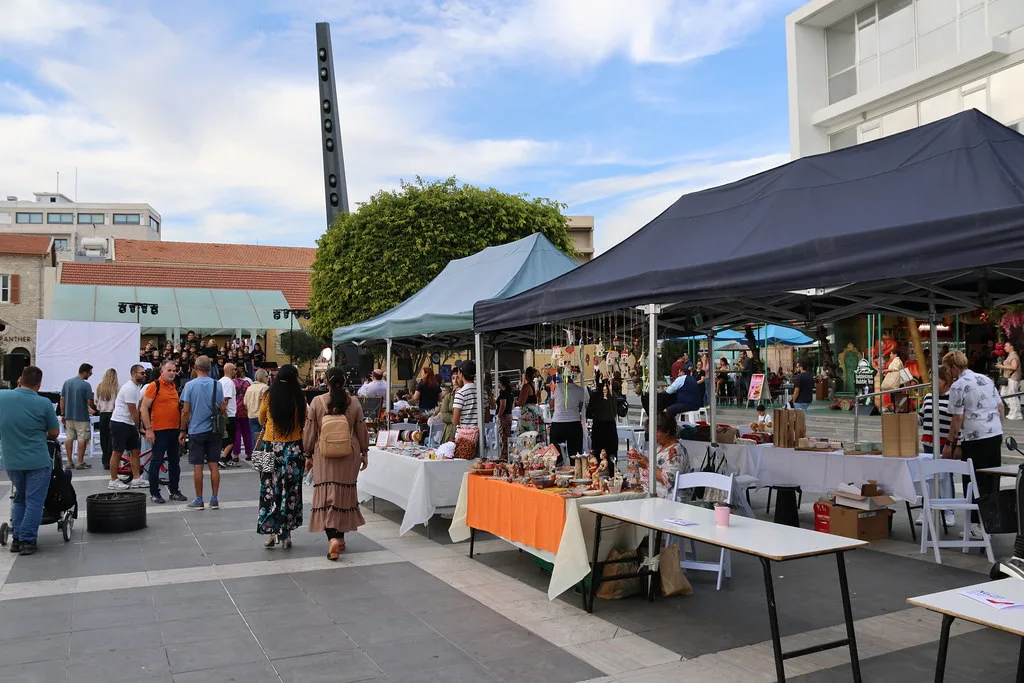
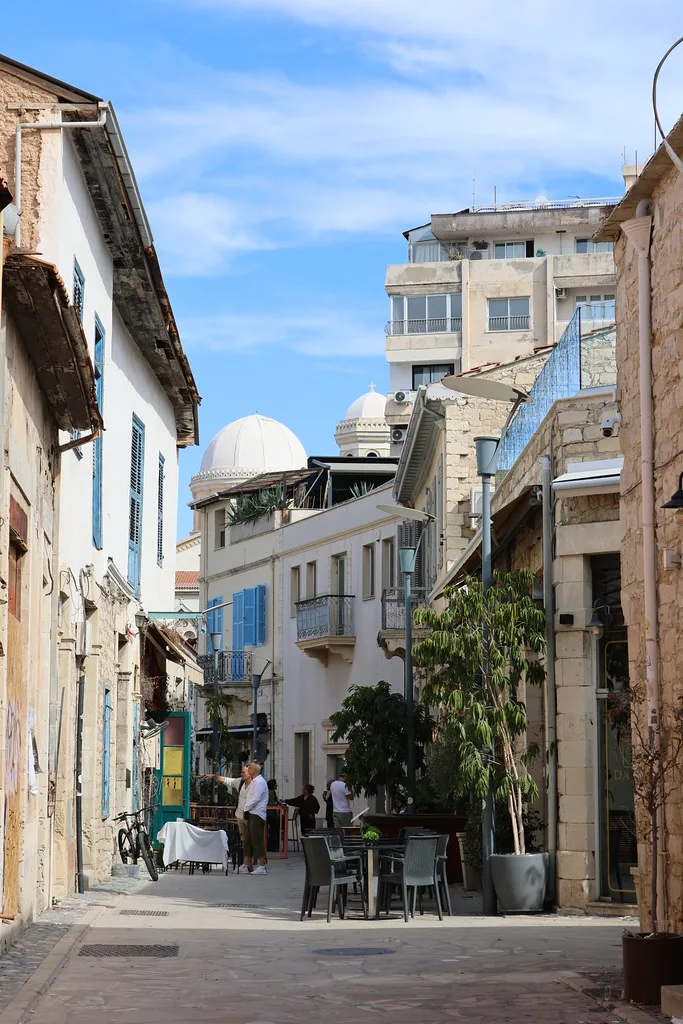
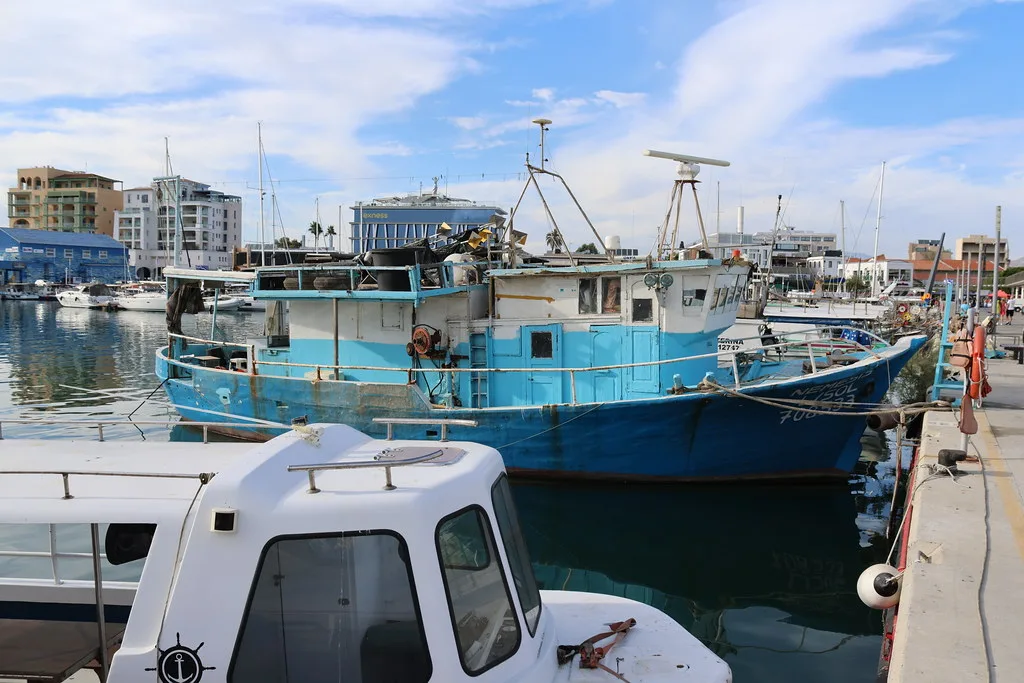
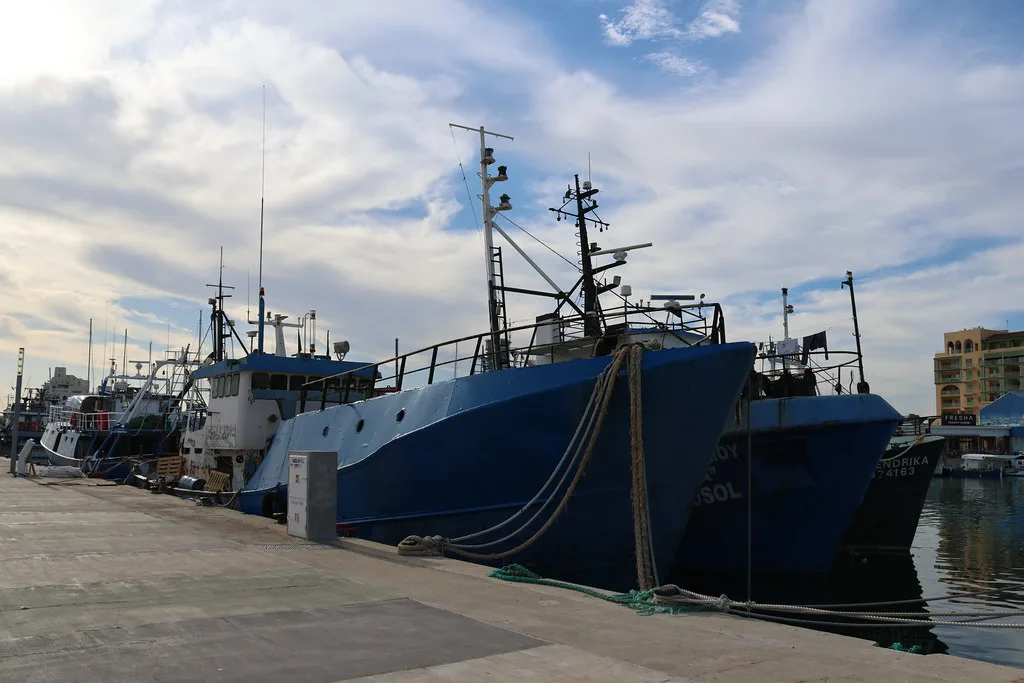
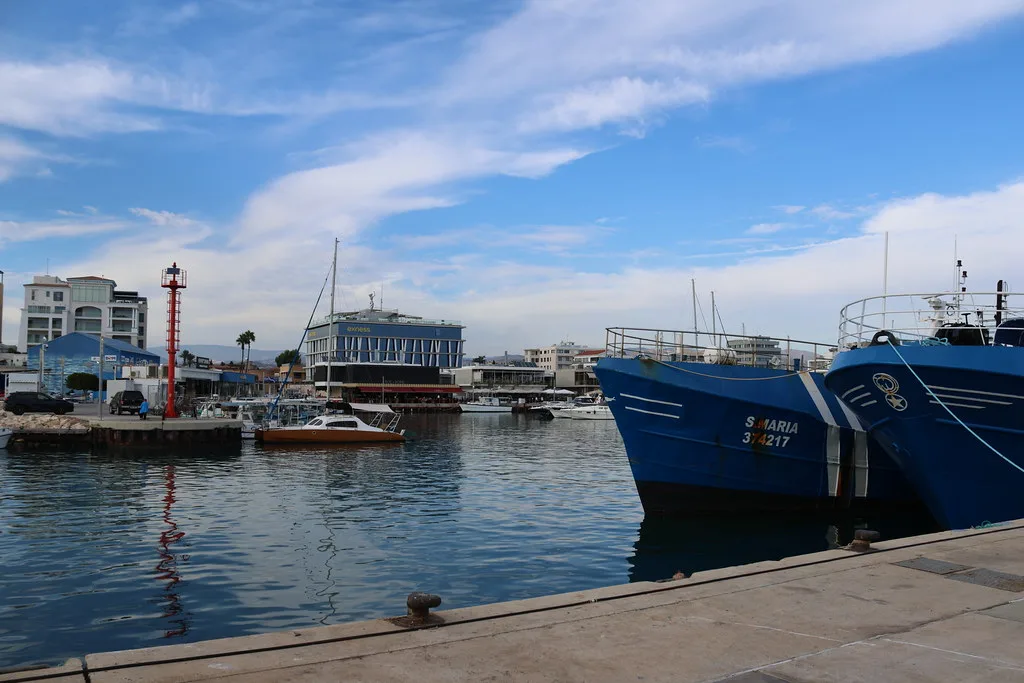
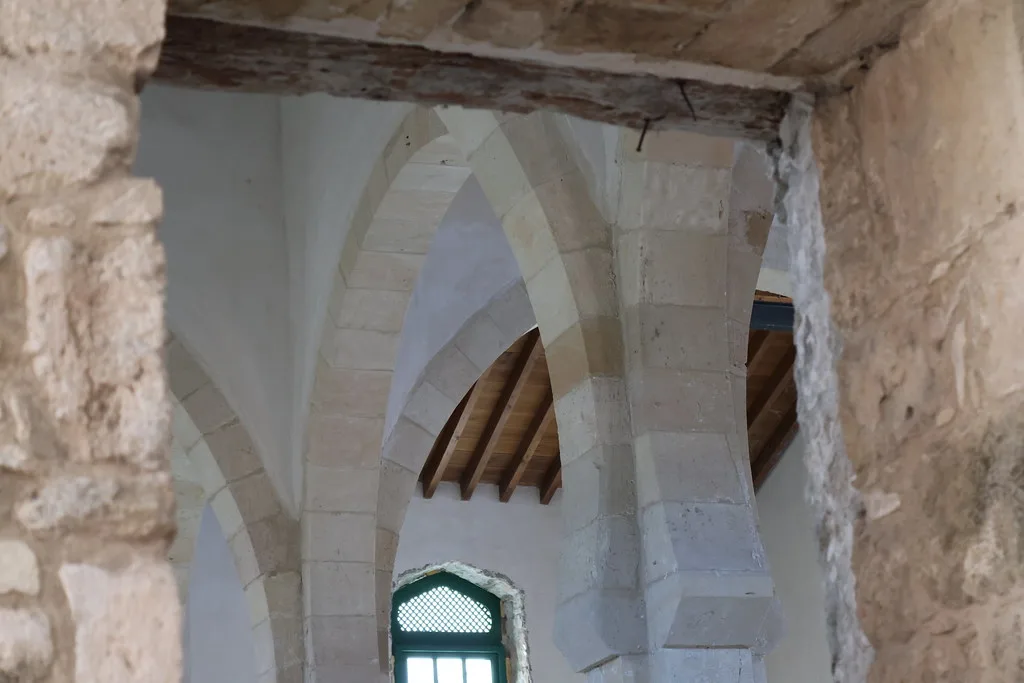
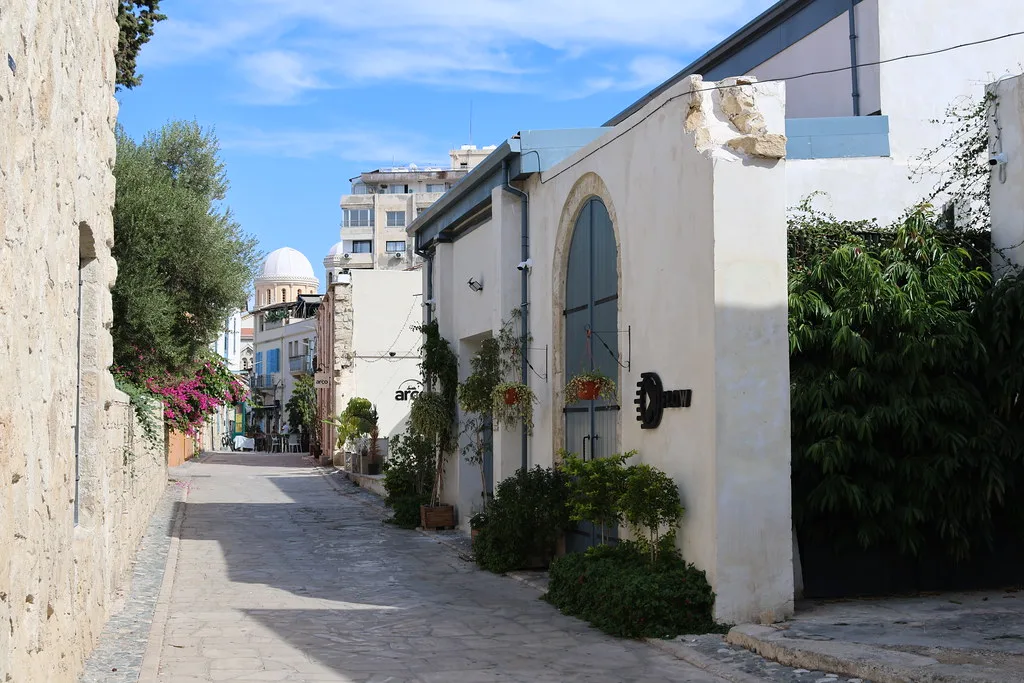
Image Credits
All photographs used on this page are sourced from free-use platforms including Unsplash and Pixabay, or are original photographs by the author. Full attribution is provided in each figcaption element. If you believe any image has been used in error, please contact us.
Frequently Asked Questions
Q: Where do cruise ships dock?
A: New Port Limassol operated by DP World, about 4 km from city center. Modern terminal with shuttles, taxis, and public bus connections (~€2 or taxi €15 to Old Town). The terminal is wheelchair accessible with ramps and level boarding areas.
Q: What's the best archaeological site?
A: Kourion Archaeological Site (25 min drive) — stunning amphitheater still used for performances, magnificent mosaics, dramatic coastal setting. Cyprus's most impressive ancient ruins. Entry fee is €4.50 per person.
Q: Can I visit Aphrodite's birthplace?
A: Yes — Petra tou Romiou (Aphrodite's Rock) near Paphos, 70 km west. Legendary site where goddess emerged from sea foam. Full-day trip or shore excursion recommended. Cost varies: ship excursion about €90, independent taxi about €120 for the car.
Q: Is Commandaria wine worth trying?
A: Absolutely. World's oldest named wine (800 BC), sweet dessert wine favoured by Crusaders. Available in restaurants and shops from €8-€15 per bottle. Kolossi Castle area is the historic production center.
Q: What happened at Limassol Castle?
A: Richard the Lionheart married Berengaria of Navarre here in 1191 during Third Crusade, making her Queen of England. Chapel and Medieval Museum inside document Cyprus's layered past across many civilizations. Entry €4.50.
Q: Is Limassol accessible for visitors with mobility issues?
A: The cruise terminal and seafront promenade are fully accessible. The Old Town has some cobblestone streets that may be difficult with a wheelchair. Archaeological sites involve uneven ground and stairs. Limassol Castle ground floor is partially accessible.
Q: What's the best time of year to visit Limassol?
A: April-May and September-October offer warm weather without extreme heat. Peak summer (July-August) can exceed 35-40 degrees Celsius. Winter months are mild but some sites have reduced hours.