


Manta: Where the Tuna Swim and the Panama Hats Are Born
Key Facts
- Region
- Pacific
- Currency
- US Dollar (USD) — Ecuador uses the US dollar as its official currency. No need to exchange money. Bring small bills ($1, $5, $10) as many vendors cannot break $20s or $50s
- Language
- Spanish; limited English in tourist areas. A bilingual guide or taxi driver for the day is recommended
Last reviewed: February 2026
My Visit to Manta
I stepped off the gangway into Manta on a Wednesday morning in late July, and the first thing that reached me was the smell — a thick, briny punch of salt, diesel, and fresh fish that hung over the waterfront like a living curtain. The sky above the harbor was a pale, washed-out blue, the kind of blue that comes from relentless equatorial sun bleaching everything it touches. Our ship had docked at the commercial pier beside a row of tuna boats painted in faded blues and yellows, their hulls stained with rust and labor, their decks strewn with coiled line and empty crates. I stood at the rail and watched crews unloading the morning catch, the silvery bodies of yellowfin tuna sliding down chutes into refrigerated trucks, and I felt something I had not expected to feel at a fishing port: awe. This was not a pretty place. But it was profoundly alive, and that aliveness drew me forward.
My wife and I walked from the pier toward the city center, a stroll of about two kilometers along a road flanked by warehouses and processing plants. The heat was immediate and heavy — Manta sits barely a degree south of the equator, and by nine in the morning the pavement was already radiating warmth through the soles of my shoes. We reached the Malecón, the oceanfront promenade that has been rebuilt and modernized since the devastating 2016 earthquake that leveled parts of the city. The new Malecón is wide and clean, lined with palm trees and benches, families walking children, vendors selling ice cream from carts. However, step a few blocks inland and you find the Manta that existed before the reconstruction: narrow streets crowded with hardware shops and textile stalls, women frying corvina over portable gas burners, the sound of reggaeton drifting from open doorways. This is a city that holds its old self and its new self in uneasy balance, and I found that tension honest and compelling.
The real surprise of the day came when we hired a taxi to Montecristi, a small town twenty minutes inland. Montecristi is the birthplace of the so-called "Panama hat" — which is, ironically, not Panamanian at all. The toquilla straw hats woven here have been crafted the same way for centuries, each one hand-formed from the fibers of the Carludovica palmata plant. The finest specimens, called superfinos, take months to complete and can cost thousands of dollars. They earned the name "Panama hat" because canal workers in the early twentieth century wore them, and Ecuador never managed to reclaim the credit. In a quiet workshop on a side street, an elderly woman was weaving a hat with fingers so nimble they blurred. She worked in the cool dim light of early morning, she explained through gestures, because the fibers are most pliable when the air is humid. By midday the straw becomes brittle and cracks. She showed me how to test quality: a true superfino can be folded flat, rolled into a tube, and shaken out without a single crease. I bought one — not a superfino, just a simple hat she had made herself, for $30. I wear it still, and every time I do, I think of her hands moving in that half-light, weaving something beautiful from the humblest of materials.
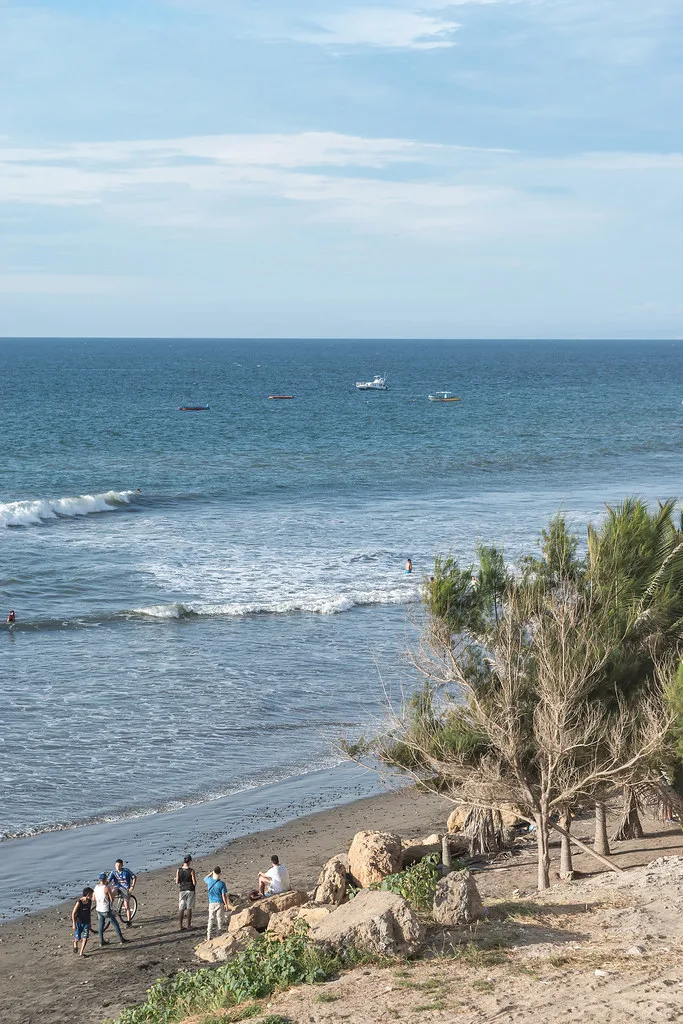
That afternoon we walked to Murciélago Beach, the main city beach, where the sand was warm and dark under our feet and the Pacific rolled in with a steady, gentle pulse. The water was surprisingly cool — the Humboldt Current pushes cold, nutrient-rich water northward along this coast, the same upwelling that draws tuna and whales. Children played in the shallows. A man grilled shrimp on a stick and sold them for a dollar each, and the taste was extraordinary: smoky, briny, the flesh popping between my teeth with a sweetness that only comes from seafood pulled from the ocean that same morning. My wife sat beside me on the sand and we watched the pelicans dive for fish, folding their wings and dropping like stones into the surf, rising each time with something silver in their beaks. Despite the heat and the noise of the city behind us, there was a quiet peace to that moment that I have carried with me ever since.
But the experience that changed me most came the following morning, when we boarded a small whale watching boat from the harbor. It was July — the heart of humpback whale season — and the captain, a leathery man named Carlos who had spent forty years on these waters, took us out past the breakwater into open ocean. Within thirty minutes, we saw the first blow: a plume of spray rising against the pale horizon. Carlos cut the engine. We drifted in silence, the boat rocking gently, the only sound the slap of water against the hull. And then the whale surfaced — a humpback mother, her calf beside her, the baby's smaller blow like an echo of its parent's. They were perhaps fifty meters away. The mother rolled slowly, showing us her barnacle-crusted flank, her enormous pectoral fin waving beneath the surface like a white wing. The calf surfaced clumsily, its body still learning the rhythms of breath. Carlos whispered, "She came from Antarctica. Three thousand miles, just to give birth here." I felt my breath caught in my chest. Something shifted inside me — a recognition of the scale and tenderness of life happening just beneath the surface of ordinary waters. My wife reached for my hand and squeezed it, and neither of us spoke. We simply watched, grateful to be witnesses to something so ancient and so fragile.
We saw three more breaches that morning — the whale launching itself almost entirely out of the water before crashing back in a thunderclap of spray — and tail slaps that sent shock waves across the surface. The cost of the tour was $40 per person, and it was worth ten times that. I have watched whales in Alaska and Norway, but there is something different about encountering them here, so close to the equator, in waters that feel like the edge of the world. The experience is raw and unpolished, the boats small, the guides local fishermen who know every current and reef. There is no multimedia presentation, no gift shop at the end. Just you, the ocean, and something enormous and gentle passing through.
That evening, we found a small restaurant near the fish market and ordered ceviche — the Ecuadorian kind, soupy and citrusy, served with popcorn and chifles and plantain chips. The flavor was bright and sharp, the shrimp tender, the broth tart with lime and rich with tomato. I also tried encebollado, the national fish stew made with albacore tuna, yuca, and pickled red onions, and it was hearty and warming despite the tropical heat. The whole meal cost less than $10 for both of us. This is food that travels from ocean to plate in hours, prepared by people who have been cooking these dishes their entire lives. There is no pretense, no fusion, no garnish — just honest flavors born from the sea.
On our last afternoon, I walked alone along the Malecón at dusk while my wife rested back at the ship. The tuna boats were returning to harbor, their running lights blinking on as the sky turned from gold to violet. A fisherman on the pier was mending nets, his hands moving with the same unconscious grace I had seen in the hat weaver's fingers that morning. He looked up and nodded. I nodded back. Neither of us had any language in common, yet we understood each other perfectly: two people who knew that the work of the hands and the patience of the hours are what give life its texture and meaning.
Looking back, I realize what Manta taught me. It is not the grand gestures that stay with you — not the breach of a whale or the beauty of a beach, though those were extraordinary. What stays is the quiet grace of ordinary labor: a woman weaving straw in dim light, a fisherman mending nets at sunset, a cook turning shrimp over coals. Manta is not a polished port. It is not easy or comfortable or designed for tourists. But it is real in ways that many cruise stops are not, and that realness stays with you long after the ship has sailed. I learned that the finest journeys are the ones that teach you to slow down and pay attention — to the taste of ceviche still cold from the ocean, to the sound of a whale exhaling beside your boat, to the feel of a handwoven hat you will carry home and keep for the rest of your life. These are the gifts that no itinerary can plan for, and no photograph can fully capture. They live in the body and the heart, and they change you quietly, the way the sea changes the shore: slowly, persistently, and forever.
Featured Images
The Cruise Port
What you need to know before you dock.
- Terminal: Port of Manta — a commercial working port approximately 2 km from the city center (5-10 minutes by taxi, $2-5 USD). The pier area is wheelchair accessible with level boarding areas for guests with mobility needs. Basic facilities at the port; more services available in the city center.
- Tender: No — ships dock directly at the pier
- Currency: US Dollar (USD) — Ecuador uses the US dollar as its official currency. No need to exchange money. Bring small bills ($1, $5, $10) as many vendors cannot break $20s or $50s.
- Language: Spanish; limited English in tourist areas. A bilingual guide or taxi driver for the day is recommended.
- Best Season: June to September for whale watching; December to May for calmer seas and beach weather. Year-round destination with warm temperatures.
- Time Zone: Ecuador Time (ECT), UTC-5
- Shore Excursion or Independent: Easy to explore independently; taxis readily available at port. Ship excursions recommended for Machalilla National Park and whale watching for guaranteed return to the vessel before departure.
Getting Around
Transportation tips for cruise visitors.
- Walking: The port is about 2 km from downtown Manta. The walk follows a road through an industrial area that is not particularly scenic, but it is flat and manageable. Once in the city center, the Malecón and Murciélago Beach are within easy walking distance. The waterfront promenade is paved and accessible for wheelchair users and those with limited mobility, with smooth surfaces and gentle gradients throughout.
- Taxis: Readily available at the port and throughout the city. Fares are very inexpensive by international standards. Negotiate price before departure or ask the driver to use the taxímetro (meter). Expect $2-5 USD within the city, $8-12 to Montecristi. A full-day taxi hire costs about $40-60 and is an excellent value for covering multiple attractions.
- Ship Excursions: Recommended for whale watching tours (Jun-Sep), Machalilla National Park, and Montecristi artisan workshops. Many cruise lines offer combined excursions that cover multiple highlights in a single day. Ship excursion prices typically range from $60-120 depending on the itinerary.
- Local Tour Operators: Whale watching and beach tours can be booked independently at the port or through hotels for $30-50 per person — generally lower cost than ship excursions, though without the guaranteed return to the vessel.
- Rental Cars: Available but not necessary for a port day. Taxis are more cost-effective and eliminate the stress of navigating unfamiliar roads. Driving is on the right side.
Tip: Spanish is essential outside tourist areas. Consider hiring a bilingual guide or taxi driver for the day ($40-60) if you are not comfortable navigating in Spanish. They can translate at workshops and restaurants, making the experience far richer.
Manta Area Map
Interactive map showing cruise terminal and Manta attractions. Click any marker for details.
Excursions & Activities
How to spend your time ashore. For whale watching and Machalilla National Park, book ahead during peak season to secure your spot. Many visitors choose to explore independent of the ship excursion options for flexibility and cost savings, though a ship excursion offers guaranteed return to the vessel before departure.
Whale Watching (June-September)
Humpback whales migrate from Antarctica to Ecuador's warm equatorial waters each winter to breed and calve, and Manta is one of the best launch points for watching them. Tour operators run daily excursions from the harbor during peak season, typically costing $35-50 per person for a 3-4 hour trip. Encounters with mothers and calves, breaching, tail slapping, and pectoral fin waves are common. Small boats with local captains offer more intimate experiences than large tour vessels. Moderate activity level — suitable for most visitors, though the boat can rock in swells. Book ahead during July and August as tours fill quickly.
Montecristi Panama Hat Workshops
Visit the birthplace of the authentic "Panama" hat, just 20 minutes by taxi ($8-12) from the port. Watch toquilla straw hat artisans at work in small family workshops, using techniques passed down for centuries. Hats range from $25 for basic quality to thousands for superfino grade. The town also has a basilica and the Eloy Alfaro museum. Low walking activity — accessible for most visitors. Allow 2-3 hours. Can be explored independent of ship tours, or combined with beach visits in a full-day taxi hire.
Murciélago Beach
Manta's main city beach is accessible and pleasant with calm water suitable for swimming. Beachfront restaurants serve fresh seafood including ceviche and grilled shrimp. Watch for dolphins offshore and pelicans diving for fish. $2-5 taxi from port, or a 20-minute walk from the Malecón. Free access. Low walking activity. Allow 2-3 hours.
Los Frailes Beach (Machalilla National Park)
Widely considered Ecuador's most beautiful beach — white sand, turquoise water, and dramatic headlands covered in dry tropical forest. About 90 minutes from Manta. A coastal trail offers panoramic Pacific views and opportunities to spot frigate birds, pelicans, and blue-footed boobies. Ship excursion recommended for this distant attraction, typically $80-120 per person. Moderate walking activity — the trail involves some uneven terrain. Allow a full day.
Pacoche Rainforest Reserve
A lush coastal rainforest reserve 30 minutes from Manta, home to howler monkeys, toucans, and hundreds of bird species. Guided nature walks cost $15-25 per person and reveal the surprising biodiversity of Ecuador's coastal forests. The humidity is intense — bring water and insect repellent. Moderate to high walking activity with forest trails. Book ahead through local operators or combine with a Montecristi visit.
Manta Malecón and Waterfront
The rebuilt oceanfront promenade offers ocean views, restaurants, and a glimpse of Manta's recovery after the 2016 earthquake. Walk the Malecón at sunset and watch the tuna fleets return to port. Free to explore. Low walking activity. Allow 1-2 hours. Fully accessible for wheelchair users.
Fresh Ecuadorian Ceviche Tour
Explore the fish market area near the port and sample ceviche at two or three local restaurants. Each place prepares it differently — some with more lime, others with tomato, some with mixed seafood. Meals cost $3-8 per person. Can be done independently with a bilingual taxi driver as guide. Low walking activity. Allow 2 hours.
Local Food & Drink
- Ceviche Ecuatoriano: Soupy, citrusy seafood dish made with corvina, shrimp, or mixed seafood. Served with popcorn, chifles (fried banana chips), and plantain chips. Different from drier Peruvian ceviche. $3-8 per serving.
- Encebollado: Albacore tuna stew with yuca, tomato, and pickled red onions. Considered Ecuador's national dish. Served for breakfast, steaming hot. $2-4.
- Corvina Frita: Whole fried corvina (sea bass) served with rice, beans, and patacones (fried plantain). Fresh from the morning catch. $6-10.
- Bolón de Verde: Mashed green plantain balls mixed with cheese or chicharrón (fried pork). A coastal breakfast staple.
- Encocado: Seafood cooked in coconut milk sauce, often with shrimp or fish. Rich, creamy, and subtly sweet.
- Batidos: Fresh fruit smoothies made with tropical fruits like maracuyá (passion fruit), mora (blackberry), or guanábana (soursop). $1-2.
Depth Soundings Ashore
Lessons learned the hard way.
- Galápagos Gateway: Manta is one of the closest mainland ports to the Galápagos Islands. Many cruisers use Manta as a pre- or post-cruise stop. Flights to Galápagos depart from Guayaquil or Quito, not Manta, so plan connecting travel accordingly.
- Whale Season: June through September is peak humpback whale season. Book whale watching tours in advance during these months as they fill up quickly, especially July and August.
- Panama Hat Shopping: Authentic Panama hats in Montecristi range from $25 (basic quality) to thousands of dollars (superfino grade). Test quality by folding completely — it should spring back without creases. Bargaining is expected.
- Currency: Ecuador uses the US dollar. Bring small bills ($1, $5, $10) as many vendors cannot break $20s or $50s. ATMs are available in the city center.
- Earthquake Recovery: Manta was heavily damaged in the 2016 earthquake but has largely rebuilt. Some areas still show signs of recovery. The Malecón has been beautifully renovated.
- Beach Safety: Some beaches outside Manta have strong surf and currents. Always ask locals about conditions before swimming. Murciélago Beach in the city is safest for casual swimming.
- Sun Protection: Manta sits nearly on the equator (0.95 degrees south). The sun is intense year-round. Bring sunscreen, a hat, and sunglasses even on cloudy days.
- Water: Tap water is not safe to drink. Stick to bottled water. Ice in restaurants is usually made from purified water but ask if uncertain.
Photo Collection
Photo Gallery
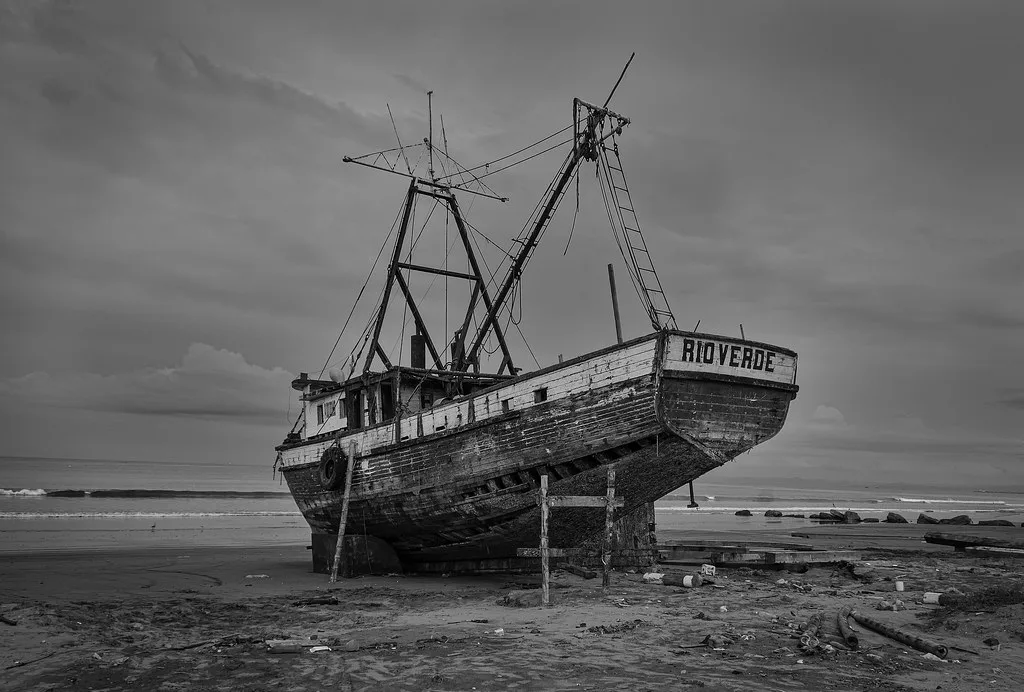
Image Credits
- Hero image: Wikimedia Commons (CC BY-SA)
- Harbor, beach, hat weaving, whale: Wikimedia Commons (CC BY-SA)
Images sourced from Wikimedia Commons under Creative Commons licenses.
Frequently Asked Questions
Q: When is the best time to see humpback whales in Manta?
A: June through September is peak humpback whale season when whales migrate from Antarctica to Ecuador's warm coastal waters to breed and calve. Tours run daily from Manta's harbor with high success rates for sightings. July and August offer the best chances.
Q: Are Panama hats really from Ecuador?
A: Yes. Authentic Panama hats are woven in Ecuador, specifically in Montecristi near Manta, from toquilla palm fibers. They became known as "Panama hats" because workers building the Panama Canal wore them. The finest superfino hats take months to weave and can cost thousands of dollars.
Q: Can I visit the Galápagos Islands from Manta as a day trip?
A: No. The Galápagos Islands are about 600 miles offshore and require flights from Guayaquil or Quito. Manta is used as a pre- or post-cruise stop for Galápagos expeditions, but same-day visits are not possible.
Q: What currency is used in Manta, Ecuador?
A: Ecuador uses the US Dollar (USD) as its official currency. No need to exchange money if arriving from the United States. Bring small bills ($1, $5, $10) as many vendors cannot break larger denominations.
Q: How is Ecuadorian ceviche different from Peruvian ceviche?
A: Ecuadorian ceviche is served soupy and citrusy, more like a cold seafood soup, and typically includes tomato sauce. It is served with popcorn, chifles (fried banana chips), and plantain chips. Peruvian ceviche is drier with less liquid.
Q: Is Manta accessible for visitors with limited mobility?
A: The waterfront Malecón is flat and paved, suitable for wheelchair users. The port area has level boarding. Taxis are inexpensive and readily available for avoiding longer walks. Montecristi workshops are mostly at ground level. Whale watching boats require stepping down into the vessel, which may be challenging for some visitors.
Q: When is the best time to visit Manta?
A: The seasonal panel above lists Peak Season as "May, Jun, Jul, Aug, Sep," Transitional Season as "Apr, Oct," and Low Season as "Nov, Dec, Jan, Feb, Mar." The avoidance note flags "Jan, Feb." The page's existing "humpback whale" FAQ identifies "June through September" as peak whale season, and the logbook recounts a late-July visit. Use the live weather widget in the seasonal panel for current short-term conditions.
Q: When is Manta's storm season?
A: The Weather Hazards panel above labels Manta's heavy-weather window as "ENSO-Driven Wet Season" with "Season: Dec – May (wet season; El Niño years intensify)" and "Peak risk: Jan, Feb, Mar (wettest months)." The hazard-note explains: "Manta sits ~1°S off Ecuador's Pacific coast — too close to the equator for tropical cyclones (which need Coriolis force to form). Heavy weather here is the wet season Dec-May, with rainfall sharply intensifying during El Niño years. The dry season Jun-Nov is the typical Galápagos-route cruise window." The live weather widget in the seasonal panel above is the primary source for current conditions on a specific sailing date.
Q: What should I pack for Manta's weather?
A: The Packing Tips section in the seasonal panel above lists: "Sunscreen and sunglasses — essential year-round"; "Light layers for variable temperatures"; "Comfortable walking shoes for exploring"; and "Rain jacket or compact umbrella." The logbook notes Manta "sits barely a degree south of the equator" with "relentless equatorial sun" — sun protection is the page's repeated emphasis. Specific Manta temperature ranges are not detailed on this page — the glance Temperature entry reads "Varies by season — check forecast."
Q: Will rain ruin my Manta port day?
A: The seasonal panel does not give Manta-specific rainfall data — the Rain entry reads "Seasonal variation — check forecast." The Best Time block lists "May, Jun, Jul, Aug, Sep" as Peak Season, with "Jan, Feb" the only window flagged in the avoidance note. The live weather widget in the seasonal panel is the source for short-term forecasts on a specific sailing date.
Author's Note: Until I have sailed this port myself, these notes are soundings in another's wake — gathered from travelers I trust, charts I have studied, and the most reliable accounts I can find. When I finally drop anchor here, I will return to these pages and correct my course.