


Photo: Wikimedia Commons
My Logbook: The Clock That Remembers What the Earthquake Took
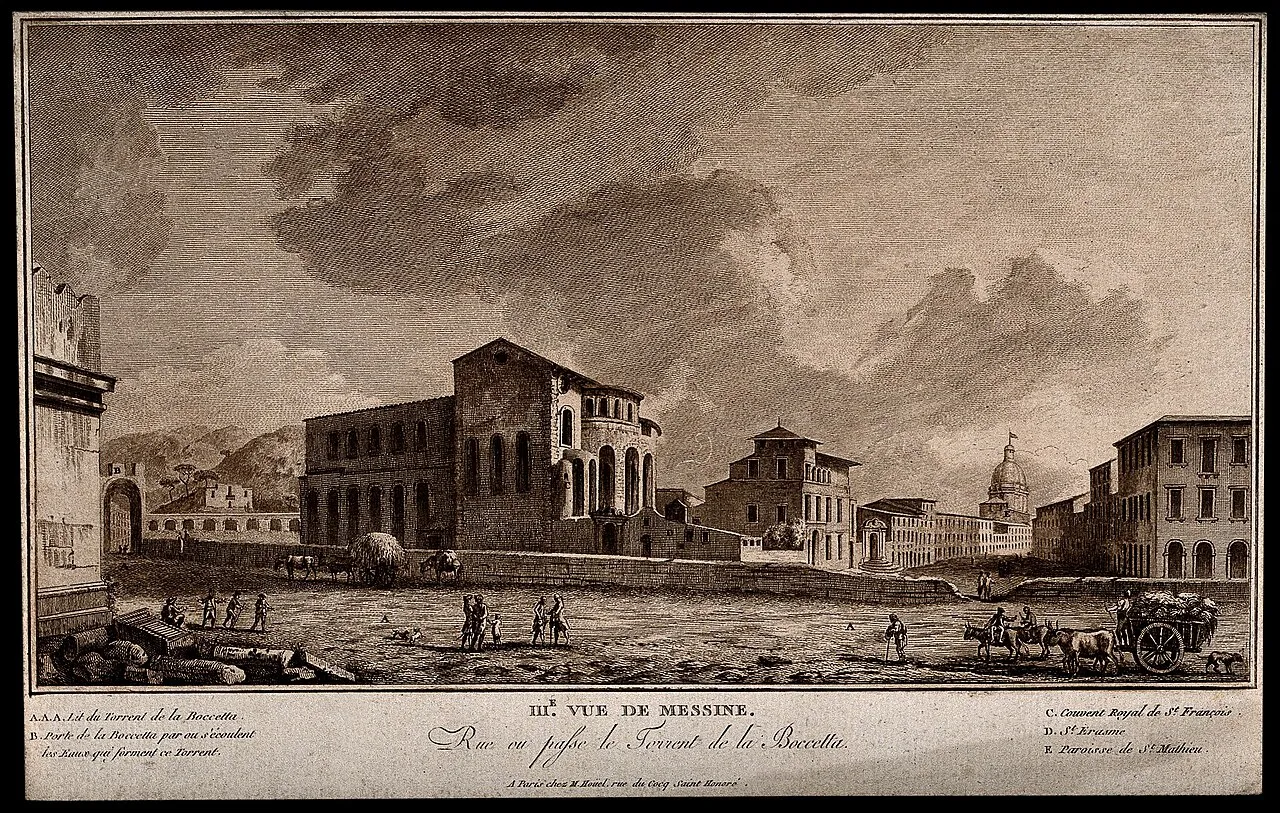
I heard the Strait of Messina before I saw it. Standing on the port side of the upper deck just after five in the morning, I caught the low hum of current moving between Sicily and mainland Calabria — a sound like breathing, as though the narrow passage of water between two landmasses had its own pulse. The sky was a deep indigo fading to copper at the eastern horizon, and as our ship eased through the strait, I could smell brine and volcanic dust carried on the warm breeze that rose from the water. The Calabrian mountains stood dark and close on the starboard side, so near I felt I could reach out and touch the scrub pines on their slopes. Then the harbour opened on the port side, and Messina appeared — low and white and modern-looking, spread along the waterfront like a city that had decided to start over and meant it.
And that is precisely what Messina did. I walked down the gangway carrying nothing but my daypack and a water bottle, and within ten minutes I was standing in the Piazza del Duomo, staring up at the Duomo cathedral's bell tower and its extraordinary astronomical clock. The tower is sixty metres tall and houses the largest astronomical clock in the world — built by the Ungerer company of Strasbourg in 1933, each level devoted to a different mechanical display. I had arrived early, so I sat on a stone bench in the piazza and waited. A woman selling arancini from a cart — golden, crispy rice balls stuffed with ragu, about 2 EUR each — saw me staring upward and laughed. "Mezzogiorno," she said, pointing at the clock. Noon. I bought two arancini and ate them slowly, the saffron rice warm and fragrant against my tongue, olive oil coating my fingertips, while I watched the piazza fill with people who had come for the same reason I had.
At noon the clock came alive. A golden lion at the top roared and waved a banner, its mechanical jaws opening and closing while a recorded roar echoed off the piazza walls. Below it, a cockerel crowed and flapped its wings. Then the figures began to move — a procession of the Messengers of the Hours, each one representing a day in the life of the city. The Madonna della Lettera, Messina's patroness, blessed the crowd in mechanical miniature. I felt a catch in my throat watching it. The clock was built twenty-five years after the 1908 earthquake that killed seventy-five thousand people in this city and levelled ninety-one percent of its buildings. The original twelfth-century cathedral — eight hundred years old — collapsed in seconds. And yet here was this clock, intricate and precise and joyful, built into the replacement cathedral as if to say: we are still here, we still mark the hours, we still celebrate what the earthquake tried to erase. I stood there with tears blurring my vision, surrounded by tourists and locals and schoolchildren, and I thought about what it means to build something beautiful in a place that has been destroyed, to insist on beauty when the ground itself cannot be trusted.
I walked through the cathedral after the clock performance ended. The interior was cool and dim after the bright Sicilian sun, and my eyes needed a full minute to adjust. The mosaic of Christ Pantocrator in the apse glowed with gold tesserae that caught the light from the clerestory windows, and I could hear the soft echo of my own footsteps on the marble floor. The nave felt both ancient and brand new — because it was. Every column, every arch had been rebuilt after the 1943 Allied bombing that destroyed the cathedral for the second time in thirty-five years. I ran my hand along the cool stone of a pillar and thought about the masons who had done this work, who had looked at the rubble and decided once more to put it all back together.
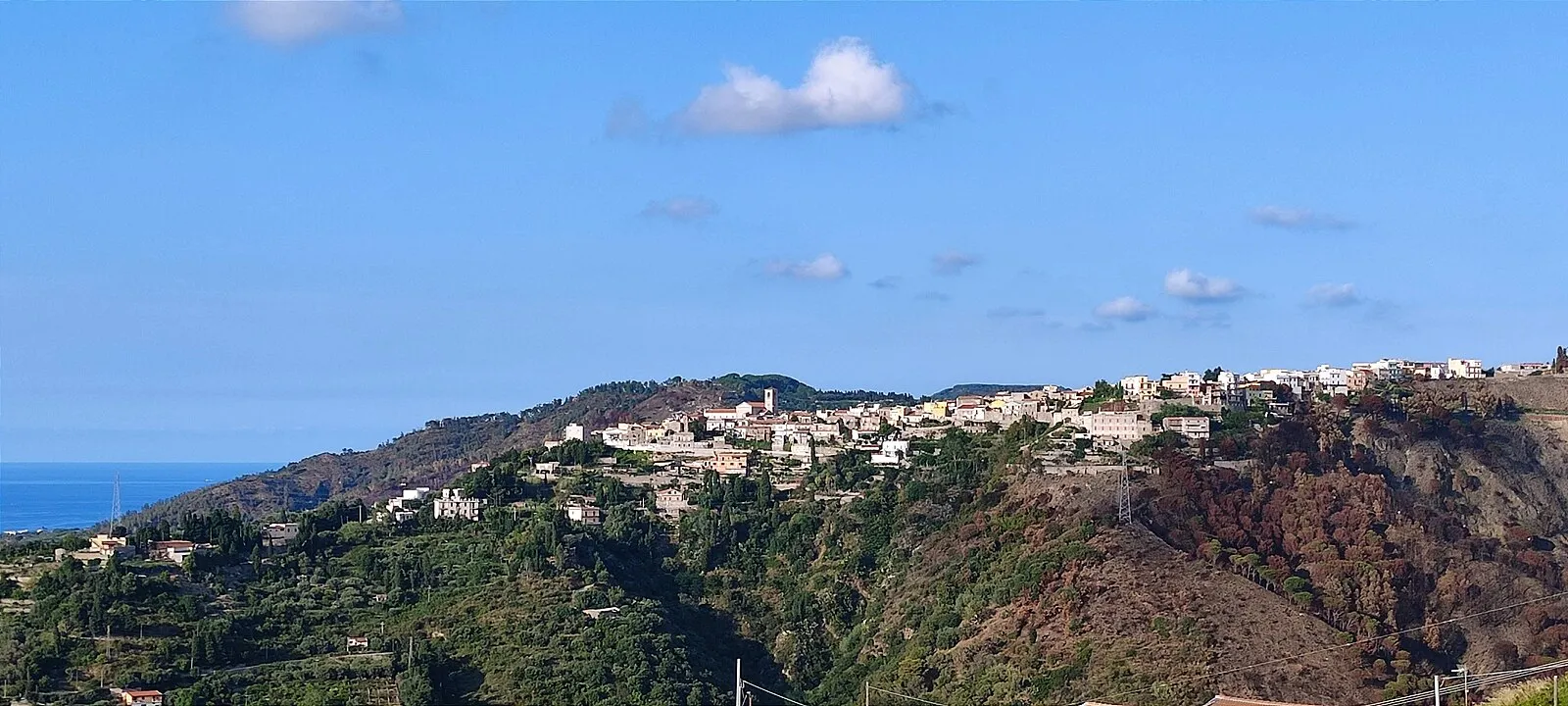
After the cathedral I caught a bus to Taormina — about fifty minutes winding along the coast road with the Ionian Sea glittering below. Taormina sits on a terrace of Monte Tauro, nearly two hundred metres above sea level, and when I stepped off the bus and walked through the Porta Messina gate into the old town, I entered a world of narrow medieval streets paved in smooth stone, bougainvillea spilling over iron balconies, and the sound of Italian conversation drifting from open cafe windows. I climbed through the town to the Teatro Antico, the Greek theatre built in the third century BC, and when I reached the top tier of seats and turned around, I gasped. Mount Etna filled the southern sky — enormous, snow-streaked, with a thin plume of smoke drifting from the summit crater. The theatre's broken arches framed the volcano like a living painting. I sat on the ancient stone seats, warm from the sun, and stared at that view for twenty minutes without moving.
However, it was back in Messina that the day found its emotional centre. I had returned from Taormina with two hours before the ship sailed, and I wandered into the side streets behind the cathedral. A small pasticceria was selling cannoli filled to order with fresh ricotta — 3 EUR for two — and I sat at a tiny marble table by the window eating them while the proprietor, a man in his seventies named Salvatore, told me about his grandfather's memories of the 1908 earthquake. His great-grandmother had been pulled from the rubble after three days, he said. She lived to be ninety-four. "She always said the same thing," Salvatore told me, wiping the marble counter with a cloth. "Messina falls down, but Messina stands up." He tapped the counter twice, firmly, as if to prove the point.
I walked back to the ship through the wide post-earthquake streets — Messina was rebuilt with broad avenues and reinforced concrete, designed to survive the next disaster — and stopped at the Fontana di Orione in the piazza. The fountain dates to 1553, one of the few structures that survived the earthquake largely intact. Water splashed over the carved figures of Orion, the mythical founder of the city, and I stood there in the late-afternoon light feeling the spray on my face and listening to the murmur of the city around me. Somewhere nearby, a radio played a Sicilian folk song, and the smell of roasting chestnuts drifted from a vendor's cart. I offered a quiet prayer of thanks — for Salvatore and his great-grandmother, for the clockmakers of Strasbourg who built beauty into a wounded city, for the masons who rebuilt the cathedral not once but twice. What Messina taught me is something I carry with me still: that the truest measure of a place is not what it builds in good times, but what it chooses to rebuild after everything has fallen. I walked up the gangway as the sun dropped toward the Tyrrhenian Sea, and I did not look back, because I knew I would return.
Weather & Best Time to Visit
The Cruise Port
Ships dock at the Messina cruise terminal on the main harbour, directly adjacent to the city centre. The terminal building is basic — a covered walkway with security screening and limited facilities, but no shops or restaurants inside. The real advantage of Messina's port is its location: step outside the gate and you are already in the city. The Duomo cathedral and its famous astronomical clock are a flat ten-minute walk from the pier. Taxis queue at the port exit and charge metered fares — a ride to the Taormina bus station costs about 8 EUR. The terminal area has accessible ramps at ground level, and the walk into the city centre is on flat, paved sidewalks suitable for wheelchair users and those with limited mobility. Port security requires passengers to show their cruise card when re-entering. On busy days when multiple ships are in port, the terminal area can feel crowded, so allow extra time when returning to the ship.
Getting Around
Messina's city centre is compact and walkable. The cathedral, the Fontana di Orione, and the Regional Museum are all within a twenty-minute walk of the cruise pier on flat terrain. For Taormina, Interbus coaches depart from the bus station near the port roughly every hour and cost approximately 5 EUR each way; the ride takes about fifty minutes along the coastal motorway. Taxis to Taormina are available but expensive — expect to pay 80-100 EUR for a one-way trip or 140-160 EUR for a round trip with waiting time. A private driver for a full-day Taormina and Etna combination costs 250-350 EUR for a group of up to four passengers, which can be more economical than individual ship excursions.
Public buses within Messina are operated by ATM and cost 1.50 EUR per ticket, but most cruise-relevant sights are close enough to walk. The city's post-earthquake streets are wide and generally accessible, with lowered kerbs at major intersections. Wheelchair users should note that Taormina is built on a steep hillside — the main Corso Umberto is relatively flat, but reaching the Greek theatre requires climbing steps or taking a shuttle bus from the lower town. Mount Etna excursions by cable car are wheelchair accessible to the first station at 2,500 metres, though the volcanic terrain above that point is rough and uneven. Carry water in summer — temperatures regularly exceed 30 degrees Celsius in July and August.
Messina Port Map
Interactive map showing cruise terminal and Messina attractions. Click any marker for details.
Excursions & Activities
Taormina & the Greek Theatre
The most popular excursion from Messina, and with good reason. The Teatro Antico di Taormina is a third-century BC Greek theatre set on a clifftop terrace with Mount Etna as its backdrop — a view that has drawn travelers since the Grand Tour era. Entry costs 10 EUR for adults. The town itself is a compact maze of medieval streets with boutiques, gelato shops, and cafes. Allow five to seven hours for a comfortable visit including travel time. You can visit independently by taking the Interbus coach from Messina (5 EUR each way, fifty minutes) or book ahead with a private driver. A ship excursion typically runs 65-95 EUR per person and includes guided commentary. This is a moderate-energy excursion with significant walking on cobblestones and steps. Wheelchair access to the theatre is limited.
Mount Etna Volcano
Europe's tallest active volcano stands 3,357 metres above sea level and is about two hours from Messina by road. Most tours go to the Rifugio Sapienza at 1,900 metres, where you can take the cable car (35 EUR round trip) to 2,500 metres, then join a guided 4x4 and hiking tour to near the summit craters for an additional 30 EUR. A ship excursion to Etna costs 90-140 EUR and guarantees your return to the vessel — this is one port where booking the ship excursion is wise because the drive time leaves little margin for error if you go independently. The summit area is significantly cooler than the coast, often 15-20 degrees below sea level temperature, so bring warm layers. High-energy excursion above the cable car station; the lower areas are accessible by vehicle.
Messina City Walking Tour
For passengers who prefer to stay close to the ship, Messina itself rewards a half-day of walking. Start at the Duomo cathedral and its astronomical clock (free entry to cathedral, clock performs at noon), walk to the Fontana di Orione, visit the Regional Museum (entry 8 EUR, closed Mondays) which houses two Caravaggio paintings, and finish with street food in the piazza. The entire route is flat and accessible, covering about two kilometres. Low-energy excursion, suitable for all mobility levels on the main streets. No need to book ahead — simply walk off the ship.
Sicilian Street Food Experience
Messina's street food tradition is among the richest in Sicily. Arancini (fried rice balls, 2 EUR), cannoli filled with fresh ricotta (3 EUR for two), granita with brioche (4 EUR), and focaccia messinese are all available from carts and small shops within walking distance of the port. You can explore independently or book ahead with a local food tour guide (25-40 EUR per person, two to three hours). Suitable for all energy and mobility levels as long as you stay in the flat city-centre streets.
Depth Soundings
Italy uses the Euro (EUR). ATMs are available within a short walk of the port, and credit cards are accepted at most shops, restaurants, and museums. However, small street vendors, market stalls, and some bus tickets require cash, so withdraw a modest amount. Tipping is not expected in Italy — a service charge (coperto) of 1-3 EUR per person is typically included at restaurants — but rounding up a taxi fare or leaving small change at a cafe is appreciated.
Messina is generally safe for cruise passengers during daytime hours. The port area and city centre are well-patrolled and well-lit. Petty pickpocketing can occur in crowded areas, particularly in Taormina during peak season, so keep valuables secure. Churches require modest dress — shoulders and knees covered for both men and women. English is understood at tourist-facing businesses, but learning a few Italian phrases earns genuine warmth. The Strait of Messina has strong currents and is not suitable for swimming near the port. Drinking water from public fountains marked "acqua potabile" is safe and free.
Photo Gallery
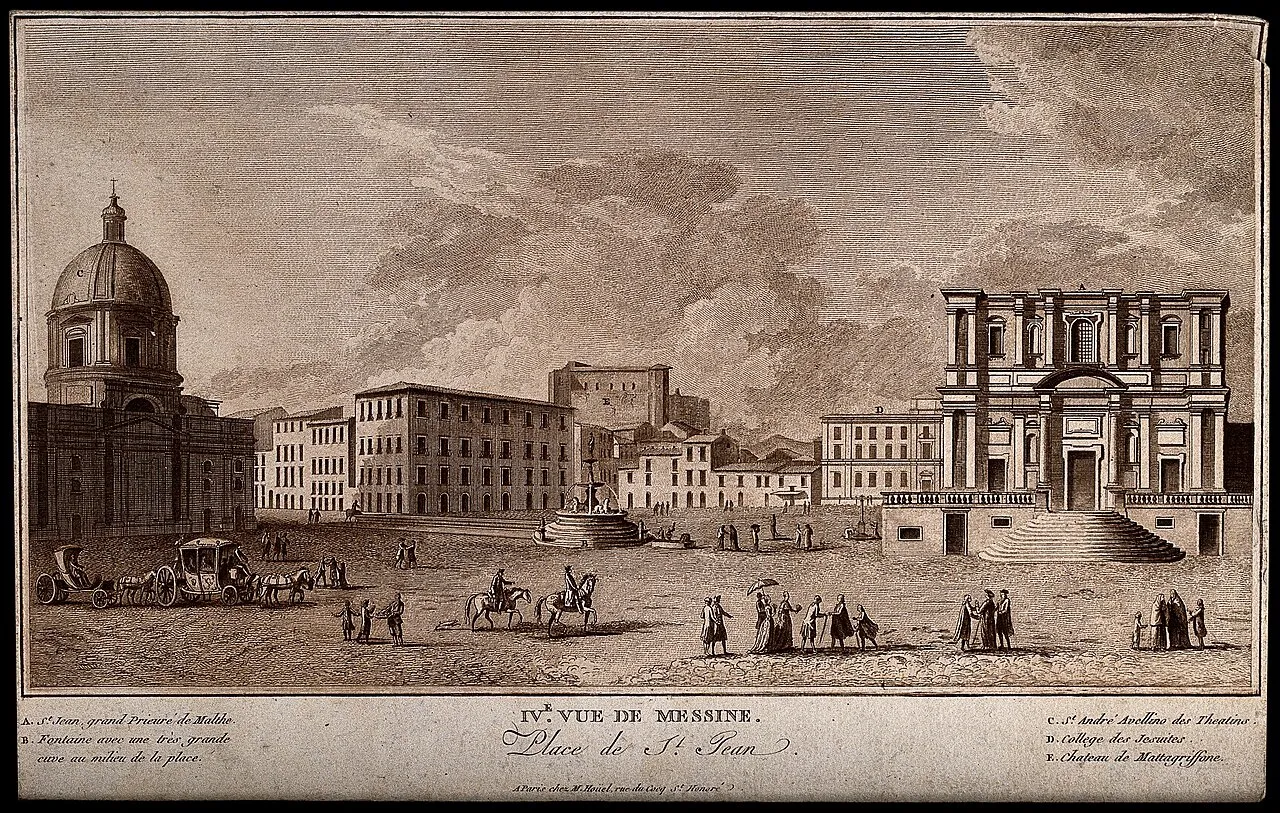
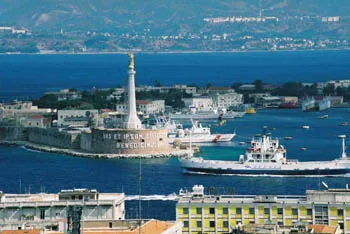
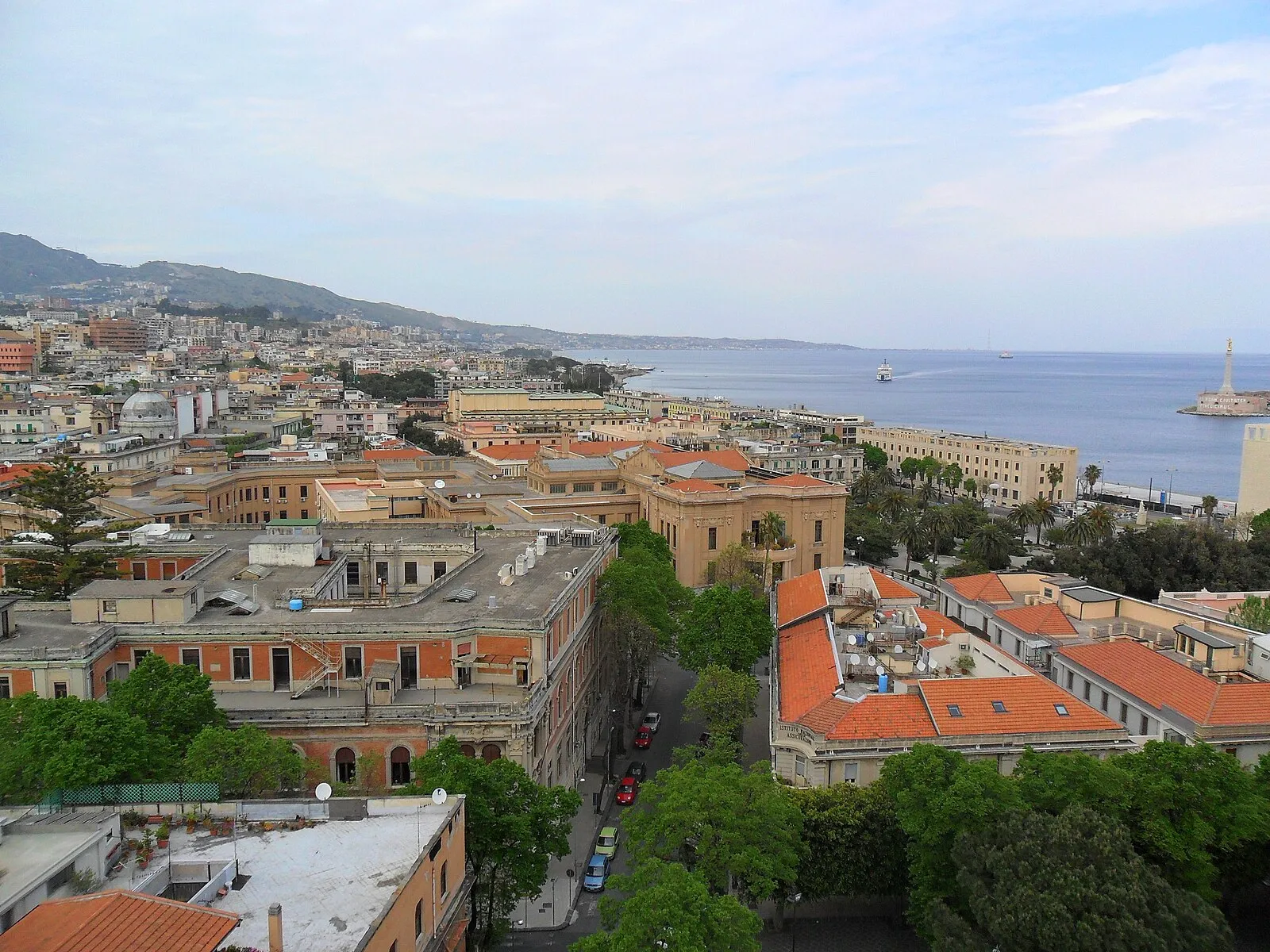
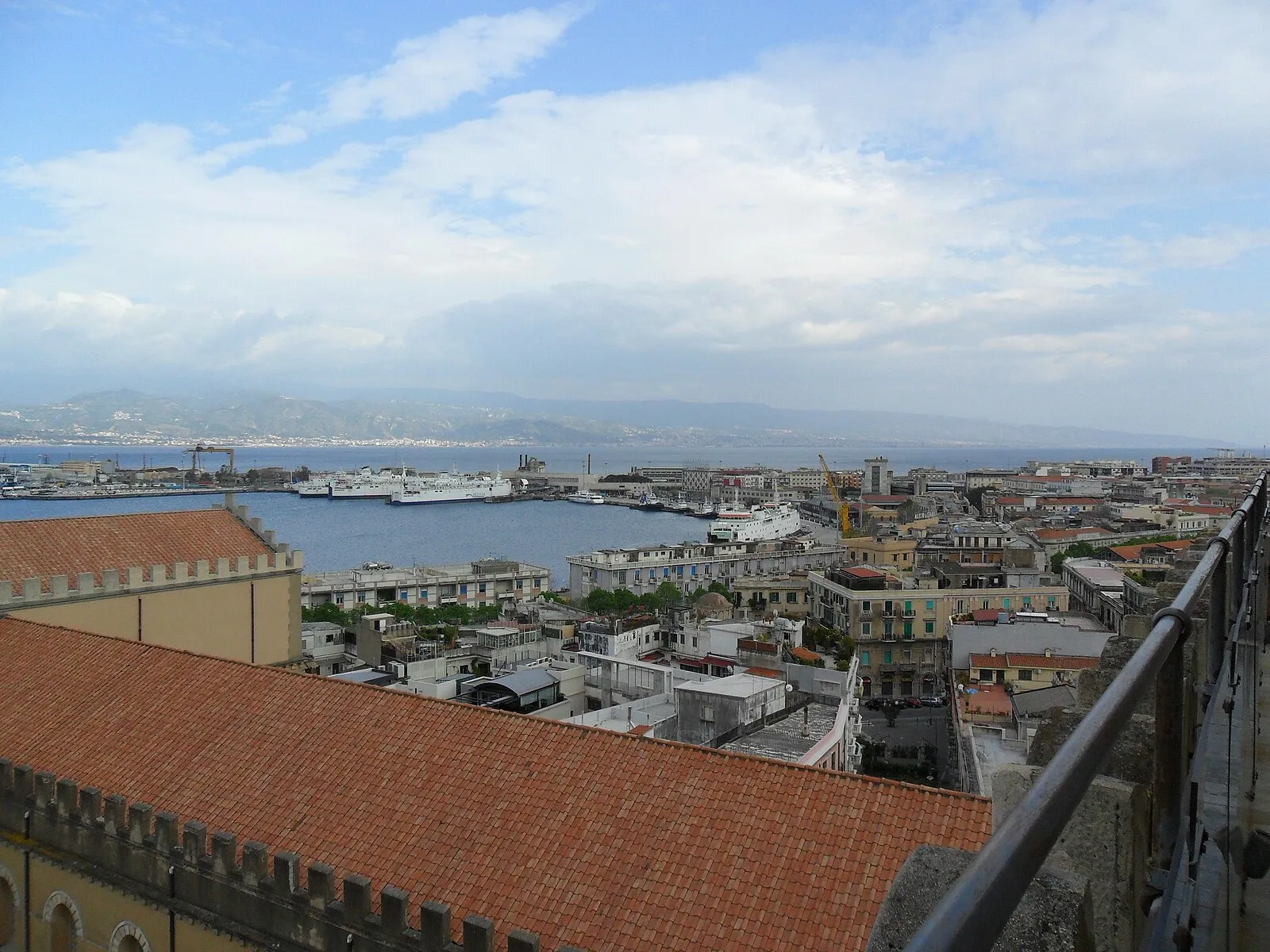


Image Credits
Photographs on this page are used under Creative Commons or free-use licenses. Images sourced from Wikimedia Commons, Pixabay, Unsplash, Pexels, and Flickr. Hero image and supplementary photographs courtesy of Flickers of Majesty.
Frequently Asked Questions
Where do cruise ships dock in Messina?
Ships dock at the Messina cruise terminal on the main harbour, directly adjacent to the city centre. The cathedral is a flat ten-minute walk from the pier. Taxis and bus connections to Taormina are available outside the port gate.
Can I walk from the port to Messina city centre?
Yes. The city centre, cathedral, and astronomical clock are all within easy walking distance on flat, paved streets. The walk takes about ten minutes and is accessible for wheelchair users. For Taormina, you need a bus (50 minutes) or taxi.
How do I get from Messina to Taormina independently?
Interbus coaches depart from the bus station near the port approximately every hour and cost about 5 EUR each way. The ride takes fifty minutes. Taxis cost 80-100 EUR one way. A private driver for the full day runs 250-350 EUR for up to four people.
Is Messina itself worth exploring, or should I go straight to Taormina?
Messina rewards a half-day of exploration. The Duomo cathedral, the astronomical clock performance at noon, the Fontana di Orione, and the Regional Museum with its Caravaggio paintings offer a rich experience — all within walking distance of the ship.
What Sicilian food should I try in Messina?
Arancini (fried rice balls, about 2 EUR), cannoli filled with fresh ricotta (3 EUR for two), granita with brioche for breakfast (4 EUR), and focaccia messinese are all widely available from street carts and small pastry shops near the port.
What is the best time of year to visit Messina?
April through June and September through October offer warm Mediterranean weather without the extreme heat and heavy cruise crowds of July and August. The astronomical clock performs year-round, and Taormina is pleasant in the shoulder months.
Messina, Sicily — Port Guide
Last reviewed: February 2026