


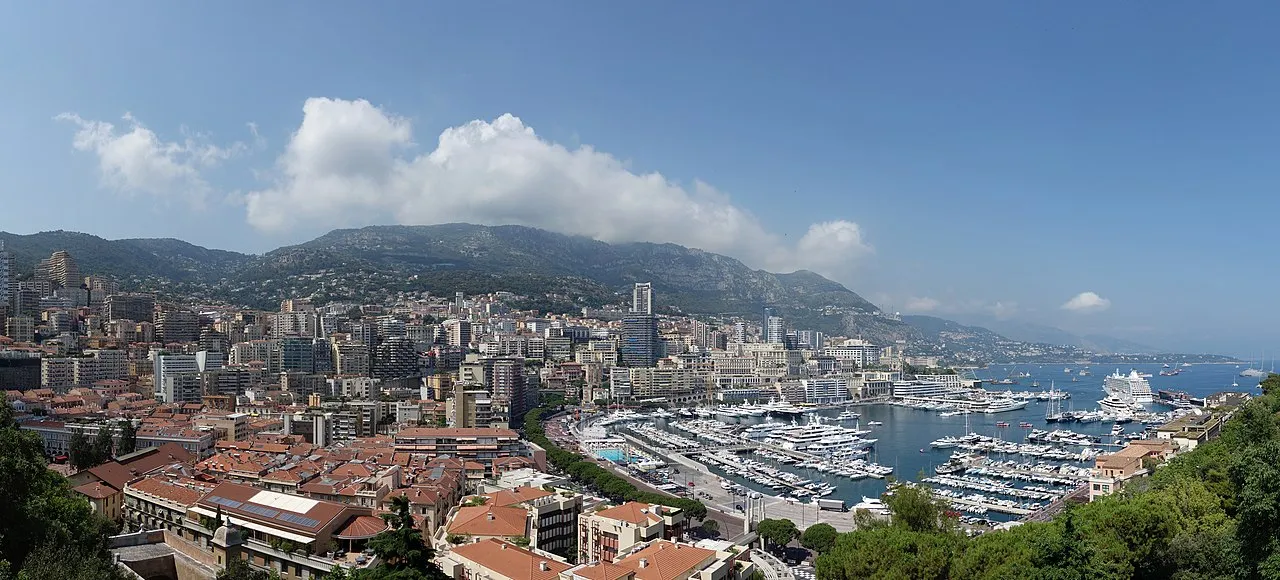
Photo: Wikimedia Commons
My Logbook: The Moment Monaco Stopped Being a Postcard
I heard Monaco before I saw it. Standing at the rail as our tender crossed the harbor, a deep V12 roar echoed off the cliff face — some unseen supercar threading the tunnel straight beneath the Rock — and then the sound bounced across the water and vanished, replaced by the clatter of rigging on a hundred yacht masts and the distant hum of a helicopter lifting off from the palace helipad. The harbor was crammed bow-to-stern with vessels that cost more than I will earn in several lifetimes: polished teak decks, radar arrays like sculpture, a few even with their own helicopter pads. I gripped my daypack straps and stepped onto the floating pontoon at Port Hercule, feeling both dazzled and slightly out of place, like a corgi at a greyhound track.
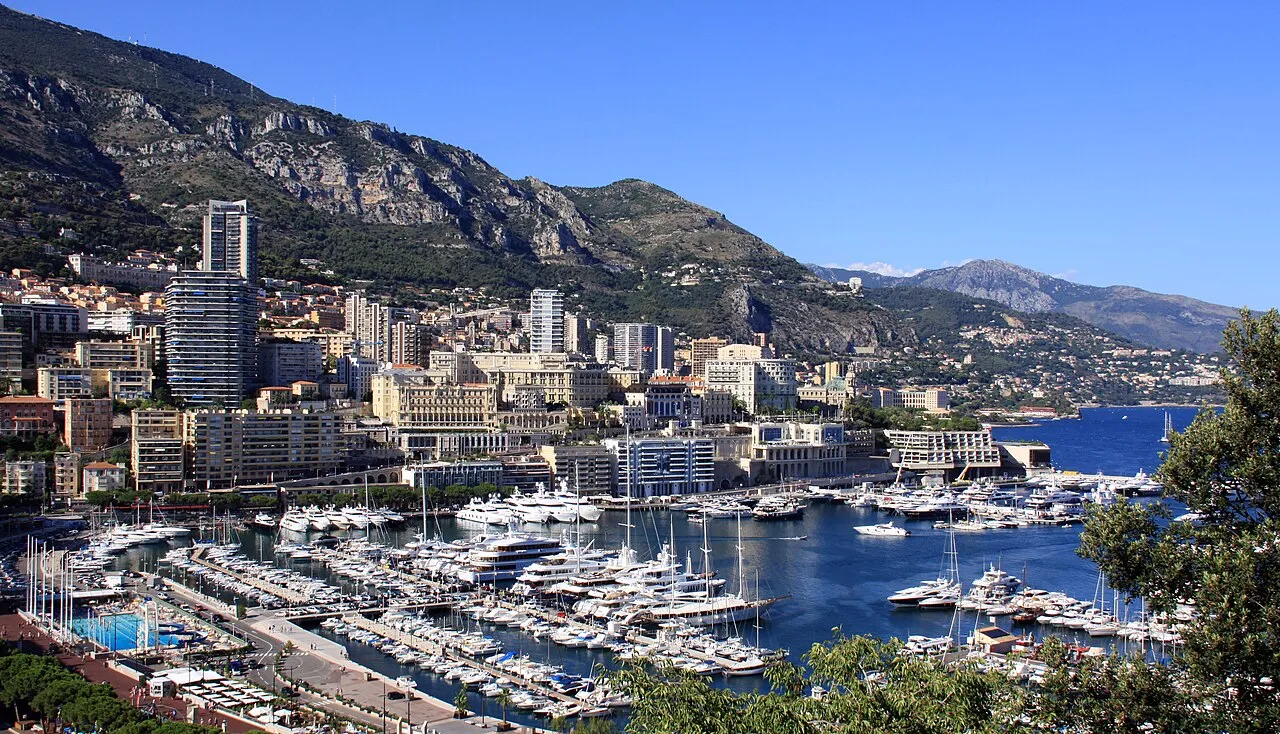
My first goal was the Grand Prix circuit. I had watched the Monaco race on television since I was a teenager, and walking those streets felt surreal. The full 3.34-kilometer loop is public road the other 364 days a year, but plaques at every corner mark the famous turns: Sainte Devote, where drivers plunge downhill after the start; Massenet, a blind left-hander with a view of the sea; the tight hairpin at the Fairmont Hotel, where Formula 1 cars slow to 65 kilometers per hour. I walked the entire route in about an hour, pausing at the harbor chicane to stare at the stretch of tarmac where Ayrton Senna won six times. The track surface is normal asphalt — no special coating, no dramatic banking — and that ordinariness made the achievement feel more real. These are regular streets. Yet every May, drivers thread them at over 250 kilometers per hour with concrete barriers centimeters from their elbows. I touched the barrier at Tabac corner and felt the roughness under my fingertips, scored and scraped from decades of near misses.
From the circuit I climbed toward Monaco-Ville, the old town perched on the Rock. The free public elevators are a gift — glass-walled lifts that whisk you up the cliff face in seconds, saving your legs for the cobblestones above. Prince's Palace stands at the summit, its cream-and-ochre facade overlooking the entire principality. I arrived just as the Changing of the Guard began at 11:55 a.m. — the Carabiniers du Prince in crisp white summer uniforms marching in precise formation while a military band played. It was formal and beautiful and entirely sincere, not a performance staged for tourists but a living tradition stretching back over seven hundred years to when the Grimaldi family first took this rock by disguise in 1297. Parts of the palace are open to visitors from April through October, and I paid the 10-euro entry fee gladly. The throne room was modest compared to Versailles, however the intimate scale felt more human — you could imagine a real family living and governing here, which they do.
I spent twenty minutes in the palace courtyard simply looking out. The view from that rampart is staggering: the harbor below, the apartment towers climbing the hillside, the sea stretching south toward Corsica, and France wrapping around the principality on three sides. Monaco is only two square kilometers — you can see almost the entire country from one spot. That compression is part of its character. Everything is layered and vertical, built upward because there is nowhere left to build outward.
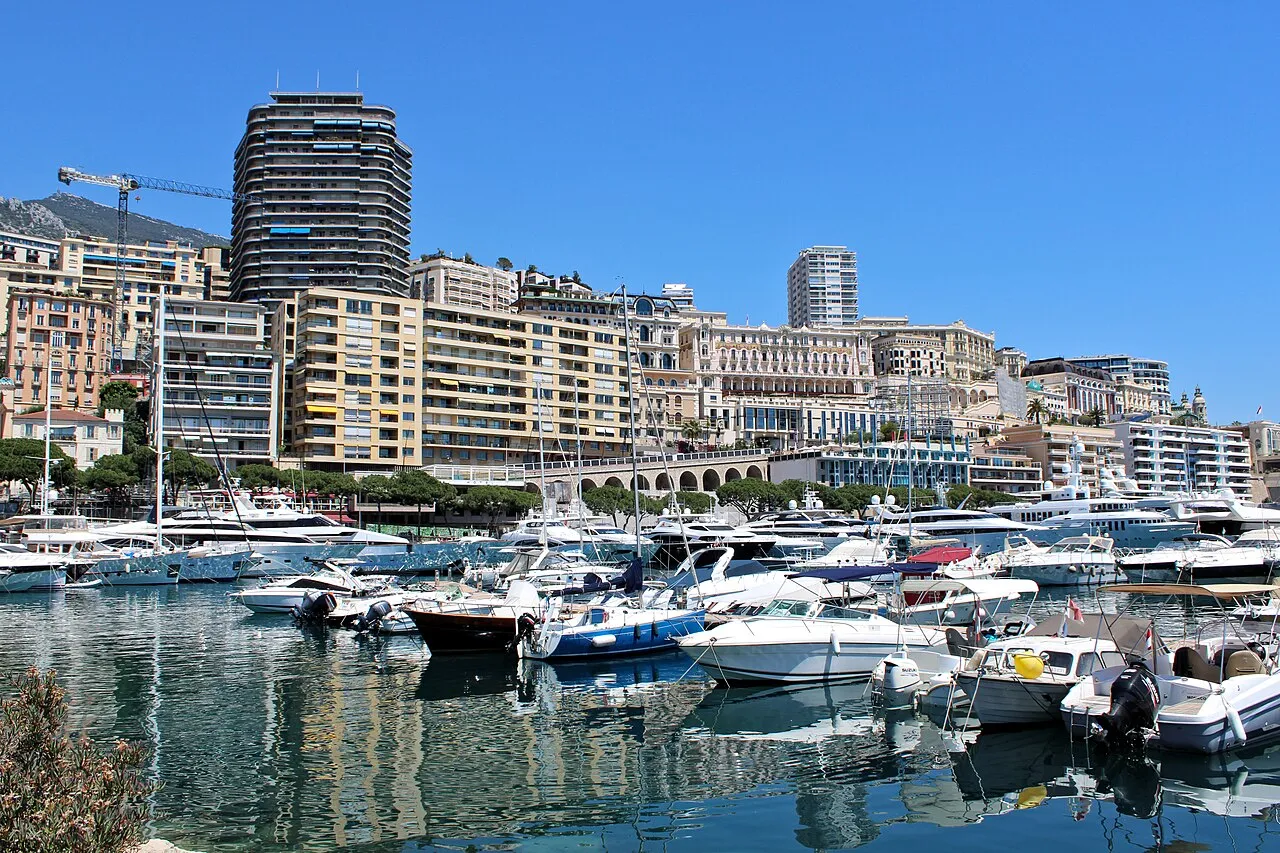
From the palace I walked to the Oceanographic Museum, a magnificent stone building that clings to the cliff edge like a barnacle with ambition. Jacques Cousteau directed this institution for over thirty years, and his spirit still fills the place. The aquarium in the basement is extraordinary — I watched a blacktip reef shark glide past a coral wall while a seahorse no bigger than my thumbnail curled around a strand of seagrass in the neighboring tank. Upstairs, the whale skeleton suspended from the ceiling stopped me cold. The sheer scale of the bones, bleached white and held together with steel cables, made my chest tighten with something between awe and sorrow. I stood beneath it for several minutes, listening to the quiet murmur of other visitors, and thought about what it means to share a planet with creatures that vast and that vulnerable. Entry costs 18 euros for adults, and it is worth every cent.
After the museum I followed the narrow streets of Monaco-Ville to the Cathedral of Our Lady Immaculate, where Prince Rainier III and Princess Grace are buried. The cathedral itself is Romanesque Revival, built from white stone quarried in the nearby La Turbie hills. I sat in a pew near the side chapel and read the simple plaque marking Grace Kelly's resting place. There were fresh flowers. Someone — perhaps a staff member, perhaps a visitor — had laid a small bouquet of white roses beside the marble. The gesture struck me as profoundly human: a movie star who became a princess, who died in a car crash on these very mountain roads in 1982, still remembered with flowers forty-some years later. I bowed my head and said a quiet prayer of gratitude for the gift of life, for the grace we receive even when we do not deserve it, and for the strangers who leave roses.
I still had time, so I walked uphill to the Exotic Garden — the Jardin Exotique — perched on a cliff above Fontvieille. The entry fee is 7.20 euros, and what I found inside was astonishing: over a thousand species of cacti and succulents clinging to the terraced rockface, many over a hundred years old, their forms twisted and improbable against the blue sky. The garden also includes a natural cave — the Grotte de l'Observatoire — with stalactites and stalagmites formed over millennia. The path through the garden is steep but there are handrails throughout, and benches at every viewpoint allow you to rest and absorb the panorama. I sat on one of those benches as the afternoon light turned golden and watched a tiny lizard do push-ups on a rock beside a cactus the size of a refrigerator. The contrast between the wild, strange beauty of the garden and the polished wealth of the streets below it was striking. Both are Monaco. Both are real.
I took the free elevator back down to the harbor level and walked along the quay toward the tender dock. The late-afternoon sun turned the water amber and threw long shadows from the yacht masts across the pavement. A busker near the tender queue was playing Debussy on a violin, and the music floated across the water as I boarded the tender back to our ship. I found a seat on the port side and watched Monaco shrink behind us — the Rock, the palace, the towers catching the last light. What I carry from this port is not the wealth or the glamour, though those are undeniable. What stays with me is the surprise: that beneath the polish, Monaco holds a cliff-edge aquarium where Cousteau's dream still lives, a garden where ancient cacti grow in silence, and a cathedral where someone leaves fresh roses for a princess who died before I was born. The tender thudded gently against our ship, and I climbed aboard with a lump in my throat. I realized that this country is smaller than many airports but deeper than I had ever imagined.
Weather & Best Time to Visit
The Cruise Port
Monte Carlo is a tender port. Ships anchor in the bay and shuttle passengers by tender to the floating pontoon at Port Hercule, Monaco's main harbor. The ride takes approximately ten minutes. The tender dock sits at the heart of the harbor, steps from Quai Antoine 1er and the beginning of the Grand Prix circuit. There is no formal cruise terminal building — you step off the tender directly onto the harbor promenade. Restrooms are available nearby at the Port Hercule public facilities. Taxis queue at the harbor edge, though in a country this small you rarely need one. A taxi to the Exotic Garden — the farthest major attraction — costs roughly 15 euros. The tender pontoon is wheelchair accessible with assistance from crew, and the harbor promenade is flat and smooth, providing level access to the Monte Carlo district via the free public elevators.
Getting Around
Monaco is only two square kilometers, making it one of the most walkable cruise ports in the Mediterranean. However, the principality is built on steep hillsides, and elevation changes between the harbor and upper districts are significant. Fortunately, Monaco has an extensive network of free public elevators, escalators, and moving walkways that connect all major levels of the city. These are well signposted, air-conditioned, and make the steep terrain manageable for most visitors. From Port Hercule, an elevator near the harbor parking structure whisks you up to the Monte Carlo district in under a minute.
Local buses operated by the Compagnie des Autobus de Monaco cost 2 euros per ride and run six routes covering the entire principality. Route 1 connects the Monte Carlo district to Monaco-Ville (the Rock) and the Exotic Garden, hitting all three major attraction clusters. Buses run every 10–15 minutes and are fully wheelchair accessible with low-floor boarding. Taxis are metered and readily available at the harbor and Place du Square, with fares starting at 3.50 euros plus 2 euros per kilometer. For visitors with mobility challenges, the combination of free elevators and accessible buses makes Monaco more navigable than its cliff-side geography might suggest. Walking the full Grand Prix circuit is a moderate-energy activity of roughly one hour on flat tarmac; walking from the harbor up to the Exotic Garden via stairs would be high-energy, but taking the elevators and bus reduces this to a low-energy option.
Monte Carlo Port Map
Interactive map showing Port Hercule, the palace, museum, and Monaco attractions. Click any marker for details.
Excursions & Activities
Walk the Grand Prix Circuit
The complete 3.34-kilometer Formula 1 street circuit is free to walk year-round. Plaques and painted kerbs mark the famous corners: Sainte Devote, the Fairmont hairpin, the tunnel, and the harbor chicane. Allow one hour for the full loop. This is a moderate-energy activity on flat tarmac, accessible for wheelchairs on most sections. You can walk it independently from the tender dock — the circuit starts right at Port Hercule. Ship excursion packages that include a guided Grand Prix walking tour typically cost 50–75 euros per person.
Prince's Palace & Monaco-Ville
The old town on the Rock is home to the Grimaldi palace, the Cathedral, and narrow medieval streets lined with souvenir shops and gelato stalls. Palace state apartments are open April through October; entry is 10 euros per adult. The Changing of the Guard occurs daily at 11:55 a.m. and is free to watch. Reach Monaco-Ville independently via the free public elevator from the harbor. A ship excursion combining the palace, old town, and Oceanographic Museum runs 65–90 euros per person. Low-energy activity once you reach the top via elevator; the streets are cobblestoned but mostly flat.
Oceanographic Museum
Founded by Prince Albert I in 1910 and directed by Jacques Cousteau for over thirty years, this cliff-edge institution houses a world-class aquarium, marine science exhibits, and a rooftop terrace with sweeping Mediterranean views. Entry costs 18 euros for adults, 12 euros for children aged 4–17. Allow 1.5–2 hours. The ground floor and aquarium are wheelchair accessible; upper galleries reached by elevator. Visit independently from Monaco-Ville, a five-minute walk from the palace. Book ahead during July and August to avoid long queues at the entrance.
Exotic Garden (Jardin Exotique)
Over a thousand species of cacti and succulents cling to a terraced cliff face high above Fontvieille. Entry costs 7.20 euros and includes access to the Observatory Cave with prehistoric stalactites. The paths are steep with handrails. Allow 1–1.5 hours. Reach it independently by Bus 2 from the harbor (2 euros) or by taxi (approximately 15 euros). This is a moderate-to-high-energy excursion due to the inclines. Not fully wheelchair accessible due to steep garden paths.
Eze & the Corniche Roads
The medieval hilltop village of Eze sits thirty minutes from Monaco by bus and offers panoramic views of the French Riviera, a perfume factory tour, and a stunning botanical garden at the summit. Entry to the Eze Exotic Garden is 8 euros. This excursion requires a half day. Ship excursion packages to Eze cost 70–110 euros per person and typically include transport along the dramatic Grande Corniche road. You can also visit independently by taking bus 82 from Monaco (2.50 euros) — book ahead if traveling during peak season to secure return transport timing. High-energy due to steep walking in the village.
Larvotto Beach
Monaco's only public beach is a pebble-and-sand stretch along the eastern shore, free to access. Sunbed and parasol rental costs 20–30 euros per day at the beach clubs. The water is clean and calm in summer. A fifteen-minute walk from the Monte Carlo district or reachable by bus. Low-energy activity, suitable for all mobility levels along the promenade.
Depth Soundings
Monaco uses the Euro. Credit cards and contactless payment are accepted virtually everywhere, from restaurants to museum ticket counters to the bus network. ATMs are plentiful around Port Hercule and along Boulevard des Moulins. There is no sales tax in Monaco — prices you see are what you pay, which can make luxury goods slightly cheaper here than in neighboring France.
The principality is compact but vertical. Free public elevators, escalators, and travelators connect all major levels and are well signposted with blue-and-white directional markers. These are a practical necessity, not a novelty, and using them turns a strenuous hillside climb into an easy stroll. Monaco is generally very safe — it has one of the highest police-per-capita ratios in the world — but pickpocketing can occur in crowded harbor areas during peak season, so keep valuables secure.
Dress codes vary by venue. The Garnier-designed halls on Place du require smart casual attire after 2 p.m. (no shorts, no flip-flops). Restaurants in the Monte Carlo district tend toward smart casual as well. For the palace, Oceanographic Museum, and street-level attractions, comfortable tourist attire is fine. Tipping is not obligatory in Monaco — a 15% service charge is typically included in restaurant bills — but rounding up for good service is appreciated. Water is safe to drink from the tap throughout the principality.
Photo Gallery
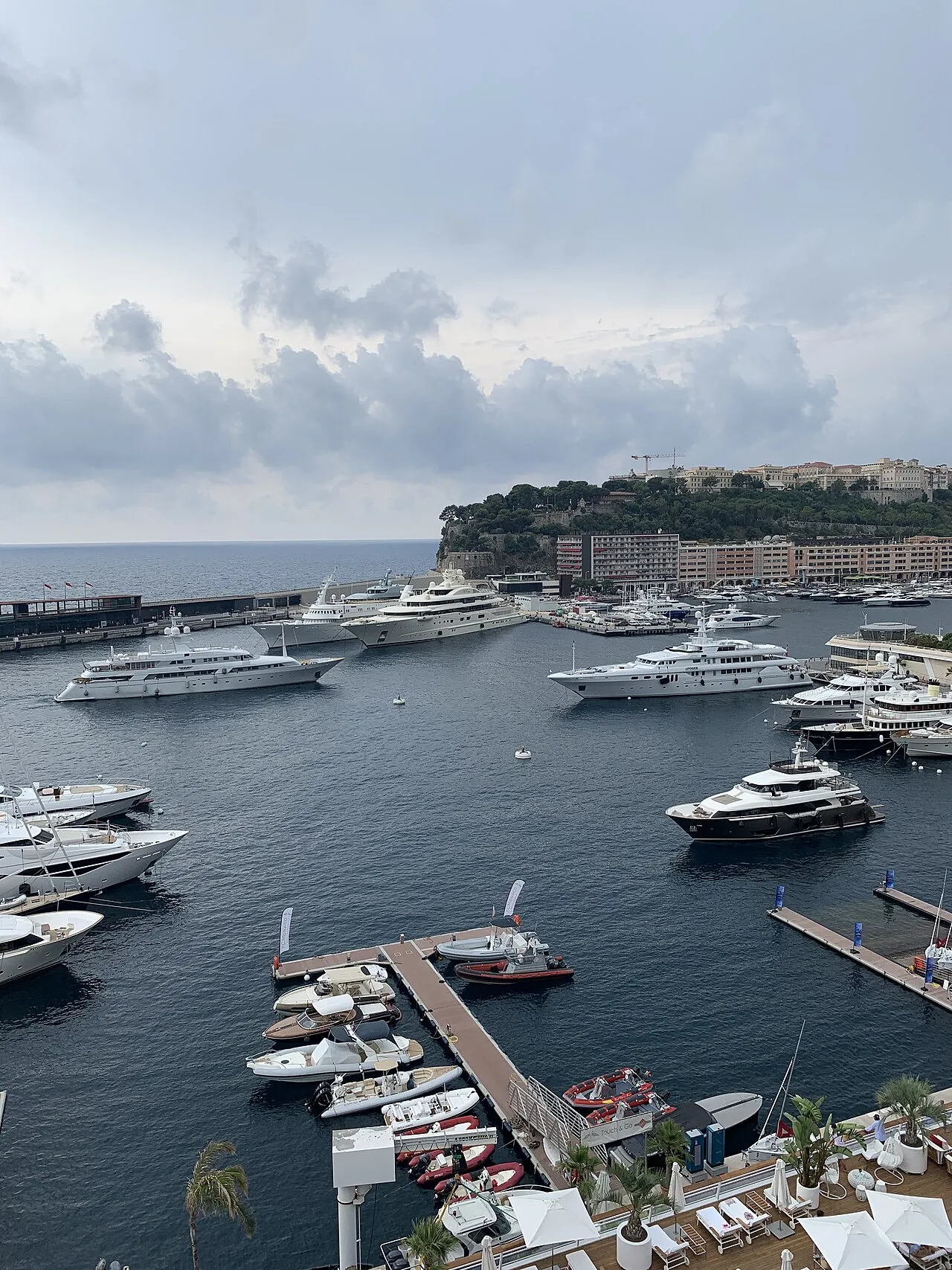
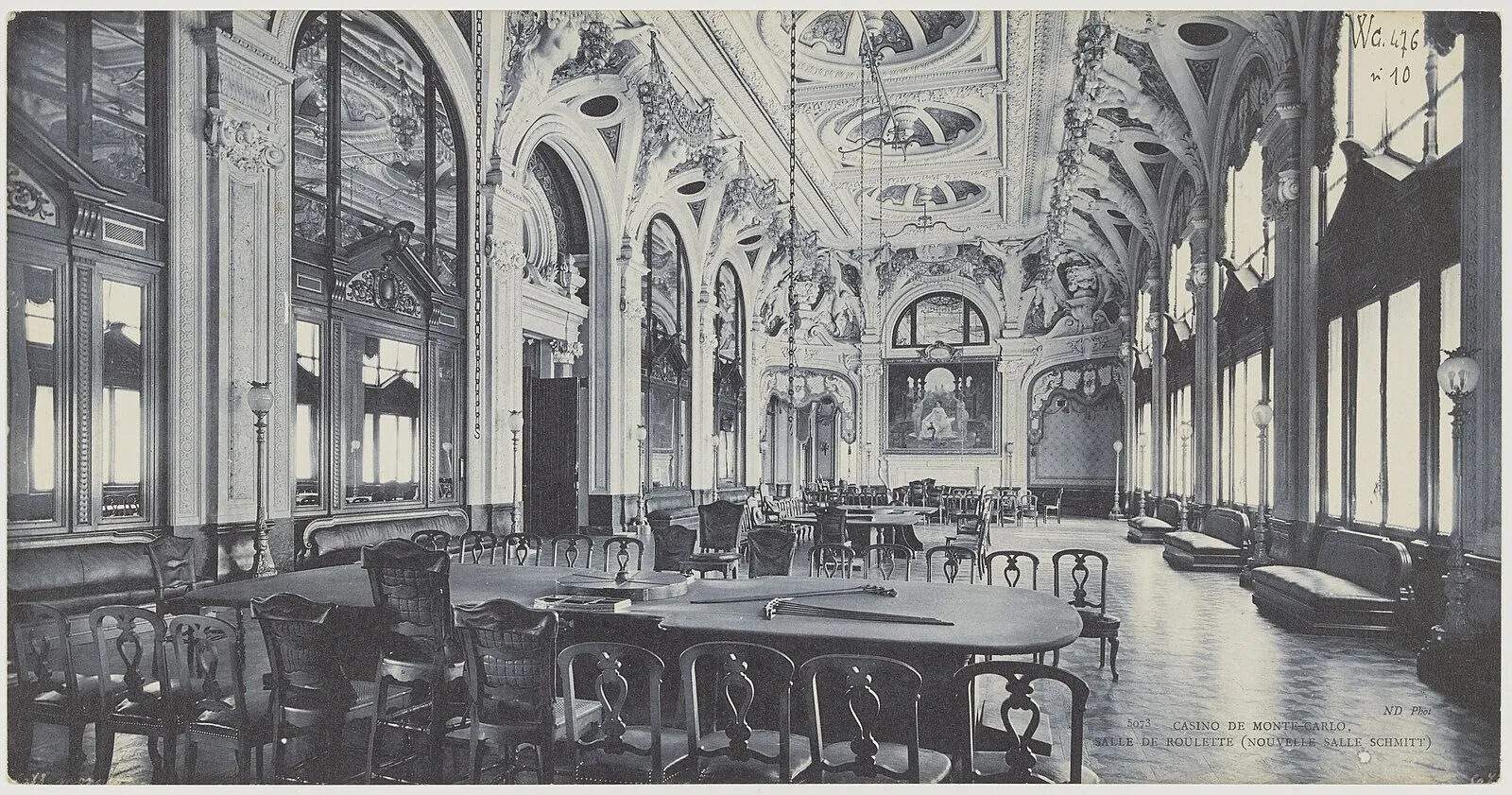

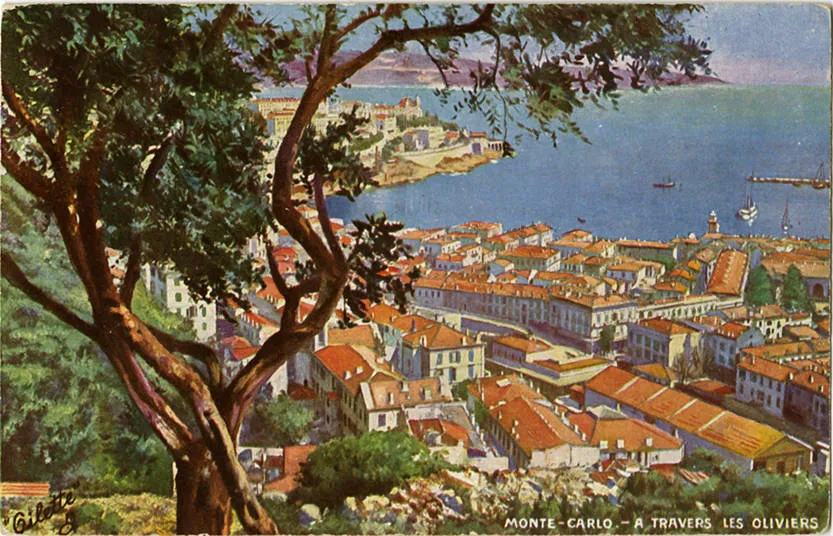
Image Credits
All photographs on this page are used under Creative Commons or free-use licenses. Images sourced from Wikimedia Commons, Unsplash, Pexels, and Pixabay. Hero image and supplementary photographs courtesy of Flickers of Majesty.
Frequently Asked Questions
Is Monte Carlo worth visiting on a cruise?
Absolutely. Monte Carlo offers the Grand Prix circuit, Prince's Palace, the Oceanographic Museum, and stunning Mediterranean scenery in one of the world's most compact countries. Four to five hours covers the highlights comfortably.
How do I get from the tender to Monte Carlo attractions?
Ships tender to Port Hercule. All major attractions are within walking distance using Monaco's free public elevators and escalators to navigate the hillsides. No taxi is needed for most itineraries.
What currency does Monaco use?
Monaco uses the Euro. Credit cards and contactless payments are accepted virtually everywhere. ATMs are plentiful near the harbor and throughout the principality.
Is Monaco accessible for visitors with mobility challenges?
Monaco has an excellent network of free public elevators and escalators connecting all levels of the hillside city. Local buses have low-floor wheelchair-accessible boarding. The harbor promenade is flat and smooth.
Can I walk the Grand Prix circuit?
Yes. The full 3.3 km circuit uses public roads year-round. Walking the route takes about an hour and is free. Plaques and painted kerbs mark the famous corners.
What should I wear in Monte Carlo?
Smart casual is expected at upscale restaurants and the Garnier-designed halls on the main square. For street-level sightseeing, comfortable walking attire is fine. No shorts or flip-flops in formal venues.
Monte Carlo, Monaco — Port Guide
Last reviewed: February 2026