


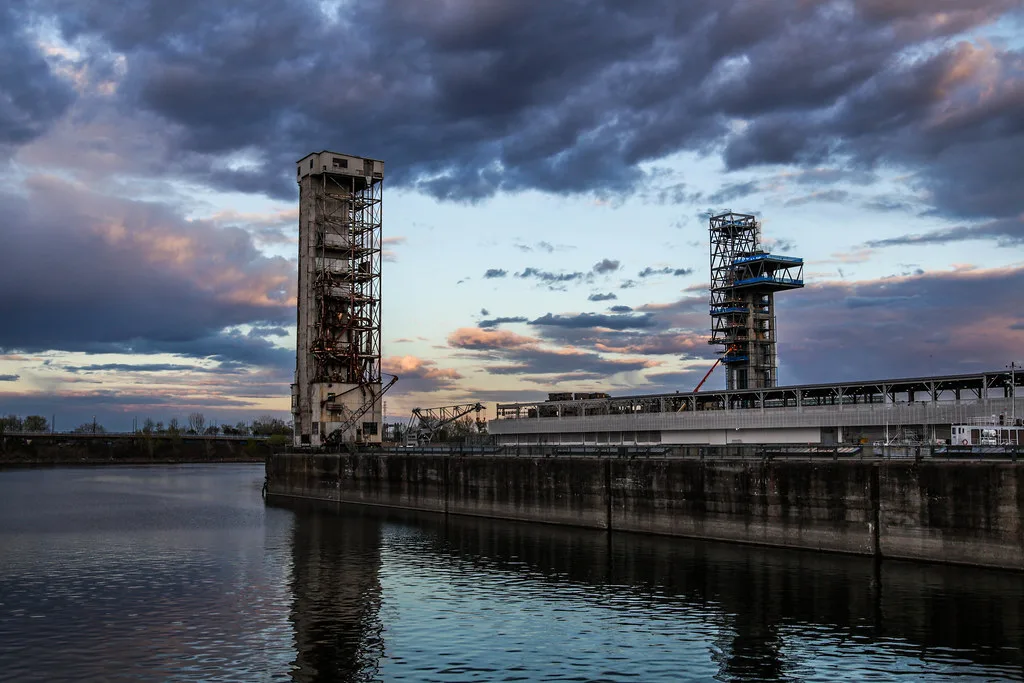
Photo: Wikimedia Commons
My Logbook: Cobblestones, Basilicas, and Bagels on the St. Lawrence
I smelled Montreal before I saw it clearly. Standing on the upper deck as our ship eased up the final stretch of the St. Lawrence River, a cold October wind carried the scent of fallen leaves and wood smoke across the water, and I pulled my jacket tighter and watched the shoreline resolve itself from mist into something real. The countryside on both banks blazed with autumn color — maples in deep crimson, birches shimmering gold, oaks holding to their russet leaves as though reluctant to let go. I had sailed past tropical islands and sun-bleached Mediterranean ports, but nothing had prepared me for this quiet northern beauty, this slow reveal of a city draped in the colors of a season that understands endings.
And then Montreal rose from the river. Not the glass towers I had expected, but church spires — dozens of them, copper-green and gray, punctuating a skyline that belonged more to Europe than to North America. The silhouette of Mount Royal anchored everything, a dark hump of forested hill rising above the rooftops, and I thought of Frederick Law Olmsted, who had designed the park on that summit and had loved this place enough to give it his best work. The ship slowed, turned, and eased against Alexandra Pier, and I could already see the cobblestones of Old Montreal gleaming in the early light.
I walked off the gangway and into the eighteenth century. Old Montreal does not feel like a reconstruction or a tourist village — it feels lived-in, worn smooth by centuries of feet. The cobblestone streets of Rue Saint-Paul are genuinely old, the stone buildings flanking them genuinely weathered, and the horse-drawn caleches that clip-clop past the storefronts are a local tradition, not a theme park ride. I turned a corner and found myself in Place Jacques-Cartier, the sloping square that serves as Old Montreal's living room, where street artists set up easels alongside accordion players, and cafe tables spill across the pavement despite the October chill. A woman at a flower stall smiled and said "Bonjour" — and then, seeing my hesitation, switched seamlessly to English. "Beautiful morning, no?" I agreed that it was.
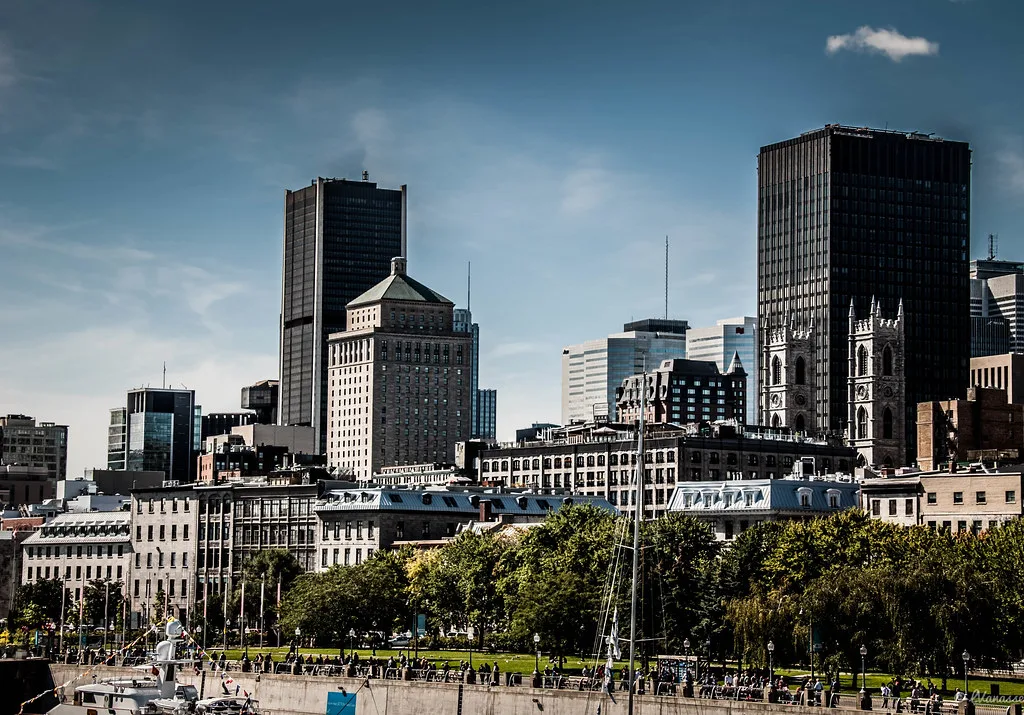
Notre-Dame Basilica stopped me cold. I had seen photographs, but photographs are liars — they cannot convey the scale of the interior, the way the deep blue ceiling studded with golden stars seems to float above you like a second sky, or the way the light filters through stained glass windows and paints the carved wooden pulpit in shifting colors. The architect, James O'Donnell, was Irish-American and Protestant, yet he built something so profoundly beautiful that he converted to Catholicism before he died, asking to be buried beneath the church he had created. I stood in the nave for a long time, my neck craned upward, feeling very small and very grateful. The entry fee of $8 CAD felt like a gift. I whispered a quiet prayer of thanks in that vast blue silence, and something inside me shifted — a recognition that beauty at this scale is not decoration but devotion, not craft but faith made visible.
Outside, I walked north toward the Plateau. The transition was gradual but unmistakable — the gray stone of Old Montreal gave way to the colorful row houses of the Plateau Mont-Royal, each one painted a different shade, each one sporting the iconic exterior spiral staircases that define Montreal's residential architecture. I climbed the hill toward Boulevard Saint-Laurent — "The Main" — and the French-Canadian culture that had been a pleasant backdrop in Old Montreal became overwhelming in the best way. Bakeries displayed towers of croissants and pain au chocolat. A patisserie window held a tarte au sucre that made me stop and stare. I heard French on every side, rapid and musical, punctuated by laughter and the clatter of espresso cups.
But I had come for the bagels. Montreal bagels are not New York bagels — they are smaller, denser, sweeter, boiled in honey water before being baked in a wood-fired oven, and the debate over which style is superior has fueled arguments on both sides of the border for decades. I walked into St-Viateur Bagel on Avenue Saint-Viateur, and the heat from the oven hit me like a wall. A baker in a flour-dusted apron was pulling a wooden paddle from the oven, and on it sat two dozen golden, sesame-crusted bagels that smelled of honey and wood smoke and something ancient. I bought a half-dozen for $5 CAD and ate the first one standing on the sidewalk, still warm, the sesame seeds crunching between my teeth. It was, without question, the finest bagel I have ever eaten. I do not say this to start a fight with New York — I say it because it is true.
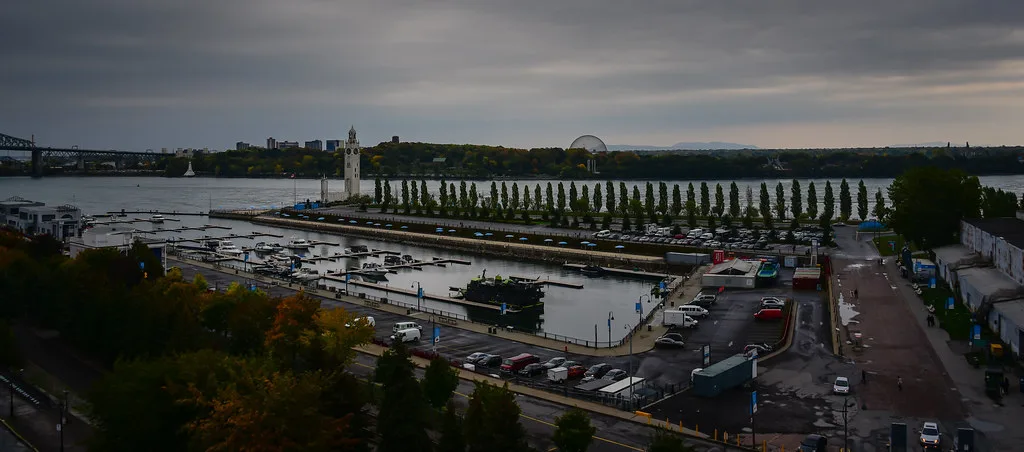
Jean-Talon Market was my next stop, a taxi ride north into Little Italy. The market sprawled beneath a long open-sided roof, and even in October it was bursting with late-harvest produce — squash in every shape and color, bushels of apples, wheels of Quebec cheese, jars of maple syrup graded from light amber to the dark, almost smoky grade that Quebecois cooks prize for baking. I bought a small wheel of Oka cheese ($14 CAD) and a jar of maple butter ($8 CAD), and I sat at a counter stall eating a bowl of soupe aux pois — thick yellow pea soup with ham — while the market hummed around me. The vendor, an older woman named Genevieve, told me her family had been selling soup at this market for three generations. "My grandmother stood where I am standing," she said, and I looked at the worn wooden counter and believed her.
I took a taxi up to Mount Royal in the late afternoon. The park was ablaze — the maples had reached their peak color, and the trails were carpeted in red and gold leaves that crunched softly underfoot. I climbed to the Kondiaronk Belvedere, the famous lookout, and the city spread below me in every direction: the river, the bridges, the church spires, the distant line of the Monteregian Hills. However, what I noticed most was the silence. Despite dozens of other visitors, nobody was talking loudly. People stood at the railing with their hands in their pockets and simply looked, as though the view demanded a kind of reverence. I understood the feeling. Montreal from above is not a city that shouts — it is a city that invites you to be still and pay attention.
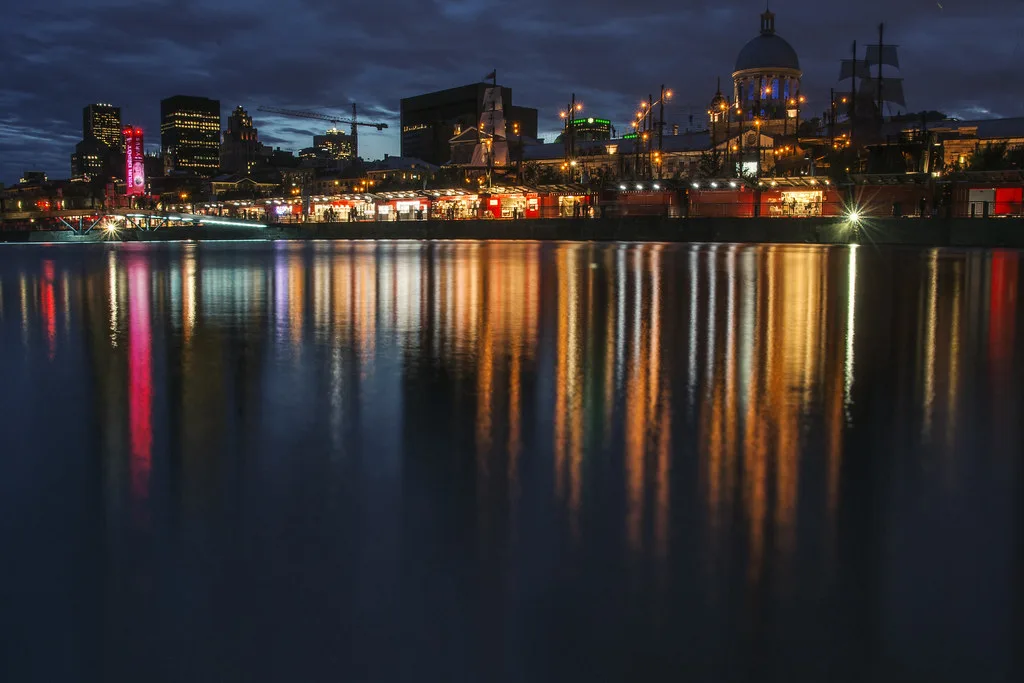
I made it back to the ship as the sun was setting, my bag heavy with cheese and bagels and maple syrup, my feet sore from cobblestones. As the ship pulled away from Alexandra Pier, I stood at the rail and watched Old Montreal's stone facades turn gold in the last light. The spires of Notre-Dame caught the sunset and held it. Somewhere below, a street musician was playing violin — I could hear it faintly across the widening water, a thin melody that carried further than it should have.
What Montreal taught me is something I had not expected to learn on a cruise. I learned that a city can hold two languages in one mouth and be richer for it. I learned that cobblestones remember the feet that walk on them, that a bagel baked in a wood-fired oven carries the memory of every baker who has stood at that oven before. I learned that autumn is not an ending but a kind of honesty — the trees showing their true colors before the long cold comes. And I learned that sometimes the greatest gift a port can give you is not a photograph or a souvenir but a quiet moment on a hilltop, looking out over a city that has been gathering stories for four hundred years, and feeling grateful to have added one of your own.
Weather & Best Time to Visit
The Cruise Port
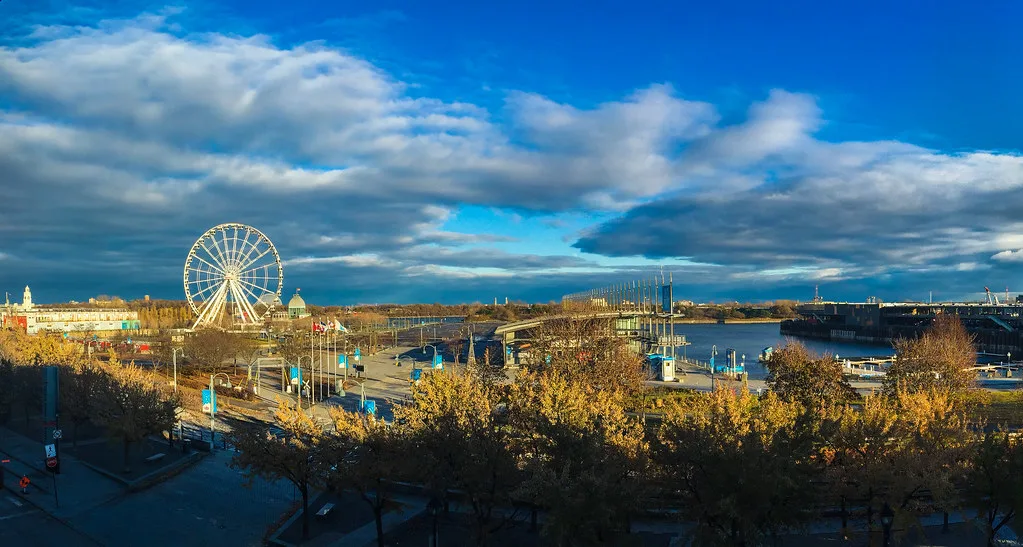
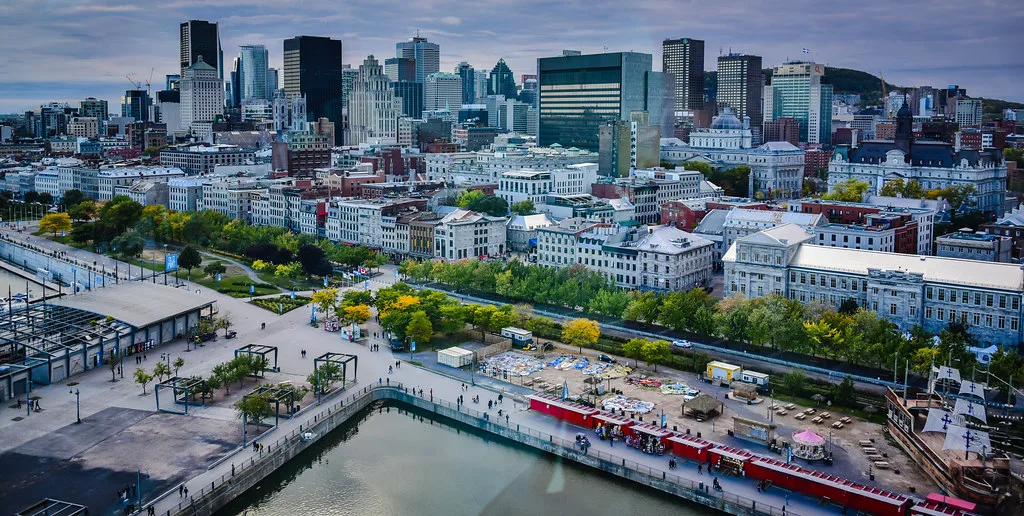
Ships dock at Alexandra Pier in the Old Port (Vieux-Port) of Montreal, and the location is among the finest cruise terminal placements in North America. You walk off the ship and into Old Montreal (Vieux-Montreal) — cobblestone streets, 18th-century stone buildings, horse-drawn caleches, and Notre-Dame Basilica two blocks away. No taxi, no shuttle, no transfer bus. The cruise terminal building itself is modest — a covered walkway with security screening and a small waiting area — but the location more than compensates. The Old Port stretches along the waterfront with parks, promenades, and the Montreal Science Centre. Place Jacques-Cartier, the main square, hosts street performers and outdoor cafes. The area is compact, flat, and largely wheelchair accessible along the main promenades, making it manageable for visitors with limited mobility. Everything in Old Montreal is within a 15-minute stroll of the pier.
Getting Around
Old Montreal is entirely walkable from the cruise pier, and most visitors spend their first hours exploring on foot. The cobblestone streets are charming but uneven in places, so sturdy flat-soled shoes are recommended. For destinations beyond Old Montreal — Mount Royal Park, the Plateau, Jean-Talon Market, Schwartz's Deli — taxis and Uber are widely available. A taxi from the Old Port to the Plateau costs approximately $15-20 CAD; to Mount Royal or Jean-Talon Market, expect $20-25 CAD. Uber operates normally in Montreal and often runs slightly cheaper than street taxis.
Montreal's Metro system is efficient and affordable at $3.75 CAD per ride. The nearest station to the cruise port is Champ-de-Mars on the Orange Line, roughly a 10-minute walk from Alexandra Pier. The Metro connects to all major neighborhoods and runs from approximately 5:30 a.m. to 1:00 a.m. Stations have elevators at most stops, though some older stations require stairs. The BIXI bike-share system ($6.75 CAD for a single 30-minute ride, or $22 CAD for a day pass) offers another option for active travelers — bike lanes are plentiful in the city center. Montreal's streets follow a rough grid pattern, and most signage is bilingual, making navigation straightforward even for first-time visitors. Budget extra time if returning to the ship during evening rush hour, as downtown traffic can slow taxis considerably between 4 and 6 p.m.
Montreal Port Map
Interactive map showing cruise terminal and Montreal attractions. Click any marker for details.
Excursions & Activities
Notre-Dame Basilica
The most rewarding single attraction in Montreal. The Gothic Revival interior features a deep blue vaulted ceiling with golden stars, intricate wood carvings, and stained glass windows depicting Montreal's founding. Entry costs $8 CAD for self-guided visits; guided tours are available for $12 CAD. The AURA evening light show ($30 CAD) transforms the interior into an immersive experience. Allow 45 minutes to an hour. Located an 8-minute walk from the cruise pier through Old Montreal. Fully accessible on the main floor. You can visit independently with ease — a ship excursion typically combines the basilica with a city tour for $60-90, but walking here on your own saves both time and money.
Old Montreal Walking Tour
The historic district rewards wandering, but a guided walking tour adds depth. The Pointe-a-Calliere archaeology museum ($25 CAD) explores the city's foundations — literally, with underground excavations of the original 1642 settlement. Bonsecours Market hosts local artisans. Rue Saint-Paul offers boutiques in historic buildings. A ship excursion for a guided Old Montreal tour runs $50-75; independently, you can book ahead with local operators for $30-40 CAD, or simply explore on foot with a downloaded walking map.
Mount Royal Park & Kondiaronk Belvedere
Designed by Frederick Law Olmsted, Mount Royal Park offers forested trails and the Kondiaronk Belvedere lookout with panoramic city views. Free entry. A taxi from the port costs $20-25 CAD each way. The lookout is accessible by road, though the walking trails involve moderate uphill grades. During fall foliage season (mid-September to mid-October), the park is spectacular — maples at peak color along every trail. Allow 2-3 hours including transit. Visit independently by taxi or Uber; ship excursions ($55-80) combine the lookout with a city driving tour.
Montreal Food Tour: Bagels, Smoked Meat & Poutine
Montreal's food scene deserves a dedicated outing. Essential stops: St-Viateur or Fairmount bagel shops ($5-8 CAD for a half-dozen), Schwartz's Deli for smoked meat sandwiches ($12-15 CAD), La Banquise for poutine ($10-14 CAD), and Jean-Talon Market for local cheese and produce (free entry, budget $20-30 CAD for tastings and purchases). A self-guided food crawl is easy to manage independently by taxi and Metro. Organized food walking tours ($60-90 CAD per person) cover the Mile End and Plateau neighborhoods. Book ahead for popular options during fall cruise season, as they fill quickly.
Plateau Mont-Royal Neighborhood Walk
The residential heart of French-Canadian Montreal. Colorful row houses with exterior spiral staircases, independent boutiques, bakeries, and cafes line every street. Boulevard Saint-Laurent ("The Main") divides the traditionally French east from the English west. Low-energy, flat walking suitable for most visitors. A taxi from the port costs $15 CAD. Free to explore; budget for coffee and pastries. No need to book ahead — simply show up and wander.
Depth Soundings
Montreal operates on the Canadian Dollar (CAD). As of early 2026, $1 USD buys approximately $1.35-1.40 CAD. ATMs are plentiful throughout Old Montreal and the city center; most accept international cards with minimal fees. Credit cards are accepted nearly everywhere — Montreal is largely cashless-friendly — but carry some small bills for tips and market vendors. Tipping at restaurants follows North American custom: 15-18% before tax.
Montreal is officially French-speaking under Quebec law. All signage, menus, and public services default to French. However, most Montrealers are fluently bilingual, and English is widely understood in tourist areas. A simple "Bonjour" when entering a shop is appreciated and sets a friendly tone; staff will typically switch to English if they sense you are more comfortable. Weather in Montreal is continental and extreme — winter temperatures plunge to -15°C or colder, while summer days reach 26°C or higher. Fall foliage cruises (September-October) offer the most pleasant weather for walking, with daytime temperatures of 8-18°C. Dress in layers, as mornings can be cold even when afternoons warm up. The walking surfaces in Old Montreal are cobblestone and can be slippery when wet — wear sturdy shoes with good grip.
Photo Gallery
Frequently Asked Questions
Where do cruise ships dock in Montreal?
Ships dock at Alexandra Pier in the Old Port, steps from Old Montreal's cobblestone streets. Walk off the gangway and you are in the historic district — no taxi or shuttle needed.
Do I need to speak French?
No, but a "Bonjour" is appreciated. Montreal is officially French-speaking, yet most residents are bilingual. Tourist areas, restaurants, and shops accommodate English speakers comfortably.
When is the best time to cruise to Montreal?
Fall foliage season (mid-September to mid-October) is peak cruise season with spectacular maple colors. Summer (June-August) is warm and festival-filled. Montreal has harsh winters with temperatures dropping to -15°C, so cruises operate spring through fall only. The live weather widget in the seasonal panel above is the primary source for short-term conditions on a specific sailing date.
Is Notre-Dame Basilica worth the entry fee?
The $8 CAD entry is a bargain for a Gothic Revival interior of extraordinary beauty — deep blue ceilings, golden stars, intricate wood carvings. The AURA evening show ($30 CAD) adds immersive light and sound.
What food should I try in Montreal?
Smoked meat at Schwartz's ($12-15 CAD), Montreal-style bagels from St-Viateur or Fairmount ($5-8 CAD per half-dozen), and poutine at La Banquise ($10-14 CAD). Visit Jean-Talon Market for local cheese and maple syrup.
Can I walk from the cruise port to the main attractions?
Old Montreal is immediately accessible on foot from Alexandra Pier — Notre-Dame Basilica is 8 minutes away. For the Plateau, Mount Royal, or Jean-Talon Market, take a taxi ($15-25 CAD) or the Metro ($3.75 CAD per ride).
When is hurricane and storm season in Montreal?
The Weather Hazards panel above labels Montreal's heavy-weather window "Continental Winter & Summer Storms" with the broader winter peak Jan-Feb (outside the cruise season anyway). Montreal at ~45°N on the St. Lawrence River is outside the main tropical-cyclone tracks. Late-season Atlantic hurricanes occasionally recurve up the St. Lawrence valley as weakened systems — most cruise season Sep-Oct calls fall in the calmer foliage window. The live weather widget in the seasonal panel above is the primary source for current conditions on a specific sailing date.
What should I pack for a Montreal port day?
The Packing Tips in the seasonal panel above lay out the layered Canadian approach: heavy layers for fall/spring, comfortable walking shoes for cobblestones, and a rain jacket. Cruise season pack: layered for 10-22°C swings (sometimes within the same day in fall foliage season). The Old Montreal cobblestones reward grip; a windproof shell matters for the exposed St. Lawrence promenade.
Will rain ruin my Montreal port day?
Montreal's underground city (RÉSO) is the largest underground walkway network in the world — 33 km of climate-controlled passages connecting the major Metro stations, shopping malls, hotels, and the basilica district. In any weather you can move between Notre-Dame Basilica's interior, the Pointe-à-Callière archaeology museum, the Montreal Museum of Fine Arts, and indoor sections of Old Montreal. Fall-foliage Mount Royal walks lose appeal in heavy rain. The live weather widget in the seasonal panel above is the primary source for short-term forecasts on a specific sailing date.
Montreal, Quebec — Port Guide
Last reviewed: February 2026