


Photo: Wikimedia Commons (CC BY-SA)
My Logbook: Frankincense and Silence in the Desert Capital
I heard Muscat before I saw it. Standing on the forward deck as our ship rounded the headland into the harbour, the call to prayer drifted across the water from somewhere beyond the mountains, faint and clear in the early morning air, and I felt my breath catch. The sound was so unexpected, so intimate against the vast silence of the sea, that I stood still and listened until it faded. Then the city appeared — whitewashed buildings pressed between mountains and ocean, a narrow ribbon of civilization clinging to the coast as it had done for centuries. No towers of glass, no cranes reaching skyward. Just stone and plaster and the amber light of an Arabian dawn.
Port Sultan Qaboos sits at the western edge of Muttrah, and from the pier I could see the corniche curving away toward the old souq. I gathered my daypack, checked that I had my headscarf tucked inside, and walked down the gangway into heat that wrapped around me like a warm blanket. It was only eight in the morning but already the air shimmered above the asphalt. A taxi driver named Khalid approached and quoted me 5 OMR ($13) for the Sultan Qaboos Grand Mosque. I agreed, and we drove through streets so clean they looked freshly swept, past buildings painted in tones of sand and cream — Oman requires all construction to follow traditional architectural standards, and the result is a city that looks like it was designed by a single thoughtful hand.

The mosque took my breath away. I had read about it, seen photographs, but nothing prepared me for the scale of it. The main prayer hall carpet — hand-knotted by six hundred Iranian women over four years, containing 1.7 billion knots — stretched beneath my bare feet like a field of woven flowers. Above me, a Swarovski crystal chandelier weighing eight tonnes hung from the ceiling like a frozen waterfall of light. I walked slowly across the carpet, feeling the silk threads between my toes, looking up at the geometric patterns carved into the marble walls, and I understood for the first time why sacred architecture exists — not to impress, but to make you feel small enough to remember what matters. A guard in traditional Omani dress nodded at me and smiled. I smiled back, grateful for the welcome.
Khalid drove me back toward the port, and I asked him to drop me at the entrance to the Mutrah Souq. He pulled over near the fish market, where the morning catch was being sorted on concrete slabs — silver fish gleaming in neat rows while men in white dishdashas haggled over prices. The smell of the sea mixed with diesel and something sweeter I could not yet place. I walked into the souq through the main gate, and the sweet smell revealed itself: frankincense, smoldering in brass burners at the entrance of nearly every stall, filling the covered alleys with a warm, resinous haze. The souq is known locally as Al Dhalam — "the darkness" — because the sun barely penetrates the tightly packed stalls, and my eyes took a moment to adjust from the fierce daylight outside.
I spent an hour wandering through those dim passages, past stalls hung with silver khanjar daggers and embroidered Omani caps, past towers of frankincense resin sorted by grade and colour — pale silver for the finest, dark amber for everyday burning. A shopkeeper named Ali poured me a small cup of kahwa, the Omani coffee spiced with cardamom and served with dates, and we sat together while he explained the different grades. I bought a bag of superior-grade frankincense resin for 3 OMR ($8) and a small brass burner for 2 OMR ($5). He wrapped them carefully in tissue paper and wished me safe travels. The coffee was bitter and aromatic, and I could taste the cardamom on my tongue for hours afterward.

From the souq I walked the corniche back toward the port, the harbour on my left and the mountains rising above me on my right. Traditional wooden dhows rocked gently at their moorings. Ahead, the twin Portuguese forts of Al Jalali and Al Mirani guarded the harbour entrance as they had since the sixteenth century, their crenellated walls golden in the midday sun. I stopped at a small cafe on the waterfront and ordered a fresh lime juice for 500 baisa ($1.30), sitting in the shade while fishing boats motored past.
It was at the Royal Opera House that something shifted inside me. I had not expected to find an opera house in Oman, but it had been built at the personal direction of Sultan Qaboos — a ruler who had studied music in England and believed that culture could bridge the distance between civilizations. The building itself was a marriage of Islamic geometry and contemporary design, all pale stone and clean arches. A guided tour cost 3 OMR ($8), and our guide — a young Omani woman named Fatima — walked us through the auditorium with obvious pride. She told us about the opening night in 2011, when Plácido Domingo performed to a house that included Omanis who had never heard opera before and Europeans who had never been inside a building so beautifully Islamic. I felt my eyes fill with tears. I whispered a quiet prayer of gratitude for a leader who had believed that beauty could bring strangers together, and for the country that had carried that vision forward after his passing.
I walked back to the ship slowly, through streets where old men sat in doorways drinking tea and children chased cats through alleys. The heat was fierce now, but I did not mind. I had frankincense in my bag, cardamom on my tongue, and the memory of a chandelier made of a million crystals hanging above a carpet made of a billion knots. Muscat taught me that restraint is its own kind of grandeur — that a country does not need to shout to be heard, that hospitality can be quiet and still reach deeper than any spectacle. I carry that lesson with me, and when I light a piece of frankincense resin at home and watch the smoke curl toward the ceiling, I am standing again on the Muttrah corniche, looking up at mountains the colour of rust, listening to a call to prayer drift across the water.
Weather & Best Time to Visit
The Cruise Port
Ships dock at Port Sultan Qaboos in the Muttrah district, situated in a natural harbour flanked by barren mountains. The terminal building is modern and air-conditioned with basic facilities including restrooms, a small duty-free shop, and a tourist information desk. Taxis queue outside the terminal gate, and fares are metered — expect to pay 2-5 OMR ($5-13) for trips within the city. The Mutrah Souq is approximately one mile from the pier, walkable along the scenic corniche promenade. Port security requires passengers to show their cruise card when returning. The terminal has accessible ramps at ground level, and the flat corniche walkway is wheelchair friendly. Currency exchange is available inside the terminal, and an ATM is located just outside the port gate. Porters are available to assist with mobility needs.
Getting Around
Muscat is a long, narrow city that stretches over forty kilometers along the coast, so walking between major areas is not practical. However, the port-to-souq corridor along the Muttrah corniche is flat, scenic, and entirely walkable — about fifteen minutes at a comfortable pace. Taxis are the primary transport for cruise visitors. They are metered and reasonably priced: a ride from the port to the Grand Mosque costs approximately 5 OMR ($13), and a trip to the Royal Opera House runs about 4 OMR ($10). Most drivers speak basic English and are accustomed to cruise passengers.
A full-day private taxi for sightseeing costs 25-35 OMR ($65-90), which is excellent value if you want to cover the mosque, opera house, and old Muscat forts in a single trip. Ride-hailing apps including Careem and OTaxi operate in Muscat and offer fixed pricing that eliminates negotiation. City buses exist but are infrequent, poorly signed in English, and not wheelchair accessible. The corniche promenade is fully accessible for wheelchair users and those with limited mobility, with smooth paved surfaces and gentle gradients throughout. Beyond the corniche, sidewalks can be uneven or absent, so those with mobility concerns should plan on taxi transport between attractions. Budget extra time for return trips during Friday prayer hours when traffic briefly congests near mosques.
Muscat Area Map
Interactive map showing cruise terminal, souq, mosque, and attractions. Click any marker for details and directions.
Excursions & Activities
Sultan Qaboos Grand Mosque
The most rewarding single stop in Muscat. Open to non-Muslim visitors from 8am to 11am (except Fridays), the mosque features the second-largest hand-knotted carpet in the world and an eight-tonne Swarovski crystal chandelier. Entry is free. Modest dress required — women must wear a headscarf, and both men and women must cover shoulders and knees. Shoes are removed at the entrance. Allow 1-1.5 hours. A taxi from port costs approximately 5 OMR ($13) each way. A ship excursion typically combines the mosque with a city tour for $60-80. You can also visit independently by taxi — book ahead if visiting during peak cruise season to ensure a driver is available for return pickup. Low-energy visit with flat, accessible pathways throughout.
Mutrah Souq
The oldest marketplace on the Arabian Peninsula stretches through a labyrinth of covered alleys selling frankincense, silverware, textiles, Omani khanjar daggers, and halwa sweets. Haggling is expected and part of the experience. Frankincense resin costs 2-5 OMR ($5-13) depending on grade. Allow 1-2 hours. Located one mile from the port along the corniche — walkable independently with no booking needed. Moderate energy; the alleys are covered and shaded but can be warm and crowded.
Royal Opera House Muscat
Opened in 2011, this stunning venue blends Islamic architecture with contemporary design. Guided tours run when performances are not scheduled and cost 3 OMR ($8). The auditorium, marble foyers, and landscaped gardens are impressive. About 15 minutes from port by taxi at 4 OMR ($10). Visit independently — no need to book ahead for tours. Low-energy, fully accessible on the ground level.
Al Jalali & Al Mirani Forts
Sixteenth-century Portuguese fortifications guarding the harbour entrance. Al Jalali houses a museum with limited public access; Al Mirani is a functioning military installation and closed to visitors. Both are visible from the corniche and make for excellent photographs. The walk from port takes about 20 minutes along the waterfront. Free, low-energy, and wheelchair accessible along the corniche viewing points.
Bait Al Zubair Museum
A private collection in a restored traditional house showcasing Omani heritage — costumes, jewelry, weapons, and household artifacts spanning centuries. Entry costs 2 OMR ($5). Located in old Muscat, about 25 minutes from port by taxi at 4 OMR ($10). Allow 1 hour. Visit independently; no need to book ahead. Low-energy, partially accessible on the ground floor.
Qurum Beach
A public beach about 20 minutes from port offering calm waters and golden sand. Free entry. Facilities are basic — bring your own water and sun protection. A taxi costs approximately 5 OMR ($13). Moderate energy. Not a ship excursion destination, but easy to visit independently if you have a longer port day.
Local Food & Drink
- Shuwa: Slow-roasted lamb or goat, marinated and cooked in underground pits for up to 48 hours
- Omani Halwa: Gelatinous sweet made with rosewater, saffron, and nuts — an acquired taste but culturally essential
- Mashuai: Whole spit-roasted kingfish served with rice — around 3-4 OMR ($8-10) at local restaurants
- Kahwa: Arabic coffee spiced with cardamom, served with dates — the traditional welcome drink, often offered free at shops
- Laban: Salted buttermilk, refreshing in the heat — about 200 baisa ($0.50)
- Fresh Lime Juice: Available at corniche cafes for about 500 baisa ($1.30) — essential in the desert heat
Depth Soundings
Oman uses the Omani Rial (OMR), which is pegged to the US dollar at approximately 1 OMR = $2.60. The rial is subdivided into 1,000 baisa. ATMs are available near the port gate and accept international cards. Credit cards work at hotels, larger restaurants, and the Royal Opera House gift shop, but souq vendors and small cafes require cash. Carry small denominations — getting change for a 10 OMR note at a market stall can be difficult.
Tipping is appreciated but not expected. Restaurants may include a 10% service charge; if not, leaving 200-500 baisa is generous. Taxi drivers do not expect tips but appreciate rounding up. Oman is conservative and respectful of tradition — modest clothing is not merely recommended but genuinely expected, especially outside tourist areas. Alcohol is available only in licensed hotel restaurants and is expensive at 3-5 OMR ($8-13) per drink. Photography is generally welcome but always ask permission before photographing Omani people, particularly women. Learning "shukran" (thank you) and "as-salamu alaykum" (peace be upon you) earns warm responses.
Photo Gallery
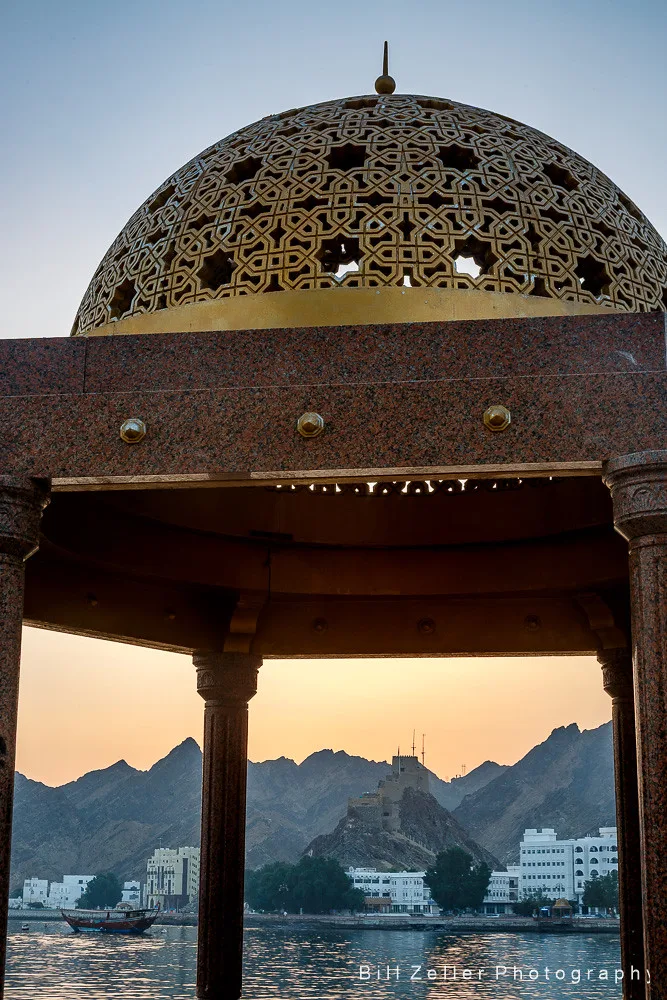


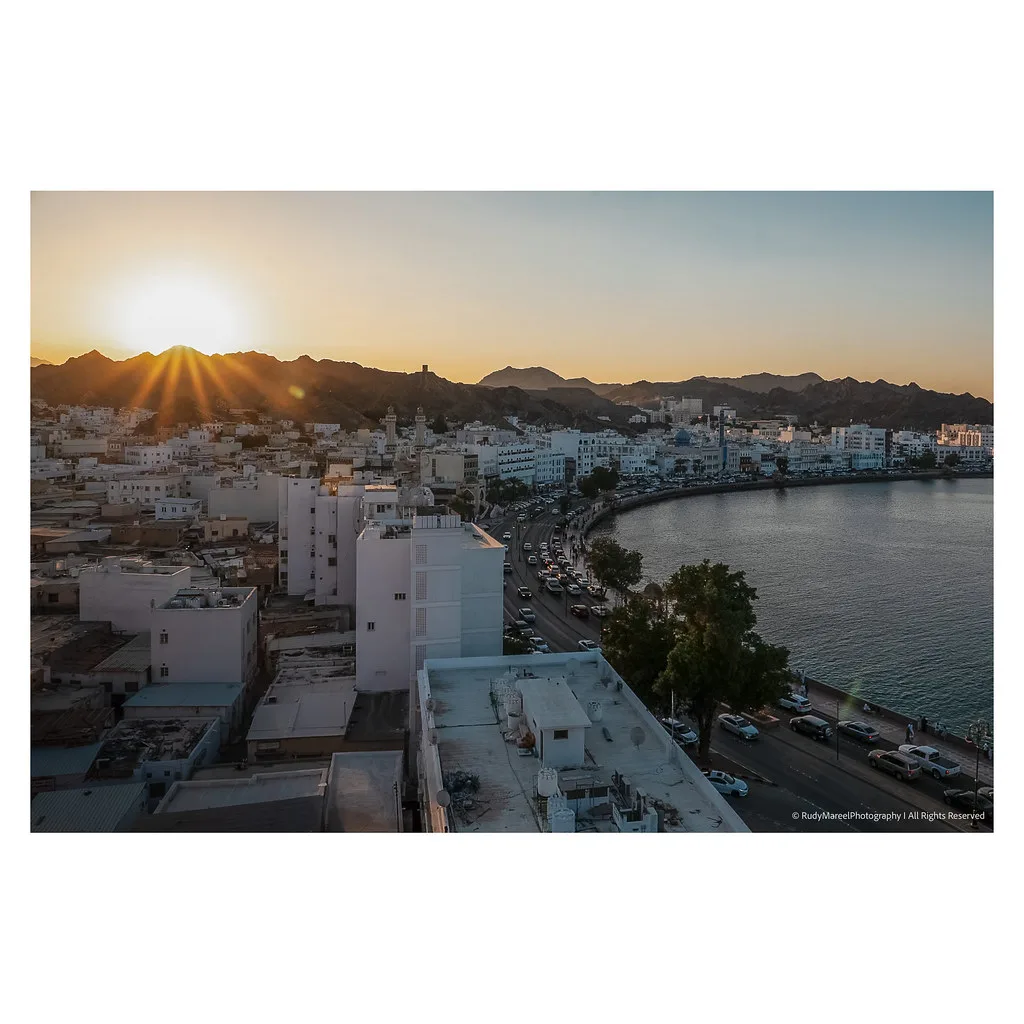


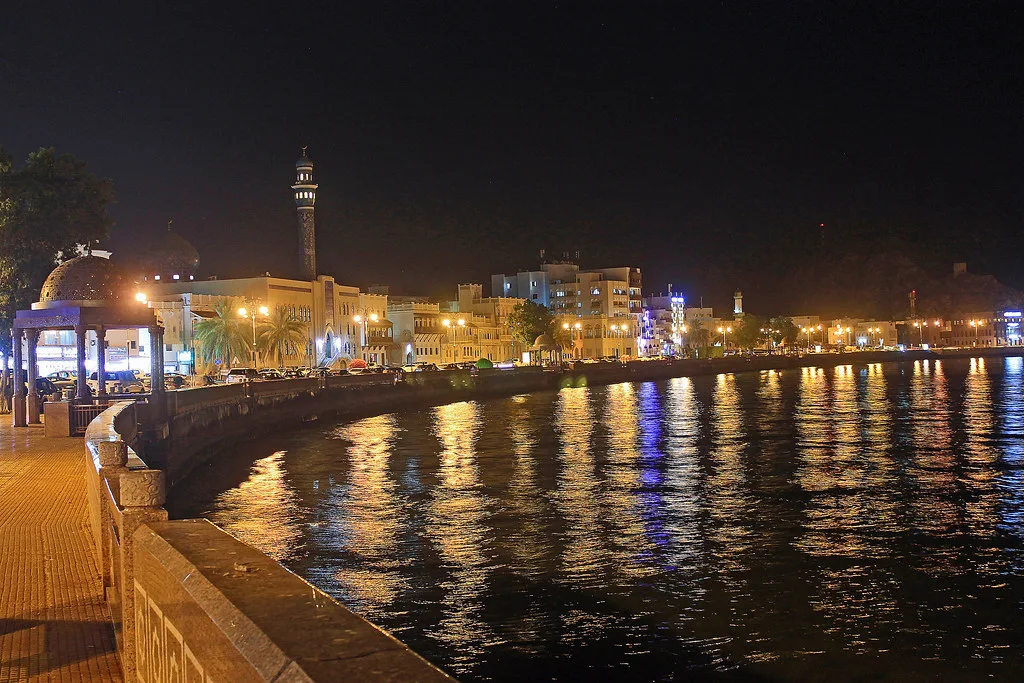
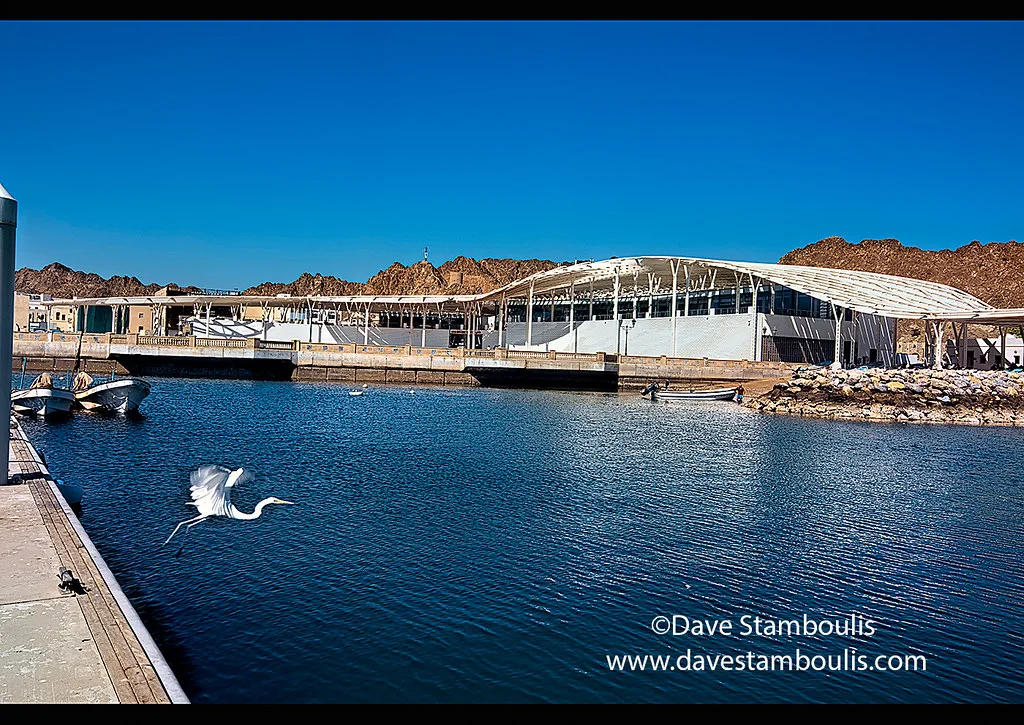
Image Credits
All photographs on this page are used under Creative Commons or free-use licenses. Images sourced from Wikimedia Commons, Unsplash, Pexels, Pixabay, and Flickr. Hero image and supplementary photographs courtesy of Flickers of Majesty.
Frequently Asked Questions
Where do cruise ships dock in Muscat?
Ships dock at Port Sultan Qaboos in the Muttrah district. The terminal is modern with air conditioning, restrooms, and a tourist desk. The Mutrah Souq is about one mile away, walkable along the corniche.
Can I visit the Sultan Qaboos Grand Mosque?
Yes, non-Muslims are welcome from 8am to 11am except Fridays. Modest dress is required and women must cover their hair. Entry is free. A taxi from port costs about 5 OMR ($13) each way.
What is the dress code in Muscat?
Modest dress is appreciated throughout Oman. Cover shoulders and knees. Women need a headscarf for mosque visits. Lightweight breathable fabrics work well in the desert heat.
Should I buy frankincense at the Mutrah Souq?
Oman produces some of the finest frankincense in the world. Prices range from 2-5 OMR ($5-13) depending on grade. Buy resin and a small brass burner — they make wonderful lightweight souvenirs.
Is Muscat safe for independent exploration?
Muscat is one of the safest cities in the Middle East. Violent crime is extremely rare and locals are welcoming. The corniche walk from port to souq is safe and scenic during daylight hours.
Do I need local currency in Muscat?
Yes, for souq shopping and small cafes. ATMs near the port accept international cards. US dollars are sometimes accepted at tourist sites but local vendors prefer Omani Rials.
What is the best time of year to visit Muscat?
Peak cruise season is October through April — Oman's mild months, with temperatures comfortable for outdoor sightseeing of the Grand Mosque, the Mutrah Souq, and the Royal Opera House. May through September is brutally hot (highs routinely above 100°F) — we recommend avoiding June through August.
What is Muscat's storm season?
The hazard-note on this page focuses on heat exposure: "Stay hydrated; limit outdoor exposure to early morning; choose air-conditioned attractions during midday." The glance Wind entry reads "Shamal winds 15-30 km/h Jun-Aug; calm Oct-Apr," and the Rain entry reads "Extremely rare — under 100mm annually, mostly Jan-Mar." Specific cyclone history is not detailed on this page; for current tropical-system status on a specific sailing date, use the live weather widget in the seasonal panel above.
What should I pack for Muscat's weather?
Modest clothing is essential year-round — cover shoulders and knees, with a headscarf for women visiting the Grand Mosque. Lightweight breathable fabrics for the desert heat (high SPF sunscreen, hat, polarized sunglasses for the intense sun). A light wrap for aggressive indoor air conditioning. For winter port calls (Oct-Mar) the weather is mild but still warm by European standards.
Will rain ruin my Muscat port day?
The glance Rain entry reads "Extremely rare — under 100mm annually, mostly Jan-Mar." For short-term forecasts on a specific sailing date, the live weather widget in the seasonal panel above is the primary source.
Muscat: Arabia's Most Graceful Welcome
Last reviewed: February 2026