


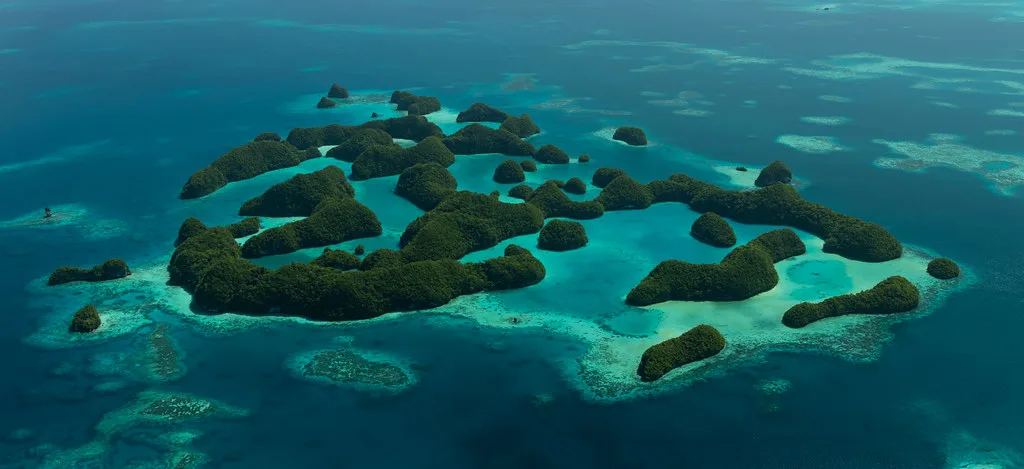
Photo: alexfine / Flickr
Palau / Koror Cruise Port Guide
The Rock Islands Paradise That Changed How I See the Ocean
Last reviewed: February 2026
My Palau Day – A First-Person Account
When our ship rounded the final headland and I caught my first glimpse of Koror harbor, with those 445 mushroom-shaped limestone islands rising from turquoise waters like ancient guardians frozen in place, I felt my breath catch in my chest. I had read about Palau for years, studied the photographs, watched the documentaries, but nothing had prepared me for the sheer scale of what I was seeing. The morning air tasted of salt and warm rain, and I could hear the cries of frigatebirds wheeling overhead as our vessel eased toward the dock. My hands were shaking as I gripped the rail, not from cold but from anticipation so intense it bordered on reverence.
I started my day with an early boat ride to Jellyfish Lake, a marine sanctuary hidden inside one of the Rock Islands. The hike from the dock up and over the limestone ridge was steep and slippery, the trail hemmed in by jungle so thick that the canopy blocked all but scattered coins of sunlight. I could smell the rich rot of fallen leaves and the faint sulfur tang of the lake itself before I ever saw it. Then the trail opened onto water so still it looked like green glass. I waded in slowly, and within moments I was floating among millions of golden jellyfish, their pulsing bodies brushing my arms and legs like gentle kisses from the sea itself. These jellyfish evolved without stinging cells because they have no predators in this enclosed lake, and swimming among them felt like drifting through liquid amber light. The warmth of the sun on my back, the silky caress of their translucent bells against my skin, the absolute silence broken only by my own breathing and the soft plop of jellyfish surfacing around me — I have never in my life felt so welcomed by creation.
The moment that stays with me forever: floating motionless in Jellyfish Lake as thousands of golden jellies pulsed around me like living constellations, their translucent bells catching sunlight in liquid gold, and I whispered a quiet prayer of gratitude because I finally understood that beauty does not need a purpose beyond being beautiful. My eyes filled with tears behind my snorkel mask, and for the first time in years I felt something shift inside me — a healing I did not know I needed, offered freely by creatures that do not even know I exist.After Jellyfish Lake, I kayaked through the Rock Islands Southern Lagoon, a UNESCO World Heritage Site where limestone islands create hidden lagoons, sea caves, and emerald channels that twist and turn like a maze designed by someone who loves secrets. My guide, a Palauan man named Taro, pointed out ancient rock art on cave walls — faded ochre figures of fish and warriors that are over a thousand years old. He showed me Bai meeting houses with their painted wooden beams telling stories older than my grandfather's grandfather. However, it was the silence between the islands that moved me most: the only sounds were our paddles dipping into water so clear I could see the coral twenty feet below, and the occasional splash of a reef fish startled by our passing.
Lunch was fresh tuna poke and taro root at a waterfront shack in Koror where locals greeted me with genuine warmth and insisted I try the coconut crab, which tasted like lobster dipped in sweetened butter. The afternoon belonged to the Milky Way lagoon, a shallow basin with soft white limestone mud on the bottom that Palauans have used for skincare for generations. I slathered myself head-to-toe in that cool white clay, and although I looked like a ghost who had taken up residence in the Pacific, the mineral-rich mud left my skin feeling impossibly smooth. Despite the silliness of it, floating in that milky-blue water surrounded by jungle-covered islands while caked in white mud was pure joy — the kind of unself-conscious delight that adults rarely allow ourselves to feel.
Yet the day also carried weight. In the late afternoon, I took a boat to Peleliu Island, site of one of the Pacific War's bloodiest battles. Rusted tanks sat half-swallowed by jungle, their gun barrels pointing at nothing. Japanese bunkers crumbled quietly under the roots of banyan trees. I walked through an airfield where thousands of men died in 1944, and the only sound was wind through the grass and the distant crash of waves on the reef. Still, even here, life had reclaimed what war had destroyed: the underwater wrecks of Japanese ships and planes are now artificial reefs teeming with fish, coral growing on gun turrets, clownfish nesting in cockpits. It is a sobering reminder that even the machines of destruction become gardens of grace given enough time.
On the boat ride back to Koror, I watched the sunset paint the Rock Islands in shades of copper and violet, and I realized I had not checked my phone once all day. Palau had done something to me that I could not quite name — something shifted in my understanding of what matters. Looking back, I think the lesson was this: we spend our lives building things, accumulating things, worrying about things, but the most profound experiences I have ever had were the ones where I simply stopped and let the world hold me. The jellyfish held me. The limestone islands held me. The silence of Peleliu held me. And I learned that sometimes you do not need to do anything at all to receive the greatest gifts.
What Palau taught me: I learned that the most sacred places on earth are not the ones humans built, but the ones we had the wisdom to leave alone. Palau is a living prayer, a 500-island argument for preservation over exploitation, and my day there changed me in ways I am still discovering. I realized that gratitude is not just something we feel; it is something the world earns from us by being more beautiful than we deserve.
The Cruise Port
Koror is Palau's main town and cruise port, compact and walkable with tour operators stationed right at the dock. Ships typically anchor in the harbor and tender passengers ashore, which takes roughly 10 minutes per tender ride. The tender pier is wheelchair accessible with ramp access, and port staff assist passengers with mobility needs. The currency is the US Dollar, so no exchange is needed for American travelers. ATMs are available in town, though they sometimes run low on cash when multiple ships visit. Palau was the first country to ban reef-toxic sunscreen — bring mineral-based (zinc or titanium dioxide) sunscreen or you will need to purchase it locally for around $15–$25 per bottle. You will stamp your passport with the Palau Pledge, an environmental commitment that feels less like bureaucracy and more like joining a sacred covenant to protect this place. The port area has restrooms and a small visitor center with free maps.
Getting Around
Most experiences in Palau require boat tours since the true wonders lie scattered across the archipelago's 500+ islands. Book directly at the port through operators like Sam's Tours or Fish 'n Fins, or pre-arrange online before your visit. Full-day Rock Islands tours including Jellyfish Lake and Milky Way lagoon cost $150–$200 per person and represent strong value given the distance covered and sites visited. Diving trips start around $100–$150 for two tanks at renowned sites like Blue Corner and German Channel.
For land-based exploring on Koror and Babeldaob islands, you can rent a car for $50 per day from several agencies near the port, or hire a taxi for individual trips at roughly $10–$20 per ride within Koror. The Ngardmau waterfall hike requires ground transportation — about a 45-minute drive from the port. Everything in Palau is intimate and navigable, but plan your day around boat schedules since most tours depart early morning and return by late afternoon. Visitors with mobility concerns should confirm boat accessibility with tour operators in advance, as smaller speedboats may pose challenges for those with walking difficulty. The larger tour catamarans offer easier boarding and more stable platforms for passengers who need moderate walking support.
Port Map
Explore Koror cruise port and Palau's Rock Islands, Jellyfish Lake, dive sites, and lagoons. Click markers for details and directions.
Top Excursions and Things to Do
Palau offers a remarkable range of excursions that can be booked as a ship excursion through your cruise line or arranged independently with local operators. If you choose to go independent, book ahead through Sam's Tours or Fish 'n Fins to guarantee your spot, as tours fill quickly when cruise ships are in port. A ship excursion offers guaranteed return to the vessel, which matters here since most activities are boat-based and weather can change quickly. For those who prefer to explore on their own, going independent typically saves $30–$50 per person compared to ship-organized tours.
Jellyfish Lake — Swimming with Stingless Golden Jellies ($100 permit fee)
The extraordinary centerpiece of any Palau visit: millions of golden jellyfish that evolved without stinging cells because they have no predators. You hike through jungle, then float in a marine lake surrounded by pulsing amber clouds. It is otherworldly, meditative, and unlike anything else on earth. The $100 Jellyfish Lake permit also covers Rock Islands access for 10 days. Low-energy activity — suitable for all fitness levels since you simply float and swim gently.
Rock Islands Southern Lagoon — UNESCO Kayaking Paradise
The Rock Islands are Palau's signature landscape — 445 limestone islands rising from turquoise lagoon waters, each capped with dense green jungle and undercut by centuries of tidal erosion into mushroom shapes. UNESCO listed them as a World Heritage Site in 2012. Kayak tours navigate the calm channels between islands, with stops for swimming, snorkeling over shallow reefs, and exploring hidden marine lakes. Half-day kayak tours run $80-120 per person. The paddling is easy — calm water, no significant currents. The scenery does the work.
Milky Way Lagoon — Natural Mud Bath
A sheltered lagoon where fine white limestone mud covers the bottom, turning the water a milky turquoise. Locals and visitors scoop up the mineral-rich mud and coat their skin — a natural spa treatment in the middle of the Pacific. Tours stop here as part of Rock Islands boat excursions. The surreal color of the water and the absurdity of smearing yourself in white mud while floating in one of the most remote archipelagos on earth makes this a memorable stop.
Koror Town Walk — 2 Hours
Palau's main town is modest but worth a morning stroll. The Belau National Museum ($10) houses artifacts from Palau's traditional culture, including storyboards — carved wooden panels depicting legends and history. The Etpison Museum nearby has an impressive collection of WWII artifacts recovered from surrounding waters. Local restaurants in town serve fresh sashimi and Palauan taro dishes at reasonable prices. Flat, walkable terrain.
Depth Soundings
Palau sits in the western Pacific, roughly 900 kilometers east of the Philippines and 3,200 kilometers south of Japan. The Republic of Palau gained independence on October 1, 1994, after nearly five decades as a UN Trust Territory administered by the United States. The relationship with the US remains close — Palau uses the US dollar as currency and its citizens can live and work in the United States under the Compact of Free Association.
The Rock Islands formed over millions of years as coral reefs grew on the ancient Kyushu-Palau volcanic ridge, then tectonic uplift and erosion shaped the surrounding limestone into the distinctive mushroom forms visible today — undercut at the waterline by sponges, bivalves, and other marine organisms. Jellyfish Lake — the signature attraction — formed approximately 12,000 years ago when rising sea levels isolated a population of golden jellyfish in a landlocked marine lake. Without significant predators, the jellyfish evolved a greatly reduced sting that is imperceptible to humans, though they retain their stinging cells.
Palau declared its waters a marine sanctuary in 2015, banning commercial fishing across 80% of its exclusive economic zone. The Palau Pledge, stamped into every visitor's passport since 2017, asks travelers to act responsibly for the sake of Palau's children and future generations. It was the world's first immigration stamp with an environmental promise built in.
Photo Gallery
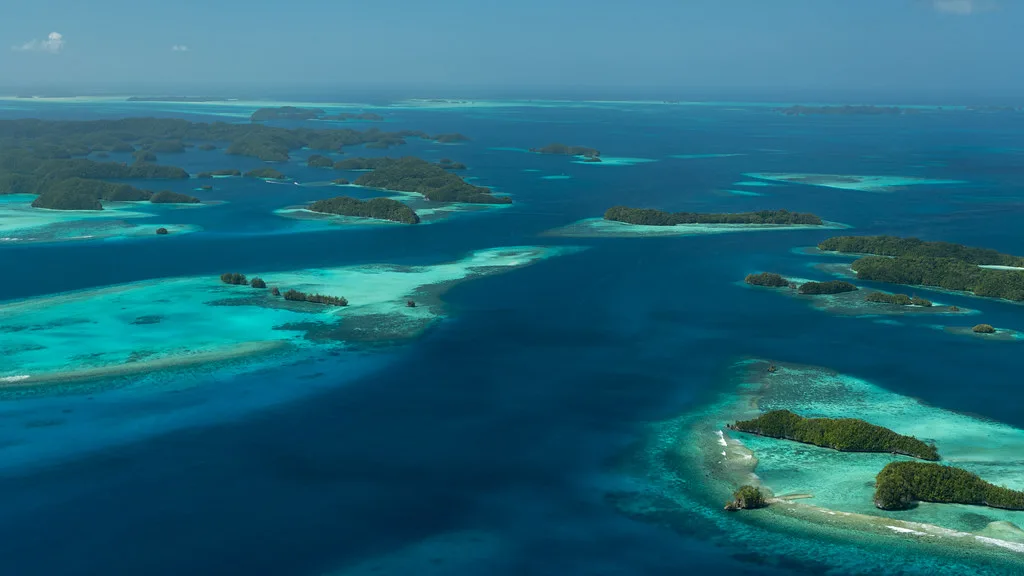
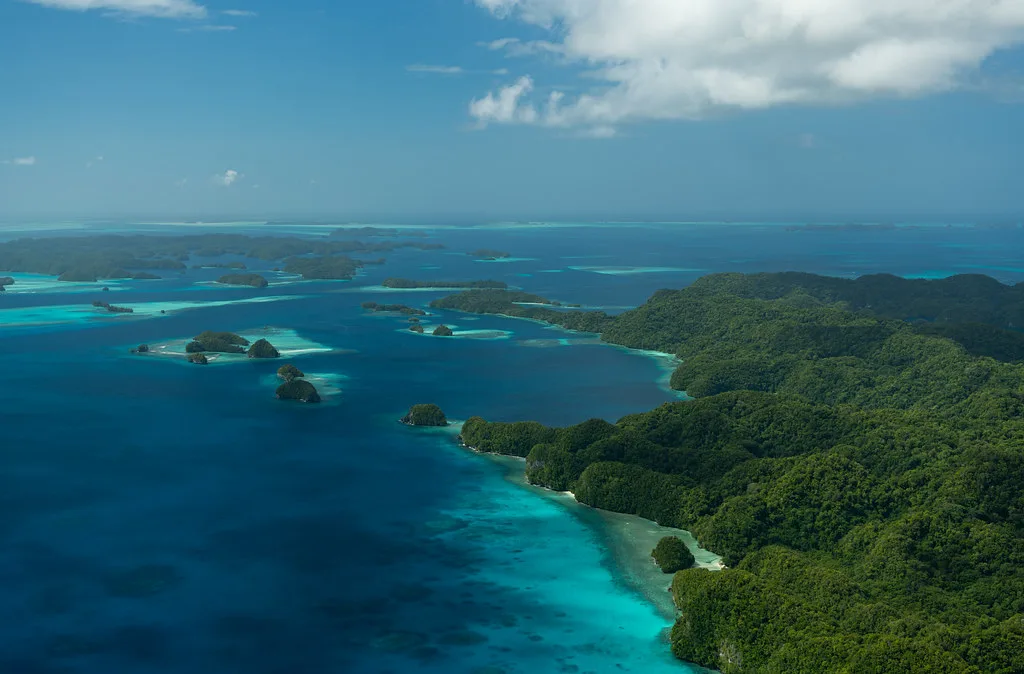
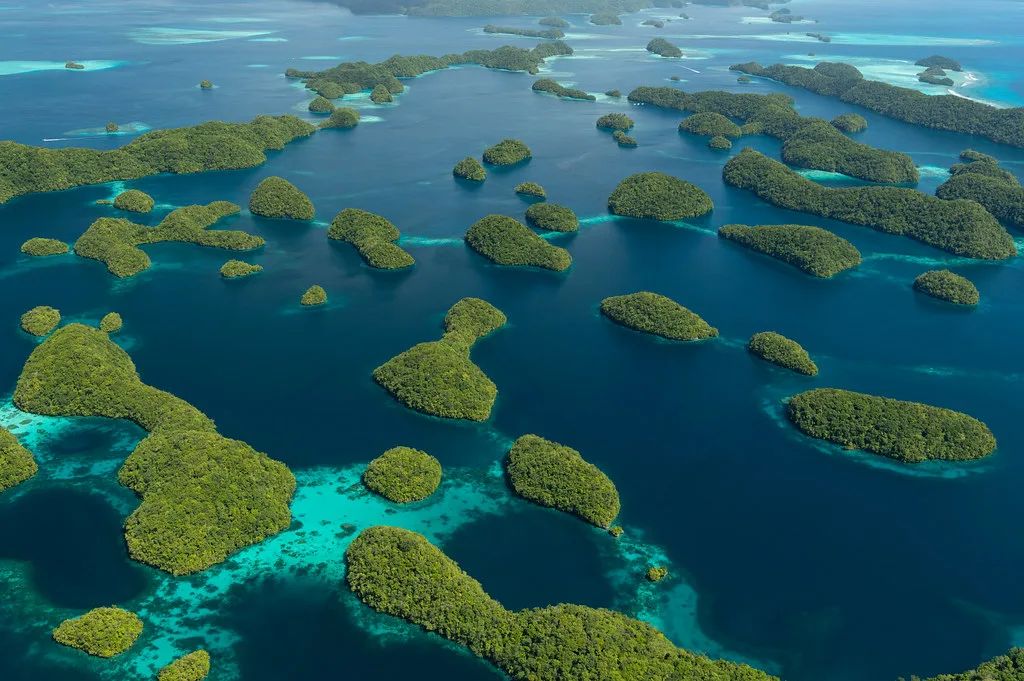
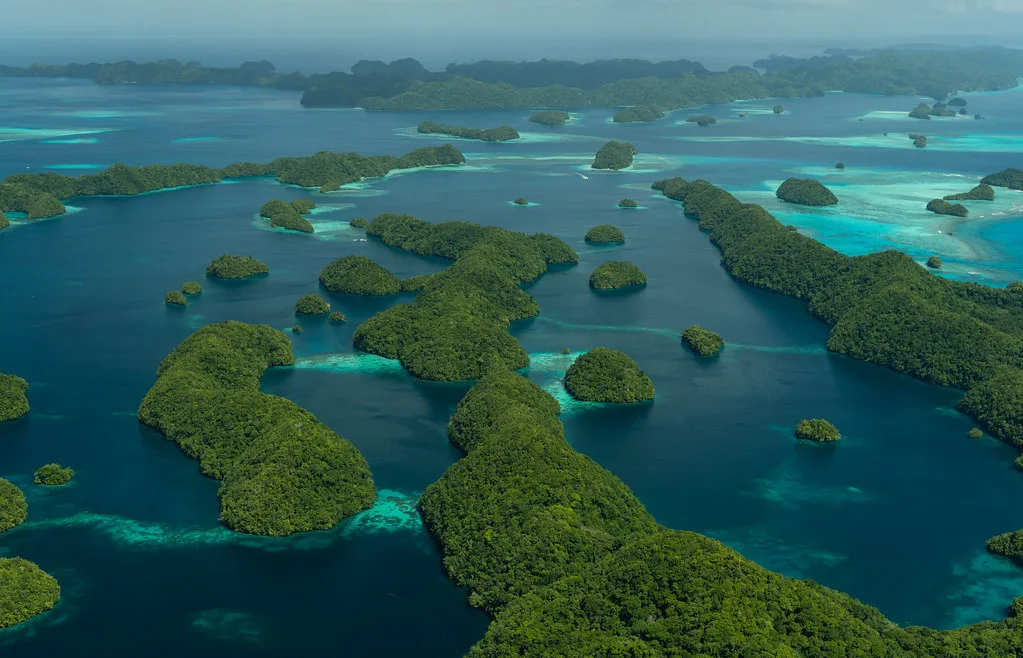
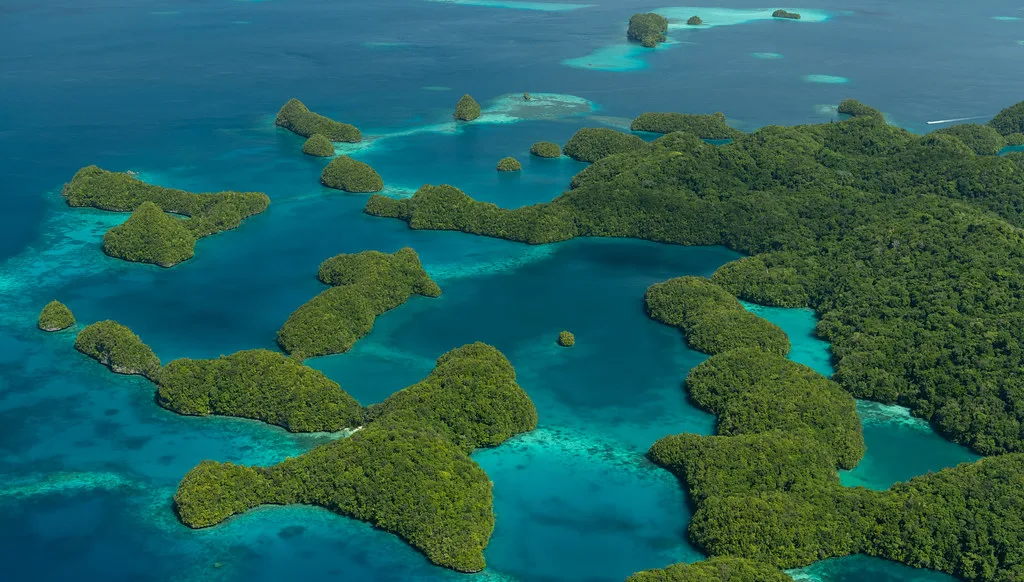
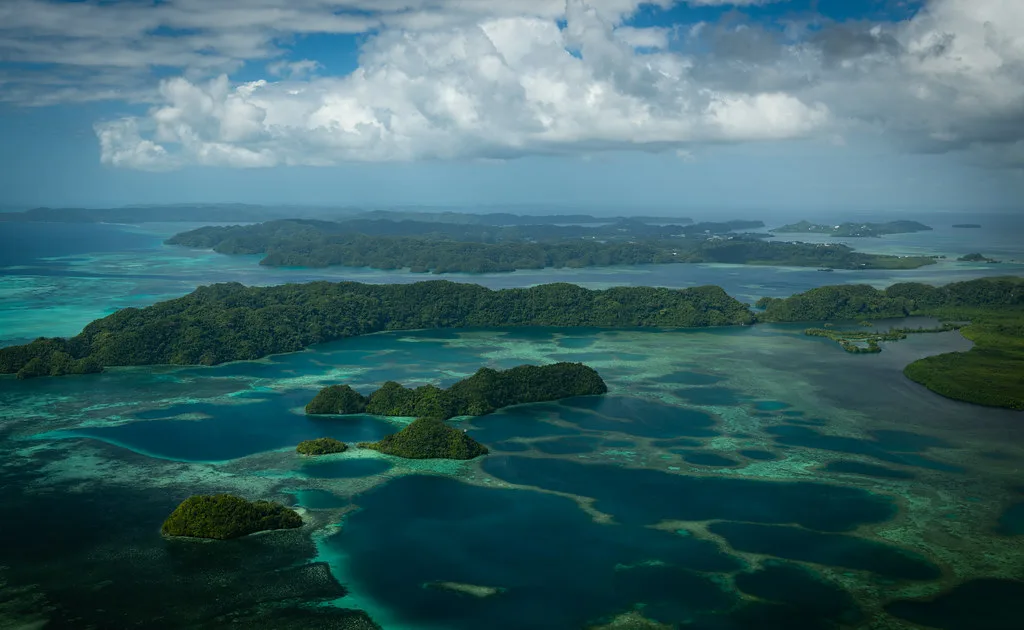
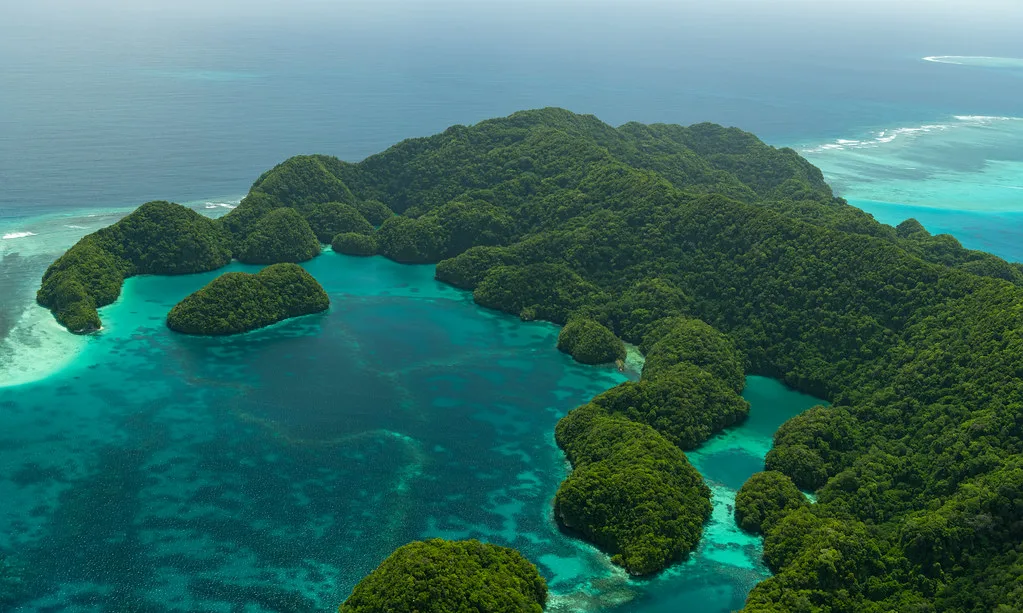
Image Credits
Images sourced from Wikimedia Commons under Creative Commons licenses.
Weather & Best Time to Visit
Frequently Asked Questions
Q: What's the best time of year to visit Palau on a cruise?
Typical range 76-87°F year-round equatorial; rain: Rain year-round; slightly drier Feb-Apr. Peak cruise months: Dec, Jan, Feb, Mar, Apr. Avoid months: N/A.
Q: Is there a severe weather or storm season that affects Palau?
Palau is not marked as a warm-water hurricane zone in our seasonal guide. Local concern: seasonal weather swings.
Q: What should I pack for Palau's weather?
For Palau, pack for 76-87°F year-round equatorial. Light breathable clothing; Reef-safe sunscreen (mandatory by law); Snorkel gear; Waterproof camera
Q: Will rain ruin my Palau port day?
Brief rain is common enough around Palau that a flexible plan beats canceling. Jellyfish Lake is a unique global phenomenon — swimming with millions of stingless jellyfish; Rock Islands are UNESCO World Heritage — spectacular from any angle