


My Visit to Pitcairn Island
I woke before dawn in my cabin, pressed my face against the cold porthole glass, and saw nothing but darkness and the faint phosphorescent shimmer of the Pacific stretching endlessly in every direction. Our ship had been sailing for three days since Tahiti, and I had watched the sea swallow every landmark, every reference point, every trace of the inhabited world. Now, somewhere ahead in that pre-dawn blackness, lay Pitcairn Island — a volcanic speck barely two miles long, home to roughly fifty souls, the most remote inhabited settlement on Earth. I felt my heart quicken. We had been told repeatedly that landing was not guaranteed. The swells had to cooperate. The longboats had to launch. The islanders had to judge conditions safe enough to bring us ashore through Bounty Bay's breaking surf. I gripped the railing and whispered a quiet prayer that the sea would let us through.
By the time light crept across the water, I could see it — a dark silhouette rising steeply from the ocean, green-draped cliffs catching the first gold of sunrise. Pitcairn looked wild, improbable, almost defiant in its isolation. My wife stood beside me on the deck, and neither of us spoke for a long while. We just watched. The island grew larger but never less astonishing. There was no harbor, no pier, no breakwater — just black volcanic rock and white surf crashing against the shore. I heard the announcement over the PA system: conditions were favorable, the longboats were launching, and we would be going ashore. I felt a surge of relief so strong it surprised me. I realized how much this place meant to me already, even before I had set foot on it.
The transfer was unlike anything I have experienced on a cruise. We climbed down into the ship's tender, motored across choppy water toward the island, and then transferred into the aluminum longboat operated by Pitcairn islanders themselves. The boat pitched and rolled in the surge. I gripped the gunwale with both hands and tasted salt spray on my lips. The islander driving our boat — a broad-shouldered man with a calm, weathered face — navigated the swells with practiced ease, timing our approach to the rocky landing with the rhythm of the waves. When we reached the concrete ramp at Bounty Bay, I stepped onto wet volcanic rock and felt the solid ground beneath my feet for the first time in days. The smell of damp earth and tropical vegetation hit me immediately — rich, green, alive, utterly different from the sterile ocean air I had been breathing. I looked up at the steep hillside above the bay and saw a path climbing through pandanus and coconut palms toward the settlement above. We were here. We had actually made it.
The climb from Bounty Bay to Adamstown is steep and unforgiving, but I welcomed every step. My legs burned from days of shipboard inactivity, and the humid tropical air clung to my skin. However, the views behind me grew more spectacular with each switchback — the deep blue Pacific, our ship riding at anchor far below, the white line of surf where we had landed. An islander named Jay offered us a ride on his quad bike, but I chose to walk. I wanted to feel this place, to earn my arrival through effort rather than convenience. My wife felt the same. We climbed together, stopping to catch our breath and to listen. The silence was extraordinary — no traffic, no machinery, no background hum of civilization. Just wind rustling through breadfruit leaves, the distant crash of waves, and the occasional call of a tropicbird wheeling overhead.
Adamstown is barely a village — a handful of wooden houses painted in faded tropical colors, a church, a tiny post office, a government building no larger than a suburban garage. Yet it felt enormously alive. Islanders emerged from their gardens to greet us, setting out tables of hand-carved miro wood souvenirs — miniature longboats priced at $15, wooden tikis for $20, carved bowls from $25 to $45 depending on size. Jars of Pitcairn honey, pale gold and intensely floral, sold for $10 each. The collectible Pitcairn stamps, which I had read about for years, were displayed at a small table near the post office — sets ranging from $5 to $30. I bought more than I intended. My wife chose a carved fish for $18 and a jar of honey, and we both purchased stamp sets as gifts. Cash only — NZD or USD accepted, absolutely no credit cards, no ATMs, no banks. I was grateful we had brought small bills. The cost of a quad bike tour was $35 per person, guided by an islander who knew every trail.
The walk to Christian's Cave took us along a ridgeline trail through dense tropical growth. I noticed the scent of ripe guava and frangipani mixing with the earthy smell of volcanic soil. The path was rough and narrow, carved by generations of islanders' feet. When we reached the cave — really an overhang in the cliff face where Fletcher Christian reportedly kept watch for pursuing Royal Navy ships — I stood at the edge and looked out. The view stopped me cold. Ocean in every direction, unbroken, immense, stretching to the curve of the earth. No land. No ships. No contrails. Nothing but blue meeting blue at a horizon so distant it seemed theoretical. I thought about Fletcher Christian standing in this exact spot in 1790, having burned the Bounty, having cut off every possibility of return, watching the empty horizon for sails that might mean his execution. The loneliness of that choice overwhelmed me.
I stood there in the wind, unable to speak for a long moment. My eyes filled with tears I did not expect. It was not sadness exactly — it was the weight of time and consequence, the realization that this tiny island held two centuries of human stubbornness, love, desperation, and hope compressed into two square miles of volcanic rock. The mutineers had chosen this place to hide, and their descendants still lived here, still spoke their strange beautiful language, still launched longboats through the same surf. Something shifted inside me. I understood, finally, that remoteness is not emptiness. This island was full — full of story, full of courage, full of the quiet grace that comes from people who have chosen to stay when the whole world forgot they existed.We returned to Adamstown and spent our remaining time talking with islanders. A woman named Meralda — descended directly from Fletcher Christian — showed us the small museum where Bounty relics are kept: the ship's Bible, navigational instruments, iron fittings pulled from the wreckage. She spoke about her family's history with matter-of-fact pride, neither romanticizing the mutiny nor apologizing for it. I asked her what it was like to live this far from everything. She smiled and said, "We have everything we need." Despite the isolation, despite the challenges of supply ships arriving only three or four times yearly, despite satellite internet that barely functions, she meant it. I believed her.
The longboat ride back to the ship was rougher than the morning landing. Swells had built through the afternoon, and our boat rose and fell dramatically in the waves. I watched Pitcairn shrink behind us — first the cliffs, then the green ridge, then just a dark shape against the sky, and finally nothing. The island disappeared as completely as if it had never existed. Yet I carry it with me still. I carry the taste of that honey, the sound of Pitkern language spoken between neighbors, the feel of carved miro wood smooth under my fingers, the sight of endless ocean from Christian's Cave.
Looking back, I learned that the most profound travel experiences are not found in convenience or comfort but in difficulty and distance. Pitcairn taught me that remoteness strips away everything unnecessary and leaves only what matters — community, resilience, and the stubborn human insistence on making a home wherever we find ourselves. I realized that our comfortable cruise ship, with its restaurants and entertainment and reliable WiFi, was the anomaly. Pitcairn was the reality — raw, honest, and humbling. What matters is not how far you travel but whether you arrive willing to be changed by what you find. We arrived willing, and Pitcairn changed us both. I am grateful beyond words for the morning the sea allowed us through.
The Cruise Port
What you need to know before the longboat lands.
- Terminal: None — Bounty Bay is a rugged shore landing via longboat (aluminum motorboat) from ship to volcanic rocks. This landing requires moderate mobility and is not wheelchair accessible.
- Distance to Settlement: Adamstown is uphill from Bounty Bay — steep paths, quad bikes, and walking trails (15-20 min climb)
- Tender: Longboat only — no pier, no harbor. Landing entirely weather-dependent. Swells above 2 meters prevent landing. Cancellations common.
- Currency: New Zealand Dollar (NZD); US Dollar (USD) accepted; NO banks, NO ATMs, NO credit cards. Bring cash.
- Language: English and Pitkern (English-Tahitian Creole unique to Pitcairn descendants)
- Driving: Left side (British territory); quad bikes primary transport; no cars; steep, narrow trails
- Best Season: November-March (Southern Hemisphere summer); calmer seas; expedition cruises only; ~6-10 ships annually
Getting Around
- Longboat Landing: The only access method is by aluminum motorboats operated by islanders. Weather determines whether landing is possible each day. Passengers transfer from the ship's tender to the longboat, then step onto wet volcanic rocks at Bounty Bay. Sea conditions change rapidly, and crew instructions must be followed carefully at all times. The landing requires moderate mobility — passengers with walking difficulty or limited mobility should assess conditions carefully before attempting the transfer.
- Quad Bikes: These are the primary transport on the island. Islanders offer guided quad bike tours for visitors at a cost of approximately $35 per person. The trails are steep, narrow, and cross volcanic terrain. Guided tours are the safest and most efficient option for cruise visitors with limited time ashore. Passengers who prefer independent exploration should ask the islanders for route recommendations.
- Walking: Possible but strenuous — the island is extremely steep and every destination involves significant uphill and downhill hiking. The climb from Bounty Bay to Adamstown alone takes 15-20 minutes at a moderate pace. Good footwear with ankle support and grip is essential on the rough volcanic surfaces. Bring water from the ship. Walking to Christian's Cave adds another 30-40 minutes each way along exposed ridgeline trails.
- No Cars: The island is too small and too steep for automobiles. Quad bikes and walking are the only options. There are no taxis, no rental vehicles, and no public transport of any kind.
- Guided Tours: Islanders organize visits for cruise passengers in an impromptu but well-coordinated fashion. Tours maximize limited time ashore and cover Adamstown, Bounty Bay relics, and Christian's Cave. Cash payment in NZD or USD is required. Independent exploration is also possible for those who prefer to wander at their own pace.
Pitcairn Island Area Map
Interactive map showing Bounty Bay landing site, Adamstown settlement, Christian's Cave viewpoint, and island trails. Click any marker for details and historical context.
Excursions & Activities
How to spend your brief time ashore — whether by ship excursion or independent exploration.
Christian's Cave — Fletcher Christian's Lookout
High ridge viewpoint where Fletcher Christian watched for Royal Navy ships pursuing mutineers. Panoramic views across entire island and endless Pacific Ocean. Reached via steep uphill hike or quad bike. Historical significance as mutiny leader's hiding place. Breathtaking isolation — no land visible in any direction. The hike takes 30-45 minutes from Adamstown. Essential for understanding Pitcairn's remoteness and mutineers' desperation. Bring water and walking shoes. Windy and exposed. This is the kind of experience that rewards independent explorers who book ahead with islanders for a guided hike at approximately $35 per person.
Bounty Bay — HMS Bounty Anchor & Artifacts
Landing site and original anchorage where mutineers burned HMS Bounty in 1790 to prevent discovery and escape. Bounty's iron anchor visible in shallow water (weather permitting). Cannon remains embedded in volcanic rock. Interpretive displays explain mutiny history. Rugged black lava shore with crashing Pacific surf. Photo opportunities. Starting point for all island visits. Historical epicenter of Pitcairn's founding story. Brief visit while waiting for longboat transfers. Most ship excursion packages include Bounty Bay as the first stop, with a guaranteed return to ship schedule that accounts for weather changes.
Adamstown — World's Smallest Capital & Only Settlement
Entire island population (~50) lives here. Wooden houses painted in tropical colors. Seventh-day Adventist church (entire community observes Saturday Sabbath). Pitcairn Island Museum houses Bounty relics, historical documents, and artifacts. Meet islanders with surnames Christian, Young, Warren, Brown — direct mutineer descendants. Purchase hand-carved miro wood souvenirs, local honey, woven baskets, painted leaves, and world-famous Pitcairn stamps (highly collectible). Community square hosts impromptu gatherings. Genuine, unhurried interaction with one of Earth's remotest communities. Cash only. Whether you arrive by ship excursion or explore independently, Adamstown is the heart of every visit.
Island Trail Exploration — Tropical Flora & Volcanic Landscape
Network of trails through tropical vegetation (bananas, papaya, coconut, breadfruit, mango). Volcanic terrain with steep ridges and hidden valleys. Seabird colonies (frigatebirds, tropicbirds, noddies). Wildflowers and native plant species. Historical sites including mutineers' original homes and gravesites. Quad bike tours available (driven by islanders) at $35 per person. Limited time constraints mean short walks only. Wear sturdy shoes — terrain rugged and paths steep. Humid tropical climate. Bug spray recommended.
Meet the Islanders — Living History
Personal interactions are Pitcairn's greatest gift. Residents are warm, welcoming, and accustomed to cruise visitors (despite scarcity). Conversations reveal unique culture blending British governance, Polynesian heritage, Seventh-day Adventist faith, and extreme isolation. Hear Pitkern language spoken. Learn about challenges of remotest community (supply ships 3-4 times yearly, satellite internet, diesel generators, rainwater collection). Witness world's smallest democracy in action (Island Council governs). Authentic, unscripted encounters. Many visitors say meeting the islanders is more memorable than historical sites. Respectful curiosity welcomed.
History & Heritage
Pitcairn's history begins with the HMS Bounty mutiny of 1789, led by Fletcher Christian against Captain William Bligh. Nine mutineers, along with six Tahitian men and twelve Tahitian women, settled on Pitcairn in January 1790 and burned the Bounty to avoid detection. The early years were violent — by 1800, only one mutineer survived. Yet the community endured, and today approximately fifty residents carry on the legacy of those first settlers, maintaining a unique blend of British and Polynesian heritage in the world's smallest democracy.
Local Food & Drink
- Tropical Fruits: Bananas, papaya, coconut, breadfruit, mango, passionfruit — grown in island gardens. Fresh, organic, abundant. Offered by locals during visits.
- Pitcairn Honey: Collected from island beehives. Unique flavor from tropical blossoms. Sold in small jars by islanders for around $10 each. Popular souvenir. Limited quantities.
- Seafood: Fish caught in surrounding Pacific waters. Lobster, tuna, mahi-mahi. Usually prepared for islanders' own meals rather than tourist service. Occasional offerings during special visits.
- Coconut Dishes: Coconut cream, coconut bread, coconut-based recipes reflecting Polynesian heritage. Preparation methods handed down through generations.
- Homemade Baked Goods: Islanders occasionally sell homemade bread, cakes, cookies to visitors. Small-scale, informal. Seventh-day Adventist community follows vegetarian-leaning diet (no pork).
- Water: Rainwater collected in cisterns — island's only freshwater source. Bring bottled water from ship for hiking.
Depth Soundings Ashore
- Bring CASH (NZD or USD) — absolutely no banks, ATMs, or credit card processing. Islanders accept cash only for souvenirs, honey, stamps, and tours.
- Prepare for landing cancellation — sea conditions change rapidly. Even after ships arrive, longboat transfers may be impossible. Accept uncertainty gracefully.
- Wear sturdy, closed-toe shoes with good grip — volcanic terrain is rugged, trails steep, and longboat landing requires careful footing on wet rocks.
- Bring small bills (5s, 10s, 20s) — islanders may not have change for large denominations. Makes purchases easier.
- Pitcairn stamps are world-famous among philatelists — purchase directly from islanders or small post office. Rare and collectible. Bring extra cash for stamp purchases.
- Respect Sabbath observance — entire community is Seventh-day Adventist. Saturday is Sabbath (no tours, no sales, no activities). Plan accordingly.
- Photography welcomed — but ask permission before photographing islanders. Respectful engagement appreciated.
- Limited time ashore (typically 4-6 hours) — prioritize Christian's Cave and meeting islanders over exhaustive exploration. You cannot see everything.
- Bug spray recommended — tropical climate means mosquitoes and biting insects, especially in vegetated areas.
- Bring reusable water bottle from ship — stay hydrated during uphill hikes. No stores or facilities to purchase drinks ashore.
- Dress modestly — small, conservative, faith-based community. Respectful clothing (covered shoulders, modest shorts/skirts) appropriate.
- Internet available but satellite-based and slow — do not expect reliable connectivity. Embrace disconnection.
Photo Gallery
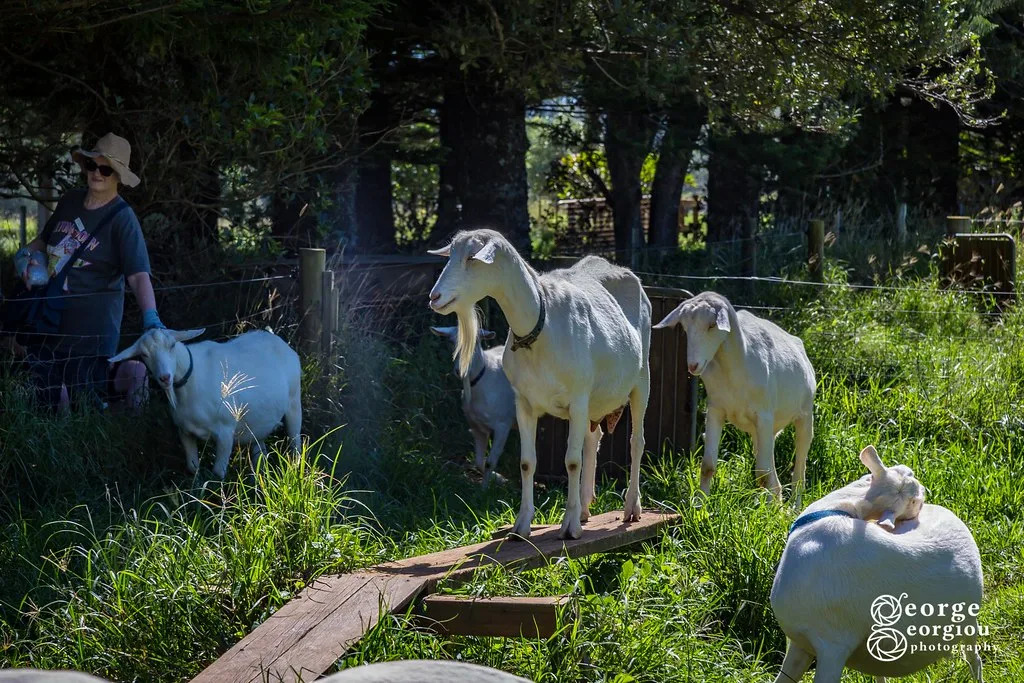
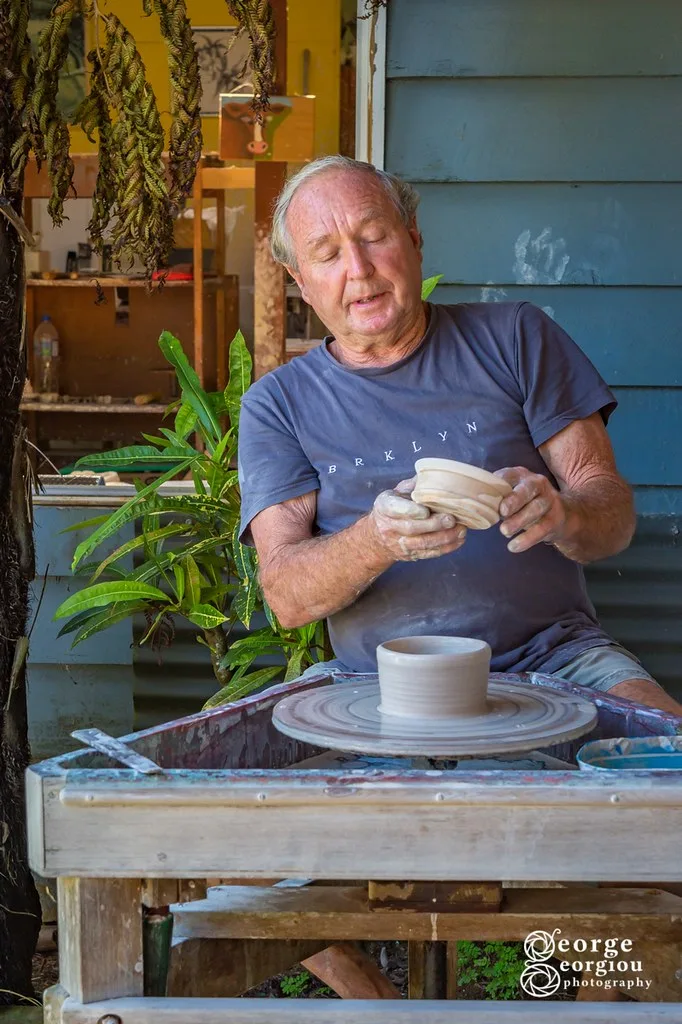
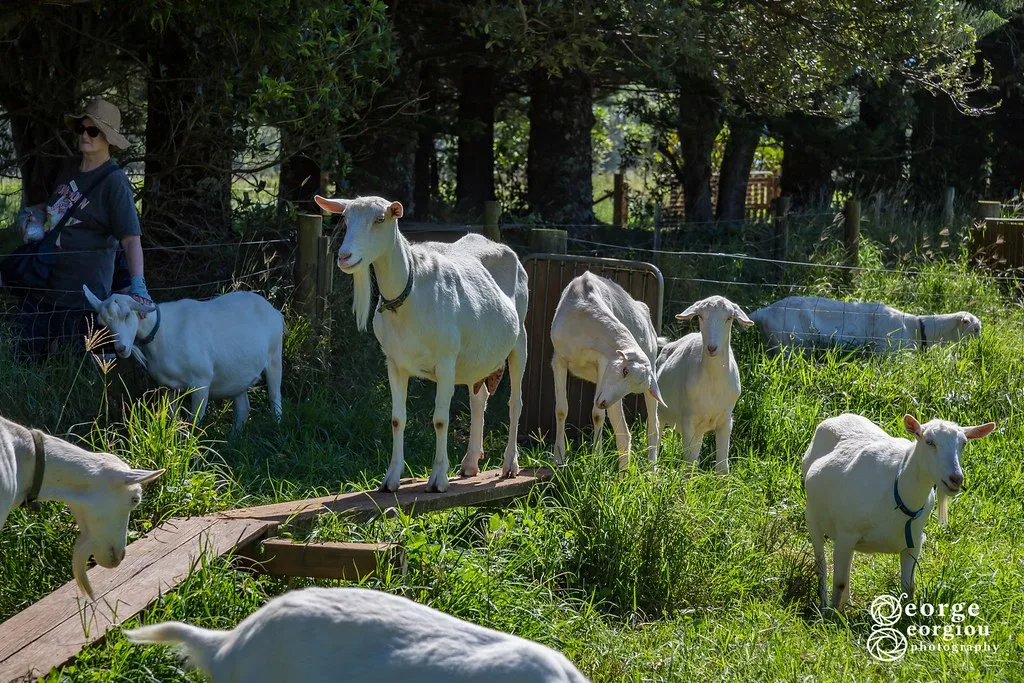
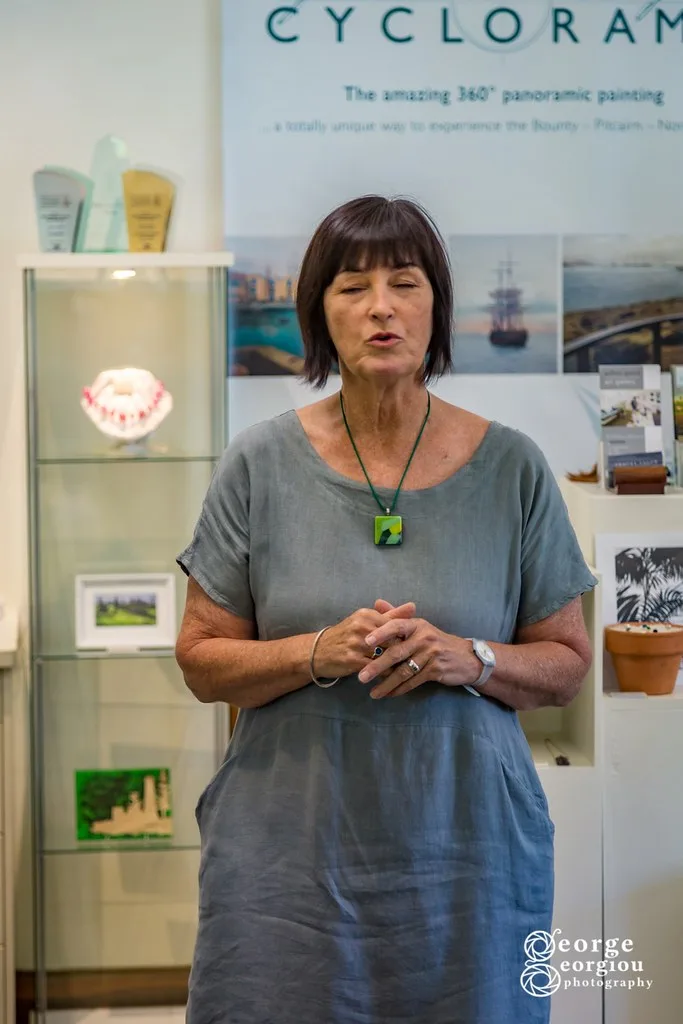
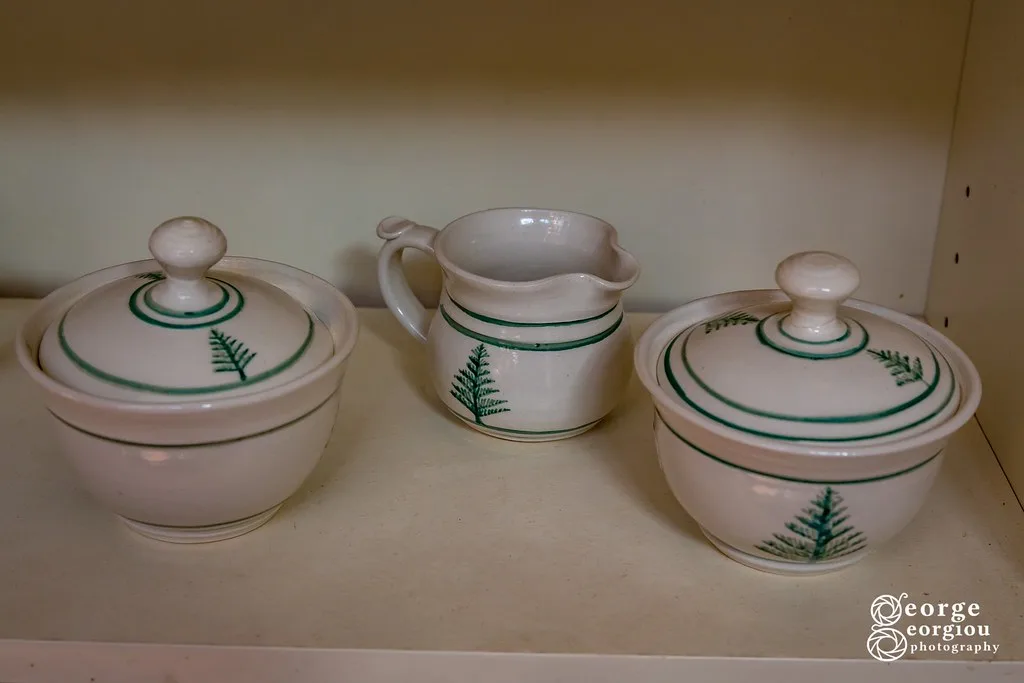
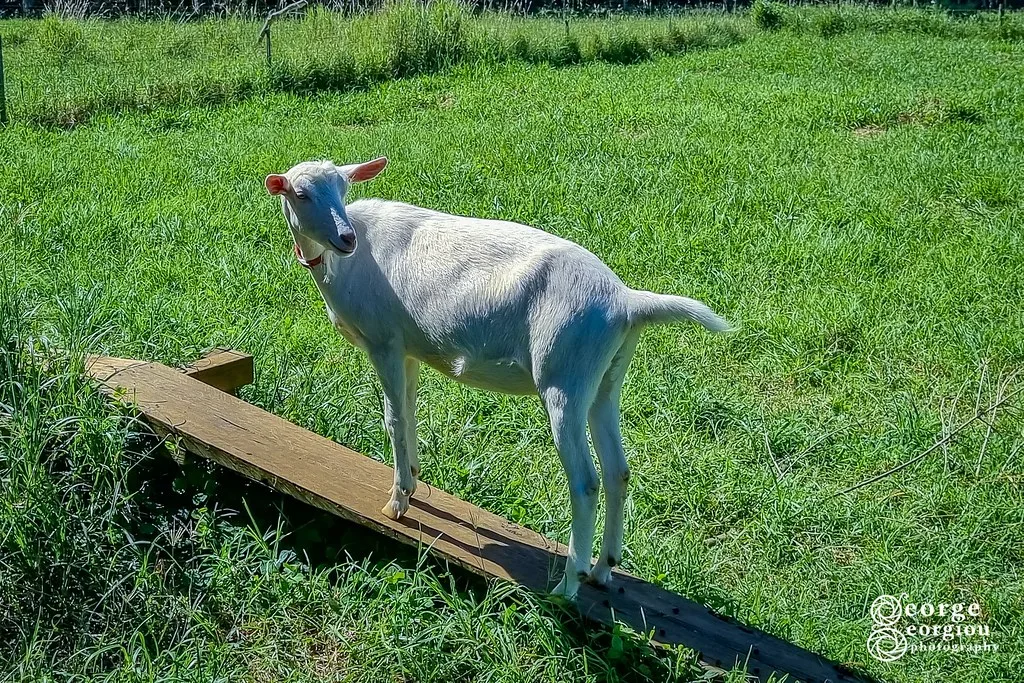
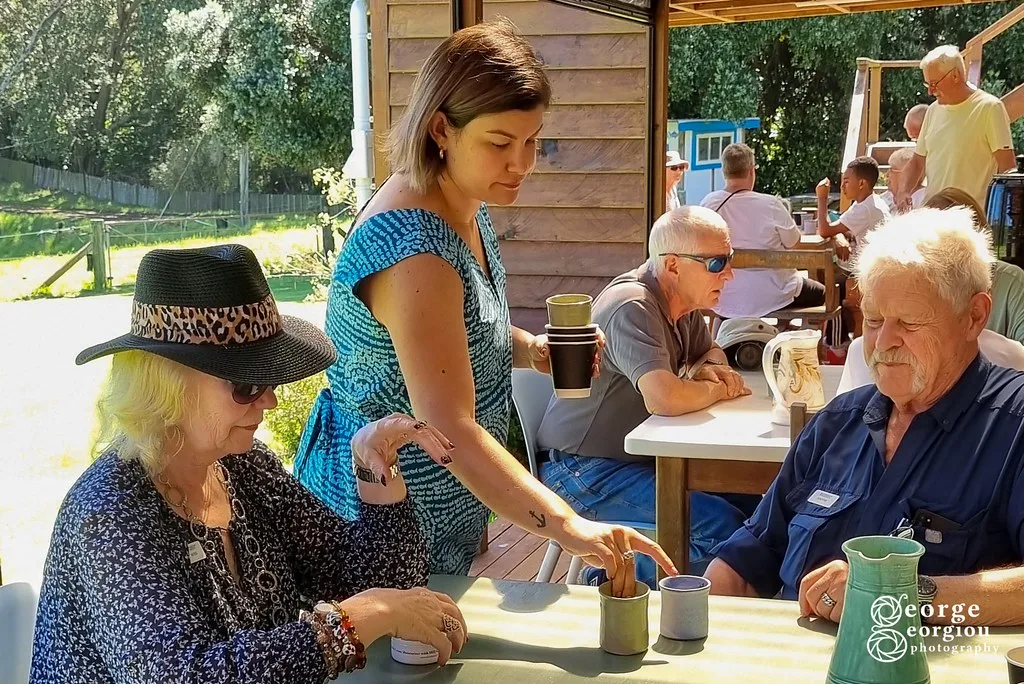
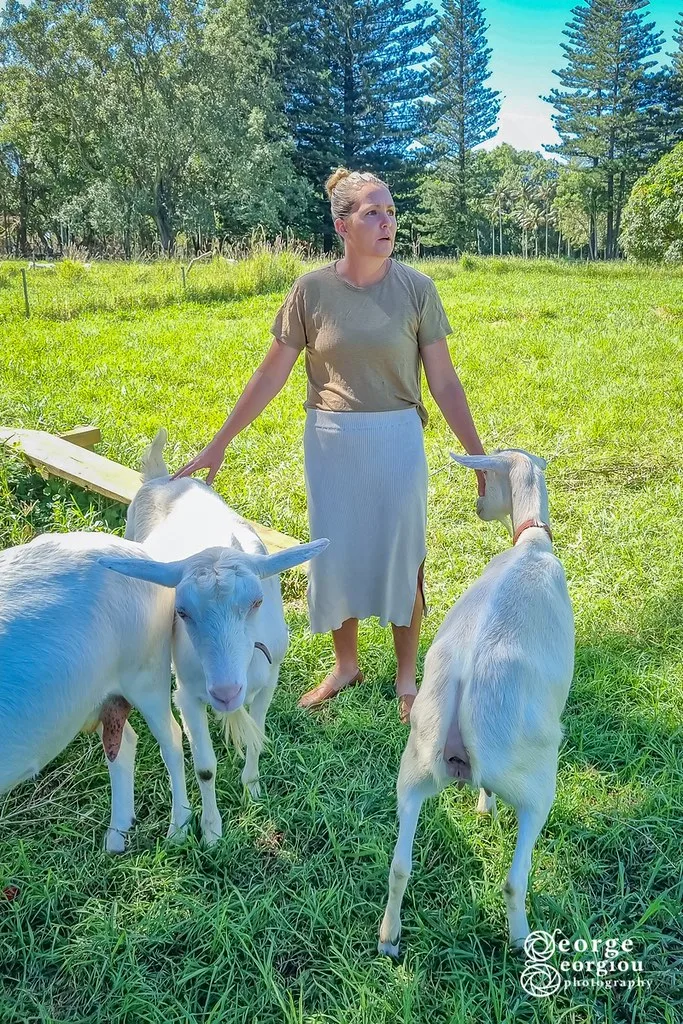
Image Credits
All photographs on this page are used under Creative Commons or free-use licenses. Individual credits appear beneath each image. Hero photograph courtesy of Unsplash.
Weather & Best Time to Visit
Frequently Asked Questions
Q: What's the best time of year to visit Pitcairn on a cruise?
Typical range 60-81°F mild oceanic year-round; rain: Distributed year-round; no true dry season. Peak cruise months: Oct, Nov, Dec, Jan, Feb, Mar. Avoid months: N/A.
Q: Is there a severe weather or storm season that affects Pitcairn?
Pitcairn is not marked as a warm-water hurricane zone in our seasonal guide. Local concern: seasonal weather swings.
Q: What should I pack for Pitcairn's weather?
For Pitcairn, pack for 60-81°F mild oceanic year-round. Sturdy shoes for rough terrain; Waterproof layers; Light warm layers; Camera
Q: Will rain ruin my Pitcairn port day?
Brief rain is common enough around Pitcairn that a flexible plan beats canceling. Pitcairn has about 50 residents — descendants of HMS Bounty mutineers; Landing depends entirely on sea conditions — often impossible
Q: How do cruise ships access Pitcairn Island?
Ships cannot dock — Pitcairn has no harbor or pier. Visitors transfer via longboat (aluminum motorboat) from ship to Bounty Bay, a rugged shore landing that depends entirely on weather and sea conditions. Swells can exceed safe landing limits, and cancellations are common even after ships arrive. The fee for longboat transfer is typically $50 per person.
Q: Who are the Pitcairn Islanders?
The approximately 50 residents are descendants of HMS Bounty mutineers (led by Fletcher Christian in 1789) and their Tahitian companions. Family names include Christian, Young, Warren, and Brown. They maintain a unique culture blending Polynesian and British heritage, speaking both English and Pitkern (a Creole language).
Q: What is there to do on Pitcairn during a brief visit?
Most visitors explore Adamstown (the only settlement), visit the Bounty relics and artifacts, hike to Christian's Cave for panoramic views, see HMS Bounty anchor and cannon remains at Bounty Bay, meet locals selling handicrafts (carved wooden items, stamps, honey), and experience the world's smallest democracy firsthand. Visits typically last 4-6 hours.
Q: What makes Pitcairn one of the world's most remote islands?
Pitcairn lies 3,300 miles from New Zealand, 3,700 miles from Panama, and 1,350 miles from Tahiti — the nearest inhabited land. No airport exists. Supply ships arrive 3-4 times yearly. Internet is satellite-based and slow. The island receives fewer than 100 visitors annually, nearly all from expedition cruise ships.
Q: Can I purchase Pitcairn souvenirs and stamps?
Yes — islanders sell hand-carved wooden items (miniature longboats, tikis, bowls) made from miro wood, local honey, woven baskets, and painted leaves. Pitcairn stamps are highly collectible among philatelists worldwide. Cash (NZD or USD) is essential — no credit cards, ATMs, or banks exist on the island.
Q: Is Pitcairn Island accessible for passengers with mobility concerns?
Pitcairn presents significant accessibility challenges. The longboat transfer requires stepping across moving vessels onto wet rocks. The island itself is extremely steep with no paved roads or wheelchair-accessible paths. Passengers with limited mobility should carefully evaluate conditions before attempting the landing. There is no accessible infrastructure on the island.