


Region: Azores, Portugal | Season: Year-round (best Jun – Sep) | Dock: Commercial harbor, 10-min walk to downtown
Captain's Logbook
Ponta Delgada: Where the Atlantic Breathes
The Azores rise from the middle of the Atlantic like emerald stepping stones placed by God himself. Ponta Delgada, the capital of São Miguel Island, is where most transatlantic crossings pause to breathe. For centuries, Portuguese explorers and modern sailors alike have anchored here — 900 miles west of Lisbon, 2,400 miles east of New York. You are genuinely in the middle of nowhere, which makes arriving here feel like a miracle. Our ship had spent five days crossing open ocean, and by the final morning the whole vessel hummed with anticipation. Passengers crowded the forward decks before sunrise, scanning the horizon for something solid. When the dark silhouette of São Miguel finally emerged from the low-hanging clouds, a cheer went up that I felt in my chest. Land. Green, impossibly green, volcanic land pushing up through the Atlantic swell like a fist wrapped in velvet.
I had heard about the twin lakes of Sete Cidades — one blue, one green, nestled inside a volcanic crater — but photographs do not prepare you for the reality. The 40-minute drive from port winds through hydrangea-lined roads (they bloom wild everywhere, in shades of violet, cornflower, and a pink so vivid it looks painted), past stone-walled farms where dairy cows graze on slopes so steep you wonder how they stay upright. The air through the open car window smelled of wet grass and the faintly sulfuric tang that volcanic soil carries even on a calm day. When we reached the Vista do Rei lookout, I stepped out of the car and stopped breathing for a moment. Below, impossibly vivid, sat the twin lakes — the larger one a deep, moody blue, the smaller one a luminous jade green, divided by a narrow bridge of land threaded with a single road. Mist drifted across the crater rim in slow curtains, and when the sun broke through it struck the green lake first, turning it almost electric. Legend says the lakes are the tears of a princess and a shepherd forbidden to marry — she wept blue tears, he wept green. Local guides insist the color difference is mineral content and algae. I prefer the legend. We hiked partway down the crater rim on a trail bordered by ferns taller than I am, and the silence inside the caldera was so complete I could hear my own heartbeat keeping time with my footsteps.
Our second excursion took us east to Furnas Valley, and if Sete Cidades is the Azores at their most beautiful, Furnas is the Azores at their most alive. The valley is a geothermal cauldron — steam rises from vents in the ground, mudpots bubble with a thick, rhythmic gurgle, and the air smells of sulfur and wet iron. We walked along the edge of the Furnas lake where hot springs seep into the shoreline, turning the sand warm underfoot even through my shoes. The caldeiras — open vents surrounded by crusted mineral deposits in shades of ochre, rust, and chalky white — hissed and belched like something breathing beneath the earth. I knelt beside one and held my palm above the steam; the heat was startling, fierce, a reminder that this island is not ancient geology. It is alive, and it is working.
The cozido das Furnas is the signature meal of this valley, and watching it being prepared is half the experience. Local cooks assemble enormous pots layered with beef, pork, chicken, blood sausage, cabbage, sweet potato, carrots, and yams, then lower them into holes dug into the volcanic earth near the lake. The pots cook underground for five to six hours, heated by nothing but the geothermal steam rising through the soil. When our guide lifted the lid at a lakeside restaurant, the smell that billowed out was extraordinary — rich, smoky, deeply savory, with a mineral undertone that no kitchen stove could replicate. The meat fell apart at the touch of a fork. The root vegetables had absorbed the volcanic steam until they tasted faintly of the earth itself. I cleaned my plate and ordered seconds, which the waiter seemed to regard as the only correct response.
After lunch we walked through the Terra Nostra Botanical Garden, and it felt like stepping into another century. The garden was established in the 18th century and expanded over 200 years into a lush, sprawling collection of native and exotic species — towering Norfolk pines, ancient cycads, ginkgo trees with fan-shaped leaves turning gold at the edges, and beds of camellias and azaleas so dense with blooms they looked upholstered. The centerpiece is the great thermal pool, a wide basin of iron-rich water maintained at roughly 38 degrees Celsius year-round. The water is a deep amber-orange, stained by dissolved minerals, and stepping into it felt like lowering myself into warm tea. I floated on my back and stared up through the canopy of century-old trees while steam curled off the surface. My muscles, stiff from five days of ocean rolling, unwound completely. Time dissolved. I could have stayed for hours.
Whale watching here is not seasonal — it is year-round. The deep Atlantic waters around the Azores host more than 20 cetacean species. We boarded a rigid inflatable boat in the Ponta Delgada marina early the next morning, the harbor still quiet, the water glassy and pearl-gray under overcast skies. The former whaling lookouts — vigias — perched on clifftops high above the coast, now spot for tour boats instead of harpoons. It is redemption made visible. Our vigia radioed coordinates, and within twenty minutes we were idling beside a pod of common dolphins that arced through the surface in groups of three and four, their backs gleaming wet in the diffused light. Then, farther out, the guide cut the engine and pointed. A sperm whale surfaced perhaps two hundred meters away, its broad back rolling slowly through the swell, its blow angling forward and to the left in the distinctive way that identifies the species. It breathed three times, each exhalation a low, resonant whoosh I felt in my ribcage, and then it raised its tail fluke — dark, dripping, impossibly wide — and slid beneath the surface without a sound. Nobody on the boat spoke for a full ten seconds.
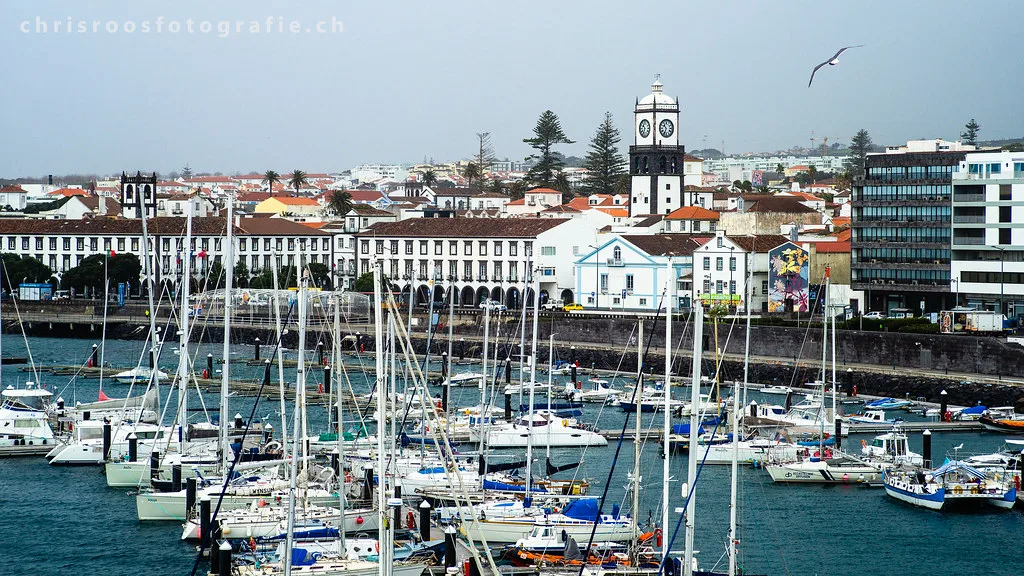
I spent my final afternoon wandering the streets of Ponta Delgada itself, and I am glad I did. The black-and-white calçada pavement under my feet — volcanic basalt and limestone laid in geometric patterns of waves, stars, and compass roses — felt like walking on art. I passed through the Portas da Cidade, three arches built in 1783 that once served as the formal entrance to the city. Behind them, the Igreja Matriz de São Sebastião rose with its Manueline facade, pale stone carved with rope motifs that reminded me this was a seafaring nation long before cruise ships existed. I ducked into a small pastelaria on a side street where an older woman sold me queijadas — small cheese tarts dusted with cinnamon — still warm from the oven. The flavor was sweet and slightly tangy, the pastry crumbling at the edges, and I ate two standing at the counter while she watched me with quiet amusement. She said something in Portuguese I could not understand, but her tone was warm, and she patted the counter twice as if to say: good, you understand what matters here.
The cobblestone streets led me past wrought-iron balconies draped with flowering vines, past churches whose doors stood open to reveal dim interiors lit by votive candles, past a fish market where vendors called out prices in rapid Portuguese while the morning catch — tuna, swordfish, limpets — glistened on beds of crushed ice. I found the botanical garden tucked behind the university, smaller and quieter than Terra Nostra but lovely in its own way, with labeled specimens of endemic Azorean flora and a greenhouse full of orchids that smelled like vanilla and damp soil. An elderly man sat on a bench reading a newspaper with his dog sleeping at his feet, and neither looked up when I passed. This was their daily life, not a tourist attraction, and that ordinariness was exactly what made it beautiful.
What surprised me most about the Azores was the silence. Not the absence of sound exactly, but a different quality of quiet. After five days of open Atlantic crossing, my ears had adjusted to the constant hum of the ship's engines and the rhythm of waves against the hull. Here on land, I could hear individual birds calling from the jacaranda trees. I could hear the fountain in the central square splashing softly. I could hear my own breathing. My eyes filled with tears I had not expected — not sadness, but something closer to relief, or perhaps recognition. I whispered a prayer of gratitude for safe crossing and solid ground beneath my feet. The Atlantic is vast and humbling, and arriving anywhere after crossing it feels like grace you did not earn.
Looking back, I think what I treasure most about Ponta Delgada is how it taught me to slow down. We had been rushing from port to port across Europe, ticking off cathedrals and castles, and then the ocean crossing forced five days of stillness. By the time we reached the Azores, I was ready to actually see rather than merely look. I noticed the hydrangeas lining every road in impossible shades of blue and pink. I noticed the volcanic soil, dark and rich, giving everything it touched an almost aggressive vitality. I noticed the way the locals moved through their days without hurry, as if they understood something about time that the rest of us have forgotten. I soaked in the amber waters of Terra Nostra and felt the island's warmth rising through the earth itself. I watched a whale breathe and disappear and understood, for one clear moment, how small my concerns really are against the scale of this ocean. I tasted food cooked by the planet itself and recognized that the best meals are not about technique but about surrender — letting the earth do what it has always done. That understanding became my souvenir — more valuable than anything I could have carried home in a suitcase.
The Cruise Port
What you need to know before you dock.
- Terminal: Commercial harbor — 10-minute walk to Portas da Cidade gates and downtown
- Distance to City Center: 10 min on foot; town is compact and walkable
- Tender: No — ships dock at pier
- Currency: Euro (€); ATMs downtown; credit cards widely accepted
- Language: Portuguese; English spoken at tourist sites
- Driving: Right side; car rental available; roads narrow and winding but scenic
- Best Season: May–October for warmest weather; whale watching year-round; expect rain any season
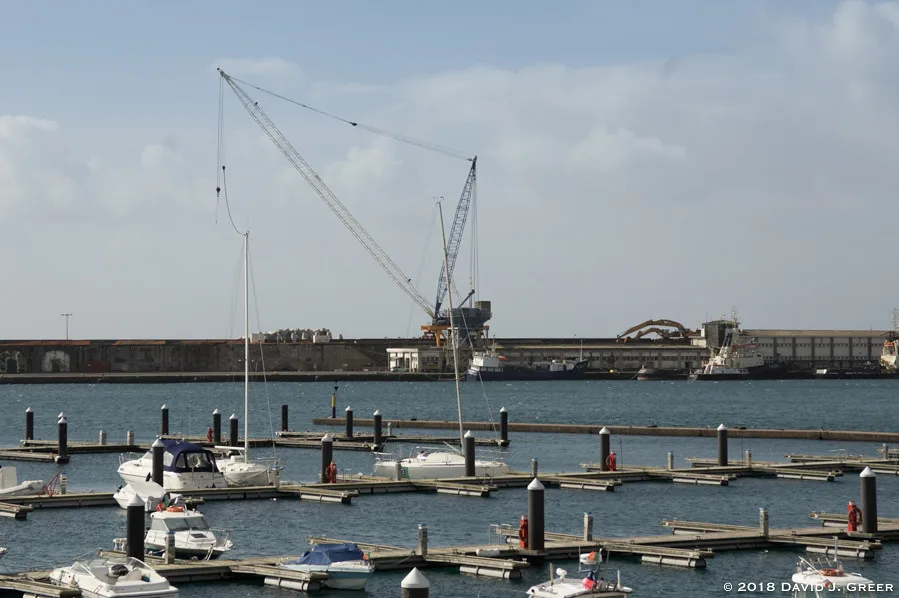
The port area itself is clean and well-organized, with clear signage directing passengers toward the city center. A small tourist information kiosk near the exit provides maps and can help arrange taxis for day trips to Sete Cidades or Furnas Valley.
Getting Around
Ponta Delgada's compact center is easily walkable, with the main attractions — Portas da Cidade, the churches, and the waterfront promenade — all within a 15-minute stroll from the cruise pier. For destinations beyond the city center, several options are available. Local buses operated by Arrendatarios run routes across São Miguel Island, including service toward Sete Cidades and Furnas, though schedules can be infrequent and may not align well with cruise ship timetables. A taxi from port to the Sete Cidades viewpoint costs roughly €10-15 each way depending on waiting time negotiated with the driver — always agree on a fare before departing. Taxis to Furnas Valley run approximately €25-30 each way due to the longer distance.
Rental cars are popular on São Miguel and give you the freedom to explore at your own pace. Several agencies operate near the port and in downtown Ponta Delgada, with daily rates starting around €30-40 for a compact vehicle. Roads are well-maintained but narrow and winding in the interior highlands, so allow extra time. Driving is on the right side. For those preferring a guided experience, local tour operators offer half-day excursions to Sete Cidades from about €35 per person and full-day Furnas Valley tours from approximately €50-60 per person, both representing good value compared to ship-organized options. The island is small enough that even the most distant attractions are reachable within an hour's drive from port.
Ponta Delgada Area Map
Interactive map showing cruise terminal, Sete Cidades crater lakes, Furnas Valley, and São Miguel Island highlights. Click any marker for details.
Accessibility Notes
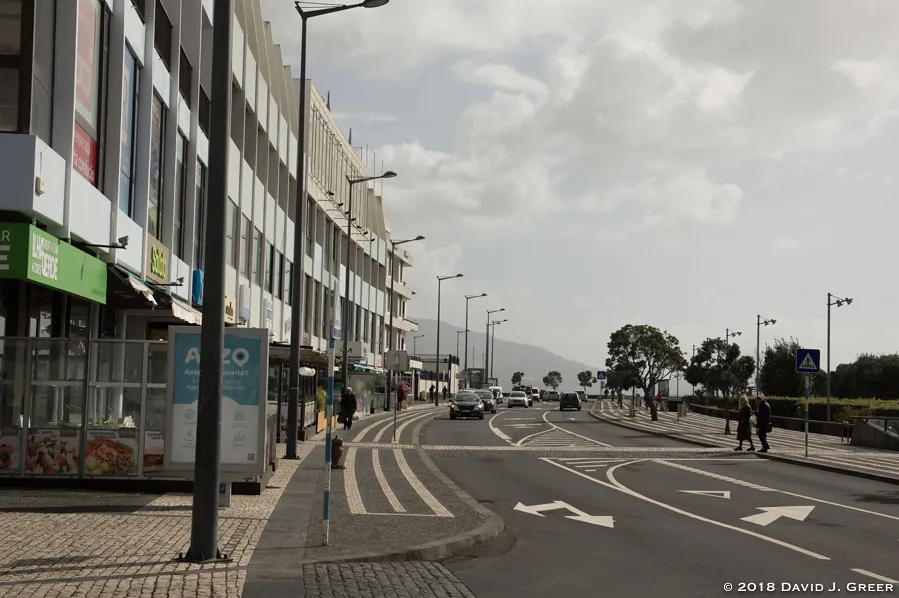
Ponta Delgada's city center is relatively flat and manageable for wheelchair users and visitors with reduced mobility, with paved sidewalks along the main waterfront promenade and through the historic shopping streets. The port itself has step-free access to the exit area. However, some older cobblestone streets in the historic quarter can be uneven. The Portas da Cidade area and the main square are accessible with smooth surfaces.
For excursions beyond the city, accessibility varies considerably. The Vista do Rei viewpoint at Sete Cidades has accessible parking and a paved viewing platform suitable for wheelchair users, offering the full panoramic view without requiring a hike. Terra Nostra Park in Furnas has paved main pathways, though some garden sections involve gravel or uneven ground. Whale watching boats generally require the ability to step down into a vessel, though some operators have accessible options — inquire when booking. The pineapple plantations have partially accessible greenhouse walkways. When booking any excursion, mention mobility requirements upfront so operators can accommodate your needs.
Excursions & Top Attractions
Sete Cidades Crater Lakes Hike
The twin lakes of Sete Cidades — one blue, one green — are the Azores' signature sight and one of Portugal's seven natural wonders. The Vista do Rei viewpoint offers the classic panorama, but the real reward comes from hiking down into the crater itself along well-marked trails that wind through dense hydrangea hedgerows. The rim walk takes roughly 2-3 hours and is moderately challenging. Ship excursions to Sete Cidades typically run €50-65, while independent taxi day trips cost roughly €40-50 for the round trip with waiting time. Wheelchair-accessible viewpoints are available at Vista do Rei, though the hiking trails are not suitable for mobility-impaired visitors.
Furnas Hot Springs & Cozido Stew
Furnas Valley is a geothermal wonderland of bubbling fumaroles, iron-rich springs, and volcanic calderas where locals cook cozido das Furnas — a traditional stew of meat and root vegetables buried underground and slow-cooked by volcanic steam for five to six hours. A plate of cozido at one of the valley restaurants costs about €15. The Terra Nostra Botanical Park (admission €8) features a massive thermal iron-water swimming pool maintained at roughly 38°C year-round, surrounded by centuries-old trees and exotic plantings. Bring an old bathing suit — the mineral water stains fabric orange. Full-day Furnas tours from local operators run €50-60 per person including lunch.
Whale Watching
The Azores are one of Europe's premier whale watching destinations, with over 20 cetacean species in the surrounding deep Atlantic waters. Half-day whale watching excursions depart from Ponta Delgada marina and cost approximately €55-65 per person. Sperm whales are resident year-round, while blue whales, fin whales, and sei whales migrate through in spring. Dolphins are almost guaranteed on every trip. Former whaling lookouts (vigias) perched on clifftops now spot for tour boats instead of harpoons. Departures depend entirely on sea conditions — book early and have a backup plan. Most operators offer a free rebooking if conditions prevent sailing.
Pineapple Plantations
The Azores are the only place in Europe that grows pineapples commercially, cultivated in distinctive glass greenhouses since the 19th century. The Arruda Pineapple Plantation near Ponta Delgada offers free self-guided tours where you can see the 18-month growing process and purchase incredibly sweet, small pineapples and pineapple liqueur. It is a quick taxi ride from port or a pleasant 25-minute walk. The greenhouse paths are accessible for wheelchair users with assistance on some sections.
Booking guidance: Ship excursion options provide guaranteed return to port and are worth considering for first-time visitors. For those who prefer to explore independently, local operators often offer competitive rates — book ahead during peak season to secure your preferred times. Whether you choose a ship excursion or go independent, confirm departure times and meeting points before heading out.
Local Food & Drink
- Cozido das Furnas: Stew cooked underground by volcanic steam — meat, vegetables, unique smoky flavor
- Lapas: Grilled limpets with garlic butter — Azorean specialty served everywhere
- Bolo Lêvedo: Sweet muffin-like bread from Furnas — perfect with butter and tea
- Queijadas: Traditional tarts filled with cheese, cinnamon, and sugar
- Azorean Pineapple: Greenhouse-grown, incredibly sweet — try liqueur or fresh fruit
- Chá Gorreana: Europe's only tea plantation — visit for tours and tastings
Depth Soundings Ashore
- Weather changes rapidly — bring layers and rain jacket even in summer
- Book Sete Cidades tours early; it's the #1 attraction and fills fast
- Swimming in Furnas thermal pools? Bring old bathing suit — sulfur stains
- Whale watching departs only if seas permit — have backup plan
- Hydrangeas bloom June–August, turning roadsides into blue/pink wonderlands
- ATMs downtown dispense euros; some shops near port accept USD but rate poor
- Portas da Cidade gates make excellent photo op — 5-min walk from ship
- Wheelchair accessible: waterfront promenade and downtown are flat and paved; Sete Cidades viewpoints have limited mobility access — confirm with tour operators
Money: The local currency is Euro (€); ATMs downtown; credit cards widely accepted. ATMs are generally available near the port area, though fees vary. Credit cards are widely accepted at tourist-oriented establishments, but carry some local cash for markets, street food, and smaller vendors. Your ship's exchange rate is typically unfavorable — withdraw from a bank ATM instead.
Timing: Start early if your ship arrives at dawn — the first hours offer pleasant conditions and smaller crowds. Allow at least 30 minutes buffer before all-aboard time. Set a phone alarm as backup.
Safety: Standard port-town awareness applies — keep valuables close and stick to well-traveled areas during daylight. Your ship's ID card is your most important item — losing it creates a genuine headache at the gangway.
Communication: Wi-Fi is often available at cafés and restaurants near the port. Consider downloading offline maps before disembarking — cellular data roaming charges can be substantial and surprising.
Photo Gallery
Frequently Asked Questions
Q: Where do cruise ships dock in Ponta Delgada?
A: Ships dock at the commercial harbor just 10 minutes' walk from downtown Ponta Delgada. The Portas da Cidade gates mark the historic entrance to town. Everything is walkable from the port.
Q: What are the twin lakes of Sete Cidades?
A: Sete Cidades are two volcanic crater lakes — one blue, one green — sitting side by side at the summit of an ancient volcano. The 40-minute drive from port leads to one of Europe's most photographed natural wonders. Legend says they're the tears of a princess and a shepherd who could never be together.
Q: What is Furnas Valley and the cozido das Furnas?
A: Furnas Valley is a geothermal wonderland with bubbling hot springs, fumaroles, and volcanic calderas. Cozido das Furnas is a traditional stew (meat and vegetables) cooked underground using volcanic steam heat for 5-6 hours. Tours typically include Terra Nostra Garden with its thermal pool and a cozido lunch. Full-day excursion from port.
Q: Is whale watching in the Azores reliable?
A: The Azores offer year-round whale watching with over 20 cetacean species in the surrounding Atlantic waters. Sperm whales and dolphins are commonly sighted. Former whaling lookouts (vigias) now spot for tour boats. Success rates are high, but departures depend on sea conditions. Book ahead for cruise day availability.
Q: What is the best time to visit Ponta Delgada?
A: The seasonal panel above lists Peak Season as "May, Jun, Jul, Aug, Sep," Transitional Season as "Apr, Oct," and Low Season as "Nov, Dec, Jan, Feb, Mar." The avoidance note flags "Jan, Feb." Use the live weather widget in the seasonal panel for current short-term conditions.
Q: What is Ponta Delgada's storm season?
A: The Weather Hazards panel above labels Ponta Delgada's heavy-weather window as "Atlantic Storm Season" with "Season: Oct – Mar (winter storms); occasional ex-hurricanes Aug – Oct" and "Peak risk: Dec, Jan, Feb." The hazard-note explains: "The Azores sit at ~37°N in the open North Atlantic. Winter Atlantic storms (Oct-Mar) bring heavy rain, gales, and rough seas. Late-season Atlantic hurricanes occasionally recurve north toward the Azores in August-October, though they usually weaken to extratropical systems before arrival." The Best Time block's avoidance note flags "Jan, Feb" — the heart of the Atlantic winter-storm peak. The live weather widget in the seasonal panel above is the primary source for current conditions on a specific sailing date.
Q: What should I pack for Ponta Delgada's weather?
A: The Packing Tips section in the seasonal panel above lists: "Sunscreen and sunglasses — essential year-round"; "Light layers for variable temperatures"; "Comfortable walking shoes for exploring"; and "Rain jacket or compact umbrella." Specific Ponta Delgada temperature ranges are not detailed on this page — the glance Temperature entry reads "Varies by season — check forecast."
Q: Will rain ruin my Ponta Delgada port day?
A: The seasonal panel does not give Ponta Delgada-specific rainfall data — the Rain entry reads "Seasonal variation — check forecast." The Best Time block lists "May, Jun, Jul, Aug, Sep" as Peak Season, with "Jan, Feb" the only window flagged in the avoidance note. The live weather widget in the seasonal panel is the source for short-term forecasts on a specific sailing date.
Key Facts
- Country
- Portugal (Azores)
- Region
- Azores
- Currency
- Euro (€); ATMs downtown; credit cards widely accepted
- Language
- Portuguese; English spoken at tourist sites
Getting Around
Town center: Ponta Delgada's historic center is walkable from the cruise port — the Portas da Cidade gates, churches, and waterfront restaurants are all within 10-15 minutes on foot. This is an easy, pleasant stroll.
Taxis: Available at the port exit. Metered and reasonably priced for in-town trips. For day trips, negotiate a fixed rate in advance.
Sete Cidades: The iconic twin crater lakes (one green, one blue) sit about 30 minutes west by car. No public bus serves the viewpoint reliably — you'll need a tour, taxi, or rental car. The winding mountain road is scenic but narrow.
Furnas Valley: The thermal springs, bubbling fumaroles, and magnificent Terra Nostra botanical garden lie about 45 minutes east. Again, a tour or rental car is the practical option. Local VTMA buses exist but run infrequently and don't align well with cruise schedules.
Rental cars: Available in town with advance booking. Roads are well-maintained but winding. Driving is on the right. An international driving permit is recommended but not always required for EU/US licenses.
Top Excursions & Things to Do
Sete Cidades Twin Lakes
The volcanic crater holding two lakes — Lagoa Azul and Lagoa Verde — is the Azores' most iconic image for good reason. The viewpoint at Vista do Rei offers a panorama that stops conversation. Half-day tours run €35-€55 per person and often include a lakeside walk and village stop.
Furnas Thermal Valley & Terra Nostra Garden
Furnas is where the Azores' volcanic heart beats closest to the surface. Steaming fumaroles, mineral springs, and the famous cozido stew cooked underground by geothermal heat. Terra Nostra Garden — a 200-year-old botanical paradise with a thermal iron-rich swimming pool — is worth the trip alone. Full-day tours run €50-€75; garden entry approximately €8.
Whale Watching
The Azores sit along the mid-Atlantic migration corridor, making this one of the world's premier whale watching destinations. Sperm whales are resident year-round; blue whales, fin whales, and sei whales pass through seasonally. Half-day boat excursions run €55-€75. Sightings are never guaranteed but success rates are high, particularly May through October.
Ship excursion packages offer guaranteed return to the vessel and handle all logistics. Independent travelers can book ahead with local operators in Ponta Delgada for more flexibility and often better prices. For Sete Cidades and Furnas, a guided tour or rental car is essential — public transport won't get you there and back reliably within a cruise port call.