


Captain's Logbook
Ravenna: My Byzantine Masterpiece
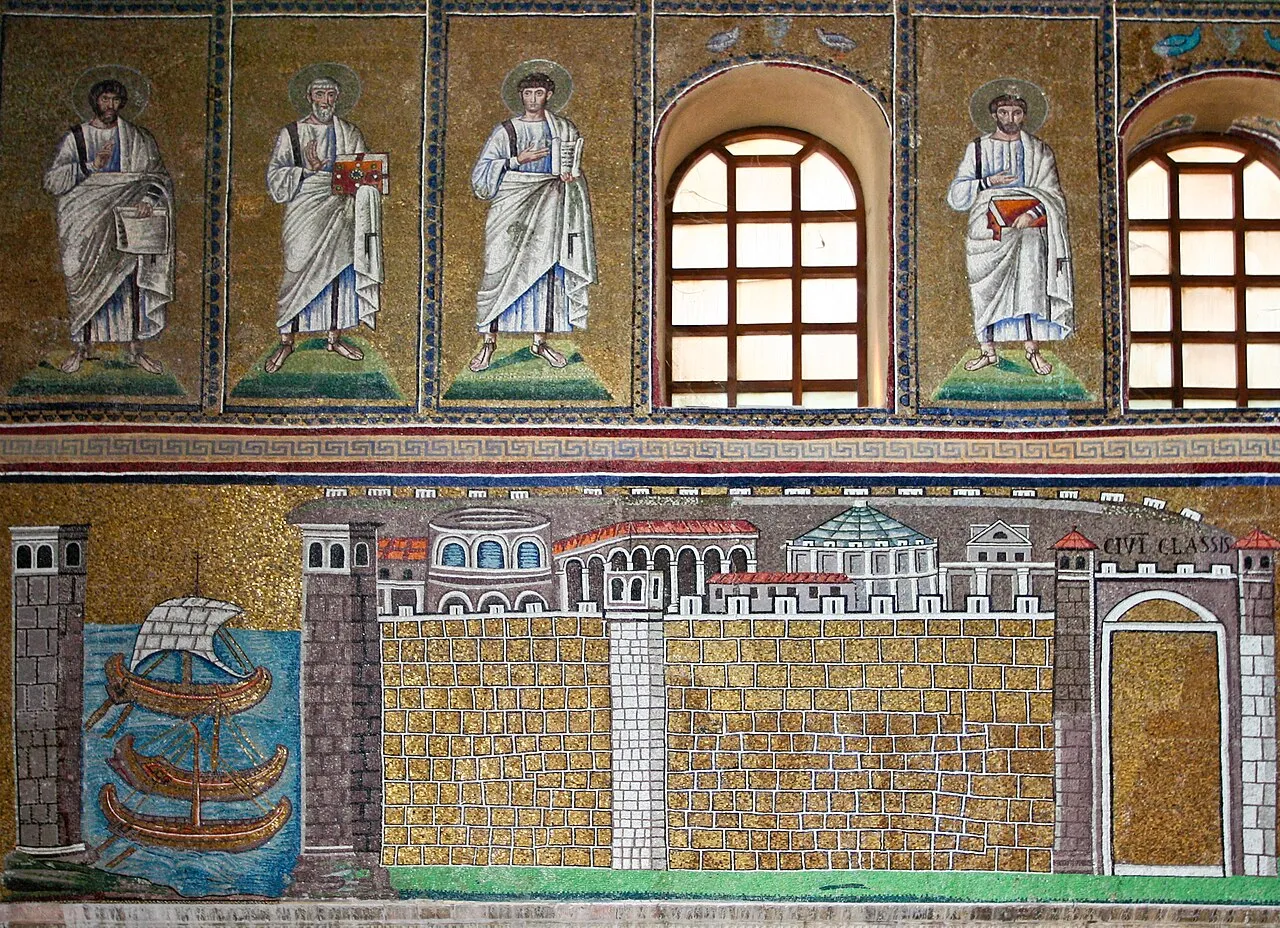
We docked in Porto Corsini and were in Ravenna center in 15 minutes. The city feels like a quiet university town until you step into San Vitale and the entire dome explodes with emerald-green, sapphire, and 24-karat gold mosaics of Justinian and Theodora staring down with emperor eyes. I actually gasped out loud. These are the world's finest 5th and 6th century Byzantine mosaics — surfaces shimmering with tesserae of gold leaf pressed between glass, still radiant after 1,500 years. The blues are so deep they feel like windows into heaven itself.
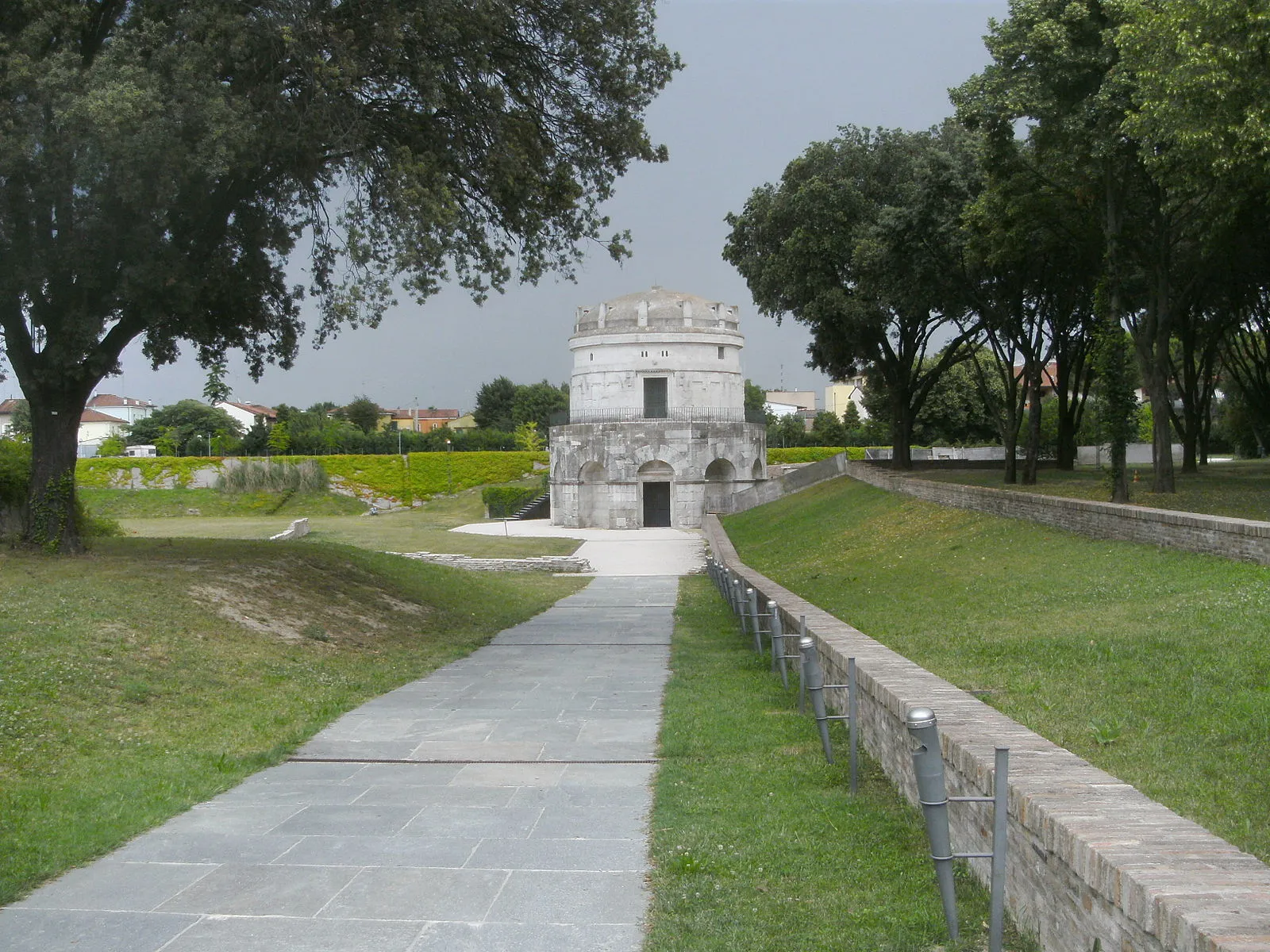
The Mausoleum of Galla Placidia is tiny but the deepest blue starry sky you'll ever see — it feels like being inside a jewel box where time stopped in 425 AD. Ravenna was the capital of the Western Roman Empire from 402 to 476, then the seat of the Ostrogothic Kingdom, then the Byzantine Exarchate. Every emperor and bishop tried to outdo the last with more gold, more color, more glory. In 1996, UNESCO designated eight of these early Christian monuments as World Heritage Sites: San Vitale, Galla Placidia, Sant'Apollinare Nuovo, Sant'Apollinare in Classe, the Arian Baptistery, the Neonian Baptistery, the Mausoleum of Theodoric, and the Archbishop's Chapel.
We visited five of the eight UNESCO sites on foot — each more jaw-dropping than the last. We had lunch — piadina romagnola at Ca' de Vèn — flatbread stuffed with squacquerone cheese and rocket that melts in your mouth. In the afternoon we visited Sant'Apollinare in Classe just outside town, where the mosaic apse with sheep and a giant cross in a green field made me tear up.
Then we walked to the Basilica of San Francesco and found Dante Alighieri's tomb tucked beside it — a simple neoclassical shrine with a single lamp that has burned since 1908. Dante died here in exile in 1321, banished from his beloved Florence for political reasons. Florence has repeatedly asked for his remains back; Ravenna has refused every time. There's something poignant about the greatest Italian poet resting in this quiet city of mosaics, far from the home that rejected him. I stood there a long time, thinking about exile and art and what it means to belong somewhere.
On the walk back to the shuttle, I noticed how the streets of Ravenna carried a gentle quiet that felt almost devotional. The scent of espresso drifted from a corner bar where a man read his newspaper without hurry, and somewhere down a side lane a bicycle bell rang twice. We passed a small mosaic workshop near Via Cavour where an artisan was pressing gold-leaf tesserae into fresh plaster using tools that looked centuries old — she let us watch for a few minutes and explained that the craft has been passed down through local families since the Byzantine period. The combined ticket for five mosaic sites cost about twelve euros, and we covered them all in a comfortable morning walk of roughly two kilometers. I would tell anyone with limited mobility that the interiors are all on flat ground and well-maintained, though the cobblestones between sites require sturdy shoes. The afternoon light inside Sant'Apollinare in Classe was softer than the morning gold of San Vitale — a different palette entirely, greens and blues and the quiet rustle of other visitors whispering as if in church. We caught the last shuttle back to Porto Corsini with time to spare, and I remember standing on the upper deck watching Ravenna's low skyline recede, thinking that no photograph could ever capture what those mosaics do to you in person — the way they hold the light of fifteen centuries and hand it directly to your eyes.
I would also suggest not overlooking the Basilica of San Francesco, where the flooded crypt holds ancient floor mosaics visible beneath a meter of crystal-clear water — goldfish swim over Roman tesserae in a surreal tableau that costs nothing to see. The whole city is compact enough that even on a half-day visit we never felt rushed. Ravenna proved that the quietest ports often carry the deepest treasures, and the mosaics here changed what I thought art could do to a person. I left convinced that every cruiser who passes through the Adriatic owes themselves at least one morning in this extraordinary city. The gold of Ravenna is not in the gift shops — it is on the ceilings, where it has been glowing for sixteen hundred years, waiting for anyone willing to look up.
I have been thinking about Ravenna ever since. Not the facts — the eight UNESCO sites, the dates, the emperors — but the feeling of standing in Galla Placidia when the timed lights dimmed and the gold still glowed. Fifteen hundred years of human hands pressing glass and gold into wet plaster, and the result is something that makes a grown man hold his breath. We spent twelve euros fifty on the combined ticket and two euros on espresso and came away with something that costs nothing and lasts forever: the certain knowledge that human beings, at their best, can make something that outlives empires. Dante knew it. That is why he stayed.
Looking back, I realized that Ravenna taught me something I had not expected to learn on a cruise: that the most profound beauty is not always the most famous. The lesson of these mosaics is patience — the patience of artisans who pressed each tessera knowing they would never see the finished work, and the patience of a small Italian city that has quietly guarded these treasures for fifteen centuries while the world rushed past to Florence and Rome.
Weather & Best Time to Visit
The Cruise Port
Cruise ships dock at Porto Corsini, Ravenna's industrial port at the mouth of the Candiano Canal, about 10 km from the historic center. The terminal area is basic — no cafes, shops, or ATMs at the dock itself. Most cruise lines provide a shuttle bus to Ravenna's center for around ~€5 per person each way, dropping you near Piazza del Popolo or the train station. The shuttle ride takes 15–20 minutes. Taxis are also available at the port but must be pre-arranged or called; expect €20–25 for the ride into town. If your ship does not offer a shuttle, some local tour operators arrange transfers — check with the port authority desk near the gangway. The port area has no shade and can be hot in summer, so have water and a hat ready for any wait. Wheelchair users should note that the shuttle buses are generally accessible, and the flat terrain of Ravenna's center makes it one of the more mobility-friendly ports in Italy.
Getting Around Ravenna
Ravenna's historic center is remarkably compact — all five central UNESCO mosaic sites sit within a 1.5 km radius, making it one of the best walking ports in the Adriatic. The terrain is flat, the streets are well-maintained, and distances between monuments are short and pleasant.
- Walking: The preferred method. From Piazza del Popolo, San Vitale is a 5-minute walk, Galla Placidia sits right next to it, and Dante's Tomb is 8 minutes in the other direction. The entire mosaic circuit takes about 2 km of easy, flat walking.
- Bicycles: Ravenna is one of Italy's most bicycle-friendly cities. Bike rental shops near the station offer day rentals for €10–15, and some hotels provide them free. Cycling lets you easily reach Sant'Apollinare in Classe (5 km south) without needing a taxi.
- Buses: Local bus #4 connects the train station to Sant'Apollinare in Classe in about 15 minutes (€1.50 per ticket, buy at tabacchi shops). Bus #70 runs seasonally to the beach at Marina di Ravenna.
- Taxis: Available at the train station piazza. A taxi to Sant'Apollinare in Classe costs about €12–15. To Marina di Ravenna beach, expect €15–20.
- Train to Bologna: Trenitalia regional trains run from Ravenna station to Bologna Centrale in about 75 minutes, costing €7–12 depending on the service. Trains depart roughly every hour, making a half-day Bologna side trip feasible if your ship allows enough time. Buy tickets at the station or on the Trenitalia app — validate paper tickets at the green machines on the platform before boarding. Bologna's porticoed streets, food markets, and the Two Towers are well worth the trip for passengers with a full port day.
- Port shuttle: When ships dock at Porto Corsini (the industrial port about 15 km from the city center), cruise lines typically provide shuttle buses into town. The ride takes about 20 minutes and drops you near the train station or Piazza del Popolo. Without the shuttle, a taxi from the port to the center runs approximately €25–30.
Ravenna Area Map
Booking guidance: Ship excursion options provide guaranteed return to port and are worth considering for first-time visitors. For those who prefer to explore independently, local operators often offer competitive rates — book ahead during peak season to secure your preferred times. Whether you choose a ship excursion or go independent, confirm departure times and meeting points before heading out.
Interactive map showing cruise terminal and Ravenna attractions. Click any marker for details.
Excursions & Shore Tours
Ravenna is one of the rare ports where independent exploration is both easy and deeply rewarding. The combined mosaic ticket covers five sites for just €12.50, the town is flat and walkable, and there is no language barrier that a smile and "buongiorno" cannot bridge. A ship excursion is fine but typically costs €60–90 per person for what you can do independently for under €20. Book ahead for summer months when the mosaics draw large crowds.
Basilica di San Vitale and Mausoleum of Galla Placidia (2–3 hours): These two adjacent sites are the crown jewels of Ravenna and among the most important Byzantine monuments anywhere. San Vitale's octagonal interior explodes with gold, emerald, and sapphire mosaics of Emperor Justinian and Empress Theodora — art that has glowed since 547 AD. Steps away, the tiny Mausoleum of Galla Placidia contains a midnight-blue starry ceiling that visitors have called "being inside a jewel box." Both are covered by the combined mosaic ticket at €12.50. Arrive at opening (9:00 AM) for near-empty rooms. Ship excursions that cover the main mosaics run €60–90 per person.
Dante's Tomb and Basilica of San Francesco (1 hour): The father of the Italian language died in exile here in 1321, and Ravenna has guarded his remains ever since — refusing every request from Florence to return them. His small neoclassical tomb sits beside the Basilica of San Francesco, whose flooded crypt reveals ancient floor mosaics visible beneath a meter of crystal-clear water with goldfish swimming over Roman tesserae. Both are free to visit.
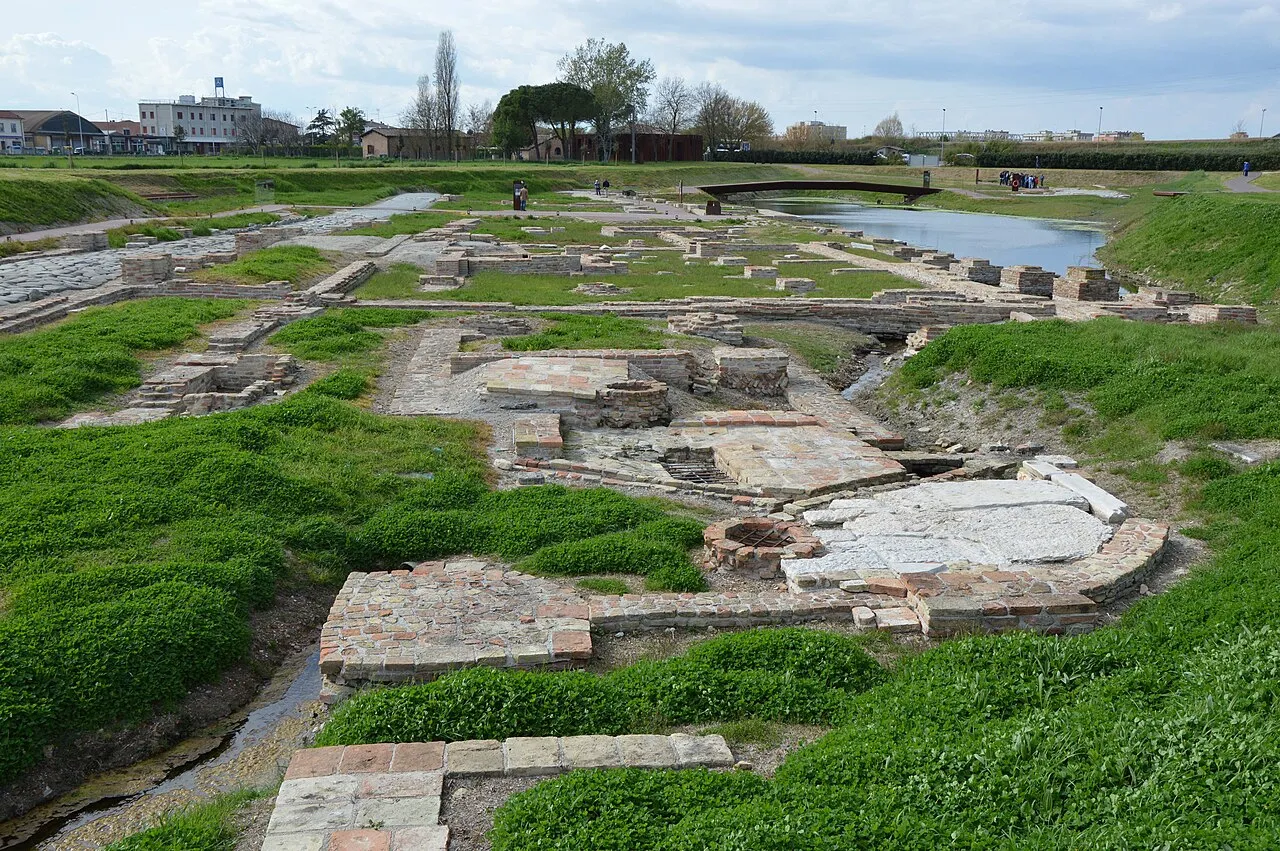
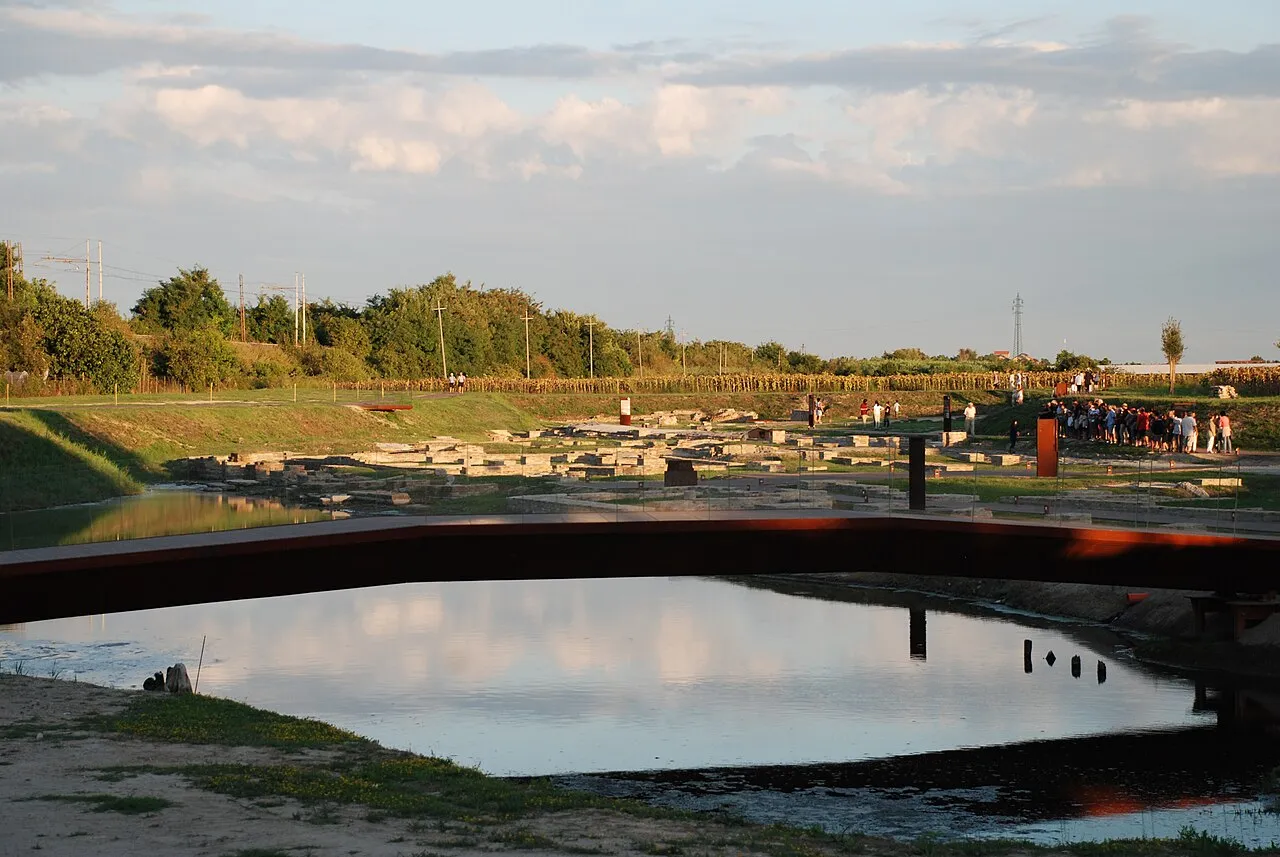
Sant'Apollinare in Classe (2 hours): This 6th-century basilica stands 5 km south of town in what was once Ravenna's Roman port. The apse mosaic — a vast green meadow with sheep, a jeweled cross, and Sant'Apollinare himself — is among the most serene images in all of Christian art. Entry is €5. Reach it by bus #4 (€1.50), bicycle, or taxi (€12–15). Ship excursions often include this site on full-day mosaic tours.
Marina di Ravenna Beach (half-day): For those wanting a break from art and history, this resort beach lies 10 km east of town. Wide sandy beaches with sunbed and umbrella rentals for €15–20 per day, beachfront restaurants serving fresh Adriatic seafood (a plate of fritto misto runs about €12–15), and warm shallow water for swimming. Bus #70 runs seasonally; a taxi costs €15–20.
Venice Day Trip
Technically possible by regional train (about 3 hours each way), but only practical with an early port arrival and a late departure. Most cruise schedules make this a gamble. If you attempt it, book train tickets on Trenitalia in advance and set multiple return-time alarms. Most passengers find Ravenna itself rewards a full day far more generously than a stressful Venice sprint.
Booking guidance: Ravenna is exceptionally DIY-friendly. Buy the combined mosaic ticket (€12.50) online at ravennamosaici.it to skip the line — it covers San Vitale, Galla Placidia, Sant'Apollinare Nuovo, the Neonian Baptistery, and the Archbishop's Chapel. If you prefer guided context, ship excursions run €60–90 per person, or hire a local licensed guide through the Ravenna tourist office for about €120–150 for a group of up to six (roughly €20–25 per person for a family). Book guides in advance during peak season (June through September). Whether guided or independent, start early — Galla Placidia limits visitors to 15 minutes per group when busy.
Depth Soundings Ashore
Practical tips before you step off the ship.
The mosaics are in small spaces that fill up – buy the combined ticket online and start early for those magical empty moments.
Money: Italy uses the Euro. ATMs are plentiful in Ravenna's center near Piazza del Popolo and the train station, but there are none at Porto Corsini. Credit cards are accepted almost everywhere including mosaic ticket offices, restaurants, and cafes — though some smaller piadinerie and gelaterias are cash-preferred. The combined mosaic ticket (€12.50) can be purchased online by card in advance.
Timing: Start early — the mosaic sites open at 9:00 AM and the small interiors (especially Galla Placidia) fill up fast on cruise ship days. If you arrive on the first shuttle, you may have San Vitale nearly to yourself. Allow at least 30 minutes buffer before all-aboard time, plus 15–20 minutes for the shuttle ride back to Porto Corsini. Set a phone alarm as backup.
Safety: Ravenna is one of the safest cities in Italy — a quiet university town where the biggest risk is tripping on cobblestones while gazing at mosaics. Standard awareness applies: keep valuables close and your ship's ID card secure.
Communication: Free Wi-Fi is available in Piazza del Popolo and at most cafes. EU roaming rules mean most European SIM cards work without extra charges. Non-EU visitors should download offline maps before disembarking.
Photo Gallery
Frequently Asked Questions
Q: Is Ravenna worth it?
A: The most beautiful art most people have never heard of – yes!
Q: Best thing?
A: San Vitale + Galla Placidia combo.
Q: How long for main sites?
A: 5–6 hours at leisurely pace.
Q: Walk from port?
A: No – shuttle needed.
Q: What is the best time to visit Ravenna?
A: Cruise season runs June through August — gateway to Byzantine mosaics (28-85°F). January and February are the months to avoid: foggy winters; hot humid summers.
Q: Is Ravenna suitable for passengers with mobility challenges?
A: Accessibility varies by area. The port vicinity and main commercial streets are generally manageable, but older historic districts may feature cobblestones, stairs, and uneven surfaces. Consider booking an accessible ship excursion if you have concerns. The ship's shore excursion desk can advise on specific accessibility options for this port.
Q: Do I need to exchange currency before arriving?
A: Italy uses the Euro. Credit cards are accepted almost everywhere in Ravenna, including mosaic ticket offices and restaurants. ATMs are available in the city center near Piazza del Popolo. Carry some cash for smaller cafes and the occasional market vendor. Note there are no ATMs at Porto Corsini itself.
Q: Can I explore independently or should I book a ship excursion?
A: Both options work well. Ship excursions guarantee return to the vessel and handle logistics, making them ideal for first-time visitors. Independent exploration costs less and allows more flexibility — just keep track of time and allow a 30-minute buffer before all-aboard. Many passengers combine approaches: an organized morning tour followed by free afternoon exploration.
Q: Does Ravenna have a hurricane or storm season?
A: Ravenna is not in a hurricane zone. The notable winter wind is the cold Bura; summers bring sea breezes. Winters can be foggy and cold — dress warmly. January and February are the months to avoid.
Q: What should I pack for Ravenna's weather?
A: Comfortable walking shoes. Binoculars for mosaic details. Warm layers for winter visits. Cash for mosaic workshops.
Q: Will rain ruin my port day in Ravenna?
A: Rain is distributed year-round; slightly drier in summer. Cruise season concentrates in the June–August window.
Last reviewed: March 2026
Image Credits
- ravenna-1.webp: WikiMedia Commons (CC BY-SA)
- ravenna-2.webp: WikiMedia Commons (CC BY-SA)
- ravenna-3.webp: WikiMedia Commons (CC BY-SA)
- ravenna-4.webp: WikiMedia Commons (CC BY-SA)
Images sourced from WikiMedia Commons under Creative Commons licenses.