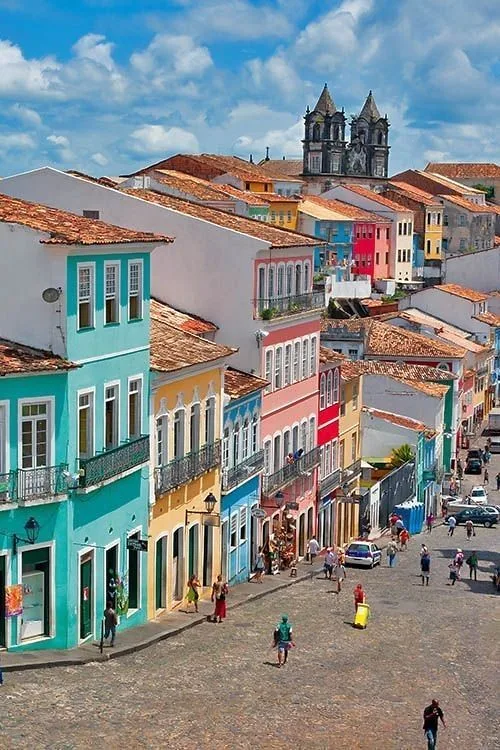
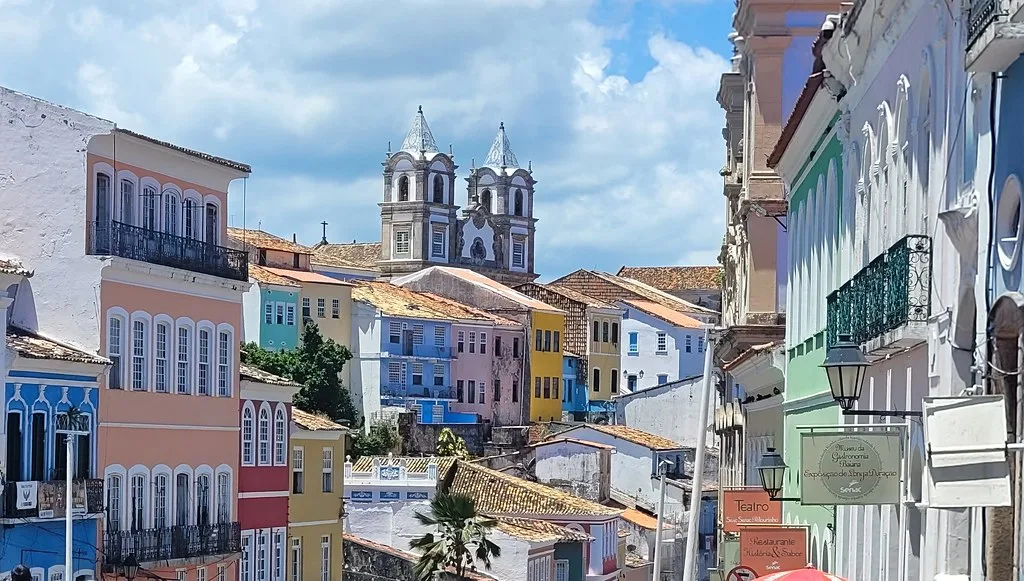
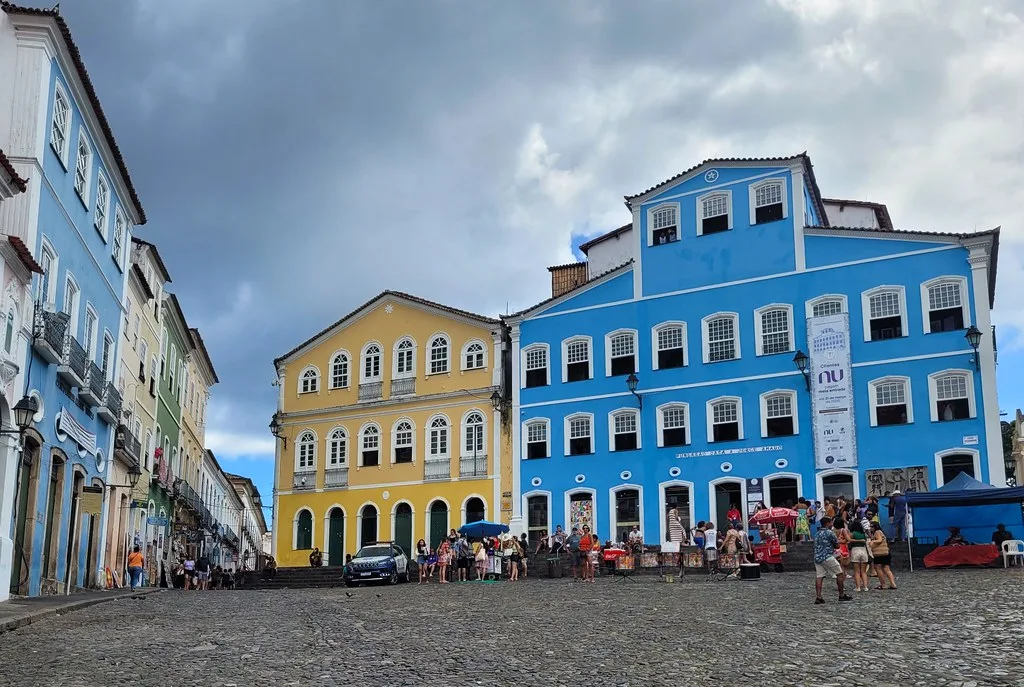
I walked toward the Elevador Lacerda, the Art Deco elevator that has been carrying people between the Lower and Upper cities since the 1870s. The ride cost me almost nothing — perhaps R$0.15 each — but the experience was worth far more than its fare. In thirty seconds I rose 72 meters, my stomach dropping slightly as the car climbed, and when the doors opened at the top I gasped. The view of All Saints Bay spread out behind me, enormous and impossibly blue, while ahead the cobblestone streets of Pelourinho unfolded like a greeting card from another century. I had seen photographs before my trip, but nothing had prepared me for the scale of the color — every building painted in a different shade of yellow, blue, pink, orange, green — each one leaning slightly into its neighbor as though the centuries had made them comfortable with the closeness.
The name Pelourinho means "whipping post." I learned this from my guide, a young woman named Mariana who spoke with quiet intensity about the district's past. This was once the largest slave port in the Americas. The very plazas where I stood taking photographs had been auction blocks where human beings were sold. But Mariana did not dwell only on suffering. She spoke about resilience — how enslaved Africans preserved their religions by hiding Yoruba orishas behind Catholic saints, how they developed capoeira as a martial art disguised as dance so their captors would not see them training, how they built churches with their own hands during their few free hours each week. I listened to her words and felt something shift inside me — a recognition that beauty and brutality could exist in the same place, braided together so tightly you could not separate them without losing both.
The Elevador Lacerda rises 72 meters between the Lower and Upper cities of Salvador Photo: Wikimedia Commons
I entered the Church of Sao Francisco and my breath caught. I have been inside grand churches before — cathedrals in Europe, basilicas in Rome — but I had never seen anything like this. Every surface was covered in gold leaf, carved into angels, flowers, vines, and faces, so dense and intricate that my eyes could not find a single place to rest. The smell of old wood and incense hung in the warm air. My wife whispered that it felt almost overwhelming, and she was right — the intention was exactly that, to overwhelm, to assert the power of the Portuguese empire through sheer visual excess. The wealth that paid for this gold came from sugar plantations worked by enslaved Africans. I stood there for a long time, trying to hold both the beauty and the cost in my mind at once.
Outside, I heard the berimbau before I saw the roda. A circle had formed in Largo do Pelourinho, and two capoeiristas moved at its center — their bodies bending and spinning in ways that seemed to ignore gravity. One threw a kick that arced within inches of the other's face, and the crowd inhaled together. The atabaque drums pounded a rhythm I could feel in my chest. Around the circle, voices sang call-and-response in a mixture of Portuguese and Yoruba, and I watched an old man beside me nodding along, his lips moving with words he clearly knew by heart. This was not a performance staged for cruise visitors. This was something that had been happening in these plazas for generations, a living thread connecting the present to a past that refused to be forgotten.
Every surface inside the Church of Sao Francisco is covered in intricate gold leaf carvings Photo: Wikimedia Commons
I stopped for acaraje from a Baiana in white dress and headwrap — the black-eyed pea fritters came split open and stuffed with shrimp paste and dried shrimp, the taste of palm oil sharp and rich on my tongue. I ate mine standing in a doorway, watching the street flow past, and I thought about how travel sometimes forces you to reconsider what you thought you knew. I had come to Salvador expecting colonial architecture and beach excursions. However, what I found was something far more complicated and far more honest — a city that carries its wounds openly and has turned them into art, music, food, and faith.
Capoeira performers in the roda at Largo do Pelourinho, continuing a tradition of cultural resistance through movement and music Photo: Wikimedia CommonsI was walking back toward the elevator when I heard singing from inside the Igreja de Nossa Senhora do Rosario dos Pretos — the Church of the Black Rosary, built by enslaved Africans over ninety-two years during their few free hours each week. I stepped inside and the voices washed over me, and for the first time in a long while I felt tears welling. The simple wooden interior, built by hands that were not free, held a quiet grace that no amount of gold leaf could match. My wife reached for my hand. Neither of us spoke. Sometimes the most sacred spaces are the ones built not with wealth but with hope.Later, sitting on a low wall in Largo do Pelourinho as the afternoon light turned the facades golden, I watched a group of children learning capoeira from an old mestre. His movements were slow and deliberate, each gesture carrying decades of practice, and the children mimicked him with the unself-conscious grace of youth. The berimbau's wire-string hum rose above the traffic noise and the calls of street vendors, and I realized I was witnessing something that had survived centuries of oppression — not merely survived but flourished. The mestre caught my eye and nodded, a small acknowledgment from one human being to another across the gulf of language and culture. That nod said more than any guidebook ever could.
Looking back, I realized that Salvador taught me something I did not expect to learn. I had thought of cruise ports as places to visit — see the sights, taste the food, take the photographs, return to the ship. But Salvador demanded more than that. It demanded that I sit with discomfort, that I hold complexity without reaching for easy answers. The drums I heard that morning were not just music. They were memory, resistance, and celebration braided into a single sound. What I learned in Salvador is that the places that change you most are not the ones that make you comfortable — they are the ones that make you listen.
The Cruise Port
What you need to know before you dock.
Terminal: Cruise terminal in Comercio district (Lower City/Cidade Baixa) — basic facilities with wheelchair accessible ramps; Mercado Modelo walking distance
Distance to Historic Center: Pelourinho (Upper City) 1 km away; 10 min taxi or Elevador Lacerda ride
Tender: No — ships dock at the pier directly
Currency: Brazilian Real (BRL); ATMs available; credit cards widely accepted in tourist areas
Language: Portuguese (English limited outside tourist areas; Spanish sometimes understood)
Driving: Right side; taxis and Uber recommended over car rental for cruise day visitors
Best Season: December-March (warm, peak season); April-November cooler but still pleasant
Mobility Note: Pelourinho has steep hills and cobblestones; wheelchair users and those with mobility concerns should plan accessible routes via the elevator or taxi to specific accessible viewpoints
Getting Around
Walking: Mercado Modelo is walkable from the terminal. Pelourinho requires an uphill walk or the Elevador Lacerda. The historic center itself is walkable but the terrain is hilly with uneven cobblestones, making it a moderate walking difficulty experience. Allow extra time if you have limited mobility.
Elevador Lacerda: The classic way to reach the Upper City from the terminal area — a 30-second ride for approximately R$0.15 (pennies). Operates frequently during daylight hours. The elevator is wheelchair accessible and provides panoramic views of All Saints Bay during the ascent.
Taxis: Available at the terminal; negotiate the fare or insist on the meter. Expect to pay approximately R$20-30 ($4-6) to Pelourinho. Uber operates in Salvador and is often more reliable for visitors who prefer fixed pricing.
Organized Tours: Ship excursion packages cover Pelourinho, churches, and cultural sites with English-speaking guides and air-conditioned transportation. Independent touring is very doable for confident travelers who prefer to explore at their own pace, and offers a guaranteed return to the ship if you keep track of time.
Safety Note: Stay in tourist areas such as Pelourinho and Barra. Keep valuables secure. Avoid displaying expensive jewelry or cameras unnecessarily. Salvador is generally safe in tourist zones but use normal city caution and stay aware of your surroundings.
Stamina Levels: Low-energy option: take a taxi to one viewpoint and the elevator, then return. Moderate walking option: explore Pelourinho on foot for 2-3 hours. High-energy option: walk between Upper and Lower City neighborhoods for a full day of exploration.
Salvador Area Map
Interactive map showing cruise terminal, Pelourinho historic district, Sao Francisco Church, Elevador Lacerda, and Mercado Modelo. Click any marker for details and directions.
Excursions & Activities
How I'd spend my time — whether by ship excursion or independent exploration.
Salvador offers both ship excursion packages and excellent independent exploration options. If you prefer the security of a guided experience with guaranteed return to the ship, the ship excursion to Pelourinho and the Church of Sao Francisco is well worth the cost — typically $69-89 per person. For independent travelers, the city is navigable on your own, and going independent lets you linger where the spirit moves you. I recommend deciding based on your comfort level with Portuguese and your confidence in navigating unfamiliar cities. If you book ahead for a private guide through a local agency, expect to pay around $120-180 for a half-day tour for two people.
Pelourinho Historic District
UNESCO World Heritage Site — the colonial heart of Salvador with colorful Portuguese architecture, cobblestone streets, triangular plazas, live music, and capoeira performances. Largo do Pelourinho features the city museum and Casa Jorge Amado (famous Brazilian author). Free to wander. 3-4 hours minimum to absorb the atmosphere. Wear comfortable shoes for hills and cobblestones.
Church of Sao Francisco
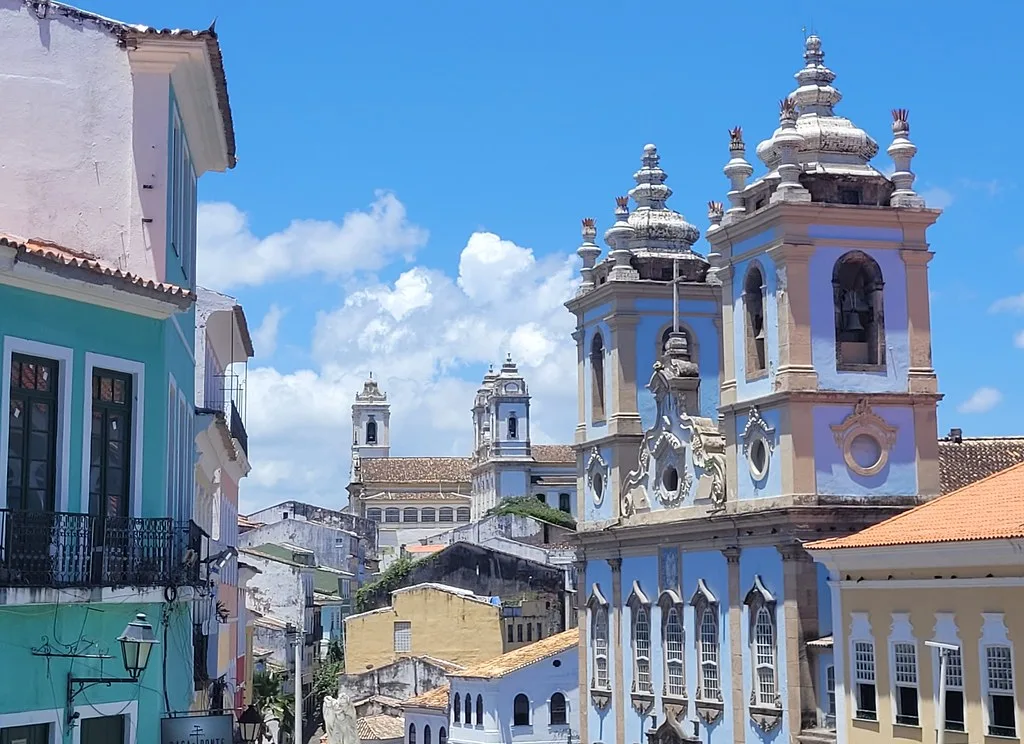
Portuguese baroque masterpiece with interior covered in intricate gold leaf — one of Brazil's most opulent churches. Every surface tells a story in carved, gilded wood. Adjacent Igreja da Ordem Terceira features a stunning facade. Entry approximately R$15 ($3). Allow 1 hour. Modest dress required. Photography restricted inside. The visual impact is intentional and extraordinary.
Igreja de Nossa Senhora do Rosario dos Pretos
The Church of the Black Rosary, built by enslaved Africans over 92 years (1704-1796), constructed during their few free hours. Simple exterior, powerful history. Interior honors African heritage alongside Catholic tradition. Free entry (donations welcome). Allow 30 minutes. The story this building tells is essential to understanding Salvador.
Elevador Lacerda
Iconic Art Deco elevator connecting Lower and Upper cities since 1873 (current structure from 1930). The 72-meter ascent takes 30 seconds and offers panoramic views of All Saints Bay. Fare approximately R$0.15 (pennies). Operates every few minutes. This is how you arrive in Pelourinho — emerging from the elevator into the plaza above is pure theater.
Mercado Modelo
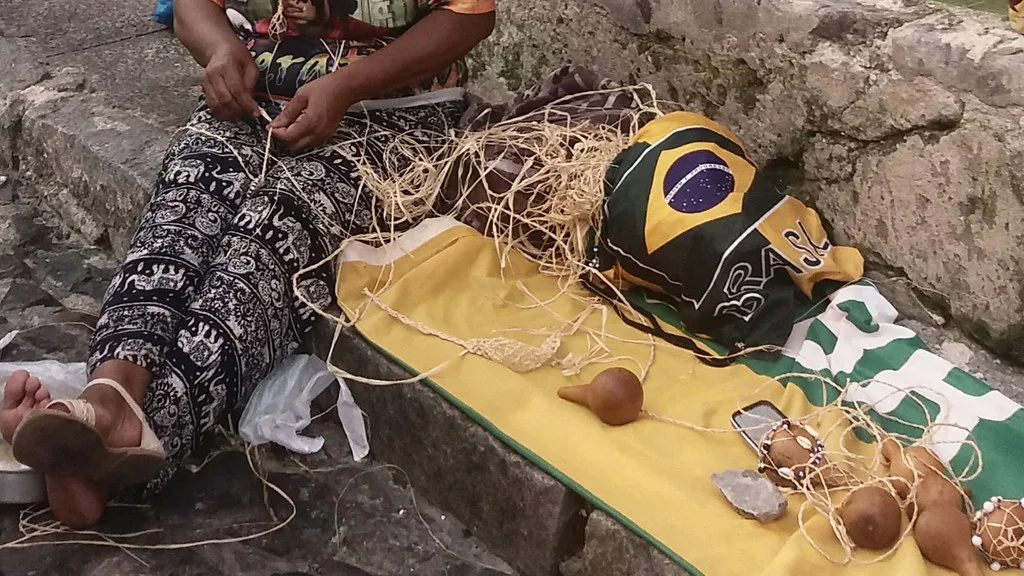
Historic venue near the cruise terminal with 250 or more vendors selling handmade crafts, lace, musical instruments, religious items, and artwork. Afro-Brazilian culture on full display. Capoeira demonstrations happen throughout the day. Upstairs restaurants serve Bahian food for $8-15 per plate. Free entry. Allow 1-2 hours. Bargaining expected — offer 60-70% of asking price. Walking distance from ship.
Forte de Santo Antonio da Barra
Bahia's oldest fort (1583) housing South America's oldest lighthouse. Now a Nautical Museum with Portuguese colonization artifacts. Views of All Saints Bay and city. Entry approximately R$15 ($3). Allow 1 hour. Located at Barra Beach neighborhood — taxi fare around R$25 ($5) from the terminal. Combine with beach time if schedule allows.
Capoeira Roda
Afro-Brazilian martial art combining dance, acrobatics, and music. Free performances in Pelourinho plazas (especially Largo do Pelourinho). Tuesday Night Street Parties feature drums, dancing, and food. Participating schools also offer quick intro lessons — approximately R$50 ($10). The music and movement are extraordinary — this is cultural resistance made art. Tips of R$5-10 ($1-2) are appreciated by performers.
History & Heritage
Salvador was founded in 1549 as Brazil's first capital, serving as the administrative center of Portuguese colonial rule until 1763. The city's location on All Saints Bay made it a strategic trading post and the primary port for the Atlantic slave trade to the Americas. Over three centuries, an estimated two million enslaved Africans were brought through Salvador, making it the largest slave port in the Western Hemisphere.
The Afro-Brazilian cultural heritage that emerged from this painful history is Salvador's defining character. Enslaved peoples preserved Yoruba religious practices by syncretizing them with Catholic saints, creating Candomble — a faith tradition still widely practiced today. They developed capoeira as a covert martial art disguised as dance. They built churches, created art forms, and maintained culinary traditions that now define Bahian culture. The UNESCO designation of Pelourinho in 1985 recognized both the Portuguese colonial architecture and the layers of African heritage embedded in every street.
Cultural Experiences
Salvador's Afro-Brazilian identity shapes every aspect of daily life, from the rhythms heard on street corners to the food served in local restaurants. Candomble ceremonies, while private religious events, have influenced public festivals throughout the year — particularly Carnival, which in Salvador is the largest street festival in the world, drawing millions of participants.
The literary tradition is equally rich. Jorge Amado, one of Brazil's most celebrated novelists, set many of his works in Salvador's streets and plazas. His former home in Pelourinho is now a museum. Music ranges from the African-rooted percussion of Olodum to contemporary Bahian pop. The visual arts scene thrives in galleries throughout the historic district. For cruise visitors, simply walking through Pelourinho with open eyes and ears provides a cultural immersion that few Caribbean or South American ports can match.
Food & Dining
Acaraje ($2-4): The iconic Bahian street food — black-eyed pea fritters split and filled with vatapa (shrimp paste), caruru (okra), and dried shrimp. Fried in dende (palm oil). Sold by Baianas in white dress. Spicy, rich, unforgettable.
Moqueca Baiana ($10-18): Fish or seafood stew cooked in clay pot with coconut milk, dende oil, tomatoes, onions, peppers. Served with rice and farofa (toasted cassava flour). Lighter than it sounds, deeply flavorful.
Cocada ($1-2): Sweet coconut candy — white or black (with rapadura/brown sugar). Sold in vendor stalls and by street sellers. Simple, sweet, addictive.
Fresh Tropical Fruits ($1-3): Mangoes, passion fruit (maracuja), cashew fruit, acai. Juice stands everywhere offer fresh blends.
Cachaca: Brazilian sugarcane spirit — base of caipirinha cocktail. Local brands worth trying. A caipirinha costs approximately R$15-25 ($3-5).
Bahian Buffet - Comida a Kilo ($5-10): Pay-by-weight restaurants offer a chance to sample multiple dishes — moqueca, feijoada, vatapa, bobo de camarao. Budget-friendly way to explore the cuisine.
Depth Soundings Ashore
Take the Elevador Lacerda up to Pelourinho at least once — the 30-second ride and dramatic arrival is quintessential Salvador, and the fare is only R$0.15.
Tuesday evenings in Pelourinho feature Terca da Bencao street parties (if your ship stays late) — drums, dancing, food, music. Free cultural immersion at its finest.
Churches require modest dress (covered shoulders and knees). Bring a light scarf or wear pants if planning church visits.
Portuguese phrasebook helpful — "Obrigado/a" (thank you), "Quanto custa?" (how much?), "Onde fica...?" (where is...?). Locals appreciate the effort even if your pronunciation is imperfect.
Acaraje vendors cluster in Pelourinho and near the Elevador Lacerda — look for Baianas in white clothing. Point to what you want; ask "picante?" (spicy?) if concerned about heat.
Sao Francisco Church photography is restricted inside — absorb it with your eyes. The gold leaf in person is worth more than any photograph could capture.
Capoeira performances in plazas are free but performers appreciate tips. R$5-10 is generous and supports living cultural practice.
Bargaining is expected at Mercado Modelo — offer 60-70% of asking price and negotiate up. Good-natured haggling is part of the experience.
ATMs inside Mercado Modelo and in Pelourinho. Bring some cash in small denominations for purchases, street food, and tips.
Photo Gallery
Pelourinho's colonial streets are a UNESCO World Heritage Site Photo: Wikimedia CommonsA Baiana prepares acaraje, Salvador's iconic street food Photo: Wikimedia CommonsIgreja do Bonfim with its famous wish ribbons tied to the fence Photo: Wikimedia CommonsAll Saints Bay seen from the Upper City near the Elevador Lacerda Photo: Wikimedia CommonsStreet art celebrating Afro-Brazilian culture and identity Photo: Wikimedia CommonsA local market stocked with tropical fruits and Bahian cooking ingredients Photo: Wikimedia CommonsRestored colonial architecture along one of Pelourinho's triangular plazas Photo: Wikimedia CommonsSunset over All Saints Bay from Salvador's waterfront Photo: Wikimedia Commons
Image Credits
Hero and gallery images: Wikimedia Commons contributors, licensed under Creative Commons.
Logbook images: Wikimedia Commons contributors, various CC licenses.
Frequently Asked Questions
Q: Where do cruise ships dock in Salvador? A: Ships dock at the cruise terminal in the Comercio district (Lower City). Pelourinho is approximately 1 km away, reachable by taxi (10 min, cost R$20-30) or the Elevador Lacerda elevator. Mercado Modelo is walking distance from the pier.
Q: What should I see in Pelourinho? A: The UNESCO historic center offers colorful colonial architecture, the Church of Sao Francisco (gold leaf baroque interior), capoeira performances, live music, and triangular plazas. Plan 3-4 hours minimum to explore properly.
Q: Is Salvador safe for cruise visitors? A: Tourist areas (Pelourinho, Barra, Mercado Modelo) are generally safe with police presence. Use normal city caution — keep valuables secure, avoid displaying expensive items, and stay in well-traveled areas. Organized tours and ship excursion groups provide additional security and comfort.
Q: What is acaraje and how much does it cost? A: Iconic Bahian street food — black-eyed pea fritters fried in palm oil, split and filled with shrimp paste, dried shrimp, and okra. Sold by Baianas (women in white dress). Typically $2-4 each. Spicy and delicious — an essential Salvador experience.
Q: Can I see capoeira performances? A: Yes! Free performances happen in Pelourinho plazas throughout the day, especially Largo do Pelourinho. Tuesday evenings feature street parties with capoeira, drums, and dancing. Some schools offer quick intro lessons for visitors (~R$50 / $10).
Q: Do I need to speak Portuguese? A: Helpful but not essential. English is limited outside major tourist sites. Spanish is sometimes understood since it is similar to Portuguese. Key phrases and patience go far. Guides on ship excursion tours speak English.
Q: Is the port accessible for wheelchair users? A: The cruise terminal itself has accessible ramps. However, Pelourinho's cobblestone streets and steep hills present significant challenges for wheelchair users and those with mobility difficulties. The Elevador Lacerda is accessible and provides transport between cities. Taxi access to specific accessible viewpoints is recommended for those with walking difficulty.
Until I have sailed this port myself, these notes are soundings in another's wake — gathered from travelers I trust, charts I've studied, and the most reliable accounts I can find. I've done my best to triangulate the truth, but firsthand observation always reveals what even the best research can miss. When I finally drop anchor here, I'll return to these pages and correct my course.