


Photo: Wikimedia Commons (CC BY-SA)
Captain's Logbook
Split
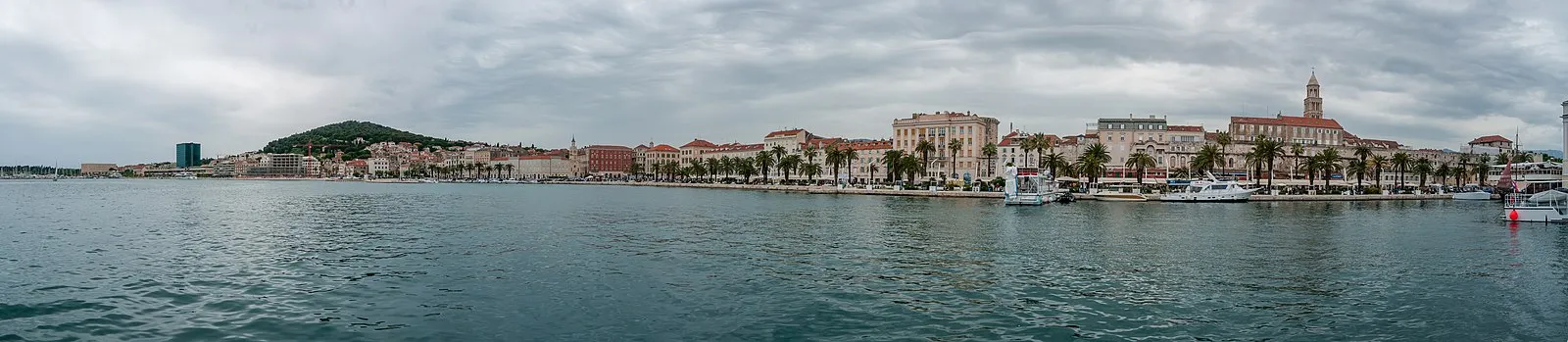
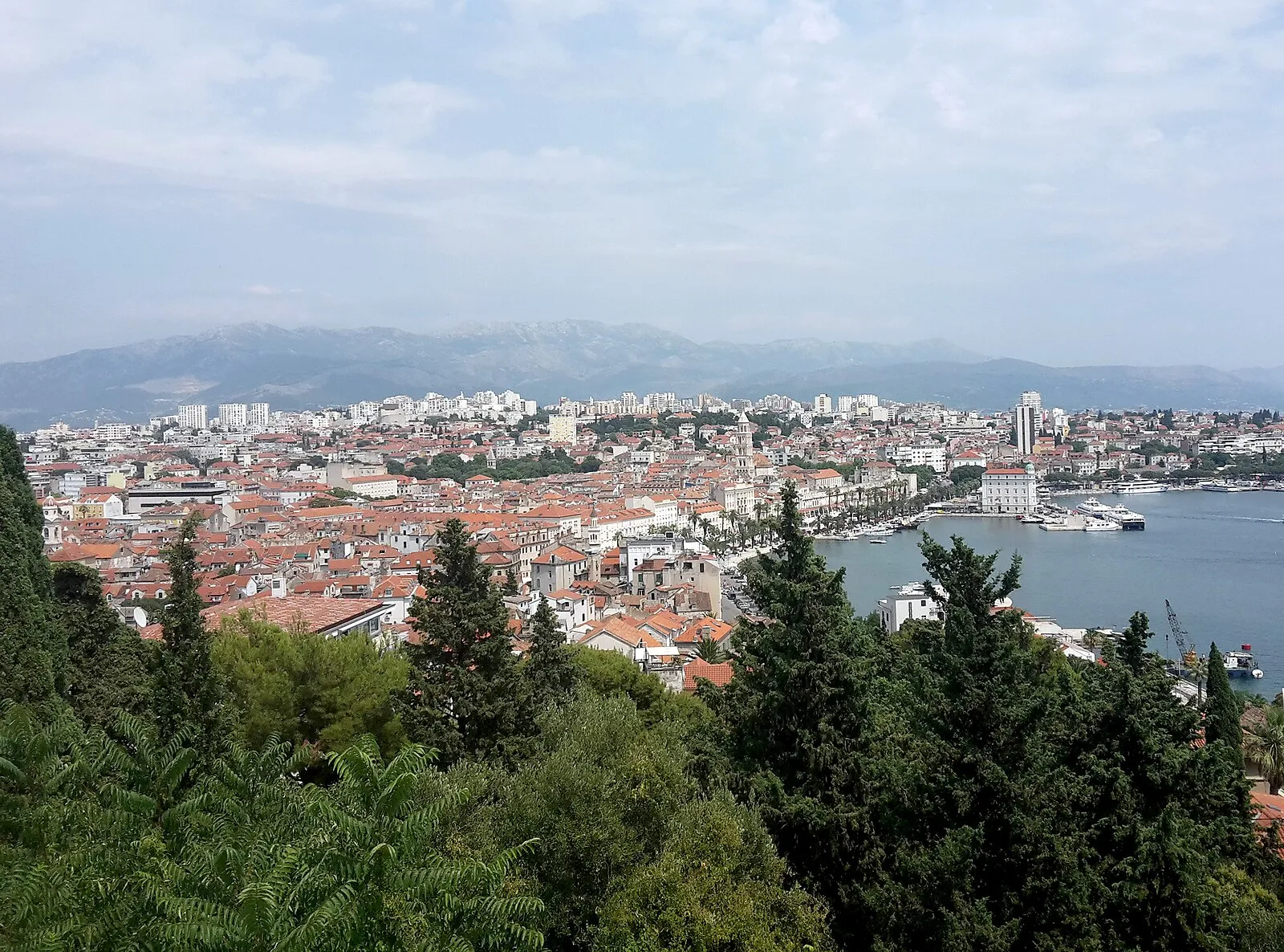
The ACI marina promenade led us straight from the ship toward Diocletian's Palace — not a ruin frozen in time, but a living organism where 3,000 souls make their homes inside 1,700-year-old walls. This is the world's only continuously inhabited Roman palace, a distinction that hits you the moment you step through the ancient gates. We walked off the gangway and into the Peristyle while a klapa group sang under the sphinx. Had the square almost to ourselves at 8 a.m. Climbed the bell tower (terrifying open stairs) for 360° views over red roofs and the Adriatic, trying to imagine what this place looked like when it was first completed in 305 CE.
What strikes me most is the sheer audacity of Emperor Diocletian's retirement dream. Born in humble circumstances in Salona — just six miles up the coast — he rose through military ranks to rule the known world from 284 to 305 AD. He instituted the tetrarchy, dividing the empire among four rulers, then did something almost unheard of: on May 1, 305 AD, he voluntarily abdicated. He spent his final eleven years in this palatial fortress he'd built from 295 to 305 CE, tending his famous cabbage gardens and watching the sea until his death in 316 AD. The palace was designed as both retirement villa and military fortress, with four great gates — Golden to the north, Silver east, Iron west, Bronze south — and sixteen towers guarding the perimeter, though only three remain standing after seventeen centuries of history.
UNESCO declared it a World Heritage Site in 1979, calling it the largest and best-preserved Roman palatial architecture anywhere. But what makes it utterly unique is that it never stopped being inhabited. For nearly three centuries after Diocletian's death, the palace stood largely empty, a monument to imperial retirement. Then around 614 AD, when the Avars and Slavs sacked Salona, desperate refugees flooded into the abandoned palace walls seeking protection. They built homes in the emperor's apartments, shops in the colonnades, churches in the temple chambers. They never left. Today I sipped espresso in a café built into what was once the imperial vestibule, then browsed handmade jewelry in a boutique tucked between ancient columns. I found myself wondering if Diocletian would be horrified or delighted to see his grand solitude transformed into this vibrant maze of humanity — his peaceful retirement villa now a bustling neighborhood where laundry hangs from windows carved by Roman stonemasons.
We strolled the Riva promenade for coffee, then took the ferry to Hvar for the day — swam at Pokonji Dol beach in water so clear I could see my toes at 10 m depth. Back in Split at sunset, the palace glowed orange, the same limestone that Diocletian would have watched turn golden each evening from his private quarters. The continuity of it all — seventeen centuries of sunsets on the same stones — took my breath away.
I sat on a bench on the Riva as the light faded, watching the palace walls turn from gold to rose to grey. The klapa singers had gone home. The tourists were thinning. An elderly woman emerged from one of the palace gates carrying a bag of groceries, and the ordinariness of it nearly undid me. She lived here — she and her neighbours — inside walls raised by an emperor for his solitude, walls that sheltered refugees fourteen centuries ago, walls that now sheltered her and her bag of bread and milk. I thought about the people in my own life who had taken me in when I had nowhere to go — a friend's spare room after my divorce, my sister's kitchen table when I could not face my own. Shelter is not always planned. Sometimes it is just an old wall someone left standing.
Looking back, Split taught me that the best things in this world are not the ones built to impress but the ones that endure long enough to be useful. Diocletian built for grandeur. The refugees who came three centuries later needed walls, not grandeur, and the walls were there. The woman with her groceries needed a home, and the home was there. I booked this port for the Roman history. I left thinking about the people — past and present — who turned an emperor's vanity into something better than he imagined. That is grace. That is always grace.
Weather & Best Time to Visit
Cruise Port Information
Split's cruise ships dock at the city port on the southern edge of the Riva promenade, placing you roughly 200 meters from the Bronze Gate of Diocletian's Palace. It is one of the shortest port-to-attraction walks in the Mediterranean — step off the gangway, cross the road, and you are standing at the walls of a Roman emperor's retirement home. Larger vessels sometimes berth at the outer breakwater or at Kaštela Bay terminal about 5 km north, where shuttle buses run to the city center (typically provided by the ship or available for €5-8 round trip).
The cruise terminal itself is modest — restrooms, a small tourist information kiosk, and a taxi rank. No dedicated shopping or restaurants at the terminal, but the Riva waterfront cafés begin immediately. Split sees ships from MSC, Costa, Norwegian, Royal Caribbean, and Celebrity among others, with port calls concentrated between April and October. Ships dock directly here; no tendering required.
Getting Around Split
On Foot
Split's historic core is compact enough that walking covers nearly everything. Diocletian's Palace, the Riva promenade, the fish market, and the cathedral are all within a 10-minute radius of the cruise berth. Marjan Hill's trailhead sits about 15 minutes west along the waterfront. Surfaces inside the palace are polished limestone and uneven cobblestones — sturdy shoes matter more than style here.
Buses
Promet Split operates the city bus network. Routes run from the main bus station on Domovinskog rata (about 500 m from the port) to outlying areas including Trogir (bus #37, roughly 30 minutes, about €2.50) and Solin/Salona ruins (bus #1, 15 minutes, about €1.50). Buy tickets at kiosks for a small discount over onboard purchase. Service is frequent during summer but can get crowded midday.
Taxis and Rideshare
Taxis queue on the Riva near the port. A ride within the city center runs €5-10; to Klis Fortress about €20-25 one way. Uber and Bolt both operate in Split and tend to be slightly cheaper than metered taxis. For Krka or Trogir day trips, negotiating a fixed-rate return with a local driver can be cost-effective for groups of three or four.
Ferries
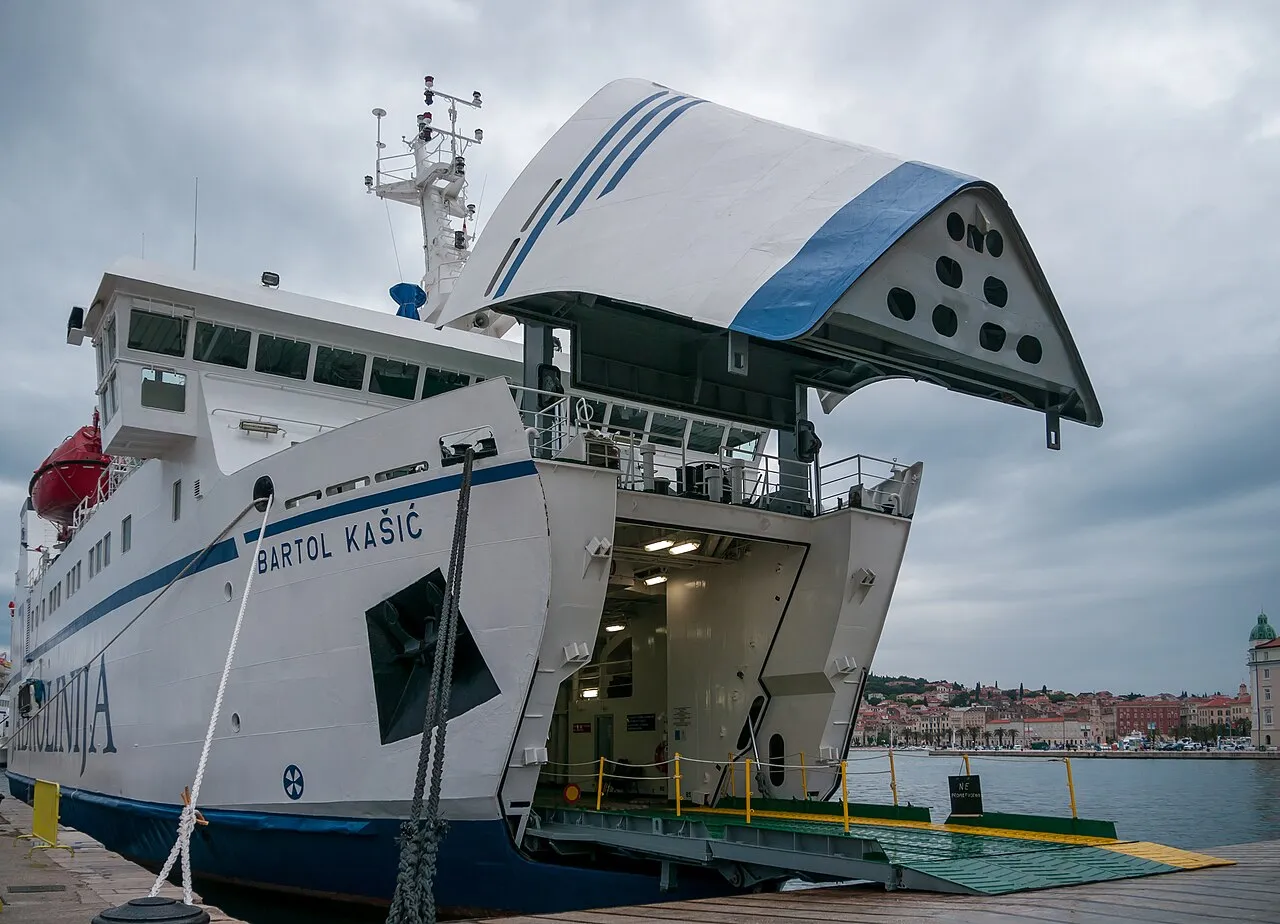
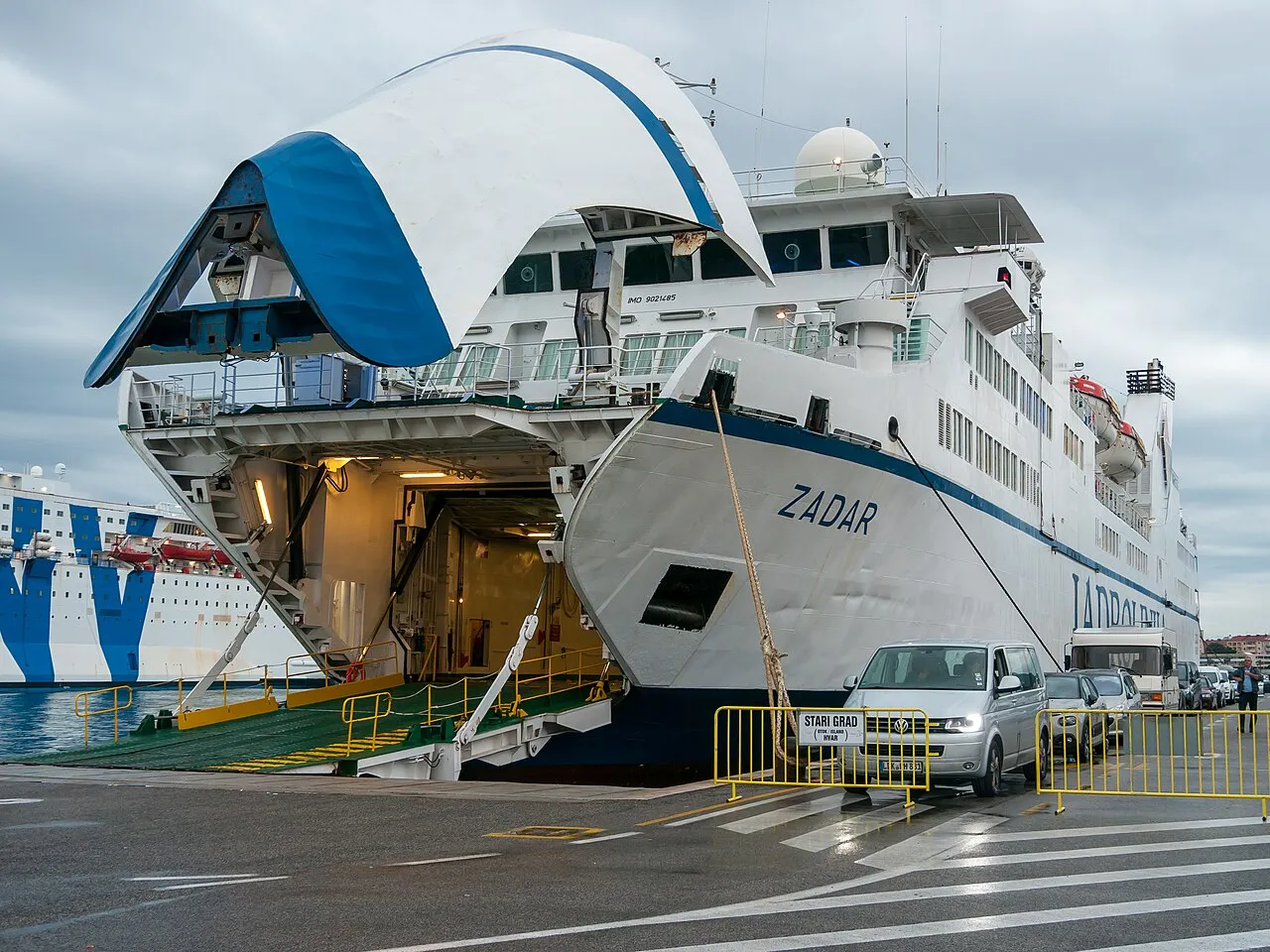
Jadrolinija ferries and fast catamarans depart from the port directly adjacent to the cruise berth. Services reach Hvar (catamaran about 1 hour, €12-15 one way), Brač (ferry 50 minutes, €5), and Vis (catamaran 1.5 hours, €15). Book ahead in peak season — the Hvar catamaran fills early on cruise ship days.
Mobility Considerations
The Riva promenade is flat and wide. Inside Diocletian's Palace, expect narrow passages, abrupt steps, and uneven stone floors that are difficult with wheelchairs or heavy strollers. The bell tower has open-rung stairs with no elevator alternative. Marjan Hill involves steady uphill walking on gravel paths.
Split Area Map
Interactive map showing cruise terminal and Split attractions. Click any marker for details.
Shore Excursions & What to See
Booking guidance: Diocletian's Palace and the old town are best explored independently — guided walking tours add context but aren't essential for navigation. Book ahead for Krka National Park day trips in July and August, when buses and tour vans fill fast. Ship excursions guarantee return-to-ship times; independent travelers should budget conservatively for the journey back.
Diocletian's Palace & Old Town
The palace is free to enter and wander — the Peristyle courtyard, the basement halls (€8 entry, worth it for the scale), the Temple of Jupiter (€3), and the labyrinth of streets that grew organically inside the Roman walls. Guided walking tours run €15-25 per person and typically last 90 minutes, covering history most visitors would miss on their own. Ship excursions package this at €40-60, often combined with a Riva walk and cathedral visit. The Cathedral of St. Domnius (€5 entry) incorporates Diocletian's mausoleum — the emperor's final resting place repurposed as a Christian church. Climb the bell tower for €7 if you can handle the open-rung stairs.
Krka National Park
The cascading travertine waterfalls at Skradinski Buk are among Croatia's most photographed natural wonders. Swimming at the falls has been prohibited since 2021 to protect the fragile travertine, though you can swim in the Krka River at Skradin town beach instead. Park entry is approximately €30-40 in peak season (July-August), dropping to €15-20 in shoulder months. The drive from Split takes about 90 minutes. Ship excursions run €70-100 per person. Independent visitors can take a bus from Split's main station to Skradin (about €10-12 one way, 75 minutes) and catch the park boat from there. Allow a full 5-6 hours minimum for this day trip — rushing Krka defeats the purpose.
Trogir
This UNESCO-listed island town sits 30 km west of Split, connected by a short stone bridge. The 13th-century Cathedral of St. Lawrence has a masterwork Romanesque portal by Master Radovan. The old town fits on an island barely 500 meters across — small enough to see in 2 hours, charming enough to linger longer. Bus #37 from Split costs about €2.50 and takes 30-40 minutes. Ship excursions package Trogir at €45-65, often combined with a panoramic drive. Going independently leaves time for a long lunch on the waterfront — seafood risotto at a harborside table runs €12-18.
Klis Fortress
Game of Thrones fans know this as Meereen — the clifftop fortress 10 km northeast of Split served as a filming location for Season 4. Beyond the TV connection, Klis held out against Ottoman forces for over a century. Entry is about €8; a taxi from Split runs €20-25 each way. The views from the ramparts span from the mountains to the sea. Budget 60-90 minutes for a thorough visit.
Marjan Hill
Split's green lung rises directly west of the old town — a forested peninsula with hiking trails, sea views, and a 12th-century chapel. The walk from the Riva to the summit viewpoint takes about 40 minutes at a comfortable pace. Free, no booking needed, and a good option when you want to escape the old-town crowds. Bring water — shade is abundant but drinking fountains are not.
DIY vs. Ship Excursion: Krka National Park
DIY Independent (€40-55/person)
- Bus Split → Skradin ~€10-12, 75 min
- Park boat to Skradinski Buk included with entry
- Park entry €15-30 (varies by season)
- Swim at the falls, explore at your own pace
- Return bus schedule requires careful timing
Ship Excursion (€70-100/person)
- Air-conditioned coach door to door
- Guided commentary on Croatian history
- Often includes stop in Šibenik old town
- Guaranteed return to ship on time
- Fixed itinerary limits free exploration
Depth Soundings Ashore
Practical tips before you step off the ship.
The bell tower stairs are steep and open — not for vertigo sufferers, but the view rewards the courage.
Money: The local currency is Euro (EUR). ATMs are generally available near the port area, though fees vary. Credit cards are widely accepted at tourist-oriented establishments, but carry some local cash for markets, street food, and smaller vendors. Your ship's exchange rate is typically unfavorable — withdraw from a bank ATM instead.
Timing: Start early if your ship arrives at dawn — the first hours offer pleasant conditions and smaller crowds. Allow at least 30 minutes buffer before all-aboard time. Set a phone alarm as backup.
Safety: Standard port-town awareness applies — keep valuables close and stick to well-traveled areas during daylight. Your ship's ID card is your most important item — losing it creates a genuine headache at the gangway.
Communication: Wi-Fi is often available at cafés and restaurants near the port. Consider downloading offline maps before disembarking — cellular data roaming charges can be substantial and surprising.
Photo Gallery
Frequently Asked Questions
Q: Is Split worth it?
A: Absolutely — living history.
Q: Best thing?
A: Palace plus day trip to Hvar or just stay and soak.
Q: How long for palace?
A: 2–3 hours to explore properly.
Q: Walk from port?
A: Yes — 5 minutes to Peristyle.
Q: What is the best time to visit Split?
A: Cruise season runs June through August — Dalmatian coast gem (36-86°F). May, September, and October are pleasant transitional months. There are no months to avoid; Bura wind can be strong in winter.
Q: Is Split suitable for passengers with mobility challenges?
A: Accessibility varies by area. The port vicinity and main commercial streets are generally manageable, but older historic districts may feature cobblestones, stairs, and uneven surfaces. Consider booking an accessible ship excursion if you have concerns. The ship's shore excursion desk can advise on specific accessibility options for this port.
Q: Do I need to exchange currency before arriving?
A: The local currency is Euro (EUR). Most tourist-facing businesses accept major credit cards. ATMs near the port offer competitive exchange rates. Carry some local cash for small purchases, markets, and tips. Avoid exchanging money on the ship — the rates are typically unfavorable compared to local bank ATMs.
Q: Can I explore independently or should I book a ship excursion?
A: Both options work well. Ship excursions guarantee return to the vessel and handle logistics, making them ideal for first-time visitors. Independent exploration costs less and allows more flexibility — just keep track of time and allow a 30-minute buffer before all-aboard. Many passengers combine approaches: an organized morning tour followed by free afternoon exploration.
Q: Is there a hurricane or storm season that affects Split?
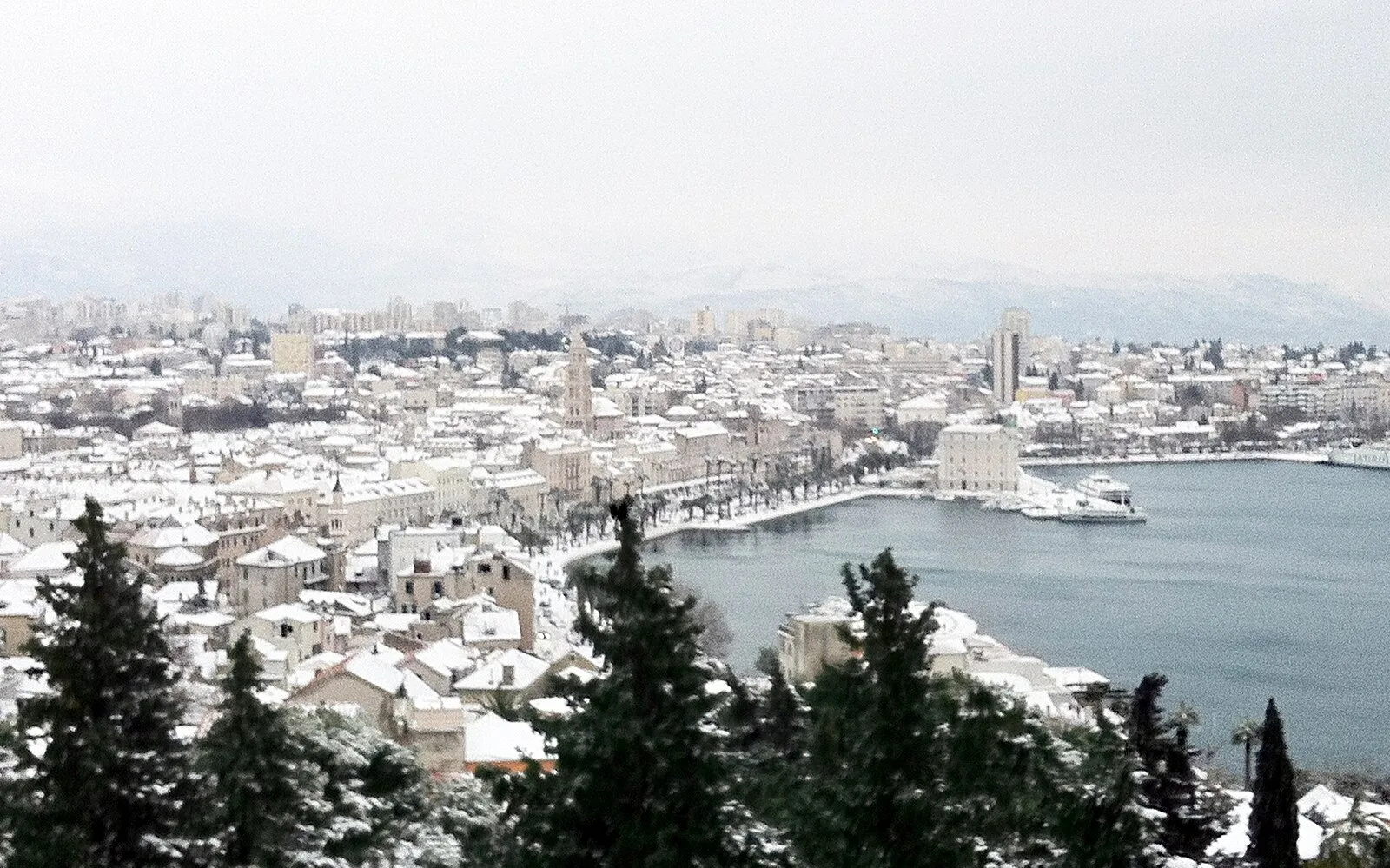
A: Split is not in a hurricane zone. The hazards record reads "Bura wind can be strong in winter." Wind data names two winds: "Bura (northeast cold) and Jugo (southeast warm)."
Q: What should I pack for Split weather?
A: Comfortable walking shoes for the palace. Sunscreen. Swimsuit for Bačvice Beach. Cash for konoba (traditional restaurants). Cruise-season highs run 72-86°F.
Q: Will rain ruin my Split port day?
A: Rain falls 2-3 days per month in July and August, 5 days in May/Sep, 7-8 days in April and October. The rain summary is "Dry Jun-Aug; wetter autumn/winter."
Last reviewed: February 2026
Split: My Living Roman Palace
Key Facts
- Country
- Croatia
- Region
- Mediterranean
- Currency
- Euro (EUR)
- Language
- Croatian / English
Image Credits
- split-1.webp: WikiMedia Commons (CC BY-SA)
- split-2.webp: WikiMedia Commons (CC BY-SA)
- split-3.webp: WikiMedia Commons (CC BY-SA)
- split-4.webp: WikiMedia Commons (CC BY-SA)
Images sourced from WikiMedia Commons under Creative Commons licenses.