

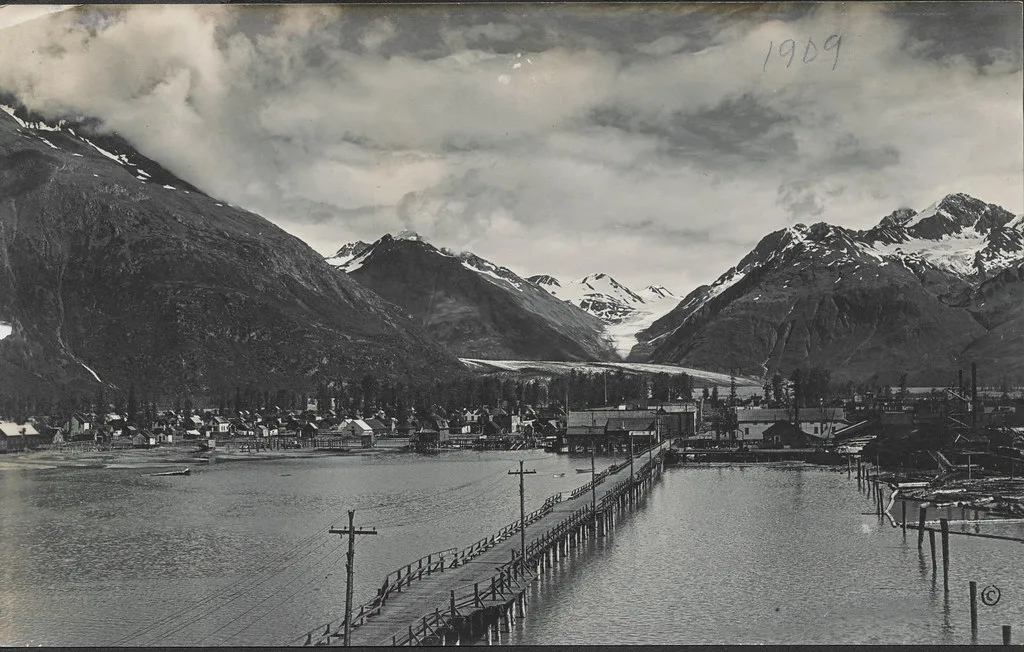
Photo: simpleinsomnia / Flickr (CC BY 2.0)
Valdez, Alaska
Region: Alaska | Season: May – September | Population: ~3,800 | Known as: Alaska's Little Switzerland

Photo: simpleinsomnia / Flickr (CC BY 2.0)
Region: Alaska | Season: May – September | Population: ~3,800 | Known as: Alaska's Little Switzerland
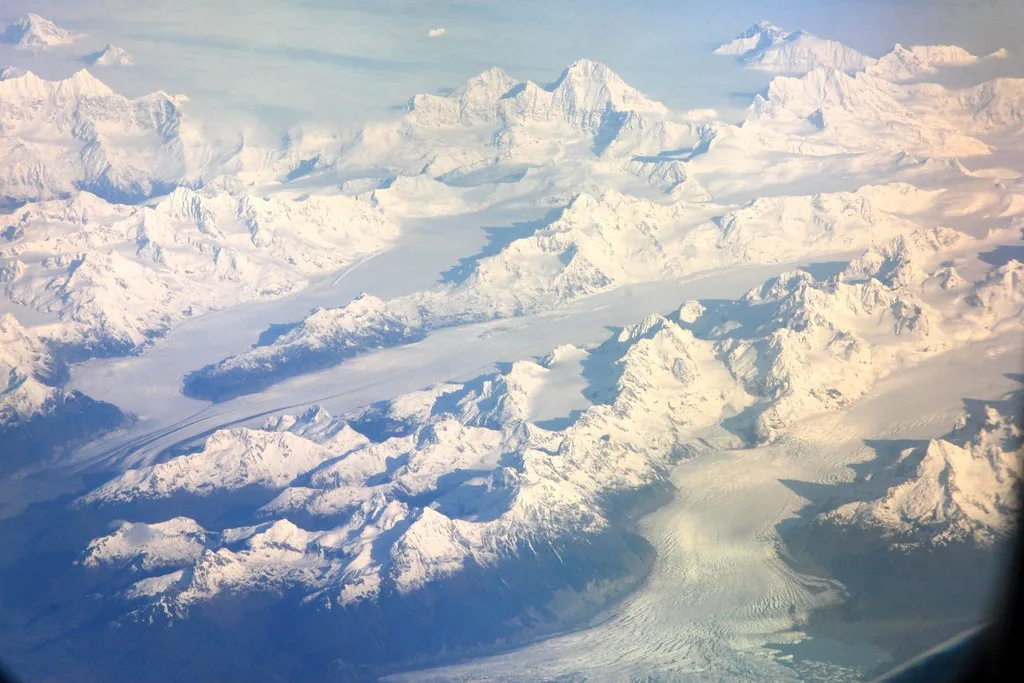
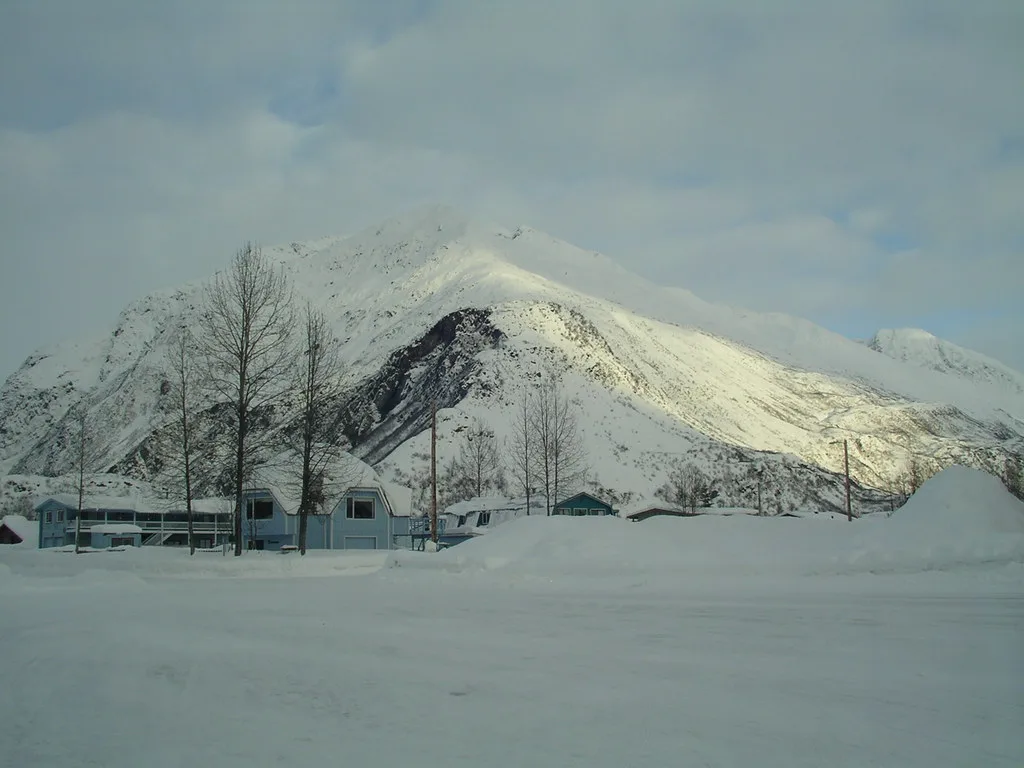
We came into Valdez through Prince William Sound on a morning when the clouds sat low on the water, pale silver against the dark green of the lower slopes, and the Chugach Mountains rose up through them like the walls of some ancient cathedral. I have read that these are the steepest coastal mountains in North America, and standing on deck watching them emerge from mist, I believed it. The peaks climb straight from tidewater to over 5,000 feet in less than a mile. They call Valdez "Alaska's Little Switzerland," and the comparison is fair — though Switzerland never had this particular wildness, this sense of being somewhere the earth is still unfinished.
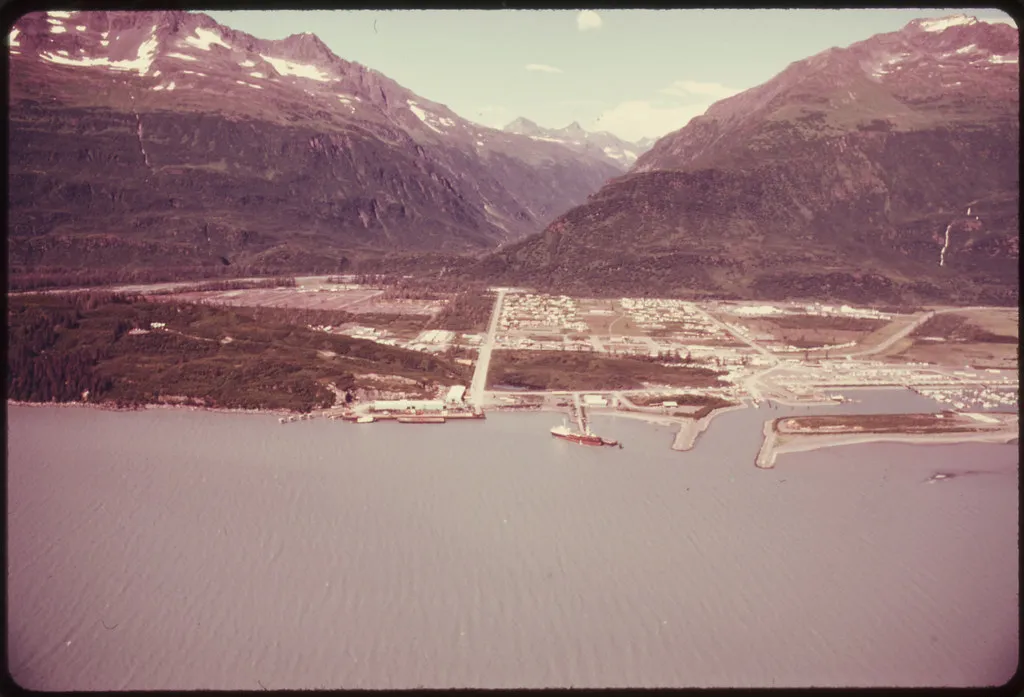
The town itself is small — about 3,800 souls — and carries a history heavier than its size suggests. On Good Friday, 1964, the most powerful earthquake ever recorded in North America (magnitude 9.2) struck this coast. A massive underwater landslide triggered a local tsunami that obliterated Old Valdez. The waterfront vanished. Thirty-two people died. The survivors made an extraordinary decision: rather than rebuild on unstable ground, they moved the entire town four miles to its current location. Old Valdez is a flat, empty place now, marked by a memorial plaque and the kind of silence that settles over ground that has known catastrophe. I stood there and tried to imagine what it took to look at the rubble of everything you owned and say, "We'll start again, somewhere safer." That is a particular kind of courage.
The Valdez Museum chronicles this story with understated power — photographs of the town before and after, personal accounts from survivors, a scale model of Old Valdez as it once stood. But the museum covers more than the earthquake. It traces the Gold Rush stampeders who came through Valdez Pass (many of them unprepared and some of them never seen again), the Native Ahtna people who lived here for thousands of years before any of that, and the construction of the Trans-Alaska Pipeline, which transformed this quiet fishing village into the terminus of one of the most ambitious engineering projects in human history. Eight hundred miles of pipe carrying crude oil from Prudhoe Bay on the Arctic Ocean to tankers waiting in Port Valdez. The pipeline terminal is visible across the bay — a sprawling industrial complex that sits, somewhat incongruously, among some of the most beautiful coastal scenery on the planet.
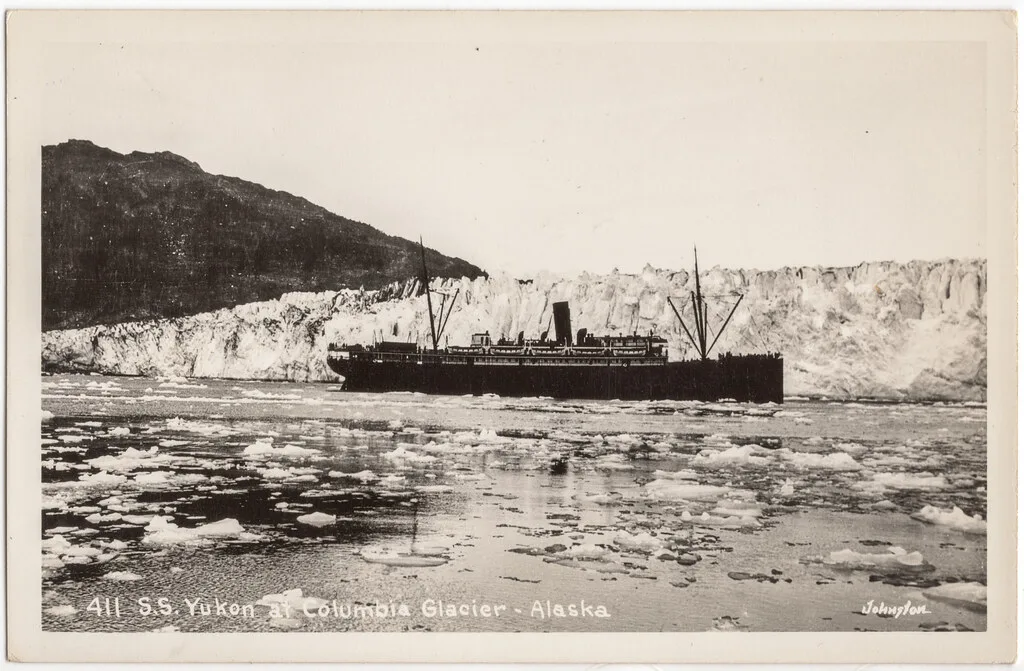
We took a boat tour to Columbia Glacier, and it was worth every minute of the journey. Columbia is one of the fastest-retreating tidewater glaciers in the world, calving enormous chunks of ice into the sound with a thunderous crack that echoes off the surrounding mountains. The captain cut the engines about half a mile from the glacier face, and we drifted among icebergs of startling blue — that deep, ancient blue that comes from centuries of compression. Harbor seals lounged on the smaller bergs, watching us with mild curiosity. The scale of the glacier is difficult to convey in words. It is three miles wide at the face, and even from our distance, the ice wall towered above us. When a piece calved, the splash sent ripples that rocked our vessel gently, a reminder that we were witnessing geology in real time.
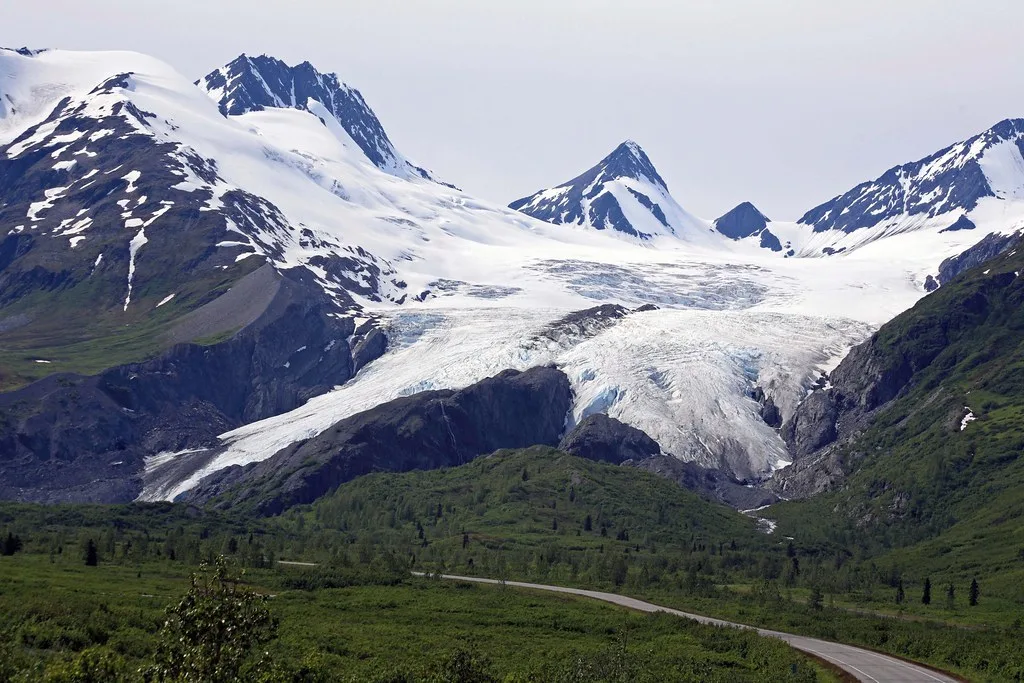
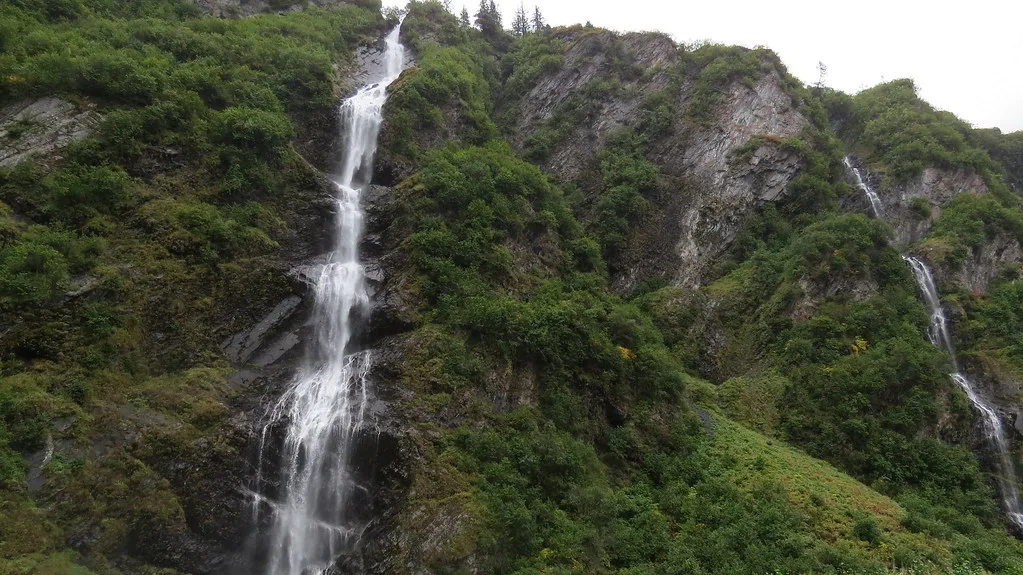
Back on land, we drove the Richardson Highway toward Thompson Pass, stopping first at Keystone Canyon. The road threads through a narrow gorge where Bridal Veil Falls and Horsetail Falls pour hundreds of feet down sheer rock walls directly beside the pavement. You can pull over and stand close enough to feel the mist on your face. The falls are not tucked away at the end of a long hike; they simply appear along the road, as though the landscape couldn't contain itself and had to show you something magnificent before you'd even properly arrived. Farther up, Worthington Glacier sits right at the road — a drive-up glacier, if you can imagine such a thing. A short trail leads to a viewing platform where you stand face-to-face with blue ice. Thompson Pass itself receives some of the heaviest snowfall in Alaska, and even in summer the surrounding peaks hold deep snowfields that feed countless waterfalls.
Sea kayaking in Prince William Sound may be the finest paddling in Alaska. The water was glassy calm the afternoon I went out, and our small group wove between rocky islands where puffins nested and sea otters floated on their backs, cracking shellfish on their bellies. The guide pointed out a humpback whale spouting in the middle distance. The silence between paddle strokes was the kind of silence you feel in your chest — not empty but full, the way a held breath is full. I understood, out there on the water, why people come to Valdez and never leave.
Solomon Gulch Fish Hatchery sits just outside town, and in late summer the salmon return in numbers that border on the unbelievable. Pink and silver salmon choke the stream, and you can watch them fighting their way upstream to spawn — that ancient, desperate, beautiful journey that ends where it began. Bears know this, of course, and sometimes appear along the creek. The hatchery is free to visit, and I finally saw, watching those fish battle the current, why people speak of the salmon run with such reverence.
The pros: scenery that genuinely defies description — mountains, glaciers, waterfalls, and Prince William Sound all in one port. The earthquake and pipeline history give Valdez a depth that pure scenery-ports sometimes lack. Columbia Glacier is an experience that stays with you long after the ice disappears from view. Fewer crowds than major Alaska ports. Keystone Canyon and Worthington Glacier are easy, drive-up attractions that don't require fitness or gear.
The cons: Valdez is a small town with limited dining and shopping options. The best excursions (Columbia Glacier boat tour, Worthington Glacier drive) require transportation and advance booking. Weather in Prince William Sound can be unpredictable — fog and rain may obscure the mountain views that make this port special. The pipeline terminal is visible but not open to public tours for security reasons.
Practical tips: Book the Columbia Glacier boat tour well in advance — it's the signature experience and sells out quickly ($120-200, 5-7 hours). Rent a car to drive to Keystone Canyon and Worthington Glacier independently ($90-130/day). Dress in warm, waterproof layers; Prince William Sound weather changes fast. Bring binoculars for wildlife spotting on the water. Visit the Valdez Museum early to understand the town's remarkable history before exploring. If time allows, the sea kayaking excursion is extraordinary.
Looking back, Valdez taught me something about resilience and scale. Here is a town that was destroyed and rebuilt itself. Here is a pipeline that carries oil 800 miles across some of the most forbidding terrain on earth. Here is a glacier that has been calving ice since before humans walked this continent. And here are mountains so steep they seem to lean over you, whispering that your plans and worries are very temporary things. I came to Valdez expecting scenery. I left with a deeper sense of what it means to live alongside forces far greater than yourself — and to find beauty, rather than fear, in that arrangement.
Valdez receives far fewer cruise ships than the major Inside Passage ports. Mid-sized vessels from Princess Cruises and some Holland America ships call here, along with smaller expedition lines that specialize in Prince William Sound itineraries. The town's remote location at the head of a long fjord — accessible only by the Richardson Highway, ferry, or sea — means it attracts travelers specifically seeking off-the-beaten-path Alaska rather than mainstream cruise tourism.
Depending on the vessel, ships either dock at the container terminal or anchor in Port Valdez and tender passengers to the small boat harbor. The harbor area is within walking distance of downtown Valdez, the museum, restaurants, and shops. The town is compact and flat, making it easy to explore on foot once ashore. A visitor information center near the harbor provides maps, excursion information, and local recommendations.
Ships typically stay 8-10 hours in Valdez, which allows time for a major excursion (Columbia Glacier boat tour or Worthington Glacier/Keystone Canyon drive) plus downtown exploration. The small size of the town means you won't spend time in lines or fighting crowds. Facilities are more limited than at larger ports — plan accordingly for dining and shopping.
Valdez is a small, flat town that is easily walkable in the downtown core. However, the most compelling attractions are outside town, so transportation planning is important for getting the most from your port day.
Accessibility Note: Downtown sidewalks are paved and manageable. The Valdez Museum is wheelchair accessible. Worthington Glacier has a paved viewing platform. Some trails and the hatchery creek area may present challenges for mobility devices. Contact the visitor center for specific accessibility details.
Valdez excursions center on glaciers, dramatic scenery, and Prince William Sound wildlife. The town's remote location means fewer tour operators than major ports — book ahead, especially for the Columbia Glacier boat tour, which is the signature experience.
The signature Valdez experience ($120-200, 5-7 hours) takes you by boat through Prince William Sound to the face of Columbia Glacier — one of the fastest-moving tidewater glaciers in Alaska. Watch massive icebergs calve from a three-mile-wide ice face while drifting among blue icebergs. Wildlife sightings commonly include harbor seals, sea otters, puffins, and whales. This is a full-day commitment but worth every hour. Dress warmly — it's colder on the water near the glacier.
A scenic drive along the Richardson Highway ($80-150 guided tour, 3-4 hours; or rent a car) takes you through Keystone Canyon, where Bridal Veil Falls and Horsetail Falls cascade hundreds of feet down sheer canyon walls directly beside the road. Continue to Worthington Glacier State Recreation Site, where a short paved trail leads to a viewing platform face-to-face with blue glacial ice. Thompson Pass, between the two attractions, receives some of the heaviest snowfall in Alaska and offers sweeping mountain panoramas.
Guided kayaking excursions through sheltered waters ($100-175, 3-5 hours) explore the protected waters of Prince William Sound. Paddle among rocky islands, watch for sea otters, puffins, seals, and whales in one of the most pristine marine environments in North America. Calm, sheltered waters make this suitable for beginners. Guides provide all equipment and instruction. An extraordinary way to experience the sound at water level.
Self-guided or guided walking tours ($10-25, 1-2 hours) explore downtown Valdez and the excellent Valdez Museum, which chronicles the 1964 earthquake, the Trans-Alaska Pipeline, Gold Rush history, and Native Ahtna heritage. The museum's earthquake exhibit — with photographs, survivor accounts, and a scale model of Old Valdez — is deeply moving. A good first stop to understand the town's remarkable story before exploring further.
A short drive or walk (free admission) to the hatchery lets you watch pink and silver salmon return upstream in late summer (July-September). The spectacle of thousands of salmon fighting their way through the creek is mesmerizing. Bears occasionally appear along the stream to fish. An easy, no-cost addition to any port day — especially rewarding in August when runs peak.
Scenic flights ($200-375 per person, 1-1.5 hours) offer aerial views of the Chugach Mountains, Columbia Glacier, Prince William Sound, and the vast ice fields that feed the region's glaciers. Some tours include glacier landings. The perspective from above reveals the true scale of this landscape in ways impossible from sea level.
Valdez has fewer tour operators than major ports, so popular excursions — especially the Columbia Glacier boat tour — sell out quickly. Book through your cruise line for guaranteed return to ship, or contact local operators directly for potentially lower prices (accepting the risk of delayed return). For independent exploration, a rental car ($90-130/day) provides the most flexibility to see Keystone Canyon and Worthington Glacier on your own schedule.
Everything you need to know before stepping ashore.
Valdez sits at the head of a deep fjord surrounded by mountains that create their own weather. Prince William Sound is wetter and cooler than many expect. Summer temperatures range 50-65°F (10-18°C), with frequent rain and occasional fog. Thompson Pass funnels storms into town. Be prepared for rapid weather changes.
Pro Tip: If you can only do one excursion, make it the Columbia Glacier boat tour. Book early — it fills up fast. If time and budget allow, drive the Richardson Highway to Keystone Canyon and Worthington Glacier as a second outing. The two experiences together capture everything that makes Valdez extraordinary.
Last reviewed: February 2026
Images sourced from Flickr under Creative Commons licenses (CC BY 2.0, CC BY-SA 2.0).
Valdez is the southern terminus of the 800-mile Trans-Alaska Pipeline from Prudhoe Bay. It's called "Alaska's Little Switzerland" for its dramatic Chugach Mountain scenery. The town offers access to Columbia Glacier (one of the fastest-moving tidewater glaciers in Alaska), Keystone Canyon waterfalls, exceptional sea kayaking in Prince William Sound, and a powerful history including the 1964 Good Friday Earthquake that forced the relocation of the entire town.
Yes — Valdez offers a unique combination of industrial history and raw natural beauty found nowhere else on Alaska cruise itineraries. The Columbia Glacier boat tour is an unforgettable experience, the Keystone Canyon waterfalls are stunning, and the earthquake/pipeline history adds depth that pure scenery ports sometimes lack. With about 3,800 residents, it's an authentic small-town Alaska experience without crowds.
Yes — downtown Valdez is compact and walkable from the harbor area, about 0.5 miles on flat ground. The Valdez Museum, restaurants, and shops are all within easy walking distance. However, the major attractions — Keystone Canyon, Worthington Glacier, and the Columbia Glacier boat tour departure — require transportation.
The 1964 Good Friday Earthquake (magnitude 9.2) — the most powerful ever recorded in North America — devastated Old Valdez. A massive underwater landslide triggered a local tsunami that destroyed the waterfront, killing 32 people. The entire town was subsequently relocated four miles to its current, more geologically stable site. The Valdez Museum has an excellent exhibit chronicling this history.
Start with the Valdez Museum to understand the town's remarkable earthquake and pipeline history. Walk through downtown, then drive (or take a shuttle) to Keystone Canyon to see Bridal Veil Falls and Horsetail Falls — it's only 15 miles and stunning. If time allows, stop at Solomon Gulch Fish Hatchery (free) on your way back. Save the full-day Columbia Glacier boat tour for longer port stays.
Peak cruise season offers the most reliable weather and best conditions for sightseeing. Check the seasonal panel above for specific month recommendations based on your planned activities.
Like most destinations, weather conditions vary by season. Check the Weather Hazards section above for specific concerns and the months recommended to visit. Cruise lines monitor conditions and will adjust itineraries if needed for passenger safety.
Essentials include waterproof layers, warm fleece, comfortable walking shoes, and binoculars. Check the Packing Tips section in the seasonal panel above for destination-specific recommendations.
Brief showers are common in many destinations but rarely last long enough to significantly impact your day. Have a backup plan for indoor attractions, and remember that many activities continue in light rain. Check the weather forecast before your visit.
Weather patterns vary by region and season. Check the weather hazards section above for specific storm season concerns and timing. Cruise lines closely monitor weather conditions and will adjust itineraries if needed for passenger safety. Travel insurance is recommended for cruises during peak storm season months.