


Valletta: My Fortress of Knights
Captain's Logbook: Valletta
I stepped off the gangway into the smallest capital in the European Union — just 6,000 souls living inside a UNESCO World Heritage Site that's been protected since 1980. They call Valletta an "open-air museum," and after wandering through 320 monuments compressed into just 0.55 square kilometers of golden limestone peninsula, I understand why. Every corner holds another chapel, palazzo, or auberge built by knights who knew they were building something eternal. In 2018, when Valletta served as European Capital of Culture, the world finally started to pay attention to what the Maltese have known for centuries: this is one of the most densely historical places on earth.
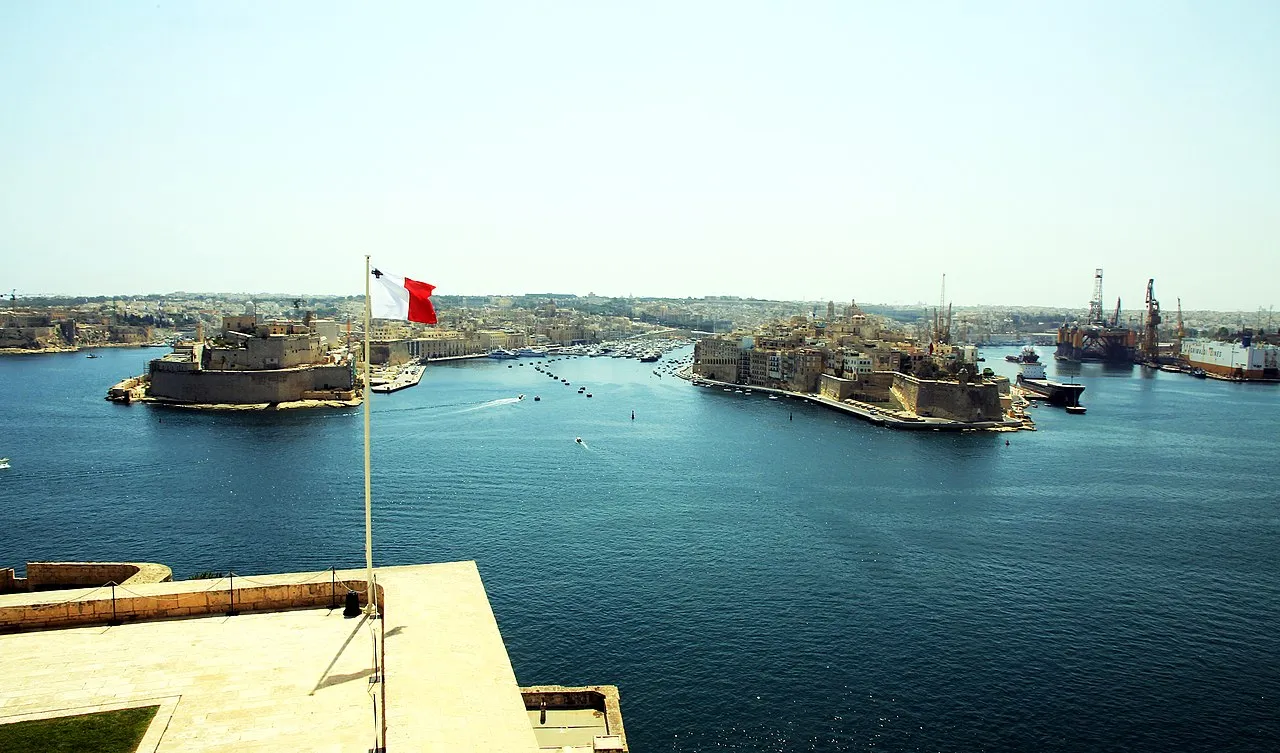
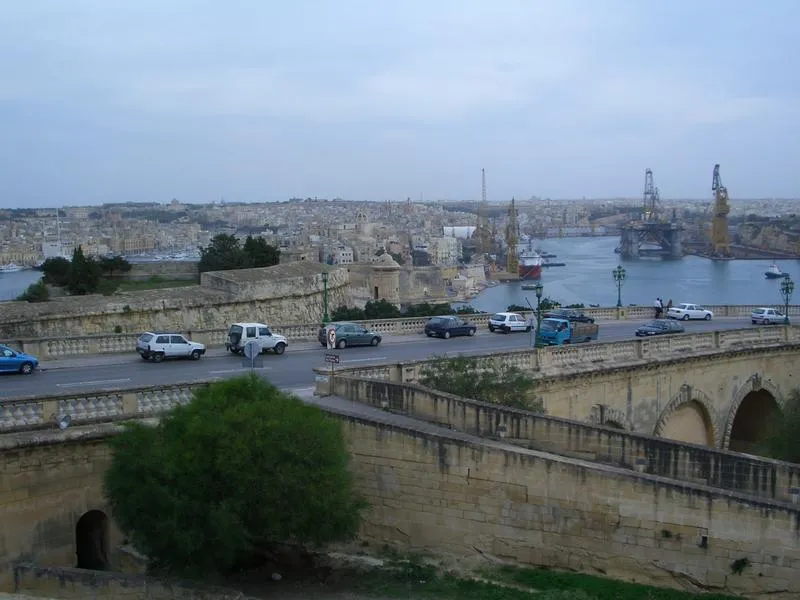
The city itself was born from siege. After the Knights of St. John barely survived the Great Siege of 1565 — when Ottoman forces nearly took Malta — Grand Master Jean de Valette decided Malta needed a fortress that could never fall. On March 28, 1566, he personally laid the foundation stone of a new city that would bear his name. Pope Pius V sent his finest architect, Francesco Laparelli, who designed a perfectly rational grid plan enclosed within an Italian bastioned system so formidable that it still dominates the harbour today. Tragically, Grand Master Jean de Valette never saw his city completed — he died on August 21, 1568, at the age of 74, with construction still underway. But by 1571, the city was finished, and what emerged was more than a capital — it was a vast network of fortifications stretching 25 kilometers around Grand Harbour, transforming the natural harbour into an impregnable fortress with Valletta as its beating heart. Today, cruise ships dock at one of seven berths across three terminals, all sheltered by walls that have stood for four and a half centuries.
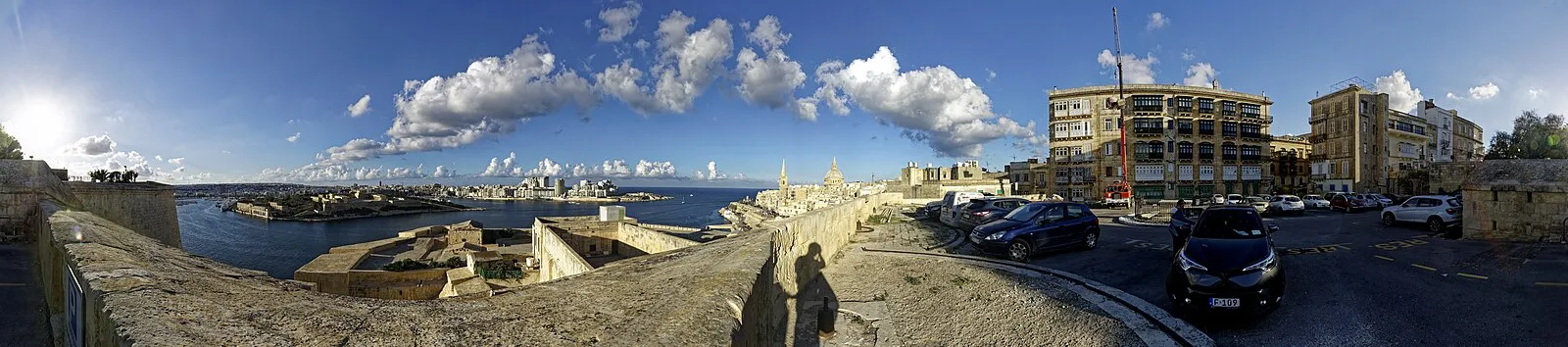
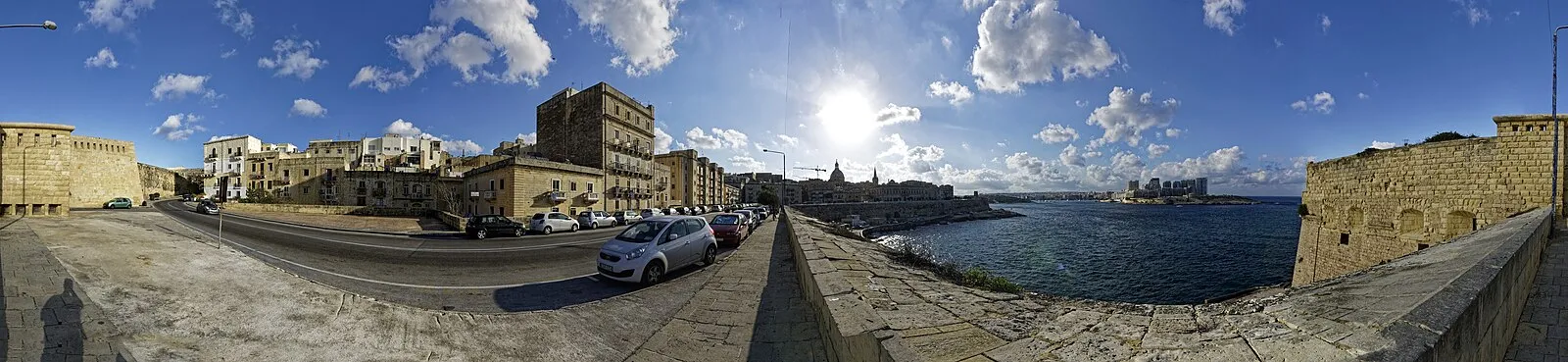
We walked off the ship and took the lift straight up to Upper Barrakka Gardens — you can also climb the monumental stairs if you're feeling ambitious — and arrived just in time for the noon gun salute. The Saluting Battery has fired that cannon at midday since the 16th century, and standing there as the boom echoed across Grand Harbour, I felt the weight of all that history. The view from the gardens is breathtaking: the whole harbour spread below, the Three Cities across the water, and the fortifications marching along the coastline like something out of a medieval dream.
Later, we visited St. John's Co-Cathedral, which looks deceptively plain from the outside — just another fortress-like limestone facade. But step through those doors and you're hit with pure Baroque splendor: gilded walls, painted ceilings, and a floor made entirely of marble tombstones inlaid with the coats of arms of the knights buried beneath. You literally walk on their graves. I stood before Caravaggio's masterpiece for a long time — "The Beheading of Saint John the Baptist," the only painting he ever signed, and he signed it in the blood flowing from John's neck. The oratory was dim, almost reverently so, and I could hear my own breathing in the silence. I looked down at the polished tombstones beneath my feet, at the heraldic shields of men who had crossed the Mediterranean knowing they might never return, who had survived a siege that should have killed them all and then poured their remaining years into building something beautiful enough to honor the sacrifice. Something shifted inside me. I felt my eyes fill with tears — not from sadness, but from the weight of standing in a place where devotion had been made tangible, pressed into stone and gold leaf and pigment. When I finally walked back out through those doors and the Maltese sun hit my face, the brightness felt almost violent after that sacred darkness.
In the afternoon, we took a boat to Blue Lagoon on the tiny island of Comino. The water was so impossibly clear and turquoise that it looked artificial — you could count the pebbles on the bottom from ten meters away. We swam until our fingers pruned, then dried off on the warm rocks while the boat rocked gently in the cove below. On the ride back I watched Valletta's skyline grow against the horizon, its dome and spires sharpening until they looked etched in amber against the late-afternoon sky.
Back in Valletta for our last hours, we found a tiny café on Strait Street — once the notorious "Gut" where sailors drank and brawled for centuries — and ordered pastizzi, those flaky diamond-shaped pastries filled with ricotta or mushy peas, still warm from the oven. We washed them down with Kinnie, Malta's bitter-orange herbal soda that tastes like nothing else on earth. The café owner, noticing our ship lanyards, pulled out an old photograph of Grand Harbour packed with Royal Navy vessels during the war. "My grandfather worked the docks," he said quietly. "Every family here has a war story."
I walked back to the ship as the setting sun painted the limestone walls in shades of amber and honey, and I finally understood what makes Valletta different from every other port we'd visited. It isn't a museum you walk through — it's a city that has been fighting to exist since the day its first stone was laid. Every fortification, every chapel, every carved balcony is an act of defiance against the forces that tried to take this island. And yet for all its martial history, what stays with me isn't the cannons or the battlements. It's the Caravaggio in the half-light. The pastizzi still warm in my hands. The café owner's quiet pride. That's what Valletta taught me — that the places worth remembering aren't the ones that shout about their significance. They're the ones that simply endure, and trust you to notice.
Weather & Best Time to Visit
The Cruise Port
Ships dock at Valletta Waterfront, a beautifully restored row of Baroque warehouses lining Grand Harbour. The terminal building has air-conditioned waiting areas, a tourism information desk, restrooms, and a handful of shops and cafés. From the waterfront, you have two options for reaching the city above: climb the monumental stone staircase (about 200 steps — a workout in the Maltese heat) or take the Barrakka Lift (€1 each way, wheelchair accessible), which whisks you up sixty-plus meters to Upper Barrakka Gardens in under a minute. Most cruise lines offer shuttle buses for larger ships docked at the outer berths. The waterfront itself has several restaurants and a small craft market worth browsing if you arrive early or return with time to spare.
Getting Around Valletta
Valletta itself is just 600 meters from end to end — everything within the city walls is walkable, though the streets rise and fall steeply. Wear sturdy shoes; the limestone pavements get slippery when wet. For exploring beyond the capital, Malta's public bus system (operated by Malta Public Transport) is inexpensive and reaches every corner of the island. A single trip costs €1.50 in winter or €2.00 in summer, and a day pass runs €3.00 — among the cheapest in Europe. The main bus terminus sits just outside City Gate, a five-minute walk from the Barrakka Lift.
Taxis are readily available at the waterfront and City Gate. A metered ride from Valletta to Mdina costs around €20–25, or you can use the Bolt app for slightly cheaper fares. For the Three Cities — Vittoriosa, Senglea, and Cospicua — take a traditional dgħajsa water taxi across the harbour (€2 each way, about five minutes, runs frequently from the waterfront). It's the most scenic crossing you'll make all trip.
Ship excursion buses and private tour operators also line the waterfront. Wheelchair users should note that while the Barrakka Lift is fully accessible, many of Valletta's historic streets have steps and uneven surfaces. The main thoroughfare, Republic Street, is the most level route through the city.
Valletta Area Map
Interactive map showing cruise terminal and Valletta attractions. Click any marker for details.
Shore Excursions & Self-Guided Adventures
St. John's Co-Cathedral — The crown jewel of Valletta and, in my opinion, the single essential attraction in all of Malta. The austere limestone exterior gives no hint of the Baroque explosion inside: gilded walls, a painted barrel-vault ceiling by Mattia Preti, and a marble floor of inlaid knight tombstones. Caravaggio's "Beheading of Saint John the Baptist" hangs in the oratory. Admission is €15 (audio guide included). Book ahead online — the cathedral limits visitor numbers, and ship excursion groups fill morning time blocks quickly.
Upper Barrakka Gardens & Saluting Battery — Free entry to the gardens, which offer the definitive Grand Harbour panorama. The Saluting Battery fires its noon cannon daily (except Sundays); arrive by 11:45 to secure a spot along the railing. A small donation gets you into the battery itself.
Mdina & Rabat — Malta's ancient capital, perched on a hill in the island's center. The walled "Silent City" has a permanent population of about 300 and bans most vehicles. Wander the honey-colored alleys, visit St. Paul's Cathedral (€5), and stop at Fontanella Tea Garden on the bastions for cake with a view. Ship excursion buses reach Mdina in about 25 minutes; independent visitors can take bus 51 or 52 from Valletta terminus (€2).
The Three Cities — Vittoriosa (Birgu), Senglea (Isla), and Cospicua (Bormla) face Valletta across the harbour. Take the dgħajsa water taxi over and explore Fort St. Angelo (€8), the Inquisitor's Palace, and the Maritime Museum. These towns see far fewer tourists than Valletta and feel genuinely lived-in. Easily done independently.
Marsaxlokk Fishing Village — A colorful Sunday fish market fills this southeastern harbour town with luzzu boats painted in traditional Osiris eyes. Try the lampuki (dolphinfish) when it's in season. Bus 81 from Valletta takes about 35 minutes.
Blue Lagoon (Comino) — Crystal-clear swimming off the tiny island between Malta and Gozo. Ferry operators depart from Ċirkewwa (north Malta, about 50 minutes from Valletta by bus). A round-trip ferry runs €10–15. The lagoon gets crowded by midday — go early or book a private boat. This one is best as a ship excursion if your time is limited, since the guaranteed return to port matters when you're chasing a sailing deadline.
Accessibility note: St. John's Co-Cathedral has step-free access via a side entrance; ask staff on arrival. Upper Barrakka Gardens and the Barrakka Lift are wheelchair accessible. Mdina's streets are mostly flat within the walls but cobblestoned. The Three Cities and Marsaxlokk have limited accessibility. Book ahead for any attraction you can't afford to miss — especially the cathedral and Blue Lagoon ferries.
Depth Soundings Ashore
Currency: Euro (EUR). ATMs are plentiful around Republic Street and the waterfront. Credit cards accepted nearly everywhere, though small cafés and market vendors may prefer cash.
Language: Maltese and English are both official languages. Nearly everyone in tourist areas speaks fluent English — you won't struggle to communicate.
Tipping: Not obligatory but appreciated. Rounding up or leaving 5–10% at restaurants is customary. Taxi drivers don't expect tips.
Sun & Heat: Malta bakes in summer — temperatures regularly hit 35°C (95°F) from June through September. Carry water, wear sunscreen, and plan indoor attractions (museums, cathedral) for the midday hours. Shade is scarce on the bastions.
Safety: Malta is exceptionally safe for tourists. Petty theft exists in crowded areas but violent crime is rare. Exercise normal precautions with valuables.
Connectivity: Free public WiFi is available at the Valletta Waterfront terminal and several cafés along Republic Street. EU roaming rules apply for European visitors.
Accessibility: The Barrakka Lift is wheelchair accessible. Republic Street is the most navigable route through the city. Many historic buildings have steps; ask locally about alternative entrances.
Photo Gallery
Frequently Asked Questions
Q: Where do cruise ships dock in Valletta?
A: Ships dock at Valletta Waterfront in Grand Harbour, directly below the fortified city walls. The Barrakka Lift (€1) takes you up to Upper Barrakka Gardens, or you can climb the monumental staircase.
Q: Can I walk from the port into Valletta?
A: Yes — Valletta is tiny (600 meters end to end) and entirely walkable from the cruise terminal via the lift or stairs. No shuttle needed for exploring the capital itself.
Q: Is Valletta worth a full port day?
A: Easily. Between St. John's Co-Cathedral, Upper Barrakka Gardens, the Three Cities by water taxi, and lunch on the waterfront, a full port day fills comfortably. Add Mdina or Blue Lagoon if you want to venture beyond.
Q: What's the best time of year to visit Valletta?
A: Spring (April–May) and autumn (September–October) offer warm weather without summer's intense heat. Peak cruise season runs May through October.
Q: Do I need to book St. John's Co-Cathedral in advance?
A: Strongly recommended. The cathedral limits visitor numbers and ship excursion groups claim many morning visits. Book online at the official site to guarantee entry.
Q: Is Valletta accessible for wheelchair users?
A: The Barrakka Lift and Republic Street are accessible, but many side streets have steps and cobblestones. St. John's Co-Cathedral has step-free access via a side entrance on request.
Q: When is hurricane and storm season in Valletta?
A: Valletta sits at ~36°N in the central Mediterranean — outside the tropical-cyclone tracks. The relevant heavy-weather pattern is Mediterranean autumn storms (Oct-Nov) which bring brief intense rain, and the dusty sirocco wind from North Africa which can spike temperatures and air quality during late summer/early autumn. Cruise season largely avoids the worst weather. Winter (Dec-Feb) is mild but rainier. The live weather widget in the seasonal panel above is the primary source for current conditions on a specific sailing date.
Q: What should I pack for Valletta's weather?
A: Lightweight clothing for the Maltese summer heat (June-September can hit 32°C+ with intense Mediterranean sun). A hat and high-SPF sunscreen — the limestone city reflects glare. Comfortable walking shoes for the staircase city's steep streets and the climb from the cruise terminal to Upper Barrakka. Modest clothing required for St. John's Co-Cathedral (shoulders and knees covered). A light layer for evenings and the Three Cities ferry breeze.
Q: Will rain ruin my Valletta port day?
A: Maltese rain is concentrated in Oct-Mar and tends to arrive as fast bursts rather than sustained storms. St. John's Co-Cathedral, the Grand Master's Palace State Rooms, the National Archaeology Museum (Mdina excursion), Casa Rocca Piccola, and the Lascaris War Rooms are all substantially indoor refuges. Boat trips and Three Cities ferry runs can suspend on high winds even in cruise season. The live weather widget in the seasonal panel above is the primary source for short-term forecasts on a specific sailing date.
Last reviewed: February 2026
Image Credits
- valletta-1.webp: WikiMedia Commons (CC BY-SA)
- valletta-2.webp: WikiMedia Commons (CC BY-SA)
- valletta-3.webp: WikiMedia Commons (CC BY-SA)
- valletta-4.webp: WikiMedia Commons (CC BY-SA)
- valletta-5.webp: WikiMedia Commons (CC BY-SA)
- valletta-7.webp: WikiMedia Commons (CC BY-SA)
Images sourced from WikiMedia Commons under Creative Commons licenses.