Most port pages start with what to see. This one starts with what to carry, because Abidjan is the call on this voyage most likely to go wrong before you ever get near it. Côte d'Ivoire sits in the World Health Organization's any country column for yellow fever — proof required from everyone aged nine months and up, regardless of where you have travelled from. There is no origin-based exemption, and since July 2016 the certificate has been valid for life.
The visa question is messier and this page is not going to pretend otherwise. The UK Foreign Office states plainly that you need a visa. The Ivorian e-visa is issued only for arrival at Abidjan airport and requires a return flight booking, which makes it structurally useless to someone arriving by sea. Ships plainly do land passengers here. But that appears to rest on a collective shore-pass arrangement made by the ship's agent, and no Ivorian government source we could find documents a cruise exemption. Ask your line, by name, in writing.
Last reviewed: 30 July 2026
Weather & Best Time to Visit
Captain's Logbook
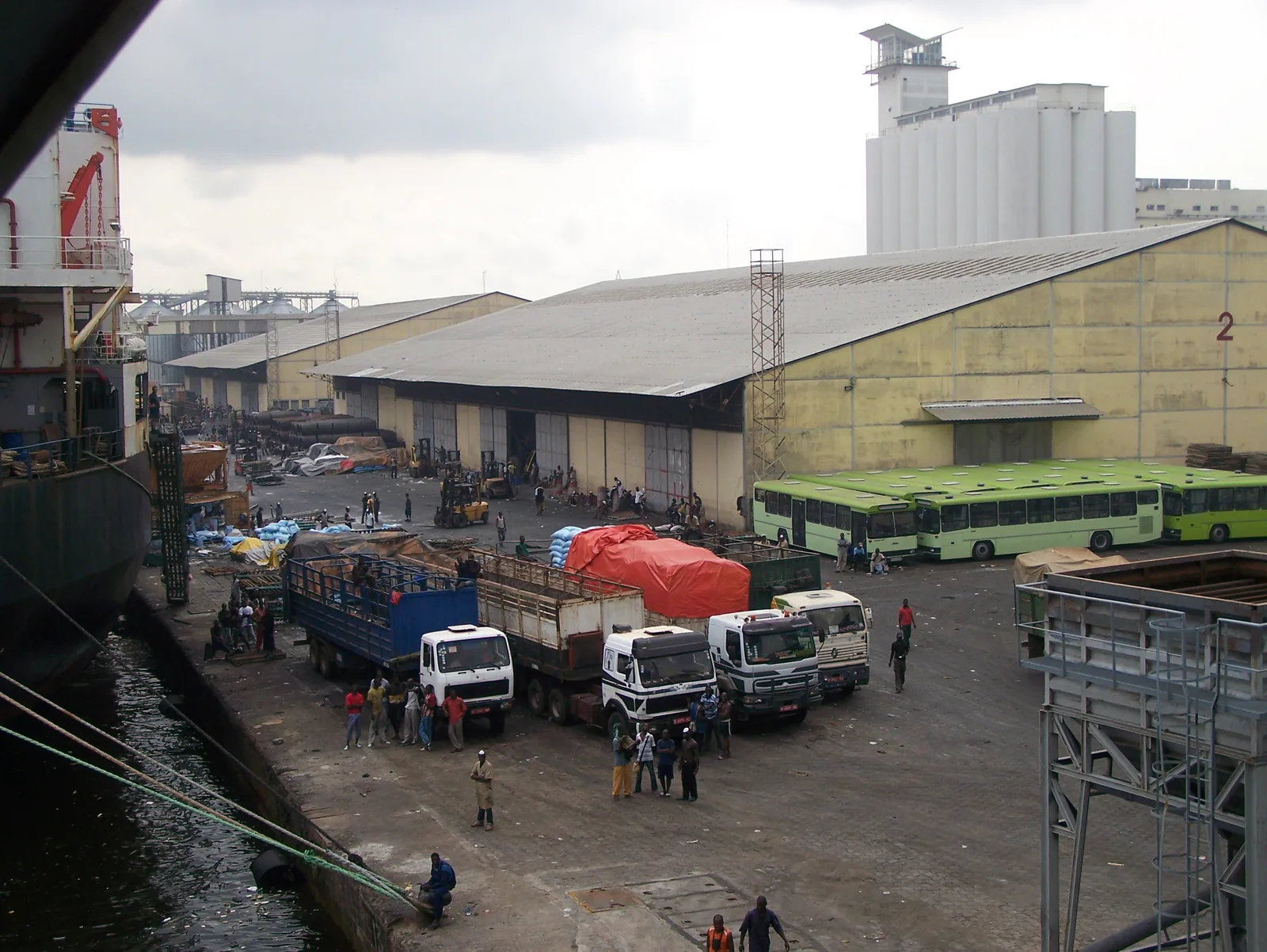
The working quay. There is no cruise terminal here — you berth at a cargo facility inside a closed customs enclosure, and the port's own regulation prohibits walking out of it. Photo: Romain Seaf, CC BY-SA 2.0 via Wikimedia Commons
An honest note before I begin: I have not stood on the quay at Abidjan. What follows is read from the record — from the Port Autonome d'Abidjan's own harbourmaster regulations, from the World Health Organization's International Health Regulations, from the US State Department's consular data and current UK Foreign Office advice, and from UNESCO. Soundings in another's wake, not my own footprints. When I sail here I will come back and log what I actually found.
This is the only page in this series where I would tell you to stop reading the interesting parts and go and check a document. Côte d'Ivoire requires proof of yellow fever vaccination from every traveller aged nine months and over, regardless of country of origin. It is in the World Health Organization's any country column, not the risk countries only column, so there is no route round it based on where you have been. Since 11 July 2016 the certificate is valid for life and nobody may demand a booster.
The practical shape of that: the line will check it when you embark in Fort Lauderdale in January, not at the gangway in Abidjan in May. A missing certificate is therefore a problem four months before the call, at the start of a 129-day voyage, which is a considerably worse problem than being turned back at a gate.
The visa question I cannot resolve for you, and I am not going to write a reassuring sentence to cover that. The UK Foreign Office states flatly that you must have a visa to enter Côte d'Ivoire. The Ivorian e-visa is issued only for arrival at Abidjan airport and requires you to hold a return flight booking — conditions a cruise passenger cannot meet. And yet ships plainly do land people here; several recent calls have. The explanation appears to be a collective shore-pass arrangement made by the ship's agent with the port. That is an arrangement between two companies, not a right you hold, and I could find no Ivorian government source documenting a cruise exemption. Put it to your line by name and get the answer in writing.
Now the port itself, which is unusual and worth understanding. You do not berth at a cruise terminal, because Abidjan does not have one — the port authority's own list enumerates nine terminals and not one is for passengers. You tie up at the grain terminal, on the north side of the basin, in the commune of Treichville. And the port's harbourmaster regulation says, in terms, that free public access to the roads, quays and hardstanding inside the customs enclosure is prohibited, and that a pass from the Port Commander is required for any person or any vehicle.
So there is no version of this day that begins with walking out and having a look. It begins with a vehicle someone arranged. I have come to think that is worth stating flatly rather than softening, because the difference between a port you can wander out of and a port you cannot is the difference between two entirely different kinds of day, and no amount of enthusiasm changes which one this is. It is not a worse day, but it is a planned one.
On safety, I want to give you the actual documents rather than an atmosphere. The US State Department has Côte d'Ivoire at Level 2, exercise increased caution, reissued 18 February 2026 — crime, terrorism, unrest, health, and piracy in nearby waters. It carries a Level 4, do not travel for the northern border region: the Savanes and Zanzan districts including Comoé National Park, where Sahel-based groups have attacked. The UK Foreign Office advises against all travel within 40 kilometres of the Burkina Faso and Mali borders. The figure of fifty kilometres that circulates online appears in neither.
None of that touches your day. The northern border is six hundred kilometres from the berth, and neither advisory restricts travel to Abidjan or to Grand-Bassam. What does touch your day is ordinary urban crime — the State Department names crowded markets specifically — and the honest advice is the same as it would be in any large city where you are conspicuous: small amounts of cash, nothing worth taking, a guide in the market, and not after dark.
The piracy line deserves a note because it frightens people wrongly. Piracy and kidnap for ransom in the Gulf of Guinea are a serious and real threat — to merchant shipping, to tankers, to crews of twenty on unlit decks. A sixty-thousand-tonne cruise ship with high freeboard, a full complement and a scheduled berth is not the target profile. It is in the advisory because the advisory covers everyone at sea, but that is not the same as it being about you.
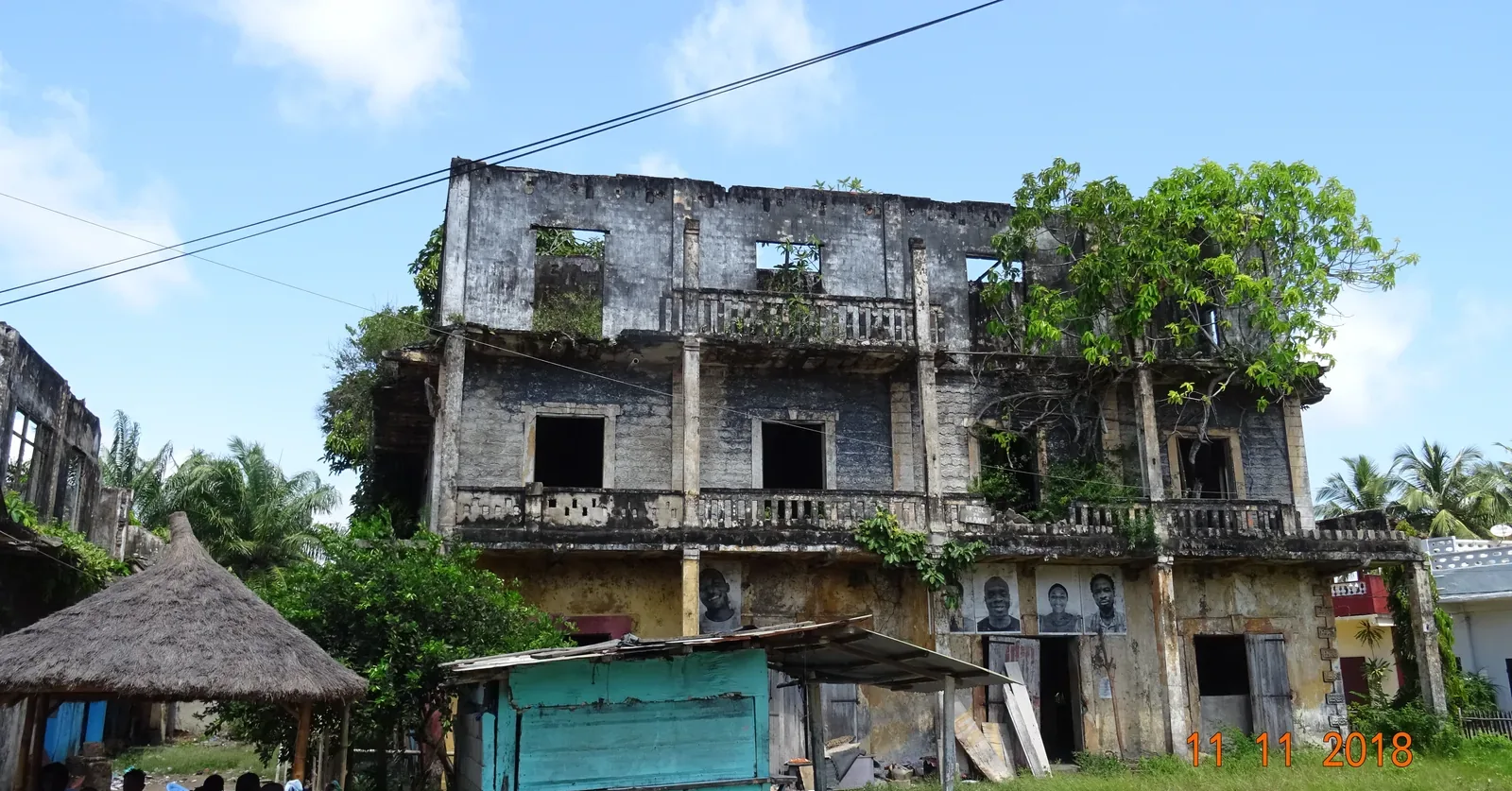
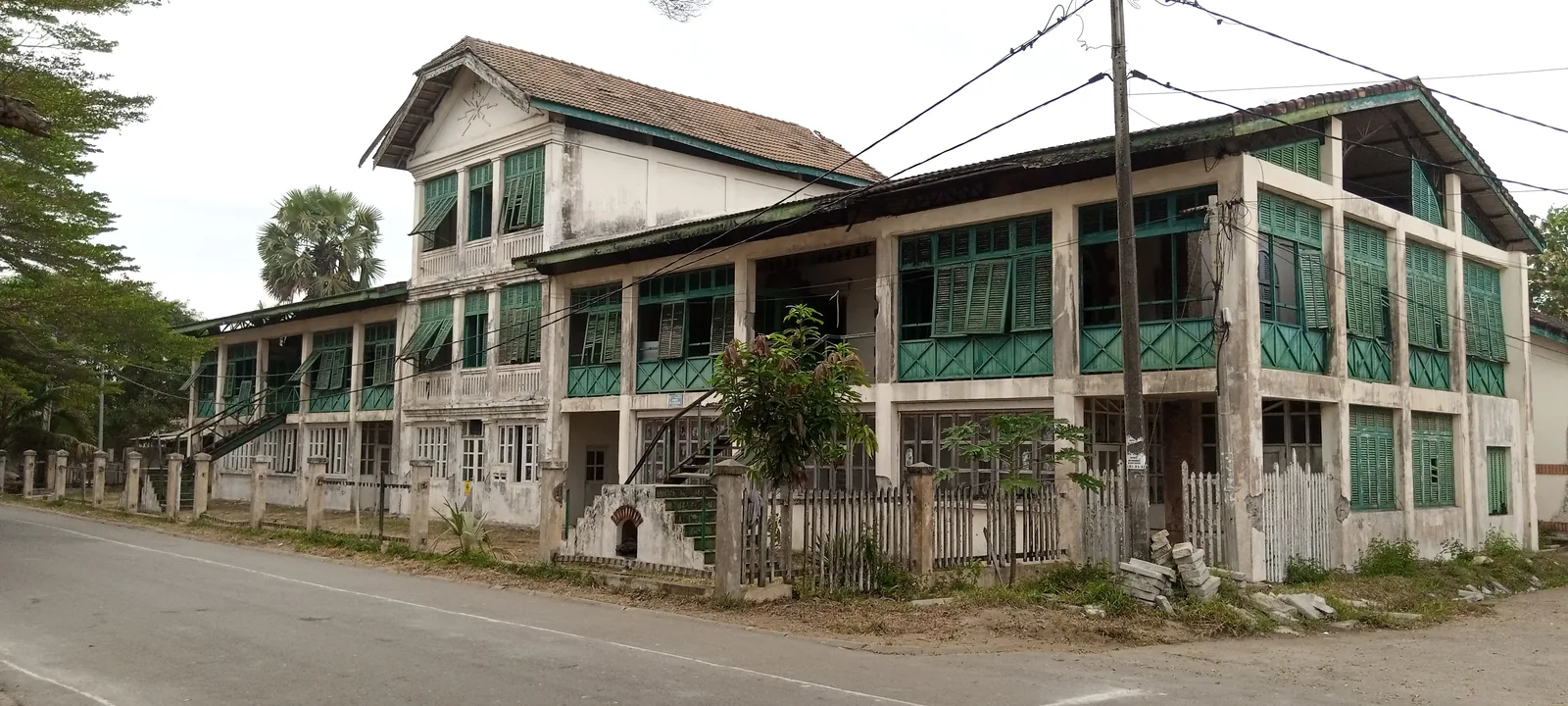
Which leaves the day. Go to Grand-Bassam. It is thirty-nine kilometres east, it was the first French colonial capital of Côte d'Ivoire from 1893, and it was abandoned as the capital in 1900 after a yellow fever epidemic in 1899 — which is a detail I keep turning over given what is stapled into your passport to get you here. UNESCO inscribed the Quartier France in 2012. What survives is a grid of colonial buildings in various stages of collapse and reuse, on a sandbar between the lagoon and the sea. I had to stop for a quiet moment over that arrangement of facts: the certificate in your passport is for the same disease that emptied the town you are going to see, and a hundred and twenty-seven years later it is the thing that lets you in. The people who cleared out of Grand-Bassam in 1899 had no such document available to them.
The Quartier France at Grand-Bassam — the first colonial capital, abandoned in 1900 after the yellow fever epidemic of 1899, and UNESCO-listed since 2012. Photo: WILLAV-FR, CC BY-SA 4.0 via Wikimedia Commons
There was an attack there in March 2016, on the beach, by an al-Qaeda-linked group; nineteen people were killed. Eleven life sentences were handed down in December 2022. There has been no repeat in a decade and neither the American nor the British advisory restricts travel to the town. I record all of that in one place because I think a visitor is owed the whole of it rather than either the silence or the headline, and because the people who run the guesthouses and the craft stalls there have spent ten years living with a sentence that gets written about them.
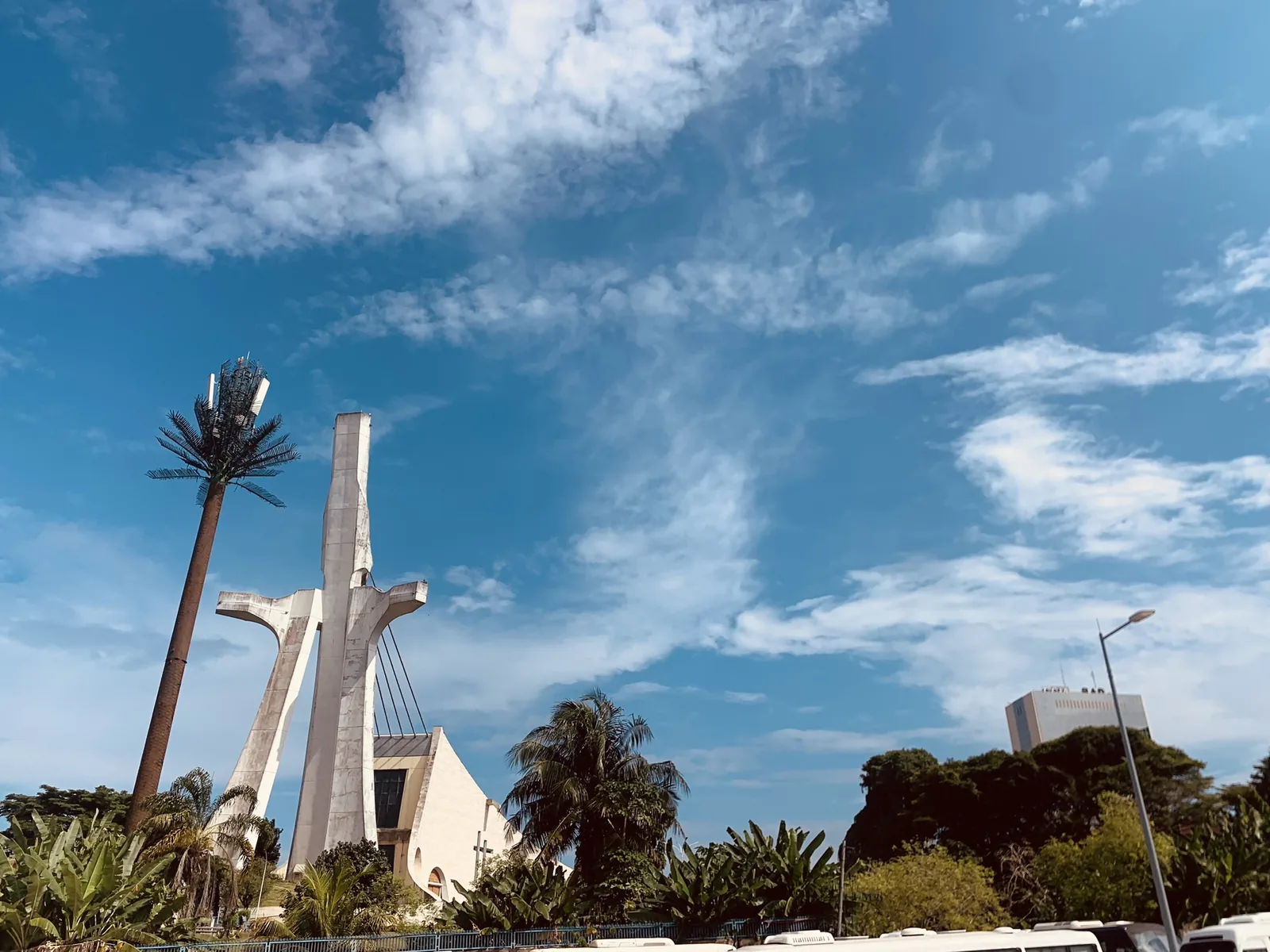
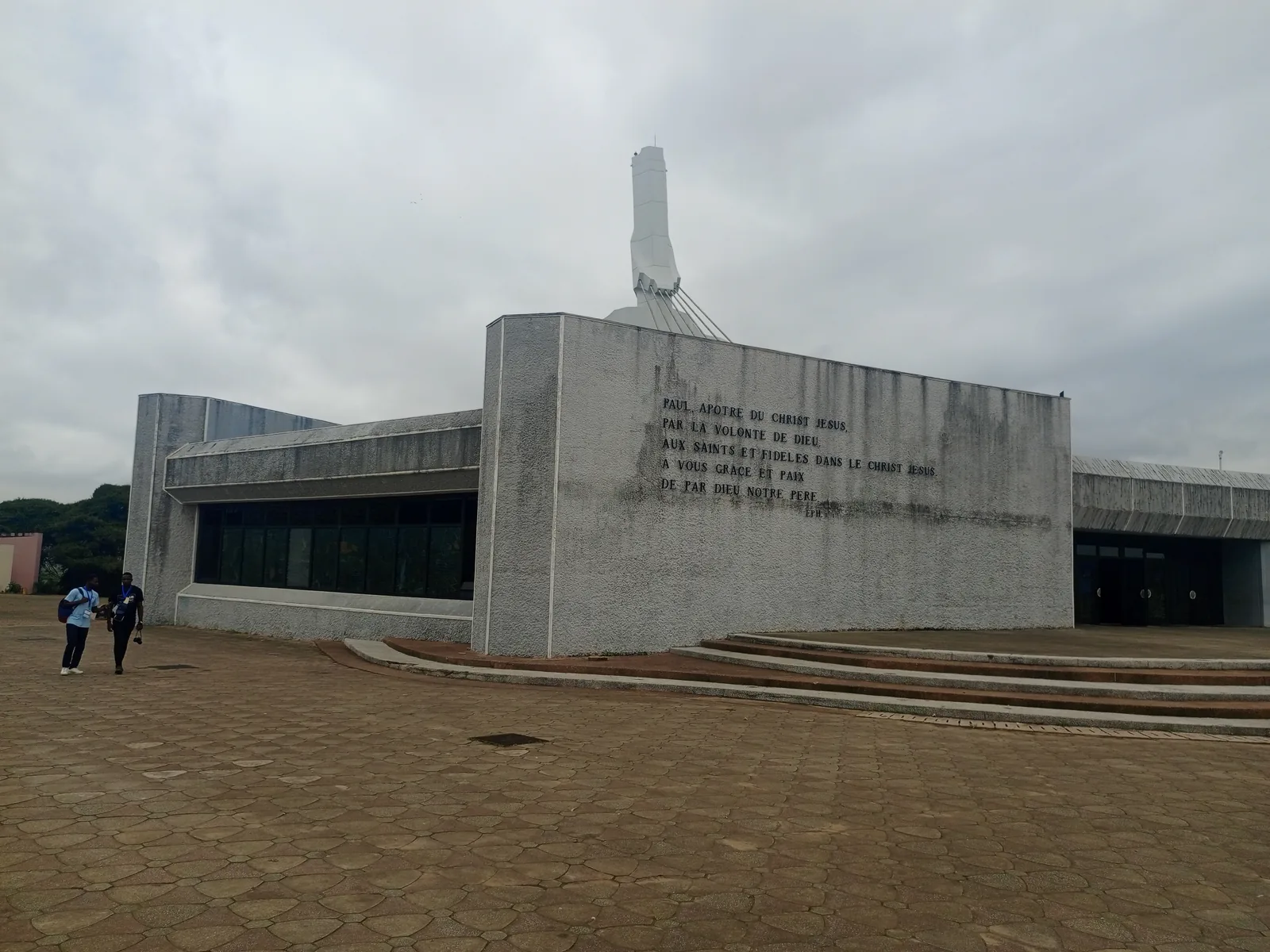
And in the city itself, the building I most want to see is St Paul's Cathedral in Plateau — Aldo Spirito's concrete cross, its foundation stone laid by John Paul II in May 1980 and the finished church dedicated by him in August 1985. Seven steel cables run from the cross down to the body of the building, so the whole structure appears to be leaning toward the lagoon, and inside there are three hundred and seventy square metres of stained glass that puts the arrival of missionaries in Côte d'Ivoire into the window alongside the biblical scenes.
St Paul's from the forecourt. The inscription reads PAUL, APÔTRE DU CHRIST JÉSUS — and the cathedral is the first stop on every documented cruise excursion here. Photo: Kod B, CC BY-SA 4.0 via Wikimedia Commons
What I realized, working through all of this, is that Abidjan asks a question the rest of the voyage does not. Most ports let you decide on the morning. This one decides months earlier, in a clinic and in an email to a reservations desk, and the passengers who have a good day here will be the ones who did the boring part in January. That is not a very romantic lesson and I suspect it is the most useful thing on this page.
Cruise Port Guide
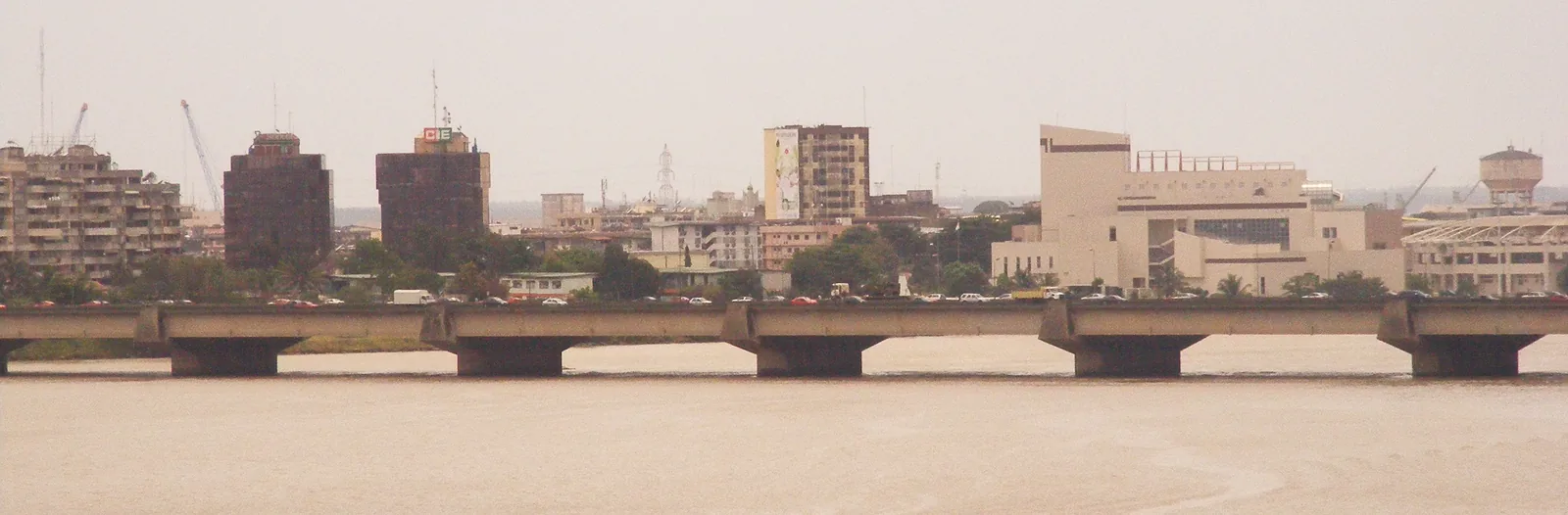
The lagoon crossing to Treichville, the commune the port sits in. Photographing bridges here is prohibited — this frame is somebody else's, taken lawfully. Photo: abdallahh, CC BY 2.0 via Wikimedia Commons
Ships berth alongside at the grain terminal on the north side of the port basin, in the commune of Treichville. There is no cruise terminal: the Port Autonome d'Abidjan's own list of facilities enumerates nine terminals, none of them for passengers. Expect a working cargo berth with whatever temporary arrangements the agent has made.
The approach is through the Vridi Canal — 300 m wide, 18 m deep, no lock, and no overhead obstruction. The harbourmaster's published limit is 15.5 m of draft with no length restriction, raised from 260 m and 11.5 m before the 2019 works. Holland America's Zuiderdam berthed here at 286 m in March 2023. There is no dimensional question at this port.
Passengers cannot walk out. The harbourmaster's regulation states that free access to the roads, quays and open ground inside the customs enclosure is prohibited to the public, and that any person or vehicle requires an access pass issued by the Port Commander. Plan every version of the day around arranged transport — a ship excursion, or a car and driver booked in advance through the ship.
Getting Around Abidjan
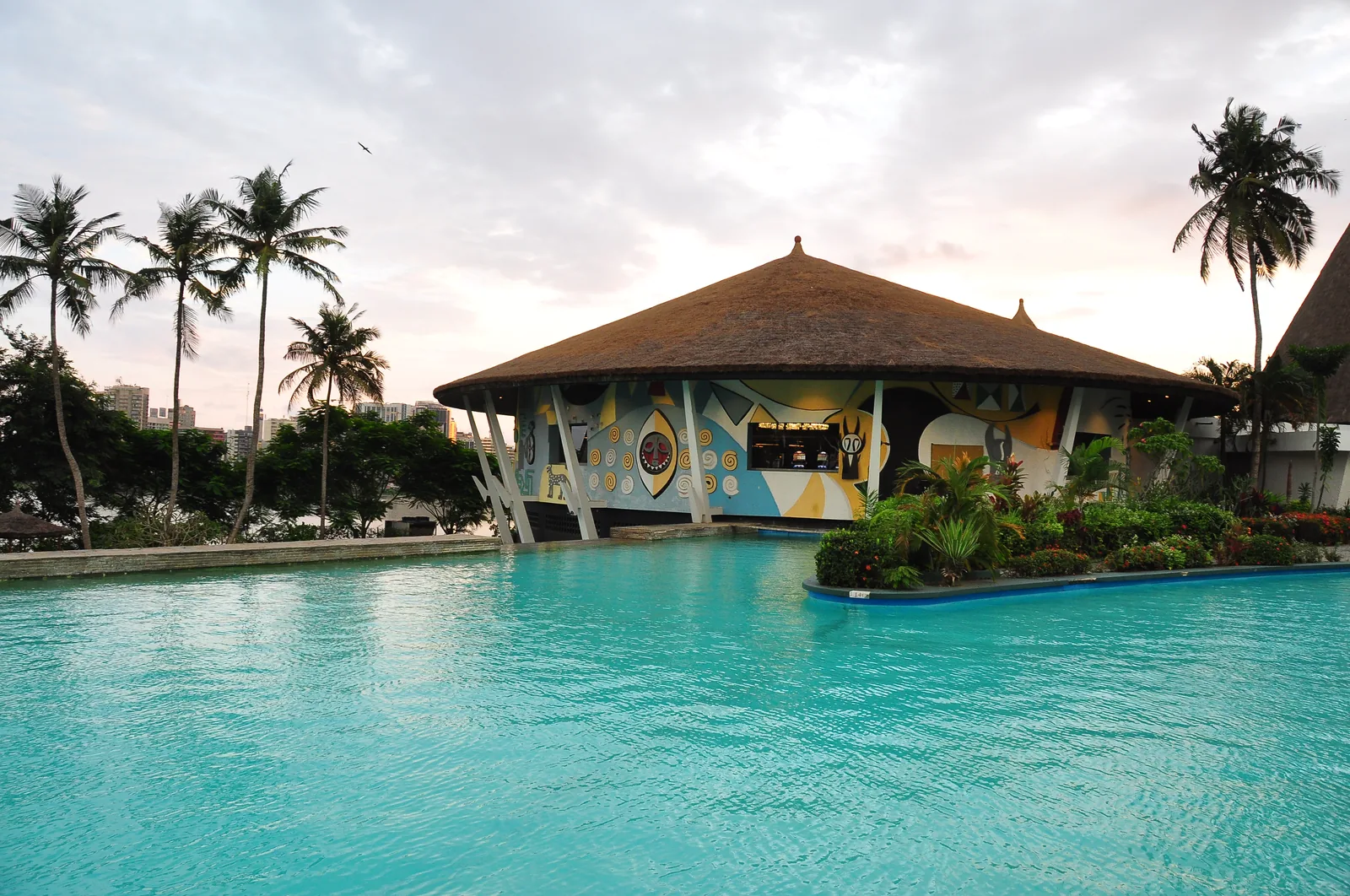
The Hôtel Ivoire grounds in Cocody. A drink here is a reasonable stop on a car tour — but the ice rink that guides still mention closed decades ago and is now a banquet hall. Photo: abdallahh from Montréal, Canada, CC BY 2.0 via Wikimedia Commons
There is no independent walk-off option here, so the choice is between a ship excursion and a pre-arranged private car and driver. Both work; the difference is that the ship waits for its own excursion and does not wait for your driver.
Taxis in Abidjan come in two kinds and the distinction is worth knowing: orange metered taxis work across the city, while woro-woro are shared, colour-coded by commune and cheaper. For a visitor arriving by ship, neither is the practical answer at the gate — you need transport that has already cleared the port's access requirements.
Language. French, and not much English outside hotels and the tourism trade. Carry the ship's name, the berth and your all-aboard time written down in French. If your driver or guide speaks English, that is a service worth paying for rather than an expectation.
What it costs. Transport is essentially the whole price of this day, because nothing is reachable on foot. A ship excursion to Grand-Bassam typically runs in the $80–150 range per person depending on length and whether lunch is included; a private car and driver arranged through the ship for the day is often similar for two people sharing and cheaper for four. Fuel, the driver's time and the port access clearance are what you are paying for. Beyond that the day is inexpensive: the cathedral costs nothing to enter, the museum charges a small fee, and a plate of attiéké and grilled fish in Grand-Bassam is a few thousand CFA — a couple of dollars.
Abidjan Port Map
Excursions & Experiences
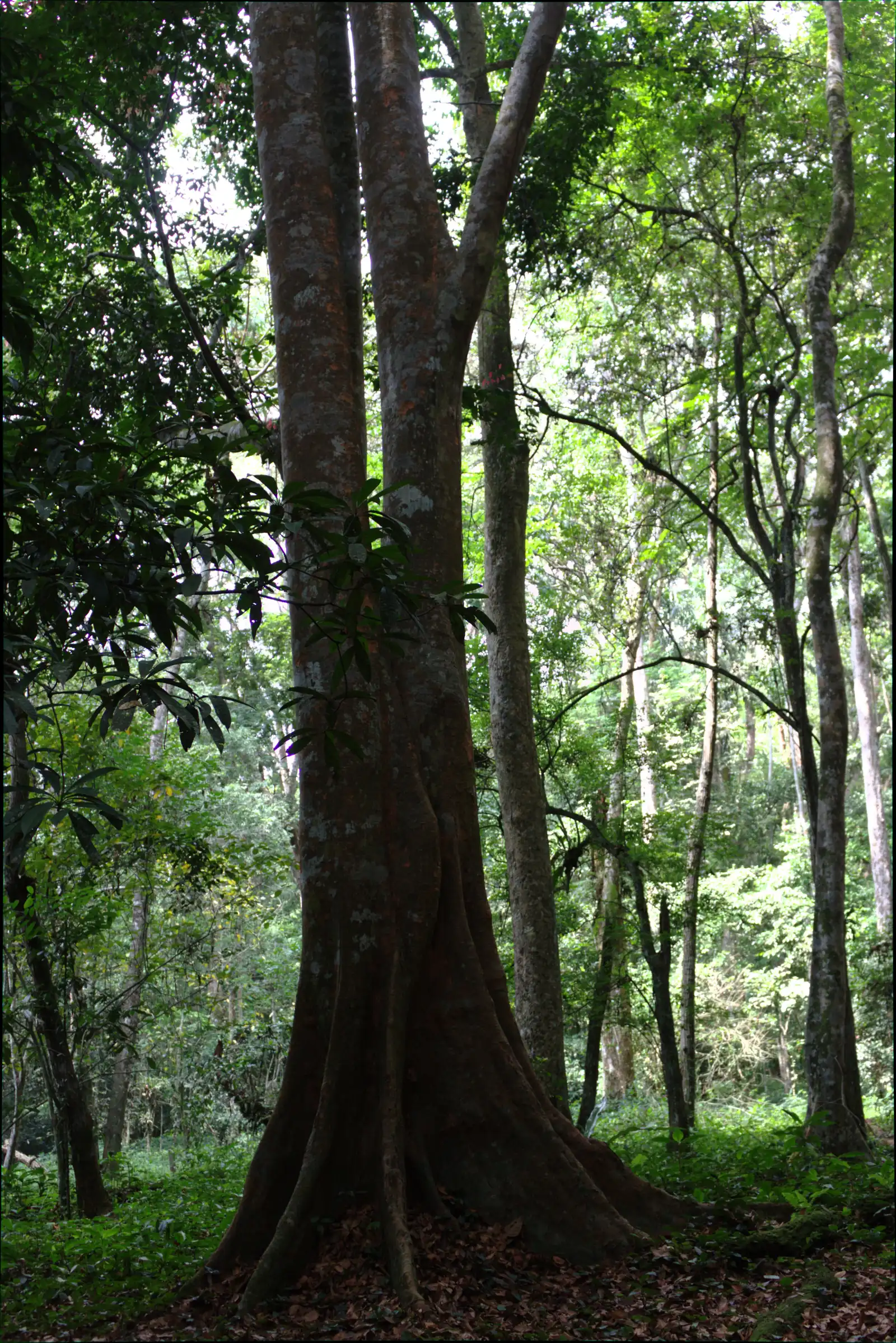
A colonial house on a Grand-Bassam street. The Quartier France is flat but the surfaces are sand and broken paving, and the shade is patchy. Photo: Aristidek5maya, CC BY-SA 4.0 via Wikimedia CommonsBanco National Park — genuine rainforest inside the city boundary, and a complete change of register from Plateau. Photo: Mouna k, CC BY-SA 4.0 via Wikimedia Commons
Everything here is a booked excursion or a pre-arranged car, because nobody walks out of this port. That constraint simplifies the decision more than it sounds: you are choosing one destination, not building a day.
The one to take
Grand-Bassam — 39 km east, thirty-five minutes with clear roads and realistically an hour to ninety minutes. The first French colonial capital of Côte d'Ivoire from 1893, abandoned in 1900 after the 1899 yellow fever epidemic, and inscribed by UNESCO in 2012 as the Historic Town of Grand-Bassam. What survives is the Quartier France — a grid of colonial buildings in every condition from restored to roofless — on a sandbar between the lagoon and the ocean, plus a craft market and the Maison du Patrimoine. This is the standard cruise excursion and it is the right one; reckon on a fare of roughly $80–150 per person for a half-day trip, and note that a private car for four often costs less per head.
In the city
St Paul's Cathedral, Plateau — about 4 km. Aldo Spirito's building: a great concrete cross with seven steel cables running down to the nave so that the whole structure seems to lean toward the lagoon. Foundation stone laid by John Paul II on 11 May 1980, dedicated by him on 10 August 1985, built for around US$12 million. Go inside for the 370 m² of stained glass, which sets the arrival of missionaries in Côte d'Ivoire beside the biblical scenes. It is an active parish cathedral and the first stop on every documented cruise excursion here.
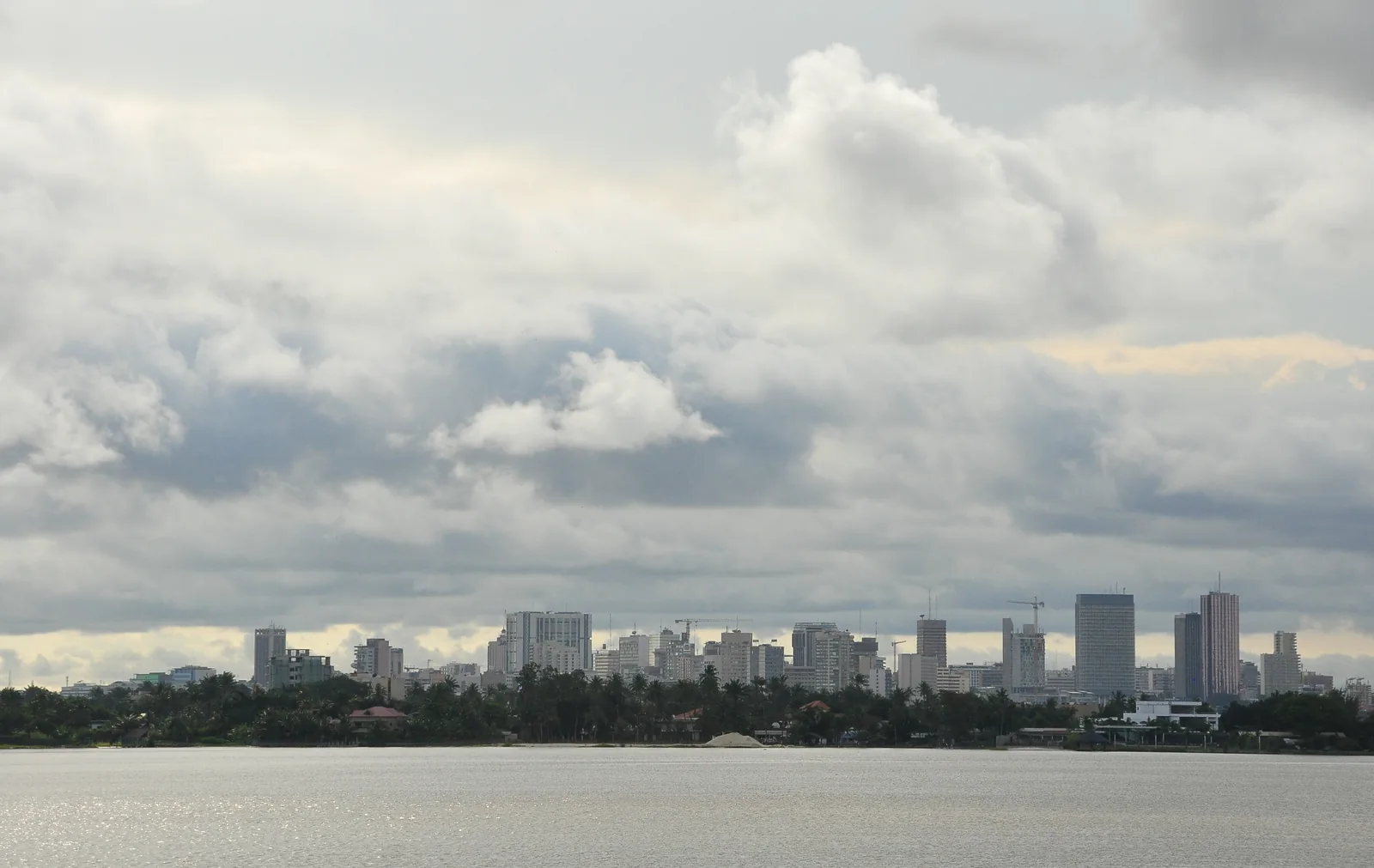
Plateau — the high-rise district that gets Abidjan called the Manhattan of the lagoon. Compact, gridded and busy with office workers, and the one part of the city a confident visitor could reasonably spend an hour walking, in daylight. Note that photographing government buildings, bridges and the port is prohibited, and Plateau is where the government buildings are.
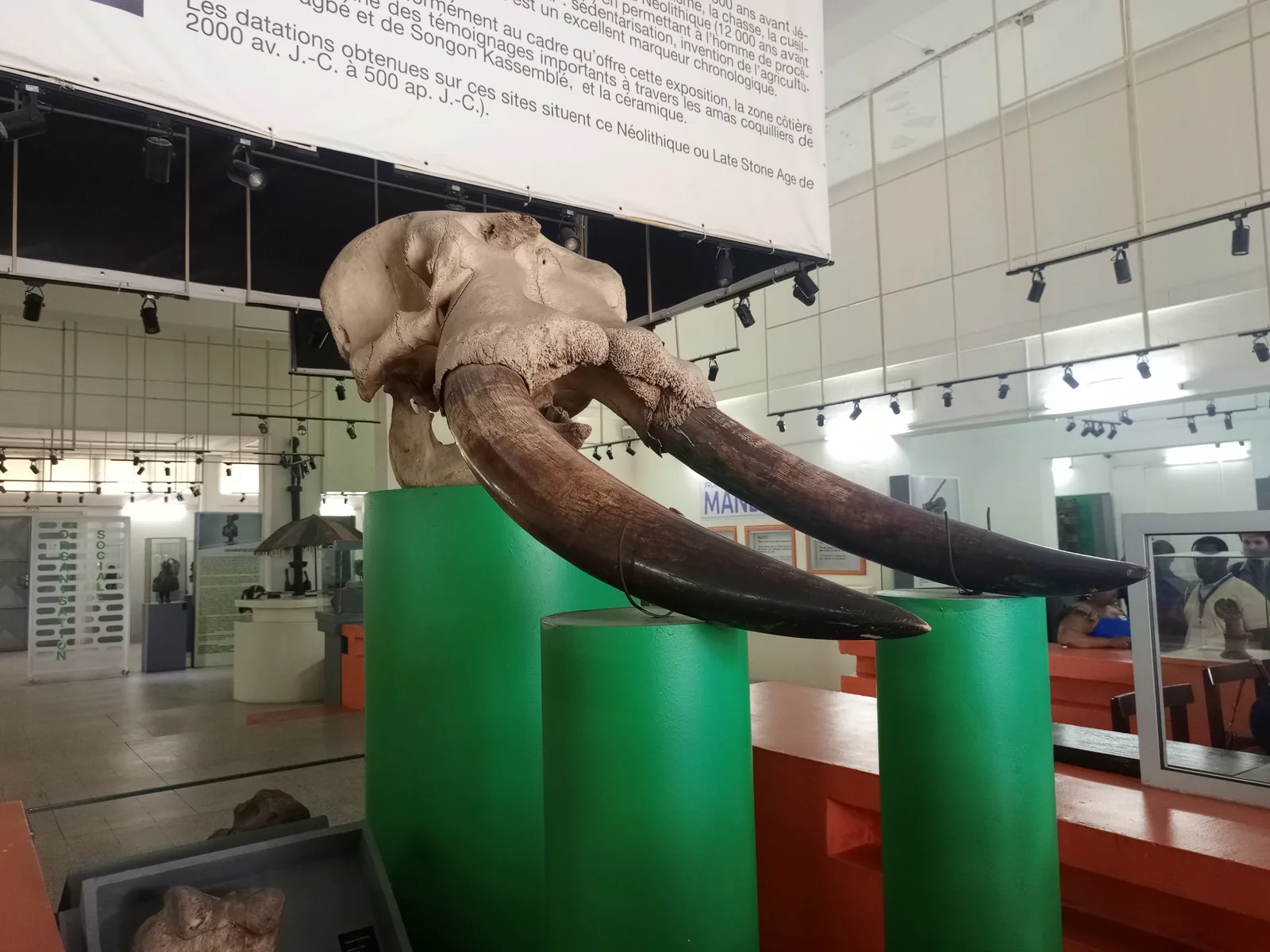
Musée des Civilisations de Côte d'Ivoire — the national ethnographic collection, masks and bronzes and regalia. The entry fee is small — a few thousand CFA. Worth an hour if your excursion includes it, but confirm it is open before you count on it; we could not establish current opening hours from a primary source.
Cocody and the Hôtel Ivoire — the embassy and villa quarter, and a hotel that is a compressed history of the country. Opened 7 September 1963; the 100-metre, 24-storey tower added in 1969; the site of clashes with French UN forces in 2004 in which two demonstrators were killed; reopened in May 2015 as the Sofitel. The ice rink is gone. It opened in 1970 and was the first in West Africa, it decayed through the 1990s, and it now functions as a banquet hall — but you will still read about skating in Abidjan in guides written this decade.
Banco National Park — genuine rainforest inside the city boundary, with buttress-rooted trees and the well-known open-air fanico laundry where washermen work the river stones. Close, unusual, and a complete change of register from Plateau.
Marché de Treichville — the big covered market in the commune you are berthed in, and the sensory heart of the district: wax prints, textiles, spices, music. It is also precisely the crowded-market environment the US State Department flags for petty crime. Go with a guide, take a small amount of cash and nothing else, and treat a phone in the hand as an invitation. Local quirk: Treichville's streets are numbered 1 to 47 rather than named.
Not on this call
Yamoussoukro and the Basilica of Our Lady of Peace — 239 km away, six and a half to eight hours of driving round trip, computed by routing rather than guessed. It is the largest church in the world and it is completely out of reach on a port day. Guides that list it as an Abidjan excursion are describing an overnight trip.
On booking, which matters more here than anywhere else on this voyage. You cannot walk out of this port, so a ship excursion is the default rather than the expensive option, and it carries a guaranteed return. If you would rather go independent, book ahead through the ship for a car and driver who can clear the port's access requirements — improvising at the gate is not a thing you can do here.
And the two items to settle before you sail: the yellow fever certificate, which the line will check at embarkation in Fort Lauderdale, and the visa question, which you should put to the documentation desk in writing and keep the reply.
History & Heritage
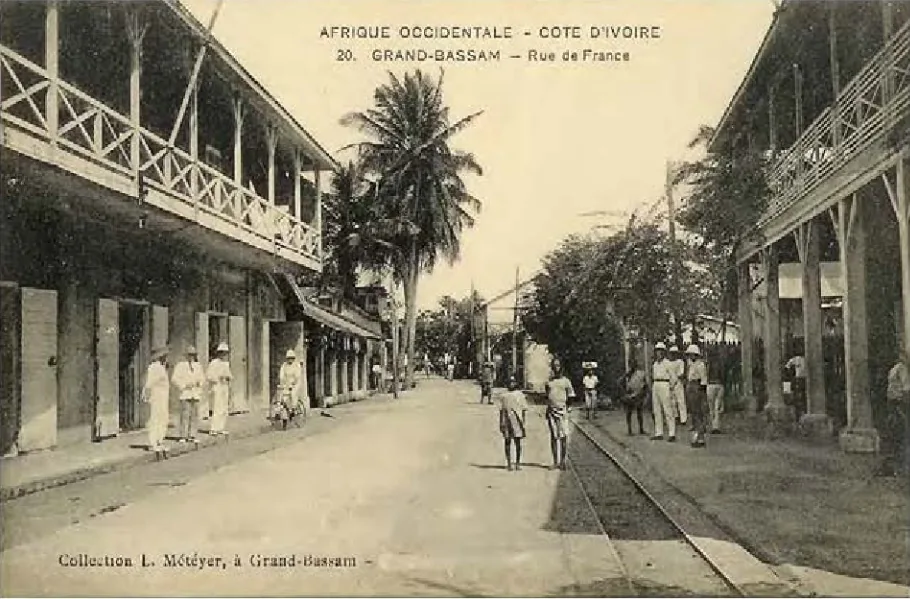
Grand-Bassam's Rue de France in the colonial period, from a postcard of the Collection L. Météyer. The town was the capital from 1893 until yellow fever emptied it in 1899. Photo: Unknown photographer, Public domain via Wikimedia Commons
The lagoons Abidjan is built around belong to the Tchaman — also written Atchan. You will see them called Ébrié almost everywhere, including on the lagoon itself, but Ébrié is an exonym and it means "bad". Tchaman or Atchan is the correct usage and costs nothing to adopt.
The city is a French colonial creation and a recent one. Grand-Bassam, forty kilometres east, was the first colonial capital from 1893 — until a yellow fever epidemic in 1899 emptied it and the administration moved. Abidjan's rise came with the opening of the Vridi Canal in 1950, which cut through the sandbar and turned a lagoon town into a deep-water port. Almost everything about the modern city follows from that trench.
Independence came in 1960 under Félix Houphouët-Boigny, who governed until 1993 and who in 1983 moved the political capital to Yamoussoukro, his birthplace. The move was never quite completed: Abidjan keeps the parliament, the Constitutional Council and the Supreme Court, and is the economic capital in fact if not in title.
Two civil conflicts, in 2002–2007 and 2010–2011, are within living memory of everyone you will meet, and Treichville — the commune you berth in — took significant casualties in the second. Côte d'Ivoire is also the world's largest cocoa producer, which is the other thing to know about the country whose port you are standing in.
Food & Drink Ashore
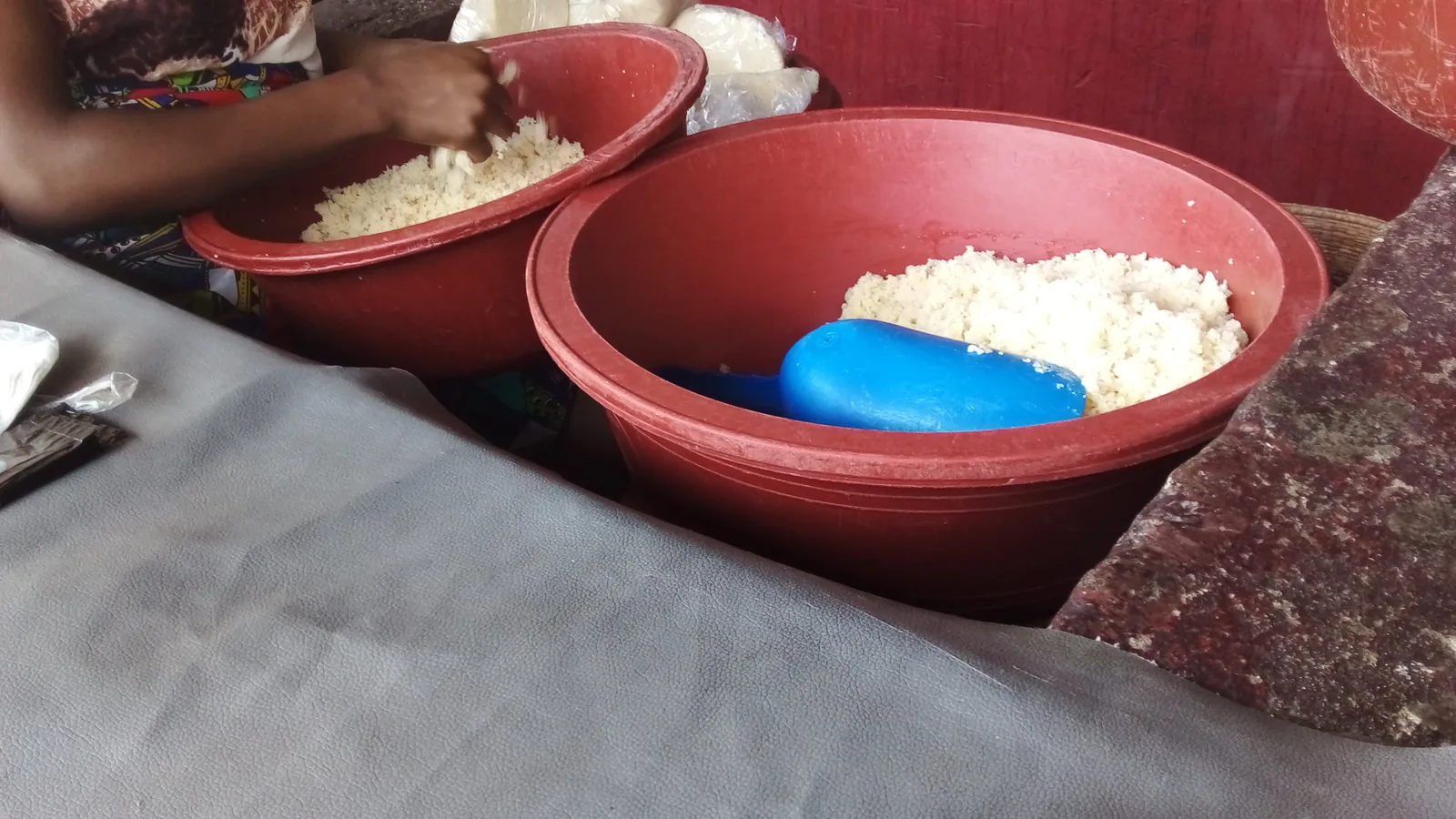
Attiéké sold loose by the basin. Fermented, grated cassava steamed to something between couscous and rice — and the one thing to eat here if you eat one thing. Photo: Blessingedi76, CC BY-SA 4.0 via Wikimedia Commons
Attiéké is the national staple — fermented, grated cassava steamed into something between couscous and rice, eaten with grilled fish or chicken. If you eat one thing here, eat that.
Kedjenou is chicken or guinea fowl slow-cooked in a sealed pot with vegetables and almost no added liquid; alloco is fried plantain, sold on every corner; and garba — attiéké with fried tuna — is the cheap, ubiquitous street plate. Ivorian coffee and cocoa are worth carrying home from the country that grows more cocoa than anywhere else on earth.
The soundtrack is coupé-décalé and zouglou, both Ivorian, both born in Abidjan, and both far more present than any tourist-facing music you might be offered.
Know Before You Go
Yellow fever vaccination is required of everyone aged nine months and over, regardless of where you have come from. Côte d'Ivoire sits in the WHO's "any country" column. Certificates have been valid for life since 11 July 2016 and a booster cannot be demanded. Expect the line to check at embarkation in Fort Lauderdale, not at the gangway — so this is a January problem, not an April one.
The visa position is unresolved and you should not take a guide's word for it — including this one. The UK Foreign Office says a visa is required. The Ivorian e-visa is issued only for arrival at Abidjan airport and requires a return flight booking, which a cruise passenger cannot produce. Ships do land passengers, evidently under a collective shore-pass arrangement made by the agent, but no Ivorian government source documents a cruise exemption. Ask your line in writing and keep the reply.
You cannot walk out of this port. Port regulation prohibits public access inside the customs enclosure and requires a pass from the Port Commander for any person or vehicle.
Do not photograph government buildings, bridges, military sites or the port. This is enforced and Plateau — where you will want to photograph the skyline — is where the government buildings are. Ask before photographing people anywhere.
The travel advisories in plain terms. The US State Department has the country at Level 2, exercise increased caution, reissued 18 February 2026, with a Level 4 do-not-travel for the northern border region — the Savanes and Zanzan districts including Comoé National Park, roughly 600 km from the berth. The UK Foreign Office advises against all travel within 40 km of the Burkina Faso and Mali borders; the 50 km figure repeated online appears in neither. Neither advisory restricts travel to Abidjan or Grand-Bassam.
Malaria is present year-round. Prophylaxis is a medical decision — see a travel clinic well before sailing, not on the ship. Drink bottled or treated water.
Depth Soundings Ashore
Inside the Musée des Civilisations. Worth an hour if your excursion includes it — but confirm it is open, because we could not establish current hours from a primary source. Photo: Kod B, CC BY-SA 4.0 via Wikimedia Commons
Things about Abidjan that only make sense once someone says them:
There is no cruise terminal, and that is not an oversight. The port authority lists nine terminals and none is for passengers. You are a guest at a grain berth.
The city exists because of a ditch. The Vridi Canal, opened in 1950, cut the sandbar and gave the lagoon a deep-water entrance. Everything above the waterline followed.
Grand-Bassam was abandoned as capital because of yellow fever. The 1899 epidemic moved the administration — which is a strange thing to read on the same day you are carrying a yellow fever certificate to get ashore.
The Hôtel Ivoire ice rink closed decades ago. It opened in 1970 as the first in West Africa and is now a banquet hall. It is still in guidebooks.
"Ébrié" means "bad". It is an exonym applied to the lagoon people, who are the Tchaman or Atchan. The lagoon still carries the insult on most maps.
Practical Information
Currency: the West African CFA franc (XOF), pegged to the euro at a fixed rate. Cards work in hotels and larger establishments; markets and taxis are cash. Change money at a bank or hotel rather than on the street.
Language: French. English is not widely spoken outside hotels and tourism. Carry the ship's name, berth and all-aboard time written in French.
Dress and conduct: Abidjan is a large, cosmopolitan African city and ordinary respectful dress is fine; modest cover is appreciated in places of worship. Ask before photographing anyone.
Accessibility and stamina. Because there is no walk-out, every option here is vehicle-based, which in one respect suits limited mobility well. Minimal walking: a car tour of Plateau and Cocody with a stop at St Paul's Cathedral, which is step-accessible at the main doors, and a drink on the Hôtel Ivoire lagoon terrace. Moderate walking: Grand-Bassam, where the Quartier France is flat but the surfaces are sand, broken paving and uneven thresholds, and shade is patchy. High energy: Banco National Park's forest paths and the Treichville market, both of which are hot, crowded and strenuous in the humidity. Note that this is not a tender port, which removes one common barrier.
Abidjan Photo Gallery
Plateau across the lagoon — the view that gets Abidjan called the Manhattan of the lagoon, and the one you get from the ship on the way in. Note the cranes. Photo: Abdallah Hussein, CC BY 2.0 via Wikimedia Commons
Credits
Every image on this page comes from Wikimedia Commons under the license noted and is credited to its creator below. In the Wake does not claim authorship of these images; when we can add our own photographs from a future visit, we will.
St Paul's Cathedral, Abidjan (page header image) — Charles BCB, CC BY-SA 4.0
Grand-Bassam's Rue de France in the colonial period, from a postcard of the Collection L — Unknown photographer, Public domain
Attiéké sold loose by the basin — Blessingedi76, CC BY-SA 4.0
Inside the Musée des Civilisations — Kod B, CC BY-SA 4.0
Frequently Asked Questions
What is the best time of year to visit Abidjan?
December to February is the long dry season — least rain, most sun, and the classic window. A world-cruise call at this port falls at the end of the voyage, in late April or early May, which is the hottest and most humid stretch and the ramp into the long rains. Expect around 32 °C with humidity in the high seventies to mid-eighties. August and September are the coolest months, not the driest-and-brightest.
What should I pack for Abidjan's weather?
Light, loose, breathable clothing, because the humidity does not let up at any point in the year. A high-factor sunscreen and a hat — you are five degrees off the equator. Insect repellent containing DEET, and malaria prophylaxis arranged with a travel clinic well before you sail. A small bag that closes properly. And a light rain shell if the call is anywhere near May.
Will rain ruin my Abidjan port day?
It depends sharply on the month, because Abidjan has two wet seasons rather than one. The long rains run from March or April into July and peak brutally in June — 375 mm across 21 rain days. A short second wet season runs October to November. January sees 15 mm. The Foreign Office notes that torrential rain here causes flooding, landslides and flash floods that have killed people, so a heavy day is a genuine disruption rather than an inconvenience.
Does Abidjan have a storm season, and could the call be cancelled?
There are no tropical cyclones in the Gulf of Guinea — this coast sits too close to the equator for them to form. What there is instead is the long rainy season, peaking in June, with torrential downpours that flood roads and cause landslides. The realistic threat to your day is a washed-out excursion rather than a cancelled call, and the berth itself is a sheltered deep-water basin behind a canal.
Do I need a yellow fever vaccination for Côte d'Ivoire?
Yes, and this is not conditional on where you have travelled. Côte d'Ivoire sits in the World Health Organization's "any country" column, meaning proof of vaccination is required from <strong>all travellers aged nine months and over regardless of origin</strong>. Since 11 July 2016 a certificate is valid for life and a booster cannot be demanded of you. Expect the cruise line to check at embarkation in Fort Lauderdale rather than at the gangway in Abidjan — which makes a missing certificate a problem four months before the call.
Do I need a visa to go ashore in Abidjan?
This is genuinely unresolved and you should not rely on any guide's answer, including this one. The UK Foreign Office states flatly that you must have a visa to enter Côte d'Ivoire. The Ivorian e-visa is issued only for arrival at Abidjan airport and requires a return flight booking — conditions a cruise passenger cannot satisfy. Ships plainly do land passengers here; the explanation appears to be a collective shore-pass arrangement made by the ship's agent with the port. But that is an arrangement between companies, not a right you hold, and no Ivorian government source documents a cruise exemption. Put the question to your line's documentation desk in writing and keep the reply.
Can I walk off the ship in Abidjan?
No. There is no cruise terminal — the port authority's own list enumerates nine terminals and none is for passengers — and you berth at a working grain terminal inside the customs enclosure. The harbourmaster's regulation prohibits free public access to the roads, quays and open ground inside that enclosure and requires an access pass issued by the Port Commander for any person or any vehicle. Every version of this day begins with transport somebody arranged.
How safe is Abidjan for a cruise passenger?
The advisories are more alarming than your day will be, and the reason is geography. The US State Department has the country at Level 2, exercise increased caution, reissued 18 February 2026, with a Level 4 do-not-travel applying to the northern border region — the Savanes and Zanzan districts including Comoé National Park, roughly 600 km from where you are standing. The UK Foreign Office advises against all travel within 40 km of the Burkina Faso and Mali borders; the 50 km figure repeated online appears in neither advisory. <strong>Neither restricts travel to Abidjan or Grand-Bassam.</strong> What does affect you is ordinary urban theft, which State flags specifically for crowded markets.
What about the piracy warnings in the Gulf of Guinea?
Real, and not about your ship. Piracy, armed robbery and kidnap for ransom in the Gulf of Guinea are a serious threat to merchant shipping — tankers and cargo vessels with small crews and low freeboard. A 60,000-tonne cruise ship with high sides, a full complement and a scheduled berth is not the target profile. The warning appears in the advisory because the advisory covers everyone at sea.
Is Grand-Bassam safe, given the 2016 attack?
Neither the American nor the British advisory restricts travel there, and it remains the standard cruise excursion. The facts, in full: in March 2016 an al-Qaeda-linked group attacked the beach and nineteen people were killed; eleven life sentences were handed down in December 2022; there has been no repeat in the decade since. The town's UNESCO-listed Quartier France and its craft trade are how a lot of people there make a living, and they have spent ten years living alongside a single sentence that gets written about them.
Can I get to Yamoussoukro and the Basilica?
No. It is 239 km from the berth and six and a half to eight hours of driving round trip, computed by routing rather than estimated. The Basilica of Our Lady of Peace is the largest church in the world and it is completely out of reach on a port day. Guides that list it as an Abidjan excursion are describing an overnight trip.
What does a day in Abidjan cost, and do I tip?
The currency is the West African CFA franc, pegged to the euro at a fixed rate. Cards work in hotels and larger establishments; markets and taxis are cash, and you should carry only a small amount. The main cost is transport, because nothing here is reachable on foot — either a ship excursion or a pre-arranged car and driver. Tipping is appreciated but not at North American rates; round up, and tip a guide or driver for a good day.
Are there photography restrictions?
Yes, and they are enforced. Do not photograph government buildings, bridges, military sites or the port. This matters practically because Plateau — where you will most want to photograph the skyline — is where the government buildings are, and because the lagoon bridges are exactly the kind of view a visitor reaches for. Ask before photographing people anywhere.




.jpg)


.jpg)


