
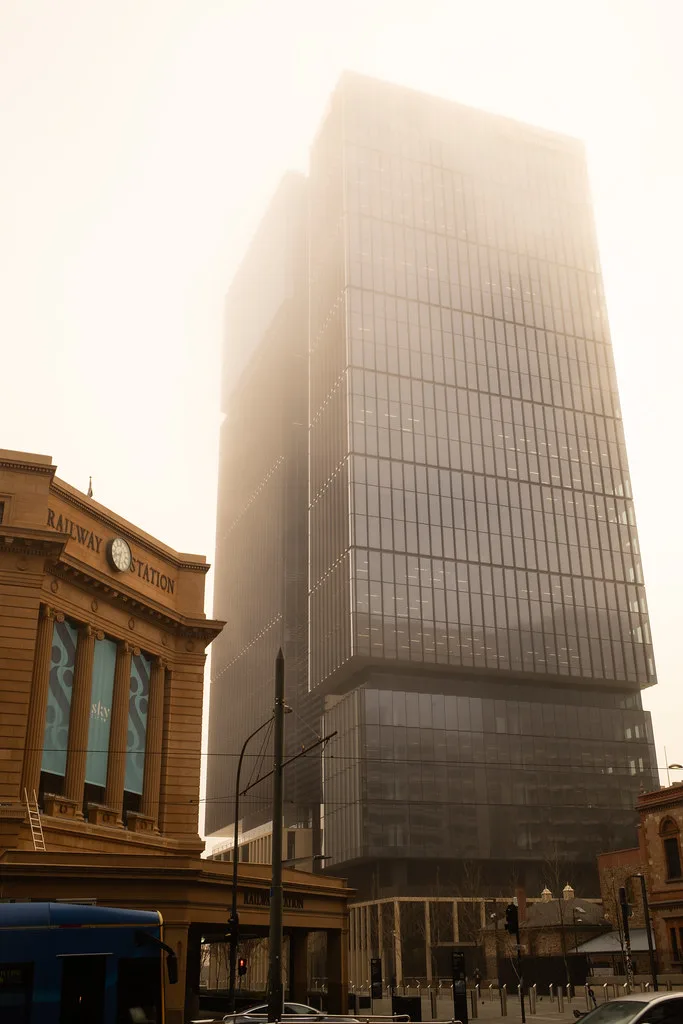
Photo: Wikimedia Commons
My Logbook: Australia's Wine Capital
I've been researching Adelaide with growing excitement, yet nothing in my planning quite captures the sense of discovery that awaits in South Australia's wine country. My research reveals a city ringed entirely by parklands — as if Colonel William Light drew a green belt around civilization itself when he laid out Adelaide in 1836. Wide boulevards stretch beneath plane trees, and the pace feels distinctly unhurried, content to let the world rush past while this corner of Australia savors its sunshine and wine.
What draws me to Adelaide is the promise of world-class wine within an hour's drive. My research has revealed more than two hundred cellar doors awaiting discovery — from family operations pouring wines in century-old stone barns to grand estates where the winemaker's great-great-grandfather planted the first vines in the 1840s. The Barossa Valley alone counts over 150 wineries and 80-plus cellar doors, producing bold Shiraz that tastes like the red earth itself and delicate Rieslings from the cooler Eden Valley that sing with acidity and stone fruit.
However, the Adelaide Central Market has captured my imagination as much as any vineyard. Operating since 1869, it represents over 150 years of cheese and charcuterie excellence, artisan bakers, and passionate vendors. I'm already planning to watch elderly Italian vendors banter with young chefs, see pyramids of stone fruit glowing in the morning light, breathe in coffee and fresh bread and something herbal I can't quite name. This is where Adelaide comes to eat, and I want to taste everything.
The wine regions have shaped my planning in unexpected ways. Though the Barossa Valley dominates my itinerary, I'm intrigued by McLaren Vale to the south where beaches pair with wineries, and the Adelaide Hills where morning mist clings to cooler-climate vineyards. At Seppeltsfield Estate, established in 1851, I've read about their tradition of releasing aged fortified wines from every vintage back to 1878 — imagine tasting a tawny from your birth year, dark amber and complex as memory itself.
My research into Hahndorf has been particularly compelling. Australia's oldest surviving German settlement, established in 1839 by Lutheran refugees fleeing religious persecution in Prussia. They named it for Captain Dirk Hahn who piloted their ship to South Australia, and they built it to last — stone cottages with steep-pitched roofs, half-timbered buildings that could have been transplanted from Bavaria. I want to walk that main street, stopping at bakeries for house-made pretzels and watching families gather for enormous plates of schnitzel.
The Adelaide Botanic Gardens have added a peaceful dimension to my planning. Spanning 50 hectares in the heart of the city, they promise acres of walking among native Australian plants, Mediterranean gardens, and the historic Bicentennial Conservatory — one of the largest single-span conservatories in the Southern Hemisphere. Free admission makes them an easy addition to any city day. I'm planning a morning stroll before the wine tours begin.
Yet what strikes me most about Adelaide is its accessibility. Port Adelaide sits just 13 kilometers from the city center, connected by a 40-minute train ride that costs around $5 AUD. The wine regions are an hour away by tour. The beaches stretch along the Gulf. Everything feels within reach without feeling rushed. This is a port for wine lovers certainly, but also for anyone who appreciates a city that has mastered the art of living well.
My planning has convinced me that Adelaide offers something rare — world-class wine country combined with genuine urban charm and that particular Australian warmth that makes strangers feel like friends. I'm going with respect for the winemaking traditions that stretch back to the 1840s, excitement for the Central Market's sensory overload, and appreciation for a city that decided long ago to surround itself with parklands and focus on the things that matter most.
The wildlife encounters have added yet another dimension to my anticipation. At Cleland Wildlife Park in the Adelaide Hills, I can walk among kangaroos and wallabies in semi-natural bushland, hand-feeding them as they lounge in the shade. It's one of the few places in Australia where you can still hold a koala. I'm planning to combine this with a visit to Hahndorf, creating a full day in the Hills that balances nature, culture, and cuisine in that uniquely South Australian way.
Looking back at my research, I realize Adelaide is teaching me something important about pace. In a world obsessed with bigger and faster, this city chose beauty and balance instead. The lesson isn't just about wine or markets — it's about deciding what matters and building a life around it.
Weather & Best Time to Visit
The Cruise Port
Adelaide's cruise terminal is located at Port Adelaide, approximately 13 kilometers northwest of the city center. The Port Adelaide Passenger Terminal sits along a working waterfront where container cranes still swing overhead. Ships dock directly at the pier — no tendering required. The terminal has basic facilities with taxi ranks and shuttle options available.
Currency is Australian Dollar (AUD) with cards accepted virtually everywhere. English is the language. The terminal area is wheelchair accessible with ramps and flat pathways. Port Adelaide itself has heritage pubs, the South Australian Maritime Museum ($15 AUD admission), and waterfront walks worth exploring if you have time before your wine country tour departs.
Getting Around
- Train to CBD: The Outer Harbor line connects Port Adelaide station to Adelaide city center in approximately 40 minutes. Trains run frequently throughout the day. Cost is around $5 AUD. The station is a short walk from the cruise terminal. This is the most economical way to reach the Central Market and Botanic Gardens.
- Taxis & Rideshares: Available at the terminal. Expect $40-50 AUD to reach Adelaide CBD. Uber and local rideshares operate throughout the area. Useful for groups or those with mobility concerns who want direct transport.
- Wine Region Tours: Ship excursions and independent operators run full-day Barossa Valley tours departing directly from the cruise terminal. Ship excursions typically $150-250 AUD per person. Independent tours from the city run $120-180 AUD. Book ahead during peak season — wine country is Adelaide's signature experience.
- Walking in Adelaide: The CBD is highly walkable with the Central Market, Botanic Gardens, and Art Gallery of South Australia all within comfortable walking distance of Adelaide Station. Flat terrain and wide footpaths make navigation easy. Wheelchair accessible throughout.
- Glenelg Tram: A heritage tram runs from Adelaide CBD to Glenelg Beach in about 30 minutes ($5 AUD). A pleasant way to combine city exploration with beach time if wine isn't your priority.
- Metro Card: Purchase at the train station — works on trains, buses, and the Glenelg tram throughout the Adelaide network.
Adelaide Area Map
Interactive map showing cruise terminal, Adelaide CBD, wine regions, and key attractions. Click any marker for details.
Beaches & Shorelines
Adelaide's Gulf beaches offer calm waters and classic Australian beach culture:
- Glenelg Beach: Adelaide's most famous beach, accessible by heritage tram from the CBD (30 minutes, $5 AUD). Sandy beach, calm gulf waters, seaside cafes, and the Jetty Road shopping strip. Family-friendly with gentle waves. Wheelchair accessible with beach wheelchairs available for loan.
- Henley Beach: Popular local beach with a long jetty ideal for sunset walks. Less touristy than Glenelg. Good cafes along the beachfront esplanade. 20 minutes by bus from the CBD.
- Semaphore Beach: Closest to Port Adelaide if you want a quick beach visit without heading to the city. Heritage seaside town atmosphere with fish and chips shops. 10-minute drive from the cruise terminal.
- Brighton Beach: Quieter alternative to Glenelg with similar calm waters. Beautiful heritage jetty. Local rather than tourist atmosphere.
Tip: Gulf St Vincent waters are calm and warm in summer (December-February). Beach facilities are excellent with accessible pathways at most major beaches. Sunscreen is essential — Australian UV is intense year-round.
Shore Excursions & Things to Do
Booking guidance: Barossa Valley wine tours should be booked in advance — ship excursion options offer guaranteed return to ship ($150-250 AUD). Independent wine tours from the city run $120-180 AUD per person. The Central Market, Botanic Gardens, and city attractions need no advance booking and work well for independent exploration.
Barossa Valley Wine Tour
Australia's most celebrated wine region, one hour northeast of Adelaide. Over 150 wineries and 80+ cellar doors produce world-famous Shiraz and elegant Rieslings. Visit historic estates like Jacob's Creek (producing since 1847), Seppeltsfield (since 1851, famous for century-old fortified wines), and boutique family wineries. Tours include 3-5 winery visits with tastings and typically lunch. Book through ship excursion desk ($150-250 AUD) for guaranteed return or independent operators ($120-180 AUD). Full-day experience. The signature Adelaide shore excursion — essential for wine lovers.
Adelaide Central Market
One of the world's great food halls, operating since 1869. Wander stalls of South Australian produce — oysters ($18-24 per dozen), artisan cheeses ($8-15 per wedge), charcuterie, fresh bread, and more. Over 80 stalls under the heritage iron roof. Sample as you go — vendors are generous. Buy provisions for a picnic or simply graze your way through. Open Tuesday-Saturday (closed Sunday-Monday). Free entry. 10-minute walk from Adelaide Station. Allow 1-2 hours. No booking required. An essential Adelaide experience.
Hahndorf Village
Australia's oldest surviving German settlement, 25 minutes from Adelaide CBD. Established in 1839 by Lutheran refugees, the main street preserves half-timbered buildings, stone cottages, and German traditions. Try giant schnitzels ($25-35 at local restaurants), house-made pretzels ($5-8), and browse craft shops. The Hahndorf Inn is a classic. Accessible by bus from the city or included in Adelaide Hills wine tours. Allow half-day. Book ahead for combined wine and Hahndorf tours from the cruise terminal.
Adelaide Botanic Gardens
Fifty hectares of gardens in the heart of the city. Native Australian plants, Mediterranean gardens, rose gardens, and the striking Bicentennial Conservatory — one of the largest single-span glasshouses in the Southern Hemisphere. Free admission. 15-minute walk from Adelaide Station. Wheelchair accessible throughout with paved paths. Perfect morning activity before or after the Central Market. Allow 1-2 hours.
Cleland Wildlife Park
Walk among kangaroos and wallabies in semi-natural bushland. Hand-feed the animals as they lounge in the shade. Hold a koala (one of the few Australian places where this is still permitted, $30 AUD for photo). Located in the Adelaide Hills, 20 minutes from CBD. Admission $28 AUD. Book koala holds in advance. Combined with Hahndorf makes a good full-day Adelaide Hills experience.
Food & Dining
Adelaide's food scene celebrates local produce and world-class wine:
- South Australian Oysters ($): Coffin Bay and Eyre Peninsula oysters are legendary — briny, sweet, perfect with local Riesling. $18-24 per dozen at the Central Market or waterfront restaurants.
- Central Market Grazing ($-$): Sample your way through 80+ stalls. Artisan cheeses, charcuterie, fresh bread, olives, pastries. Build your own picnic for $20-30. The quintessential Adelaide food experience.
- Barossa Food ($-$$): Winery restaurants pair estate wines with regional produce. Expect $40-80 for lunch with wine. Farmhouse cheeses, smallgoods cured with Old World techniques, olive oils.
- German Fare at Hahndorf ($): Giant schnitzels ($25-35), house-made pretzels, German beer, apple strudel. The Hahndorf Inn and German Arms Hotel are classics.
- Adelaide Cafe Culture ($-$): Rivals Melbourne for quality. Excellent coffee ($4-6), brunch plates ($18-28), laneway cafes. Rundle Street and Peel Street are hotspots.
Budget tip: The Central Market offers incredible value for quality food. Picnic in the Botanic Gardens or parklands with market provisions.
Note: Australian wine is excellent value by the glass ($10-18). The Barossa produces some of the world's finest Shiraz. Don't leave without tasting.
Local Notices & Current Conditions
- Wine Tour Timing: Barossa Valley tours take a full day (8-10 hours). Book through ship excursion desk for guaranteed return before sailing. Independent tours require careful timing.
- Sun Protection: Australian UV is intense year-round. Sunscreen, hat, and sunglasses essential — even in wine country where you're outdoors between cellar doors.
- Central Market Hours: Open Tuesday-Saturday only. Closed Sunday and Monday. Plan city visits accordingly.
- Summer Heat: December-February temperatures reach 30-40°C. Wine tours and outdoor activities are best scheduled for morning. Stay hydrated.
- Currency: Australian Dollar (AUD). Cards accepted virtually everywhere. Tipping not expected but appreciated for excellent service (10% at restaurants).
Depth Soundings Ashore
Practical tips before you step off the ship.
Adelaide is South Australia's capital and Australia's wine capital, gateway to world-famous regions including the Barossa Valley, McLaren Vale, and Adelaide Hills. The city was founded in 1836 as Britain's only "free settlement" colony — no convicts — and that planned, orderly character persists today. Currency is Australian Dollar (AUD); cards are accepted virtually everywhere including small vendors. Approximately $1 AUD = $0.65 USD.
Safety is excellent — Adelaide consistently ranks as one of Australia's safest cities. Standard travel precautions apply. The city is welcoming and friendly in that particular Australian way that makes strangers feel comfortable.
The cruise terminal and city center are wheelchair accessible with flat terrain. Adelaide Station has elevator access. The Central Market has wide aisles. Wine tours should be confirmed for accessibility — some historic cellars have uneven surfaces or stairs. Glenelg Beach offers wheelchair access and beach wheelchairs for loan.
Language is English with Australian expressions. Weather varies dramatically — Mediterranean climate with hot summers (December-February) and mild winters. UV protection is essential year-round. Pack layers for air-conditioned venues and cooler wine cellars.
Practical Information
- Currency: Australian Dollar (AUD); $1 AUD = ~$0.65 USD
- Language: English
- Time Zone: Australian Central Standard Time (ACST), UTC+9:30/+10:30
- Weather: Mediterranean climate. Hot summers Dec-Feb (30-40°C). Mild winters Jun-Aug (8-16°C). Best weather Oct-Nov, Mar-Apr.
- Port Type: Port Adelaide — ships dock directly, no tender
- To CBD: 40 min by train ($5 AUD) or 20 min by taxi ($40-50 AUD)
- Accessibility: Terminal accessible. City has flat terrain and good wheelchair access. Wine tours vary — confirm in advance.
Photo Gallery
Image Credits
- barossa-valley.webp: Flickers of Majesty
- central-market.webp: Flickers of Majesty
- hahndorf.webp: Flickers of Majesty
- port-adelaide.webp: Flickers of Majesty
- botanic-gardens.webp: Flickers of Majesty
All images used with permission. Photo credits link to original sources.
Frequently Asked Questions
Q: How do I get from Port Adelaide to the city?
A: The Outer Harbor train line runs from Port Adelaide station to Adelaide CBD in about 40 minutes ($5 AUD). Trains run frequently. Taxis cost $40-50 AUD. The train station is a short walk from the cruise terminal.
Q: Is the Barossa Valley worth visiting?
A: Absolutely — it's one of the world's great wine regions with 150+ wineries. Ship excursions run $150-250 AUD and guarantee return before sailing. If you love wine, the Barossa is extraordinary. Tours visit 3-5 wineries with tastings and lunch included.
Q: When is the Central Market open?
A: Tuesday through Saturday only. Closed Sunday and Monday. If your port day falls on closed days, plan for wine tours or beach time instead. The market is worth adjusting plans for if possible.
Q: Can I do wine tours independently?
A: Yes, but driving yourself isn't recommended after tastings. Book independent tours from the city ($120-180 AUD). However, ship excursions offer guaranteed return — important when sailing times are fixed. Book ahead for either option.
Q: What if I don't drink wine?
A: Adelaide still shines. The Central Market, Botanic Gardens (free), Art Gallery of South Australia (free), Glenelg Beach by vintage tram, and Hahndorf German village all offer excellent experiences without wine. The food scene is exceptional regardless.
Last reviewed: February 2026