

Photo: Diego Delso, CC BY-SA 4.0
My Logbook: Where Civilization Meets Wilderness
I've been researching Anchorage with growing appreciation for Alaska's largest city, yet what strikes me most is how this place defies easy categorization. My planning reveals a modern American city of 290,000 people — yet surrounded by wilderness so immediate that moose wander through suburban backyards and bears fish in streams within city limits. However, what truly fascinates me is Anchorage's role as the gateway to Alaska's cruise ports: most passengers flying in for Gulf of Alaska voyages pass through here, making it the threshold between the familiar and the frontier.

What draws me to spending time in Anchorage is the opportunity to acclimate before the cruise begins. Ships depart from either Seward (about 2.5 hours south) or Whittier (about 1 hour southeast), but flying into Anchorage the day before eliminates the stress of same-day connections. I keep reading about travelers who arrived with time to spare, explored the city, and started their cruise adventures relaxed rather than jet-lagged and frazzled.
The wildlife possibilities have captured my imagination. The Alaska Wildlife Conservation Center, about 50 miles south on the Seward Highway, offers guaranteed encounters with bears, moose, musk ox, caribou, and other Alaska species. Though these are rescued animals rather than wild encounters, I'm told it's the most reliable way to see Alaska's iconic wildlife up close — and the setting against Chugach Mountain views is spectacular. I'm budgeting $15 admission and planning 2-3 hours.
My research into glacier flightseeing has been compelling. Several operators offer small-plane tours from Anchorage and nearby Lake Hood — the world's largest floatplane base — to fly over glaciers, past mountain peaks, and sometimes land on ice fields. Prices run $200-400 per person for 1-2 hour flights. Travelers describe the humbling scale of it — the cold air rushing through the small plane's vents, the roar of the engine fading as the pilot banks over blue-white ice rivers, the sharp smell of aviation fuel giving way to clean mountain air through the window crack. Seeing Alaska from above, watching glaciers flow like frozen rivers between peaks, understanding the vast scale of this landscape — this seems worth the investment.
Yet what strikes me most about Anchorage is how accessible the wilderness is from downtown. The Tony Knowles Coastal Trail runs 11 miles along Cook Inlet with mountain views, moose sightings, and the possibility of seeing beluga whales in summer. Earthquake Park commemorates the devastating 1964 Good Friday earthquake (9.2 magnitude) while offering panoramic views. I want to understand how Alaskans live with this proximity to both nature and natural hazard.
The food research has uncovered distinctly Alaskan possibilities. I keep reading about reindeer sausage from street vendors downtown, wild salmon prepared every way imaginable, king crab legs at Snow City Café, and sourdough pancakes — that gold-rush legacy. Though Anchorage isn't a culinary destination in the traditional sense, the access to wild-caught seafood and game defines the eating experience here.
The Anchorage Museum has emerged as essential in my planning. The Smithsonian Arctic Studies Center displays Alaska Native art and artifacts with cultural context I haven't found elsewhere. I want to understand the Tlingit clan system, the Inupiat whaling traditions, the way indigenous peoples adapted to one of Earth's most challenging environments — before I see their descendants in Alaska's coastal towns during the cruise.
My planning has convinced me that Anchorage deserves more than just a quick overnight before rushing to the ship. The Alaska Wildlife Conservation Center, the Native Cultural Center, the Coastal Trail, the flightseeing opportunities — these experiences set the context for everything that follows during an Alaska cruise. I'm going with respect for the indigenous peoples who first called this land home, appreciation for the modern Alaskans who've built a city in the shadow of wilderness, and excitement for the glaciers and wildlife that await.
I've also been researching practical considerations. Hotel prices run $150-300/night during cruise season (May-September), and booking early is essential. The drive to Seward along Turnagain Arm is reportedly one of America's most scenic highways — reason enough to rent a car ($50-90/day) and make the journey independently rather than taking motorcoach transfers. Summer daylight lasts until nearly midnight, which takes adjustment but offers incredible flexibility for exploring.
What continues to surprise me in my research is how much Anchorage offers beyond being a transit point. The city has outstanding restaurants specializing in wild salmon and king crab, excellent museums documenting Alaska Native cultures and arctic exploration, and trails where you might spot moose, eagles, or even beluga whales — all within city limits. I want to arrive early enough to experience this threshold city, not just pass through it on the way to the ship.
The lesson I'm already learning, before I've even arrived: Alaska demands a different posture. Not the rushed efficiency of checking boxes, but the patient attention of someone entering territory that was never meant for hurrying. The indigenous peoples who first called this land home understood something we often forget — that the land itself is the teacher, and we are guests who arrive with much to learn and little to offer but respect. I realized, sitting with all this research, that my planning has already changed me. I'm slower now, more attentive, more willing to listen before I speak. Perhaps that's what Anchorage offers before you even step off the plane: the first lesson in humility that Alaska will continue to teach.
Weather & Best Time to Visit
The Cruise Port
Anchorage itself is not a cruise port — ships dock at Seward (2.5 hours south via Seward Highway) or Whittier (1 hour southeast through the Anton Anderson Memorial Tunnel). Most cruise lines offer motorcoach transfers between Anchorage airport/hotels and the ship, included in Gulf of Alaska cruise packages. The drive to Seward along Turnagain Arm is spectacularly scenic; Whittier is accessed through North America's longest highway tunnel.
Currency is US Dollar. Credit cards accepted everywhere. English is the primary language. Ted Stevens Anchorage International Airport (ANC) is the main gateway, with direct flights from Seattle, Los Angeles, Dallas, and other US cities. The city is wheelchair accessible with paved trails, accessible museums, and ADA-compliant facilities throughout. Rental cars are readily available at the airport; parking is easy and often free outside downtown.
Getting Around
- Rental Cars: The recommended option for flexibility. Seward Highway to Seward and the drive to Whittier are among America's most scenic. Rates $50-90/day during cruise season. Reserve well ahead — cars sell out in summer. Airport pickup convenient. Parking easy throughout Anchorage.
- Cruise Line Transfers: Motorcoach transfers between Anchorage and Seward/Whittier are typically included in Gulf of Alaska cruise packages. Check your booking for details. Professional, comfortable, but inflexible timing.
- Alaska Railroad: Scenic train service runs between Anchorage and Seward ($89-269 depending on class) with spectacular views. Book through alaskarailroad.com. The Coastal Classic route is a destination experience in itself. Book well in advance.
- Taxis/Rideshare: Available in Anchorage. Uber and Lyft operate. Taxis to downtown from airport approximately $25-35. Not practical for distances to Seward or Whittier.
- Walking in Downtown: Anchorage downtown is walkable with good sidewalks. The Tony Knowles Coastal Trail is excellent for walking or biking. Museums, restaurants, and shops concentrated in walkable core.
- Public Transit: People Mover bus system serves Anchorage but not useful for cruise connections or tourist attractions beyond downtown. Route 102 connects downtown to the Alaska Native Cultural Center in summer.
- Airport Shuttles: Various shuttle services connect Ted Stevens Airport to downtown hotels and cruise transfers. Expect $25-40 per person. Hotels often provide complimentary airport shuttles.
Anchorage Area Map
Interactive map showing Anchorage, routes to Seward and Whittier, Alaska Wildlife Conservation Center, and key attractions. Click any marker for details.
Waterfront & Outdoor Access
Anchorage isn't a beach destination — the water is cold and silty — but waterfront and outdoor experiences abound:
- Tony Knowles Coastal Trail: 11-mile paved trail along Cook Inlet from downtown to Kincaid Park. Mountain views, possible moose sightings, beluga whales in summer. Free. Excellent for walking, running, or biking.
- Earthquake Park: Commemorates the 1964 Good Friday earthquake (9.2 magnitude). Interpretive displays, panoramic views of Cook Inlet and Denali (on clear days). Free. Worth 30-60 minutes.
- Ship Creek: Downtown salmon fishing in urban Alaska. Watch salmon spawn or catch your own (license required, $20/day). Fish cleaning stations available. Peak runs June-August.
- Flattop Mountain: Popular hiking destination with 360-degree views. 3.5 miles round trip, moderate difficulty. Accessible via Glen Alps Trailhead (parking $5). Allow 2-3 hours.
Note: Moose are common throughout Anchorage, including urban trails. Keep distance (they can be aggressive, especially with calves). Bears are possible in outer areas — carry bear spray on wilderness hikes.
Shore Excursions & Things to Do
Booking guidance: Glacier flightseeing should be booked in advance through operators like Rust's Flying Service or Regal Air. Alaska Wildlife Conservation Center requires no advance booking. Alaska Railroad to Seward sells out — book ahead at alaskarailroad.com. Independent exploration with rental car offers most flexibility.
Alaska Wildlife Conservation Center
Guaranteed wildlife encounters at this rescue facility 50 miles south on Seward Highway. Brown bears, black bears, moose, musk ox, caribou, wolves, and other Alaska species in natural-looking enclosures with mountain backdrops. Self-guided driving tour or walking paths. $15 adults, $10 children. Allow 2-3 hours. No advance booking needed. Combines well with Portage Glacier visit. Photography opportunities excellent.
Glacier Flightseeing
Small-plane tours over glaciers and mountains offer perspective impossible from ground level. Operators like Rust's Flying Service depart from Lake Hood (world's largest floatplane base). 1-2 hour flights $200-400 per person. Some include glacier landings ($350-500). Book in advance for summer dates — weather cancellations may require schedule flexibility. A humbling, memorable experience well worth the investment.
Alaska Native Cultural Center
Essential introduction to Alaska's indigenous cultures. Traditional village sites representing five cultural regions, dance performances, art demonstrations, and exhibits. $25 adults. Allow 2-3 hours. Shuttle service from downtown available. Provides cultural context for Native communities you'll encounter during your cruise. Gift shop features authentic Native art.
Anchorage Museum
Smithsonian Arctic Studies Center houses significant Alaska Native collections with cultural interpretation. Art galleries, Alaska exhibits, and children's discovery center. $20 adults. Allow 2-3 hours. Downtown location, walkable from most hotels. Combined with Native Cultural Center provides comprehensive indigenous culture overview.
Portage Glacier & Begich Boggs Visitor Center
Though the glacier has retreated from view, the visitor center offers glacier exhibits and the Seward Highway drive is spectacular. Combine with Alaska Wildlife Conservation Center for a half-day trip. Free admission to visitor center. Boat tours to glacier face available ($39 adults) when operating. Book ahead for boat tours.
Alaska Railroad to Seward
Make the transfer to your cruise ship a destination experience. The Coastal Classic route travels through glacier-carved valleys and alongside Turnagain Arm. $89-269 depending on service class. 4-hour journey. Book well in advance at alaskarailroad.com — this sells out. GoldStar service includes dome car seating and meals.
Tony Knowles Coastal Trail
Anchorage's signature outdoor experience — 11 miles of paved trail along Cook Inlet from downtown to Kincaid Park. Mountain views, moose sightings common, beluga whales visible in summer. Free access. Bike rentals available downtown ($25-40/day). suits jet-lag recovery or evening exercise during Alaska's endless summer twilight. Wheelchair and stroller accessible throughout.
Food & Dining
Anchorage food is defined by wild-caught seafood and Alaska game:
- Wild Salmon ($$$): King, sockeye, and silver salmon prepared every way imaginable. Simon & Seafort's and Sullivan's are locals' favorites. Expect $30-50 for entrées. Worth it for fresh-caught Alaska salmon.
- King Crab ($$$$): Alaska's premium shellfish. Legs by the pound at seafood restaurants. Expect $50-80+ for a generous serving. Splurge-worthy.
- Reindeer Sausage ($): Street vendor specialty downtown. Grilled with onions and peppers. $8-12. Uniquely Alaskan fast food.
- Sourdough Pancakes ($$): Gold-rush legacy breakfast. Snow City Café and Gwennie's Old Alaska Restaurant are institutions. $12-18 for breakfast. Arrive early — popular spots get crowded.
- Moose's Tooth Pub & Pizzeria ($$): Alaska's most famous brewery and pizzeria. Creative pizzas, excellent beers. $15-25. Often has waits — worth it.
- 49th State Brewing ($$): Brewpub with Alaska-inspired menu and mountain views. $15-30. Good casual option.
Budget tip: Grocery stores (Fred Meyer, Carrs) stock excellent fresh seafood for hotel room cooking if you have kitchenette access.
Local Notices & Current Conditions
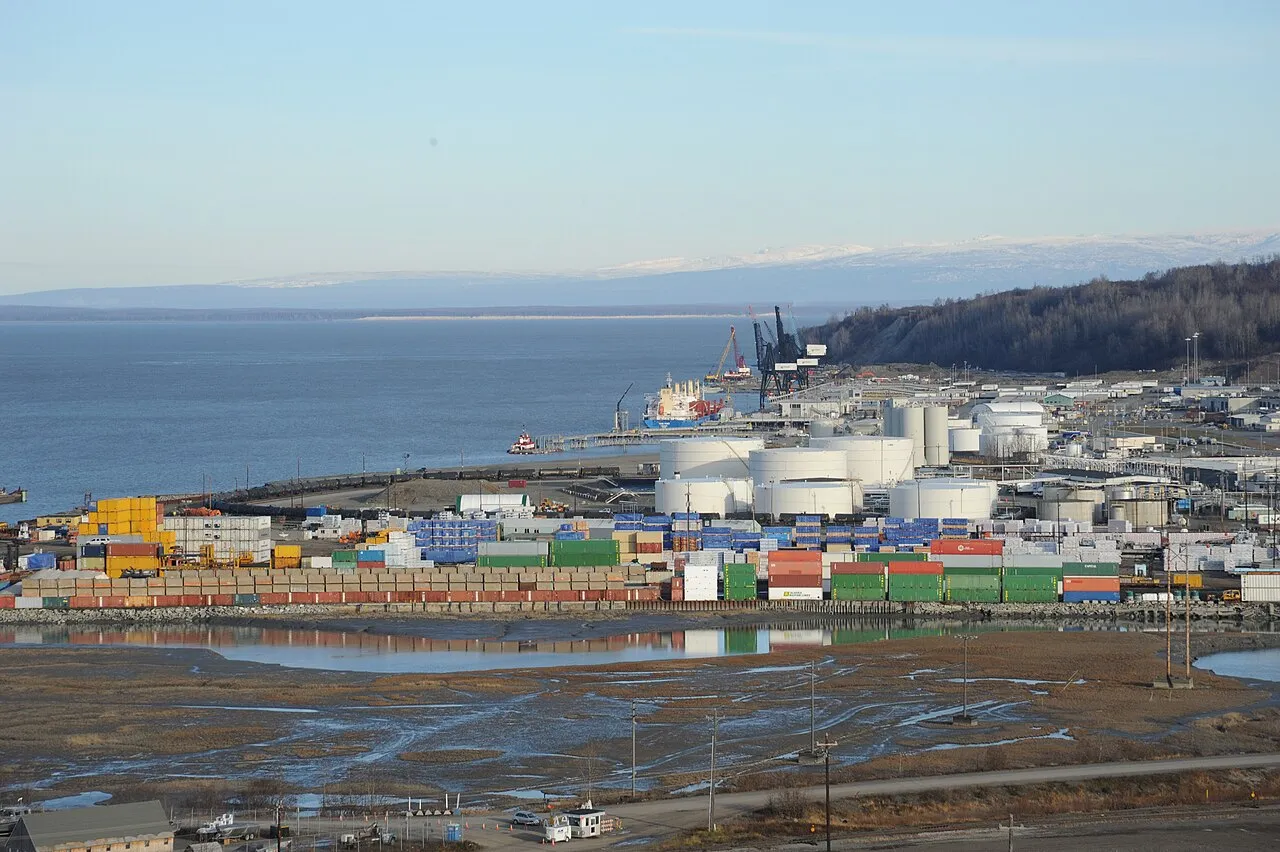
- Anchorage is not a cruise port: No cruise ships dock at the Port of Anchorage itself (it's a working cargo port). Ships marketed as "Anchorage" itineraries actually dock at Whittier (60 miles, 1-1.5 hours) or Seward (125 miles, 2.5-3 hours). All cruise guests transfer by motorcoach or Alaska Railroad.
- Wildlife Safety: Moose are common throughout Anchorage, including urban areas and city parks — keep 25 yards distance, especially from cows with calves. Both black and brown (grizzly) bears use city greenbelts and trails; ADF&G reports ~50 nuisance brown-bear calls per year. Carry bear spray on all hikes, make noise, travel in groups, and never leave food unattended.
- Turnagain Arm tides: Cook Inlet's Turnagain Arm (just south of Anchorage on the Seward Highway) has some of the highest tidal ranges in the world. Extreme tides create mudflats that can trap and drown visitors who walk onto them. Stay on marked trails and viewpoints. Check NOAA tide tables if venturing near the water.
- Earthquake preparedness: Alaska is the most seismically active US state. Anchorage experienced the 1964 M9.2 "Good Friday" earthquake (Earthquake Park interprets this) and a M7.0 in November 2018. Modern building codes are excellent, but know "Drop, Cover, Hold On" — instructions are posted in hotels and public buildings.
- Summer Daylight: Anchorage is at 61°N — below the Arctic Circle, so no true midnight sun. June 20-21 brings ~19.5 hours of actual sunlight and up to 22 hours of functional daylight including twilight. Bring a sleep mask. December brings only ~5.5 hours of daylight.
- Weather: Cruise season (May-Sep) highs are 55-68°F (13-20°C), nights 45-52°F (7-11°C). September is the wettest month (~2 inches); May is the driest. Layers and waterproof shell essential.
- Dena'ina Athabascan homelands: Anchorage sits within Dena'ina Elnena, the traditional homelands of the Dena'ina Athabascan people. Traditional place names are being reintroduced: Cook Inlet is Tikahtnu ("big water river"), Ship Creek is Dgheyaytnu, Point Woronzof is Nuch'ishtunt. Visit the Alaska Native Heritage Center to learn more.
- Cruise Transfers: If using cruise line motorcoach, confirm pickup times and locations. Alaska Railroad Coastal Classic to Seward is a scenic alternative. If driving yourself, verify parking and drop-off procedures at Seward or Whittier.
- Rental Cars: Book well in advance — cars sell out in summer. Return policies for one-way rentals (picking up in Anchorage, dropping at Seward) vary by company.
Depth Soundings Ashore
Practical tips before you arrive in Alaska.
Anchorage is Alaska's largest city with a population of approximately 290,000. It serves as the gateway for Gulf of Alaska cruises departing from Seward (2.5 hours south) and Whittier (1 hour southeast). Ted Stevens Anchorage International Airport (ANC) is the main gateway with direct flights from Seattle, Los Angeles, Dallas, and other US cities. Most cruise passengers spend at least one night in Anchorage before or after their voyage.
Currency is US Dollar. Credit cards accepted everywhere. English is the primary language. Safety is generally good with standard urban precautions. Wildlife encounters (moose, bears) require awareness even in urban areas.
Accessibility is good in Anchorage with paved trails, accessible museums, and ADA-compliant facilities. The Tony Knowles Coastal Trail is wheelchair accessible. Rental vehicles with hand controls available with advance notice. Cruise transfers typically use accessible motorcoaches.
Weather during cruise season (May-September) features temperatures 55-70°F with occasional rain. Layers essential. June and July offer 20+ hours of daylight. The midnight sun is remarkable but can disrupt sleep — bring a sleep mask.
Practical Information
- Currency: US Dollar; credit cards accepted everywhere
- Language: English
- Time Zone: Alaska Time (AKST), UTC-9/-8
- Weather: Summer 55-70°F; rain possible; layers essential
- Port Type: Gateway city — ships dock at Seward (2.5 hrs) or Whittier (1 hr)
- Walkable: Downtown walkable; attractions require car or tour
- Accessibility: Good — paved trails, accessible museums, ADA compliance throughout
Photo Gallery

Image Credits
- anchorage-chugach.webp: Diego Delso, CC BY-SA 4.0, via Wikimedia Commons
- anchorage-1.webp through anchorage-4.webp: Wikimedia Commons
Images sourced from Wikimedia Commons under Creative Commons licenses.
Frequently Asked Questions
Q: Where do Alaska cruise ships dock near Anchorage?
A: Cruise ships dock at either Seward (2.5 hours south) or Whittier (1 hour southeast). Anchorage itself is not a cruise port, but serves as the gateway city for flights and pre/post-cruise stays. Most cruise lines include motorcoach transfers between Anchorage and the ship as part of Gulf of Alaska packages.
Q: How much time should I spend in Anchorage?
A: At minimum, overnight if arriving the day before your cruise to avoid connection stress. Ideally 2-3 days to experience Alaska Wildlife Conservation Center, flightseeing, Native culture centers, and the spectacular Seward Highway drive without rushing. Many travelers add a pre-cruise land tour to Denali National Park.
Q: Is a rental car necessary in Anchorage?
A: Helpful but not essential. Downtown Anchorage is walkable, and organized tours include transport. However, a rental car ($50-90/day) offers flexibility for Alaska Wildlife Conservation Center, Portage Glacier, scenic drives, and making the Seward Highway journey at your own pace. Parking is generally easy and often free outside downtown.
Q: When is the best time of year to visit Anchorage?
A: May through September for cruise season. June and July offer longest daylight (20+ hours of light), warmest weather (60-70°F), and peak wildlife activity. August brings fall colors starting and salmon runs. May and September are quieter with slightly lower hotel prices.
Q: Does Anchorage have severe weather concerns?
A: Alaska has no hurricane season, but rain is possible any day during cruise season. The bigger weather concern is temperature variability — mornings can be cool (50s°F) while afternoons warm to the 70s. Layers are essential. Wildlife (moose, bears) is a more significant hazard than weather.
Q: What should I pack for Anchorage's weather?
A: Waterproof jacket and layers are essential — weather changes quickly and rain is always possible. Comfortable walking shoes with good traction, binoculars for wildlife viewing, and a sleep mask for the bright summer nights. If hiking outside urban areas, carry bear spray.
Q: Will rain ruin my activities in Anchorage?
A: Rain in Alaska is typically light and intermittent, not the heavy downpours of tropical regions. Most activities continue in light rain. The Alaska Wildlife Conservation Center, museums, and flightseeing all operate rain or shine. Locals say "there's no bad weather, only bad clothing" — pack layers and waterproof gear.
Last reviewed: February 2026