A tender call eighteen kilometres from the thing you came for
Belém sits about 120 kilometres up the Pará River from the Atlantic, on Guajará Bay. It is the great port city of the Amazon basin — though not, as almost every guide implies, on the Amazon itself. The commercial quay in the middle of town carries a little over seven metres, and that single number decides the shape of your day: a ship drawing eight or more anchors out in the bay off Icoaraci and sends you ashore by launch.
The transfer costs two hours of a port day before you add tender queues at both ends. That is not a complaint — it is the arithmetic, and knowing it in advance is what separates a good day here from a frustrating one. What is left is enough for the market, the fort and the theatre, and those three are the reason to come.
Last reviewed: 30 July 2026
Weather & Best Time to Visit
Captain's Logbook
An honest note before I begin: I have not stood on the Doca do Ver-o-Peso at first light. What follows is read from the record — from INMET's climate normals, from IPHAN's tombamento file, from UNESCO's inscription of three days ago, from Pará state and municipal releases, from the reported detail of Volendam's own call here in January 2026. Soundings taken in another's wake. When I sail here I will come back and log what I actually found.
The first thing to get straight is the one that shapes everything else. You do not tie up in Belém. The commercial quay in the Reduto district carries, in the Portuguese of the port record, pouco mais de sete metros de calado — a little over seven metres — and não permite atracação de grandes navios. Volendam draws about 8.1. There is no argument to be had with that number, and it is not a theory about what might happen: on 12 January 2026 Volendam herself anchored off Icoaraci and tendered nine hundred passengers ashore, on Belém's own founding anniversary. Every 2026 call has followed the same pattern. You come ashore by launch, eighteen to twenty kilometres from the city you booked this call to see.
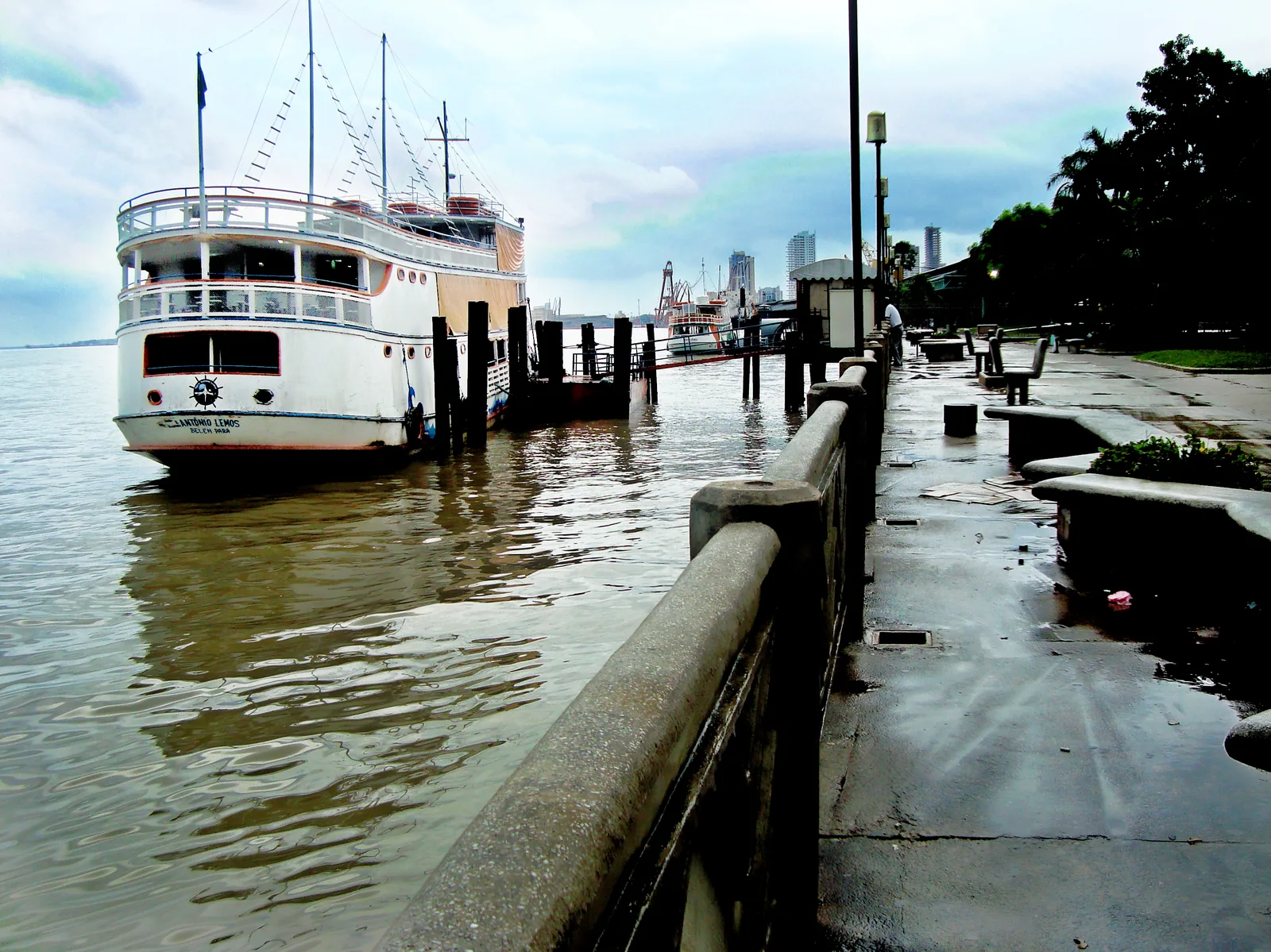
The Baía do Guajará. Brown, fresh, tidal and Amazonian — and not the Amazon, which is beyond Marajó Island a hundred kilometres away. Photo: Renato Ribeiro, CC BY-SA 2.0 via Wikimedia Commons
There is a deep berth now, and it does not change the answer. For COP30 the Terminal Portuário de Outeiro was rebuilt with a pier of roughly 710 metres, expressly to lie two liners alongside as floating hotels. It works. But it is not being used for this, and the reason is mundane: the state ports company's own explanation is that low tide at the hours cruise ships arrive and depart makes the manoeuvre difficult, tornando Icoaraci a opção mais viável. By 2028 that may have shifted. Do not plan on it.
So the arithmetic of the day is fixed before you wake up. Anchor around seven or eight, tender, an hour on the road each way, all aboard around five. Four to five usable hours downtown, and two of your day spent looking out of a bus window at a city you are trying to reach. Knowing that in advance is the whole difference between a good day here and a frustrating one, because the honest response is to plan three things instead of six.
The three are not hard to choose, and the first of them is Ver-o-Peso. Here I want to be careful with a date that almost every guide gets wrong. The market is usually said to date from 1688, though what actually happened in 1688 — on 21 March, by royal provision — was that the King of Portugal granted the Câmara de Belém the revenue of the Ver-o-Peso, so that the drogas do sertão leaving the colony could not be shipped without clearance. The weighing station itself, the Casa de Haver o Peso, was installed at the igarapé do Piri in 1625. The tax grant is sixty-three years younger than the thing it taxed, and collapsing the two loses more than six decades — it loses the point, which is that the market came first and the state came to it.
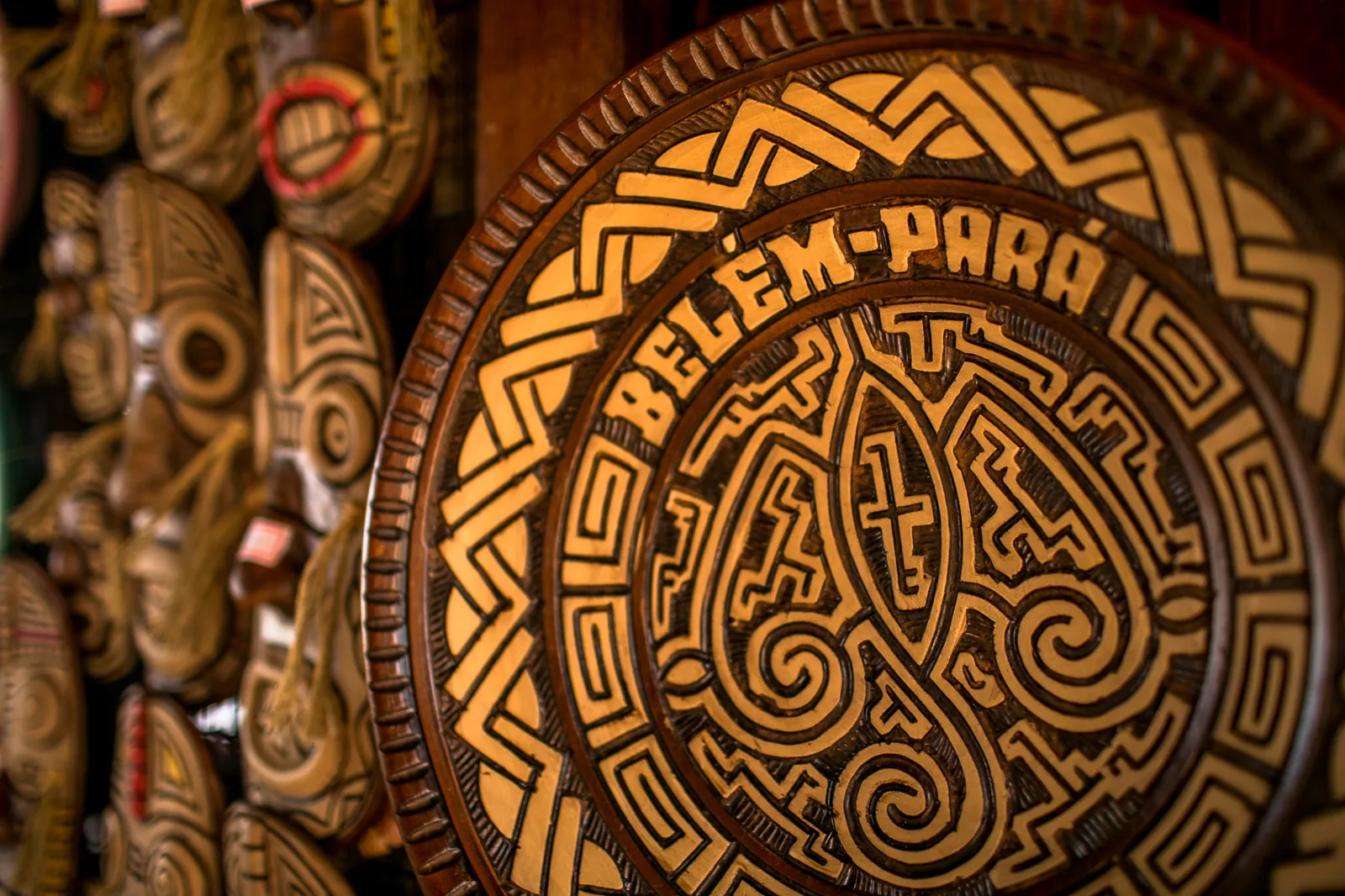
Icoaraci, where the tender lands, is Belém's ceramics district in its own right — Marajoara-style pottery, and a defensible way to spend the day if you would rather not spend two hours of it on a bus. Photo: Bruna Brandão / MTur Destinos, Public domain via Wikimedia Commons
The name is a corruption of haver o peso — to have the weight — which runs back through Portuguese to the French avoir du poids, avoirdupois, the Hanseatic weighing standard. "See the weight" is folk etymology. It happens to describe the function exactly, which is why it stuck.
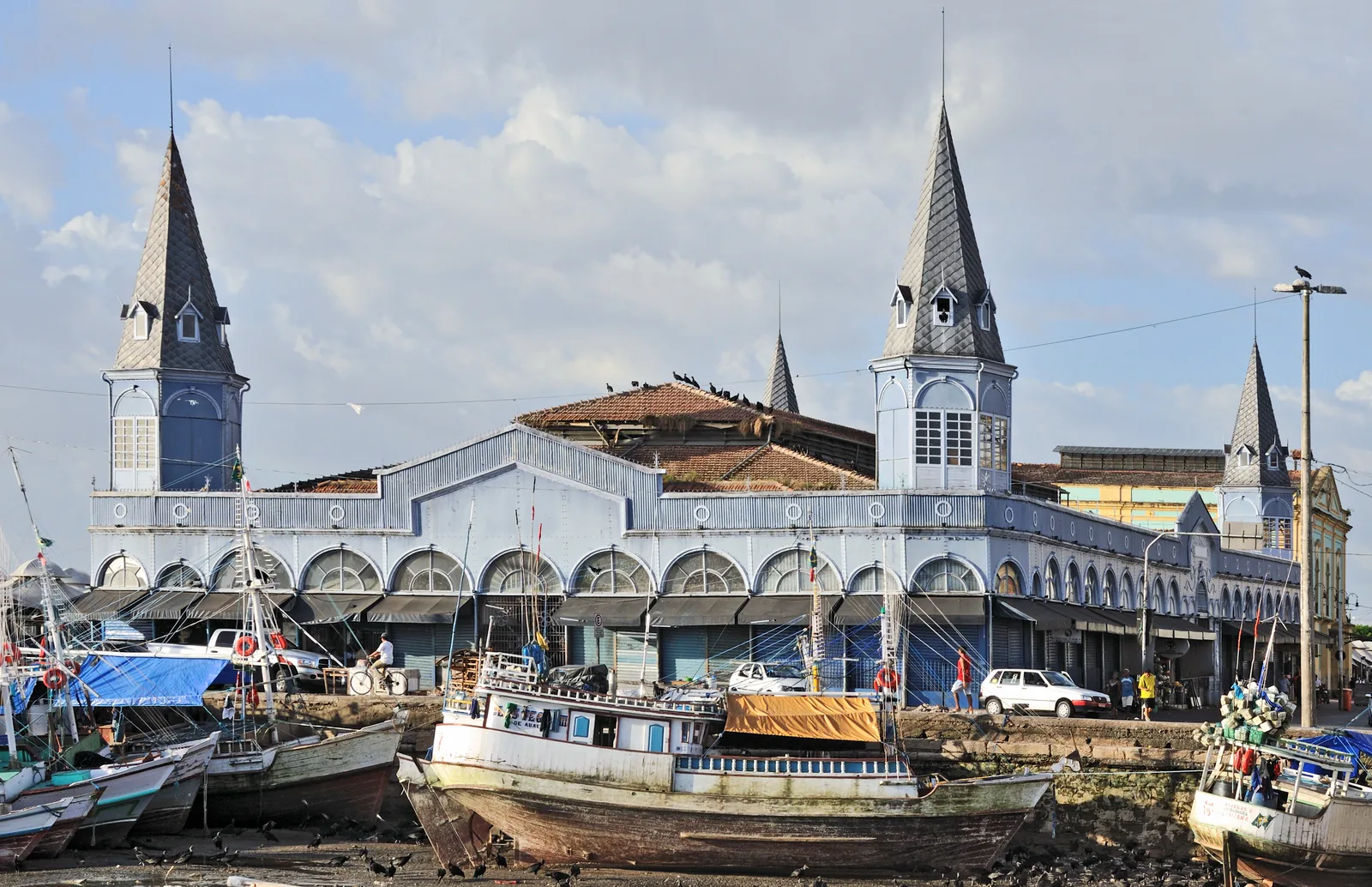
What stands there now is largely 1901: the Mercado de Ferro, a twelve-sided hall of 1,197 square metres in prefabricated zinc and iron, shipped in pieces from England and New York and bolted together on the riverbank — four corner turrets and the Belle Époque swagger of a city that at that moment believed rubber would go on forever.
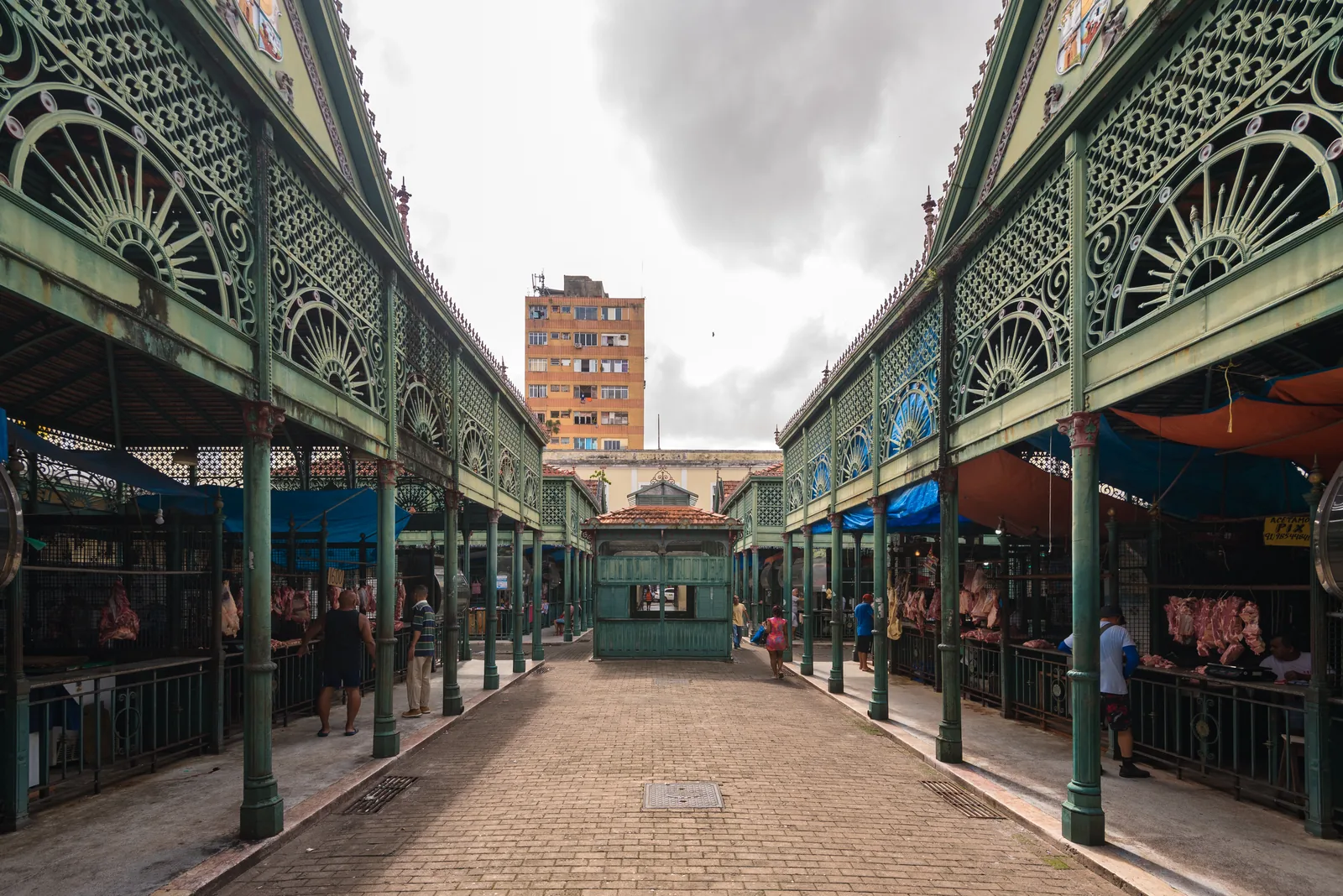
And then a correction of a different kind, because the market you may have read about no longer exists in that condition. The whole complex was physically rebuilt for COP30 — fish market September 2025, main fair November 2025, cast-iron meat market January 2026, nearly three hundred trading boxes renewed. Any description of a dilapidated Ver-o-Peso describes a city that has been superseded.
The Mercado de Carnes Francisco Bolonha, the 1867 meat market of the Ver-o-Peso complex — reopened in January 2026 after a full rebuild for COP30. Photo: Donatas Dabravolskas, CC BY-SA 4.0 via Wikimedia Commons
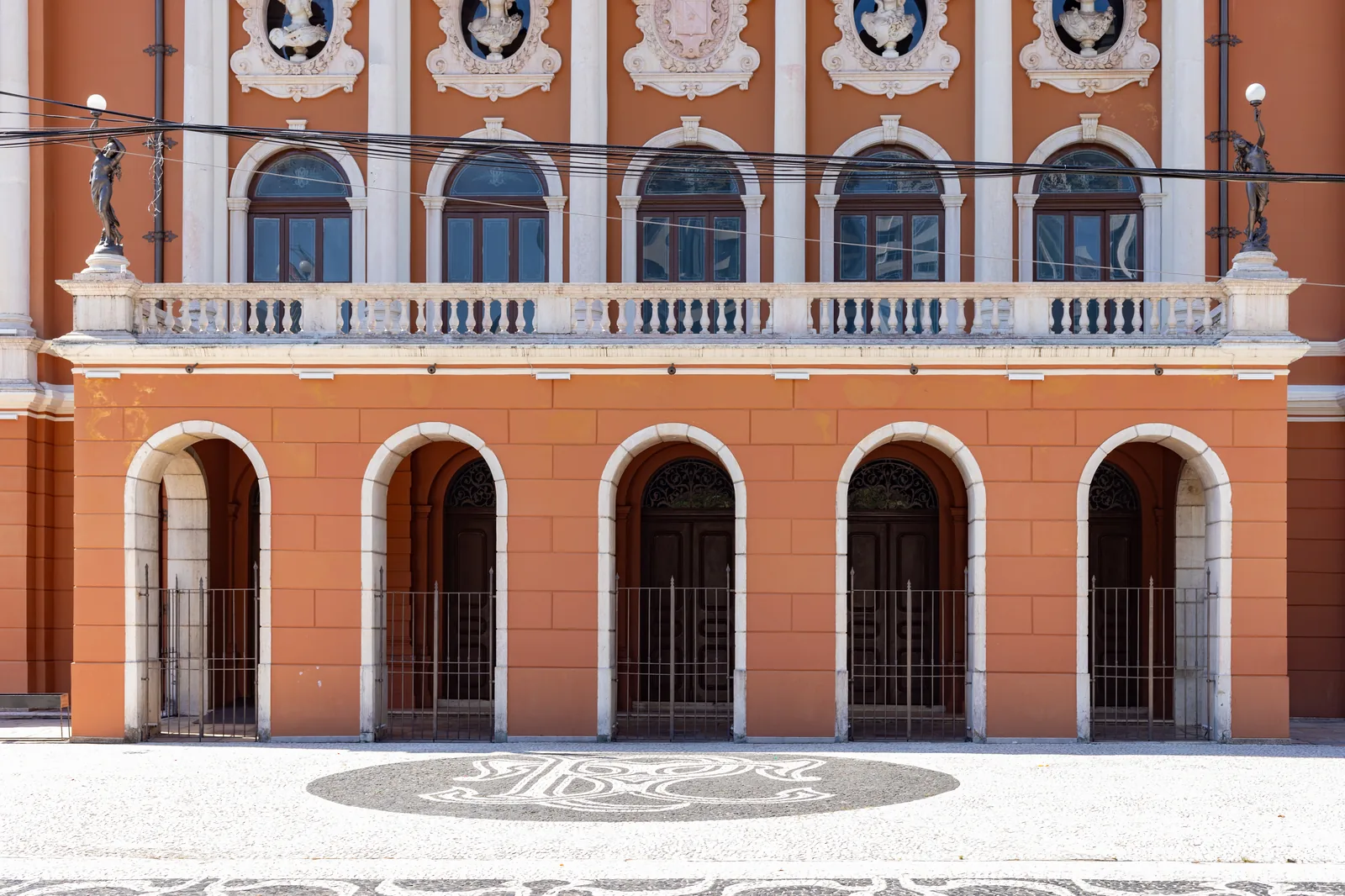
The second thing is three days old as I write, and I doubt any printed guide on the ship will have it. On 27 July 2026, at the 48th session of the World Heritage Committee in Busan, UNESCO inscribed the Theatro da Paz on the World Heritage List under criteria (ii) and (iv). Not alone: it is one of two components of a serial property called Amazonia Theatres, paired with the Teatro Amazonas in Manaus — and the squares are inside the inscription, not buffering it. Praça da República in Belém, Largo de São Sebastião in Manaus. That is deliberate. The nomination is about two river cities that built opera houses to prove something, not about two auditoria.
The theatre opened on 15 February 1878, eighteen years before Manaus, which is a fact worth carrying: the famous one came second. And lining the dates up is where I finally understood why the two were inscribed together rather than separately. UNESCO dates the Amazonian golden age from 1879 to 1912 — so Belém built its opera house the year before the money arrived, and Manaus built its in the middle of it, and inside a generation the boom was gone and both cities were left holding a Belle Époque theatre in the middle of a rainforest. A hundred and forty-eight years later the citation praises them for exactly the thing that ruined the men who paid for them: political and urban ambition. Brazil's twenty-sixth World Heritage property, and the first cultural one in the whole North Region.
The third is the correction I would least like a passenger to learn at the rail. Belém is not on the Amazon. It stands on the right bank of the Baía do Guajará, a sub-estuary where the Guamá, Acará and Moju come together on the flank of the Rio Pará — the southern arm of the delta, cut off from the Amazon's main stem by Marajó, an island roughly the size of Switzerland. The water below you is brown, fresh, tidal and Amazonian — but it is not the Amazon. Say at the mouth of the Amazon and you are right; say on it and you are about a hundred kilometres and one enormous island out.
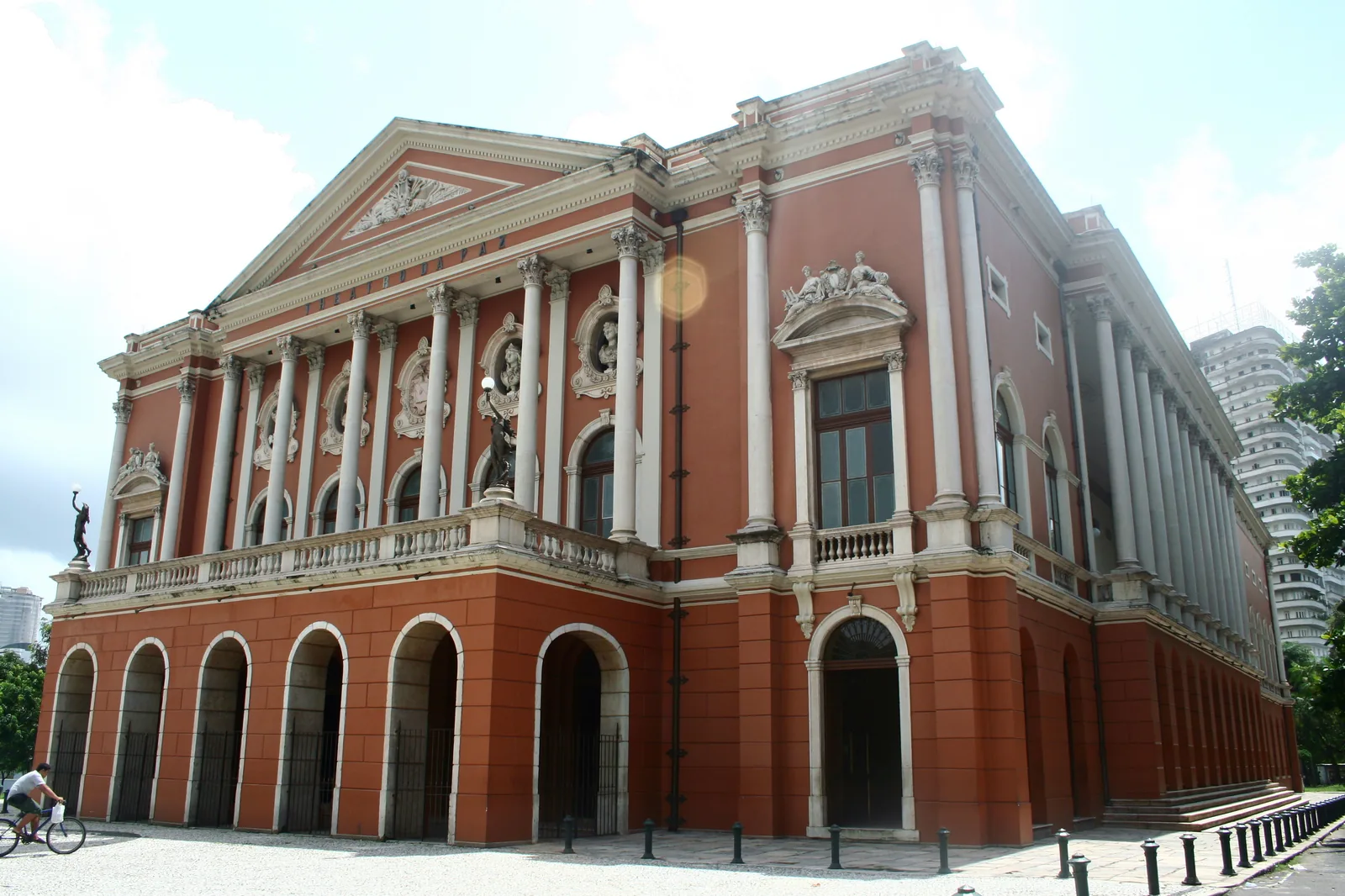
The Theatro da Paz, opened 15 February 1878 — eighteen years before the famous one in Manaus. Inscribed on the UNESCO World Heritage List on 27 July 2026, with the square it stands in. Photo: Paul R. Burley, CC BY 4.0 via Wikimedia Commons
Which sets a limit on the thing people most want. There is no day trip from here to the Amazon proper, none to Marajó, none to a lodge. What there is — and it is more than a consolation — is Ilha do Combu, ten to fifteen minutes by boat across the Guamá, genuinely dense várzea forest with ribeirinho households living off açaí and cacao, less than a kilometre off a city of 1.3 million. I have set out how to reach it below. It is the honest Amazon answer available on a port day.
The weather deserves a line of its own, because every world-cruise call falls in the worst of it: 3,308 millimetres of rain a year across 224 rain days, and a February-to-April call lands squarely in the peak. But the shape matters more than the total. This is not all-day drizzle; it is a bright oppressive morning, then a violent convective downpour in the early afternoon lasting thirty to ninety minutes, then a cooler evening. Belém sets its appointments by it — depois da chuva, after the rain. Do the market and the old city first thing, be indoors by early afternoon, and carry a poncho rather than an umbrella that will invert. The rain is warm, and passengers who accept it have a better day than passengers who fight it.
Two hard practicalities to settle a long way out, and I have given both their own entries below because getting either wrong is expensive. Brazil reinstated visas for United States, Canadian and Australian citizens on 10 April 2025, and the e-Visa explicitly covers arrival by vessel — it has to be in hand before you board in Florida, not sorted out in the bay. And the yellow fever certificate this voyage requires is French Guiana's requirement, not Brazil's. You need the card either way; it is worth knowing which country is asking, so that nobody argues with a gangway officer about the wrong one.
So the verdict the record kept pushing me toward. Belém is a genuinely great port badly served by its own logistics: a four-hundred-year-old Amazon market just rebuilt, an opera house that became a World Heritage Site this week, a colonial core you can walk in twenty minutes — yet it makes you spend two hours on a bus to touch any of it. Go early, take the transfer seriously, accept the rain, and eat the açaí the way they eat it here: thick, unsweetened, near-black, with tapioca granules and fried fish. Not a smoothie bowl. That is a different fruit in a different country.
What I learned putting this together is narrower than I expected, and it is about dates. Three of the four things worth correcting on this page are a date being quoted for the wrong event: 1688 for a market founded in 1625, a UNESCO listing for one theatre when it was two, a visa rule from 2019 that was reversed in 2025. None of them is anybody's dishonesty. They are all just a fact that stopped being true while the guidebooks went on printing. Belém has changed more in the last eighteen months than most cities change in twenty years, and the useful discipline for a port like this is not to know more than the guidebook — it is to check when the guidebook was written.
Cruise Port Guide
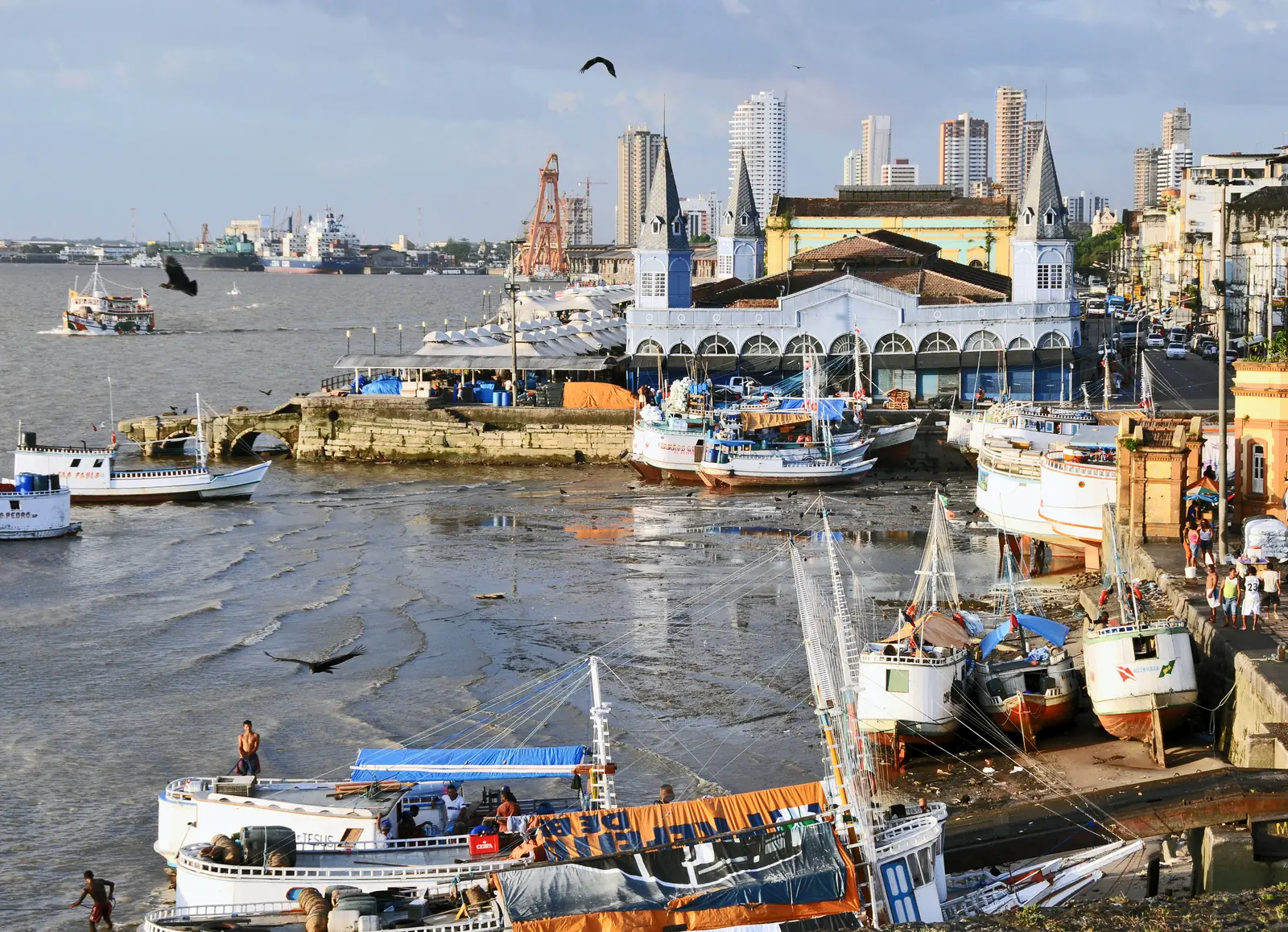
The fishing port and Ver-o-Peso from the fort. This is the waterfront your ship does not reach — the quay here carries a little over seven metres. Photo: Cayambe, CC BY-SA 3.0 via Wikimedia Commons
This is a tender call, and the reason is a number. The Port of Belém's downtown quay in the Reduto district carries a little over seven metres and does not permit large ships to berth; a world-cruise ship draws more than that. Ships anchor in Guajará Bay off Icoaraci and tender ashore to the Terminal Hidroviário e Turístico de Icoaraci. The Icoaraci foreshore itself is silted — the operative local statement is that the liners would run aground if they came to the waterfront.
The terminal is a river-boat facility that cruise tenders use. Opened on 8 October 2025 and run by CPH, the Pará state ports and waterways company — not the federal Companhia Docas do Pará, which runs the Porto de Belém proper. About 650 m² of building on a roughly 1,000 m² footprint, five floating docks, a covered walkway, ticket windows, accessible toilets and a few shops, with capacity around 2,000 passengers a day. It is also the terminal for the river route to Ilha de Cotijuba. Nothing about it was designed to take a 237-metre ship alongside and it cannot.
Outeiro is the thing that might change this by 2028. A new pier of about 710 metres was completed there for COP30 at a cost of over R$233 million, expressly to berth two large ships, and a cable-stayed bridge to Icoaraci opened on 18 October 2025. It is complete and operational — and cruise ships are still not using it, because low tide at typical cruise arrival and departure times makes the manoeuvre difficult. Watch this one; do not plan around it.
Getting Around Belém
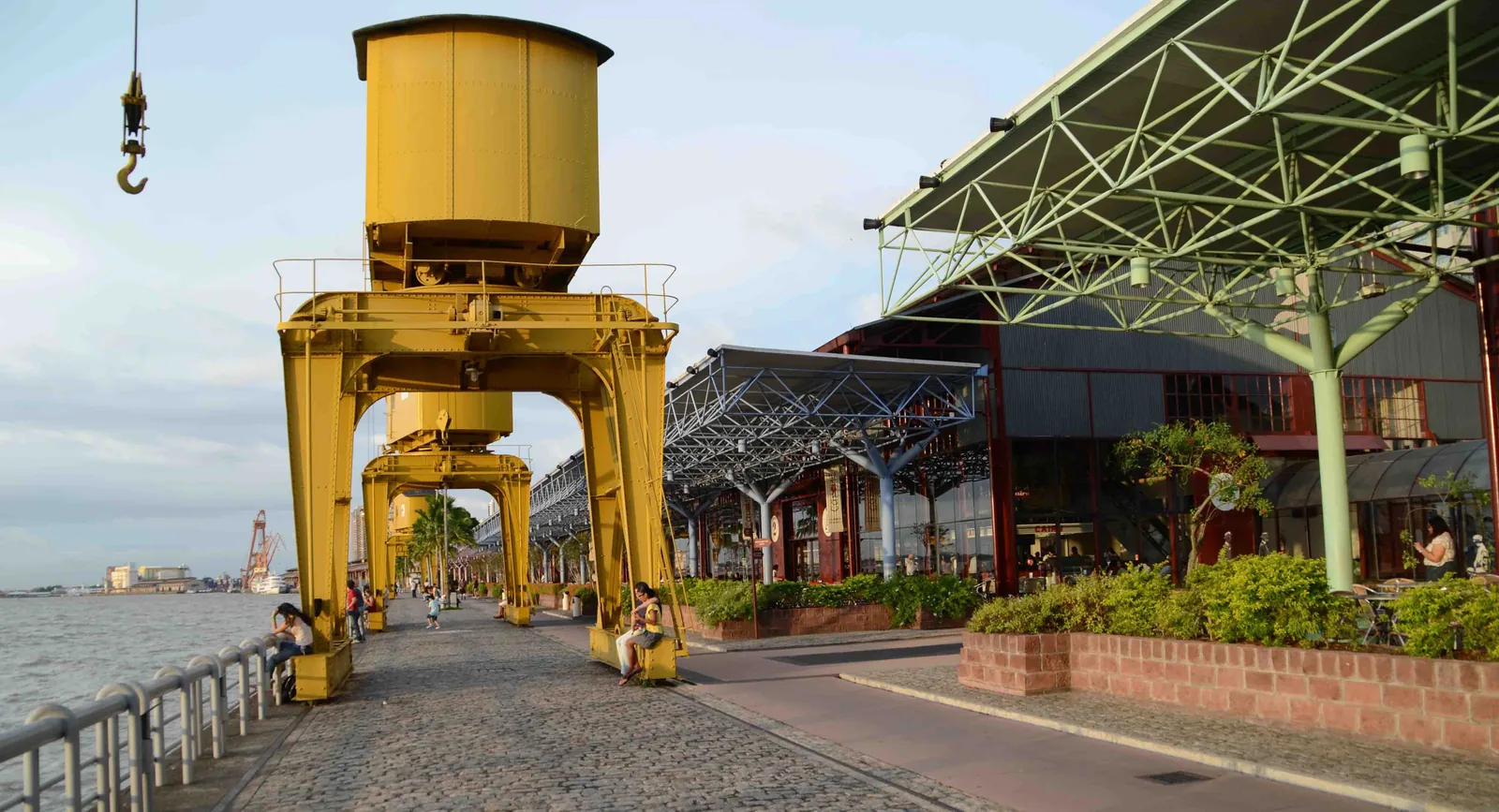
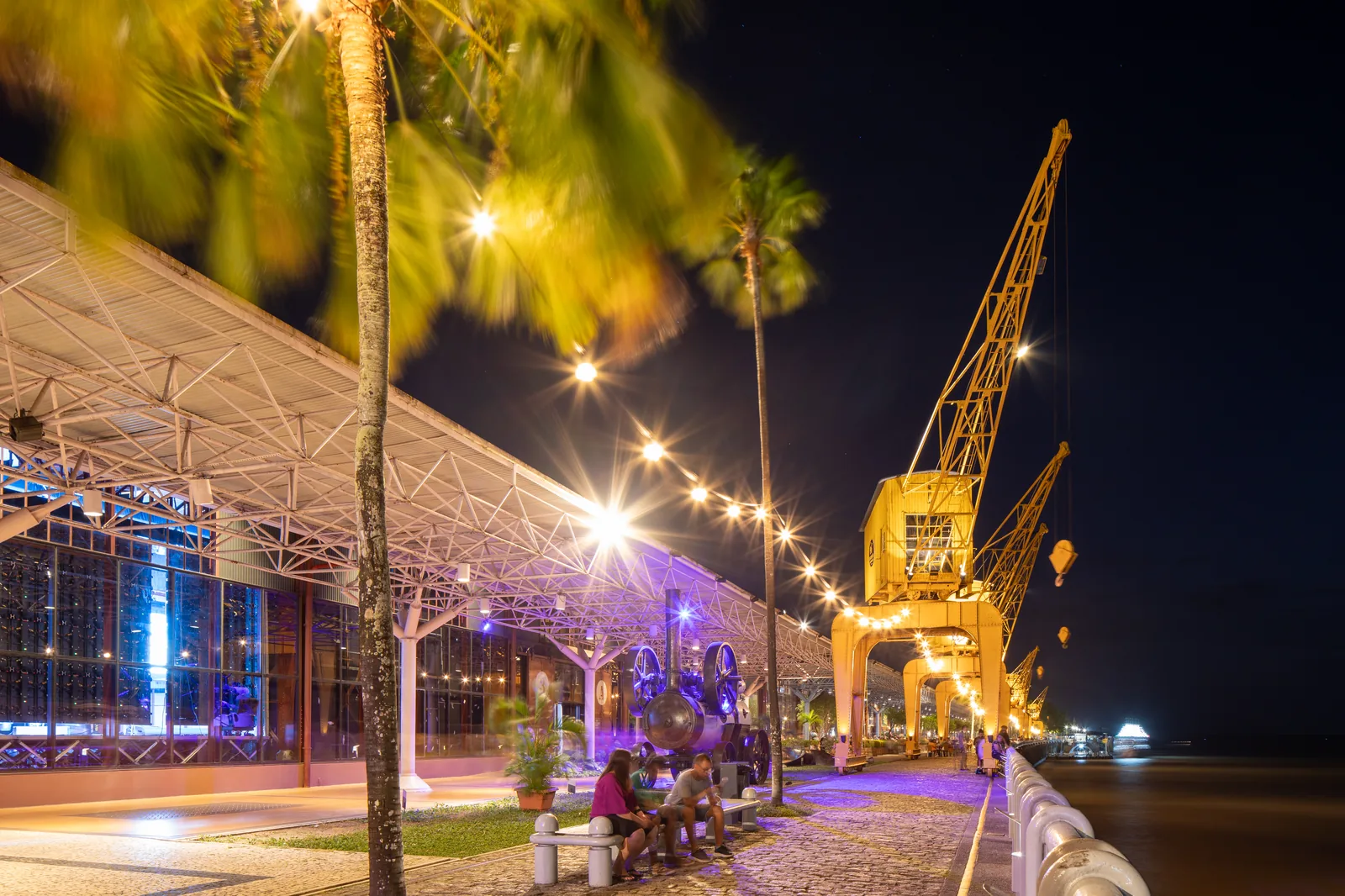
Estação das Docas — the old port warehouses, converted in 2000. Walkable from Ver-o-Peso, and the easiest place downtown to sit out the afternoon rain. Photo: Celso Abreu, CC BY 2.0 via Wikimedia Commons
The transfer is the day's governing fact. Icoaraci to the historic centre is 18–20 km; allow 40–60 minutes each way in normal traffic and longer at peak. On a call from around 07:00 to 17:00 that is two hours of road before you count tender queues at both ends, which leaves roughly four to five usable hours downtown.
Take the ship's shuttle or a pre-booked transfer for that leg. Expect informal taxi and van touts at the terminal. Uber and 99 both operate in Belém and are the recommended way to move around once you are downtown — a tracked route, a fixed price and no cash handling. Street-hailed taxis are legal; insist on the meter. Whether app coverage is reliable at the Icoaraci terminal for the return leg is not something I could verify, so do not stake your all-aboard time on it.
Downtown, everything worth your morning is walkable. Ver-o-Peso, the Forte do Presépio, the Casa das Onze Janelas, the Largo da Sé and Estação das Docas sit within ten to fifteen minutes of each other along the waterfront and through the Cidade Velha. Only the Theatro da Paz needs wheels, and that is about fifteen minutes by taxi to Praça da República.
Language: Portuguese, and the gap is real — English is limited even in tourism-facing businesses, and Spanish gets you part of the way but is not Portuguese. The city met the January 2026 arrivals with trilingual pocket maps and QR codes, which tells you both that Belém is making an effort and that you should carry a translation app.
Belém Port Map
Excursions & Experiences
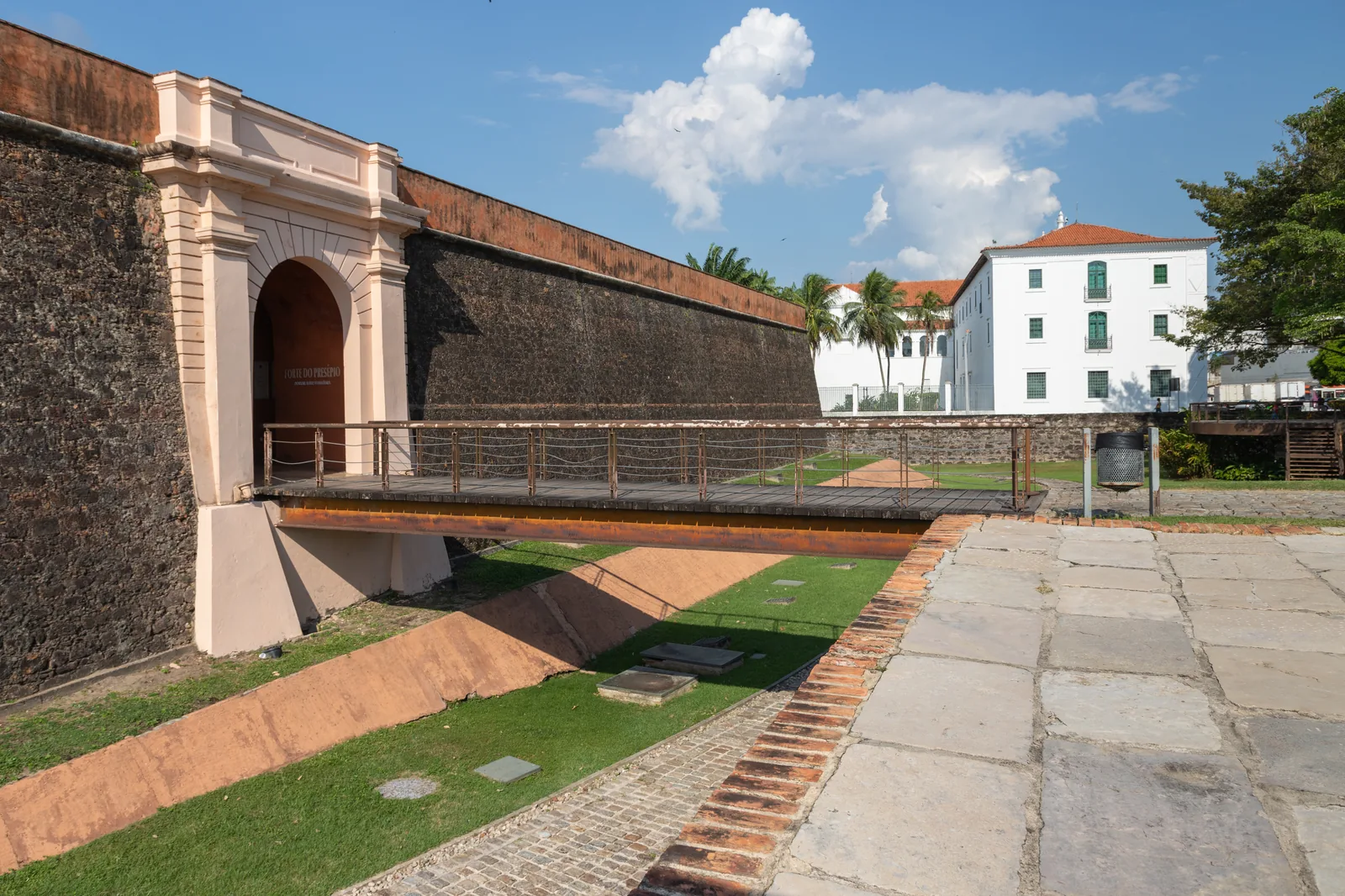
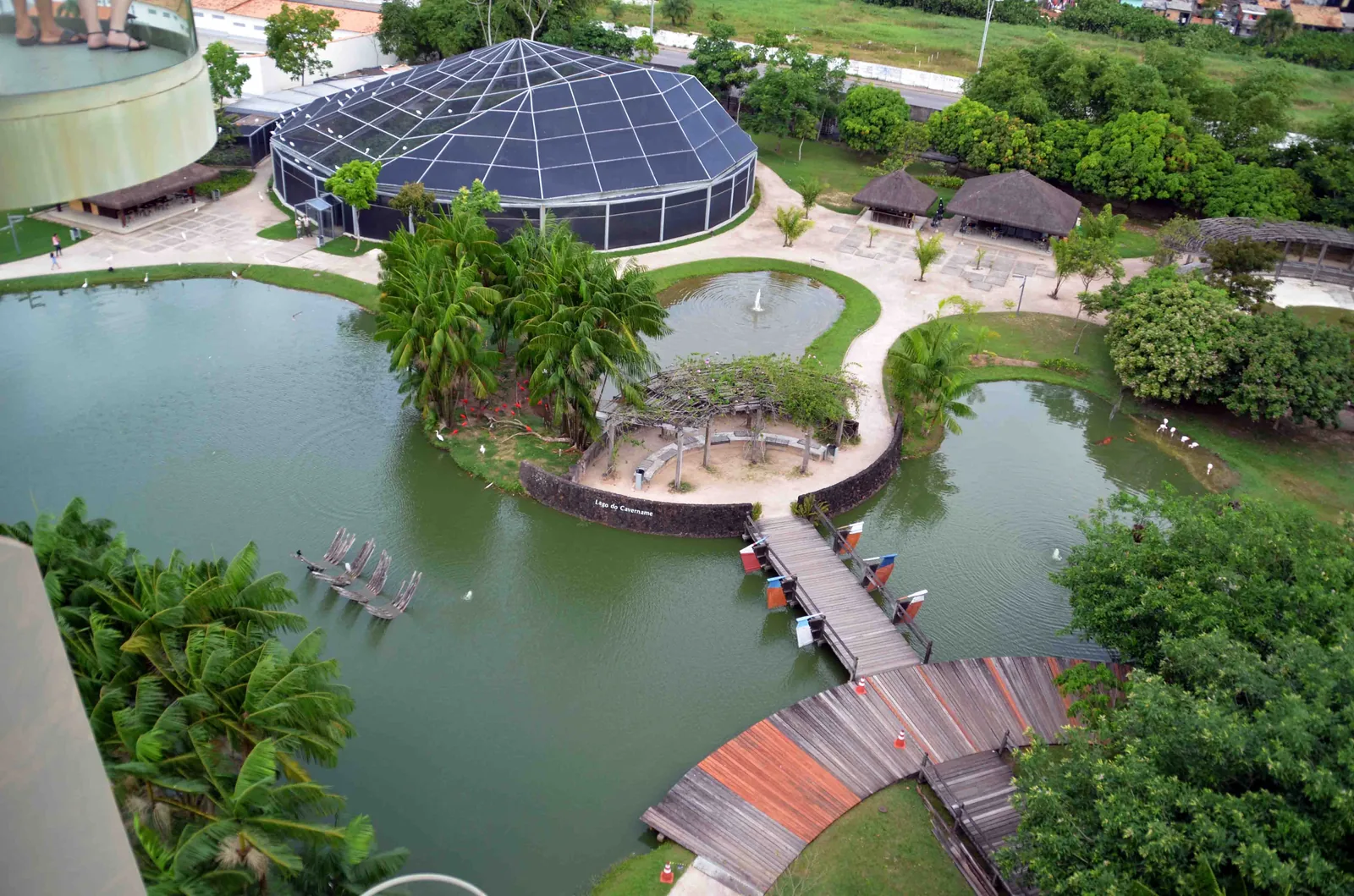
The Forte do Presépio, where Belém was founded on 12 January 1616. Five minutes' walk from Ver-o-Peso, and the natural pairing with it. Photo: Paul R. Burley, CC BY 4.0 via Wikimedia CommonsMangal das Garças, from the tower. A riverside park at the edge of the Cidade Velha, and the shortest route to Amazonian birds on a port day. Photo: Celso Abreu, CC BY 2.0 via Wikimedia Commons
The transfer eats two hours, so the honest planning advice is to pick two things, maybe three, and do them properly. There are three coherent shapes to a Belém day, and they do not combine.
Shape one — the city, and the strong recommendation
Ver-o-Peso, as early as the tender allows. The 1901 iron market, the fish market, the Doca, and above all the ervanárias — the herb and medicinal-plant stalls with their bark, roots, resins, garrafadas and scented banhos de cheiro. That corner is the most distinctive thing in the city and worth the visit even if you buy nothing. 60–90 minutes. The fish and açaí trade is over by mid-morning, so a 09:30 arrival is late for that and fine for the rest.
Forte do Presépio and the Casa das Onze Janelas, five minutes' walk from the market. The 1616 foundation point of the city on the bluff above the açaí fair, with an archaeology museum, and next to it an 18th-century house — sugar-mill owner's, then military hospital, now a contemporary art museum — whose terrace has the best bay view in the old city. 45–60 minutes.
Theatro da Paz, about 15 minutes by taxi to Praça da República. Guided tours depart on the hour Tuesday to Friday 09:00–12:00 and 14:00–17:00, and Saturday and Sunday mornings; 45 minutes, R$10 full and R$5 half, box office only, maximum 40 people per group, and free on Wednesdays. Closed Mondays. On a big-ship day the cap matters — ship excursions will have pre-booked, independent walk-ups may not get in.
Lunch at Estação das Docas. Three converted riverfront warehouses of the old port, opened in 2000 — 32,000 m² along 500 m of frontage, air-conditioned, safe, on the water. This is where you eat tacacá, maniçoba, pato no tucupi and filhote without taking a chance on a street stall, and it conveniently covers the early-afternoon downpour.
Shape two — the river, for anyone who came for the Amazon
Ilha do Combu, 10–15 minutes by boat from the Terminal Hidroviário Ruy Barata opposite Praça Princesa Isabel. An environmental protection area of ribeirinho households living from açaí and cacao, with dense várzea forest and igarapés less than a kilometre from the city shoreline. Riverside restaurants serve river fish and açaí and you can swim. The stop people come for is Dona Nena's Casa do Chocolate — bean-to-bar Amazonian chocolate made on the island.
This is the best honest answer to "can I see the rainforest on a port day" — genuine floodplain forest and genuine river life. It also takes half your day, so it does not combine with the city shape.
Shape three — stay in Icoaraci
Icoaraci is Belém's ceramics district, and that is not a euphemism for having nothing. The cerâmica marajoara workshops are here, working in a style drawn from pre-Columbian Marajoara pottery, along with a riverside promenade and the boats to Ilha de Cotijuba from the same terminal you landed at.
Modest against the city, but real — and it costs you no bus time at all. For anyone who would rather have four unhurried hours than two hours of road and three rushed ones, this is a defensible choice rather than a consolation prize.
Not feasible on a port day — say it plainly
The Amazon River proper, and Marajó Island — roughly three hours by boat each way. Nothing reaches either and back.
The Museu Goeldi on a Monday or Tuesday; its Parque Zoobotânico opens Wednesday to Sunday, 09:00–16:00, R$3. And the Theatro da Paz on a Monday, which is exterior-only.
Ver-o-Peso and the Theatro and the Goeldi and Combu. Pick two. The transfer has already spent the rest.
On booking. This is one of the ports where a ship excursion earns its price, and not for the reason people usually give. It is not access — Ver-o-Peso is free and the theatre is R$10. It is the transfer: 18–20 km of unfamiliar road each way, a hard all-aboard, a language gap, and a theatre capped at 40 people per tour. What you are buying is a guaranteed return to the tender. A private guide booked in advance does the same job and usually better. Going independent is entirely doable if you are comfortable with app-based transport and start early — but book ahead for the Theatro da Paz if it matters to you, because walk-ups on a big-ship day may not get in.
On safety, briefly — the detail is under Know Before You Go. Belém's homicide rate is genuinely high, and it is concentrated in peripheral neighbourhoods rather than the tourist core; what threatens a passenger is petty theft, and Ver-o-Peso is known ground for it. Daylight, a group, nothing visible, and do not wander into the streets behind the market. Under those conditions the market is safe enough and it is absolutely worthwhile. Anyone who tells you to skip Ver-o-Peso has misunderstood this port.
History & Heritage
The theatre and its square. UNESCO's inscription covers both — the nomination is about rubber-boom cities that built opera houses to prove something, not about two auditoria. Photo: Celso Roberto de Abreu Silva, CC BY 2.0 via Wikimedia Commons
Belém was founded on 12 January 1616 at the Forte do Presépio, on the bluff where the fort still stands above the açaí fair — a Portuguese claim staked at the mouth of the Amazon to keep the Dutch, English and French out of the river. The city grew as the shipping point for the drogas do sertão, the forest products of the interior, which is exactly what the weighing station of 1625 existed to tax.
The Casa de Haver o Peso was installed in 1625 at the igarapé do Piri, on the site of today's market, to weigh goods and collect duty. On 21 March 1688 a royal provision granted the Câmara de Belém the revenue of the Ver-o-Peso — a fiscal transfer sixty-three years later, not a founding, and the source of the date most guides print. The igarapé was filled in around 1803 and its mouth became the Doca do Ver-o-Peso. The original Casa was demolished in 1847; the meat market followed in 1867 and the iron fish market in 1901.
The rubber boom made the city you walk through. UNESCO dates the Amazonian golden age from 1879 to 1912, and the civic buildings of the waterfront and the Cidade Velha are its physical residue. The Theatro da Paz opened on 15 February 1878, just ahead of the money; the Teatro Amazonas in Manaus followed in 1896. When rubber seeds reached Southeast Asia and the plantations there undercut the wild trade, the boom collapsed and left both cities with opera houses they could no longer afford — which is, in the end, why UNESCO inscribed them together on 27 July 2026 as the serial property Amazonia Theatres, under criteria (ii) and (iv).
The most recent layer is only months old. Belém hosted COP30 from 10 to 21 November 2025, and roughly R$4.5 billion of committed works — one Pará assessment puts total investment above R$7 billion — rebuilt the market complex, delivered the Icoaraci tender terminal and the Outeiro pier, doubled the airport's capacity, closed the open drainage canals into linear parks and lit the main corridors. Officials described it as advancing the city's infrastructure by twenty to thirty years. Whatever you read about Belém that was written before late 2025 describes a different place.
Food & Drink Ashore
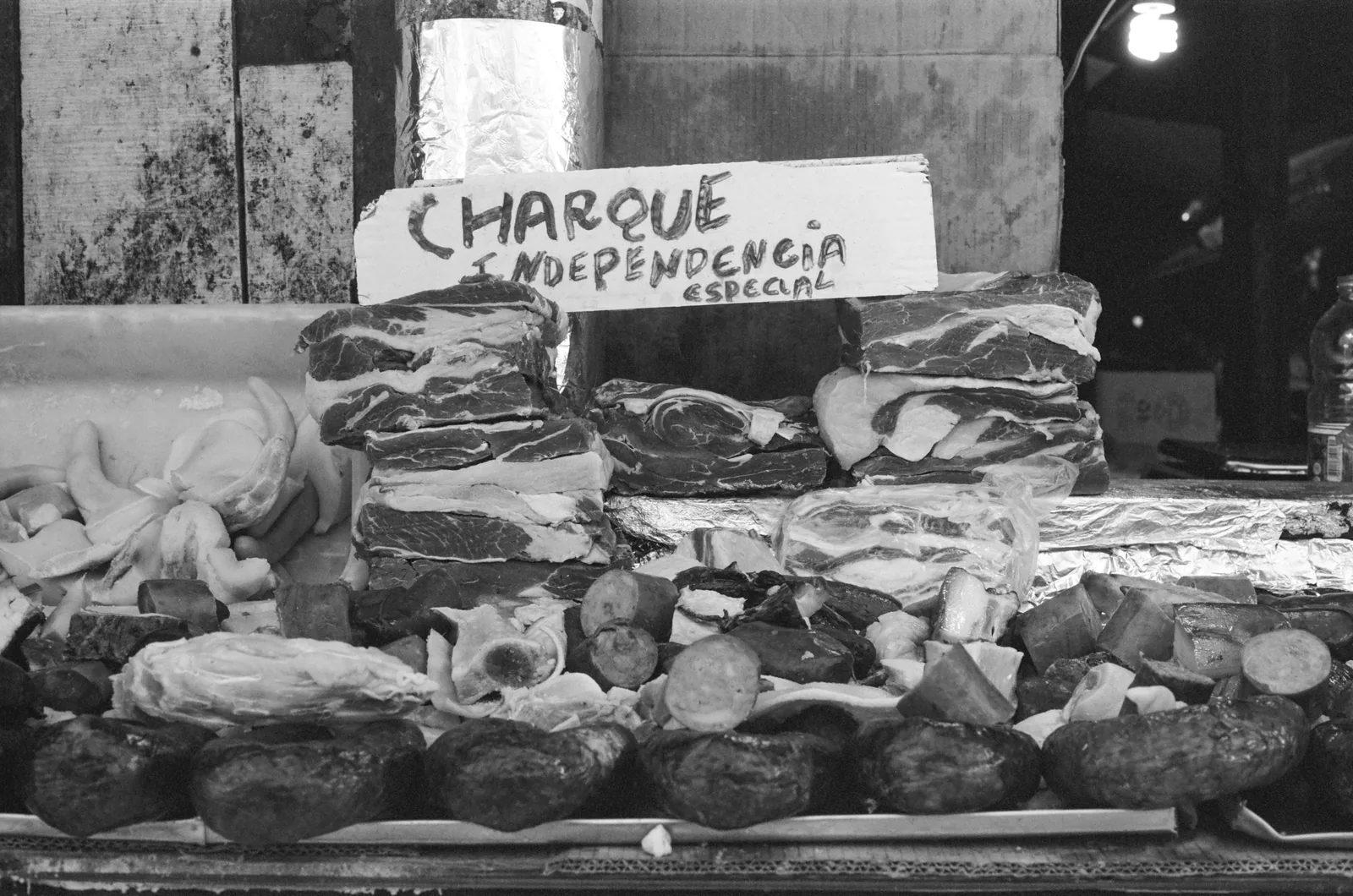
Charque and sausage on the slab at Ver-o-Peso. The market is cash-first; Estação das Docas takes cards. Photo: Paul R. Burley, CC BY-SA 4.0 via Wikimedia Commons
Açaí here is a savoury staple, not a smoothie bowl. It arrives at the Doca do Ver-o-Peso by boat before dawn from the river islands, in baskets called rasas, and it is eaten thick, unsweetened and near-purple-black with farinha de tapioca and fried fish or shrimp. Trying it the way the city eats it is ninety seconds of your day and the most authentic thing available in them. Buy it from an established vendor or a restaurant rather than a street cart — contaminated pulp is a genuine if small transmission route for Chagas disease.
The Pará kitchen is its own thing and it is worth ordering blind.Tacacá — a hot tucupi broth with jambu, the leaf that numbs your mouth, and dried shrimp. Maniçoba, cassava leaf cooked for days. Pato no tucupi, duck in fermented cassava juice. Filhote, pirarucu and tambaqui from the river. None of it tastes like anywhere else in Brazil.
Estação das Docas is the sensible place to eat on a ship day — air-conditioned, safe, on the water, and it covers the afternoon downpour. Cards are widely accepted there and in formal restaurants; carry small-denomination reais for the market, the açaí fair, taxis and the Icoaraci workshops, which are cash-first. Restaurants add a 10% taxa de serviço and nothing further is expected. Always pay in reais, never in the currency your card offers you. Do not drink the tap water; bottled is cheap and everywhere, and ice at established restaurants is fine.
Know Before You Go
US, Canadian and Australian citizens need a Brazilian e-Visa. The 2019 waiver was reversed on 10 April 2025 and the requirement is in force — about US$80.90, applied for online, 48–72 hours, and it explicitly covers arrival by vessel. It must be in hand before you board. Re-verify before a 2028 sailing: this policy has flipped twice in a decade.
Yellow fever is recommended for Pará but not required to enter Brazil. The mandatory requirement on this itinerary comes from French Guiana, so you will be carrying the certificate anyway. Get the vaccine at least 10 days before, and carry the yellow card.
This is a tender call 18–20 km from the city. Not a walk-off port, not a downtown berth. Budget two hours of road plus tender queues and plan around four to five usable hours in the centre.
Dengue, chikungunya, Zika and Oropouche circulate in Pará, carried by day-biting mosquitoes — precisely when you are ashore. Repellent applied in the morning is the single most useful health measure of the day. Urban malaria risk in Belém itself is low.
Petty theft is the real risk, not violent crime. Ver-o-Peso and the streets behind it are known pickpocket and phone-snatch ground. Daylight, groups, nothing visible, and do not resist a robbery. Brazil is US State Department Level 2 as of 10 June 2026; Pará is not among the states carrying Level 4 advisories.
Plan on rain. A February-to-April call falls in the wettest window of one of the wettest large cities on Earth — March averages 506 mm across 26 rain days. Outdoor walking first thing, indoors by early afternoon, poncho not umbrella.
Depth Soundings Ashore
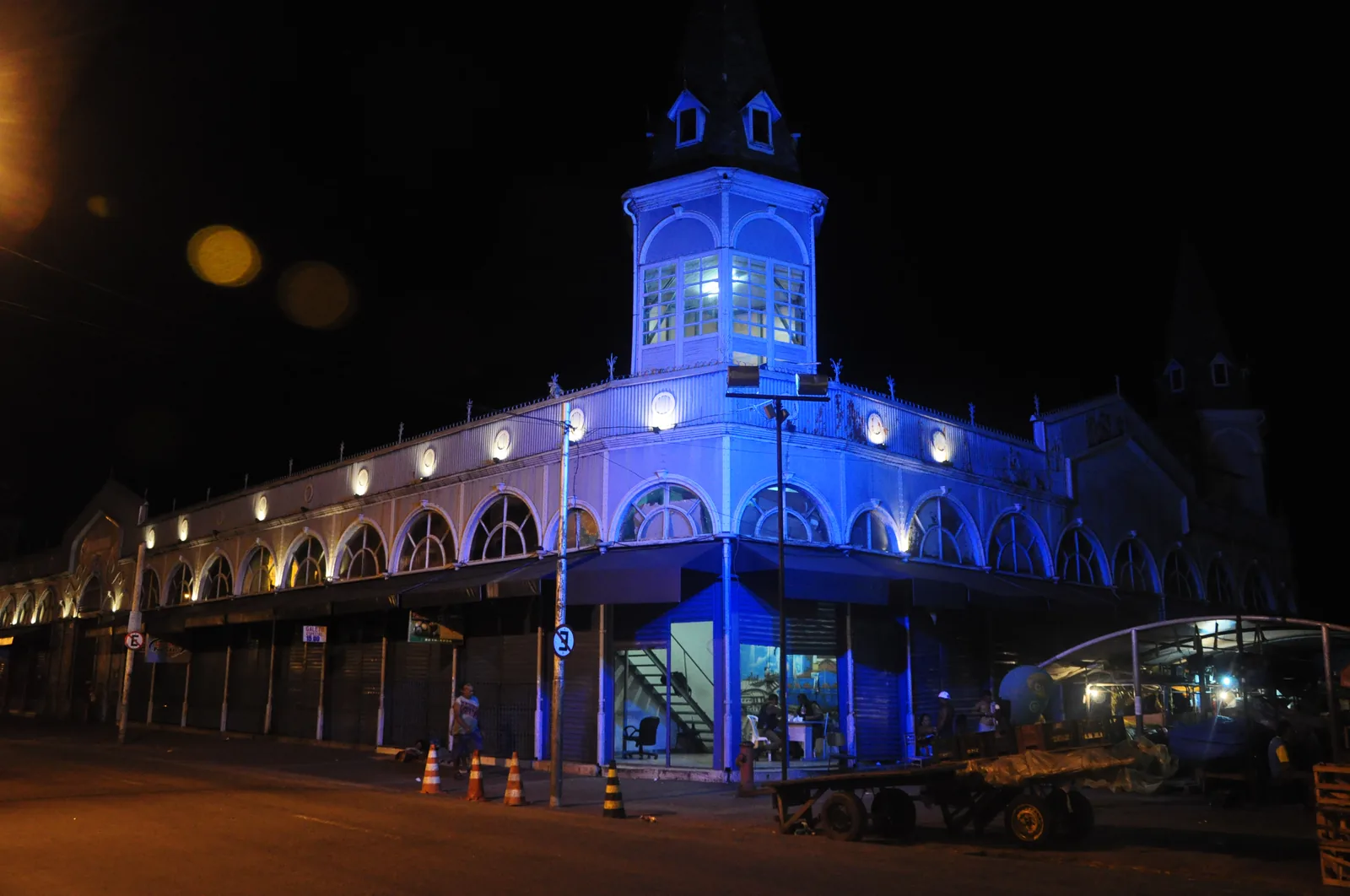
The fish market at night. It reopened in September 2025 after the COP30 rebuild — which is why descriptions of a dilapidated Ver-o-Peso are describing a city that no longer exists. Photo: Celso Abreu, CC BY 2.0 via Wikimedia Commons
Things about this call that only make sense once someone says them:
Ver-o-Peso dates from 1625, not 1688. The 1688 royal provision granted the city's chamber the market's revenue, sixty-three years after the weighing station was installed. Almost every guide prints the tax date as the founding date.
Belém is not on the Amazon. It is on Guajará Bay, off the Rio Pará — the delta's southern arm, separated from the main stem by Marajó Island. At the mouth of the Amazon, not on it.
The theatre became a World Heritage Site on 27 July 2026, as one of two components of Amazonia Theatres with Manaus — and both public squares are inside the inscription. It is also eighteen years older than the famous one in Manaus.
There is a deep berth and ships do not use it. Outeiro's 710 m pier was finished for COP30 and works; low tide at cruise arrival and departure hours keeps the fleet anchored off Icoaraci instead. The one thing most likely to change by 2028.
The "2,000 stalls" figure is nobody's. The municipality counts 1,193 permit-holders and about 2,400 people working the complex daily.
The market you may have read about was rebuilt. Fish market September 2025, main fair November 2025, meat market January 2026. Pre-2025 descriptions are obsolete, and that goes for most of the city.
Practical Information
Currency: the Brazilian real. Cards are widely accepted in restaurants, Estação das Docas and formal shops; the market, the açaí fair, taxis and the ceramics workshops are cash-first, so carry small notes. Pix is near-universal among Brazilians but needs a Brazilian account and is no use to a visitor. Use ATMs inside bank branches or at Estação das Docas, in daylight, and always decline the card machine's offer to charge you in dollars.
Language: Portuguese, and the gap is real. English is limited even in tourism-facing businesses. A translation app is genuinely useful here rather than a nicety.
Heat and humidity are the constant. Highs of 31–33 °C and humidity of 79–90% every month of the year, with the heat index frequently over 40. There is no cool season and no seasonal relief — what changes through the year is cloud and rain, not temperature. Light long sleeves beat sunscreen alone, and drink more than seems necessary.
Accessibility. This is a tender port, which rules it out for many wheelchair users before anything else is considered, and the terminal at Icoaraci does at least have accessible toilets and a covered walkway. Once downtown the historic core has uneven colonial paving, kerbs and market crowds. Minimal walking: Estação das Docas, which is level, air-conditioned, safe and on the water — a genuinely pleasant place to spend a few hours. Moderate: the market and the waterfront, on the flat. High energy: the Cidade Velha, the fort and the walk up from the açaí fair. Heat and humidity raise the effort of everything by a category.
What it costs: very little once you are there. Ver-o-Peso is free, the Theatro da Paz is R$10 with a 45-minute tour and free on Wednesdays, the Museu Goeldi's park is R$3. The money in this port day goes on the transfer, not on admission — which is exactly what a ship excursion is selling you.
Belém Photo Gallery
Estação das Docas from the river — three warehouses and a passenger terminal along 500 m of frontage. Photo: Paul R. Burley, CC BY 4.0 via Wikimedia Commons
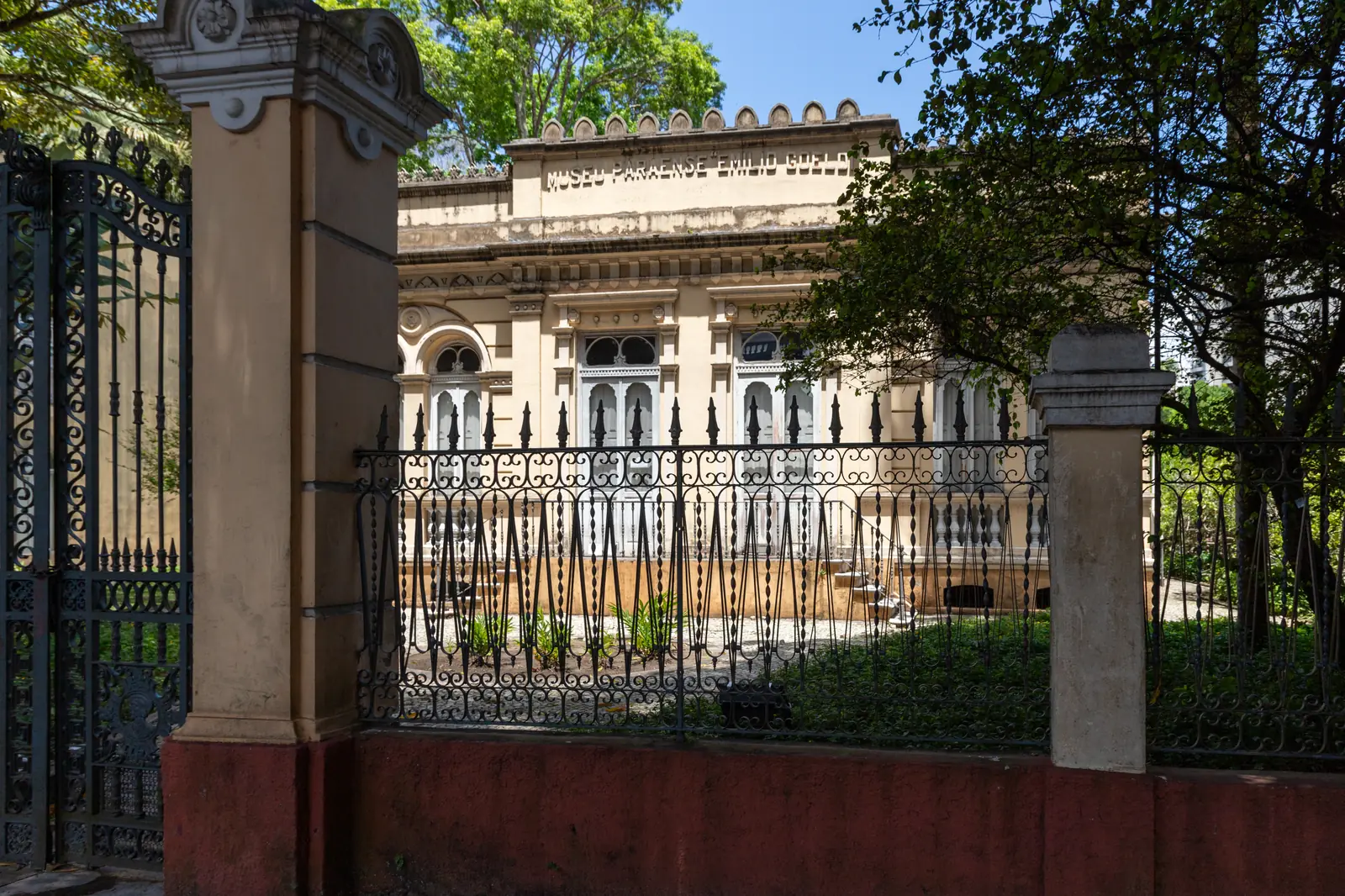
The Museu Goeldi, founded 1866. Its Parque Zoobotânico opens Wednesday to Sunday — closed on the two days a port call is most likely to fall. Photo: Paul R. Burley, CC BY 4.0 via Wikimedia Commons
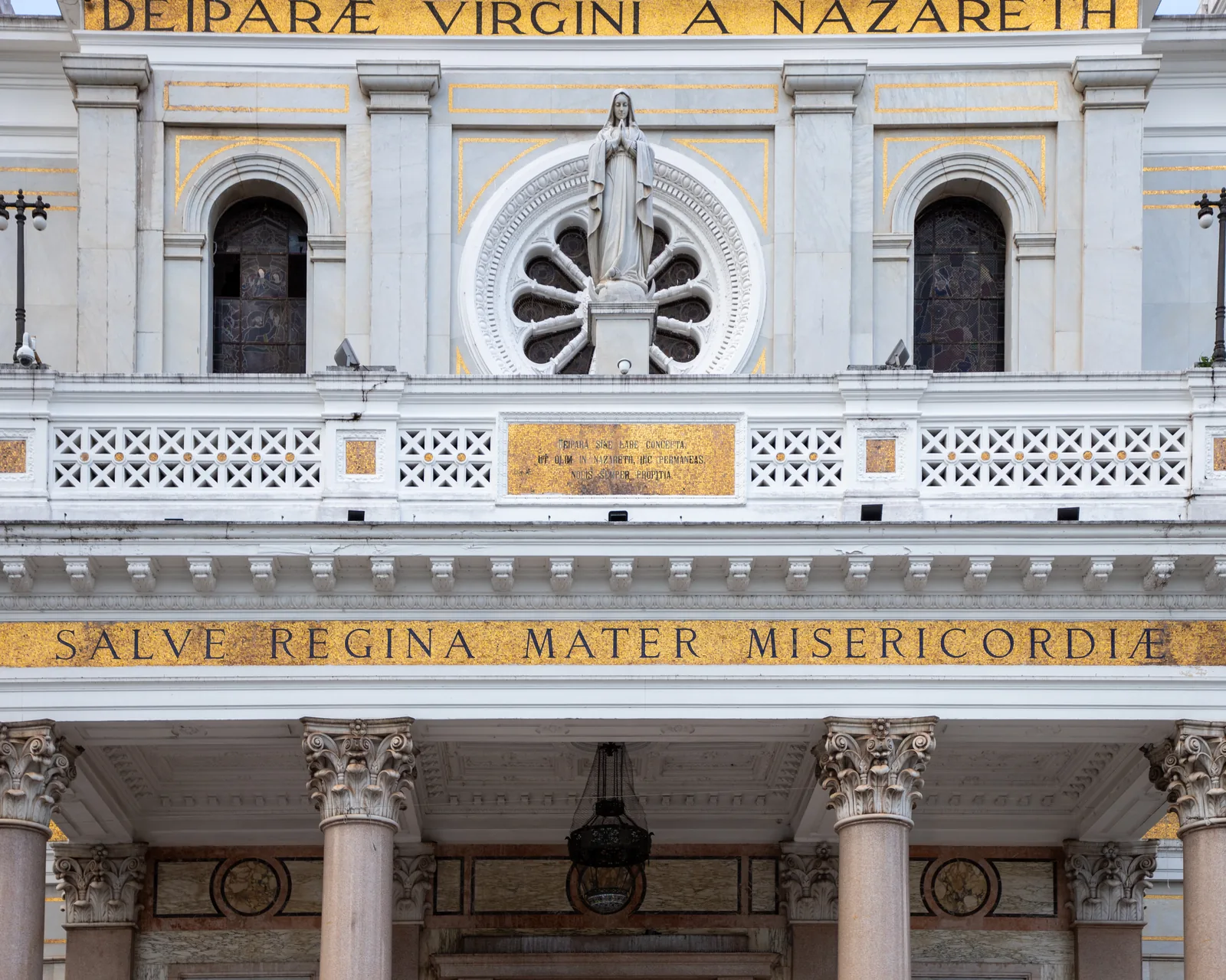
The Basílica de Nossa Senhora de Nazaré, built 1909 on the model of St Paul Outside the Walls. Its Círio procession each October is the largest Marian procession in the world — and falls nowhere near a world-cruise call. Photo: Paul R. Burley, CC BY 4.0 via Wikimedia Commons
Credits
Every image on this page comes from Wikimedia Commons under the license noted and is credited to its creator below. In the Wake does not claim authorship of these images; when we can add our own photographs from a future visit, we will.
The Ver-o-Peso market hall across the fishing basin (page header image) — Cayambe, CC BY-SA 3.0
The Baía do Guajará — Renato Ribeiro, CC BY-SA 2.0
Marajoara-style ceramics being made at Icoaraci — Bruna Brandão / MTur Destinos, Public domain
The Mercado de Carnes Francisco Bolonha — Donatas Dabravolskas, CC BY-SA 4.0
The Theatro da Paz from Praça da República — Paul R. Burley, CC BY 4.0
The fishing port and Ver-o-Peso from the Forte do Castelo — Cayambe, CC BY-SA 3.0
The riverside promenade at Estação das Docas — Celso Abreu, CC BY 2.0
Mangal das Garças from the observation tower — Celso Abreu, CC BY 2.0
The Theatro da Paz across its square — Celso Roberto de Abreu Silva, CC BY 2.0
Charque and sausages on a butcher's slab at Ver-o-Peso — Paul R. Burley, CC BY-SA 4.0
The Mercado de Peixe floodlit at night — Celso Abreu, CC BY 2.0
Estação das Docas from the river — Paul R. Burley, CC BY 4.0
The Museu Paraense Emílio Goeldi — Paul R. Burley, CC BY 4.0
The Basílica de Nossa Senhora de Nazaré — Paul R. Burley, CC BY 4.0
Frequently Asked Questions
What is the best time of year to visit Belém?
August to November, comfortably — rainfall drops to 120–150 mm and sunshine climbs past 240 hours. A world-cruise call falls in February, March or April instead, the wettest quarter of the year: 438, 506 and 466 mm, with rain on 25 or 26 days of each month. February has the least sunshine of any month; March is the wettest and most humid. There is no good option in that window, only an informed one.
What should I pack for the weather here?
A light rain jacket or a cheap poncho rather than an umbrella, which will invert in a convective squall, and shoes you do not mind soaking. Insect repellent with DEET or icaridin applied in the morning — the mosquitoes that carry dengue, chikungunya, Zika and Oropouche here bite by day, which is exactly when you are ashore. A hat, high-factor sunscreen and more water than seems necessary: the mean maximum is 31–33 °C every month of the year at 79–90% humidity, and the heat index frequently passes 40 °C.
Will rain concerns affect my day in Belém?
Almost certainly, and the useful thing is knowing the shape of it. Belém takes <strong>3,308 mm across 224 rain days a year</strong> — rain on 61% of all days — but it is convective, not continuous: a hot bright morning, cloud stacking from late morning, then a violent downpour in the early afternoon lasting 30 to 90 minutes. The city plans around it and so should you. Do Ver-o-Peso and the Cidade Velha first thing and be indoors by early afternoon. The rain is warm; passengers who accept it have a better day than passengers who fight it.
Does Belém have a storm season, and can this call be cancelled?
No tropical cyclones — one degree south of the equator is far too close for them to form — so no hurricane season in the usual sense. What there is instead is a wet season running roughly December to May and peaking in March, and convective squalls that can bring short bursts of strong wind across Guajará Bay. The bay is far more sheltered than an open-ocean anchorage, so the tender operation is less weather-exposed than at somewhere like the Îles du Salut. The greater constraint here is tidal rather than meteorological: arrival and departure are tide-set, and it is the tide window that keeps ships off Icoaraci rather than alongside at Outeiro.
Do cruise ships dock in Belém, or is this a tender port?
<strong>Tender, and not close to the city.</strong> The downtown quay carries a little over seven metres and does not permit large ships to berth; a world-cruise ship draws more. Ships anchor in Guajará Bay off Icoaraci and tender to the Terminal Hidroviário e Turístico de Icoaraci, 18 to 20 kilometres from the historic centre — as Volendam did on 12 January 2026. There is now a deep berth at Outeiro, finished for COP30 with a 710 m pier, but ships are not using it: the state ports company says low tide at typical cruise arrival and departure times makes the manoeuvre difficult. That is the thing most likely to change by 2028.
Do I need a visa for Brazil?
If you hold a <strong>US, Canadian or Australian</strong> passport, yes. Brazil reinstated the requirement on 10 April 2025, reversing the 2019 waiver, and it remains in force: an e-Visa applied for entirely online, currently about US$80.90, typically issued in 48 to 72 hours, and it <strong>explicitly covers arrival by vessel</strong> — so it must be in hand before you board. UK, EU and most other nationalities remain visa-exempt for short stays. Re-verify before a 2028 sailing; this policy has flipped twice in a decade.
Do I need a yellow fever vaccination?
For Brazil it is <strong>recommended for Pará but not required for entry</strong>. The mandatory requirement on this itinerary comes from French Guiana a few days earlier, which does demand proof — so you will be carrying the certificate regardless. Brazil follows the WHO single-dose-for-life schedule; take it at least ten days before, and carry the yellow card. Worth getting the reason right, so nobody argues about the wrong country at the gangway.
Is Ver-o-Peso safe, and is it worth it?
Yes and emphatically yes, in that order. It is a working market in a city with a high homicide rate — reported at 71.4 per 100,000 — but that violence is concentrated in peripheral neighbourhoods and organised-crime disputes, not the tourist core. What actually threatens a passenger is petty theft. Go in daylight and in a group, wear no jewellery or watch, keep the phone away, carry one card and modest cash, and do not wander into the streets behind the market. Under those conditions it is safe enough, and it is a four-hundred-year-old Amazon river market that has just been completely rebuilt. Anyone who tells you to skip it has misunderstood this port.
How old is Ver-o-Peso really?
The market dates from <strong>1625</strong>, when the Portuguese installed the Casa de Haver o Peso at the igarapé do Piri to weigh goods and collect duty. The 1688 date you will see almost everywhere refers to a royal provision of 21 March that year granting the city's chamber <em>the revenue</em> of the Ver-o-Peso — a fiscal transfer sixty-three years after the fact, not a founding. The iron market standing there now is 1901; IPHAN listed the whole ensemble on 9 November 1977.
Is the Theatro da Paz really a World Heritage Site?
Since <strong>27 July 2026</strong>, inscribed at the 48th session of the World Heritage Committee in Busan under criteria (ii) and (iv). Not alone: it is one of two components of a serial property called <em>Amazonia Theatres</em>, paired with the Teatro Amazonas in Manaus, and both public squares are inside the inscribed property rather than buffering it. Brazil's 26th World Heritage property and the first cultural one in the North Region. Tours run hourly, last 45 minutes, cost R$10, cap at 40 people, and the theatre is <strong>closed on Mondays</strong>.
Can I see the Amazon rainforest on a port day?
Not the Amazon River — Belém is on Guajará Bay off the Rio Pará, and the main stem lies beyond Marajó Island, an island roughly the size of Switzerland. What you can reach is <strong>Ilha do Combu</strong>, ten to fifteen minutes by boat from the Terminal Hidroviário Ruy Barata: genuine várzea floodplain forest, igarapés, and ribeirinho households living from açaí and cacao, less than a kilometre from the city shoreline. That is the honest answer. What is not available on a port day is Marajó, a lodge, or anything upriver.
Is this call suitable if I have limited mobility?
Partly, and the tender is the first hurdle — it rules the port out for many wheelchair users before anything else is considered. The Icoaraci terminal has a covered walkway and accessible toilets, and the 18–20 km transfer is a seated ride. Downtown, <strong>Estação das Docas</strong> is level, air-conditioned, safe and on the water — a genuinely pleasant way to spend a few hours rather than a fallback. The Cidade Velha, the fort and the market have uneven colonial paving, kerbs and crowds, and the heat raises the effort of everything by a category.



.jpg)
.jpg)


_(9513504846).jpg)

.jpg)


.jpg)


