


Photo: Unsplash
Captain's Logbook: Busan
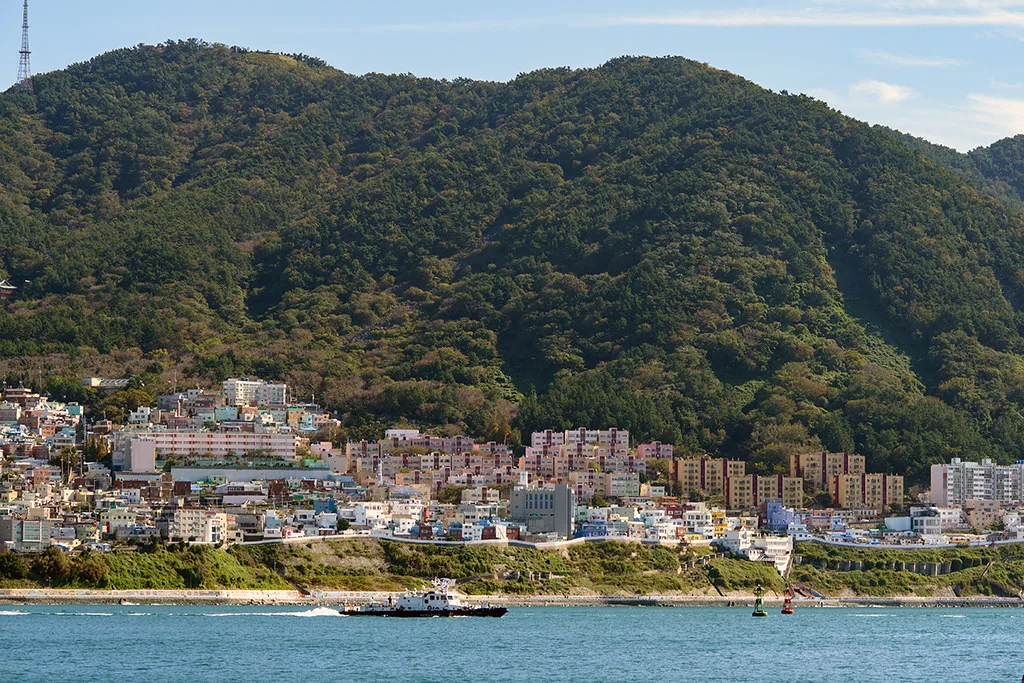
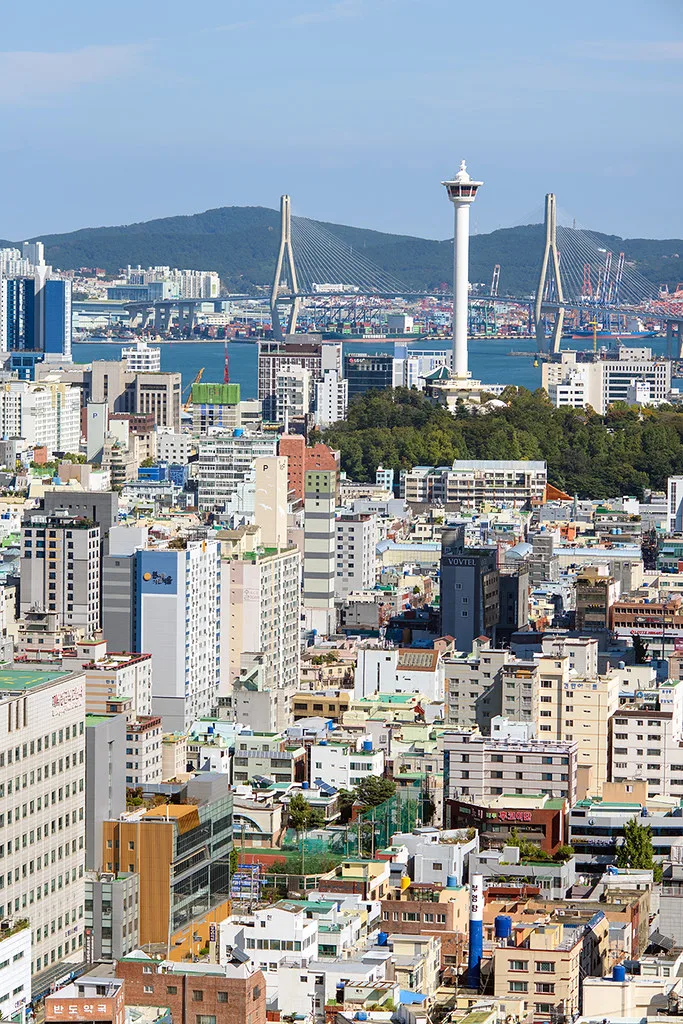
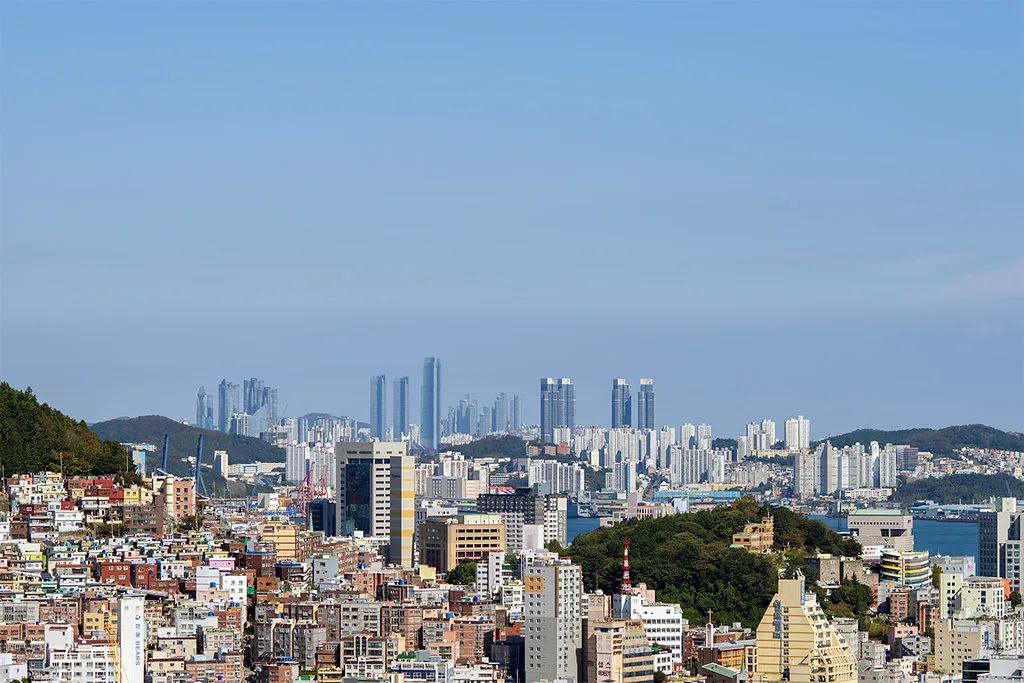
I confess I arrived in Busan with Seoul on my mind — expecting South Korea's largest port city to be merely a smaller version of the capital. How wrong I was. From the moment the ship rounded the headland, I saw a city that refuses comparison. Mountains tumble directly into the sea here, their slopes thick with temple complexes some fourteen centuries old. The harbor stretched wide and busy, testament to Busan's role as Korea's maritime heart, its fishing heritage written in every dock and market stall.
What strikes me most is how Busan wears its history openly. This is a city shaped by war and refuge, by fishermen and monks, by artists who saw beauty in rusted hillsides and transformed them into living canvases. Walking these streets, I found myself thinking: where Seoul pulses with corporate ambition, Busan flows with salt air and creativity. The energy feels coastal, unhurried in the best way, confident in its own identity.
I spent a day wandering from cliff-side temples where waves crash against Buddhist prayer halls, to markets where octopus writhe in vendors' hands, to hillside neighborhoods painted every color imaginable. This is Korea's film capital — the Busan International Film Festival draws global attention each October — but it's also simply a city that knows how to live. Beaches stretch white-sanded along modern districts. Street vendors sell hotteok with seeds unique to Busan. K-pop drifts from shop windows, mixing with temple bells from the mountains above.
I saved the best for first light. I climbed down the 108 stone steps of Haedong Yonggungsa Temple in darkness, each step representing a human affliction the Buddha taught us to release. Then the sun broke over the East Sea, gilding the pagodas perched impossibly on oceanside cliffs. Waves crashed against the rocks below. Incense spiraled upward, mingling with salt spray. A monk in gray robes struck the great bell, and its voice rolled out over the water like something older than language. I stood at the bottom of those steps, my eyes filled with tears I could not explain, and whispered a quiet prayer of gratitude — not to any tradition I could name, but simply to the fact of being alive in a place where human devotion and the raw power of nature had been woven together for six hundred years.
We wandered through Gamcheon Culture Village in the mid-morning light, climbing steep alleys between houses painted every color of the sky, collecting stamps for the village passport at each turning. An elderly woman sat on her doorstep watching the parade of visitors with an expression I couldn't quite read — pride and weariness mixed in equal measure. My wife bought a handmade bookmark from a tiny workshop where a young artist was painting watercolors of the rooftops below. "This used to be a refugee settlement," he said in careful English. "My grandmother came here during the war with nothing. Now look." He gestured at the panorama of color cascading down the hillside to the harbor. The transformation of Gamcheon from desperate shelter to beloved landmark felt like the story of Busan itself — a city that takes what it's given and makes it beautiful.
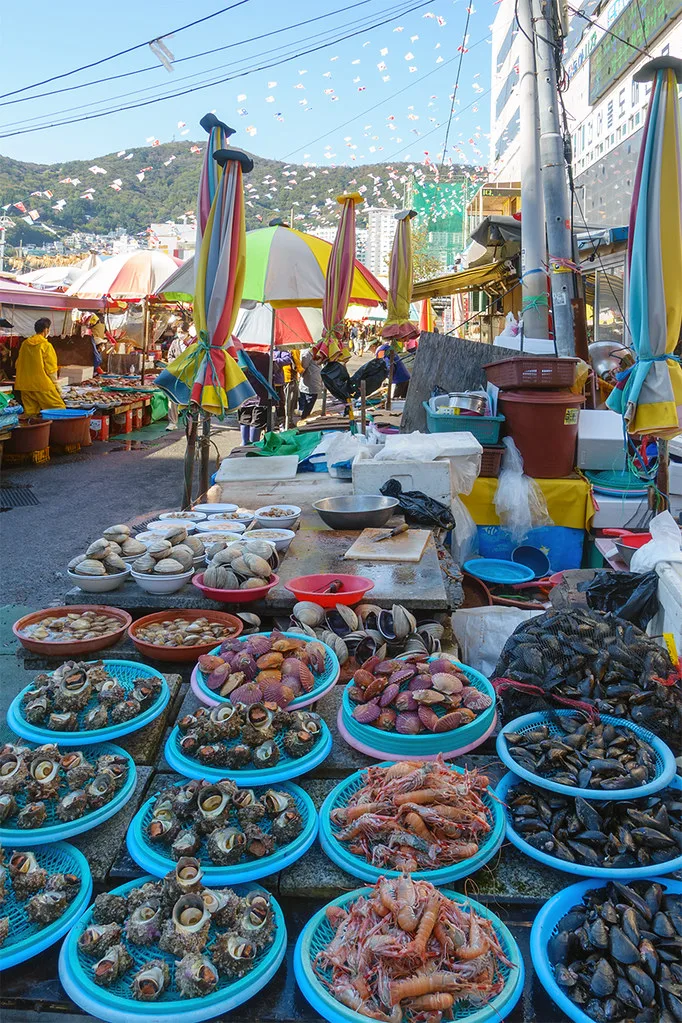
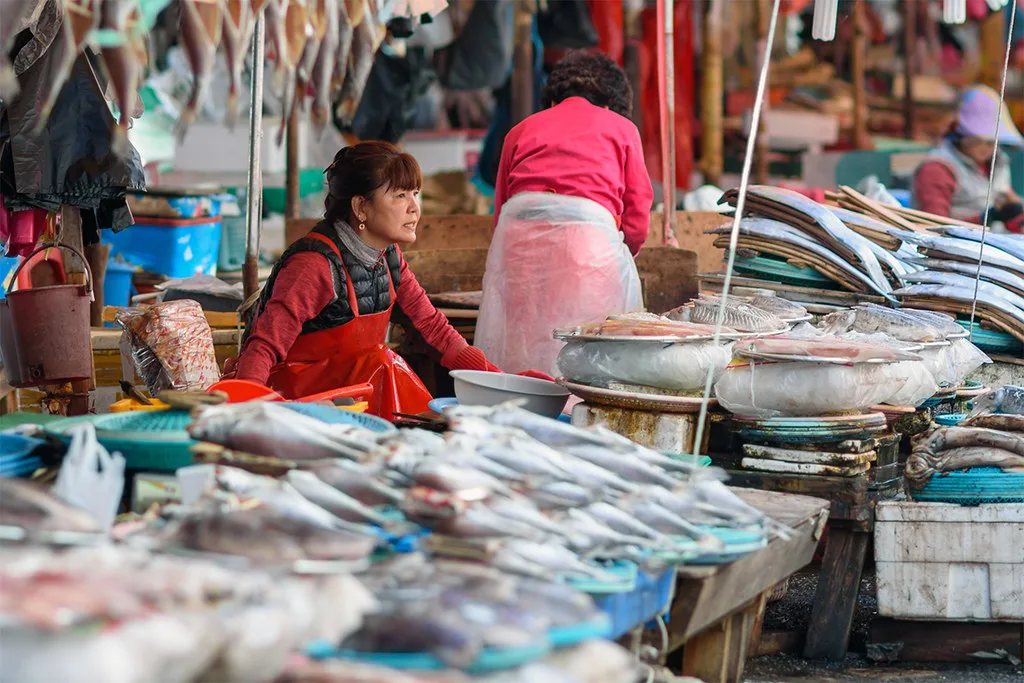
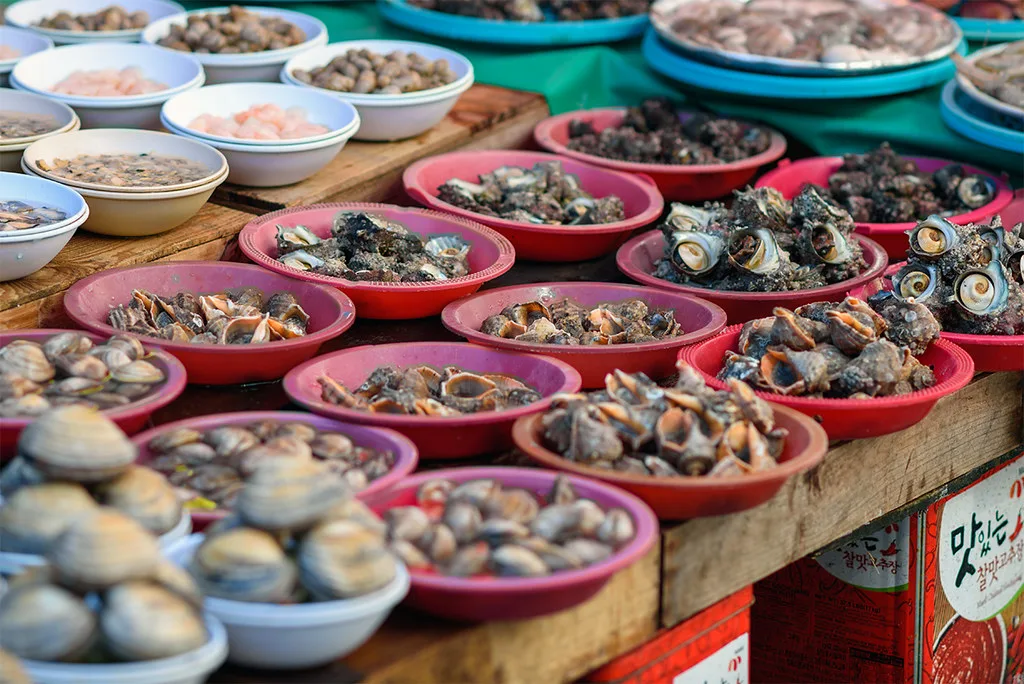
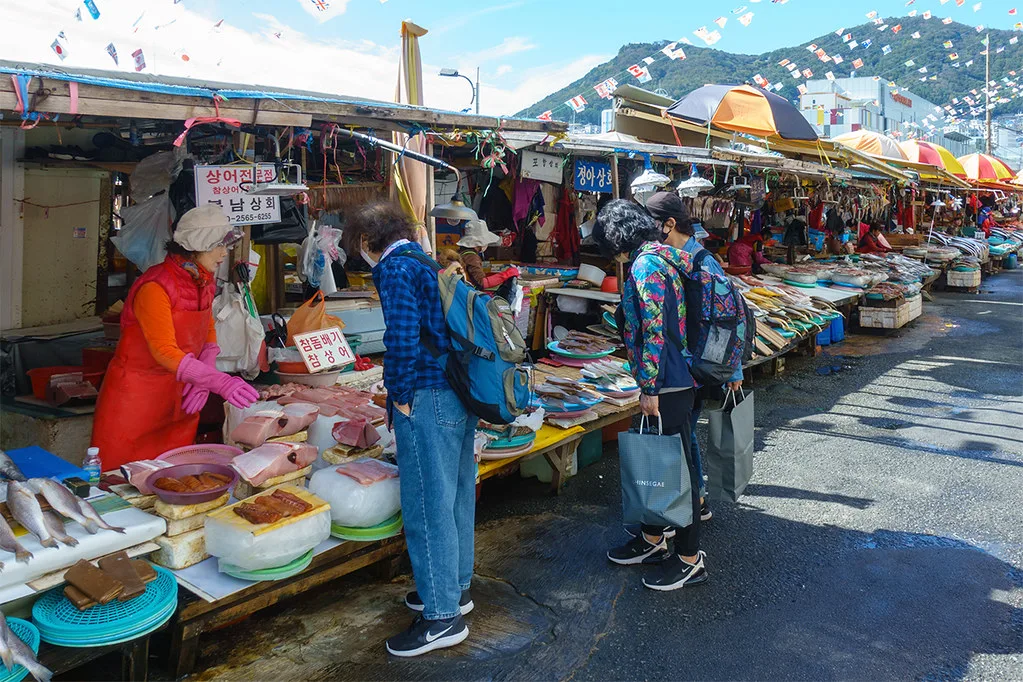
Later that afternoon, at Jagalchi Market, I tried sannakji — live octopus, the tentacles still moving on the plate. The vendor watched me with an amused grin as I wrestled the first piece into my mouth, the suction cups gripping my tongue while the briny freshness flooded my senses. My wife laughed so hard she nearly dropped her chopsticks. The vendor pressed another piece on me, insisting with a warmth that needed no shared language. This is what Busan does: it feeds you, startles you, makes you laugh, and then — in the space between a temple bell and a market stall — it quietly rearranges something inside you.
I finally understood, walking back to the ship that evening past painted houses glowing in the last of the sunlight, that Busan taught me what I'd been missing in the polished capitals of Asia. Not every city needs to be curated for visitors. Some are simply, stubbornly themselves — salt-stung and monk-blessed and absolutely unapologetic about it. I carry Busan's temple bells with me still, ringing somewhere beneath every port I've visited since. The city gave me something I hadn't known I needed — not just beauty or culture, but the permission to be overwhelmed by both at once, and to let that overwhelm become gratitude. We travel, I think, not to see the world but to let the world see us clearly, stripped of our routines and certainties, standing openmouthed before things we cannot explain. In Busan, the ocean crashes against six-hundred-year-old prayer halls, live octopus writhes on market plates, and painted hillside houses glow like stained glass in the afternoon light. Nothing here apologizes for being too much. Neither should we. That's the lesson I learned in Busan, and it changed how I see every port since.
Weather & Best Time to Visit
The Cruise Port
Most ships dock at Busan Port International Cruise Terminal in the Yeongdo district, a modern facility with a tourism information desk, duty-free shop, and taxi stand directly outside. The terminal sits across the harbor from the city center, so you'll need transport to reach most attractions. Taxis queue at the terminal exit and are affordable by Western standards — a ride to Jagalchi Market or Nampo-dong runs about ₩8,000–12,000 ($6–9 USD). Some ships dock at the newer Busan International Passenger Terminal near Busan Station, which has direct metro access. Both terminals have restrooms, basic shops, and English-speaking staff at the information desk.
Getting Around Busan
Busan's metro system is clean, efficient, and has English announcements and signage on every line. A single ride costs ₩1,400 ($1 USD). The T-money card (₩2,500 from convenience stores) works on metro and buses and saves money on transfers. Line 1 connects Busan Station to Nampo-dong (for Jagalchi Market and Gamcheon Village), while Line 2 reaches Haeundae Beach.
Taxis are plentiful and inexpensive. Most attractions cost ₩10,000–20,000 ($7–15 USD) by taxi from the cruise terminal. Drivers rarely speak English — have your destination written in Korean (screenshot from Google Maps works well). Regular taxis are silver or white; deluxe (black) taxis charge slightly more but offer more space.
Ship excursion buses are the easiest option for distant sites like Haedong Yonggungsa Temple (40 minutes) and Beomeosa Temple (60 minutes). For Gamcheon Village and Jagalchi Market, going independently by taxi is simple and significantly cheaper. Wheelchair users should note that metro stations have elevators, but Gamcheon Village's steep alleys and temple steps present significant accessibility challenges. Haeundae Beach boardwalk and Jagalchi Market's main building are the most accessible major attractions. The metro is generally the fastest way to cover long distances across the city, beating taxis in traffic during peak hours.
Shore Excursions & Self-Guided Adventures
Haedong Yonggungsa Temple — An oceanside Buddhist temple built in 1376, clinging to cliffs where land meets the East Sea. Descend 108 stone steps past zodiac statues to reach red-columned pavilions with waves crashing below. Free admission. Allow 90 minutes. Forty minutes by taxi (₩25,000/$18) or bus 181. Ship excursion versions often pair this with Gamcheon Village for a full-day tour — book ahead as these popular combinations fill quickly.
Gamcheon Culture Village — A colorful hillside neighborhood born as a Korean War refugee settlement, transformed into a living art installation starting in 2009. Houses painted every shade imaginable, connected by steep alleys with murals, sculptures, and small galleries. Free to enter; stamp-collecting village passport available. Budget 2–3 hours. Fifteen minutes by taxi from the terminal. People still live here — keep voices down and respect private property. Budget 2–3 hours to explore properly.
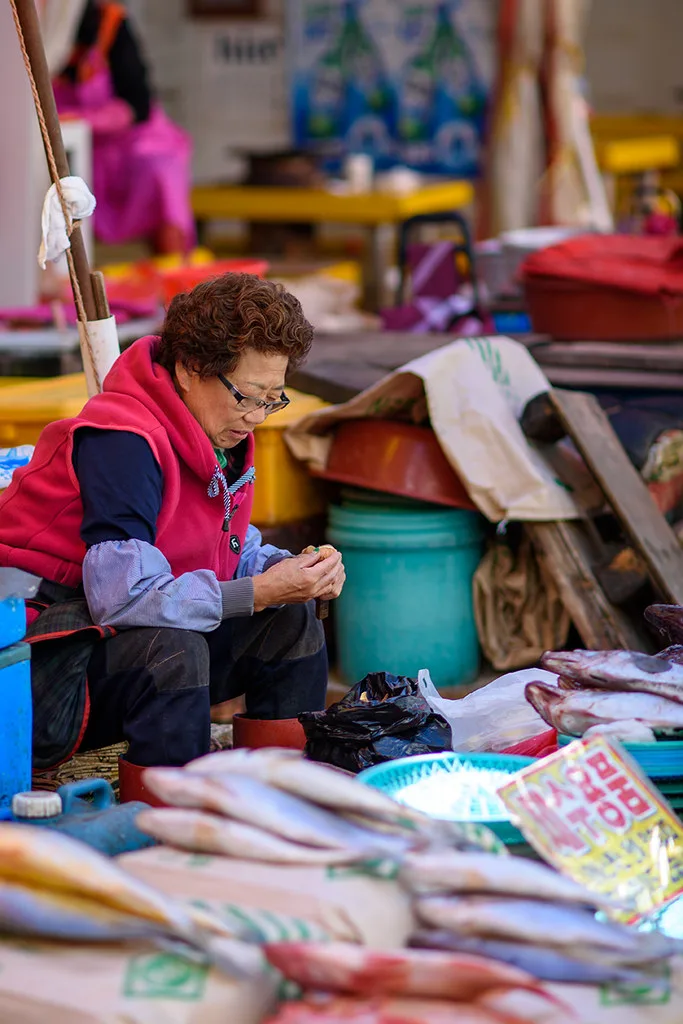
Jagalchi Fish Market — Korea's largest seafood market, sprawling along the waterfront since the Korean War era. Point at live seafood in tanks, the vendors prepare it on the spot. Try sannakji (live octopus, ₩15,000/$11) if you're brave — chew thoroughly, the suction cups grip. Upper floors have cooked options. Ten minutes by taxi from the terminal. Nearby BIFF Square has Busan's best street food: ssiat hotteok ($2), tteokbokki ($3), Korean fried chicken ($8–12).
Beomeosa Temple — A mountain sanctuary founded in 678 AD, one of Korea's major Buddhist centers. Classical architecture, afternoon chanting, forest trails to meditation hermitages. Free admission. An hour from the terminal by bus 90 from Seomyeon station. The contrast with Haedong Yonggungsa is striking — ocean drama versus mountain stillness. High-energy option for those with a full port day.
Haeundae Beach — Busan's famous white-sand beach backed by high-rises. Free access. The beachfront promenade is pleasant year-round. Nearby: the Busan Cinema Center (world's longest cantilever roof), shopping, seafood restaurants. Twenty-five minutes by taxi. A low-energy complement to temple visits. The beachfront restaurants serve excellent grilled shellfish at reasonable prices ($15–25 for a generous portion).
Accessibility note: Temple visits involve significant stairs (108 at Haedong Yonggungsa, mountain paths at Beomeosa). Gamcheon Village has steep alleys with no level alternative. For mobility-impaired travelers, Jagalchi Market's main building, Haeundae Beach boardwalk, and the Busan Cinema Center area are the most accessible options. Ship excursion operators can advise on adapted itineraries — guaranteed return to port is straightforward given Busan's efficient taxi system.
Depth Soundings Ashore
Currency: Korean Won (KRW). Credit cards are accepted almost everywhere — Korea is largely cashless. ATMs at convenience stores (CU, GS25, 7-Eleven) dispense won. Exchange rates at the terminal are poor; use ATMs instead.
Language: Korean. Major tourist sites have English signage, and metro/bus announcements include English. Most young Koreans speak some English. Google Translate's camera mode is invaluable for menus and signs.
Tipping: Not customary in South Korea. Do not tip at restaurants, taxis, or hotels — it can cause confusion.
Safety: Busan is exceptionally safe. Violent crime against tourists is virtually unheard of. Exercise normal precautions with valuables in crowded markets.
Connectivity: Free WiFi is abundant — metro stations, cafés, and most public spaces. Portable WiFi devices (₩5,000/day) are available at the cruise terminal.
Accessibility: Metro stations have elevators. Jagalchi Market's main building is wheelchair accessible. Temples and Gamcheon Village involve significant stairs and uneven terrain.
Photo Gallery
Frequently Asked Questions
Q: Where do cruise ships dock in Busan?
A: Most ships dock at Busan Port International Cruise Terminal in Yeongdo district. Jagalchi Market and Nampo-dong shopping are 10–15 minutes by taxi.
Q: Is Busan easy to navigate without Korean?
A: Major tourist sites have English signage. Metro and bus announcements include English. Google Maps works well for navigation and directions.
Q: Can I see Gamcheon Village and Haedong Yonggungsa in one port day?
A: Yes, with planning. Do Gamcheon in the morning (closer to port) and Haedong Yonggungsa in the afternoon. Taxi or a combined ship excursion is most efficient for covering both.
Q: Is Busan expensive?
A: No — significantly cheaper than Seoul or Tokyo. Street food costs $2–5, a full seafood meal at Jagalchi runs $15–25, and taxis are inexpensive by Western standards.
Q: Is the live octopus (sannakji) safe to eat?
A: Yes, when eaten properly. Chew thoroughly — the suction cups can grip your throat if swallowed in large pieces. Vendors demonstrate the technique. It's a Busan specialty worth trying.
Q: What should I pack for Busan?
A: Comfortable walking shoes (temples have many stairs), layers for variable weather, and an umbrella during monsoon months (July–September). Sunscreen year-round. Bring hand sanitizer for market visits.
Q: When is the best time to visit Busan?
A: The glance Temperature reads "2°C (36°F) winter to 29°C (84°F) summer" and Rain reads "Monsoon Jul–Sep; dry Oct–May." The Wind entry adds "Sea breezes year-round, typhoon risk Aug–Oct."
Q: When is Busan's typhoon and storm season?
A: The glance Wind entry reads "Sea breezes year-round, typhoon risk Aug–Oct," and Rain reads "Monsoon Jul–Sep; dry Oct–May." The hazard-note adds: "Ships may reroute during typhoons; check weather forecasts."
Q: Will rain ruin my Busan port day?
A: The glance Rain entry reads "Monsoon Jul–Sep; dry Oct–May." For short-term forecasts on a specific sailing date, the live weather widget in the seasonal panel above is the primary source.
Busan: Where Ancient Temples Meet Urban Cool
Last reviewed: February 2026