
Weather & Best Time to Visit
Cruise Port
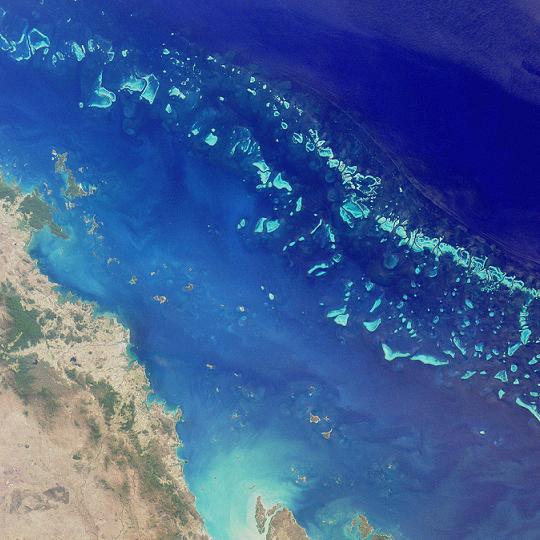
Location Reality: Cairns cruise terminal (Wharf Street, Wharves 2/3) sits right downtown, about 1.5 km from the Esplanade. You walk off the ship and into the city — no expensive transfers required. However, the channel is narrow; some larger vessels must anchor in Trinity Bay and tender passengers ashore. Check your cruise line's announcement for your specific ship.
Terminal Facilities: The terminal building has basic amenities — restrooms, tourism information, and taxi queue. The Reef Fleet Terminal for outer reef day trips is separately located about 800 meters south along the waterfront. Most serious Cairns experiences require booking transportation or tours in advance.
Port Congestion: When multiple ships arrive, the town feels crowded and reef boats fill quickly. Book tours early — ship excursions guarantee your return, but independent operators often offer better experiences at lower prices. Reef day trips range from $180-$280 AUD depending on the operator and included extras.
Getting Around
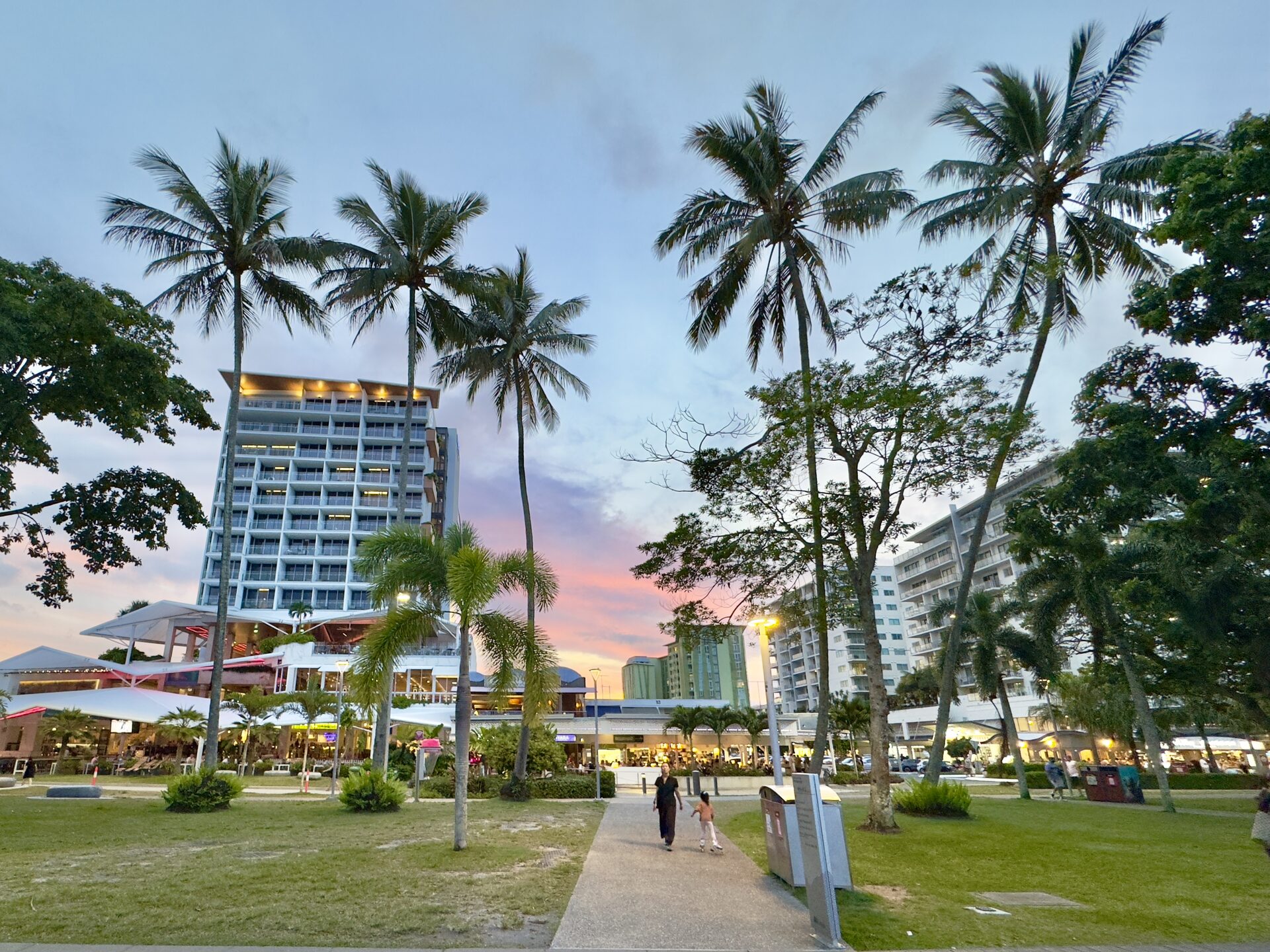
Walking: Downtown Cairns is flat and compact — perfect for walking between the terminal, Esplanade, and restaurants. The 1.5 km stroll to the lagoon takes 20 minutes at a leisurely pace. Waterfront boardwalks are wheelchair accessible throughout. Low stamina level for downtown exploration; the real attractions require transportation.
Reef Tours: Fast catamarans depart from the Reef Fleet Terminal for 8-9 hour days at the outer reef. Book through ship excursions (guaranteed return but premium pricing) or independent operators like Reef Magic, Quicksilver, or Sunlover ($180-$280 AUD). Most include snorkel gear, lunch, and multiple reef sites. Go independent if your ship is in port 10+ hours; book ahead essential for cruise ship days.
Daintree Tours: Day trips to the rainforest run 10-12 hours and cost $180-$250 AUD. They typically include Mossman Gorge, Daintree River cruise (crocodile spotting), Cape Tribulation, and lunch. Go independent for better guides and smaller groups, but verify return timing matches your ship departure. Moderate stamina level for forest walking.
Kuranda: The historic scenic railway ($55 AUD one-way) and Skyrail cableway ($60 AUD one-way) offer different perspectives of the rainforest. Combine both for a one-way each journey — the classic Cairns rainforest experience at $115 AUD total. Village itself is free to explore with artisan stalls and wildlife parks. Moderate stamina level.
Taxis and Rideshare: Taxis queue at the terminal. Uber operates in Cairns. Expect $15-$20 AUD to Reef Fleet Terminal if walking isn't feasible. Rental cars available but unnecessary for most cruise visitors unless doing independent Daintree exploration.
Port Map
Interactive map showing cruise terminal, Reef Fleet Terminal, Esplanade lagoon, and key attractions.
Shore Excursions
Great Barrier Reef Day Trip
The main event. Fast catamarans reach the outer reef in 90 minutes for 3-4 hours of snorkeling among pristine coral gardens. Operators visit different reef sites — some use pontoons with underwater observatories, others take smaller groups to pristine locations. Ship excursion pricing runs $300-$400 AUD with guaranteed return; independent operators charge $180-$280 AUD but require careful timing management. Book ahead absolutely essential — these trips fill days in advance when ships are in port. Introductory diving available for non-certified swimmers ($100+ additional). All equipment included. Low stamina level for snorkeling; the ocean does the work.
Daintree Rainforest and Cape Tribulation
The world's oldest rainforest meets the reef at Cape Tribulation — a sight found nowhere else on Earth. Full-day tours include Daintree River cruise (crocodile spotting almost guaranteed), rainforest walks, tropical fruit tasting, and lunch. Indigenous-led tours add cultural depth and are highly recommended. Ship excursion pricing $250-$350 AUD; independent operators $180-$250 AUD. Go independent for smaller groups and better guides. Book ahead strongly recommended. Moderate stamina level for walking trails; some involve stairs and uneven surfaces.
Kuranda Scenic Railway and Skyrail
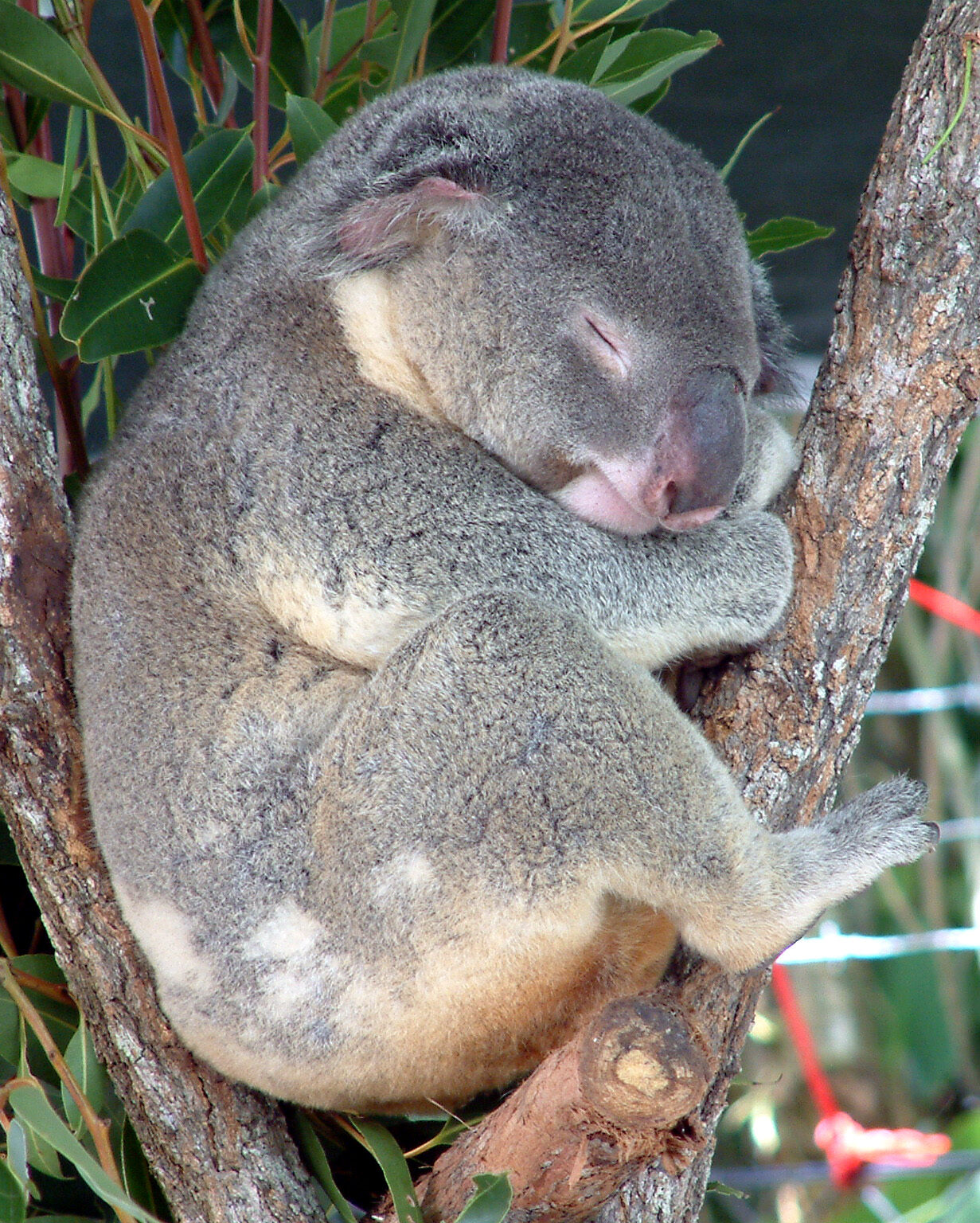
The classic combination: take the historic 1891 railway up through Barron Gorge, return via Skyrail cableway floating above the canopy. Kuranda village offers artisan stalls, butterfly sanctuary ($22 AUD), and koala photography ($28 AUD). Total experience runs 5-6 hours including village time. Independent booking $115 AUD for rail/Skyrail combo; ship excursions $180-$220 AUD. Book ahead recommended but often available same-day outside peak season. Low-moderate stamina level; railway and cableway are seated.
Wildlife Encounters
The Cairns Aquarium ($45 AUD) showcases reef life without the boat ride — useful for non-swimmers or short port calls. Cairns Zoom and Wildlife Dome ($28 AUD) offers koala encounters and bird feeding. The Tjapukai Aboriginal Cultural Park ($65 AUD) provides immersive Indigenous cultural experiences including ceremony, didgeridoo, and bush tucker tasting. These work well as half-day options combined with downtown exploration. Go independent for flexibility. Low stamina level throughout.
Half-Day Options
For shorter port calls or those who prefer staying closer to town, consider the Cairns Botanic Gardens (free admission), a morning at the Esplanade lagoon, or the Northern Beaches accessible by local bus ($3.50 AUD). Hartley's Crocodile Adventures offers croc encounters closer to Cairns than the Daintree ($45 AUD, 40 min north). These options require no advance booking and offer genuine Australian wildlife experiences without full-day commitments.
Local Flavors
Barramundi: Queensland's signature fish appears on every menu — grilled, battered, or pan-fried. Fresh local catch costs $20-$30 AUD at waterfront restaurants. Dundee's and Ochre Restaurant both serve excellent preparations.
Tropical Fruits: Mango, papaya, and exotic fruits like rambutan thrive in the tropical climate. The weekend produce hall on Grafton Street (Fri-Sun mornings) offers the freshest selection at local prices — $3-$8 AUD per kilo depending on season.
Meat Pies: Australian bakery staple. Cairns bakeries serve classic beef pies, chicken curry variations, and the famous sausage roll for $5-$8 AUD. Quick, filling, and authentically local.
Waterfront Dining: The Esplanade restaurants range from casual fish and chips ($18-$25 AUD) to upscale seafood ($50+ AUD). Salt House and Hemingway's Brewery offer waterfront atmosphere with reliable quality.
Important Notices
Stinger Season: Box jellyfish inhabit waters November through May. The Esplanade lagoon is always safe; ocean swimming requires a stinger suit (provided by reef operators) during these months.
Crocodiles: Saltwater crocodiles inhabit local waterways. Never swim in rivers, creeks, or ocean near creek mouths. Warning signs are genuine safety notices, not tourist attractions.
Sun Protection: Tropical Queensland sun is intense. Reef operators provide lycra suits but bring reef-safe sunscreen (chemical sunscreens damage coral). Reapply frequently even on cloudy days.
Reef Etiquette: Don't touch coral — it damages both the reef and your skin. Fin carefully to avoid breaking formations. Take only photographs; coral and shell collection is illegal and carries heavy fines.
Depth Soundings
Cairns exists because of what lies beyond it. Founded in 1876 as an export port for gold discoveries at the Hodgkinson River, the settlement struggled initially — nearby Port Douglas seemed better positioned. But the railway connection to the tablelands secured Cairns' future, and gradually the rough mining town transformed. Sugar cane replaced gold as the primary industry through the twentieth century, and then tourism replaced sugar as travelers discovered what the Yidinji and Djabugay peoples had known for 50,000 years: this intersection of reef and rainforest holds wonders beyond human comprehension.
The Great Barrier Reef is dying. Coral bleaching events in 2016, 2017, 2020, and 2022 devastated large sections, and warming oceans threaten continued destruction. What you see today may not exist for your grandchildren. This urgency gives reef visits a bittersweet quality — gratitude for witnessing something magnificent, grief for what we are losing. The Daintree, meanwhile, survived 180 million years of change. Whether it survives the next century depends on choices we make now.
Practical Information
Currency: Australian Dollar (AUD). Cards accepted universally; cash useful for small vendors. ATMs throughout downtown.
Language: English. Indigenous languages (Yidinji, Djabugay) spoken in cultural contexts.
Weather: Tropical climate. Dry season (May-October) offers best conditions — comfortable temperatures, low humidity, no stingers. Wet season (November-April) brings heat, humidity, afternoon storms, and marine stingers.
Accessibility: Downtown Cairns and the Esplanade are fully wheelchair accessible. Reef boats vary — some have platform lifts, others require climbing. Specify accessibility needs when booking. The Kuranda railway accommodates wheelchairs with advance notice.
Wi-Fi: Free Wi-Fi available at the Esplanade, libraries, and many cafés. Mobile coverage excellent throughout Cairns; limited in remote rainforest areas.
Photo Gallery
Frequently Asked Questions
Q: Is Cairns worth visiting on a cruise stop?
A: Yes. Cairns is the gateway to TWO UNESCO World Heritage Sites: the Great Barrier Reef and the Daintree Rainforest. Few ports offer access to natural wonders of this magnitude. However, the major attractions require full-day tours, so plan accordingly.
Q: Can you do the reef in a port day?
A: Yes, but timing is tight. Reef trips run 8-9 hours (typically 8am-5pm). Your ship needs to be in port until at least 6pm. Ship excursions guarantee your return; independent tours require careful time management.
Q: What if I don't want to get in the water?
A: Some reef boats have glass-bottom sections and semi-submersible tours. The Cairns Aquarium showcases reef life without the boat trip. The Daintree offers equal magnificence on dry land.
Q: Which is better — reef or rainforest?
A: Both are extraordinary. The reef is more unique (rainforests exist elsewhere; the Great Barrier Reef does not). Nevertheless, the Daintree at 180 million years old is genuinely ancient. If you have two days, do both. One day forces a difficult choice.
Q: Is the reef really dying?
A: Multiple mass bleaching events have damaged significant portions. The outer reef that tour boats visit remains vibrant in many areas, but the situation is serious and time-sensitive. Visiting responsibly — choosing reef-safe sunscreen and sustainable operators — matters.
Q: Are crocodiles actually dangerous?
A: Yes. Saltwater crocodiles kill people in Queensland. Never swim in rivers, creeks, or near creek mouths in the ocean. The Esplanade lagoon is safe; the ocean at non-patrolled locations is not.
Q: When is the best time to visit Cairns?
A: Peak cruise season is June through October — the dry season, with comfortable temperatures (60-80°F), low humidity, the calmest seas for reef trips, and the best visibility for outer-reef snorkeling (the activity-row on this page lists Snorkeling as in-season Jun-Oct specifically). May and November are transitional months. December through April is low season and overlaps the wet monsoon plus cyclone window — we recommend avoiding January and February for the heaviest rain and strongest cyclone risk.
Q: When is cyclone and storm season in Cairns?
A: The glance Rain entry on this page reads "Very wet Nov-Apr (monsoonal); dry May-Oct" and the Wind entry reads "Trade winds; occasional cyclone threat." The hazard-note adds: "Travel insurance with weather-event coverage is recommended." Specific storm history is not detailed on this page; for current tropical-system status on a specific sailing date, the live weather widget in the seasonal panel above is the primary source.
Q: What should I pack for Cairns's weather?
A: For a peak-season (June-October) port call: light, breathable clothing for 60-80°F dry-season warmth; a light jacket for cool dry-season mornings; reef-safe sunscreen (mandatory in Marine Park waters); polarized sunglasses; quick-dry rashguard if snorkeling. For a wet-season (Nov-Apr) port call: add a real rain jacket, lightweight long sleeves for sun and mosquitoes, and accept that everything will be humid. Year-round: covered shoes for the Esplanade lagoon walkway, insect repellent for evenings and Daintree trips.
Q: Will rain ruin my Cairns port day?
A: From November through April, monsoonal afternoon thunderstorms are routine and heavier downpours can flood low-lying roads. The reef itself is unaffected by surface rain — visibility underwater remains good as long as the boat can make the run — but Daintree day trips become muddy, and the Skyrail cableway closes for high winds. The Esplanade lagoon, the Cairns Aquarium, and the Reef Fleet Terminal's covered area provide shelter when needed. The dry season (May-October) sees very little rain.
Last reviewed: February 2026
Captain's Logbook
✓ No ads. Works offline. Independent of cruise lines. Affiliate Disclosure
Captain's Logbook
Cairns
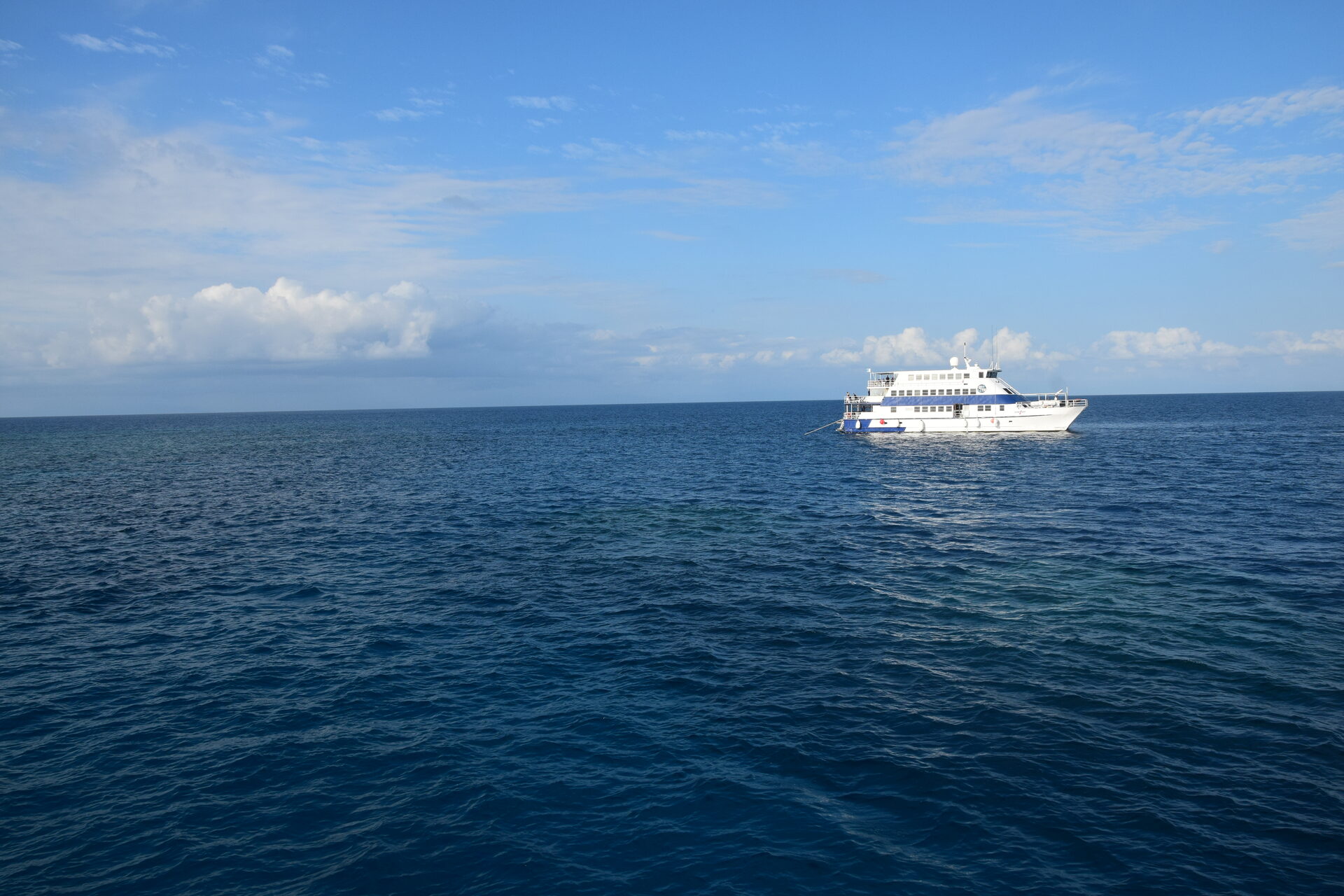
The catamaran sliced through Trinity Bay at 7:30 in the morning, and I gripped the rail as Cairns disappeared behind us. Ninety minutes of open ocean separated me from the outer Great Barrier Reef — a destination I'd dreamed about since childhood, since those first Jacques Cousteau documentaries showed me a world beneath the waves that seemed impossible, too beautiful to be real. The boat rose and fell with the swell, and I tasted salt on my lips, felt the tropical humidity pressing against my skin. However, nothing could have prepared me for what waited at the reef.
The water changed color gradually — from deep navy to lighter blue, then to shades of turquoise I had never seen outside photographs. When the crew dropped anchor and told us to gear up, my hands trembled slightly as I adjusted my snorkel mask. I stepped off the platform, felt the warm water embrace me, and put my face beneath the surface. The underwater city that spread below me stopped my breath completely. Brain coral the size of cars. Staghorn forests swaying in invisible currents. Electric-blue clams with lips that seemed to glow. A sea turtle glided past, ancient and unhurried, completely indifferent to my presence. I floated there, weightless, watching life forms that had existed for 500 million years continue their timeless dance.
Three hours passed like thirty minutes. I saw parrotfish grinding coral into sand, clownfish defending their anemone homes with absurd bravery, a reef shark cruising the deeper water with prehistoric grace. The colors — coral pink, neon yellow, electric purple — seemed artificially enhanced, but they were simply real, simply what half a billion years of evolution produces when conditions are perfect. My fellow passengers and I barely spoke on the return voyage. What was there to say? We had glimpsed something that transcended words, something that made our daily concerns seem very small indeed.
Yet the reef was only half the story. Two days later, I drove north toward the Daintree — 180 million years old, the world's oldest continuously surviving tropical rainforest. The road wound through sugar cane fields, then climbed into mountains where the vegetation thickened until sunlight struggled to penetrate. At the Daintree River ferry crossing, signs warned of saltwater crocodiles, and I believed them immediately when I saw the prehistoric head surfacing near the boat ramp. These animals shared water with dinosaurs. They still remember.
Cape Tribulation stopped me cold. Here — and only here on Earth — two UNESCO World Heritage Sites physically collide. Rainforest descended to white sand, ancient trees reaching toward the water's edge. Beyond the gentle surf, the reef began. I stood at that intersection feeling the weight of deep time, understanding suddenly why this place felt sacred without any church, any temple, any human construction at all. Captain Cook named it Tribulation after his ship struck the reef here in 1770. Nevertheless, what I experienced wasn't tribulation but revelation — the understanding that life on this planet is older, stranger, and more magnificent than our brief human presence can easily comprehend. My eyes welled with unexpected tears as I stood there, overwhelmed by the scope of what surrounded me — the ancient meeting the ancient, forest touching reef, time compressed into a single breathtaking vista that no photograph could ever capture.
The Tjapukai guides who led our rainforest walk spoke of 50,000 years of continuous human presence. Their ancestors watched this forest when it was young — well, younger — and they still know its secrets: which plants heal, which streams hold sacred meaning, which stories the land itself tells to those patient enough to listen. I learned more in that three-hour walk than in years of nature documentaries. The didgeridoo demonstration at the cultural center resonated in my chest, the drone connecting earth and sky, and I understood something about belonging that my wandering life rarely touches.
Back in Cairns, the Esplanade lagoon offered free swimming in artificial saltwater — the ocean itself hosts stingers seasonally, and those crocodile warnings aren't decoration. I floated in the pool as the tropical sun set over Trinity Bay, watching flying foxes stream from their roosts toward the fruit trees of the botanical gardens. The fish and chips at a waterfront restaurant cost $22 and tasted perfect — fresh barramundi caught that morning, chips crispy and golden. But I barely noticed the food. My mind kept returning to that sea turtle, that ancient crocodile, that rainforest meeting reef. Cairns had given me something I couldn't quite name: a recalibration of scale, perhaps. A reminder that human time is brief, and the natural world holds wonders we have barely begun to appreciate. I am profoundly grateful for what these waters and forests taught me about the patience and persistence of life itself.
Depth Soundings
Money: The local currency is Australian Dollar (AUD). ATMs are generally available near the port area, though fees vary. Credit cards are widely accepted at tourist-oriented establishments, but carry some local cash for markets, street food, and smaller vendors. Your ship's exchange rate is typically unfavorable — withdraw from a bank ATM instead. Budget $30–$80 per person for a comfortable day including lunch, transport, and a few entry fees.
Timing: Start early if your ship arrives at dawn — the first hours offer pleasant conditions and smaller crowds. Allow at least 30 minutes buffer before all-aboard time. Set a phone alarm as backup. Most port visits allow 8–10 hours on shore, which is enough to see the highlights without rushing if you prioritize well.
Safety: Standard port-town awareness applies — keep valuables close and stick to well-traveled areas during daylight. Your ship's ID card is your most important item — losing it creates a genuine headache at the gangway. If visiting the Great Barrier Reef, follow your guide's instructions about reef-safe sunscreen and marine stingers — stinger suits are provided during jellyfish season (October to May).
Communication: Wi-Fi is often available at cafés and restaurants near the port. Consider downloading offline maps before disembarking — cellular data roaming charges can be substantial and surprising. Google Maps offline mode or Maps.me work well for navigation without data.
Food & Water: Tap water safety varies by destination — ask locally or buy bottled water to be safe. The best food often comes from busy local restaurants rather than tourist-facing spots near the port. Lunch at a popular local place typically costs $8–$20 per person. Street food can be excellent value if you choose busy stalls with high turnover.
Quick Facts
Key Facts
- Country
- Australia (Queensland)
- Region
- Caribbean
- Currency
- Australian Dollar (AUD). Cards accepted universally; cash useful for small vendors. ATMs throughout downtown
- Language
- English. Indigenous languages (Yidinji, Djabugay) spoken in cultural contexts