
Weather & Best Time to Visit
The Cruise Port
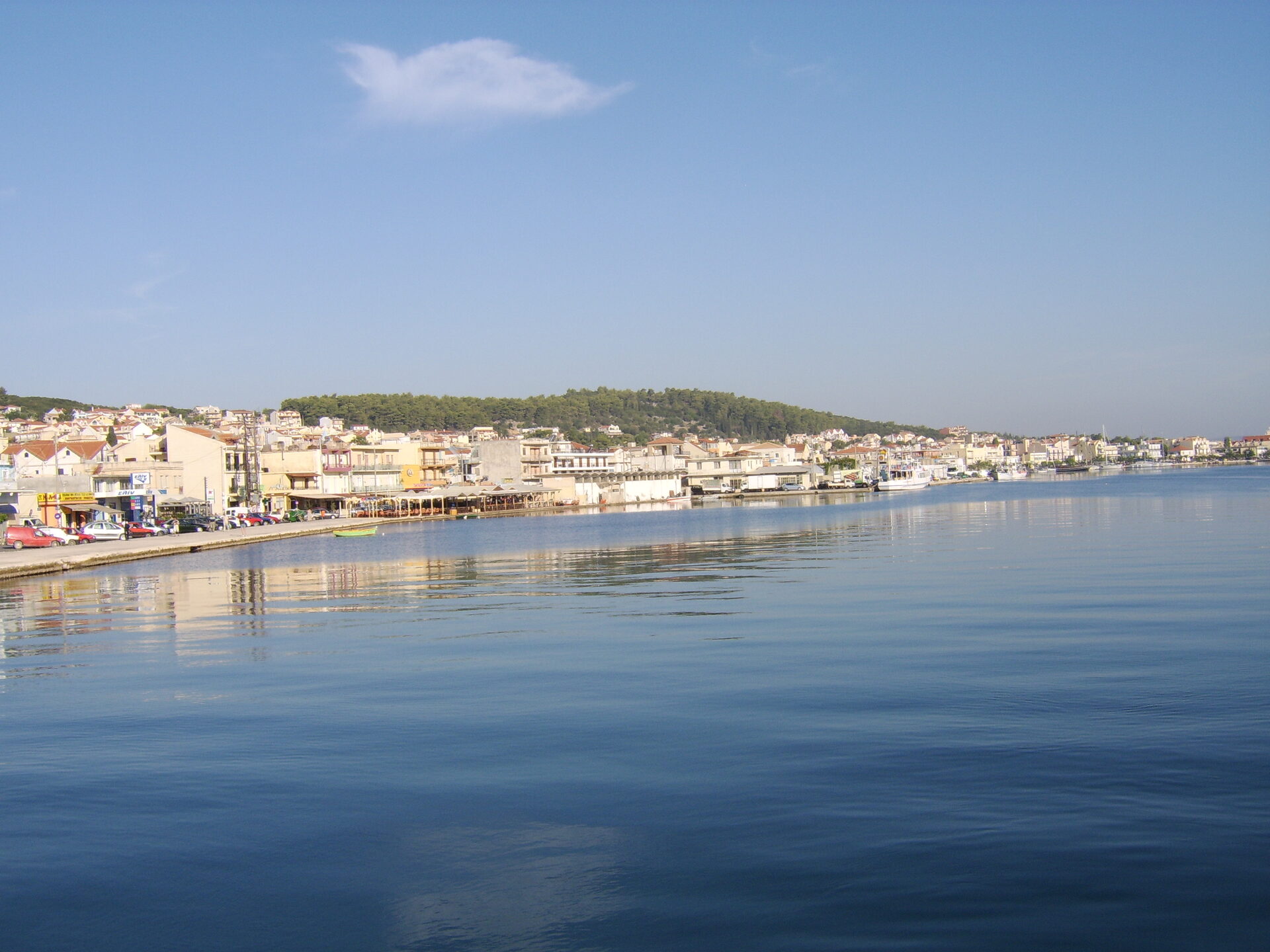
Most cruise ships dock directly at Argostoli's pier in the capital, within easy walking distance of the town center. Larger vessels may anchor offshore and tender passengers in depending on pier availability and ship size. The waterfront promenade leads directly into the commercial center, where you'll find shops, cafés, and the main pedestrian street Lithostroto. Currency is the Euro throughout Greece.
Taxi and tour operators meet ships at the pier. During peak cruise season, book cave and beach excursions in advance to secure your spot — Melissani Cave tours fill quickly on ship days. The pier area is flat and accessible, though reaching the island's main attractions (caves, beaches, northern villages) requires vehicle transport over winding mountain roads.
Getting Around
Argostoli's town center is walkable — the waterfront, main shops, cafes, and museums are all within easy reach of the cruise pier. However, Cephalonia's main attractions require wheels. Car rental (€45-70/day) offers the most flexibility. Roads are generally good, though mountain routes are narrow and winding. Drive on the right. Pre-book during summer months as availability is limited on cruise ship days.
Taxis wait at the port and can be hired for half-day (€40-60 for caves) or full-day tours (€80-100 including northern villages). Always agree on price before departure. Ship excursions typically visit caves and Myrtos Beach at €65-90 per person; independent booking through local operators saves 15-25%. Local buses connect Argostoli to major villages but run on limited schedules that rarely align with cruise ship hours — not recommended for time-limited cruise visitors.
Distances are deceiving on this large island. Budget 30-40 minutes to Melissani and Drogarati caves (both near Sami on the east coast), 45 minutes to Myrtos Beach, and over an hour to Fiscardo or Assos in the north. For wheelchair users, Argostoli's waterfront is relatively flat with good pavement. However, cave sites require significant stair climbing — Drogarati has 150+ steps, and Melissani requires boarding small boats. Contact your cruise line for adapted shore excursion options.
Cephalonia Port Map
Shore Excursions
Cephalonia offers extraordinary natural beauty and 50,000 years of history. Both can be explored independently or through ship excursions with guaranteed return to the vessel.
Melissani Cave Underground Lake
The signature Cephalonia experience. Board a rowboat and glide across electric-blue waters in this partially collapsed cave system. When midday sun pours through the opening above, the lake glows with otherworldly luminescence. The ancient Greeks believed nymphs dwelled here — one visit explains why. Entry €8 includes boat ride. Located 30 minutes from Argostoli. Ship excursions $70-90 USD typically combine with Drogarati. Go independent and book ahead for the 11:00 a.m.-1:00 p.m. window when light is best. Low stamina level.
Myrtos Beach
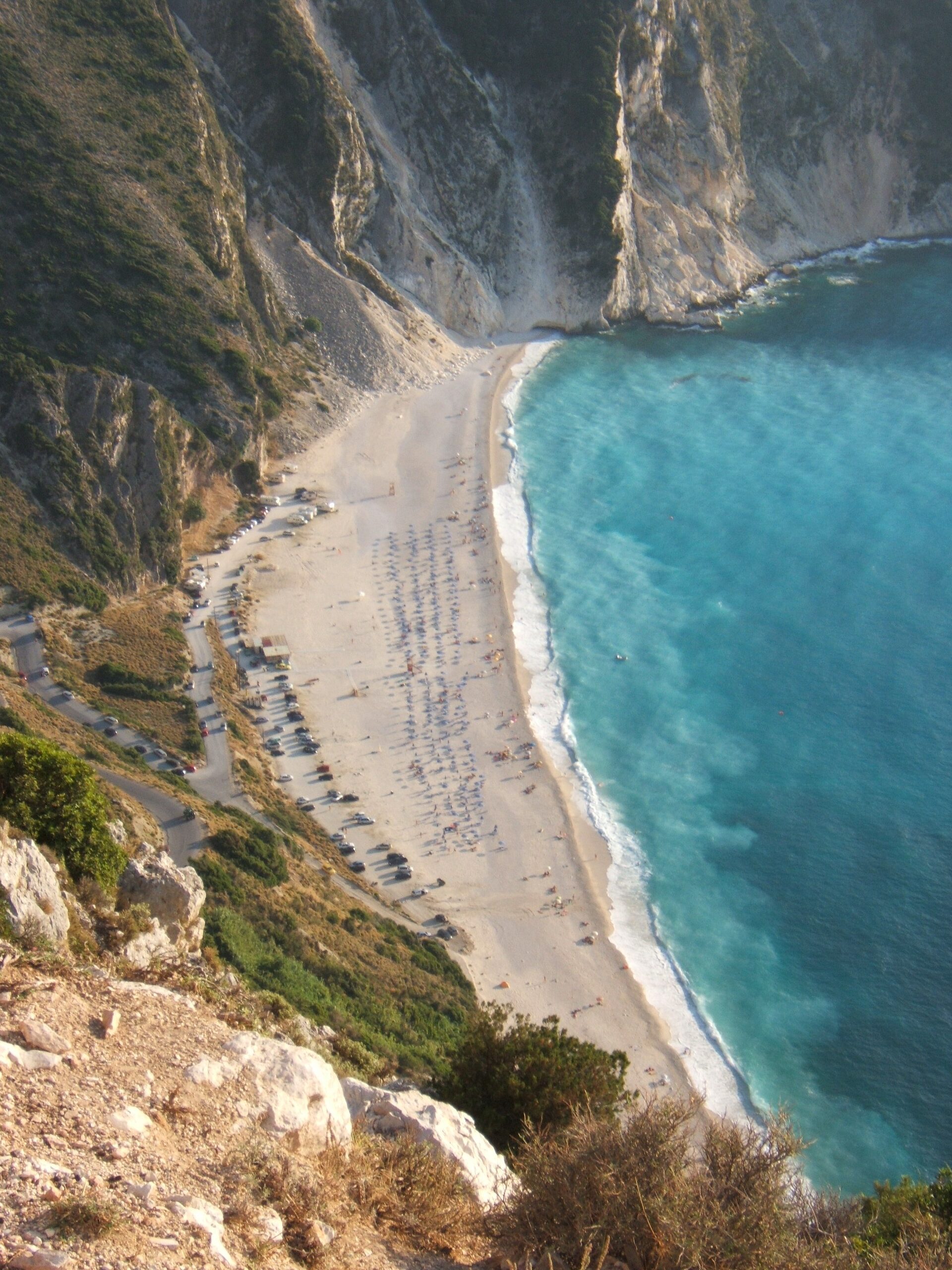
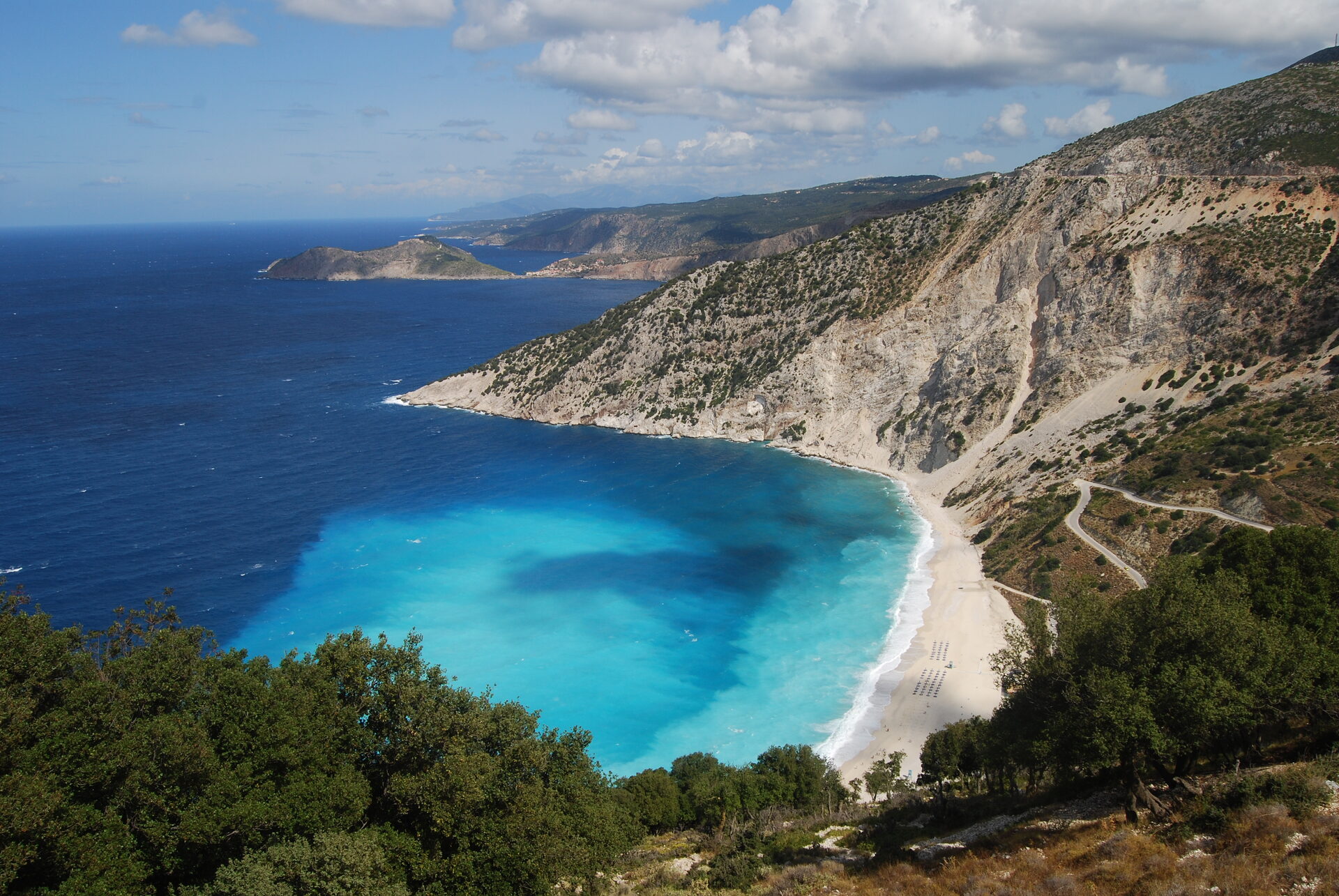
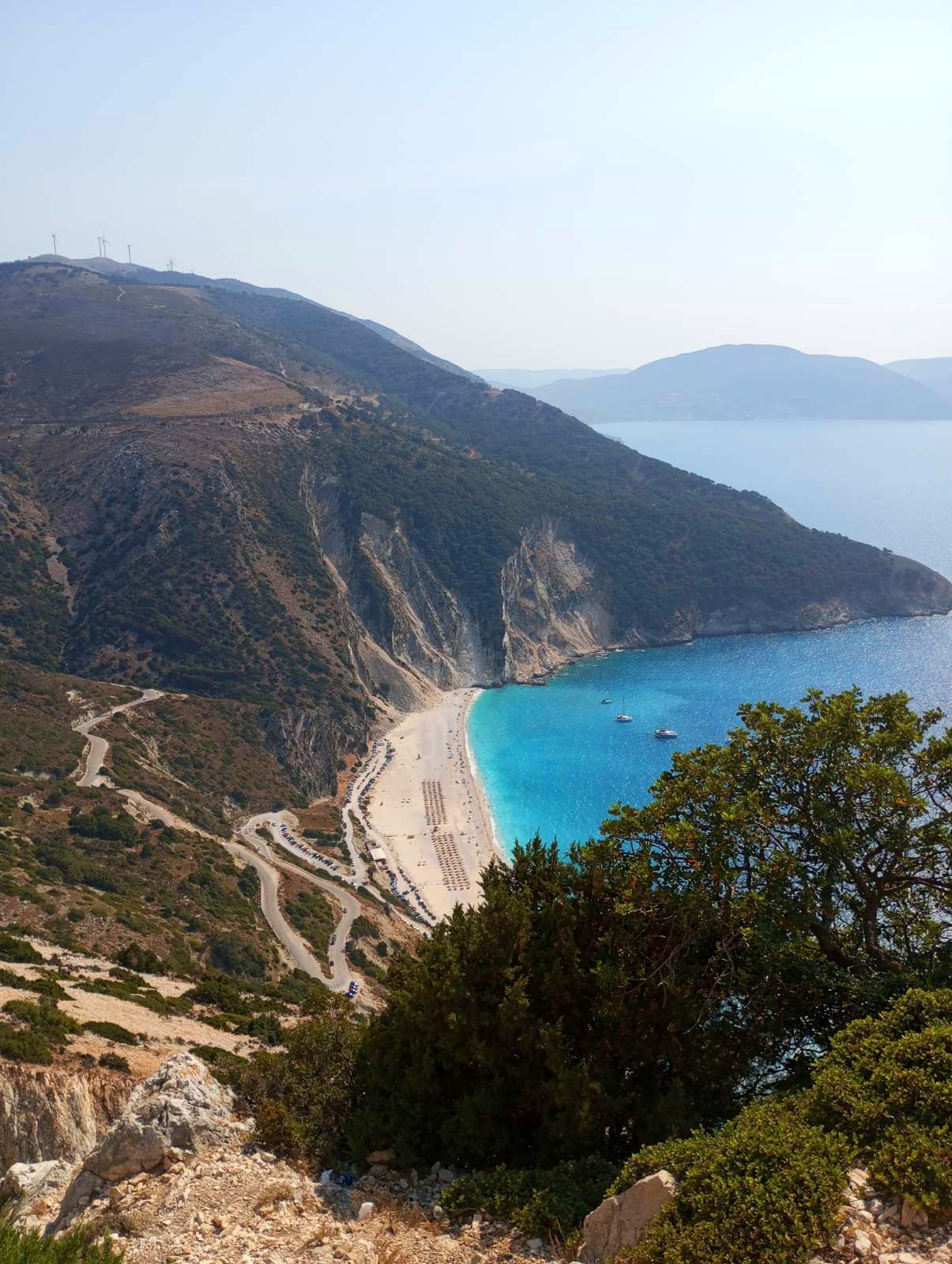
Voted Greece's most beautiful beach multiple times. White pebbles meet impossibly turquoise water beneath towering limestone cliffs. The beach is exposed and can have strong currents — respect the water. Taxi from Argostoli €20-25 each way. Beach parking €3-5. No sunbed rentals — bring your own supplies. Ship excursions $65-80 USD. Go independent for flexibility. The viewpoint above offers stunning photos without the steep descent. Moderate stamina level for the cliff road walk down.
Drogarati Cave
A 150-million-year-old cavern with spectacular stalactites and stalagmites. The acoustics are so remarkable that concerts are occasionally held in the main chamber. Located near Sami, about 30 minutes from Argostoli and only 5 km from Melissani — combine both caves in one trip. Entry €6. Wear sturdy shoes for the 150+ steep steps. Ship excursions typically combine with Melissani. High stamina level due to stairs.
Fiscardo Village
The only village that survived the 1953 earthquake with its Venetian architecture intact. Colorful buildings ring a perfect horseshoe harbor where yachts moor beside fishing boats. Excellent waterfront restaurants serve fresh seafood (€15-30 per person). Located on the northern tip — about an hour's drive from Argostoli. Ship excursions $80-100 USD sometimes combine with Assos. Go independent by taxi for full-day northern exploration (€80-100). Low stamina level.
Robola Winery Tour
Visit vineyards cultivating Cephalonia's indigenous white grape variety. Robola wine is crisp, mineral-driven, and uniquely suited to the island's limestone soils. Tastings €10-15 for 4-5 wines with local cheese and olives included at most estates. The Robola cooperative near Omala Valley provides authentic introduction to the island's winemaking heritage that survived the 1953 earthquake. Bottles €8-15 to take home. Book ahead during peak cruise season as group sizes are limited. Low stamina level with gentle walking through terraced vineyards.
Local Flavors
Kreatopita: The island's signature dish — layers of pasta, spiced meat with cinnamon and clove, and cheese baked until golden. Every family has their own recipe passed through generations. €8-12 at tavernas.
Robola Wine: Crisp, mineral-driven white from indigenous grapes that thrive in limestone soil. Order it chilled with grilled fish or octopus. €4-6 per glass, €12-20 per bottle.
Grilled Octopus: Fresh from the morning catch, charred over open flames and dressed with olive oil and lemon. Best at waterfront tavernas in Argostoli and Fiscardo. €12-18.
Aliada: Garlic and potato purée that accompanies most meat dishes. Creamy, pungent, and utterly addictive. Included with main courses.
Mandolato: Nougat made with almonds and local honey, revealing Italian pastry traditions from Venetian centuries. Pair with strong Greek coffee. €3-5 at bakeries.
Important Notices
Summer Heat: July and August temperatures reach 85-95°F (30-35°C). Many attractions are outdoors with little shade — bring water, hat, and sunscreen. Plan outdoor activities for morning or late afternoon.
Cave Temperature: Both Melissani and Drogarati caves are cool year-round (around 60°F/16°C). Bring a light layer even in summer.
Beach Safety: Myrtos Beach can have strong currents. Respect posted warnings. The beach is all pebbles — water shoes recommended.
Monastery Dress Code: St. Andrew Monastery is active. Cover shoulders and knees. Women may be offered skirts at entrance.
Sea Turtle Conservation: Loggerheads nest on southern beaches May-October. Stay clear of marked nests, avoid flash photography at night, remove trash.
Depth Soundings
Practical tips before you step off the ship.
Book Melissani Cave for the 11:00 a.m.-1:00 p.m. window when sunlight directly illuminates the water — the effect is worth planning around. Combine both caves in a single trip since Melissani and Drogarati are only 5 km apart near Sami. For Myrtos Beach, arrive early to secure limited parking and avoid the steepest midday heat. The cliff road descent has no guardrails in places.
Argostoli has ATMs and most places accept cards, but smaller villages prefer cash — have euros on hand for tavernas, beach parking, and small purchases. Don't try to see everything in one day. Choose two or three key experiences and enjoy them properly. The island rewards slow travel — there's far more history and natural beauty here than any single day can accommodate. If visiting in late spring, the wildflowers at St. George Castle are extraordinary.
Photo Gallery
Frequently Asked Questions
Q: Do cruise ships dock or tender in Cephalonia?
A: Most cruise ships dock directly at Argostoli's pier in the capital. Some larger vessels anchor offshore and tender passengers in depending on pier availability and ship size. Check with your cruise line before arrival.
Q: What is Cephalonia famous for?
A: Melissani Cave's crystal underground lake, Myrtos Beach (repeatedly voted Greece's most beautiful), Captain Corelli's Mandolin filming locations at Sami and Antisamos Beach, indigenous Robola wine, Fiscardo's preserved Venetian architecture, and 50,000 years of human history reaching back to the Paleolithic era.
Q: How long should I spend in Cephalonia on a cruise stop?
A: A typical 8-10 hour stop allows both caves (Melissani and Drogarati are conveniently located near each other) plus either Myrtos Beach or the northern villages. To explore ancient sites, multiple beaches, and the island's diverse regions without rushing, consider an overnight stay. The island genuinely rewards slow travel.
Q: What is the best time of year to visit Cephalonia?
A: The glance Temperature reads "42-86°F — Captain Corelli's island" and Rain reads "Dry Jun-Aug; wet winters." Daylight reads "9.5-15 hours." Humidity reads "Moderate (43-73%)."
Q: Can I visit both caves in one trip?
A: Yes — Melissani and Drogarati are only about 5 km apart near Sami. Most visitors combine both in a single morning, leaving afternoon free for a beach or the northern villages. Budget 30-40 minutes at each cave plus travel time.
Q: When is Cephalonia's storm season?
A: The hazard-note on this page reads: "Seismically active zone." The glance Rain entry reads "Dry Jun-Aug; wet winters." For current weather outlook on a specific sailing date, the live weather widget in the seasonal panel above is the primary source.
Q: What should I pack for Cephalonia's weather?
A: The glance Temperature reads "42-86°F — Captain Corelli's island" — pack for the full range. Humidity reads "Moderate (43-73%)" and Rain reads "Dry Jun-Aug; wet winters." The Packing Tips section lists "Sunscreen and sunglasses — essential year-round"; "Light layers for variable temperatures"; "Comfortable walking shoes for exploring"; "Rain jacket or compact umbrella."
Q: Will rain ruin my Cephalonia port day?
A: The glance Rain entry reads "Dry Jun-Aug; wet winters" — peak-summer visitors rarely face rain. For short-term forecasts on a specific sailing date, the live weather widget in the seasonal panel above is the primary source.
Last reviewed: February 2026
Captain's Logbook
✓ No ads. Works offline. Independent of cruise lines. Affiliate Disclosure
Captain's Logbook
Cephalonia
I'll confess something: I came to Cephalonia expecting Captain Corelli's postcard — the Hollywood version of a Greek island. What I found instead was a place that refuses to be reduced to a single story, where the earth itself had something to say about resilience, and where human footprints stretch back fifty millennia into the mists of the Paleolithic. The weight of that history settled on me as our ship approached Argostoli's harbor, the morning light catching limestone cliffs that have watched more centuries pass than I can properly imagine.
We docked at Argostoli, the capital that has held that distinction since 1797. The town rises amphitheatrically from the Gulf of Koutavos, its streets climbing the hillside in tiers like an ancient theater. But this is not ancient architecture you're seeing — the 1953 earthquake erased nearly everything that came before. Venetian mansions, Byzantine churches, centuries of stone memory gone in minutes of violent shaking. What impresses me is what came after: the town rebuilt itself following the original street layout, as if to say that while buildings may fall, the pattern of a place endures. I walked that waterfront the first morning, watching fishermen mend nets with the same patient movements their grandfathers must have used before the earthquake, their great-grandfathers before that.
Homer knew this island as part of Odysseus's kingdom, and from these shores warriors once sailed to the fields of Troy. That ancient weight flavors everything here. The name itself holds mystery — some scholars trace it to "Cephali," meaning head, perhaps for the island's prominence as the largest in the Ionian chain. Others whisper of King Cephalus from Greek mythology. I preferred not knowing for certain. Some mysteries are better left intact.
By midmorning I'd hired a taxi and headed east toward Sami, where both caves waited. The road wound through olive groves and past Robola vineyards climbing limestone hillsides. My driver told me his family replanted these exact slopes after the earthquake, and his grandfather's voice caught when he first tasted the new vintage. "The roots know where they belong," he said. I believed him. Some things survive deeper than stone.
Melissani Cave announced itself with a queue of tourists and a flight of concrete steps descending into the earth. But when I reached the water — when I actually stepped into the rowboat and felt the crystal-clear lake stretch out beneath me — every expectation dissolved. The cave roof had collapsed millennia ago, and now a ragged oval of sky opened above. When midday sun pours through that opening, the water glows an impossible electric blue, so bright it seems lit from within rather than above. Our boatman stopped rowing and let the silence settle. I could see every stone on the lake bottom twenty meters below. The ancient Greeks believed nymphs dwelled here, and in that moment, suspended in light and stillness, I understood why.
The moment that stays with me: floating in Melissani's underground lake as sunlight cut through the cavern like something sacred, watching my hands trail through water so transparent they seemed disconnected from my body. My breath caught. For the first time in longer than I could remember, I felt genuinely small — not diminished, but rightly sized against something ancient and beautiful. No photograph captures this. Some beauty requires witness, not documentation. I sat in that rowboat longer than I should have, and when we finally paddled back to the dock, my eyes had to readjust to ordinary light. The world above seemed somehow dimmer.
Drogarati Cave offered an entirely different kind of underground wonder. While Melissani gives you water and light, Drogarati reveals the earth's patient architecture. This cavern is 150 million years old, discovered only three centuries ago when an earthquake opened the entrance. I descended 150 steep steps into cool darkness and stood in the main chamber while the guide explained stalactites and stalagmites. Honestly, the words felt inadequate. Some of these formations have been growing, drop by mineral drop, since long before humans walked this island. The acoustics are so perfect that concerts are held here — I can imagine how a single violin note would fill this stone cathedral.
After the caves, I headed north toward Myrtos Beach. The descent down the cliff road is not for the faint of heart — hairpin turns with sheer drops and no guardrails in places. But the reward is a beach that photographs can never quite capture. White pebbles meet turquoise water beneath towering limestone cliffs. This beach has earned every "most beautiful in Greece" vote it's ever received. I've seen beaches across the Mediterranean, but Myrtos has a wildness to it, a sense that it belongs more to the elements than to us. The water shifts from pale jade to deep sapphire depending on depth and light. I swam until my fingers pruned, then lay on sun-warmed stones and listened to waves rearrange themselves.
Fiscardo came next — the only village that survived the 1953 earthquake unscathed, a geographical quirk that preserved what the rest of the island lost. Its Venetian buildings cluster around a perfect horseshoe harbor where luxury yachts now moor beside fishing boats. The architecture here is what the entire island once looked like: ochre and cream facades, terracotta roofs, wooden shutters the color of aged wine. I ate grilled octopus at a waterfront taverna and watched cats navigate between tables with the confidence of locals who know exactly where they belong. Every building here is a museum piece, but people still live in them, still hang laundry from the balconies, still argue about politics in the café.
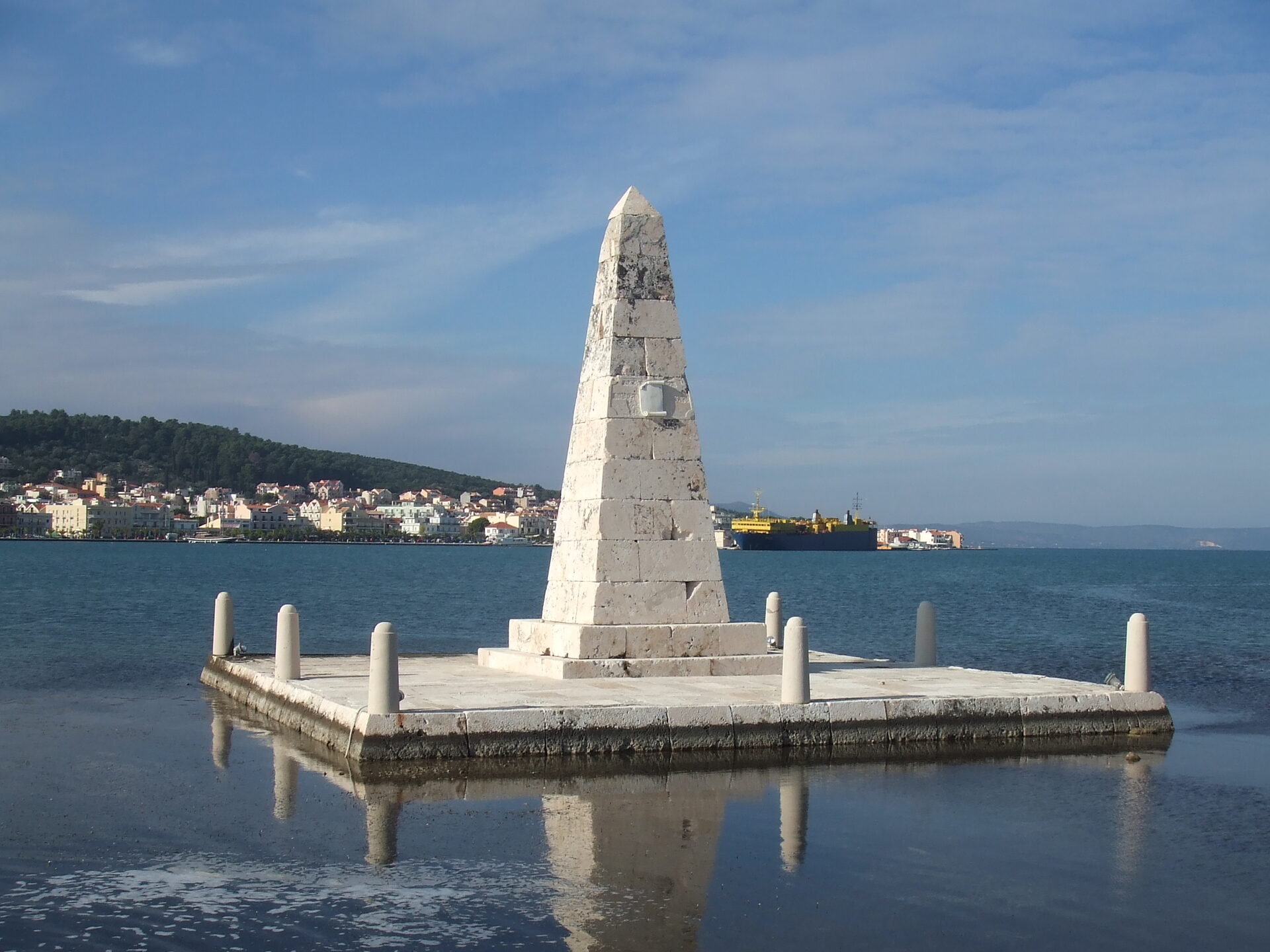
On my last evening, I returned to Argostoli's waterfront as the sun dropped toward the Lixouri peninsula. Church bells rang from the reconstructed cathedral — not the original bells, but bells nonetheless, marking time as they always have. What I learned from Cephalonia taught me something I didn't expect: resilience isn't about preserving everything exactly as it was. It's about knowing what matters enough to rebuild, what to carry forward, what to let the earth reclaim. The island's beauty isn't just in its caves and beaches — it's in the choice to continue, to replant, to remember while still moving forward. That lesson, written in earthquake scars and rebuilt stone, will stay with me long after this voyage ends.
Quick Facts
Depth Soundings
Money: The local currency is Euro (€)EUR. ATMs are generally available near the port area, though fees vary. Credit cards are widely accepted at tourist-oriented establishments, but carry some local cash for markets, street food, and smaller vendors. Your ship's exchange rate is typically unfavorable — withdraw from a bank ATM instead. Budget $30–$80 per person for a comfortable day including lunch, transport, and a few entry fees.
Timing: Start early if your ship arrives at dawn — the first hours offer pleasant conditions and smaller crowds. Allow at least 30 minutes buffer before all-aboard time. Set a phone alarm as backup. Most port visits allow 8–10 hours on shore, which is enough to see the highlights without rushing if you prioritize well.
Safety: Standard port-town awareness applies — keep valuables close and stick to well-traveled areas during daylight. Your ship's ID card is your most important item — losing it creates a genuine headache at the gangway.
Communication: Wi-Fi is often available at cafés and restaurants near the port. Consider downloading offline maps before disembarking — cellular data roaming charges can be substantial and surprising. Google Maps offline mode or Maps.me work well for navigation without data.
Food & Water: Tap water safety varies by destination — ask locally or buy bottled water to be safe. The best food often comes from busy local restaurants rather than tourist-facing spots near the port. Lunch at a popular local place typically costs $8–$20 per person. Street food can be excellent value if you choose busy stalls with high turnover.
Photo Gallery