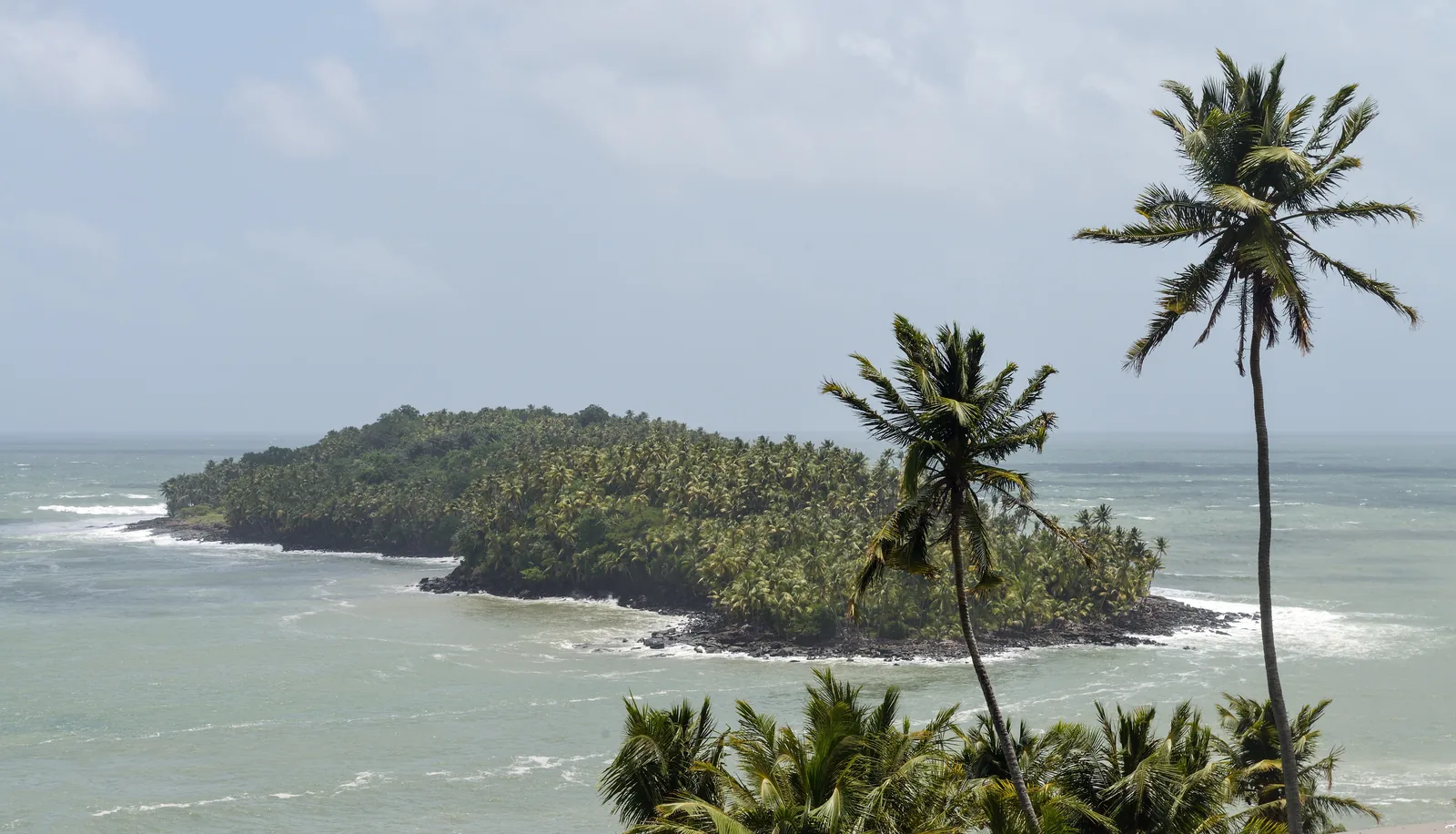
The Îles du Salut sit eleven to fourteen kilometres off Kourou. Île Royale, twenty-eight hectares, is where the tender lands and where the administration, the hospital and most of the surviving buildings are. Île Saint-Joseph, twenty hectares, holds the solitary-confinement cells and the warders' cemetery, and can be reached by a small shuttle when the sea allows. Île du Diable is fourteen hectares of rock ringed by shoals and cross-currents, and it is closed.
The name of the call is the problem. English has used "Devil's Island" for the whole archipelago for well over a century, and cruise lines use it because it sells. But a passenger reading it will reasonably expect to walk on the island in the title, and they will not. It is worth knowing that before you book an excursion rather than after you have paid for one.
Last reviewed: 30 July 2026
Weather & Best Time to Visit
Captain's Logbook
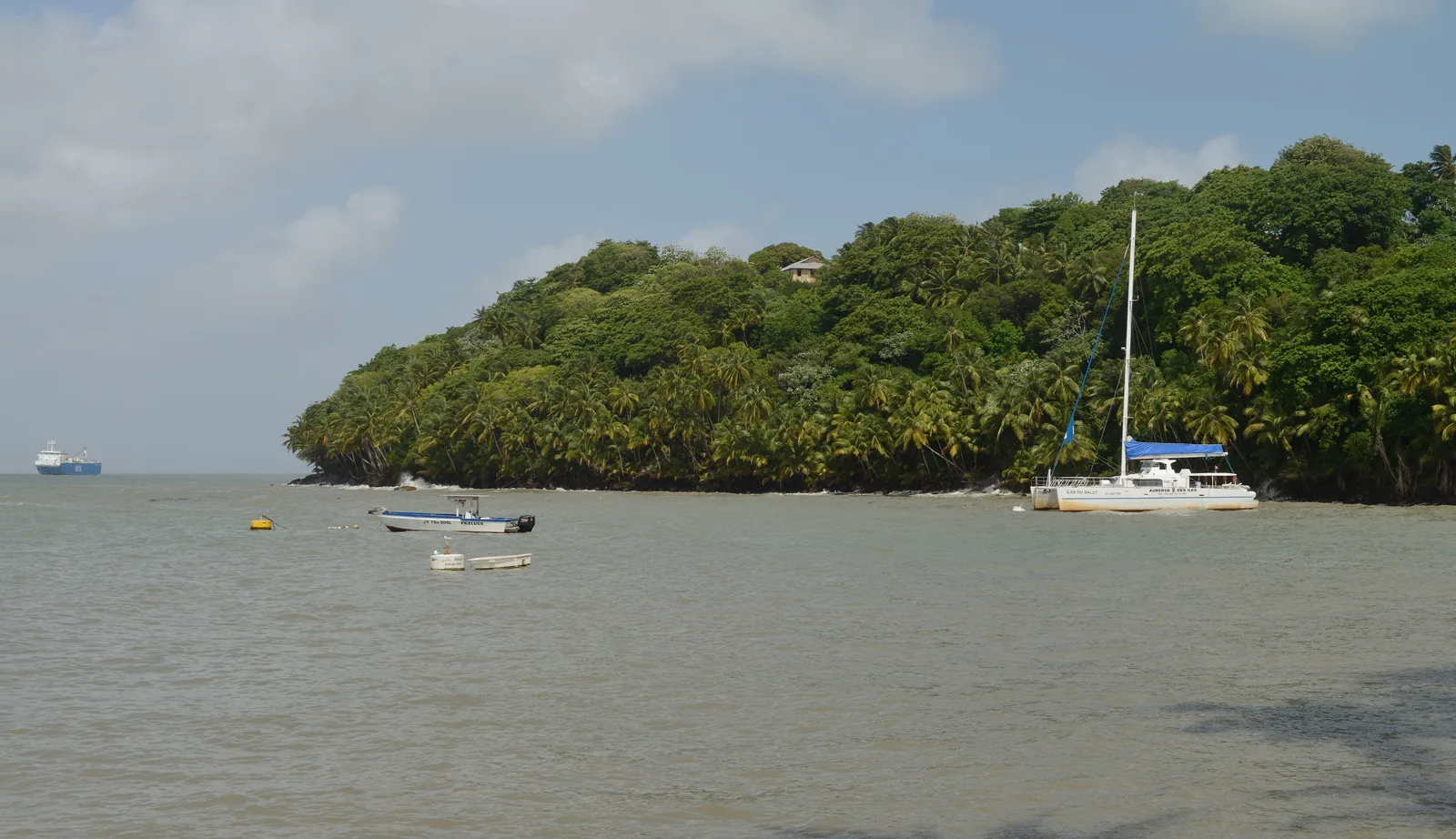
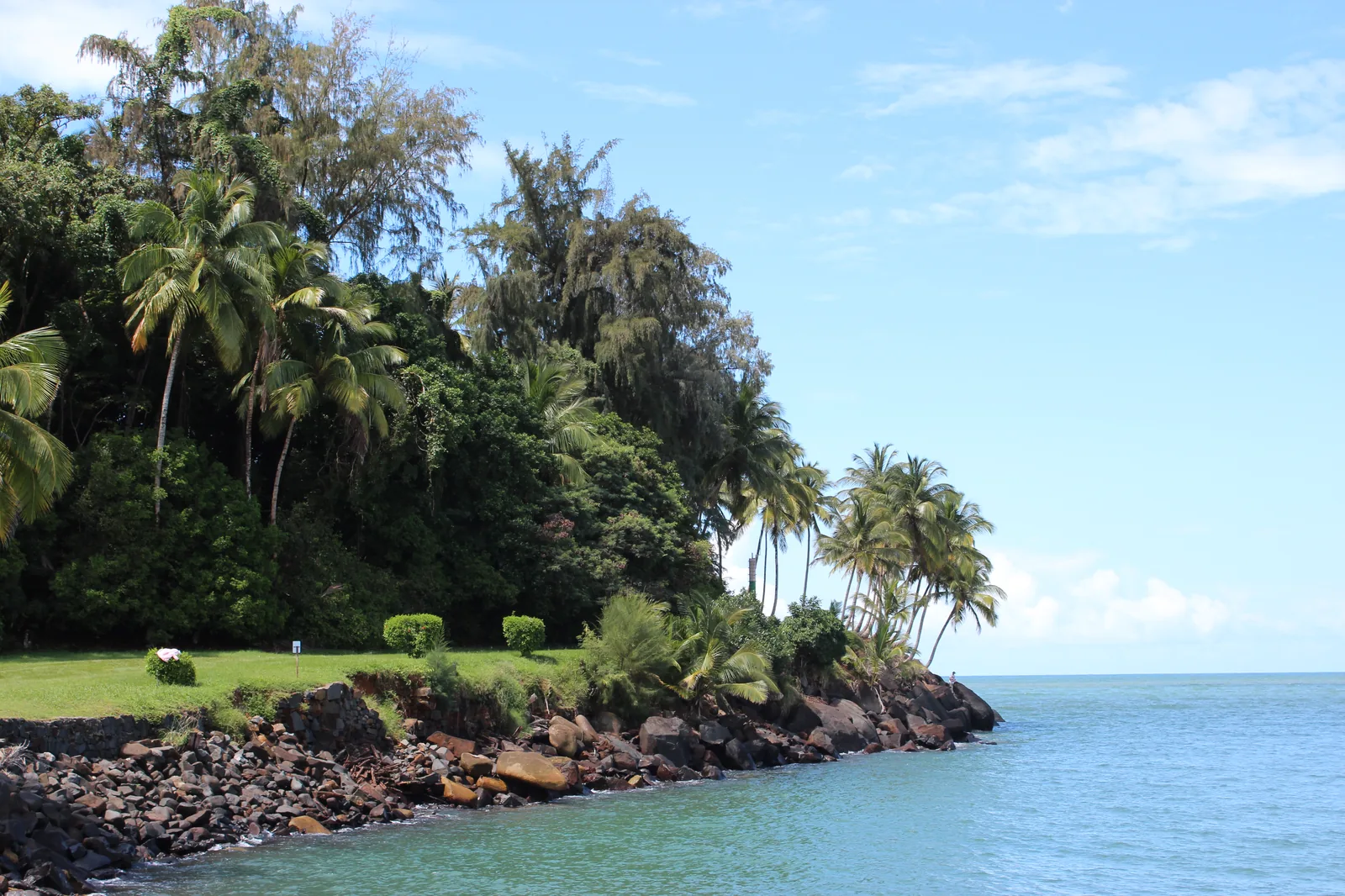
The anchorage off Île Royale. There is no berth on any of the three islands — this is a tender call, and swell can end it. Photo: Cayambe, CC BY-SA 4.0 via Wikimedia Commons
An honest note before I begin: I have not stood on Île Royale. What follows is read from the record — from CNES, which owns these islands, from the French penal-history archive at Criminocorpus, from the Institut national de l'audiovisuel, from Météo-France. Soundings in another's wake, not my own footprints. When I sail here I will come back and log what I actually found.
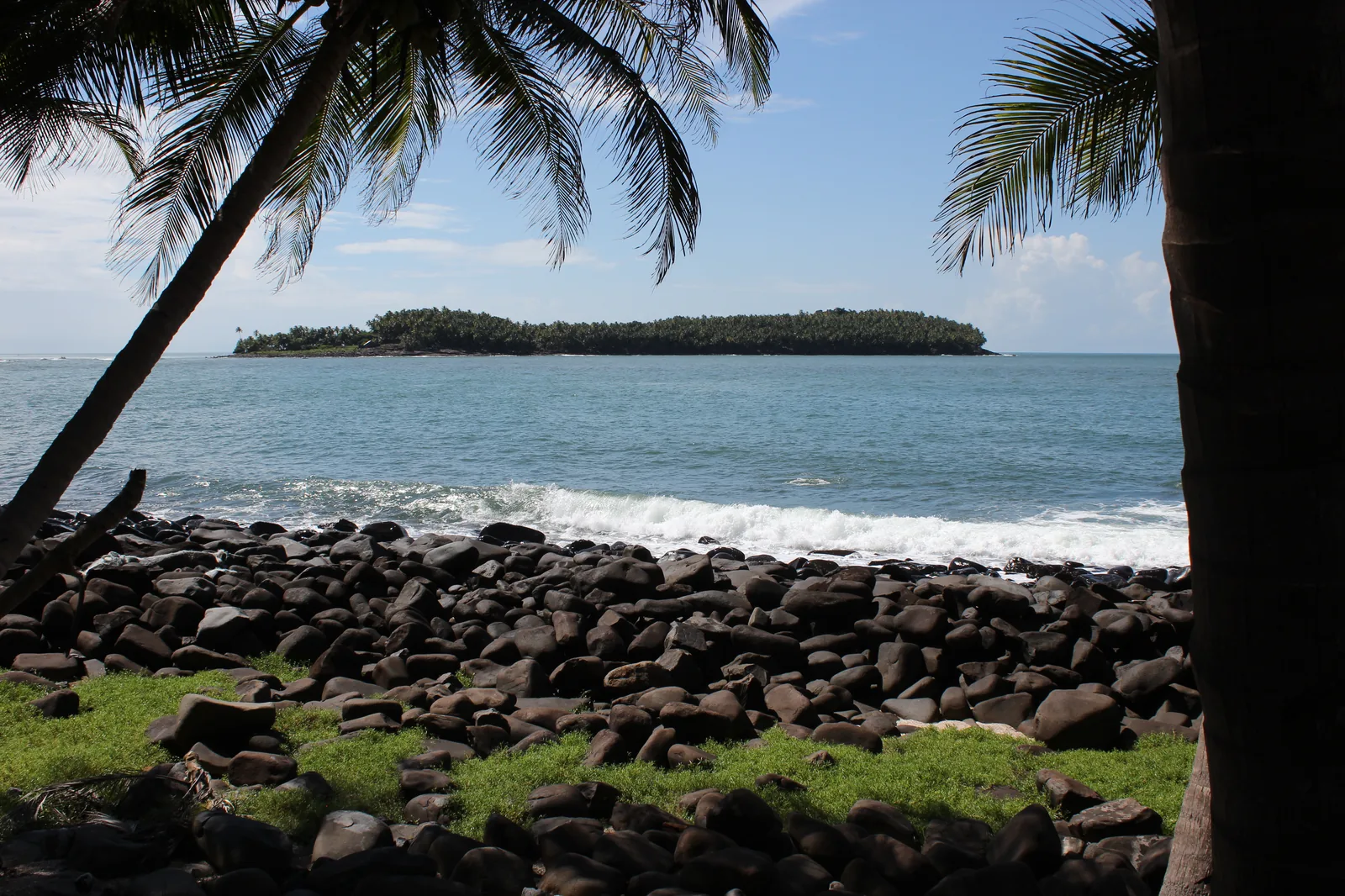
The first thing to settle is the one the brochure gets wrong. You do not land on Devil's Island. CNES states that Île du Diable reste interdite au débarquement — remains forbidden for landing — because of sea conditions. The island is ringed by rocky promontories, shoals and strong cross-currents. There is no jetty and there never was one usable in a normal sea. When the prison administration needed to move supplies and mail across the two-hundred-metre channel, they strung an aerial cableway.
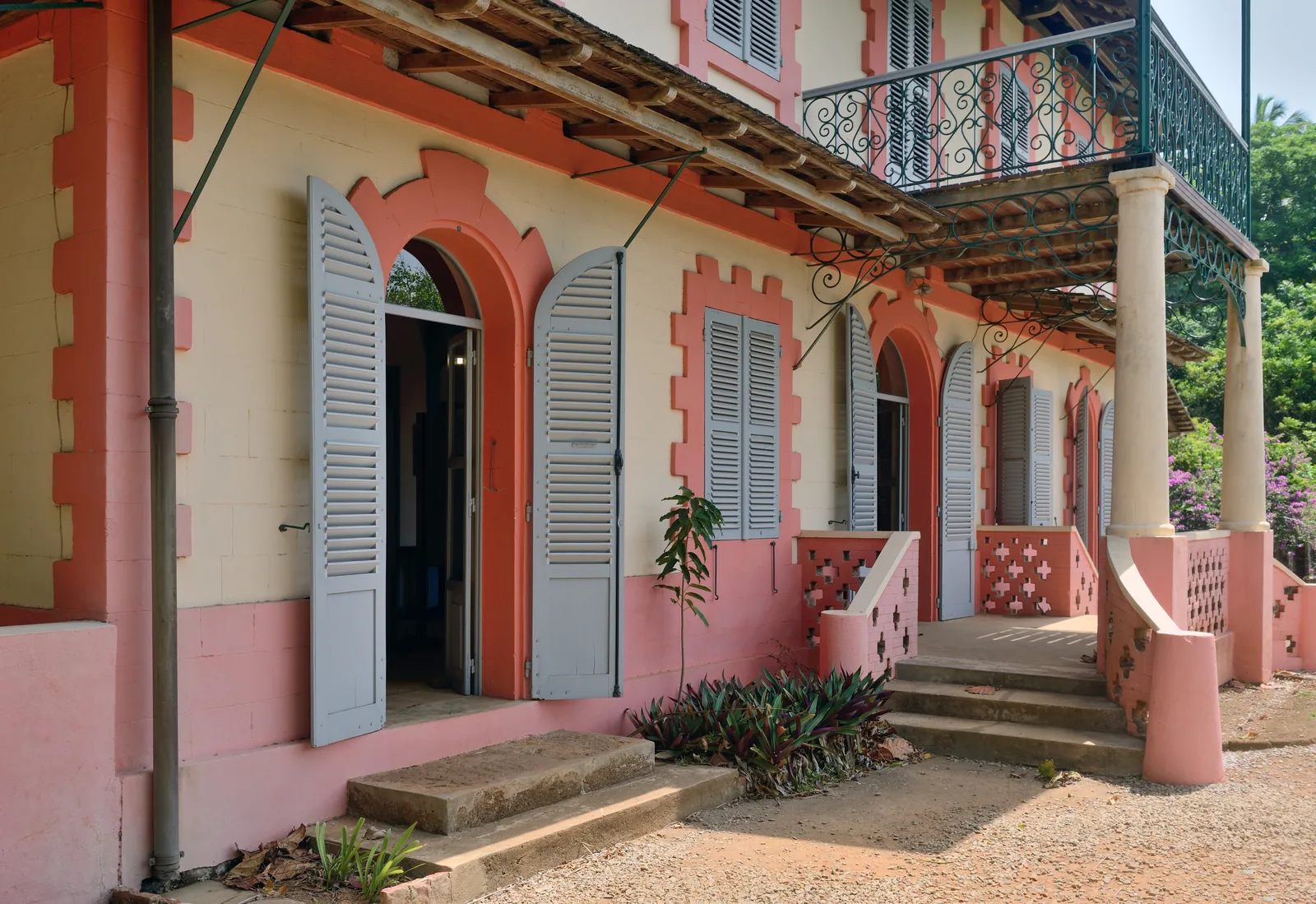
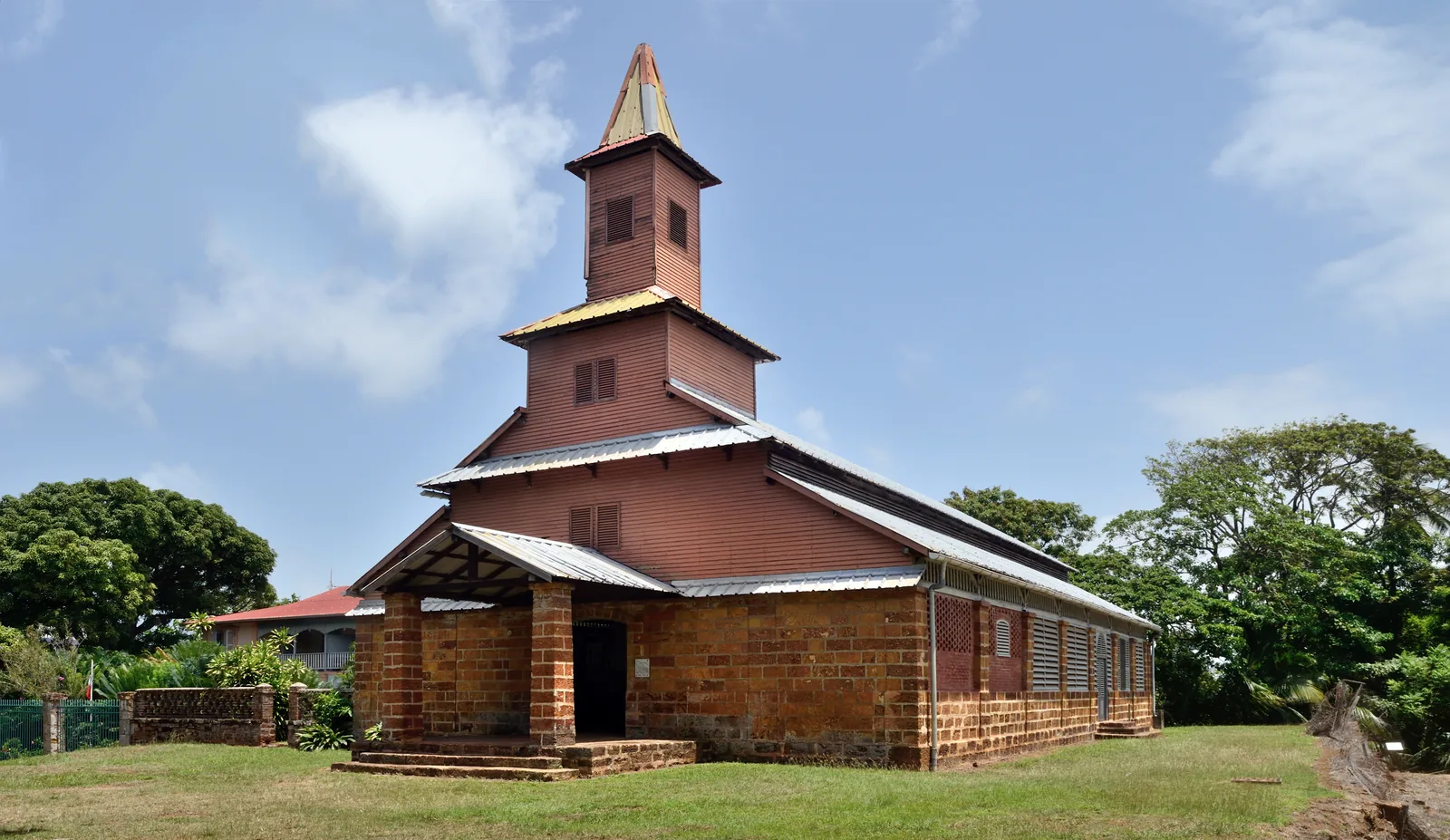
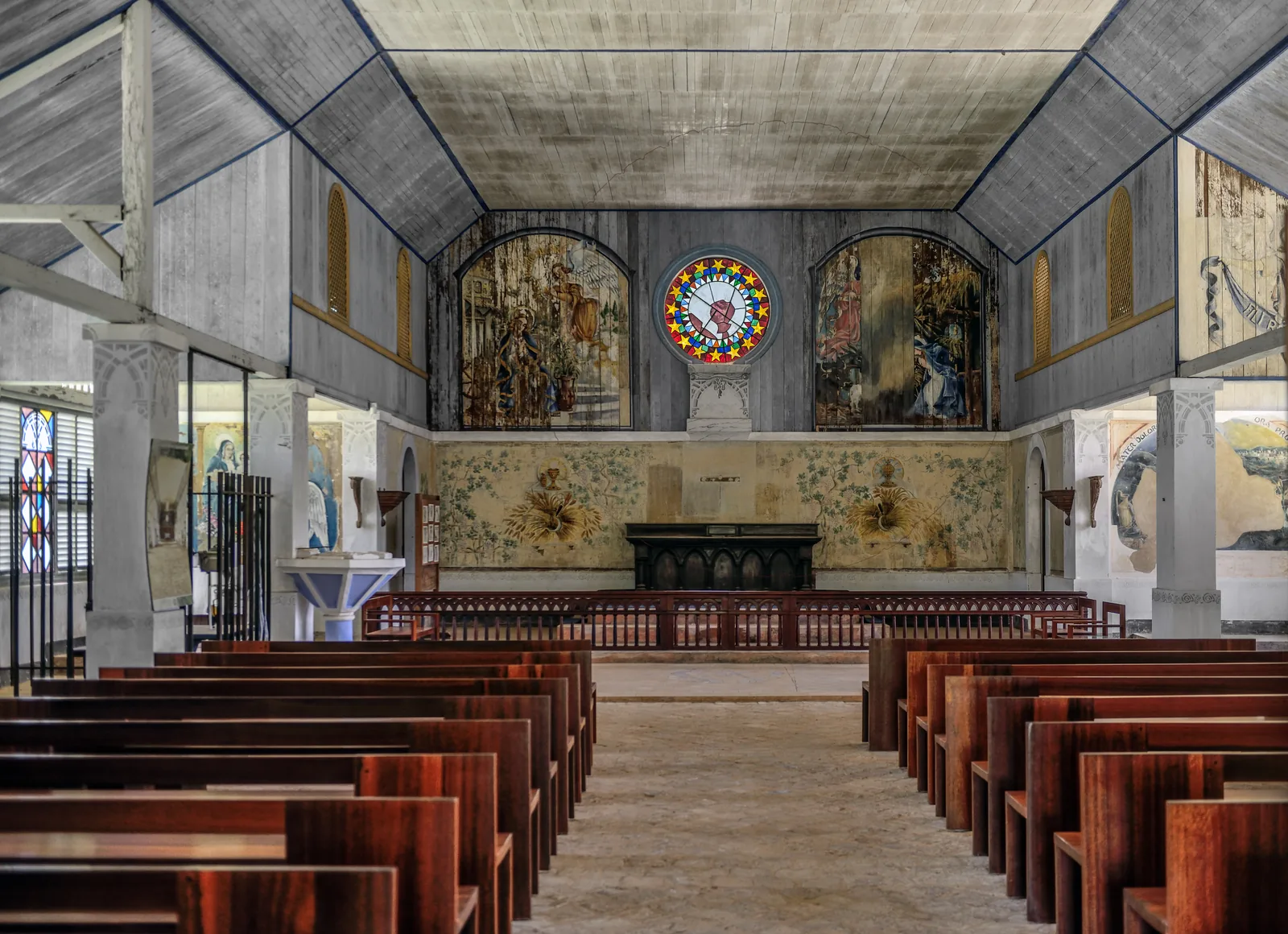
So the day is Île Royale, and Île Royale is not a consolation prize. Twenty-eight hectares, a ring path, and the administrative heart of the whole system still standing: the prison blocks, the hospital, the chapel, the warders' houses, two cemeteries, and a museum in what was the director's house. You walk it in a couple of hours among palms and agoutis, and the buildings are in that particular condition — roofless, root-cracked, still legible — that makes a place feel abandoned rather than curated.
The second thing the popular account gets wrong is more serious, and I want to be careful with it. The Îles du Salut were not the deadly part of the bagne. They were the administrative and disciplinary core — Royale for the administration and the hospital, Saint-Joseph for solitary confinement, Diable for a handful of political prisoners. What killed men in French Guiana was the mainland: Saint-Laurent-du-Maroni, the forest camps, the road details, and above all Charvein, which the convicts themselves called the Camp de la Mort. The islands had sea breezes and were relatively free of malaria. Their reputation is about symbolism and about Dreyfus, not about the death rate.
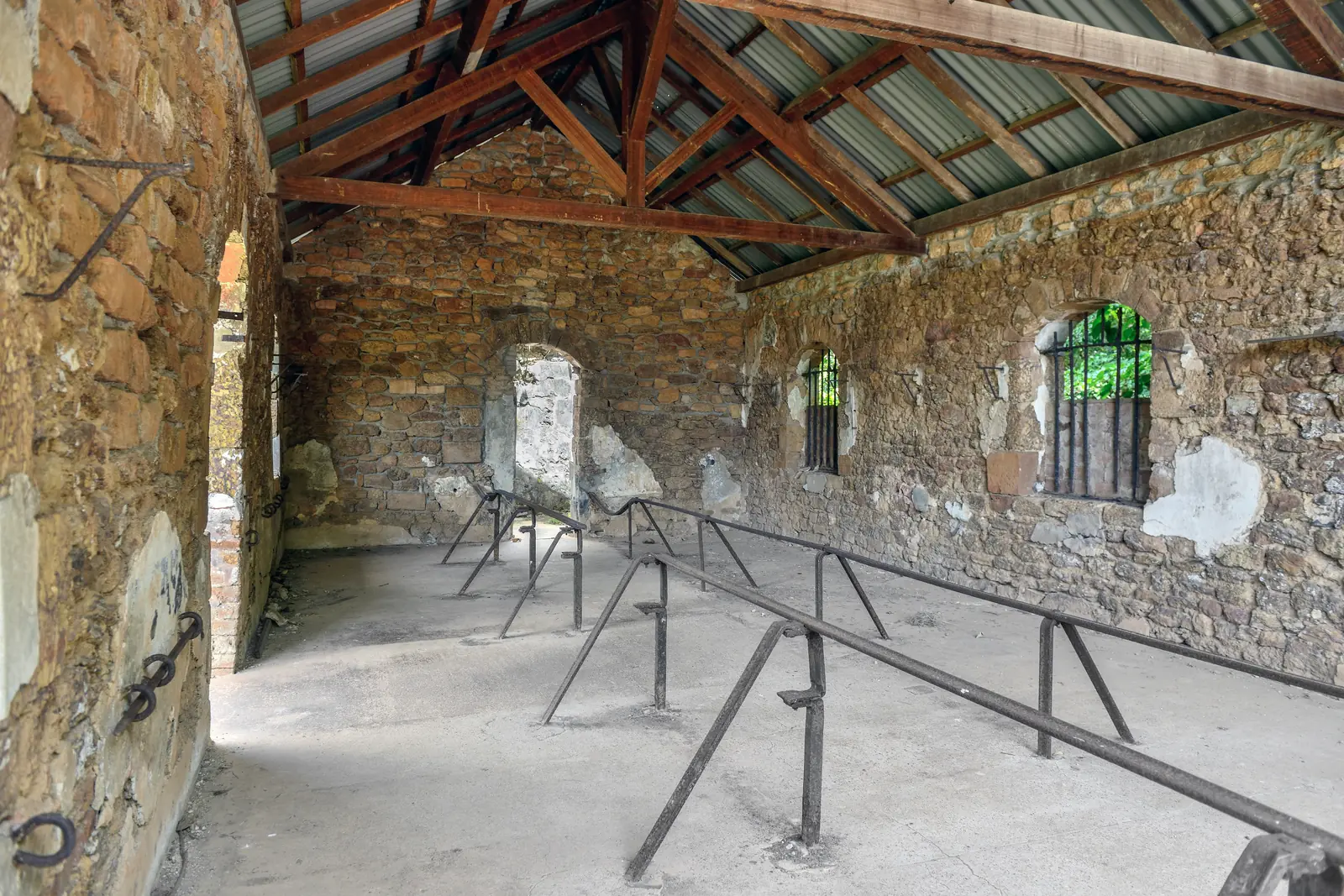
A dormitory on Île Royale, the shackle bars still in the floor. The islands were the disciplinary core of the bagne — the mainland camps were what killed men. Photo: Cayambe, CC BY-SA 4.0 via Wikimedia Commons
How many men went through it is genuinely contested and I am not going to pick a number and present it as settled. The French figures by legal category give 77,520 men and 315 women transported to hard labour between 1852 and 1938, 22,163 men and 519 women relegated as habitual offenders, and 329 political deportees. The Justice Ministry's own count of a narrower population is 54,288. Michel Pierre, the standard historian of the bagne, gives about 70,000 across all categories. Those do not reconcile, because they are counting different things, and anyone who quotes one figure without saying so is tidying up history.
The rule I keep returning to is doublage, and it is the most useful single fact about this place. A convict sentenced to eight years or more had to remain in the colony for life after release. A shorter sentence meant staying for a period equal to the sentence itself. So the men who finished their time did not go home; they accumulated in Cayenne and Saint-Laurent as a destitute underclass called the libérés. It was not the sentence that made the bagne a life sentence. It was the paperwork after it.
And then Dreyfus, who is the reason anyone outside France has heard of this rock. He was interned on Île du Diable from 13 April 1895 to 9 June 1899 — one thousand five hundred and seventeen days. Note that date: you will see March 1895 quoted in a great many places, and that is when he reached Guiana and the islands, not when he was put on Diable. He was held on Royale first.
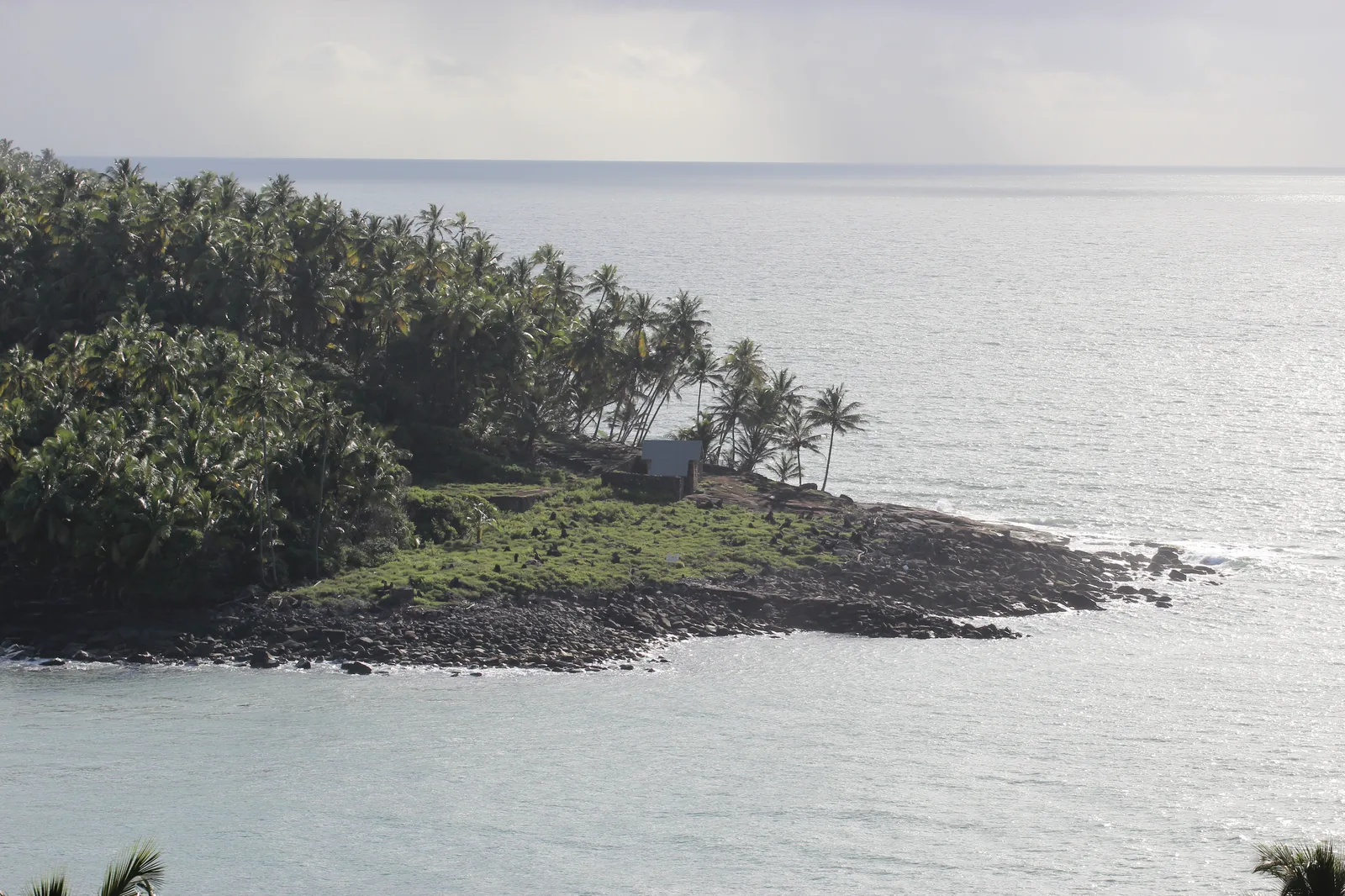
Dreyfus's hut on Île du Diable, seen from Royale. A listed monument since 1987, restored in the nineties, and you cannot go to it. Photo: Christian F5UII, CC BY-SA 4.0 via Wikimedia Commons
He was the island's sole prisoner. A rotating detail of warders watched him around the clock and were forbidden to speak to him. In September 1896, after a false rumour that an escape was being planned, the conditions were tightened savagely — a double palisade was built around the hut so he could no longer see the sea. He was fully rehabilitated on 12 July 1906. His hut was classified a monument historique in 1987 and restored in the early nineties, and you still cannot go and look at it, which is either a fitting irony or simply the sea being what it is.
There is a detail underneath that one which I find harder to put down. Charles Benjamin Ullmo, a naval officer convicted of treason in 1908, was held on Île du Diable from 17 July 1908 to 15 March 1923 — fifteen years, dans la case même où vécut Dreyfus, in the very hut where Dreyfus had lived. My chest tightened at that. France emptied the hut, cleared the man's name, and then put another man in it for three times as long, and almost nobody has heard his name.
Which brings me to Papillon, and here I would rather be blunt than diplomatic. Henri Charrière was convicted on 26 October 1931 of the murder of Roland Le Petit, a charge he always denied, and transported. He was never held on Île du Diable. The book's central set-piece — the leap from the cliffs on a sack of coconuts, riding the seventh wave — did not happen to him. He escaped on 18 and 19 March 1944 from the Cascades forest camp, on the mainland. Gérard de Villiers went into the penal archives and concluded that about ten per cent of the book is true.
I do not say that to spoil anyone's afternoon. The honest line is that Papillon is a novel with a real man's name on it; the bagne it describes existed and was in most respects worse than the book; and Charrière's own share of the story is small. If you want a first-hand account that holds up, René Belbenoît's Dry Guillotine of 1938 is the one — he actually got out, via British Guiana, and wrote it down.
Two practical things I would not want anyone to learn at the gangway. French Guiana is part of France and of the European Union, but it is not in the Schengen area — a Schengen visa, even a French one, does not admit you. And yellow fever vaccination is mandatory for entry, for everyone over nine months. Enforcement on a tender call is uneven, which is precisely why you carry the yellow card rather than relying on not being asked.
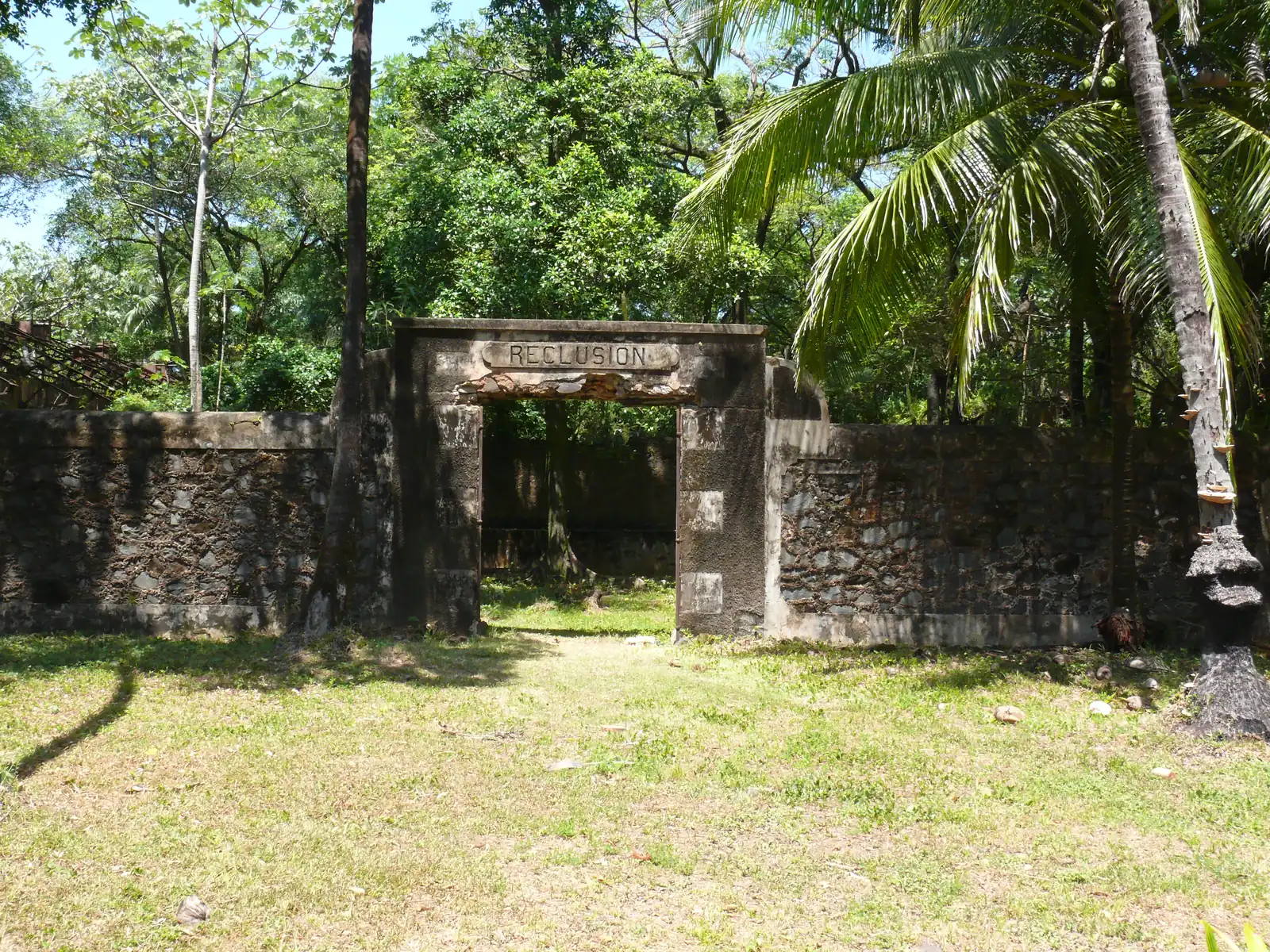
The réclusion on Saint-Joseph — the solitary cells, now roofless and open to the sky, which is not how they were experienced. Photo: Arria Belli, CC BY-SA 3.0 via Wikimedia Commons
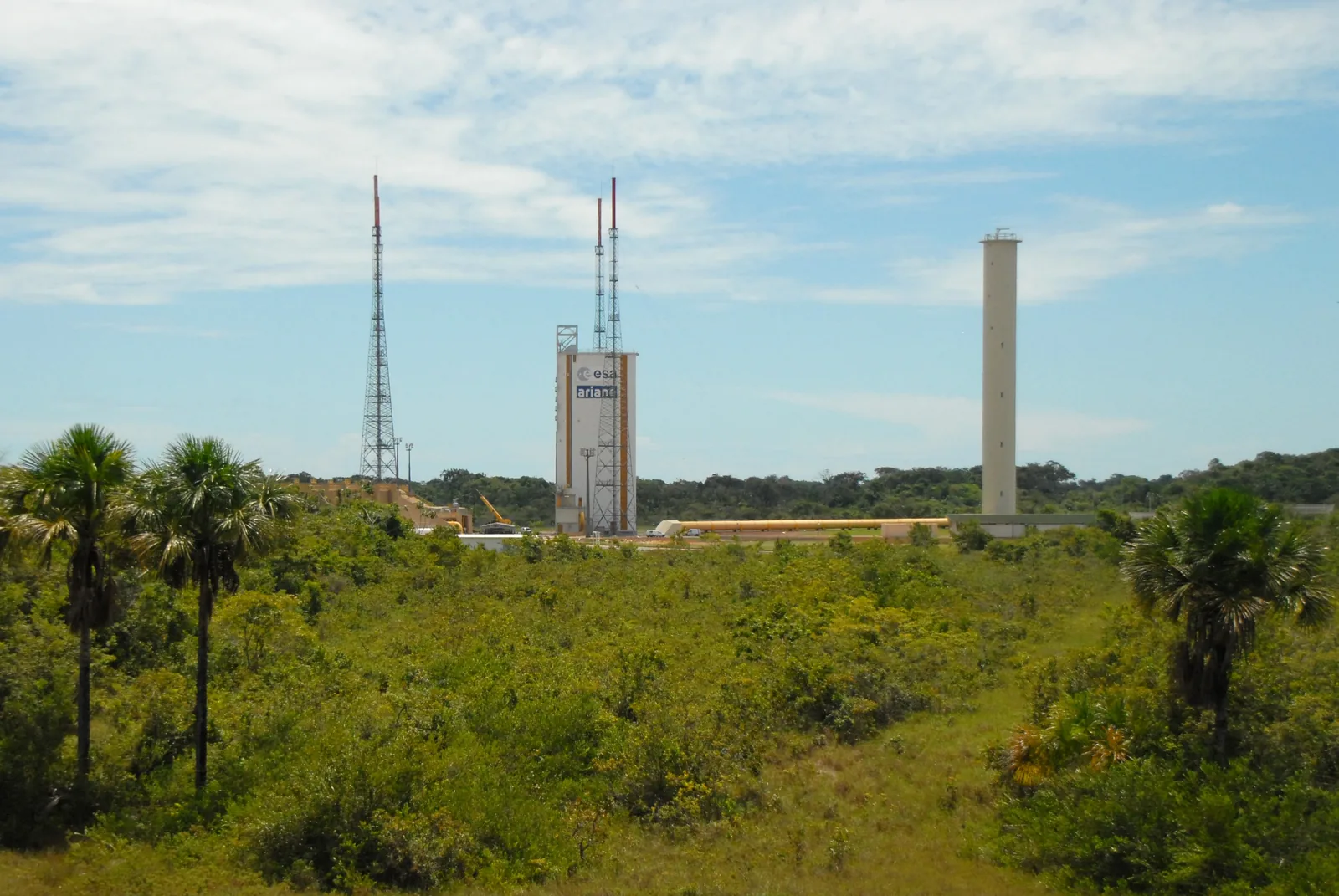
The last thing is the strangest, and it is the reason this call can vanish from your itinerary without a cloud in the sky. These islands sit under the launch corridor from Kourou. CNES has owned them since 1971, and they are evacuated and closed for every eastward launch under a prefectural navigation ban — a ban that stays in force through a postponement. What I realized, reading all of this, is that the islands have never once been left alone: a penal colony, then a space programme, and the same rock closed to the public either way. Only the reason changed.
Cruise Port Guide
The ring path on Île Royale. Unpaved, uneven, root-crossed and — in the French sources' own words — sometimes slippery. Photo: Christian F5UII, CC BY-SA 4.0 via Wikimedia Commons
This is a tender call and there is no alternative. None of the three islands has a berth capable of taking a ship of world-cruise size; ships anchor off Île Royale and tender to the jetty there.
The call is more cancellable than most, by two independent mechanisms. The first is ordinary: swell can make the tender transfer unsafe, and it can separately stop the small inter-island shuttle to Saint-Joseph even when the main landing is fine. The second is peculiar to this place — the islands lie under the launch corridor from the Guiana Space Centre and are evacuated and closed for every eastward launch, under a prefectural navigation ban that remains in force if the launch slips.
Ashore there is one restaurant, at the Auberge on Île Royale, and no shop of any kind. Saint-Joseph has nothing at all. Carry euros in cash — the inter-island shuttle's own operator is explicit that non-cash payment will be refused — and carry water.
Getting Around Îles du Salut
Royale and Diable from Saint-Joseph. The inter-island shuttle runs when the sea allows, and takes cash only. Photo: Christian F5UII, CC BY-SA 4.0 via Wikimedia Commons
Everything on Île Royale is on foot, and the island is small enough that this is not a constraint: a ring path of a couple of hours takes in the prison buildings, the chapel, the hospital, the warders' quarter and both cemeteries, with the view across to Île du Diable on the seaward side.
The paths are not made for city shoes. They are unpaved, uneven and crossed with tree roots, and French sources describe them as sentiers parfois glissants — sometimes slippery — which in an equatorial climate with afternoon rain means often. Île Royale rises to 66 metres and the walking includes real gradient.
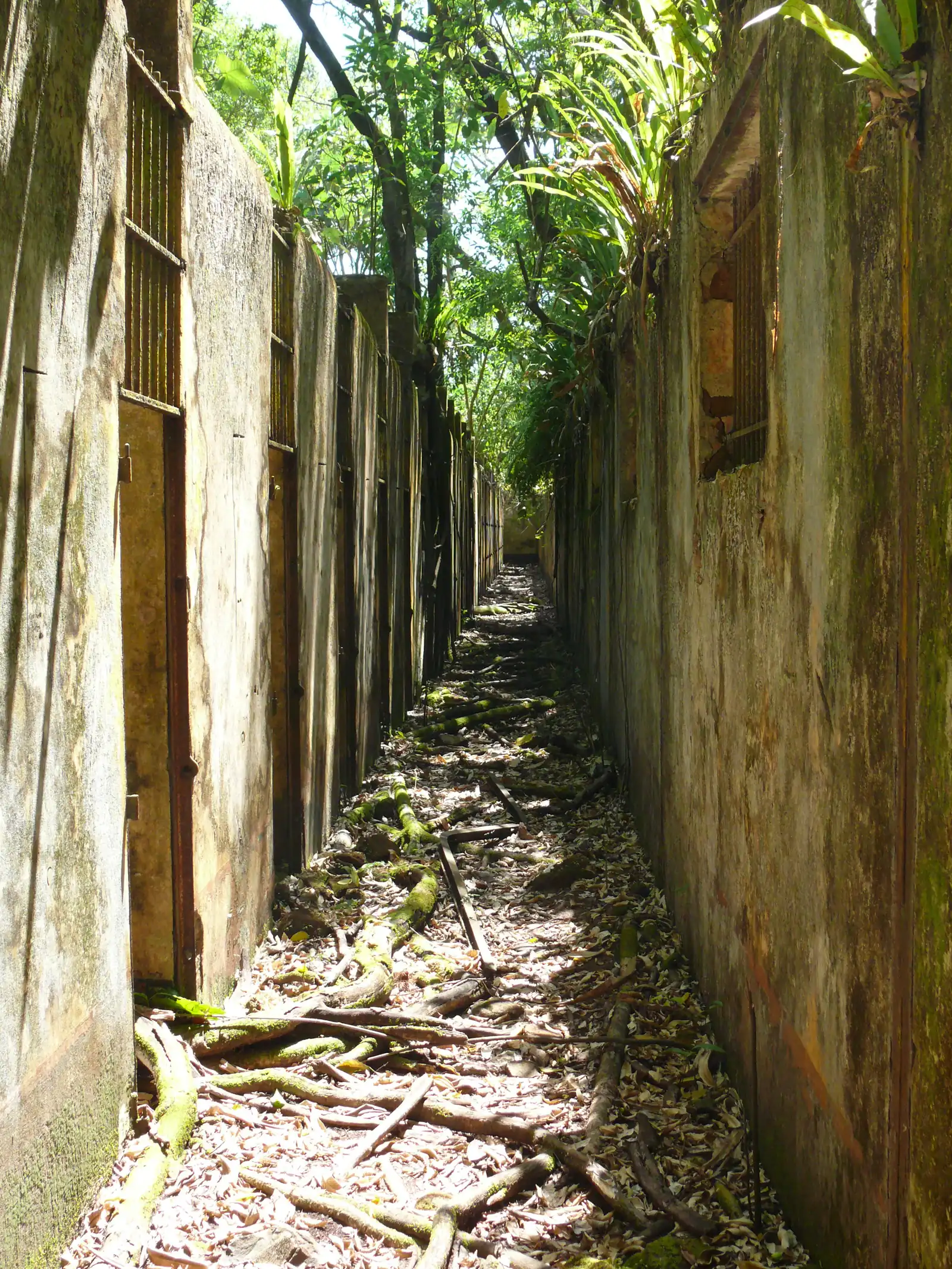
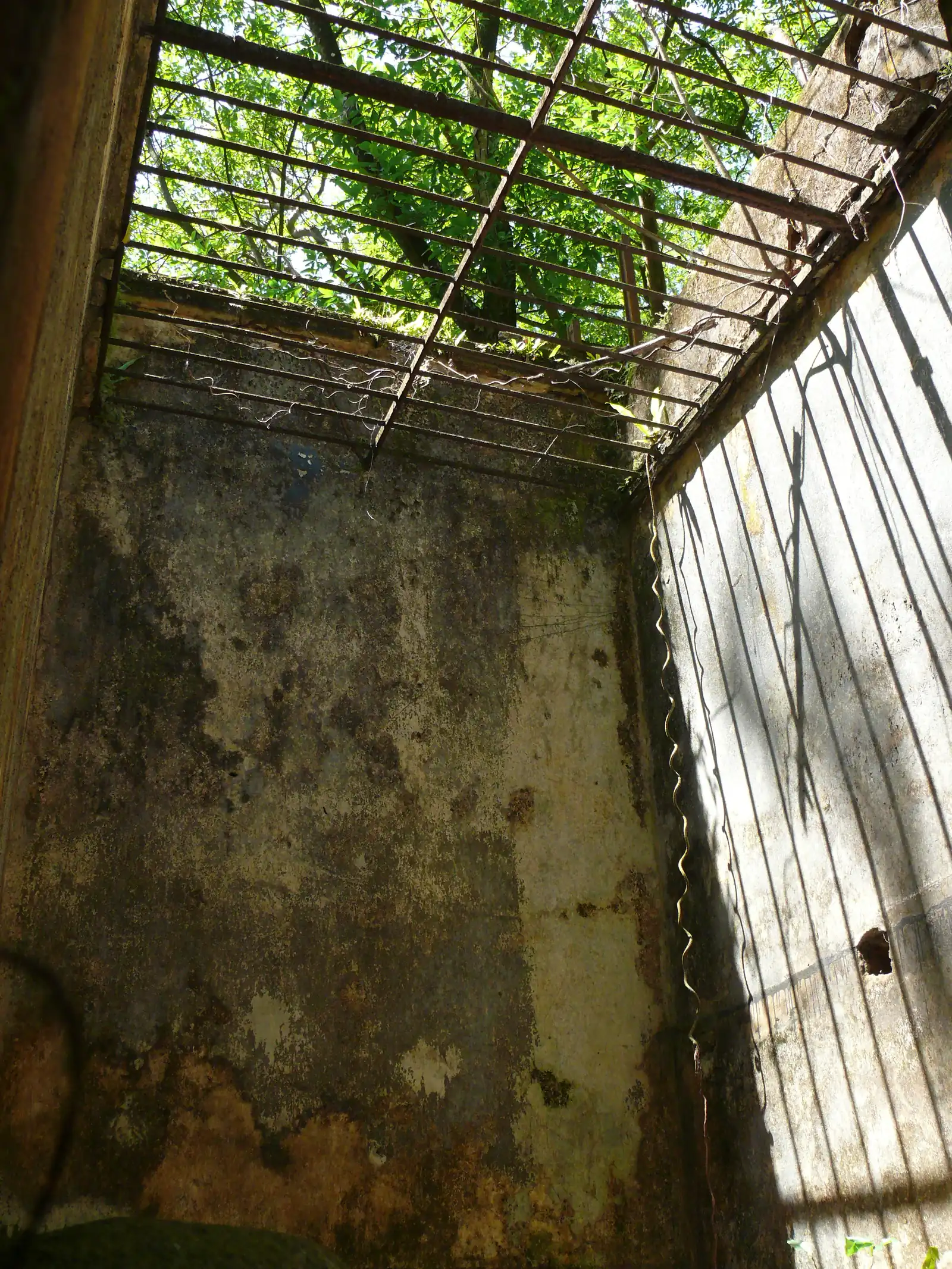
Saint-Joseph is a separate decision. A small shuttle crosses when the sea allows, it is paid in cash, and the island has no facilities whatsoever. It is also the more affecting of the two: the réclusion cell alleys stand roofless and open to the sky, which is not how they were experienced.
Language: French. Guided commentary on the islands is in French unless your ship supplies its own guide, and English is not widely spoken beyond the auberge staff.
There is one island to walk, one you may be able to reach, and one you cannot. That is the whole decision, and it is mostly made for you by the sea.
Île Royale — the day
The ring path. Two hours at an unhurried pace takes in the prison blocks, the hospital, the chapel, the warders' quarter and both cemeteries, with the seaward stretch giving the view across to Île du Diable. Free, unguided, and the right way to see it.
The museum, in the former prison director's house — the interpretive centre for the whole penal system, and worth the time before you walk the ruins rather than after.
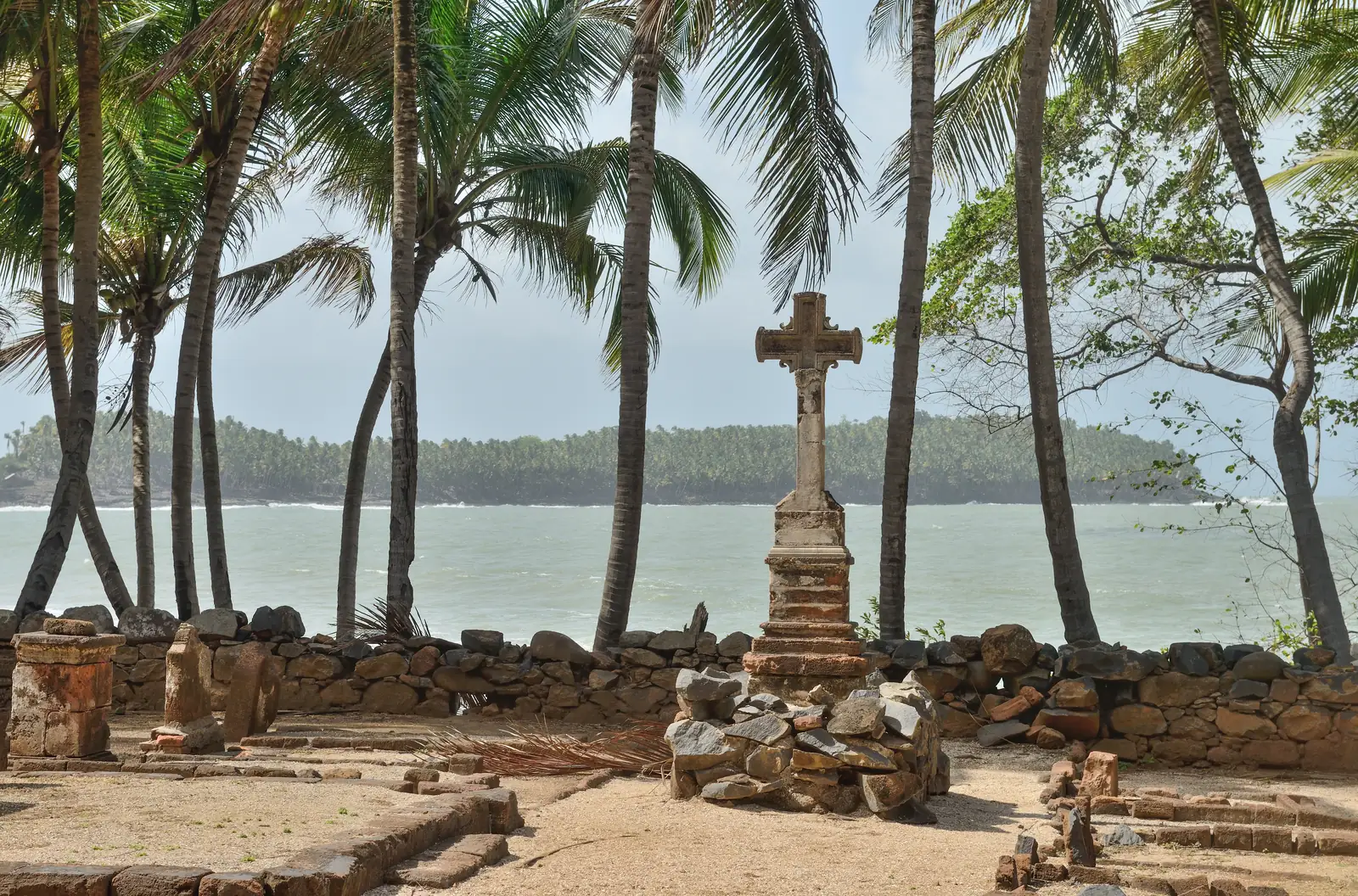
The chapel, whose interior survives, and the two cemeteries. The warders' cemetery holds the guards and their families; the convicts were not buried on land.
The agoutis and the monkeys. The islands' animals are habituated and unbothered, and they are a large part of why the place feels reclaimed rather than preserved.
Île Saint-Joseph — if the sea allows
The réclusion. The solitary-confinement compound: a gateway, then alleys of cells now roofless and open to the sky. This is the harder of the two islands and the more affecting. The shuttle is small, sea-dependent, and cash only in euros. There are no facilities on the island.
Île du Diable — what you can actually do
Look at it, and photograph it. That is the complete list. Landing is prohibited by the managing authority; there is no jetty and never has been a usable one; and no ship excursion, private arrangement or payment changes that. From the seaward path on Royale the channel is about two hundred metres and Dreyfus's hut — restored, and a listed monument since 1987 — is visible across it.
On booking. A ship excursion here buys guided commentary and a guaranteed return to the tender, which on a call this weather-dependent is worth more than usual. Going independent on Île Royale is entirely straightforward — you walk off the jetty and follow the path — but if Saint-Joseph is your reason for coming, book ahead or at least carry cash, because the shuttle takes no cards and does not run in swell.
On cost, which is unusual here. There is almost nothing to pay for. Walking Île Royale is free, the museum charge is nominal, and the only real prices are the Auberge's set lunch — reckon on €25–35 — and the inter-island shuttle to Saint-Joseph, a few euros each way and cash only. A ship excursion buys guiding and a guaranteed return rather than access, because the access is free. That is worth knowing before you pay $90 for a tour of an island you can walk round yourself.
What to carry: euros in cash, water, shoes with grip, and the yellow fever certificate. There is one restaurant on Royale and nothing else on either island.
History & Heritage
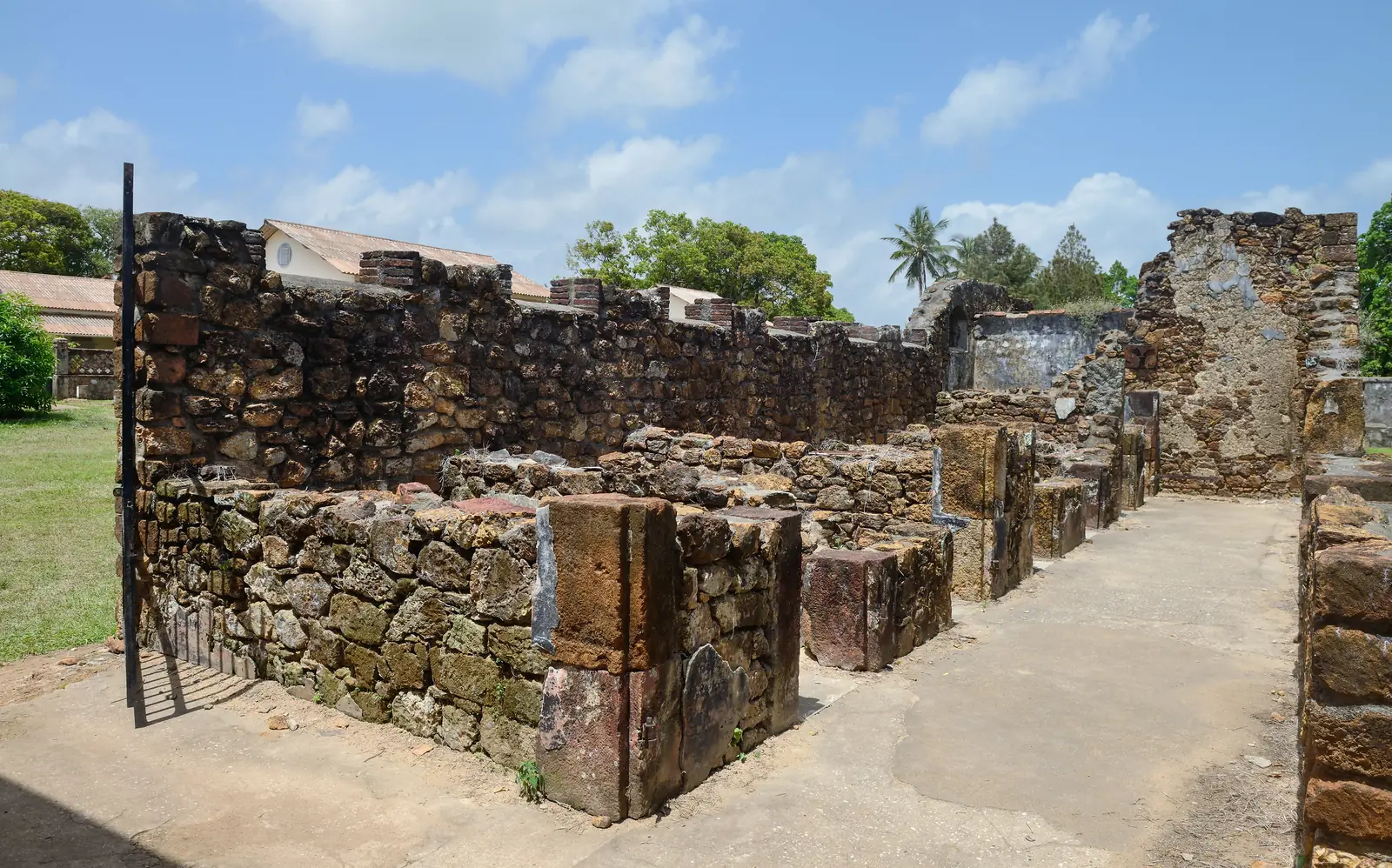
Cell ruins on Île Royale. Convict transportation ran from 1852; the islands closed in 1946 and the last men left Guiana on 1 August 1953. Photo: Cayambe, CC BY-SA 4.0 via Wikimedia Commons
Convict transportation to French Guiana began by decree of 27 March 1852, and the first transportés landed that year. Transportation was abolished by the Popular Front in 1938; the Îles du Salut penitentiary was evacuated and closed in 1946; and the last repatriated convicts left Guiana on 1 August 1953. You will see the span given as 1852–1953, 1854–1947 and 1852–1946 in different sources, all defensible for different things.
The system had three legal categories and they are worth separating. Transportation was hard labour for serious crime — 77,520 men and 315 women between 1852 and 1938. Relegation was for habitual offenders — 22,163 men and 519 women. Deportation was political, and accounted for only 329 people, of whom Dreyfus is the one anyone remembers. The Justice Ministry's own narrower count is 54,288, and the historian Michel Pierre gives about 70,000 across all categories. The figures do not reconcile because they count different populations.
Doublage is the rule that made the sentence permanent. Anyone sentenced to eight years or more had to remain in the colony for life after release; a shorter sentence required staying for a period equal to it. The libérés — released men who could not go home — accumulated in Cayenne and Saint-Laurent-du-Maroni as a destitute underclass. Very few ever returned to France.
The islands themselves were the disciplinary and administrative core, not the killing ground. That was the mainland — Saint-Laurent, the forest camps, the road details, and Charvein, which the convicts called the Camp de la Mort. Sea breezes and relative freedom from malaria made a posting to Royale comparatively survivable. The archipelago's reputation rests on Dreyfus and on symbolism rather than on mortality.
Food & Drink Ashore
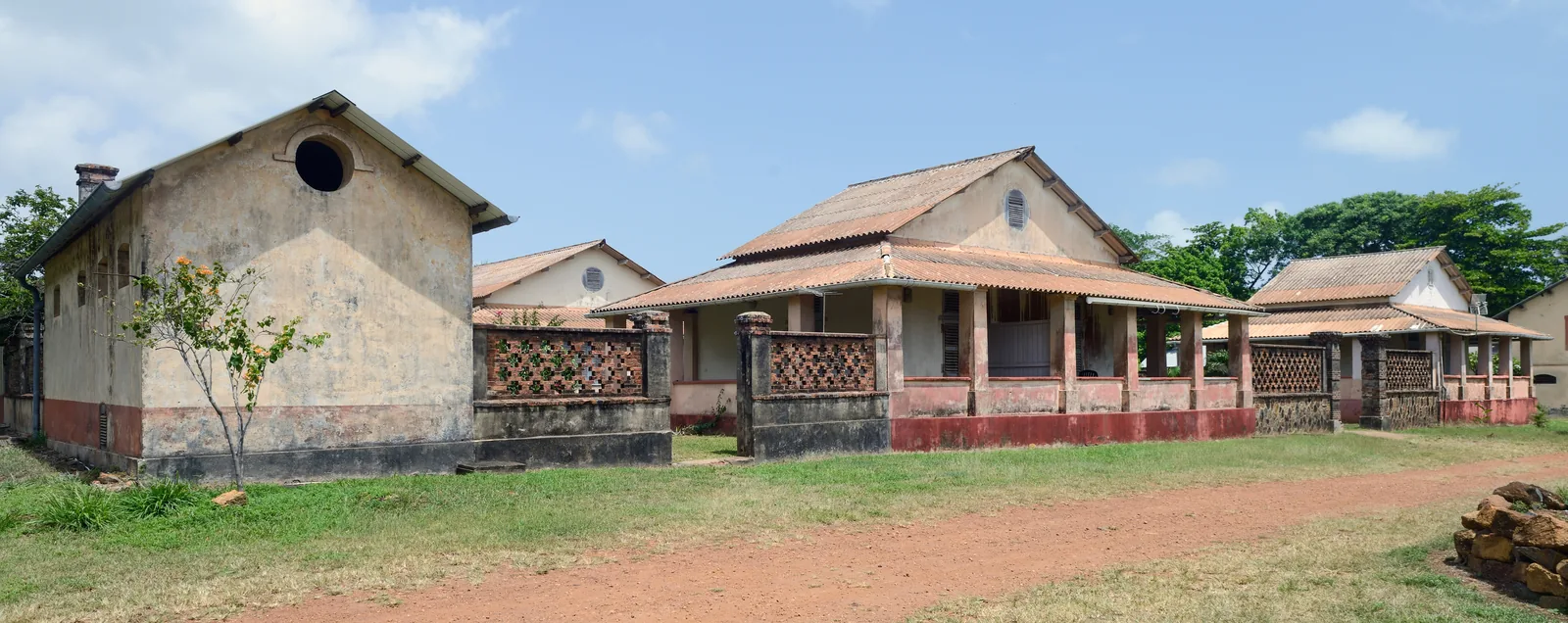
The warders' quarter on Île Royale. The Auberge restaurant occupies these buildings and is the only food service on the archipelago. Photo: Cayambe, CC BY-SA 4.0 via Wikimedia Commons
There is one restaurant, at the Auberge on Île Royale, in the former warders' quarters. It is the only food service on the archipelago and it is a French kitchen in a French department — expect a set menu rather than a snack counter, and expect it to be busy on a call day.
There is nothing at all on Île Saint-Joseph — no shop, no kiosk, no water. Carry what you need across.
The currency is the euro and you should carry cash. The inter-island shuttle's own operator states that non-cash payment will be refused.
Know Before You Go
You cannot land on Île du Diable. CNES, which owns the archipelago, states it remains closed to landing because of sea conditions — rocky promontories, shoals and strong cross-currents, with no usable jetty. This applies to ship excursions and private arrangements alike.
French Guiana is in the EU but NOT in the Schengen area. A Schengen visa — even one issued by France — does not admit you. Visa nationals need one specifically valid for French Guiana.
Yellow fever vaccination is mandatory for entry to French Guiana for everyone over nine months. Enforcement on a tender call is uneven, which is exactly why you should carry the certificate rather than rely on not being asked.
This call has two separate ways of being cancelled. Swell can stop the tender or the Saint-Joseph shuttle. And the islands are evacuated and closed for every eastward launch from Kourou under a prefectural navigation ban — which stays in force if the launch is postponed.
Dengue, chikungunya and Zika circulate in French Guiana. Malaria risk is concentrated in the interior and along the Maroni and Oyapock rivers rather than the coast or the islands, but mosquito precautions are sensible everywhere.
The paths are unpaved, uneven, root-crossed and often slippery, and Île Royale rises to 66 m. This is not a flat stroll and it is not suitable in smooth-soled shoes.
Depth Soundings Ashore
Kourou. The islands sit under the launch corridor, and are evacuated and closed for every eastward launch — a closure that survives a postponement. Photo: Camille Gévaudan, CC BY-SA 4.0 via Wikimedia Commons
Things about this call that only make sense once someone says them:
The islands were the survivable part. Travel writing has this exactly backwards. The mainland camps killed men; the islands had sea breezes and comparatively little malaria. Their reputation is about Dreyfus and symbolism.
Doublage, not the sentence, made it permanent. Eight years or more meant staying in the colony for life after release. The men who served their time mostly never went home.
Dreyfus went onto Île du Diable on 13 April 1895, not in March. The March dates you will read are his arrival in Guiana and at the islands. He was held on Royale first, and on Diable he was the sole prisoner for 1,517 days.
Another man spent fifteen years in the same hut. Charles Benjamin Ullmo, convicted of treason in 1908, was held on Île du Diable from July 1908 to March 1923 — in the very hut where Dreyfus had lived.
Papillon is about ten per cent true. Charrière was never on Île du Diable; he escaped from a mainland forest camp in March 1944. Gérard de Villiers established the proportion from the penal archives in 1970.
A rocket can take your port day. The islands are under the Kourou launch corridor and are closed for every eastward launch — and the closure survives a postponement.
Practical Information
Currency: the euro. Carry cash — the inter-island shuttle refuses cards and there is no ATM on the islands.
Language: French. English is not widely spoken beyond the auberge staff, and island commentary will be in French unless the ship provides its own guide.
Connectivity: French mobile networks reach the islands, but fourteen kilometres offshore is not a signal to rely on. Assume you are out of contact for the day.
Accessibility and stamina. This is the least accessible call on the voyage and it is honest to say so. It is a tender port, the jetty transfer is sea-dependent, and once ashore there is no vehicle, no smooth surface and no shortcut. Minimal walking: the jetty area and the auberge terrace, from which Île du Diable is not visible — the view is on the far side. Moderate: the lower loop past the prison buildings and the chapel. High energy: the full ring path, which climbs to 66 m on uneven, root-crossed and often slippery ground and is genuinely strenuous in equatorial heat. Anyone with real mobility limits should plan this as a possible ship day and weight the docked calls instead.
What it costs: very little. There is no entry fee to Île Royale, the museum charges a nominal amount, lunch at the Auberge runs roughly €25–35, and the Saint-Joseph shuttle is a few euros each way in cash. The price of a ship excursion here buys commentary and a guaranteed return, not admission.
The warders' cemetery on Saint-Joseph. The guards and their families were buried on land; the convicts were not. Photo: Cayambe, CC BY-SA 4.0 via Wikimedia Commons
Credits
Every image on this page comes from Wikimedia Commons under the license noted and is credited to its creator below. In the Wake does not claim authorship of these images; when we can add our own photographs from a future visit, we will.
Île du Diable from Île Royale (page header image) — Cayambe, CC BY-SA 4.0
The anchorage off Île Royale — Cayambe, CC BY-SA 4.0
Dreyfus's hut on Île du Diable, seen from Royale — Christian F5UII, CC BY-SA 4.0
A dormitory on Île Royale, the shackle bars still in the floor — Cayambe, CC BY-SA 4.0
The réclusion on Saint-Joseph — Arria Belli, CC BY-SA 3.0
The ring path on Île Royale — Christian F5UII, CC BY-SA 4.0
Royale and Diable from Saint-Joseph — Christian F5UII, CC BY-SA 4.0
The museum, in the prison director's house — Cayambe, CC BY-SA 4.0
One of the solitary cells on Saint-Joseph — Arria Belli, CC BY-SA 3.0
The gateway to the réclusion on Saint-Joseph — Arria Belli, CC BY-SA 3.0
The warders' cemetery on Saint-Joseph — Cayambe, CC BY-SA 4.0
Frequently Asked Questions
What is the best time of year to visit the Îles du Salut?
August to November is the great dry season and much the best window — September averages just 24 mm of rain across under three rain days, against an annual total of about 2,523 mm. A world-cruise call falls in February, March or April instead; of those March is clearly the best at around 208 mm, on the tail of the short dry break the French call the <em>petit été de mars</em>.
What should I pack for the weather here?
Shoes with real grip, because the island paths are unpaved, root-crossed and often slippery after rain. Light breathable clothing and more water than you expect — the mean maximum sits between 29 and 32 °C every single month of the year, with high humidity and no relief. A hat, high-factor sunscreen and insect repellent: you are five degrees north of the equator.
Will rain concerns affect my day on the islands?
Rain here comes in heavy convective bursts rather than all-day drizzle, so even a wet month has dry hours — but it makes the paths genuinely slippery on ground that climbs to 66 metres. The larger weather risk is not rain at all but swell, which can stop the tender outright, or allow the main landing while stopping the small shuttle to Saint-Joseph.
Does this call have a storm season, and can it be cancelled?
There are no tropical cyclones here — five degrees north of the equator is too close for them to form — so there is no hurricane season in the usual sense. What there is instead is the great rainy season from April to July, peaking in May at 472 mm across 24 rain days, and swell, which is the thing that actually decides the day. Swell can make the tender transfer unsafe outright, or allow the main landing while stopping the small shuttle to Saint-Joseph. And there is a second mechanism peculiar to this place: the islands sit under the launch corridor from the Guiana Space Centre at Kourou and are <strong>evacuated and closed for every eastward launch</strong> under a prefectural navigation ban — which stays in force if the launch is postponed. This is one of the more cancellable stops on the whole voyage.
Can I actually set foot on Devil's Island?
No. This is the central fact of the call and it is worth being blunt about, because cruise marketing routinely bills the stop as "Devil's Island". CNES, which owns the archipelago, states that Île du Diable <em>reste interdite au débarquement</em> — remains forbidden for landing — because of sea conditions. It is ringed by rocky promontories, shoals and strong cross-currents, and there is no jetty and never has been one usable in a normal sea. No ship excursion, private arrangement or extra payment changes this. You see it from Île Royale, across about two hundred metres, and you photograph it.
So what do I actually get to see?
Île Royale, which is not a consolation prize. Twenty-eight hectares with a ring path taking in the prison blocks, the hospital, the chapel, the warders' quarter, both cemeteries and a museum in the former director's house — plus the seaward view across to Île du Diable and Dreyfus's restored hut. If the sea allows, a small shuttle also runs to Île Saint-Joseph, where the solitary-confinement cell alleys stand roofless and open to the sky.
Was this really the worst prison in the world?
No, and travel writing has this backwards. The Îles du Salut were the <em>administrative and disciplinary</em> core of the penal colony — Royale for the administration and hospital, Saint-Joseph for solitary, Diable for a handful of political prisoners. What killed men in French Guiana was the mainland: Saint-Laurent-du-Maroni, the road details and the forest camps, above all Charvein, which the convicts called the <em>Camp de la Mort</em>. The islands had sea breezes and comparatively little malaria. Their reputation rests on symbolism and on Dreyfus.
How many convicts were sent here?
The honest answer is that the figures do not reconcile, and anyone who gives you a single number is tidying up. By legal category: 77,520 men and 315 women transported to hard labour between 1852 and 1938; 22,163 men and 519 women relegated as habitual offenders; and 329 political deportees. The Justice Ministry counts a narrower population at 54,288. Michel Pierre, the standard historian of the bagne, gives about 70,000 across all categories — that is the figure to use if you use one, and it should be attributed.
What was doublage?
The single most useful fact about this system. Anyone sentenced to eight years or more had to remain in the colony <em>for life</em> after release; a shorter sentence meant staying for a period equal to it. So the men who finished their sentences did not go home. They accumulated in Cayenne and Saint-Laurent as a destitute underclass called the <em>libérés</em>. It was not the sentence that made the bagne a life sentence — it was the rule that came after it.
How long was Dreyfus held here?
He was interned on Île du Diable from <strong>13 April 1895 to 9 June 1899 — 1,517 days</strong>, as the island's sole prisoner. Note that date: many sources give March 1895, but that is when he reached Guiana and the islands, and he was held on Royale first. A rotating detail of warders watched him around the clock and were forbidden to speak to him; after a false escape rumour in September 1896 a double palisade was built around his hut so he could no longer see the sea. He was fully rehabilitated on 12 July 1906.
Is Papillon a true story?
Largely not. Henri Charrière was convicted in October 1931 and transported, but <strong>he was never held on Île du Diable</strong> — the book's central set-piece, the leap from the cliffs on a sack of coconuts, did not happen to him. He escaped in March 1944 from the Cascades forest camp on the mainland. Gérard de Villiers researched the penal archives and concluded that about ten per cent of the book is true. The fair summary: it is a novel with a real man's name on it, the bagne it describes existed and was worse than most of what it describes, and Charrière's own share of the story is small. For a first-hand account that holds up, read René Belbenoît's <em>Dry Guillotine</em>.
Do I need a visa or vaccinations for French Guiana?
Possibly a visa, and definitely the yellow fever certificate. French Guiana is part of France and of the European Union but is <strong>not in the Schengen area</strong> — a Schengen visa, even one issued by France, does not admit you, and visa nationals need one specifically valid for French Guiana. Yellow fever vaccination is mandatory for entry for everyone over nine months old. Enforcement on a tender call is uneven, which is exactly why you carry the certificate rather than relying on not being asked.
Is this call suitable if I have limited mobility?
Honestly, it is the hardest call on the voyage. It is a tender port with a sea-dependent transfer, and once ashore there is no vehicle, no smooth surface and no shortcut — the paths are unpaved and uneven and the island climbs to 66 metres. The jetty area and the auberge terrace are manageable, but the view across to Île du Diable is on the far side of the island. Anyone with real mobility limits should plan this as a possible ship day and put their energy into the docked calls instead.