Eastport is the easternmost city in the United States — a small working fishing port of about 1,300 people spread across Moose Island, at the far Down East corner of Maine where Passamaquoddy Bay meets the Canadian line. It was incorporated as a city in 1893, back when thirteen sardine canneries lined its shore; today the canneries are gone, but fishing, aquaculture, and a growing trickle of tourism keep the waterfront working. For a cruise traveler, Eastport is one of the smallest and most genuine calls on a Canada & New England itinerary: no chain stores at the pier, no manufactured attraction, just a brick Water Street, a headland of spruce trails, and one of the strangest pieces of water in the hemisphere churning offshore.
This guide covers how you actually get ashore here (almost always by tender), what a slow half-day in town looks like, the honest weather picture for a cold-water port at the tail of the season, and the two things worth timing your morning around — the historic downtown and the Old Sow, the largest tidal whirlpool in the Western Hemisphere.
Last reviewed: July 2026
Weather & Best Time to Visit
Captain's Logbook
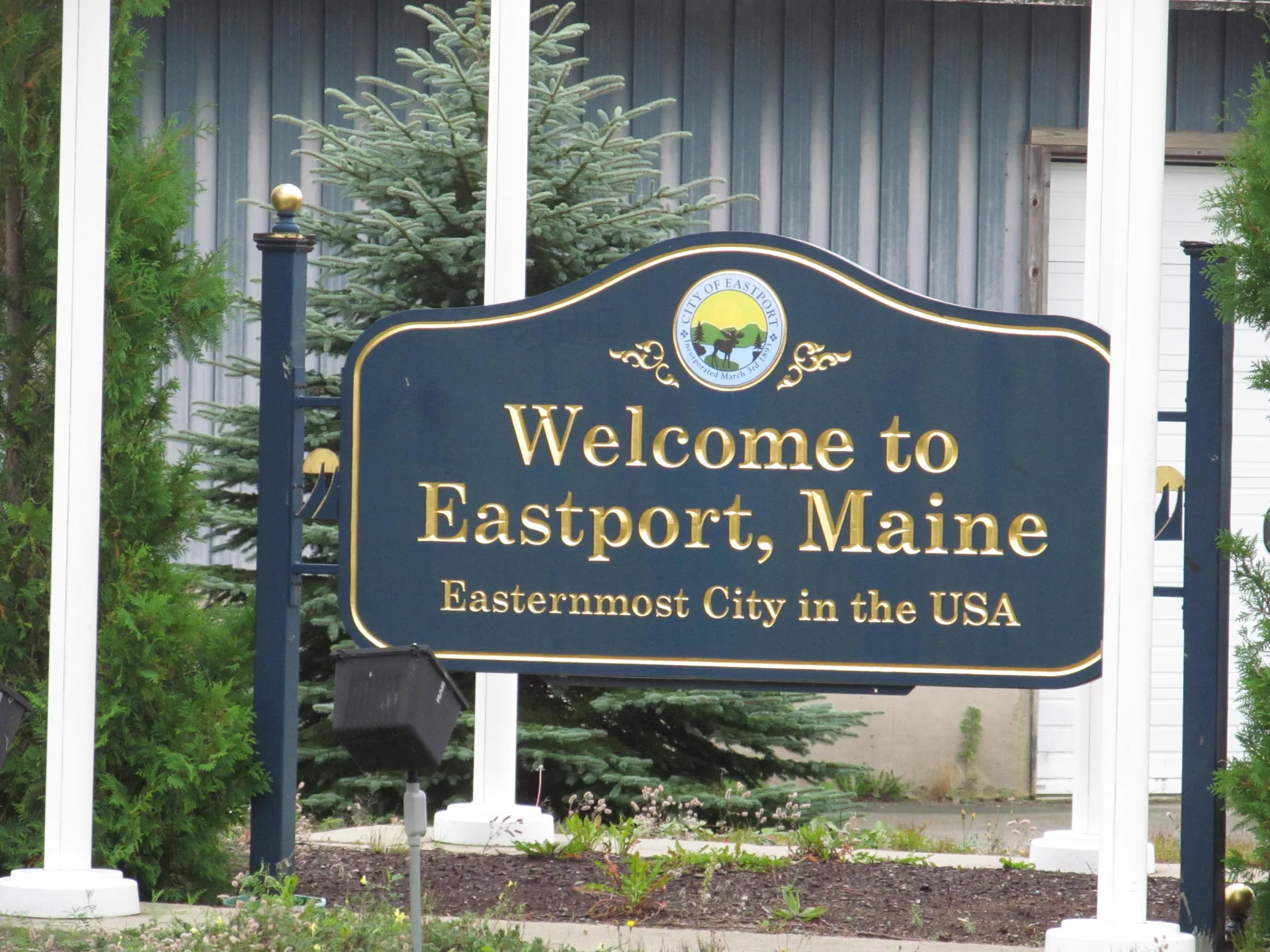
The sign says it plainly: the easternmost city in the USA — a distinction Eastport wears without fuss. Photo: Doug Kerr (Dougtone), CC BY-SA 2.0 via Wikimedia Commons
An honest note before I begin: I have not set foot in Eastport yet. What follows is a reading of the place from the record and from the accounts of people who have stood on that breakwater — soundings taken in another's wake, not my own footprints on Water Street. I would rather tell you that plainly than pretend to a morning I have not had. When I do sail here, I will come back and log what I actually found.
So let me tell you what I see when I look at this little city honestly. Eastport is the kind of place that most itineraries would never bother with, and that is exactly why it belongs on one. It is the easternmost city in the country — the first American ground the sun touches — and yet there is nothing grand about it. About thirteen hundred people live out here on Moose Island, at the end of a causeway, at the end of the road, at the edge of the map. The big ships cannot even come alongside; they anchor out in Passamaquoddy Bay and send you in by tender, which feels right. You do not arrive in Eastport so much as you are ferried to it, the way you would reach any real island.
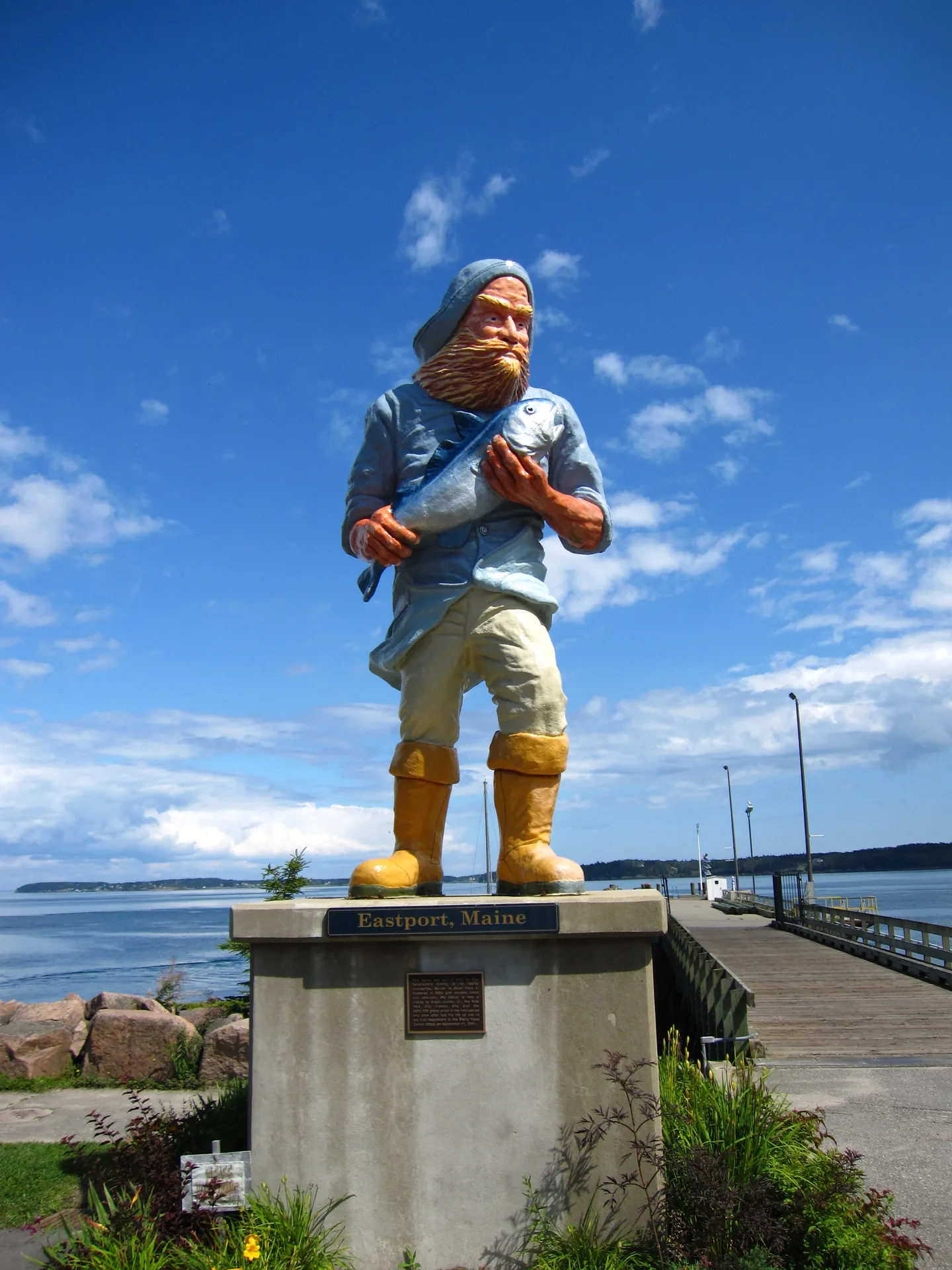
What strikes me from the record is how little the town is selling. There is no purpose-built pier attraction, no manufactured "experience" waiting at the gangway. There is a brick Water Street that has been standing since the sardine boom, when thirteen canneries worked this shore and the harbor never froze. There is a carved fisherman out on the breakwater, oilskins and yellow boots, holding a fish and looking out to sea — a plain monument to the plain, hard work that built the place. And there is the water itself, which out here is not scenery so much as a force. The tides run about twenty-five feet. Twice a day the whole edge of this town fills and empties like a slow lung.
The thing I most want to see is the Old Sow. Offshore, on the very line between Eastport and Canada's Deer Island, the Bay of Fundy tides wring themselves into the largest tidal whirlpool in the Western Hemisphere — a churn of boils and eddies that the locals named for the noise it makes, like a great sow feeding. It is strongest a couple of hours before high tide, and you watch it from Dog Island on the north end. I find I trust a town that offers you a whirlpool instead of a gift shop. It asks nothing of you but that you show up at the right hour and pay attention. That is a good posture for a traveler, and honestly for a Christian — the tide does not run on your schedule; you learn its schedule and meet it there. There is a quiet grace in that, something close to a prayer: the sea keeps its own appointed times, and all you can do is come when it calls and be still.
There is a harder thread here too, because this coast keeps its history close. Just south of town, at Shackford Head, five worn-out warships from the Civil War were beached on those enormous tides in the early 1900s and burned to the waterline so their copper and iron could be salvaged. You can walk out through the spruce to the headland where it happened, where the cold air still carries the smell of salt and pine off a working coast. Looking back at everything the record has taught me about this small city, I realized the quiet lesson of a place like Eastport: everything that once seemed permanent — the canneries, the fleet, even the great ships of a war — gets rendered down in the end, and the water goes on running the same twenty-five feet up and down. It is a sobering, clarifying kind of place. Not a resort. A memento mori with a lobster roll.
So here is what I would tell you, from the record, until I can tell you from experience. Do not come to Eastport expecting to be entertained; come expecting to slow down. Walk Water Street unhurried and go into the galleries — the art and pottery here are real, not pier-trinket stuff. Get yourself to Dog Island if the tide is right and give the Old Sow a proper twenty minutes. If you have the legs for it, hike Shackford Head for the overlook. Eat the scallops. Dress warmer than you think you need to, because the fog and the cold water will find you. And do not be in a hurry back to the tender — a morning in a town this honest is the whole point of a stop this small.
When I finally log my own steps ashore, I will tell you whether the Old Sow lived up to its name and whether the walk out to Shackford Head is worth the cold. Until then, take these as careful soundings, and go make your own.
Cruise Port Guide
Eastport is a tender port for most cruise ships. Larger vessels anchor out in Passamaquoddy Bay and ferry passengers ashore by tender to the Eastport City Pier at the breakwater, right at the foot of downtown; smaller expedition-style ships can sometimes come alongside. The breakwater itself dates to 1962 and was rebuilt and expanded in 2017, but this remains first and foremost a working fishing port, not a purpose-built cruise terminal — you share the waterfront with lobster boats and the day's catch.
A few honest caveats on getting ashore. Because it is a tender call, your landing depends on the weather, the swell, and the state of the very large local tide; morning fog is common here and can delay or shorten the operation, and in rare cases a small call can be cut short. There is no customs hall or big terminal — you step off the tender essentially into the middle of town. The upside of all that smallness is that you are downtown the moment you land: Water Street, the shops, and the fisherman statue are a few minutes' walk from the pier. Always confirm your specific arrival method and times in your cruise line's app, and build a little flexibility into your plans for the tide and the fog.
Getting Around Eastport
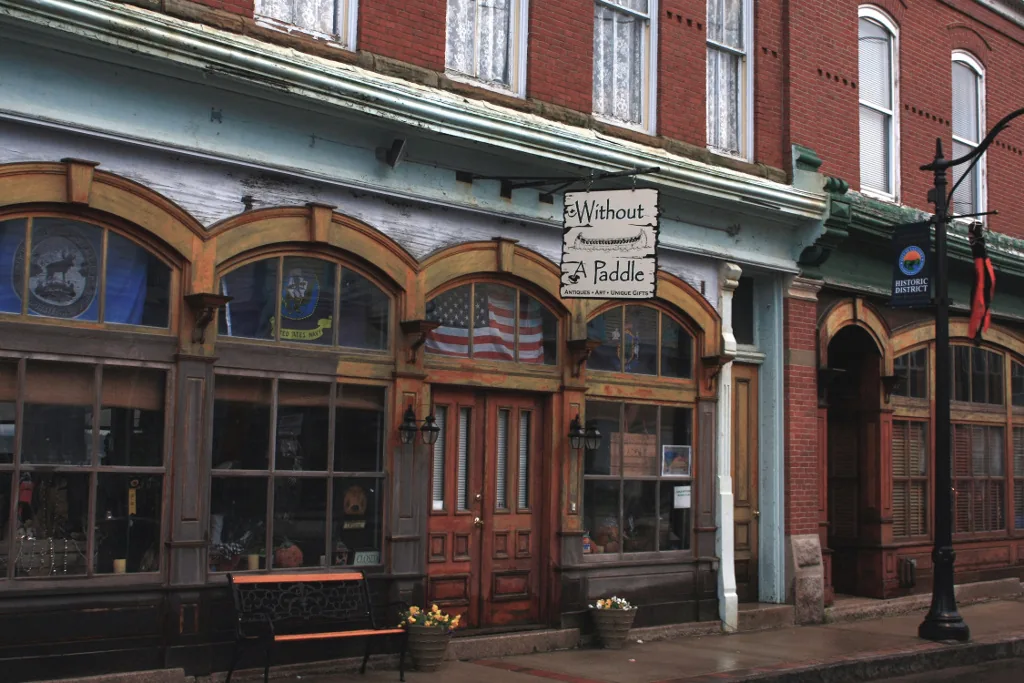
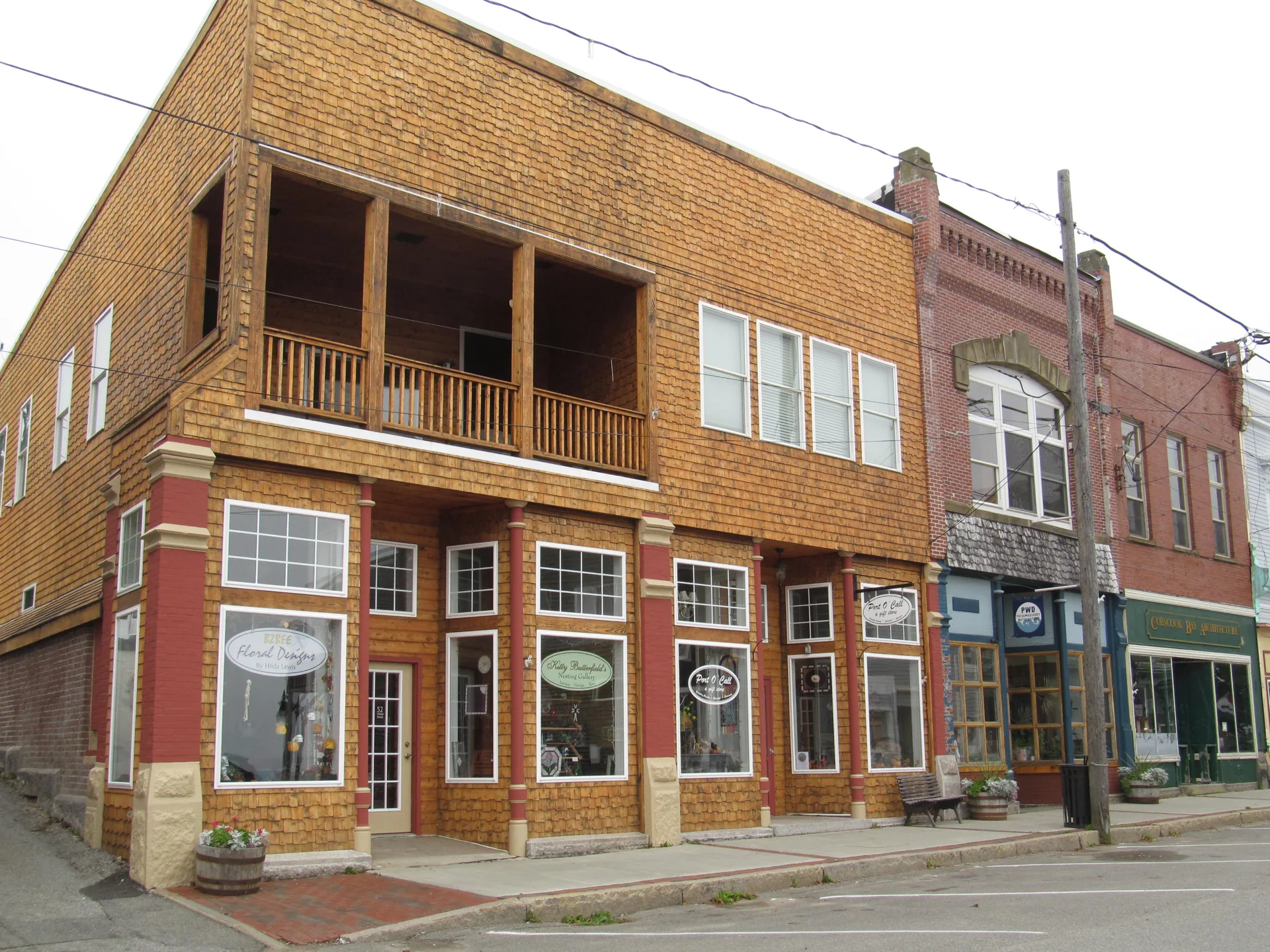
Water Street's historic downtown — galleries, antiques, and gift shops in nineteenth-century brick, a few minutes' walk from the tender. Photo: Brian W. Schaller, Free Art License 1.3 via Wikimedia Commons
Getting around Eastport is mostly a matter of your own two feet. The town is small and the core is walkable: from the tender landing at the breakwater, Water Street's historic downtown is a few minutes away on the flat, and you can see the galleries, shops, and the waterfront without any transport at all. This is the great virtue of a call this compact — the moment you are ashore, you are already where you want to be.
For the two sights that are not downtown — Dog Island for the Old Sow at the north end of Moose Island, and Shackford Head State Park a short way south — you will want wheels. The most reliable option is a ship's shore excursion, which handles the timing (important for the whirlpool) and gets you back to the tender on schedule. Otherwise there may be a local shuttle or a taxi on a cruise day, but do not count on a fleet of them in a town this size; ask at the pier when you land.
On accessibility: be realistic about the tender. Stepping from the ship into a small boat is the hardest part of this call for anyone with limited mobility, and swell or fog can make it harder or shift the timing. Once ashore, the waterfront stretch of Water Street is reasonably level, but the town does climb away from the water, and the Shackford Head trails are uneven natural ground rather than paved paths. If the tender transfer is a concern, ask your ship's shore-excursion desk about conditions for your specific call before you commit to going ashore.
Eastport, Maine Port Map
Excursions & Experiences
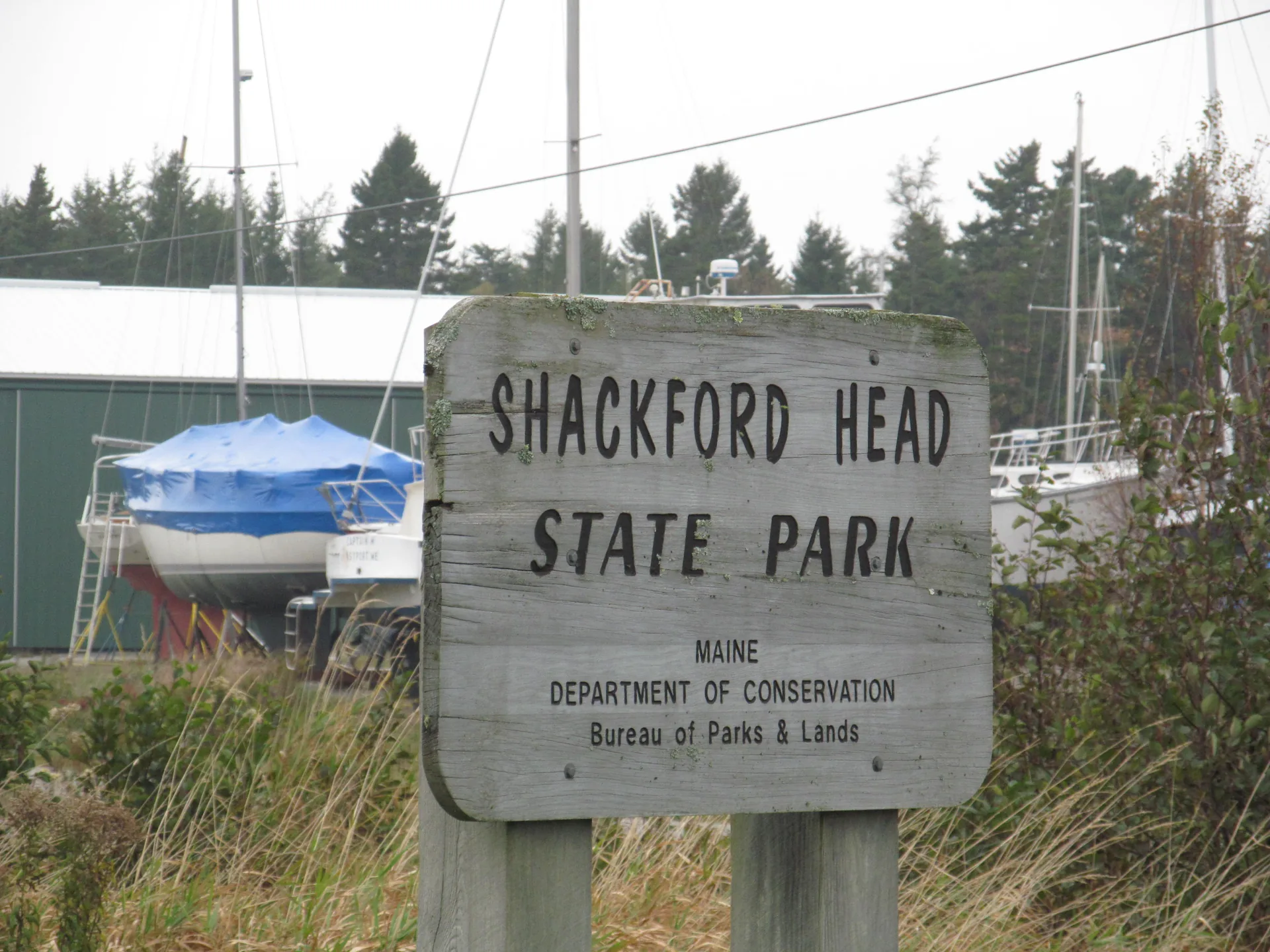
Shackford Head State Park — about three miles of trails through spruce to headland overlooks above Cobscook Bay. Photo: Doug Kerr (Dougtone), CC BY-SA 2.0 via Wikimedia Commons
Eastport's "excursions" are mostly the town and the landscape itself — there are no big-ticket attractions here, and that is the appeal. The best of a port day divides into a few honest options, and the smart move is to decide before you land whether you are a walk-the-town person or a get-out-to-the-tide person, because a small tender call does not leave time for both at leisure.
In town, on foot (free)
Water Street historic district — the brick nineteenth-century downtown, with genuine galleries, pottery and art studios, antiques, and a few cafés. This is real small-town Maine, not pier-trinket shopping.
The breakwater and fisherman statue — walk out onto the working pier to the carved fisherman, and watch the lobster boats and the tide.
The waterfront and the view across to Canada — Campobello Island and Deer Island, New Brunswick, sit just across the water.
Worth a ride or a guided tour
The Old Sow whirlpool from Dog Island — the largest tidal whirlpool in the Western Hemisphere, best a couple of hours before high tide; a guided tour handles the timing. Some operators run boat trips out toward it in season.
Shackford Head State Park — a ninety-acre headland with about three miles of trails (the Overlook, Schooner, and Ship Point paths) through spruce forest to ocean overlooks; interpretive signs tell the story of the five Civil War warships beached and burned here on the great tides in the early 1900s.
Whale and wildlife watching — these rich cold waters draw whales, seals, porpoises, and seabirds; availability depends on the operator and the day.
If you only have the one small window ashore, the honest recommendation is to match it to the tide: if your call lands near the Old Sow's strong hours, go see the whirlpool, because you cannot see that anywhere else. If it does not, spend the morning slowly in town and out on the breakwater. Either way, this is a stop that rewards paying attention over ticking off a list.
A word on booking and cost. Because Eastport is a small tender call, the simplest way to reach the Old Sow, Shackford Head, or a whale-watch is to book a ship excursion: the price is set by the cruise line, and it comes with a guaranteed return to the ship, so you never have to chance finding a taxi at the pier. If you would rather explore independent of a tour, the town itself carries almost no cost — there is no fee to walk Water Street, the breakwater, or out to the fisherman statue, and the tender in from the ship is already covered by your cruise fare. Whatever you choose, book ahead where you can: on a small call with a short window ashore, the travelers who plan their morning fare better than the ones who wing it.
Food & Drink Ashore
Eastport is lobster and scallop country, and eating here is refreshingly unpretentious. The town has a handful of restaurants, cafés, and a pub within an easy walk of the pier, and the pitch is exactly what you would hope for at the eastern edge of Maine: fresh local seafood, a lobster roll, a bowl of chowder, a scallop plate — cooked plainly and served without ceremony. This is a working port, so the seafood has not traveled far.
A few practical notes. This is a small town, so the choices are limited and some spots keep seasonal or short hours — a foliage-season weekday is your best odds of finding a full lineup open, and a quiet shoulder day your worst. Prices are in US dollars and cards are widely taken, but carrying a little cash is sensible in a place this small. And if the weather has turned raw — as it often does here — a hot chowder in a warm room is one of the real pleasures of a Down East call. If you would rather budget your onboard drinking than your ashore spending, our drink calculator can help you decide whether a beverage package is worth it for your cruise.
Know Before You Go
It is almost always a tender. Larger ships anchor in the bay and ferry you ashore; fog, swell, and the big tide can delay or shorten the operation, so a scheduled call is never fully guaranteed.
Dress for cold and fog. Even in summer the sea breeze is chilly; bring layers and a waterproof shell. This is not a swim or beach port.
Time the Old Sow. The whirlpool is strongest a couple of hours before high tide and is watched from Dog Island — check a tide table or book a timed tour.
The town is small and seasonal. Some shops and restaurants keep short hours outside the busy foliage weeks; do not expect a big commercial district.
Canada is right there — but you are still in the USA. Campobello and Deer Island sit across the water; a normal Eastport call does not cross the border, so you will not need your passport ashore unless your excursion specifically goes into Canada.
Depth Soundings Ashore
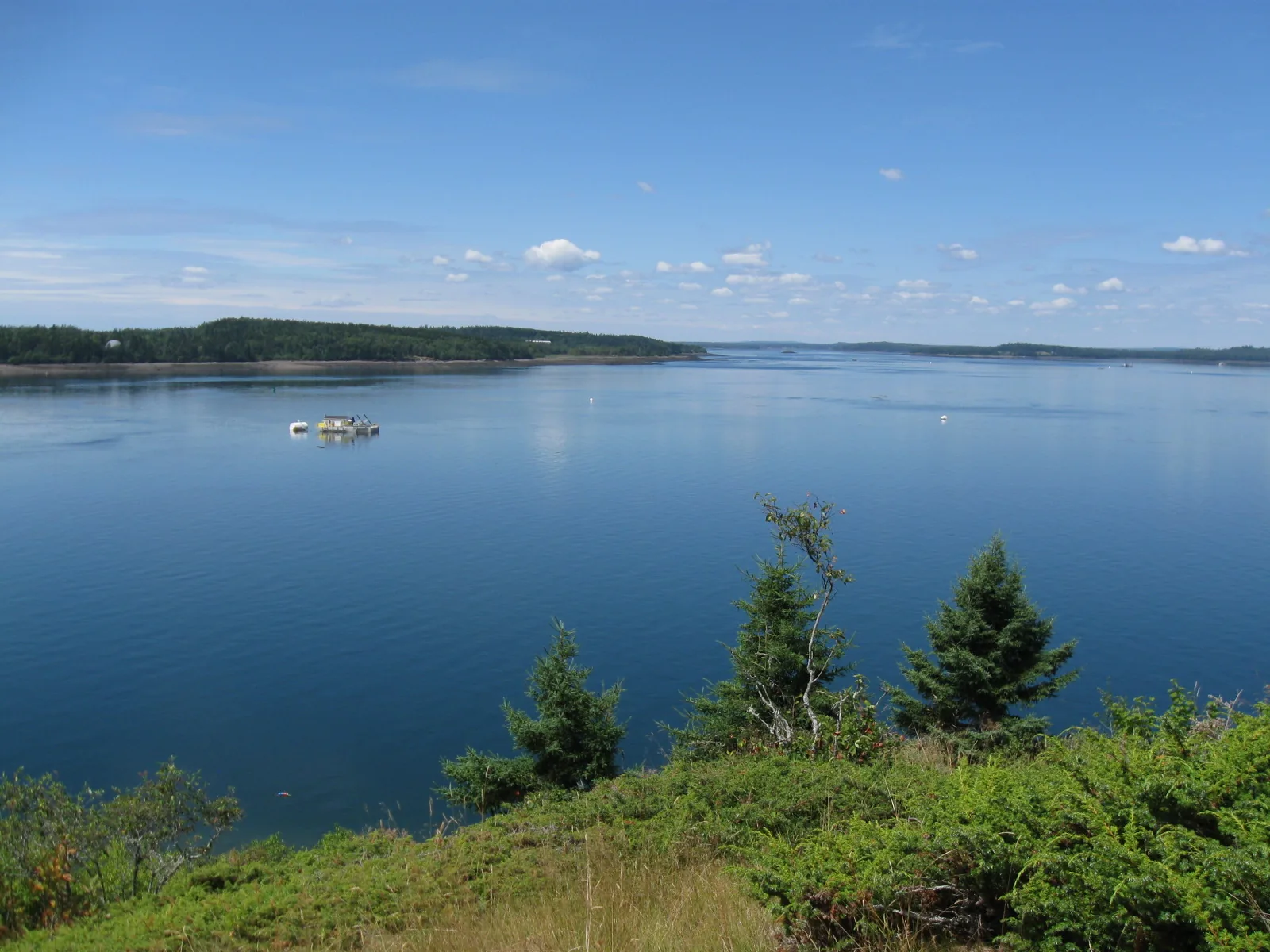
The cold tidal waters near Eastport — deep, clean, and moved by some of the largest tides on the planet. Photo: Ken Gallager, CC BY-SA 3.0 via Wikimedia Commons
The small, specific things that make an Eastport morning go well — the details that are easy to miss until you are standing on the breakwater wishing someone had told you:
Watch the tide, literally. With a range around twenty-five feet, the harbor you land in will look markedly different by the time you leave. It is genuinely part of the sightseeing here.
The Old Sow runs on the tide, not on you. If seeing the whirlpool matters, check when high tide falls on your call day and aim for a couple of hours before it; a guided tour takes that worry off your plate.
Fog is the usual spoiler, not storms. Mornings here can start socked in and burn off later — build a little slack into your plan rather than sprinting for the first tender back.
Pack it like a cool-coast day, not a beach day. A warm layer, a rain shell, and good walking shoes cover almost everything you will want; swimsuits and snorkels stay in the cabin.
Go into the galleries. Eastport has a real small-arts scene — pottery, painting, and craft — and the shops on Water Street are worth actual browsing time, not just a photo.
Cash and short hours. Cards work, but a few dollars in your pocket and a glance at opening times will save you frustration in a town this small.
Practical Information
Country: United States (Maine, Washington County). English is the language; you are still in the USA even though Canada is across the water.
Currency: US dollar. Cards are widely accepted; a little cash is handy in a small town.
Tipping: Standard US restaurant tipping (roughly 15–20%) applies ashore; guided tours appreciate a tip as well.
Connectivity: Normal US cell coverage in town (no roaming, since you have not left the country); coverage thins out on the trails and headlands. See our internet at sea guide for onboard options.
Time zone: Eastern Time — the same as most US East Coast departure ports.
Safety: Eastport is a small, safe town; the real cautions are natural — cold water, slippery rocks and wet trails, fog, and the powerful tidal currents offshore, which are a danger for small boats rather than for people on land.
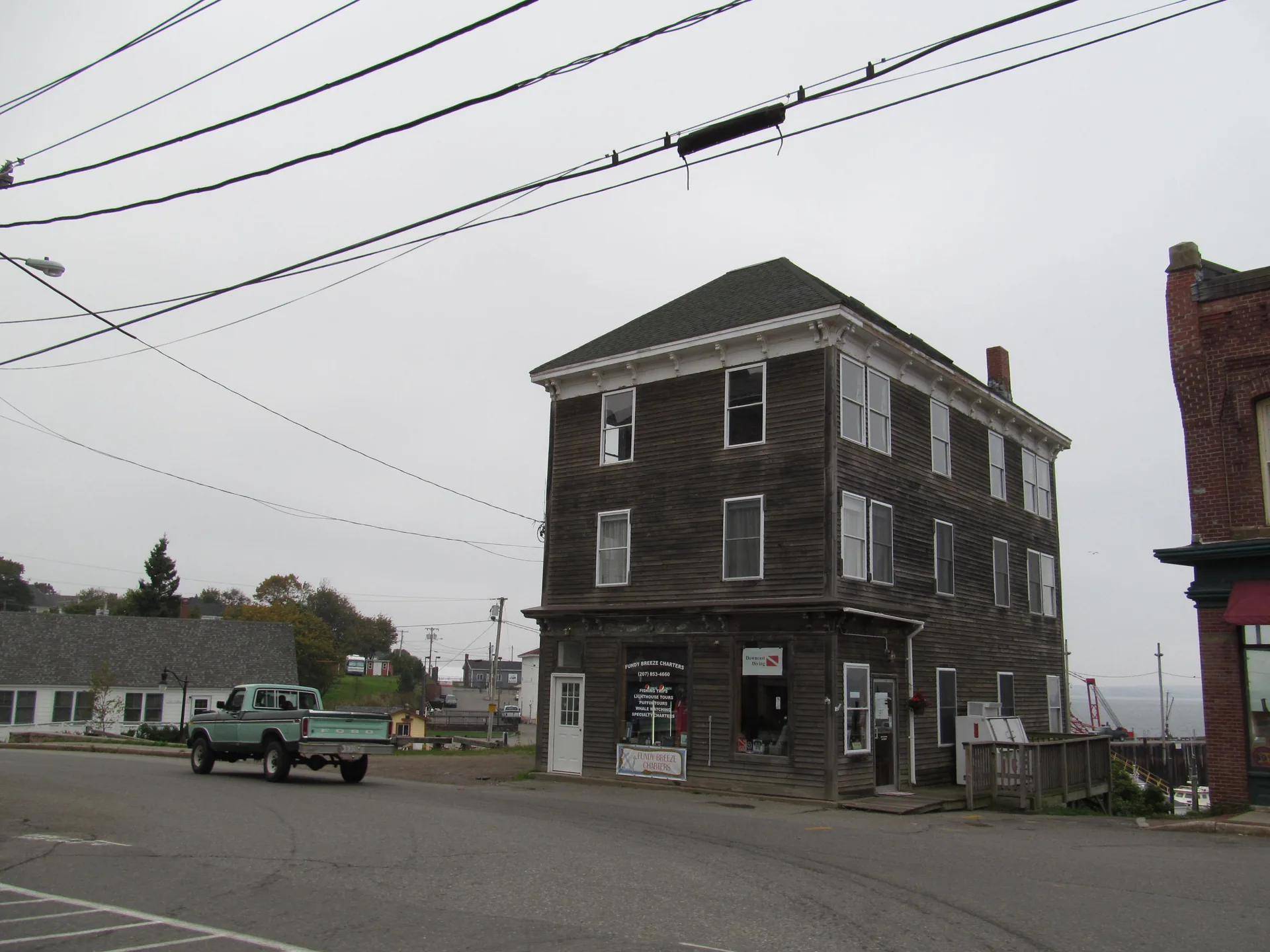
A working-waterfront building with a charter and dive shop, the bay behind. Photo: Doug Kerr (Dougtone), CC BY-SA 2.0 via Wikimedia Commons
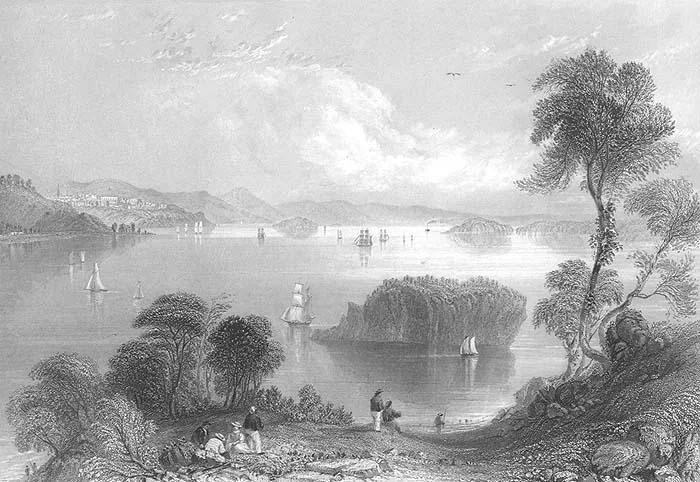
Eastport and Passamaquoddy Bay in a 19th-century engraving after W. H. Bartlett. Photo: after William Henry Bartlett, public domain via Wikimedia Commons
Every image on this page comes from Wikimedia Commons under the license noted and is credited to its creator below. In the Wake does not claim authorship of these images; when we can add our own photographs from a future visit, we will.
Hero — fisherman statue — Chris M Morris, CC BY 2.0
“Easternmost City” welcome sign, Water Street shops, waterfront charter building & Shackford Head sign — Doug Kerr (Dougtone), CC BY-SA 2.0
Tidal waters near Eastport (Cobscook Bay) — Ken Gallager, CC BY-SA 3.0
Eastport & Passamaquoddy Bay engraving — after William Henry Bartlett, public domain
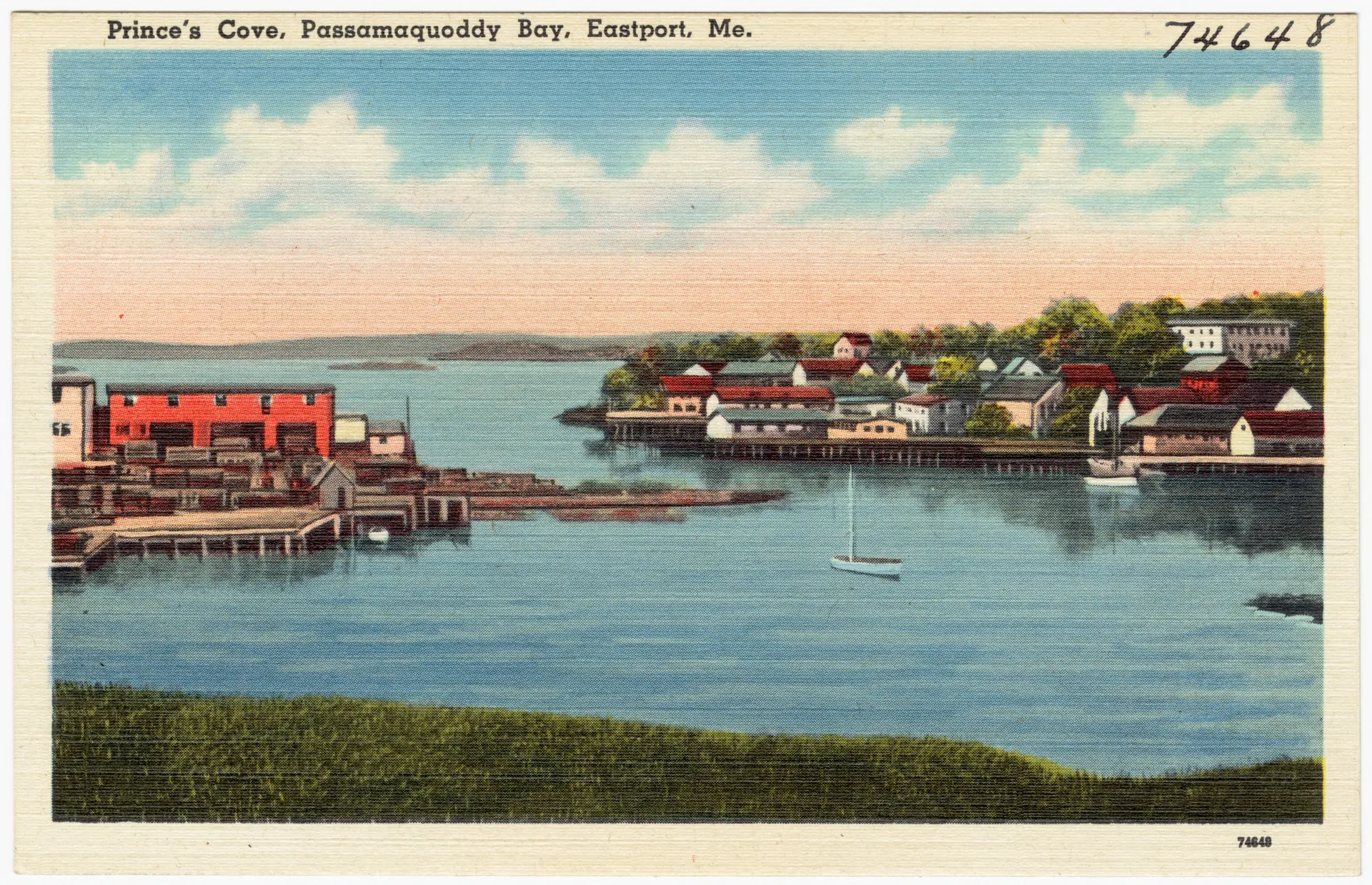
Prince's Cove postcard — Tichnor Brothers, public domain
Frequently Asked Questions
What is the best time of year to visit Eastport, Maine?
The cruise season runs roughly August through October, and late September into October is the sweet spot for New England and Canadian fall foliage. Summer is milder and greener; the deep off-season is cold, quiet, and not a cruise window. Foliage this far Down East often runs a little behind the inland peak, so check current reports.
Does the ship dock at Eastport or tender?
Larger cruise ships anchor in Passamaquoddy Bay and tender passengers to the Eastport City Pier at the breakwater downtown; smaller vessels can sometimes come alongside. Because this is a working fishing port with very large tides, tender operations depend on weather and the state of the tide, and fog can delay a landing.
What is the Old Sow whirlpool and can I see it?
The Old Sow is the largest tidal whirlpool in the Western Hemisphere, churning on the international boundary between Eastport and Deer Island, New Brunswick. It is driven by the huge Bay of Fundy tides and is strongest a couple of hours before high tide. The classic land viewpoint is from Dog Island on the north end of Moose Island; check a tide table to time it.
Is Eastport really the easternmost city in the United States?
Yes. Eastport, on Moose Island, is the easternmost city in the United States. The town of Lubec sits a little farther east, but it is a town, not a city — so both claims can be true at once, which trips up a lot of travel writing.
What is there to do in Eastport on a port day?
Walk Water Street's historic brick downtown and its galleries and shops, see the fisherman statue out on the breakwater, hike the trails and headland overlooks at Shackford Head State Park, time the Old Sow whirlpool from Dog Island, and eat local lobster and scallops. It is a small-town, slow-morning kind of call rather than a big-attraction one.
What should I pack for Eastport's weather?
Layers, a windproof and waterproof shell, and sturdy walking shoes for the hills and possibly wet trails. Bring a warm top even in summer — the cold North Atlantic keeps Eastport cool, and fog is common. Leave the beach and snorkel gear at home; this is not a swim destination.
Can I swim or go to a beach at Eastport?
Not really. The water here is cold year-round and this is a rocky, working coastline rather than a beach-and-snorkel destination. Come for the town, the trails, the tides, and the seafood — not for a swim day.
Is Eastport accessible for limited mobility?
The main challenges are the tender transfer and the downtown's hills. On days a ship tenders, stepping into a small boat can be difficult in any swell, and fog or tide can shift the timing. Water Street along the waterfront is fairly walkable, but the Shackford Head trails are uneven natural ground. Ask your ship's shore-excursion desk about tender conditions for your specific call.
Does Eastport get hurricanes or severe storms?
Eastport is not a tropical destination and is not in the hurricane belt, so a direct hurricane is unlikely. But it sits in New England, and the remnants of a late-season Atlantic storm or an autumn nor'easter can bring rain, wind, and swell to this coast — occasionally enough to disrupt a small tender call. Day to day, fog is a more routine spoiler than any storm.
Will rain or fog ruin my Eastport port day?
A little rain rarely ruins a walk through town — duck into a gallery or a café for a hot bowl of chowder and wait it out. Fog is the bigger wildcard here: a thick morning fog can delay or even shorten a tender operation, since the ship must anchor offshore. Build some slack into your plans and don't sprint for the first tender back.


.jpg)


.jpg)