

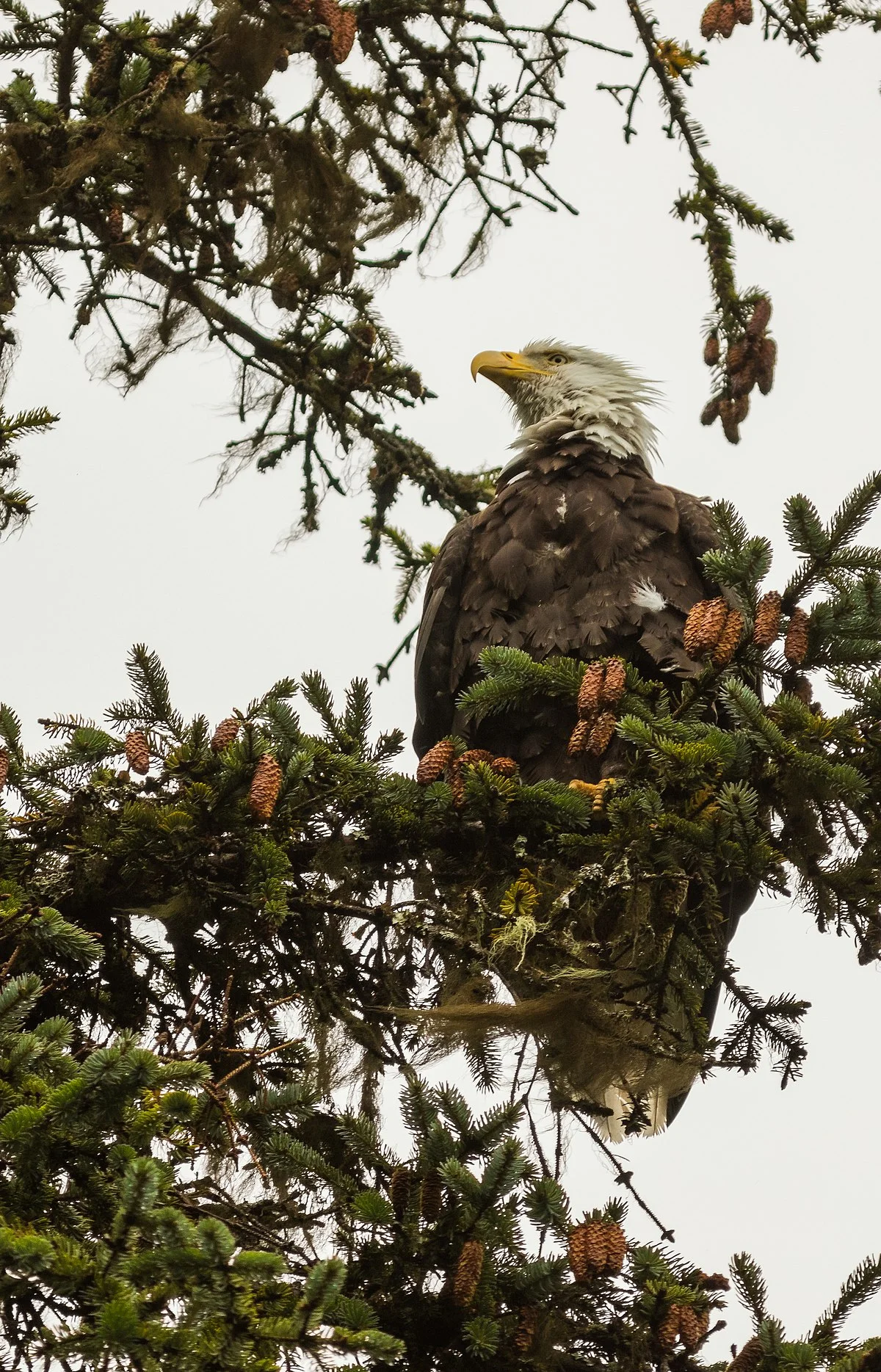
Photo: Diego Delso / Wikimedia Commons (CC BY-SA 4.0)
Haines, Alaska
Region: Alaska (Upper Lynn Canal) | Cruise Season: Late April – early October | Dock: Port Chilkoot (direct docking, no tender)

Photo: Diego Delso / Wikimedia Commons (CC BY-SA 4.0)
Region: Alaska (Upper Lynn Canal) | Cruise Season: Late April – early October | Dock: Port Chilkoot (direct docking, no tender)
The ship pulled into Haines on a Tuesday morning, and I immediately noticed what was missing: crowds. After the tourist gauntlet of Juneau and Ketchikan, Haines felt like a deep breath of Alaskan air. The town has maybe 2,500 year-round residents, a handful of cruise ships per week instead of per day, and the kind of authentic frontier atmosphere that most Alaska ports have lost to jewelry stores and helicopter tours. I walked off the gangway and within 50 feet was standing alone on a quiet street watching ravens argue over something in a garbage can.
We drove out to the Alaska Chilkat Bald Eagle Preserve first — about 19 miles up the Haines Highway through dramatic Chilkat Valley scenery. Our guide explained that while the massive fall gatherings (3,000–4,000 birds) peak from mid-October through January during a late chum salmon run, we'd still see eagles in summer. She was right: within an hour I'd counted dozens of bald eagles perched in cottonwood trees along the Chilkat River flats. We watched an adult swoop down to pluck a salmon from the water, then carry it to a gravel bar to eat while ravens waited hopefully nearby. The preserve protects roughly 49,000 acres along the Chilkat, Klehini, and Tsirku rivers — one of the world's most reliable bald eagle habitats.
Fort William H. Seward sits immediately above the cruise dock — a collection of historic white clapboard buildings arranged around a parade ground. Completed in 1904 as the last of twelve Gold Rush-era U.S. Army posts in Alaska, it was the only active military installation in the territory between 1925 and 1940, built to project U.S. power over the Dalton, Chilkoot, and White Pass trails during the Alaska-Canada boundary dispute. Decommissioned after World War II, the fort was sold to veterans and artists and is now a National Historic Landmark. Today nearly all original buildings remain and house inns, restaurants, galleries, Port Chilkoot Distillery, the Chilkat Center for the Arts, and Alaska Indian Arts — where Chilkat Tlingit (Jilkáat Kwáan) master carvers work on totem poles and clan house posts. I watched a carver shaping a raven clan piece — cedar chips curling under his adze — and he invited me to run my hand along the grain. Although many ports feature Native art, this felt different: these weren't assembly-line tourist pieces but genuine cultural expression happening right before my eyes.
Lunch was at the Bamboo Room — a locals' joint since 1953 where fishermen and artists share counter space. I had the halibut and chips ($18) while eavesdropping on a conversation about commercial fishing quotas. The pie is legendary (get the strawberry rhubarb, $7). However, unlike tourist-oriented restaurants at other ports, no one tried to upsell me on anything or rush me out. The pace here is slower, genuinely Alaskan, and refreshingly unpretentious.
The afternoon hike up Battery Point Trail offered views across Lynn Canal to the Chilkat Range — snow-capped peaks even in August. The trail winds through old-growth forest thick with devil's club and blueberry bushes, emerging at a rocky point where we watched seals hauled out on distant rocks. Round trip is about 4 miles on well-maintained trail, easy for most fitness levels. I saw exactly two other hikers the entire time — the solitude was remarkable compared to the crowds at other ports.
Downtown Haines is genuinely walkable — art galleries, an excellent bookstore, the Hammer Museum (yes, an entire museum of hammers, which is more interesting than it sounds), and shops selling Tlingit art that's actually made locally rather than imported from overseas. The American Bald Eagle Foundation museum ($15) has excellent dioramas and live eagles that can't survive in the wild. I spent an hour learning about eagle biology from a volunteer who clearly loved her job and answered every question with genuine enthusiasm.
The pros: authentic small-town Alaska atmosphere, exceptional eagle viewing even in summer, excellent hiking, fascinating Fort Seward, friendly locals who actually have time to chat, and no cruise-ship crowds. The pace is slower and more genuine than anywhere else on the Inside Passage.
The cons: fewer excursion options than bigger ports, limited shopping if you want mainstream souvenirs, and some services close early or have irregular hours. The eagle preserve is 19 miles away, so you need transportation to see the main attraction.
Practical tips: Book the eagle preserve tour in advance through your cruise line ($85-150) or arrange a rental car to explore independently. Wear layers — weather changes fast. Bring binoculars for eagle spotting. Walk to Fort Seward and downtown rather than taking taxis. Try the local breweries (Haines Brewing Company makes excellent ales). And save room for pie at the Bamboo Room.
Looking back, I discovered in Haines something I didn't know I was looking for: a place that chose itself over tourist dollars. The town could have built megaport facilities and welcomed a dozen ships daily. Instead, they kept things small — not from lack of ambition but from clear priorities. I learned that some places remain authentic not by accident but by decision, and that the bald eagles gathering along the Chilkat River are, in their own way, evidence of that choice. Where humans tread lightly, wild things flourish. Haines taught me what it looks like when a community decides enough is enough.
Haines receives far fewer cruise ships than Juneau, Ketchikan, or Skagway. Cruise Line Agencies of Alaska schedules show around 20–30 large-ship calls per season, with only one ship at a time in port. This lower volume is intentional: the Haines Borough's 2025 Cruise Industry Survey explicitly notes the community's preference to avoid Skagway-style congestion, and a new per-passenger fee ($9 in 2025–26) is being used to fund modest infrastructure improvements rather than aggressive growth.
Ships dock directly at the Port Chilkoot Cruise Ship Dock — immediately below Fort William H. Seward and about 0.5 miles from downtown. There is no routine tendering at Haines; only the largest vessels occasionally anchor out. The walk into town is flat and pleasant with Lynn Canal views; a low-cost shuttle runs for those who prefer not to walk. The pier area has basic facilities including restrooms and a visitor information kiosk where locals volunteer to answer questions.
Haines is a road-connected community — one of the few Alaska cruise ports you can actually drive to, via the Haines Highway through Canada. Ships typically stay 6–9 hours, enough time for a signature excursion plus downtown exploration or Fort Seward's walking district. The downtown sidewalks are paved and wheelchair accessible, though Fort Seward's gravel parade ground and most hiking trails may present challenges for mobility devices. Ship excursion tickets usually include guaranteed return to ship — a meaningful detail in a lower-volume port where independent tour operators are fewer.
Haines is one of the most walkable cruise ports in Alaska. The town is compact, terrain is flat, and distances are short. Most visitors can comfortably walk between the dock, downtown, and Fort Seward without needing any form of transportation.
Accessibility Note: Downtown sidewalks are paved and wheelchair accessible. Fort Seward's parade ground is gravel but manageable. Some hiking trails are not wheelchair accessible. Contact the visitor center for specific accessibility information on attractions.
Interactive map showing the Port Chilkoot cruise dock, Fort Seward, downtown attractions, Chilkoot Lake, and the Bald Eagle Preserve corridor up the Haines Highway.
Note: The Alaska Chilkat Bald Eagle Preserve viewing area runs along the Chilkat River flats at highway miles 18–24, not from downtown. You need a vehicle or tour to reach it.
Haines excursions focus on wildlife, wilderness, and authentic Alaska culture. The town's smaller scale means fewer mega-tour options but more genuine experiences. Book ahead through your cruise line to guarantee spots, especially for the popular eagle preserve tours.
The signature Haines experience ($85-150, 2.5-3 hours) takes you 19 miles up the stunning Haines Highway to the 48,000-acre preserve — the world's largest bald eagle gathering site. Even in summer you'll typically see dozens of eagles along the Chilkat River, plus bears, moose, and other wildlife. Guides provide spotting scopes and expert interpretation. Ship excursion prices are typically 15-20% higher than booking with local operators, but include guaranteed return to ship.
Guided walking tours ($25-45, 1.5-2 hours) explore the historic Fort William H. Seward compound and include visits to Alaska Indian Arts, where master carvers create traditional Tlingit art. Watch totem pole carving demonstrations and learn about the cultural significance of clan symbols. Tours are accessible for those with mobility limitations on paved paths.
Wildlife viewing excursions ($100-175, 3-4 hours) visit Chilkoot Lake State Recreation Site during salmon runs (July-September). Brown bears fish for salmon at the weir while eagles gather overhead. The setting is spectacular — glacial lake backed by snow-capped peaks. This is one of the most accessible places in Southeast Alaska to see brown bears fishing.
Guided nature walks ($40-75, 2-3 hours) explore trails like Battery Point, Mount Ripinsky, or the rainforest paths around town. For independent exploration, Battery Point Trail is excellent — 4-mile round trip with coastal views, starting from the cruise port area. Free trail maps available at the visitor center.
Guided rafting trips ($100-165 per person, 3-4 hours) on the Chilkat River offer a unique perspective on Haines' wilderness. The float trips are gentle Class I-II rapids — suitable for families and first-timers — and combine wildlife spotting with stunning mountain and glacier scenery. Bald eagles, bears, and seals are frequently seen from the water. Local operators like Chilkat Guides run trips through the heart of the eagle preserve. This ranks among the top ways to experience Haines' backcountry without a strenuous hike.
Scenic flights ($200-350 per person, 1-1.5 hours) offer aerial views of Glacier Bay, the Chilkat Range, and the vast wilderness surrounding Haines. Some tours include glacier landings. Float planes depart from the harbor.
Haines has fewer excursion options than larger ports, so popular tours can sell out. Book ahead through your cruise line when booking opens for guaranteed return to ship. Compare ship excursion prices with local operators like Chilkat Guides — local prices are typically lower, but you accept the risk of missing the ship if tours run late. For independent travelers, a rental car ($80-120/day) provides flexibility to explore the eagle preserve, Chilkoot Lake, and the scenic Haines Highway at your own pace.
Everything you need to know before stepping ashore.
Haines weather is typical Southeast Alaska — unpredictable, often wet, and cooler than you'd expect in summer. Temperatures range 50-65°F (10-18°C) in summer months. Rain is common; pack waterproof layers and sturdy shoes.
Pro Tip: The Bamboo Room deserves a stop for lunch and pie — it's been a locals' favorite since 1953 and the atmosphere is pure small-town Alaska. The strawberry rhubarb pie sells out quickly.
Last reviewed: February 2026
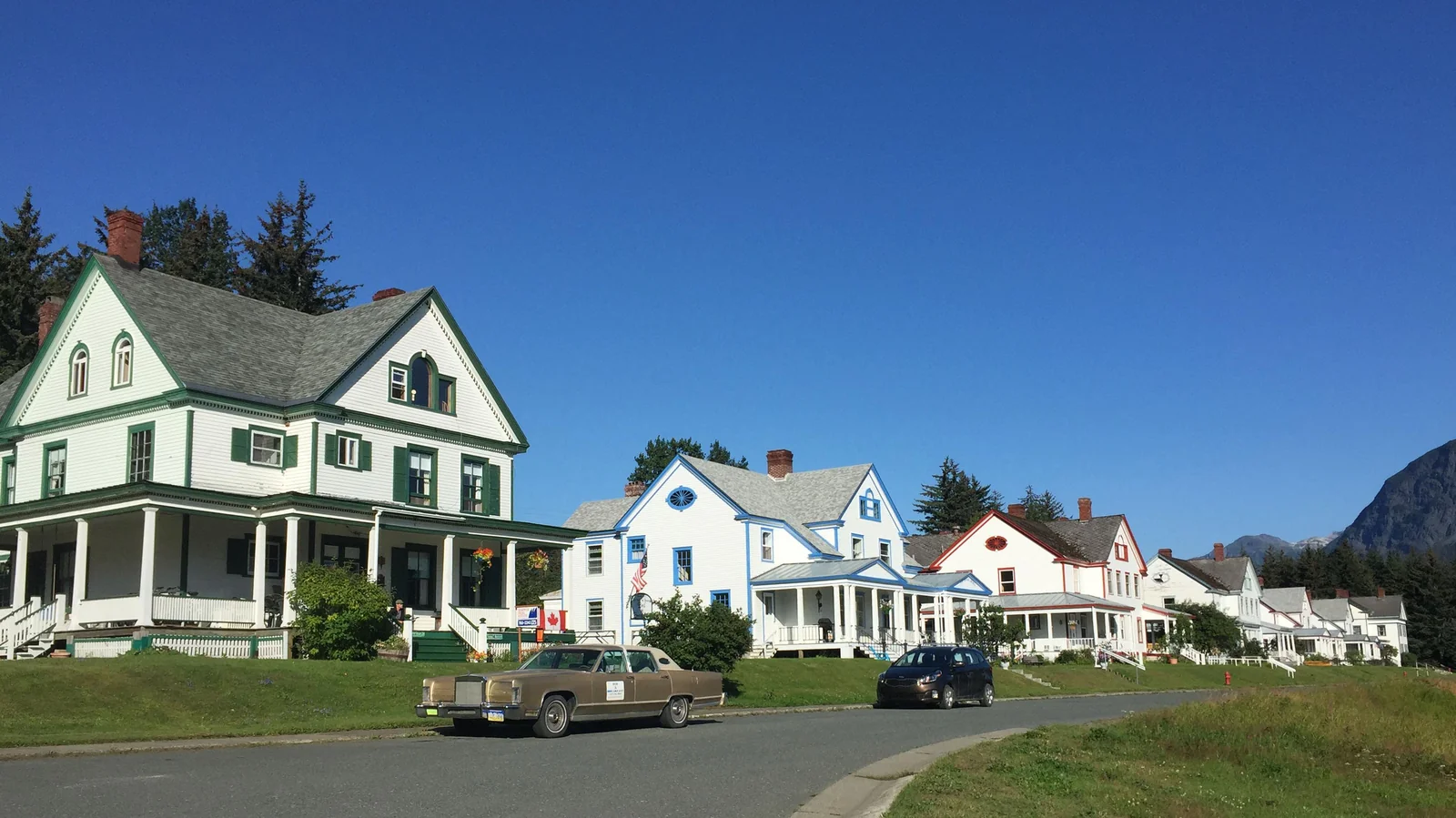
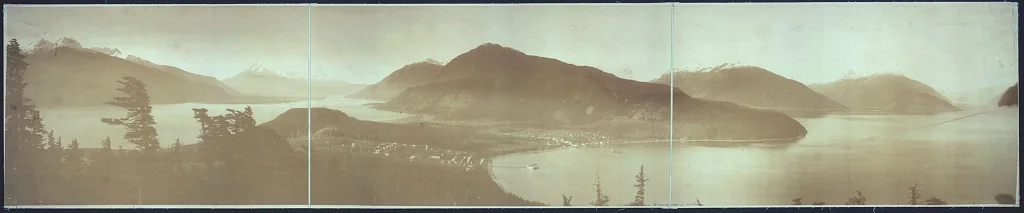
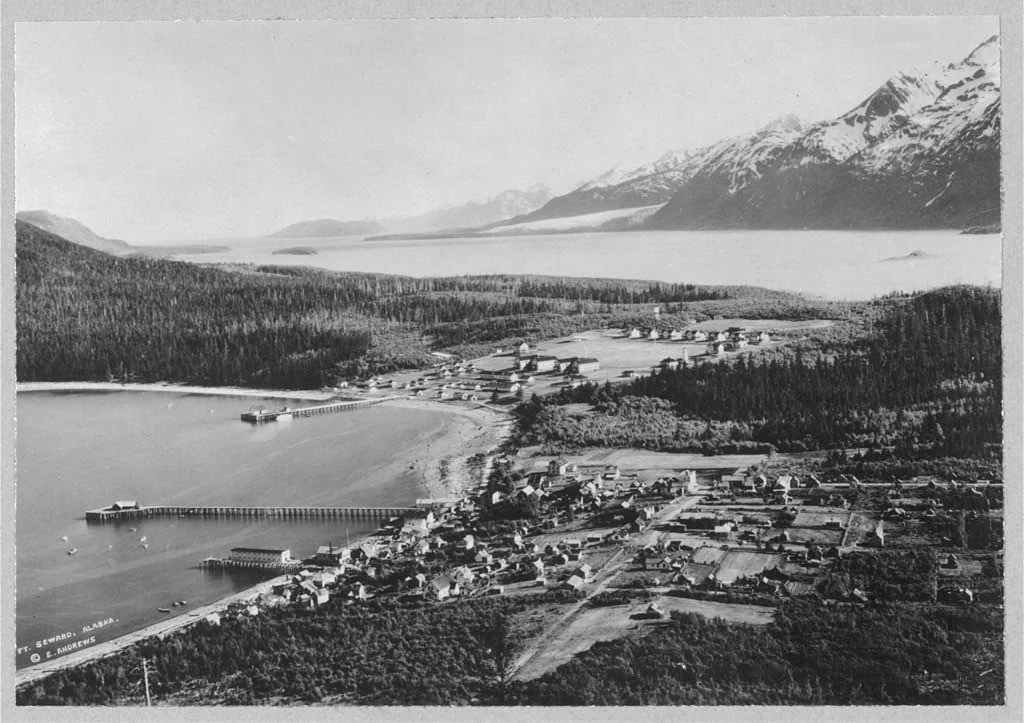
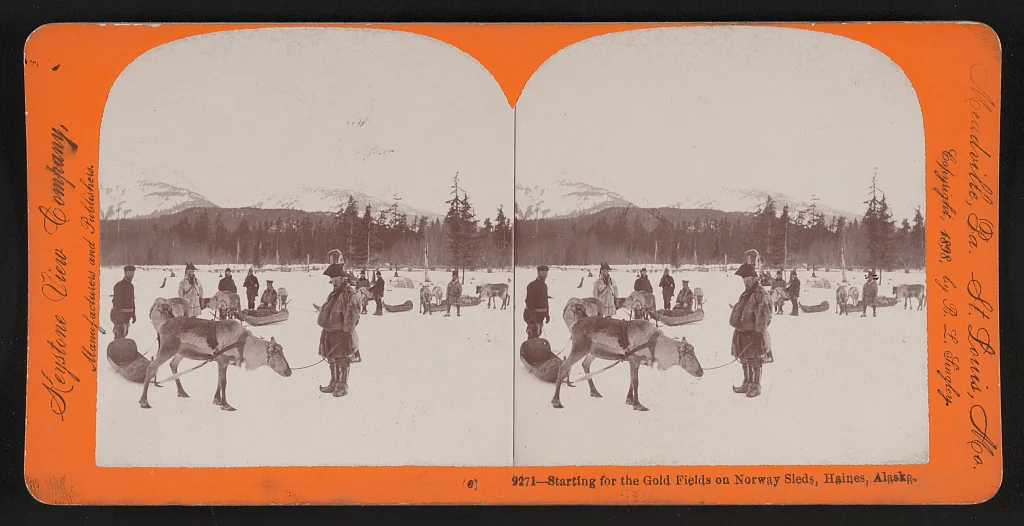
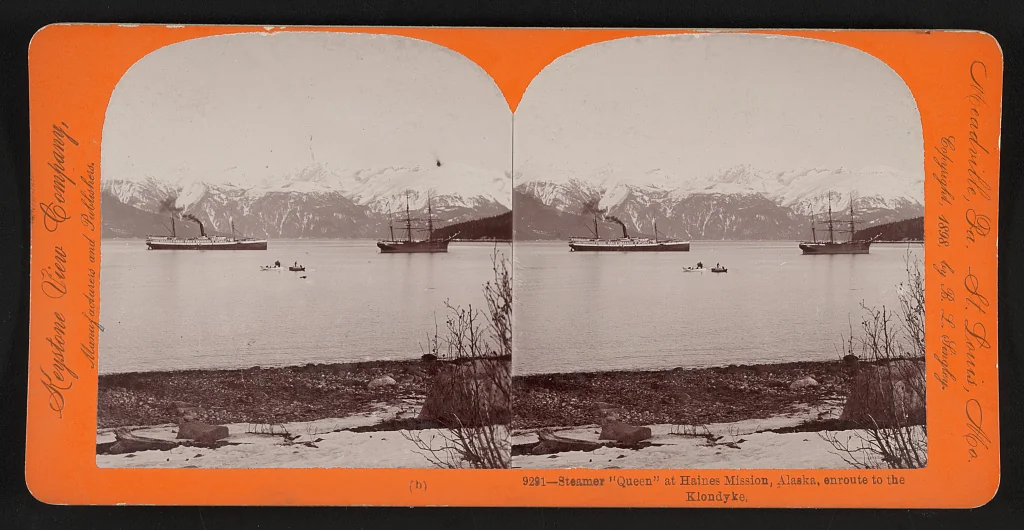
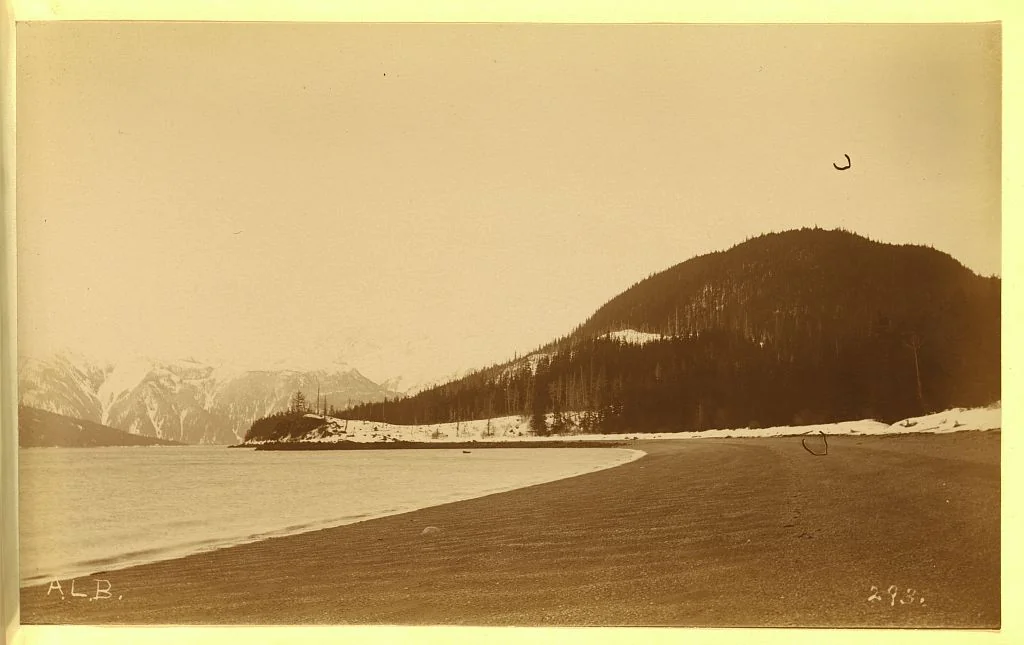
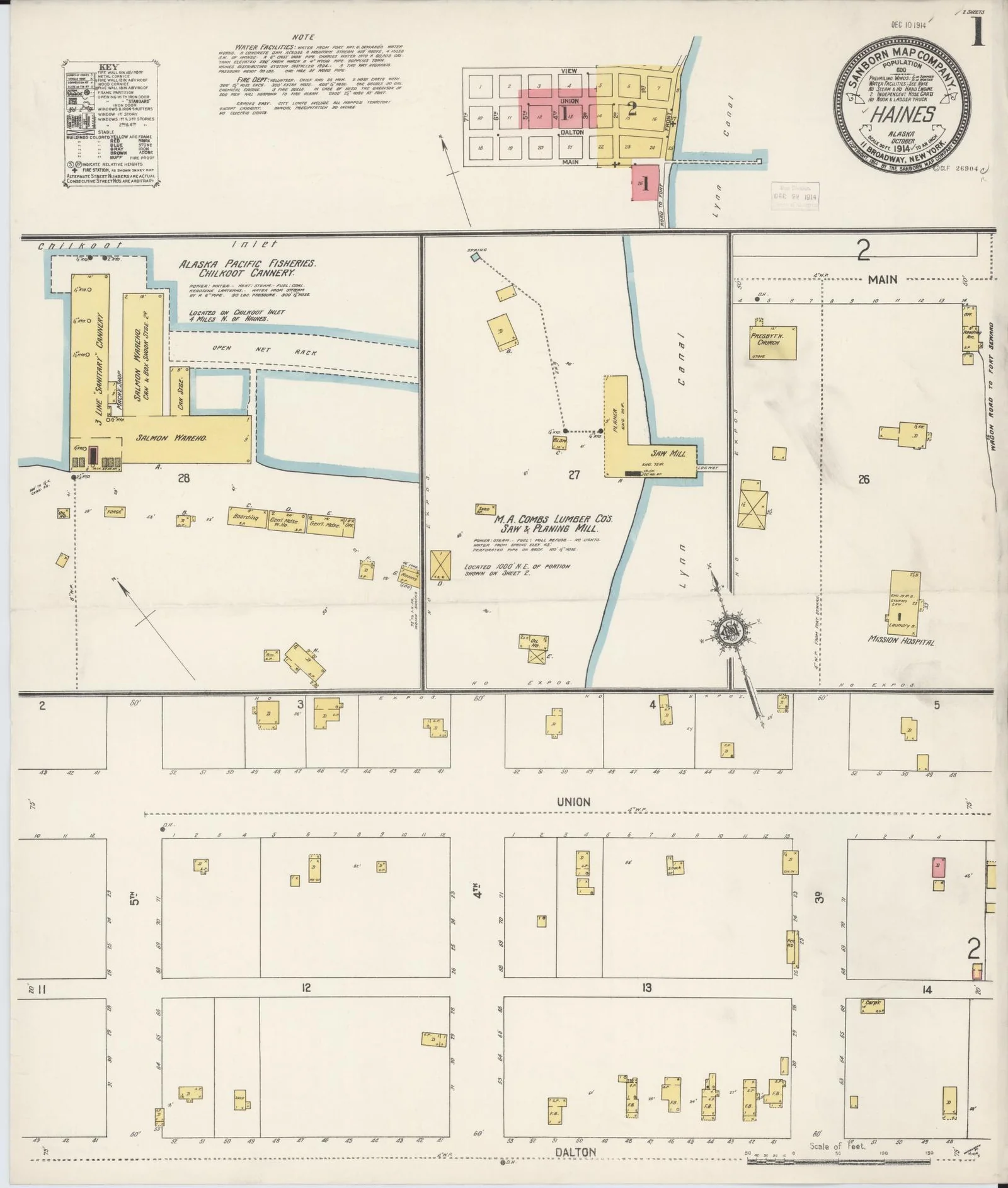
Hero image from Wikimedia Commons (Diego Delso, CC BY-SA 4.0). Fort Seward photograph from the National Park Service (public domain). Historical photographs (1894–1915) and the 1914 Sanborn fire insurance map from the Library of Congress Prints & Photographs and Geography & Map Divisions (public domain, pre-1928). Each image has been downloaded directly from its source, visually verified against the catalog record, and cited with a specific item URL per admin/CAREFUL.md Image Verification Protocol.
For mainstream cruise visitors, June through August offers the most reliable weather: highs 55–60°F (13–16°C), lows in the mid-40s (7°C), and daylight approaching 18 hours at the June solstice. The famous fall eagle gathering peaks mid-October through January and is outside the typical cruise season.
Pack warm layers, a waterproof-and-windproof outer shell, hat, and sturdy non-slip shoes. Lynn Canal channels northerly outflow winds of 15–25 knots that make the apparent temperature feel several degrees colder than the thermometer reads. Bring binoculars for eagle and wildlife spotting, and a waterproof camera bag for river excursions.
Alaska is not in a hurricane zone. The real concern is Gulf of Alaska extratropical storms, which intensify in autumn. Rain-on-snow events during wet wet transitional monthss have triggered landslides in Haines — the 2020 Beach Road landslide killed two residents after an atmospheric river event. Summer cruise days rarely encounter severe weather.
No — most summer rain arrives as light drizzle or passing showers rather than all-day downpours. Chilkat River rafting, Fort Seward walking tours, and museum visits continue in light rain. Bring waterproof layers and you will still see eagles, bears at Chilkoot Lake, and totem carvings at Fort Seward.
Haines has a direct cruise dock at Port Chilkoot, immediately below Fort William H. Seward. Large ships dock there one at a time — Haines intentionally limits cruise volume compared with Skagway. The walk to downtown is about 0.5 miles on flat, paved sidewalks; Fort Seward is about 0.75 miles from the dock.
The famous gathering of 3,000–4,000 bald eagles happens in the Alaska Chilkat Bald Eagle Preserve from mid-October through January, peaking in November when a local festival is held. During the cruise season (May–September) you will see smaller numbers — dozens rather than thousands — along the Chilkat River and at Chilkoot Lake.
Jilkaat Kwaan Heritage Center is a Chilkat Tlingit cultural facility in Klukwan, opened in 2016 to house major clan treasures including the Whale House collection. It is 22 miles (~35 km) from the Haines cruise dock along the Haines Highway — about a 30–40 minute drive. 2026 season is early June through late August, Monday–Saturday afternoons; adult admission is around $15.
Fort Seward was the last Gold Rush–era U.S. Army post in Alaska, completed in 1904, and was the only active military installation in the territory between 1925 and 1940. Decommissioned after WWII and now a National Historic Landmark, its original buildings have been reused as inns, galleries, the Chilkat Center for the Arts, and Port Chilkoot Distillery. It is a compact walking district directly above the cruise dock.
Haines and Skagway are complementary, not interchangeable. Skagway concentrates on Gold Rush history, the White Pass railway, and high daily cruise volume. Haines offers lower cruise traffic (one ship at a time), Chilkat Tlingit cultural depth at Klukwan, wildlife-forward excursions in the Bald Eagle Preserve, and a slower small-town pace. If you want less crowding and more wildlife, Haines is the stronger pick.
Yes. The Port Chilkoot Cruise Ship Dock is about 0.5 miles from downtown Haines and 0.75 miles from the Fort Seward parade ground, all on flat paved sidewalks. Most passengers walk comfortably. A low-cost shuttle ($2–$5) and limited taxis are also available on cruise days.
Brown and black bears frequent the Chilkat and Chilkoot river corridors — follow standard Alaska bear safety with any local guide. Haines lies within the Queen Charlotte–Fairweather fault zone, capable of magnitude 7–8 earthquakes per USGS. Rain-on-snow events have triggered landslides in steep terrain. Lynn Canal has a tidal range over 6 meters, affecting small-boat operations and intertidal walks.
Walk off the ship and straight up to Fort William H. Seward (15 minutes), visit the Alaska Indian Arts totem carving studio, browse the historic district, then continue 0.5 miles into downtown for the Hammer Museum, Sheldon Museum, and lunch. This gives you authentic Haines without transportation. With 4+ hours, add a jet-boat or raft tour on the Chilkat River.